Teacher appreciation week was last week! (As was May the 4th, Star Wars Day). Thank you to every classroom teacher and educator in Washington and beyond for all things you do on a daily basis for our students. In every way, we wouldn't be here without you! | | Camp CSTP 2026: Early Bird Registration is Open Now! | |
Spend a night or two with us during the week of July 29-31! This summer, CSTP is hosting two sessions in-person at the Rainbow Lodge Retreat Center in North Bend, WA, including “Culturally Responsive Pedagogy in Practice” and "Teacher Leadership: Leading from Within."
Our intimate sessions are limited to 22 attendees and focus on connecting educators while diving into important topics. These sessions are an excellent opportunity for educators to retreat and recharge in community while getting ready for the new school year, with options to register for one or both learning sessions. Be sure to register by May 31 to take advantage of Early Bird pricing.
Claim your spot here!
If you are a National Board Certified Teacher, enter code "NBCT" (or, if this is your first year, "NewNBCT") at checkout for an additional discount!
Culturally Responsive Pedagogy in Practice
-
Dates: 12:00 PM on July 29, 2026 - 11:30 AM on July 30, 2026
-
Early Bird Price April 14-May 31: $195.00 (or combine with another session for $375)
-
Regular Registration Price June 1-July 16: $220.00 (or combine with another session for $400)
-
Clock Hours: 6
-
About: This professional development will empower educators to shape their culturally responsive pedagogical practices through intentional planning, reflection, and anticipation of student needs rooted in cultural awareness.
Teacher Leadership: Leading from Within
-
Dates: 12:00 PM on July 30, 2026 - 11:30 AM on July 31, 2026
-
Early Bird Price April 14-May 31: $195.00 (or combine with another session for $375)
-
Regular Registration Price June 1-July 16: $220.00 (or combine with another session for $400)
-
Clock Hours: 6
-
About: This professional development session is designed for teacher leaders at any stage, whether you hold a formal role, aspire to lead, or lead from within your classroom, school or district. Using CSTP’s Teacher Leadership Framework, participants will explore the knowledge, skills, and dispositions needed to strengthen their leadership practice while reflecting on their own strengths and areas for growth.
Read more and register here!
| | Video Series: Student Growth Goals Best Practices | | |
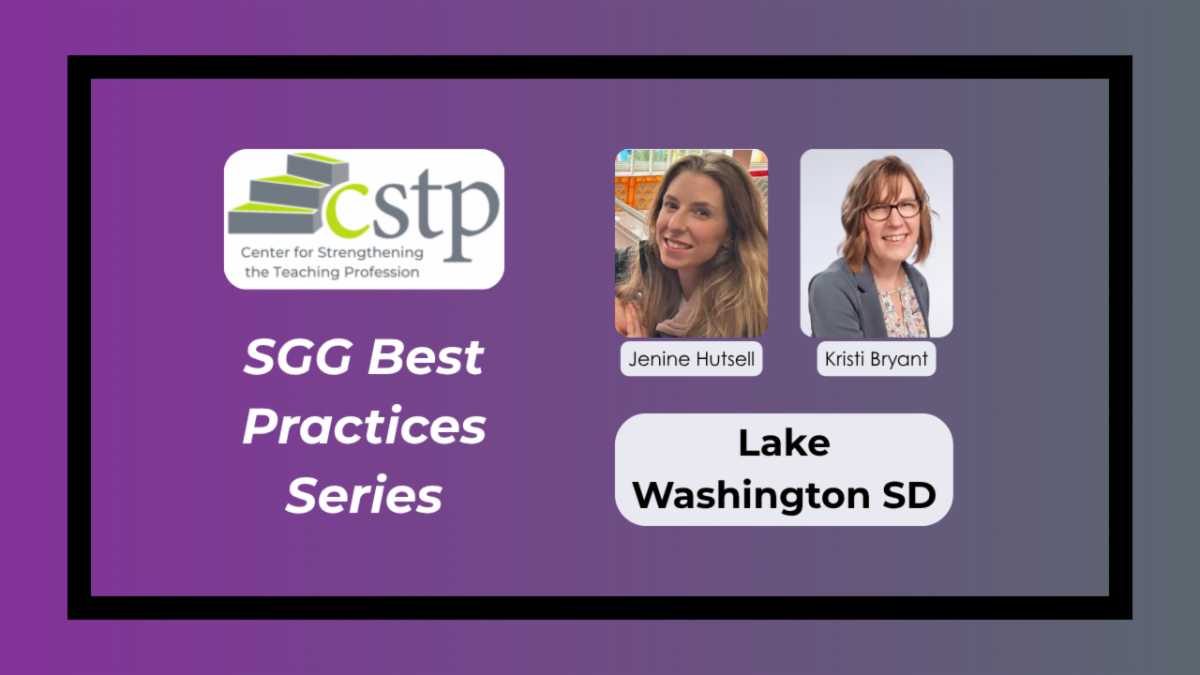
Here at CSTP we pride ourselves in providing ongoing, responsive, and relevant training for educators. With that in mind, we have created a series of videos on Student Growth Goals.
In this series, we invite practitioners from across the state to highlight tools, practices, and strategies for implementing student growth goals that are making a positive impact on both teachers and students. The videos and resources are designed with the intention of being available to all educators when ever they are in need and ready for them as well as so that they might be used for collaborative conversations and group learning opportunities.
Our practitioners are:
- Lake Washington School District
- Washington Education Association
- Summit Virtual Academy in Lacey, WA
- Spokane Public Schools
Find the videos and further resources and handouts on our website here.
| | Bring CSTP Expertise to Your School or District's Professional Learning | | |
As the school year continues on and you are considering what professional learning you may need in preparation for, or during the coming year, CSTP is ready to collaborate with you! We provide consultation, facilitation, and coaching to support teacher leadership, teamwork, and customized professional learning in your school or district.
We bring expertise in:
-
Teacher Leadership Development, helping educators step into influential roles and contribute meaningfully at the school and district level.
-
Supporting Teacher Teams, offering structures and strategies that enhance team communication and empower collaborative, equity-focused reflective practice
-
Culturally Responsive Pedagogy, equipping educators with tools and mindsets that support all students to access rigorous, engaging work while honoring all students’ identities
Let CSTP help you design meaningful learning experiences, launch leadership frameworks, or amplify teacher-led initiatives—whether virtual or in-person. Interested in exploring how CSTP can support your school or district? Reach out to Linsdey@cstp-wa.org. We’re ready to collaborate with you!
| | Partner with CSTP to Offer Clock Hours at Your Next Training | | |
Are you running a course, professional development or book study and want to offer Washington State clock hours? CSTP is an approved Washington State clock hour provider and can approve your courses for clock hours. It is free for the instructor to apply for the course with participants paying a nominal fee.
Learn More and Apply for Clock Hours
| | Candidate Submission Window Ends May 16 | |
The ePortfolio submission deadline for National Board materials is May 16, 2026. Depending on your internet speed, it might take a few days to upload and verify everything, so don’t wait until the last minute. NBPTS recommends you start as soon as possible. All submissions are due by May 16, 2026, at 11:59 pm, CT.
Uploading and Submitting Tips:
- Know the File Requirements: Ensure the files for all written material are in PDF format, and all videos are MP4s. The size limit for each file you submit is 500 MB. Review the technical guides for help with converting files to the right types and size.
- Stay Organized: Consult the Submission at a Glance chart in your component instructions to ensure proper organization.
- Start Uploading: Review the Guide to Electronic Submission for step-by-step instructions. Trouble Uploading Files? If you do not see the Choose Files button, try accessing the system using a different browser or network. Do not click Submit final portfolio if you are experiencing this issue. Review the FAQs for additional troubleshooting steps or contact Customer Support for assistance.
- Double-check Your Submission: Verify the accuracy, completeness, and playability (audio and video) of your material on multiple devices before clicking Submit. Reminder: The National Board will not audit or inventory the contents of your submission.
- Save Your Work: Keep a copy of your submission - the National Board will not be able to provide you with one.
Have questions about organizing, uploading, and submitting your material? Check out these frequently asked questions. For additional support, Customer Support is ready to help! You can reach them Monday - Friday, from 8 am to 6 pm CT. They will also be available to help on Saturday, May 16, from 8 am to 5 pm, CT.
| National Board Initial Candidate Information Sessions with OSPI | | |
To support Washington state candidates through this process, OSPI will be hosting information sessions open to all educators looking to begin or continue their National Board journey. These sessions will cover considerations for why National Board Certification is right for you, the assessment process, and supports and resources to help along the way.
-
Who? Any teacher or counselor interested in pursuing National Board certification.
-
What? Information session hosted by OSPI, in partnership with WEA and CSTP. Attend to find out what National Board certification requires and the timeline options.
-
When? Tuesday, May 19 AND Tuesday, June 9 @ 4:30 PM-6:30 PM. 2 Clock Hours available per session
-
Where? Register here! Registration will close the day of the session. A Zoom link will be emailed upon completing the registration survey.
| | WEA National Board Information and Support | | |
All WEA sessions are available for WEA members only. Visit the WEA National Board Certification webpage for more information and more course availability.
National Board Information Session Series
Session 3: Support & Next Steps: Session 3
- Wednesday, May 13, 2026 - 4:30 to 6:30 pm
| | |
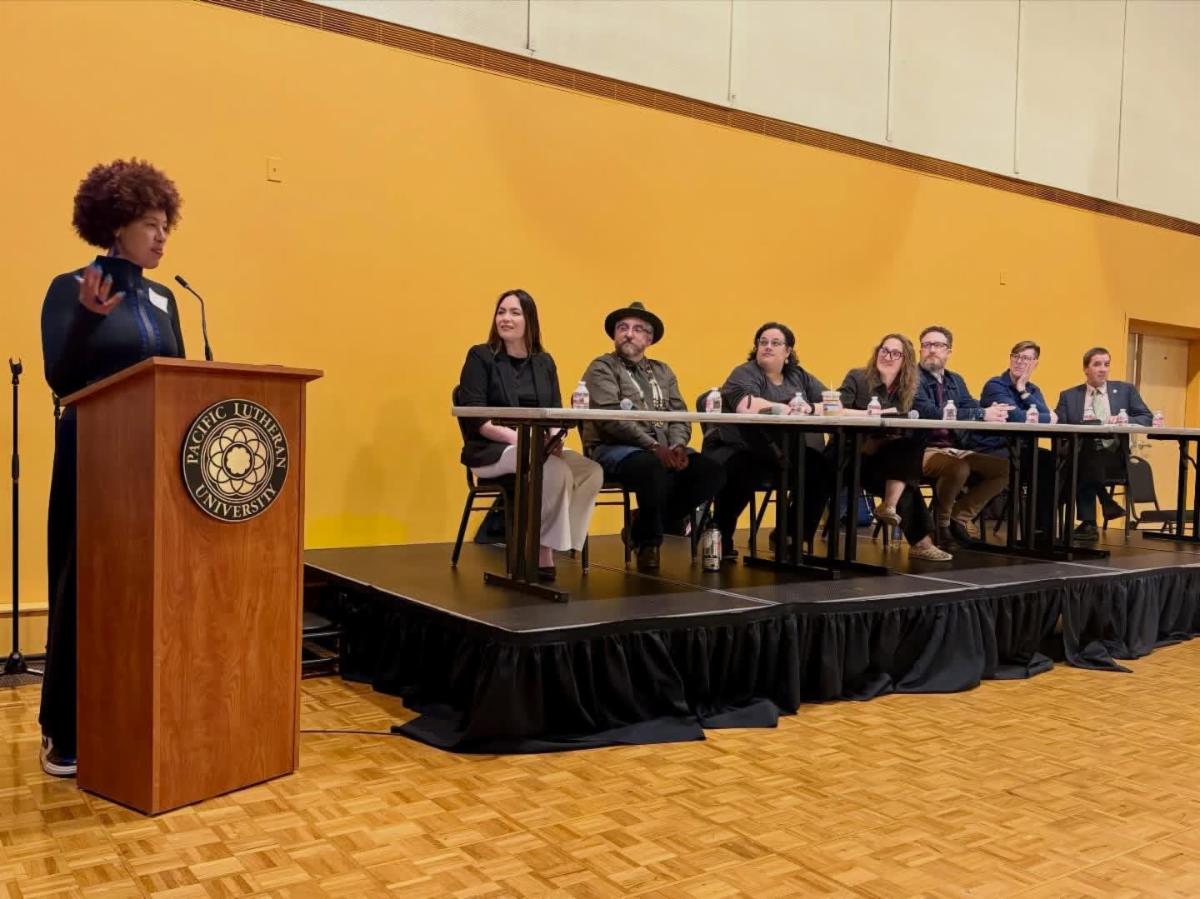
On April 22, eight Washington and National Teachers of the Year came together on a WATOYEvents panel to discuss issues that impact education today. This award winning and thoughtful group tackled many of the problems of practice we all grapple with daily.
One question posed was, "If you could all change one thing in education, what would you collectively do?"
And some of the answers were:
Brooke Brown: "Trust the folks in the school with support. Be willing to be uncomfortable."
Gabriela Whitemarsh: "If you’re a teacher of kids you should love kids and your community, we should all learn more than one language."
Jerad Koepp: "Conversation about the low bar of school leadership in this country is a bastion of white male mediocrity as they govern from their own positionality. This is why anyone who isn’t a white male struggles as they take on higher leadership roles."
And from everyone: "Stop standardization."
If you ever get a chance to attend another event like this, it could leave you with some food for thought and a feeling of rejuvenation as it did for us.
| | May is Asian / Pacific American Heritage Month | | |
From the Smithsonian and National Gallery of Art:
In the month of May we take time to reflect and celebrate the important role that Asian Americans, Native Hawaiians, and Pacific Islanders (AANHPIs) have played in our shared history. Explore Smithsonian events happening online and in-person and find resources, podcasts, and collection items to learn more about AANHPI contributions.
Asian Americans are often left out of view of American history but their lives—and art—are inextricably intertwined with the nation's history. Discover AAPI artists whose art contend with the complex events and issues of the American story.
Read more and find resources here.
| | |
Join us for fun facts, obscure knowledge, and exploration of physics, genetics, etymology, art, and more!
| | Hybridized Kids These Days | | |
For as long as humans have been using other animals for labor, we have wondered how we could improve them. A perfect example of this is the mule: How could agricultural societies combine the intelligence of a horse with the sturdiness of a donkey? The answer is to breed them together. Mules have been bred for thousands of years, but to this day we still need a female horse and a male donkey to create them. Why don’t we breed them directly with each other? This is the obstacle with hybrids: Most of them are infertile.
A hybrid animal is the cross between two different species. These animals may look compatible enough on the outside, and they can produce young, but their genetic patterns are different. In the case of the donkey and horse, they each have a different number of chromosomes. There aren’t enough pairs present in the genetics of the mule to produce viable reproductive gametes. This is distinct from crossbreeding, which is the combination of two breeds of the same species. Crossbred animals like dogs may have a unique look, but not a unique chromosomal pattern.
Other hybrids may be fertile under the best conditions, but their offspring are predisposed to health instability or other conditions. The liger is a relatively famous hybrid between a tiger and a lion. Female ligers are fertile but breeding them with tigers or lions has resulted in sickly cubs that can survive in the safety of captivity but wouldn’t last in the wild.
Then you have an animal like the huarizo, the hybrid between a llama and an alpaca. These two South American beasts of burden are closely related, with the alpaca being a little smaller and woolier. They have the right number of chromosomal pairs between them for many huarizos to be fertile. However, they can only be bred with pure llamas or alpacas. It has so far not been genetically viable to create a standalone breeding line of huarizos.
We do have records of two species coming together in the natural world to produce hybrids that are viable with each other. For example, the eastern coyote is descended from hybrids between western coyotes and grey wolves. These species began to encounter each other more as their territories were reduced by human settlement and industry. This creation of a third independent species with a unique genetic pattern is known as hybrid-speciation. This process is rare but has also been observed in some finches and dolphins.
All hybrids, fertile or not, have their own value as animals. They are living beings worth honoring. To all of those mules, ligers, and other hybrids that have been bred in captivity, I dedicate this to you. You will always be remembered for being smarter, bigger, or just cooler than your parents–even if you never managed to give them grandchildren.
| | Your gift ensures that CSTP continues to support student achievement through a focus on teaching excellence. With you as a partner in CSTP’s mission, you directly make a difference in the lives of youth across Washington State schools. Donations are tax deductible and essential as CSTP works to support educators navigate unique models of student engagement and teacher leadership. | | Liking and sharing our posts on social media is another way you can support CSTP during these times. Thank you for sharing our message. | | | | |