EDUCATION ADVISERS
MAY NEWSLETTER
We help aspirational parents who are struggling to find the right school or educational pathway for their children to make well-informed decisions based on their child’s specific needs and their family’s priorities.
BOOK A FREE CONSULTATION
| |
Join us for our new Webinar series
This is a multi‑part series designed to help parents navigate key education choices, hosted by EA Consultants with senior leaders and expert practitioners from top UK schools and education providers.
Session 5 - 10 June, 12.00 BST
UK Guardianship Demystified
This webinar introduces a leading provider of guardianship services and explains why guardianship is an essential part of school life for many students.
Topics Covered
What guardianship is and why it is required
Who needs a guardian
What a guardian does on a day‑to‑day basis
How guardians support students, schools and families
How to choose a reputable guardianship provider
Hosted by: EA Consultants with a leading guardianship services provider. Register here.
Session 6 - 17 June, Time TBC
The Best Schools for Athletes
A deep look at how top independent schools support talented athletes, from coaching and facilities to balancing academic excellence.
Topics Covered
What sports are available in independent schools
How sport fits into the curriculum and weekly timetable
Opportunities for talented athletes to train and compete at a high level
Balancing sporting commitments with academic expectations
What a football academy is and how students gain entry
Hosted by: EA Consultants & sports specialists from leading UK independent schools. Register here.
| |
|
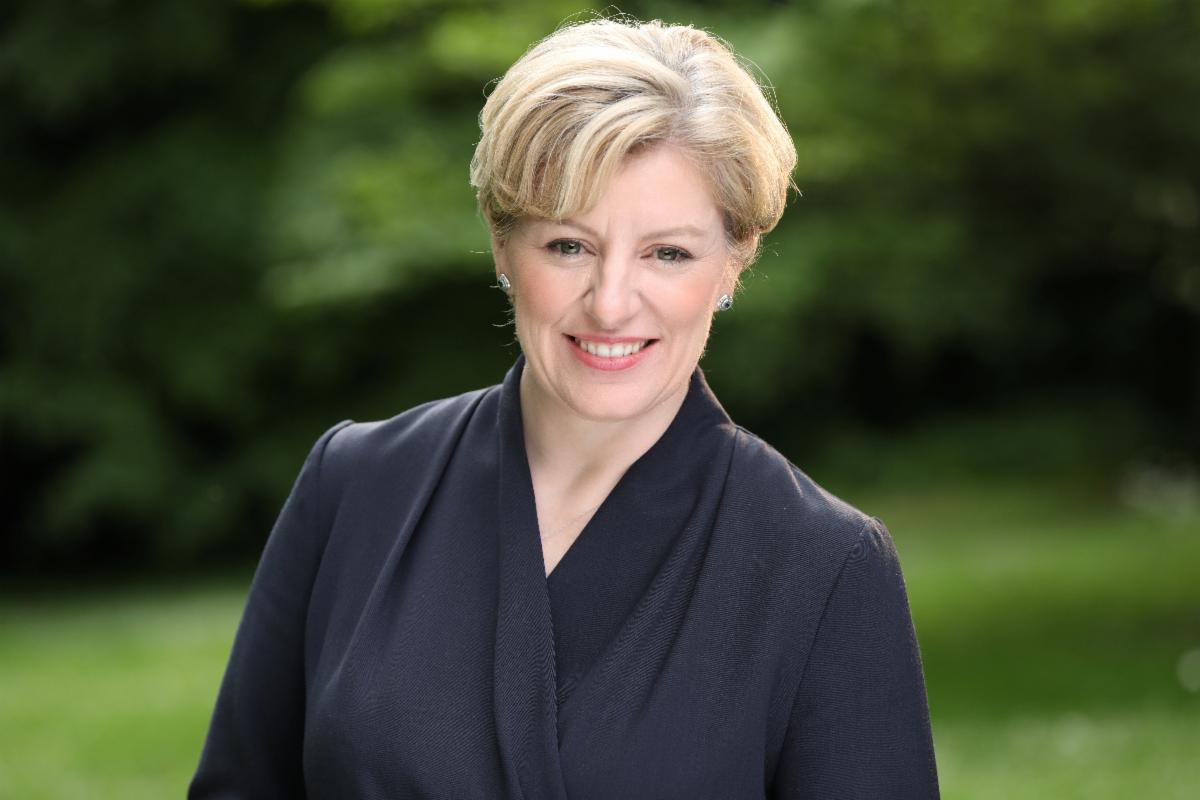
Head Lines - Jo Duncan Wycombe Abbey
What first sparked your interest in education when becoming a teacher?
When I was at school, my career aspiration was to become a lawyer. I think I was particularly influenced by the 80s TV series LA Law! When I was deciding on my degree course, I went to talk to my RS teacher to ask her about the study of Theology at undergraduate level and in that conversation she told me that one person from her A Level class every year became an RS teacher, and she thought that this year it would be me. I told her I had no intention of becoming a teacher. However, during my degree course (joint honours in Theology/English Literature) I had the opportunity to go to Eastern Europe in the summers of my second and third year to teach English. There were few resources – just a blackboard with chalk and a class full of willing pupils - and I absolutely loved it. By the time I was in my final year at St Andrews I had decided that teaching was the career for me. I didn’t even consider anything else. I applied to do my PGCE at Homerton, Cambridge and went from there.
How did your own teachers influence your teaching style?
I was educated at a girls’ grammar school in Northern Ireland, and I had some excellent teachers throughout my time. Those who inspired me did so through their deep knowledge and love of their subjects, most notably the RS teacher mentioned above, but I was also influenced by my English and History teachers, these were subjects which I took at A-level. They influenced my teaching style because they encouraged me to read widely, ask questions, and enjoy learning and that is something that I have tried to do with my pupils.
What makes a great school?
I think a great school is built on a firm foundation and has a clear vision for the future. It’s a place with learning at its heart and a genuine focus on young people who are growing and developing into young adults. A great school is far more than excellent examination results and outcomes, it’s about people, community, friendship, and it’s based on a shared set of values. In the case of Wycombe Abbey these are trust, encouragement and mutual respect.
What is your favourite part of the school day?
Every day is so different that this question is difficult to answer, but my favourite part of the school week is first thing on a Friday when we have Big School - basically school assembly - when the whole school comes together. I lead it but many people speak, including girls who share initiatives or talk about things they’ve done or future plans. We give out awards and celebrate success. I also enjoy seeing the School come together on a Friday afternoon for Whole School Singing, it’s such a nice way to end the working week with enthusiastic singing from the pupils.
What’s your favourite interview question for a prospective student?
One of my favourites is, ‘If I had a magic carpet and I said you could use it to go anywhere in the world, where would you choose and why?’ Their answers are always fascinating.
If you could change one thing about your school, what would it be?
If I could change one thing it would be to enable every pupil to be able to participate in our Global Links program. We currently have a number of exchange opportunities with boarding schools in Australia, Canada, US and India but they are limited in number and and girls have to apply for them. I think it’s a great learning experience to spend time in another culture and particularly in another school to really start to understand it as well as to learn about yourself.
When you tell people you are a headteacher, what is their reaction?
I have many conversations about being a Headteacher, especially when I have to share my address and postcode because it is ‘The Headmistress’s House, Wycombe Abbey’. People are intrigued more than anything else and find it fascinating that I might live at School as well as being a Headteacher. I’ve been a Head for 18 years now so it’s less of an issue, but previously people always commented, ‘you seem too young to be a Headmistress’, which was probably true.
What positive message would you want to give to the world?
I think there’s a lot of anxiety, especially amongst teenagers, for a whole range of reasons but my positive message to young people is that life is a fantastic adventure to be lived. That doesn’t mean it’s perfect, far from it, but it is something to be cherished and enjoyed.
| |
|
How Schools Are Building the Soft Skills Children Need
Across education, there is growing recognition that children need more than academic knowledge to thrive. Skills such as creativity, collaboration, empathy, critical thinking and good judgement are increasingly seen as essential for young people’s future success. Yet these “human competencies” are often harder to measure, meaning they can be overshadowed by exam‑driven priorities.
One international school in Thailand has developed an approach that shows what is possible when soft‑skills development is taken seriously. Their MAGIC‑T model (Museums, Art Galleries, Institutions, Cultural Centres and Theatres) brings creative practitioners into school for long‑term projects, not one‑off workshops. This gives students the chance to work with designers, artists and experts over several weeks, allowing deeper learning and genuine skill‑building.
A recent project asked students to explore ancient technologies and sustainability. Working with a former Parsons School of Design dean, pupils experimented with natural materials, built prototypes, tested ideas and created large‑scale sculptures. Throughout, they practised risk‑taking, problem‑solving, negotiation, teamwork and independent decision‑making.
The school emphasises the difference between simple “teamwork” and true ensemble work. Ensemble work requires students to navigate uncertainty, listen to others, build consensus and contribute ideas when there is no single right answer. Crucially, students’ voices shape the final outcomes, helping them see that their thinking has real impact.
While not every school can replicate a full MAGIC‑T programme, the principles are widely applicable. Long‑term creative projects, partnerships with local organisations, and tapping into the skills of parents and community members can all help schools build the soft skills that matter most.
For families, this is reassuring: online or offline, the best schools are finding meaningful ways to help children grow as thinkers, collaborators and confident young people ready for the world ahead.
Get in touch with our knowledgeable team to discuss how we can find a school that is the best fit for your child +44 303 033 2259.
|
Watch: Q&A with Jesse Elzinga, Headmaster of Sevenoaks School
What truly defines a great school? In this engaging Q&A, Jesse Elzinga shares what matters most - exceptional academics, a rich co‑curricular life, and, above all, outstanding pastoral care.
One message stands out powerfully: if a young person is having a bad day, they shouldn’t be left to stay in a bad place. Jesse talks about the responsibility schools have to notice, support, and help students move forward, reminding us how vital care and compassion are in helping young people thrive.
From the everyday buzz of breaktime and assemblies to the energy of performances and sports fixtures, Jesse reflects on the moments that bring a school community to life. He also shares his optimism for the future, explaining why working with young people gives him real hope in an often challenging world.
👉 Watch the full video to hear Jesse’s reflections in his own words.
| |
Why Reading Still Matters in a World of Endless Screens
Children’s author and outgoing Children’s Laureate Frank Cottrell‑Boyce has warned that technology is quietly eroding children’s ability to feel genuinely happy. In an interview with The Times, he drew a sharp line between happiness and distraction - suggesting that much of children’s online time leaves them in a “suspended state”, more sedated than stimulated.
Cottrell‑Boyce argues that while scrolling and social media can fill hours, they don’t nourish children emotionally or creatively. Instead, they risk replacing the deeper satisfaction that comes from imagination, connection, and meaningful downtime.
He is backing The Sunday Times’ Get Britain Reading campaign, which encourages families to commit to just 10 minutes of reading for pleasure each day - a small habit that can help rebuild attention, spark joy, and give children a healthier balance in a tech‑heavy world.
At Education Advisers we work with the world's leading schools. Book a free consultation with us to discuss how we can help you find the best school in your target location.
| |
|
The Pisa Test: What It Is, Why It Matters, and How the UK Performs
With new Pisa results due this September, many parents are asking what these international rankings actually measure - and whether they should influence decisions about their child’s education. Pisa has now been running for 26 years and remains one of the most influential global benchmarks of student performance.
What Is Pisa?
The Programme for International Student Assessment (Pisa) is run by the OECD and compares how effectively 15‑year‑olds across the world can apply their learning in reading, maths and science. It is not a curriculum test. Instead, it assesses whether students can use their knowledge to solve real‑world problems - interpreting data, analysing information, and reasoning through unfamiliar scenarios.
Every three years, a representative sample of students from each participating country completes a two‑hour computer‑based test and a questionnaire. In 2022, more than 690,000 students from 81 countries took part, making it one of the largest education studies in the world.
How Rankings Work
Countries receive average scores in reading, maths and science, benchmarked against the OECD average (in 2022: 472 maths, 476 reading, 485 science). While league tables attract headlines, the scores themselves and the trends over time are far more meaningful.
Recent cycles have shown a global decline, particularly in maths and reading, with significant variation between countries. High performers such as Singapore, Japan and Estonia continue to score well above average, while others sit significantly below.
How the UK Performs
The UK performs above the OECD average overall:
- Maths: 489
- Reading: 494
- Science: 500
However, performance varies across the four nations:
- England remains the strongest performer, consistently above the OECD average.
- Scotland has seen a gradual decline, now closer to average in maths and science.
- Wales continues to score below the OECD average across all subjects.
- Northern Ireland performs broadly in line with OECD averages, above Wales but below England.
Why Pisa Matters for Parents
Pisa provides a valuable international lens on how well education systems prepare students for modern life not just exams. It highlights strengths, exposes weaknesses and often shapes national policy.
For parents, Pisa is not about judging individual schools, but it does offer insight into:
- the overall strength of a nation’s education system
- how well students are being prepared for real‑world problem‑solving
- long‑term trends that may affect future opportunities
If you want expert guidance on choosing the right school, we help families navigate the full landscape - from academic performance to pastoral care, curriculum pathways and long‑term outcomes. If you would like tailored advice on selecting a school that aligns with your child’s strengths and aspirations, our consultants are here to support you. Book a call here.
| |
|
Summer School Fun
Choosing the right summer school can be one of the most rewarding decisions for your child. A high-quality summer programme offers far more than just a way to fill the holidays it’s an opportunity to learn new skills, make lifelong friends, and experience personal growth in a safe, inspiring environment.
Whether your child dreams of mastering a sport, exploring STEM subjects, perfecting their dance moves, or improving their English language skills, the UK is home to some of the finest summer schools in the world.
We held an informative webinar hosted by our knowledgeable team and summer school partners on "How to Choose the Best Summer School Programme". Please click this link to watch the recording.
At bestsummerschools.co.uk we make finding the perfect programme simple and stress-free. Every course featured on our site is carefully curated by expert consultants, ensuring exceptional quality and a memorable experience.
Our wide range of options includes sports camps, dance workshops, STEM courses, and English language programmes, catering to every interest and ability level.
Browsing is easy - enjoy scrolling through our handpicked selection and, when you find a programme you love, simply request more information directly from the page. Not sure which course is right for your child? Don’t worry! Our friendly team is always on hand to offer personalised guidance and suggestions. With such a vast choice, it’s natural to feel overwhelmed but that’s where we come in. Attending a summer school is more than just fun - it builds confidence, independence, and cultural awareness. It’s a chance to step outside the classroom, discover new passions, and gain skills that last a lifetime.
We offer free advice to help you find the right programme for your child
Book a call here
| |
How Schools Are Preparing Students for an AI‑Driven Future - and What Parents Should Expect
Artificial intelligence is now part of the educational landscape, raising important questions about how young people learn, think and make decisions. Globeducate has taken a structured approach by introducing an AI Graduate Profile, designed to ensure students develop the judgement and confidence to use AI safely and responsibly throughout their school career.
For families, this matters. As AI becomes embedded in university admissions, future careers and daily life, parents increasingly want reassurance that their child’s school is preparing them well.
A Clear Developmental Pathway
Up to age 11 – Curious and Safe
Pupils begin by exploring simple questions about fairness, decision‑making and whether computers should be trusted. The emphasis is on safe habits and open discussion.
Ages 11–14 – Critical and Informed
Students learn to question AI outputs, identify bias and understand how these systems are built. They practise analysing AI‑generated material and recognising what may be missing or misrepresented.
Ages 14–18 – Agentic and Ethical
Older learners use AI with purpose and discernment. They decide when AI is appropriate, when it is not, and take responsibility for the choices they make, treating AI as a thinking partner rather than a shortcut.
How Schools Measure Progress
Students are assessed as emerging, developing or secure across four areas:
- Questioning – Do they interrogate AI outputs?
- Purposeful use – Can they choose when and how to use AI?
- Ethical awareness – Do they recognise issues such as bias or privacy?
- Communicating reasoning – Can they explain their decisions clearly?
This framework helps schools move beyond informal experimentation and towards a consistent, evidence‑based approach.
What This Means for Parents
The central aim is to help young people move from asking “Can I use AI?” to “Should I and why?”
For parents, this is a strong indicator of a school that is preparing students not just for exams, but for the world they will enter.
Education Advisers specialise in helping families identify the right school - academically, pastorally and strategically. If you would like tailored advice on schools that are leading the way in digital literacy and AI readiness, our consultants can guide you through the options and help you make an informed, confident choice. Book a call here.
| |
| |
Education Advisers help aspirational parents who are struggling to find the right school or educational pathway for their children to make well-informed decisions based on their child’s specific needs and their family’s priorities. We have 20+ years of experience in helping young people secure offers from the very best independent schools and universities. We provide a professional, bespoke service to guide families with expertise and sensitivity to find the right solution for each individual child, helping with each stage of the process. Our close links with the world’s leading independent schools and in-depth knowledge of education mean that we can provide parents with peace of mind, knowing that they are making the best choices for their child’s education.
Contact us for a free consultation to find out how we can help. Call +44 203 003 2259, Email us or Book a Call and we will be in touch as soon as possible.
| | | | |