Celebrating Community Impact: Sabri Fair’s Work Across the Region
| | |
In communities across south-central Minnesota, Sabri Fair has become a steady, behind-the-scenes force for good, bringing people together, securing critical resources, and turning ideas into lasting impact. His work reflects a deep commitment to ensuring that rural communities are not only supported, but also empowered to thrive.
Sabri’s partnership with Convivencia Hispana in St. James has resulted in more than $650,000 in grant funding from federal and regional partners, supporting energy efficiency upgrades in 45 homes and providing free energy audits to 143 households in the community, nearly 8% of the city’s occupied housing. These efforts are helping families reduce energy costs while improving comfort and long-term sustainability.
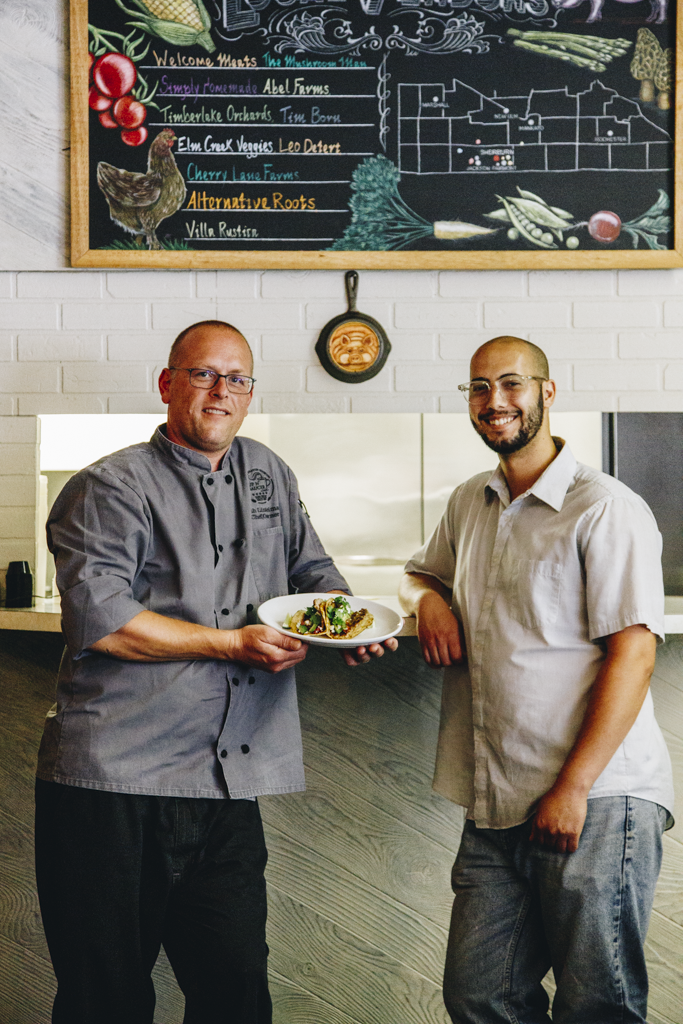
Recognizing that strong communities are built on reliable access to food, Sabri has also played a central role in strengthening the regional food system. He authored and helped implement a Local Food Purchase Assistance project that brought $91,000 to south-central Minnesota, enabling partnerships between local farmers and food access organizations. Through this work, locally grown food is reaching underserved residents at no cost, while also creating new economic opportunities for farmers.
Sabri’s vision extends beyond individual projects to building systems that last. He secured funding for and helped lead the development of a regional Food Rescue Plan, identifying critical gaps and opportunities in food recovery. That work led directly to the creation of a Regional Food Rescue Coordinator position. Since March 2025, the program has rescued and redistributed more than 150,000 pounds of food, reducing waste while feeding communities.
Each year, Sabri also brings visibility to local agriculture through Local Foods Month, an initiative he created and continues to lead. By connecting area restaurants with local farmers, the program celebrates the region’s agricultural diversity while fostering relationships that endure beyond the event itself.
In addition, Sabri has guided multiple communities through the development of resilience plans, helping local leaders identify practical, actionable steps to prepare for future challenges. These plans not only strengthen community readiness but also position them to secure additional funding for implementation.
Sabri’s work is rooted in collaboration and a genuine belief in the strength of community. Whether helping a family lower their energy bills, ensuring surplus food reaches those who need it most, or building partnerships that support local economies, his contributions are both far-reaching and deeply personal. Through leadership and sustained dedication, Sabri is helping to build a more connected, resilient, and compassionate region.
To connect with Sabri Fair on specific projects or ideas, email sabri@rndc.org.
| |
RLF Spotlight: Czech Point - Highlighting the Power of Partnerships
| | |
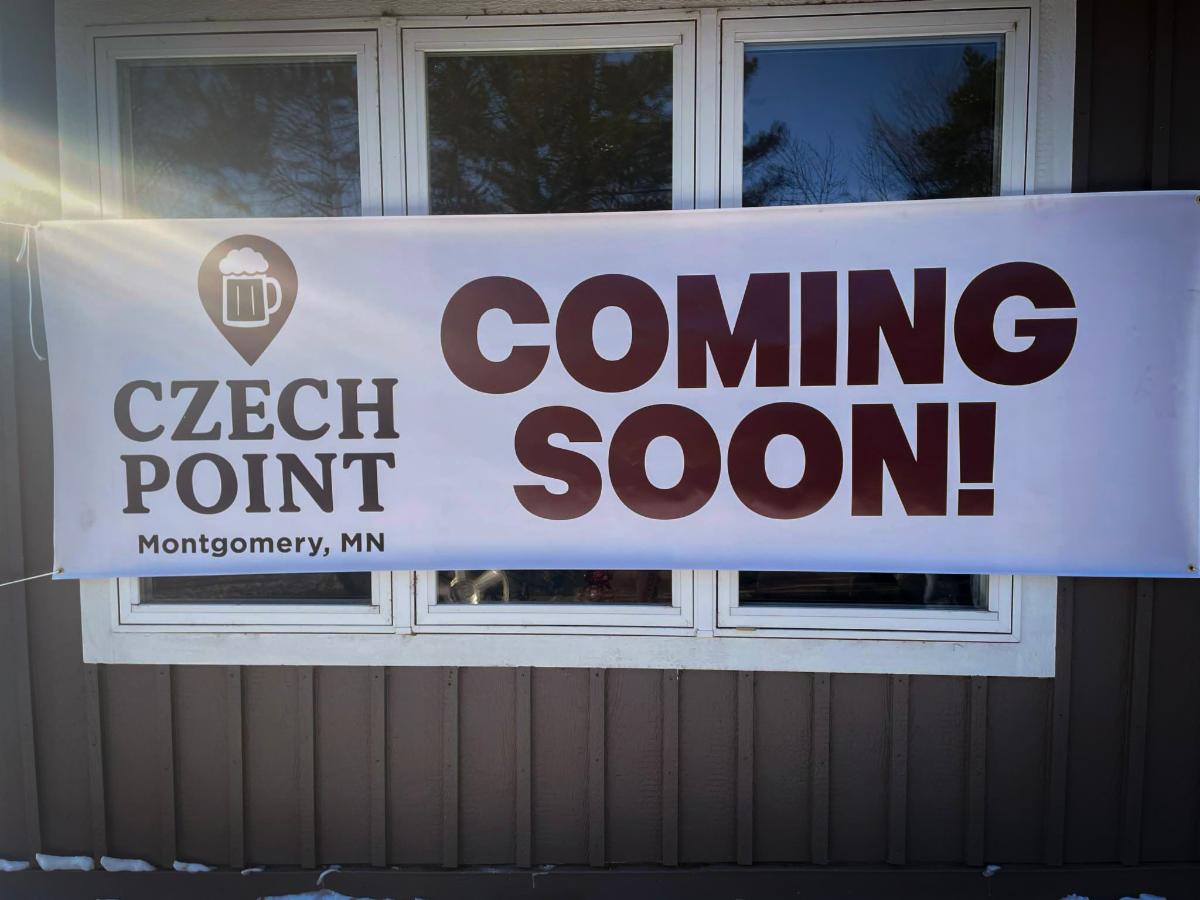
A new dining destination is coming to Montgomery this spring, bringing fresh energy to the community and showcasing how strategic partnerships can help local businesses grow and thrive.
Czech Point, a new restaurant and gathering space, is set to open in mid-May and will offer residents and visitors another option for food, drinks, and entertainment. The restaurant plans to feature a menu of appetizers, sandwiches, and made-from-scratch meals, with an emphasis on local meats and in-house baked goods. Guests can expect signature cocktails and, on occasion, live music.
Behind this new venture is owner Lindsey Green, who is relocating her restaurant operations from Jordan. After leasing space in her previous location, Green is excited to take the next step in her business journey by owning her building in Montgomery. She brings experience from her previous establishment, Lindsey’s BBQ & Grill, and is already building strong community interest—evidenced by Czech Point’s growing social media presence.
This project was made possible through a partnership between RNDC and Frandsen Bank in Montgomery. Frandsen Bank provided $582,000 in financing through an SBA Loan, while RNDC supported the project with a $90,000 loan through its Revolving Loan Fund (RLF).
RNDC’s RLF program is designed to fill financing gaps and support projects that strengthen local economies. By working alongside traditional lenders, RNDC helps make projects possible that might not otherwise move forward, supporting business expansion, job creation, and community vitality across south central Minnesota.
Czech Point is a strong example of how collaboration between local lenders and regional development organizations can help bring new opportunities to small communities. As Montgomery continues to grow and evolve, investments like this contribute to a more dynamic local economy and an enhanced quality of life for residents.
RNDC’s Revolving Loan Fund program is here to help fund your future. Those interested in learning more can contact Lending Specialist Jazmine Flores at 507-389-8889 or by email at jazmine@rndc.org.
| | Celebrate Bike Month Friday, May 15 with RNDC! | | |
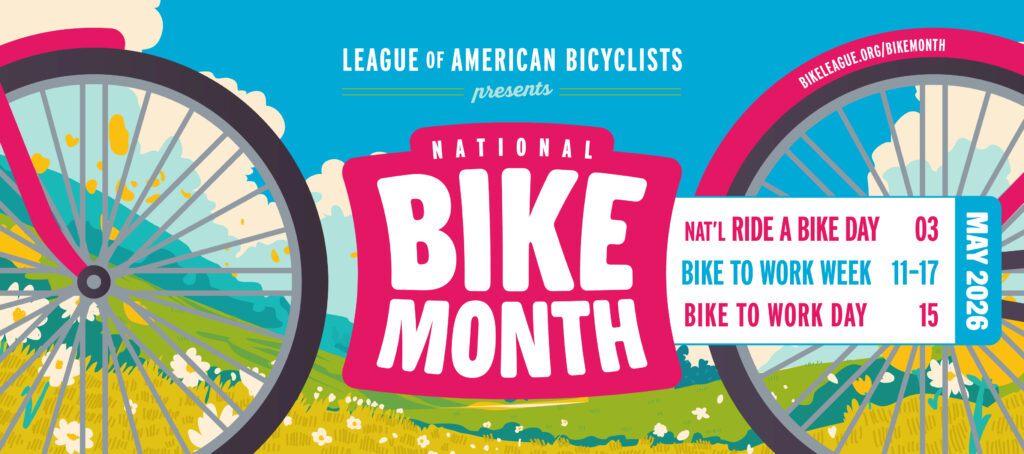
May is Bike Month, and RNDC Transportation Planner Mark Plotz has been busy supporting events throughout the region that encourage active transportation and healthy communities.
In St. Peter, Mark joined the welcome committee for students who biked and walked to North Elementary School as part of Bike to School Day. Community leaders, including Mayor Shanon Nowell, the police chief, school resource officer, and a community service officer, greeted students as they arrived and thanked them for wearing helmets. Nicollet County Public Health distributed reflective wristbands, while Mark put his bike mechanic experience to work by filling tires and checking brakes for students and families.
St. Peter is a strong example of how communities can support safe and accessible movement for children. Successful walkable and bike-friendly communities often share a few key characteristics:
• Schools, parks, and other destinations are located within walking and biking distance.
• Parents feel safe allowing children to walk and bike independently.
• Neighborhoods are connected through sidewalks and safe routes.
Communities that prioritize biking and walking also help children build lifelong healthy habits and can support improved academic performance.
Bike to School Day also serves as a lead-up to Bike to Work Day, taking place Friday May 15 from 7:30 to 9:00 a.m. at Civic Center Plaza outside the Intergovernmental Center in Mankato. The event is hosted through a collaboration between Region Nine and Greater Mankato Bike & Walk Advocates.
The morning will include coffee, bike-themed activities such as a tire-change competition and bike show-and-tell, and free bike fixes from Key City Bikes. RNDC Chairman Mike Laven will help kick off the program at 8:00 a.m.
The event is free and open to everyone, with no registration required. Participants are encouraged to ride to work, save on fuel costs, and enjoy a fun community event celebrating active transportation.
For questions, contact Mark Plotz at mark@rndc.org.
| | |
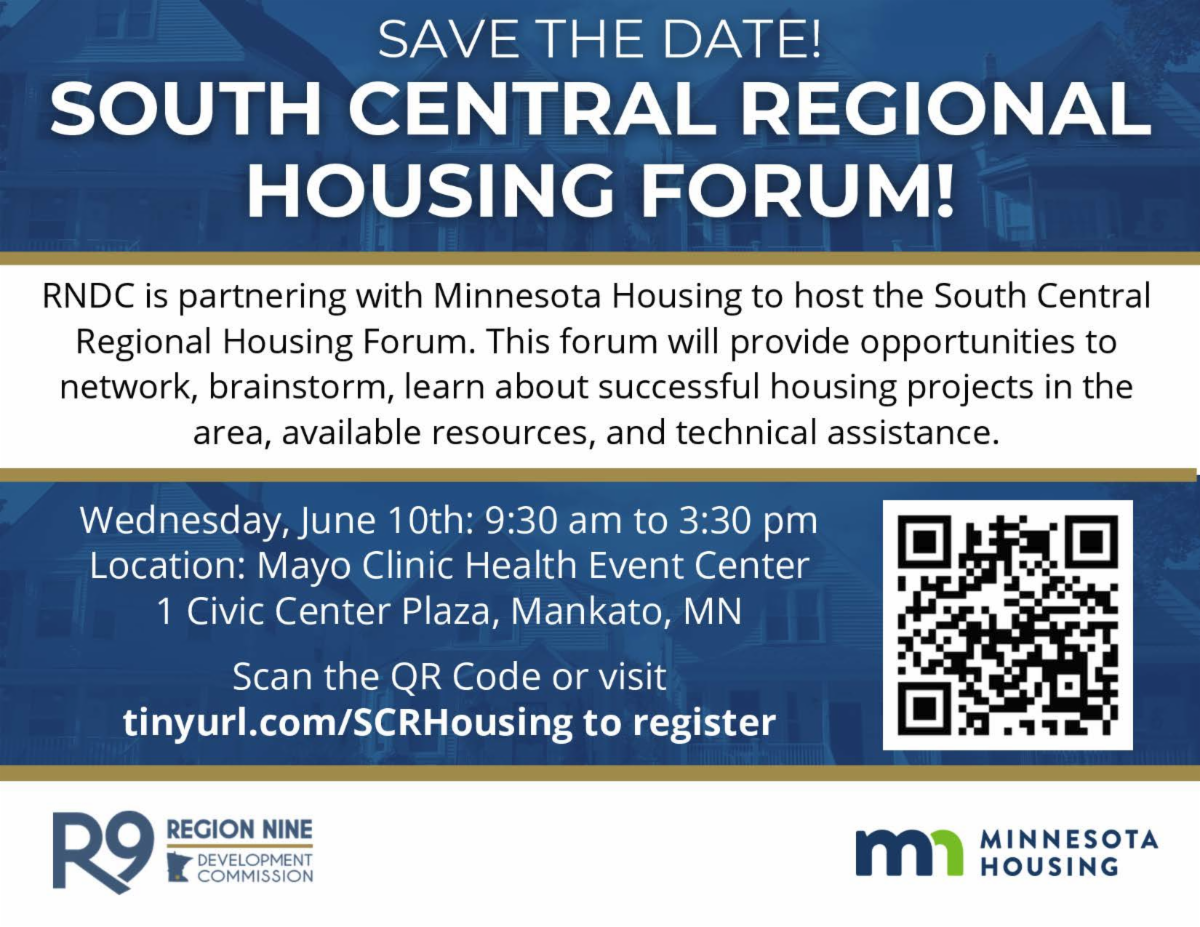
Community leaders, housing professionals, and regional partners are invited to attend the South Central Regional Housing Forum on June 10 in Mankato. The event is hosted in partnership by Region Nine Development Commission and Minnesota Housing.
The forum will bring together local governments, nonprofit organizations, lenders, housing developers, and community leaders from across south central Minnesota to share ideas, highlight available resources, and identify practical solutions to address ongoing housing challenges in the region.
Attendees will hear from speakers and panelists on current housing trends, development tools, and financing options, along with real-world examples of communities making progress on local housing initiatives. The event will also provide opportunities for discussion and collaboration, helping to shape regional housing priorities moving forward.
Event Details:
Date: June 10, 2026
Time: 9:30 a.m. – 3:30 p.m.
Location: Mayo Clinic Health System Event Center
Cost: Free (registration required)
Light breakfast and lunch will be provided
Register today by clicking the button below or visit: www.tinyurl.com/SCRHousing
| | New County Housing Profiles Highlight Challenges and Opportunities Across Minnesota | | |
Communities across south central Minnesota are getting a clearer picture of local housing needs thanks to the release of the 2026 County Profiles from the Minnesota Housing Partnership (MHP). Updated every two years, the profiles provide detailed housing data for all 87 Minnesota counties and offer valuable insight into affordability, homeownership, and rental housing challenges affecting residents across the state.
The profiles examine a range of housing indicators, including housing costs, homeownership disparities, wages needed to afford housing, and the shortage of homes available to renters with extremely low incomes. The data paints a consistent picture across Minnesota: housing affordability continues to be a major challenge for many households.
One of the most significant findings is that every county in Minnesota has too few homes that are affordable and available to renters with extremely low incomes. In nearly 80% of counties, the shortage exceeds 100 units, while nearly one-third of counties face shortages greater than 500 homes.
The data also shows that home values are rising faster than incomes. From 2023 to 2024, home values increased in every county statewide, while homeowner incomes increased in only about two-thirds of counties. As housing costs continue to climb, more renters and homeowners are struggling to keep up.
| | |
At least one in four renters in every Minnesota county is considered cost burdened, meaning they spend more than 30% of their income on housing. In 20 counties, more than half of renters face that burden. Older adults are especially affected, with at least 30% of senior renter households cost burdened in every county.
The profiles also highlight ongoing disparities in homeownership. While white, non-Hispanic households maintain relatively high homeownership rates across Minnesota, significant gaps remain for Black, Indigenous, and other households of color, particularly in the state’s more populous counties.
For communities in Region Nine, the profiles can serve as an important planning and policy tool. Local governments, housing developers, nonprofit organizations, and community leaders can use the data to better understand housing pressures in their communities and identify strategies to support housing stability and growth.
“The data in these profiles tell a remarkably consistent story across Minnesota’s 87 counties,” said Gabriela Norton, Director of Research at Minnesota Housing Partnership. “In every county, renters with extremely low incomes face a shortage of homes that are affordable and available to them, and in every county, at least one in four renters is cost burdened. We also see that older adults and households of color are more likely to face barriers to stable housing and homeownership. By making these trends visible at the local level, we hope these profiles can help communities and policymakers better understand the challenges they face and identify solutions that can make a difference.”
As communities across south central Minnesota continue working to address housing shortages and affordability concerns, tools like the County Profiles help provide the local data needed to guide future housing investments and community development efforts.
June 10th, RNDC is hosting a regional housing forum. More information on the event is available at www.tinyurl.com/scrhf or click the button below.
| | |
Grants Available to Expand E15 Access Across MN
The Minnesota Department of Agriculture (MDA) is now accepting applications for the Agricultural Growth, Research, and Innovation (AGRI) Biofuels Infrastructure Program. This grant provides matching funds for Minnesota fuel retailers to upgrade their stations to offer gasoline blended with at least 15% ethanol at the pump.
The MDA may award up to $4.7 million through a competitive review process. The AGRI Biofuels Infrastructure Program is funded through an appropriation by the Minnesota Legislature to the AGRI Program, along with additional financial support from Minnesota Corn. Applicants may request between $5,000 and $199,000 per project and must commit at least 35% of the total project cost as a cash match.
Applicants must be retail petroleum dispensers in Minnesota with no more than 20 retail fuel dispensing sites and be actively operating and dispensing fuel to the public at the time of application. The scoring criteria of this grant program prioritizes retailers that do not currently offer higher blends of ethanol, those that plan to offer higher blends at every petroleum dispenser, and projects that support equitable distribution across the state.
Deadline: June 2, 2026
| | |
Application Period Open for Climate-Friendly Practices Funds
The Minnesota Department of Agriculture (MDA) is accepting applications for climate-friendly agricultural practices (CFAP) incentive payments. CFAP provides payments at a flat rate up to $10,000 for producers to implement a selection of sustainable agricultural practices with known, quantifiable greenhouse gas emission reductions.
Approved practices include:
- Conservation cover
- Pasture and hay planting
- Conservation crop rotation
- Tree and shrub establishment
Payments are available on a first-come basis, with about $1.2 million allocated for this year. Payments are being offered through the Minnesota Agricultural Water Quality Certification Program (MAWQCP), which certifies producers across the state for implementing conservation practices that are proven to improve and protect water. Applicants are not required to be certified in this program to apply. However, certified applicants receive a higher payment rate than non-certified applicants.
Farmers, producers, agricultural LLCs, and agricultural landowners operating on land within Minnesota are eligible to apply. Applicants are eligible to reapply if not awarded their first try. Those who have received funding are eligible to apply for additional resources so long as the request involves new practices or different acres.
For more information and to apply, please visit the CFAP website or contact Megan Moland at megan.moland@state.mn.us.
Deadline: First Come, First Served
| |
Region Nine Development Commission takes great pride in working with and on behalf of counties, cities, townships, and schools throughout South Central Minnesota. Since 1972, being a partner for progress has led to the development of programs and identification of solutions in the areas of economic development, business development, healthy communities, transportation, community development, and leveraging regional resources. To learn more about our work and mission, visit www.rndc.org.
| | | Follow RNDC on social media to stay up-to-date on events, news, and more! | | | | |