|
Feast Day: May 2nd
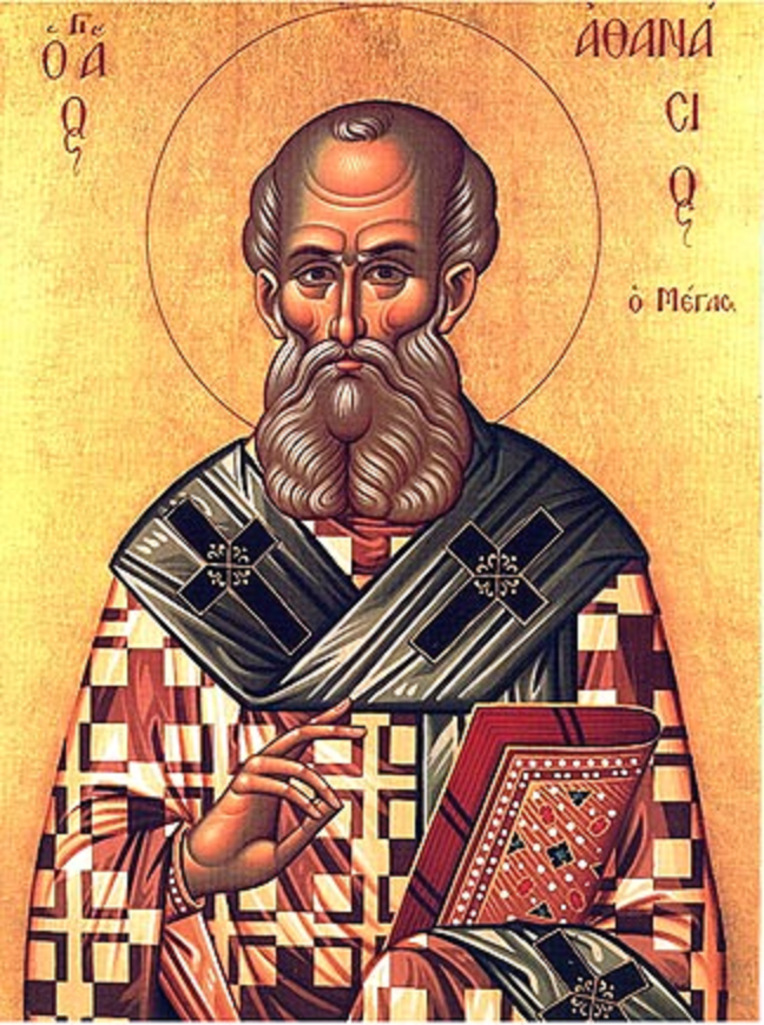
St. Athanasius was a 4th century Early Church Father, Doctor of the Church, and the 20th Patriarch of Alexandria. As a deacon, he was assistant to Alexander, 19th Bishop of Alexandria at the 1st Council of Nicaea, which first and foremost was called by Emperor Constantine in order to address the heresy of Arianism, which stipulates that the Son is a creation of the Father and not consubstantial with Him, therefore denying the Divinity of Christ.
Athanasius was a fierce opponent of Arius at the council, defending the Trinity. His actions at the council, including his writing On the Incarnation and his Letters to Serapion deeply influenced theology and the Church's definition of the dogma of the Trinity - eventually leading to the creation of the Nicene Creed and solidifying the doctrine of the Catholic Church. For these feats he was exiled by Arian bishops five times over a period of 17 years, earning him the title "Athanasius contra mundum" (Athanasius against the world).
While Bishop of Alexandria, he was instrumental to the development of monasticism. During his first visit to Rome, he arrived with two Egyptian monks who were disciples of St. Anthony, exciting at first disgust and contempt, but soon admiration and imitation. Monasticism would then spread over all Italy and the isles of the Mediterranean, and eventually the rest of Europe. Many went to Egypt and Palestine, including St. Jerome, who was the first person to translate the Bible into Latin, laying the foundation for other vernacular translations of Scripture.
St. Gregory Nazianzen called him the "Pillar of the Church". He died in 373.
Blessings,
William Johnston
|