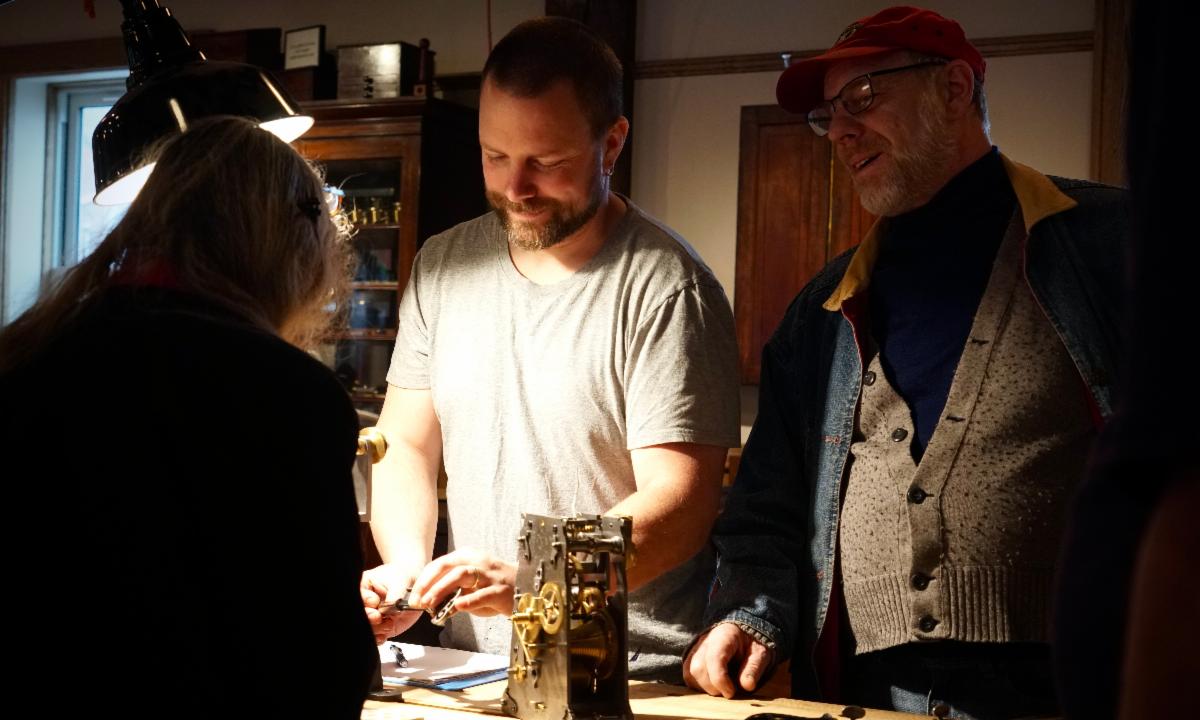
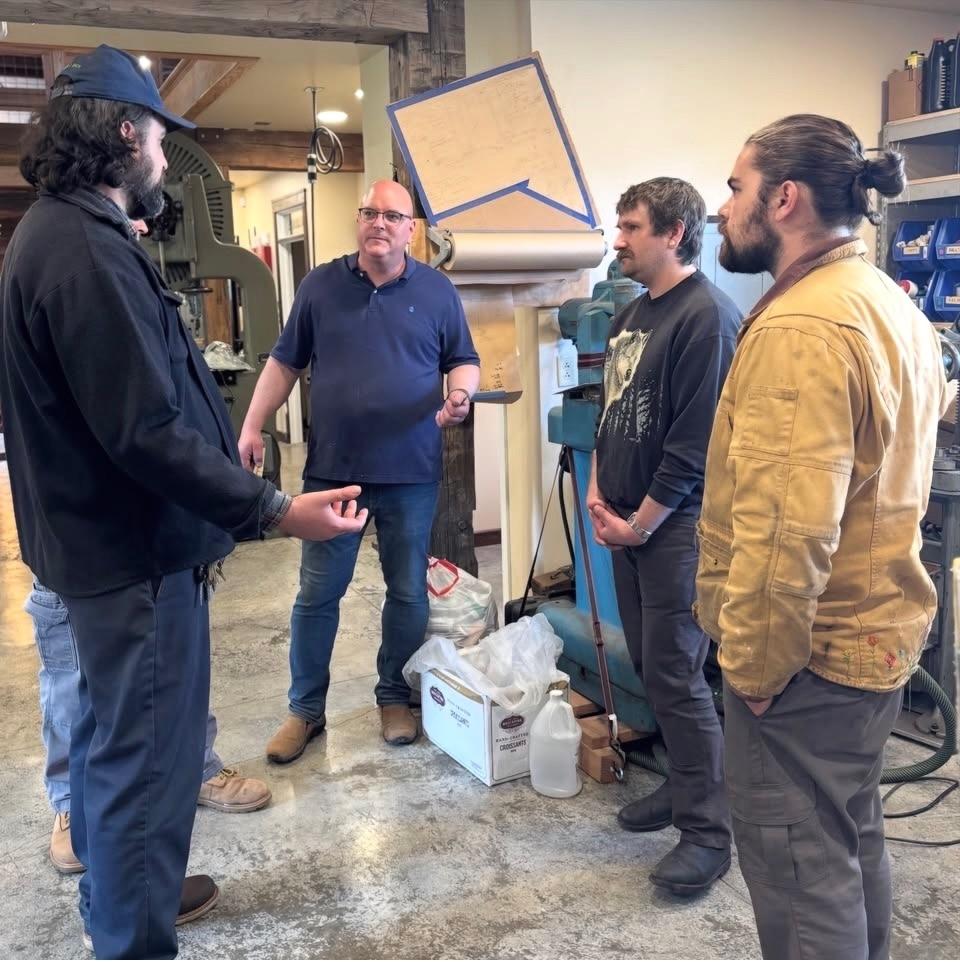
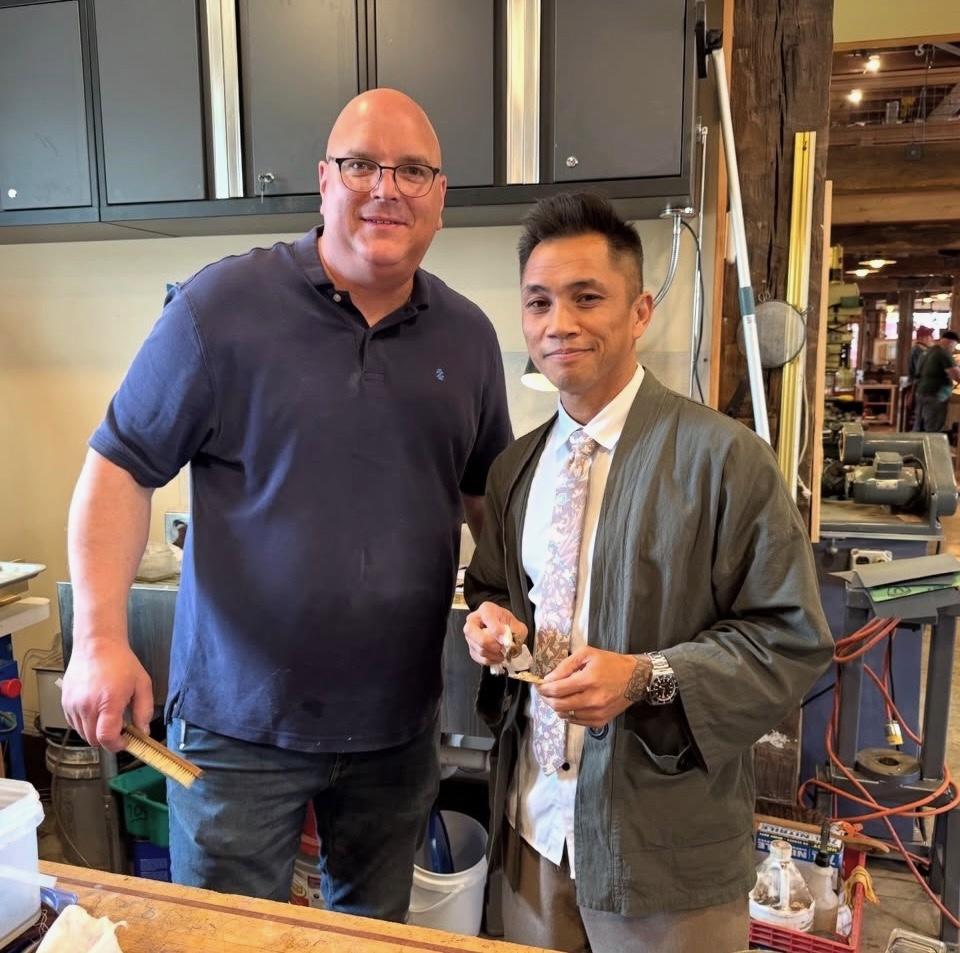
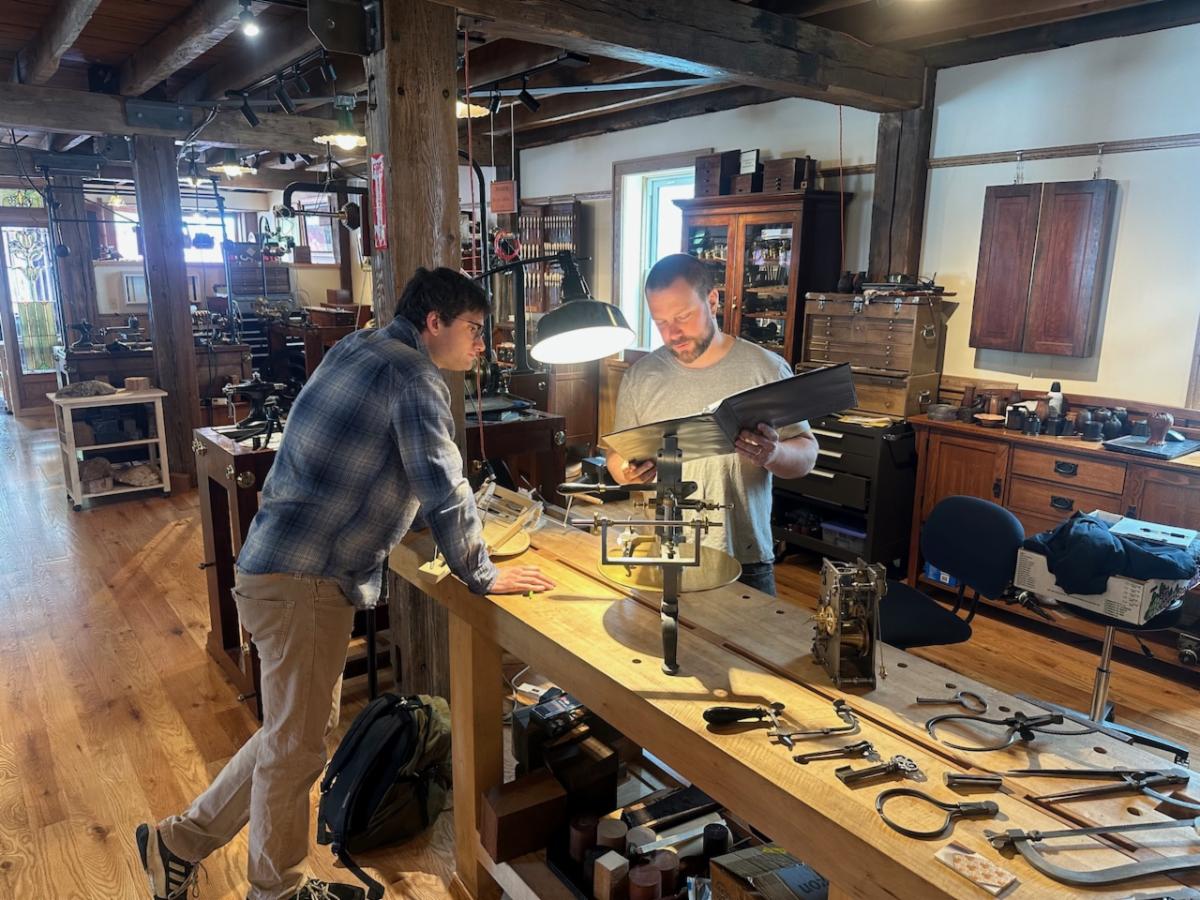
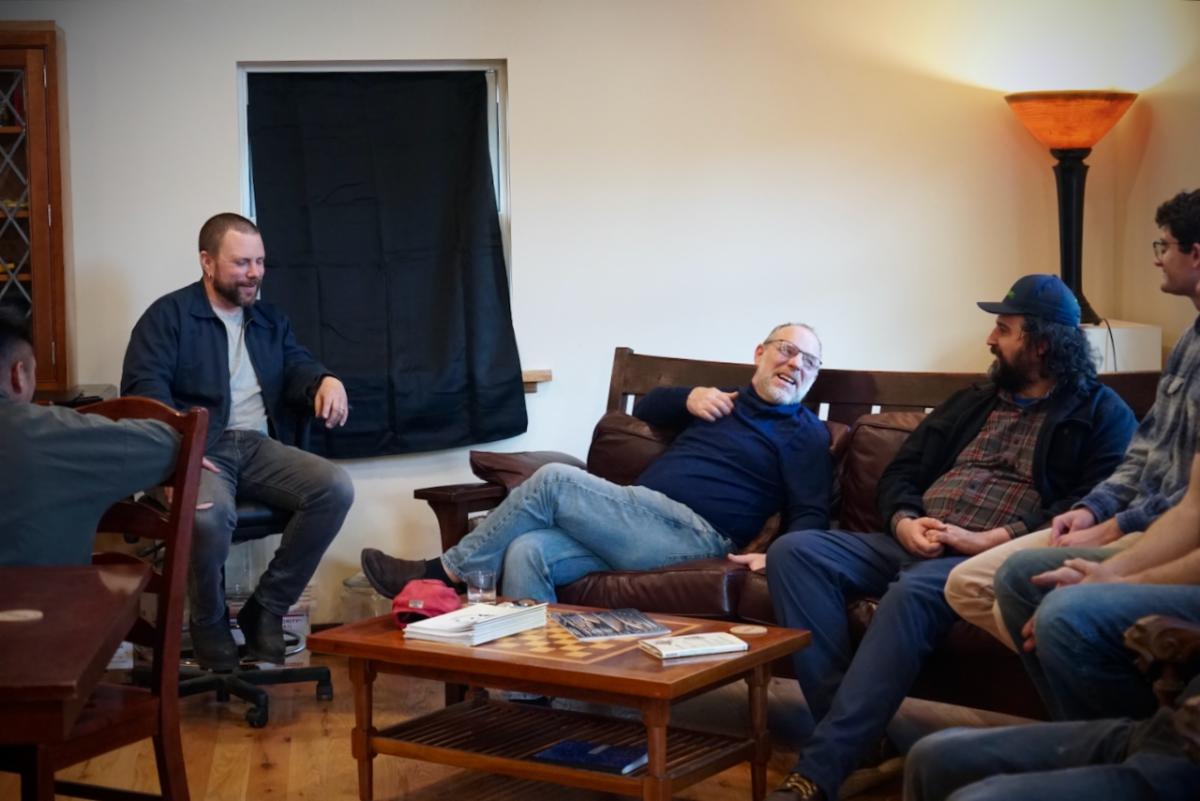
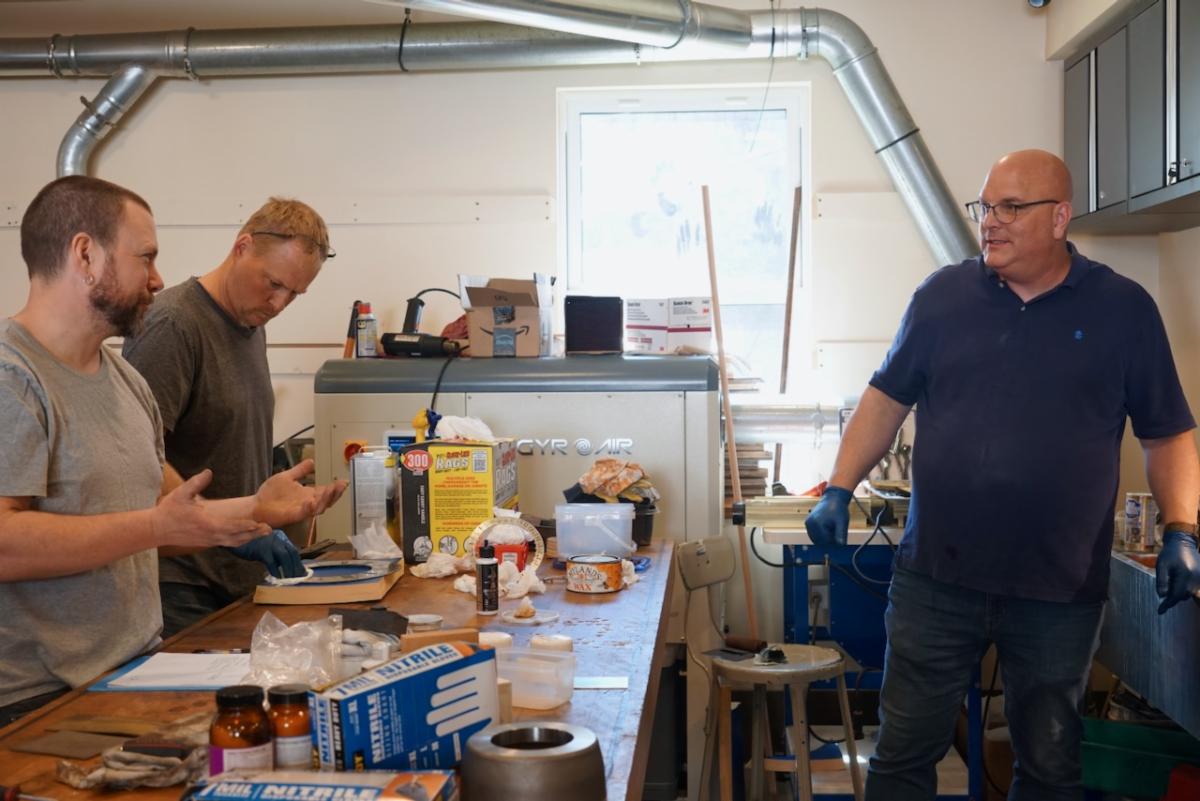
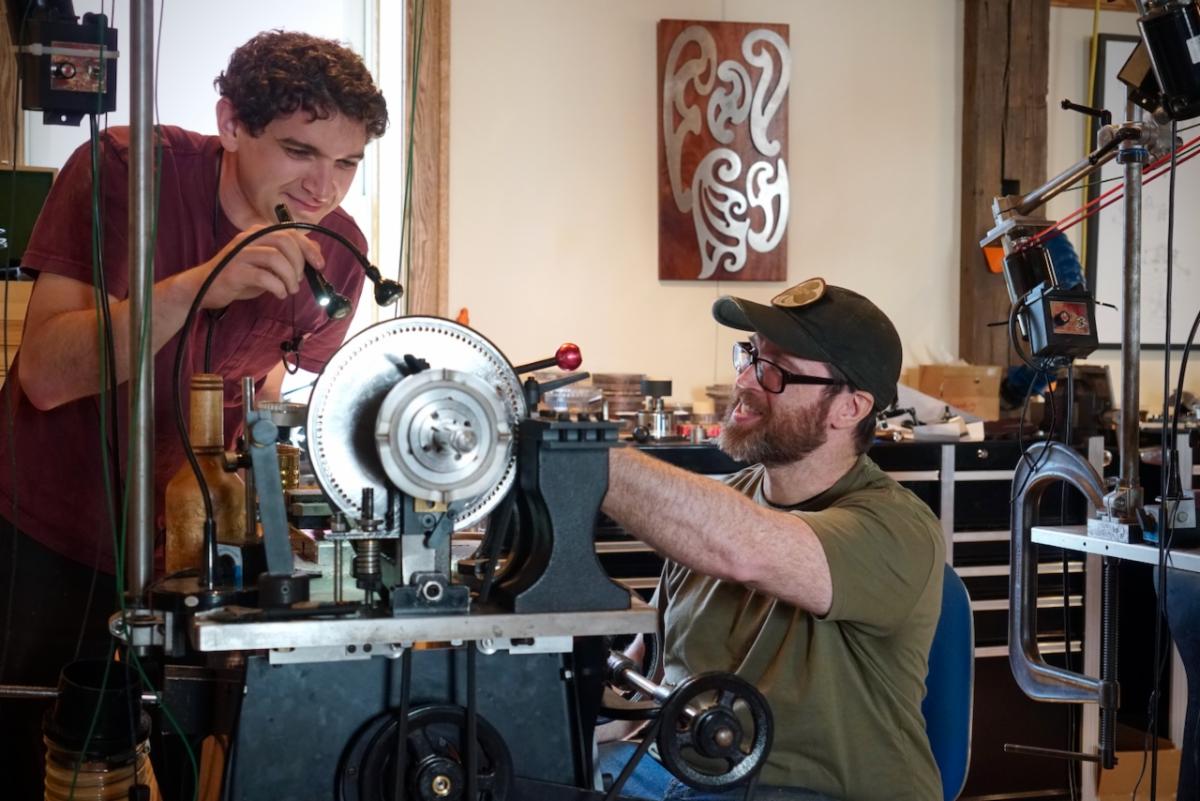
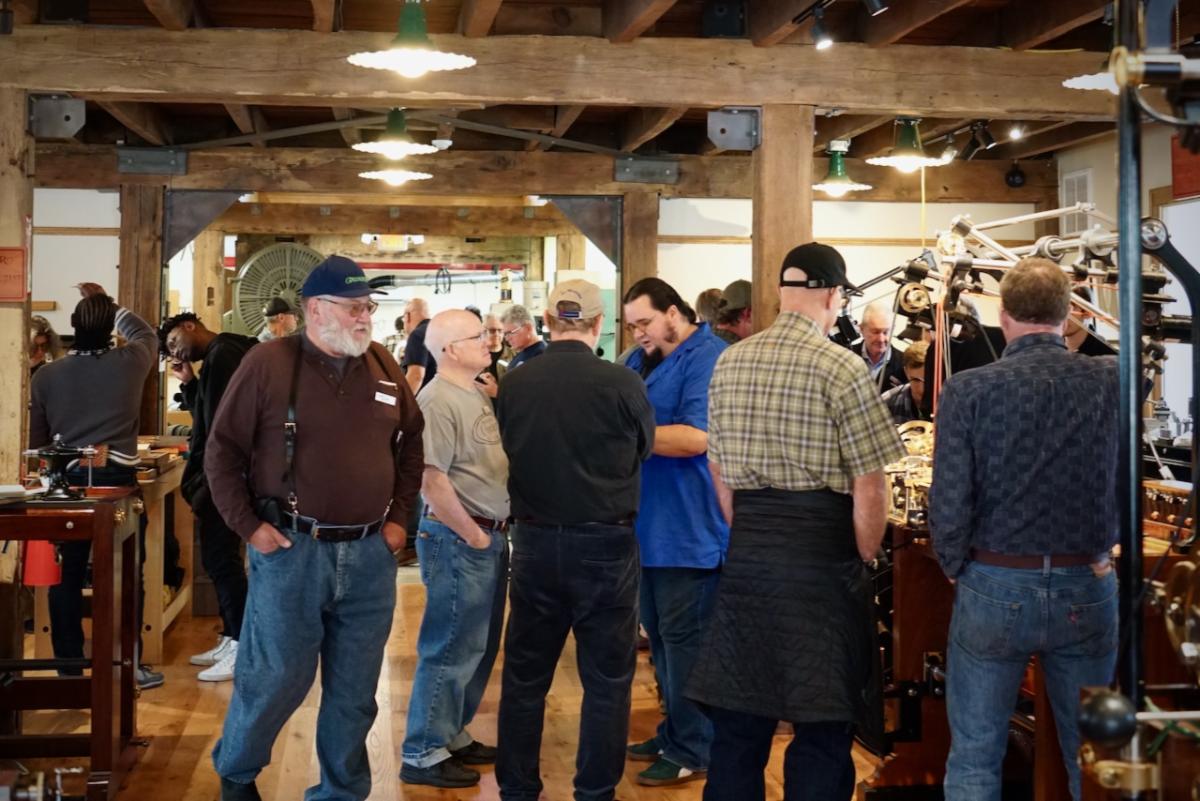
We had a very successful Open Shop Saturday on May 9. There was a steady flow of guests throughout the day including old friends and new faces. As with any Plumier event, the conversations between guests were rich with exchanges of experience, expertise, and enthusiasm covering a full range of interesting subjects. | | | | David with Xenon Mallari, a student who was in town from Texas on a trip visit his wife at Penn State. | | |
For the first time, our Open Shop featured a special guest.
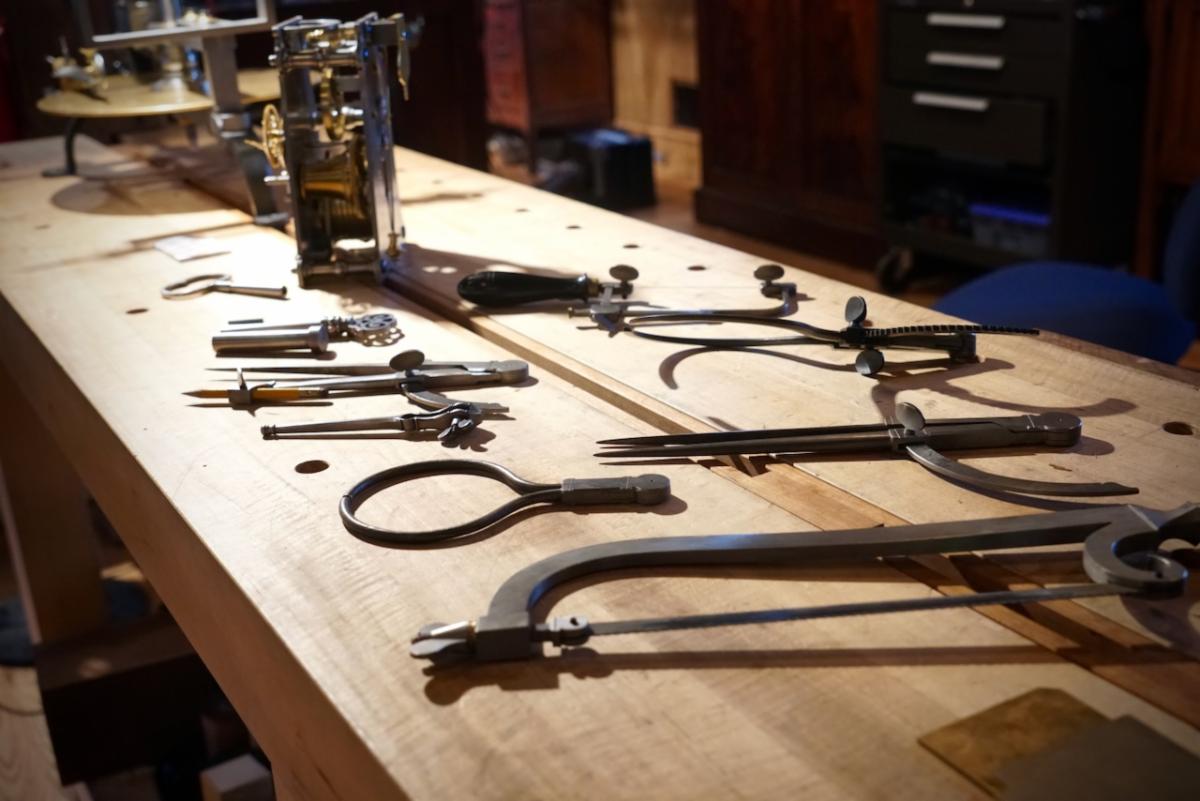
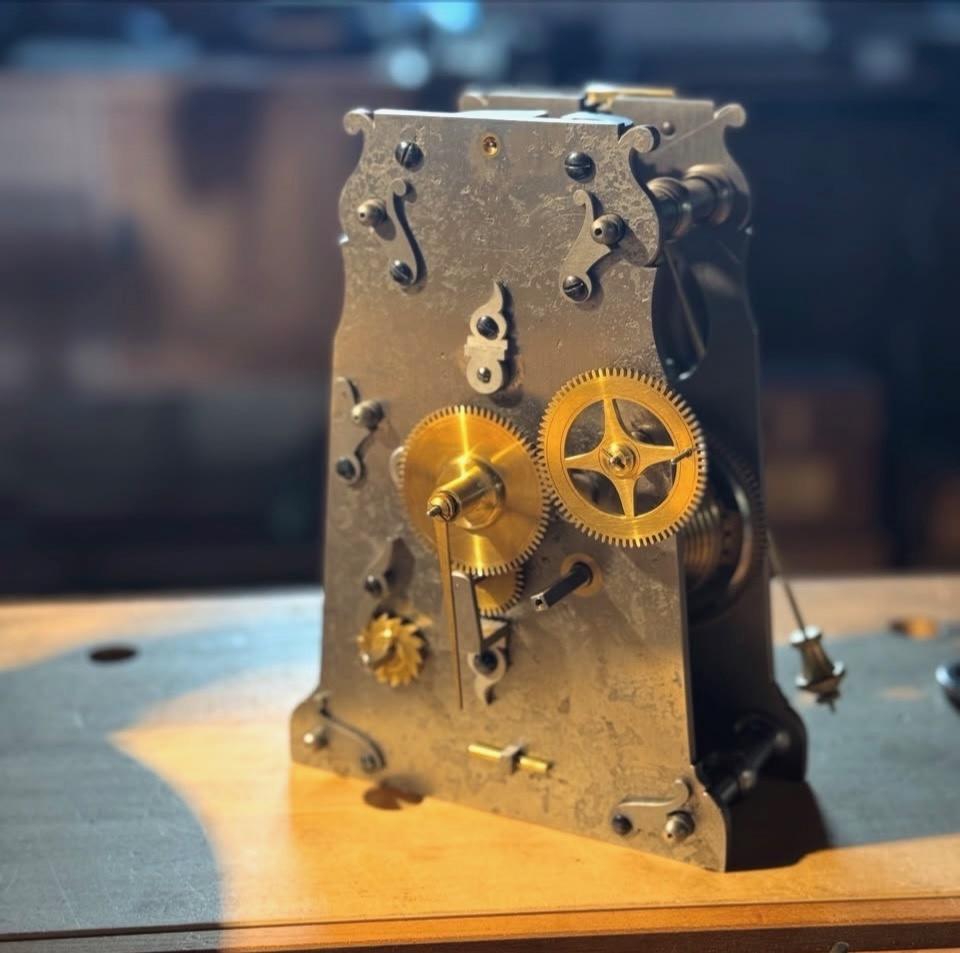
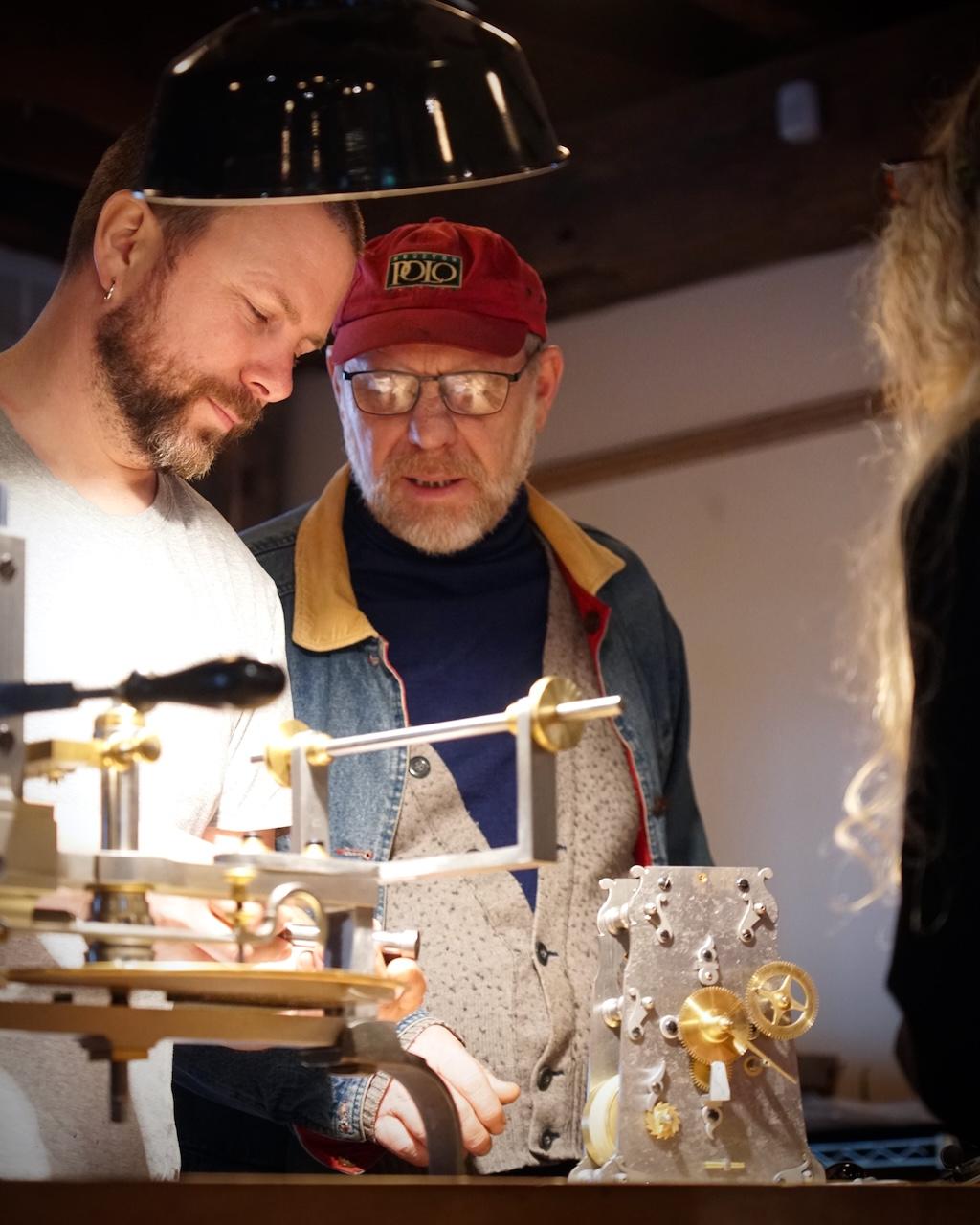
Blacksmith Seth Gould came out to Saltsburg directly from teaching a divider making class at the Center for Metal Arts in Johnstown, PA. He brought with him some of his larger projects from the past few years including his wheel cutting engine and clock movement. It was a treat to see this incredible work up close
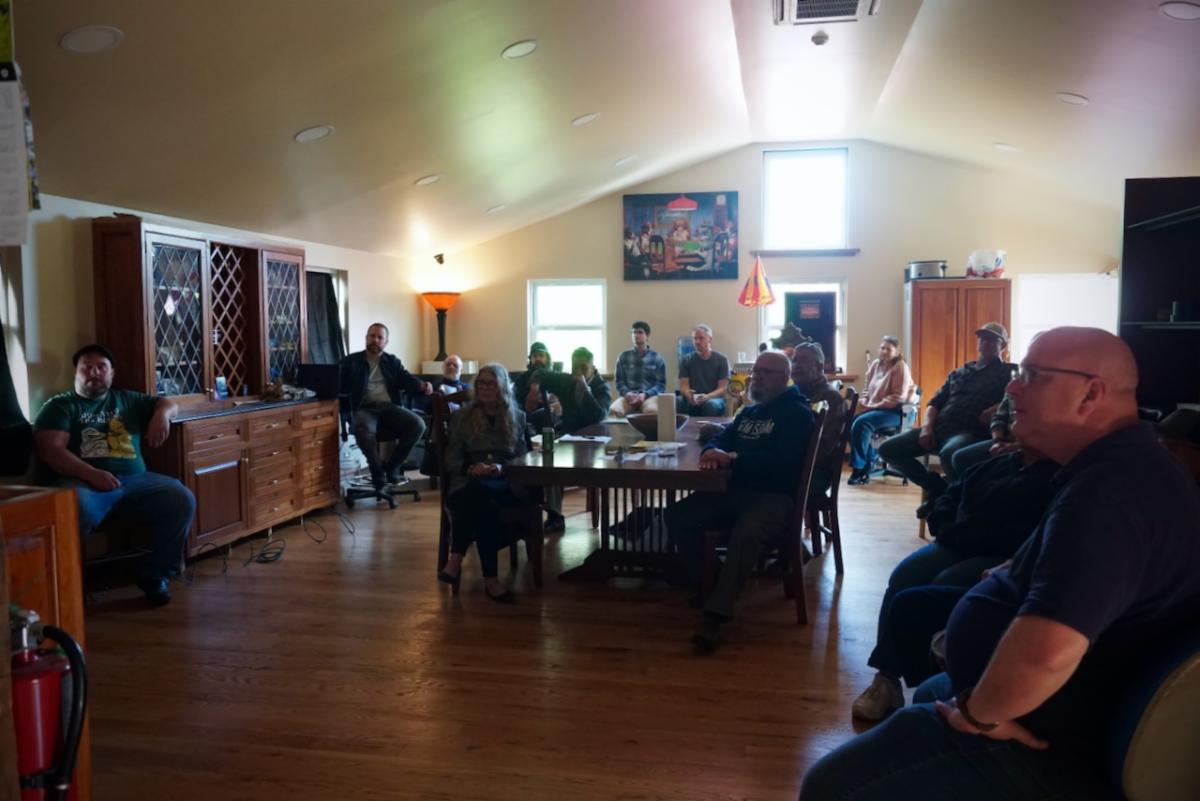
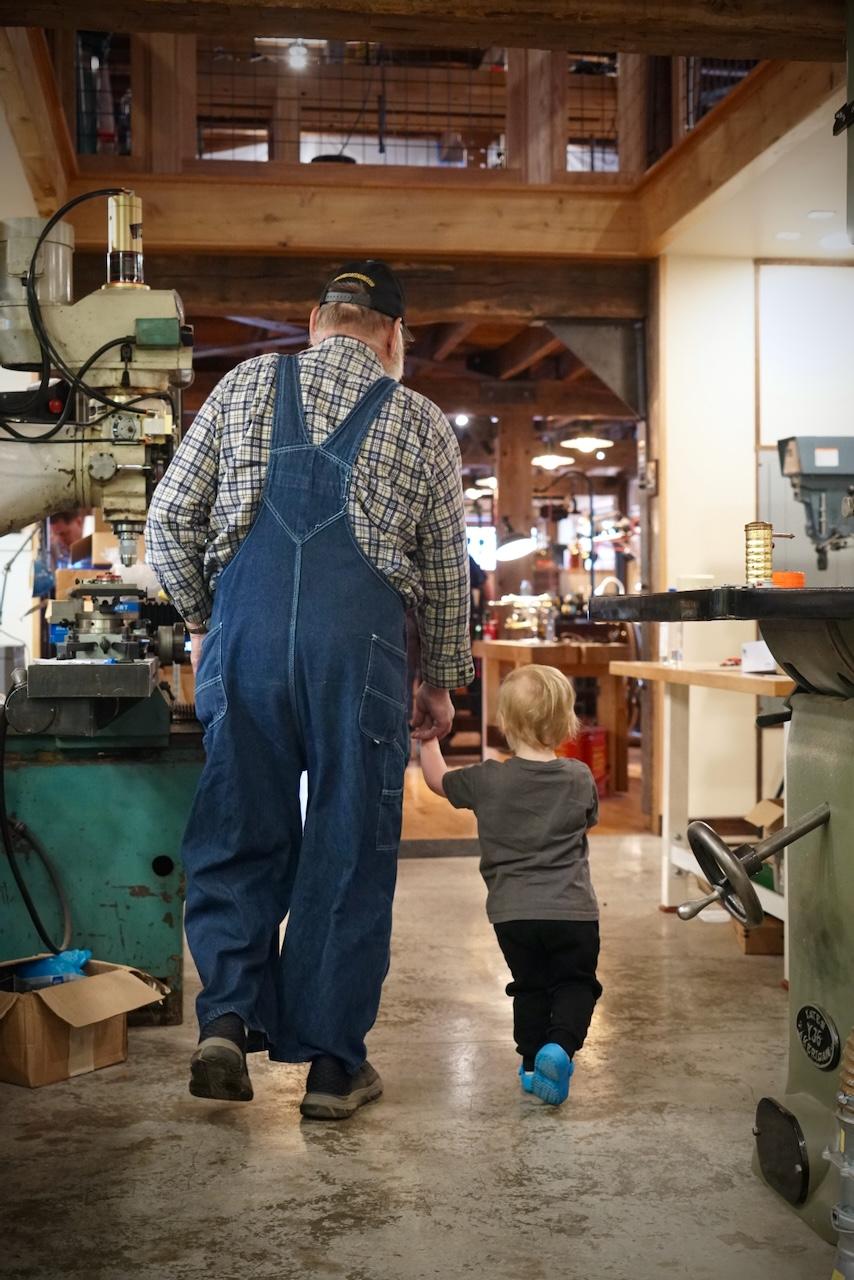
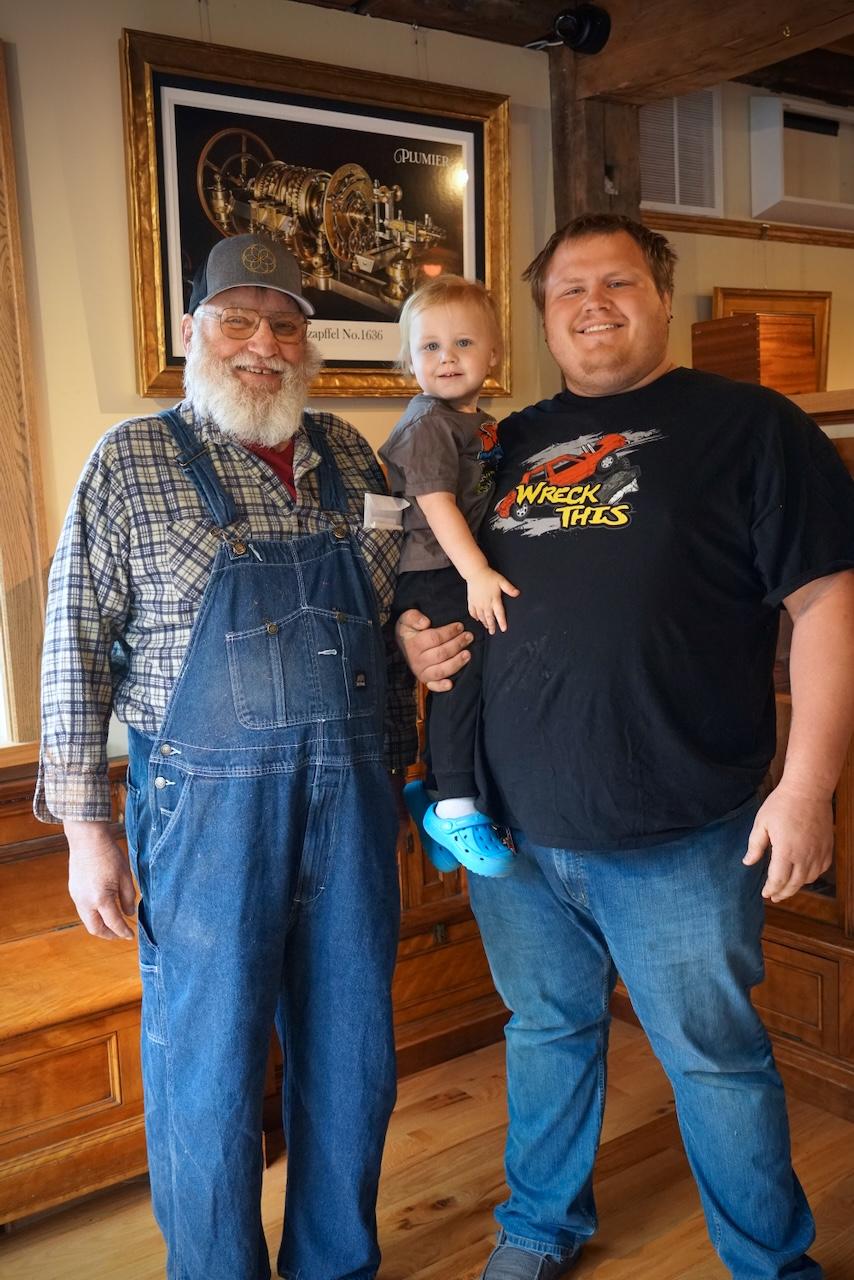
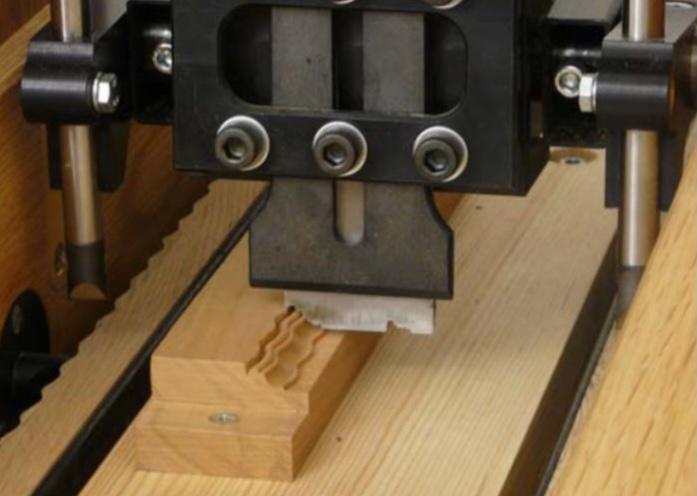
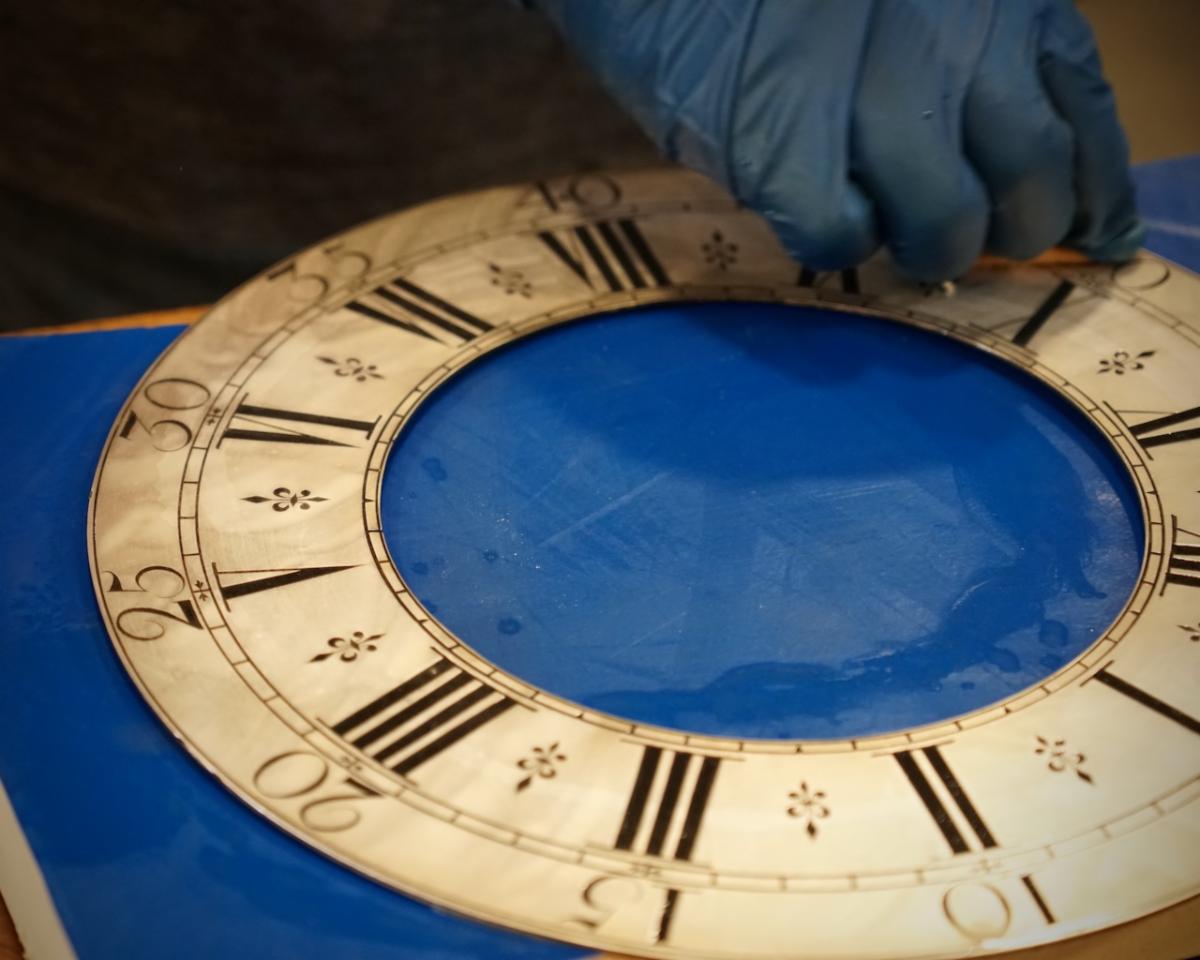
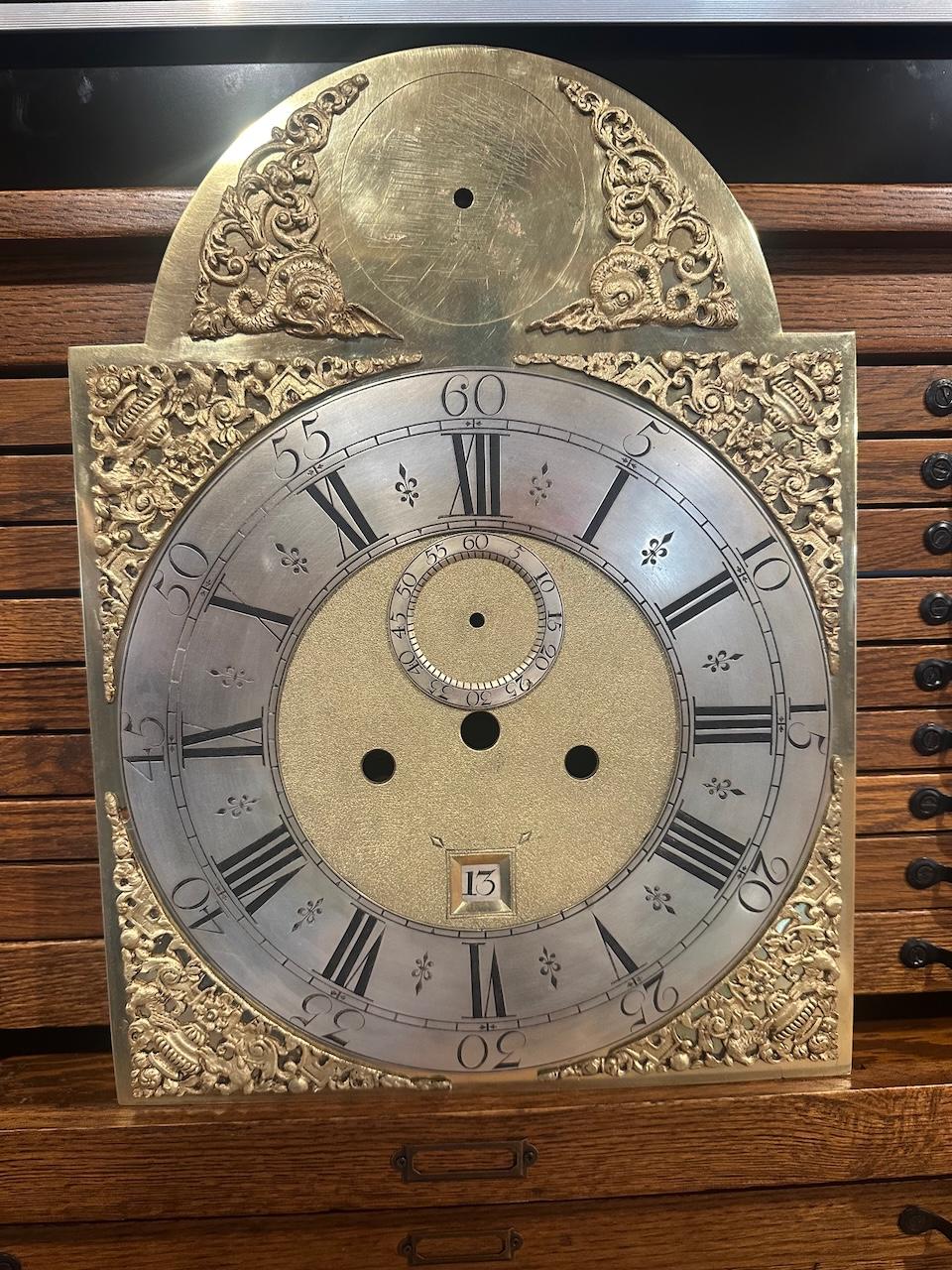
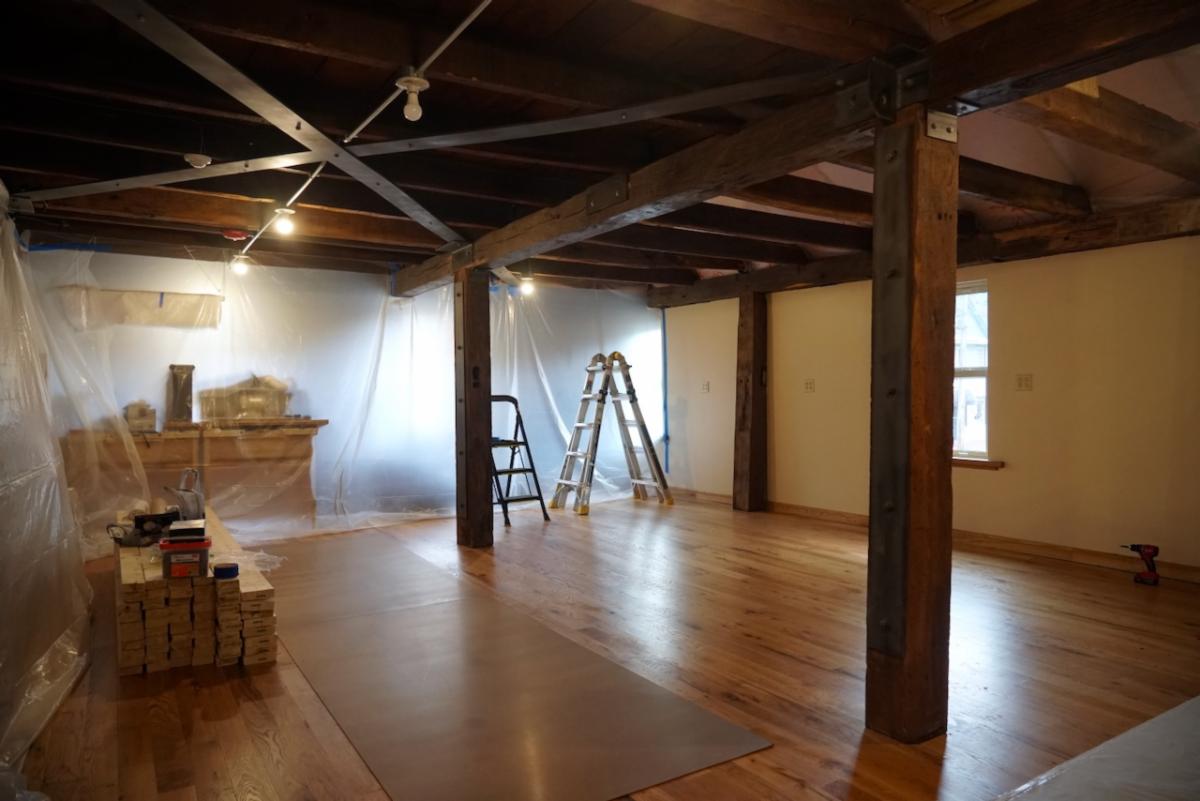
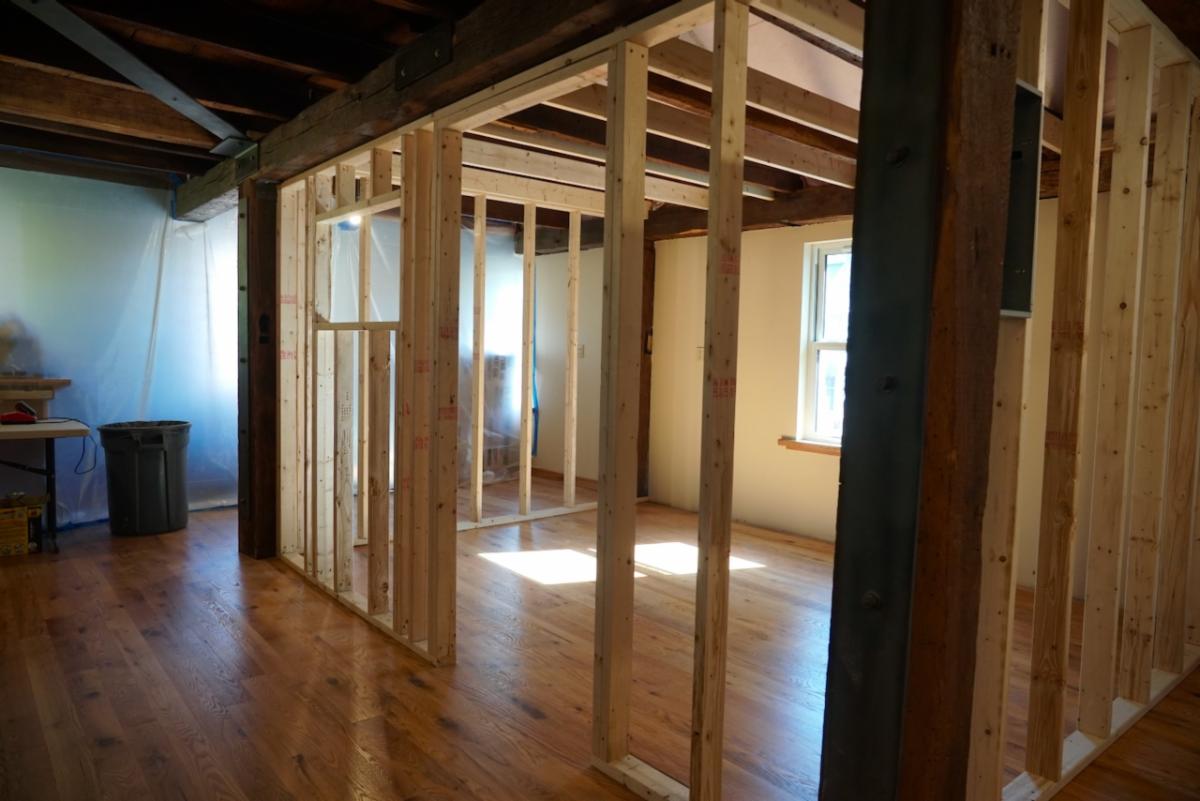
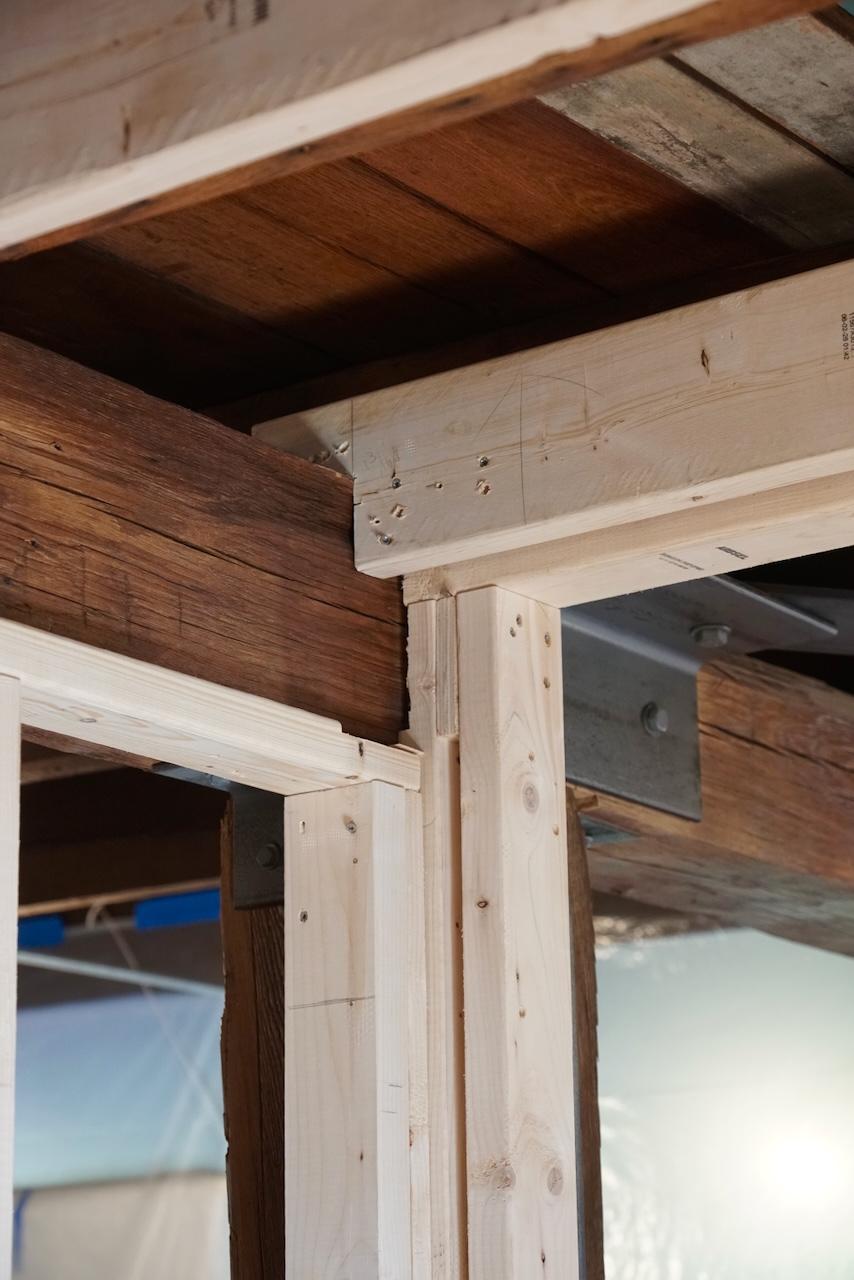
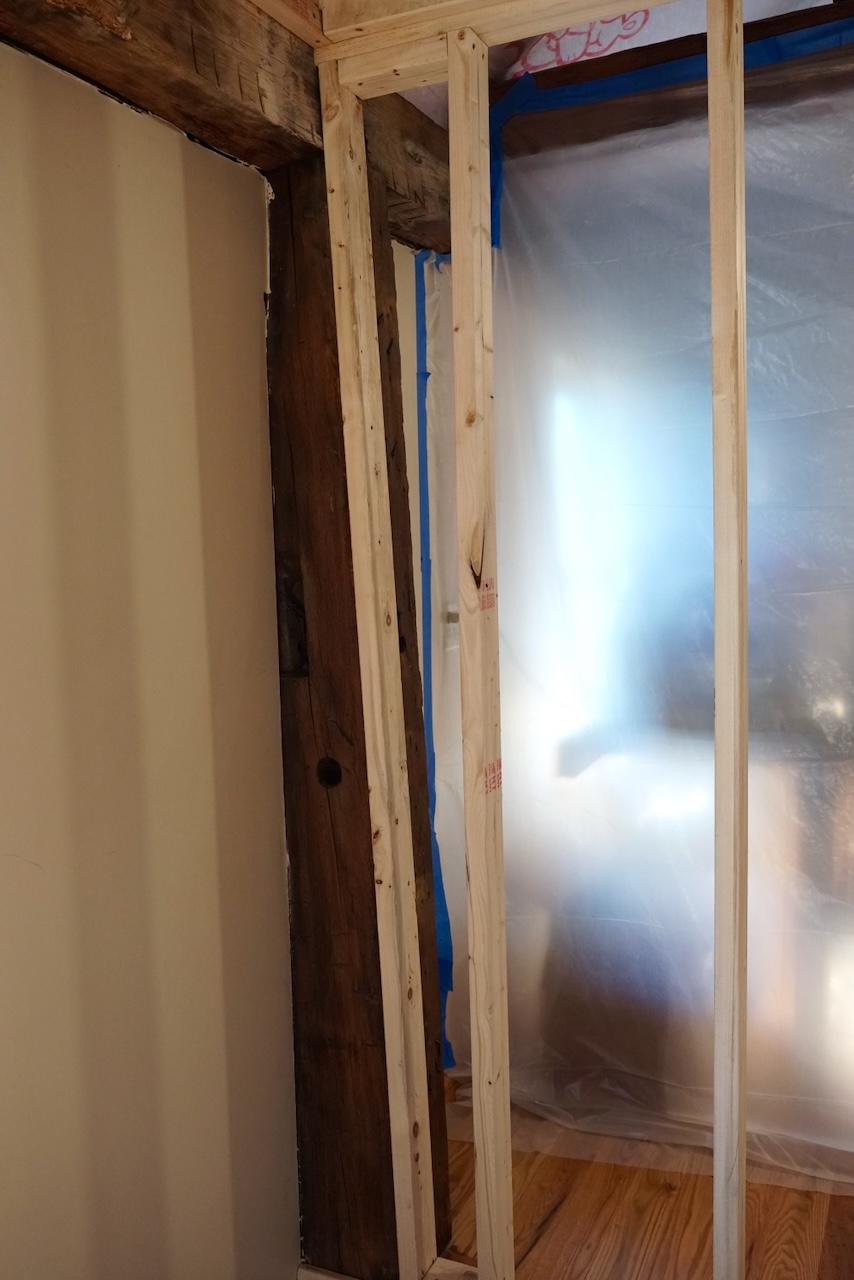
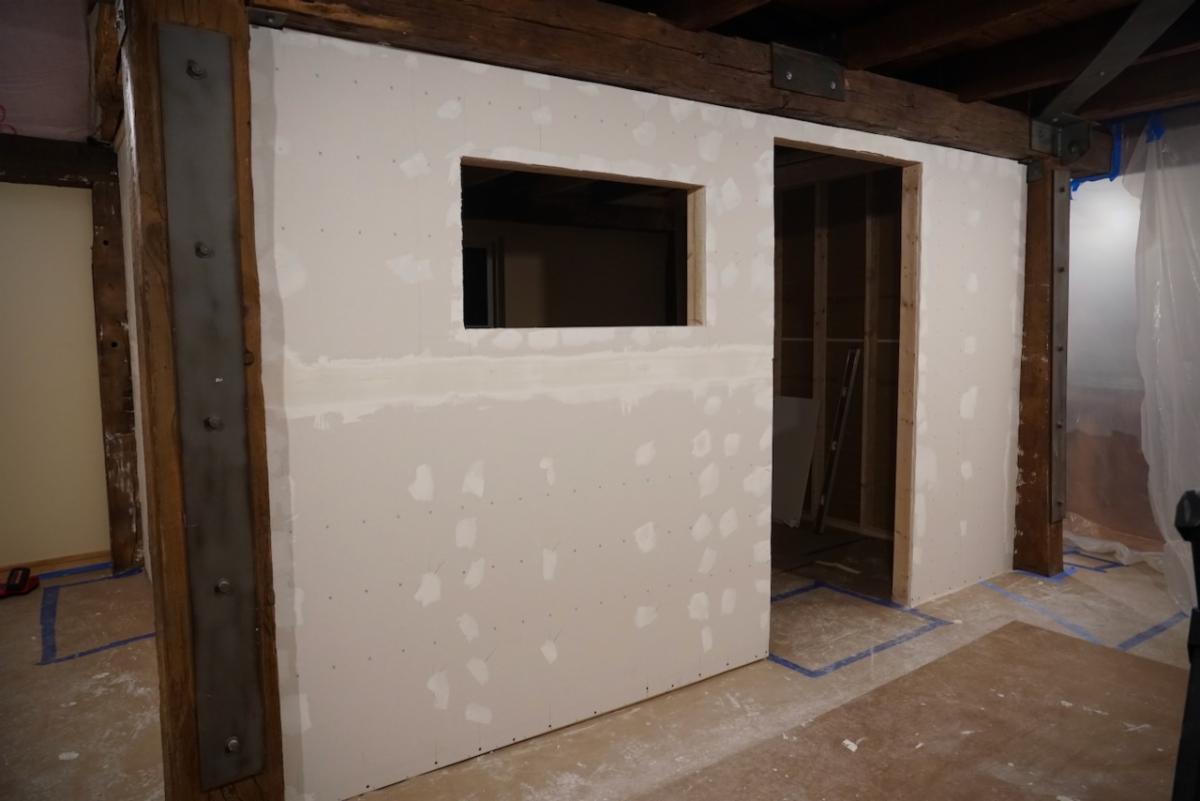
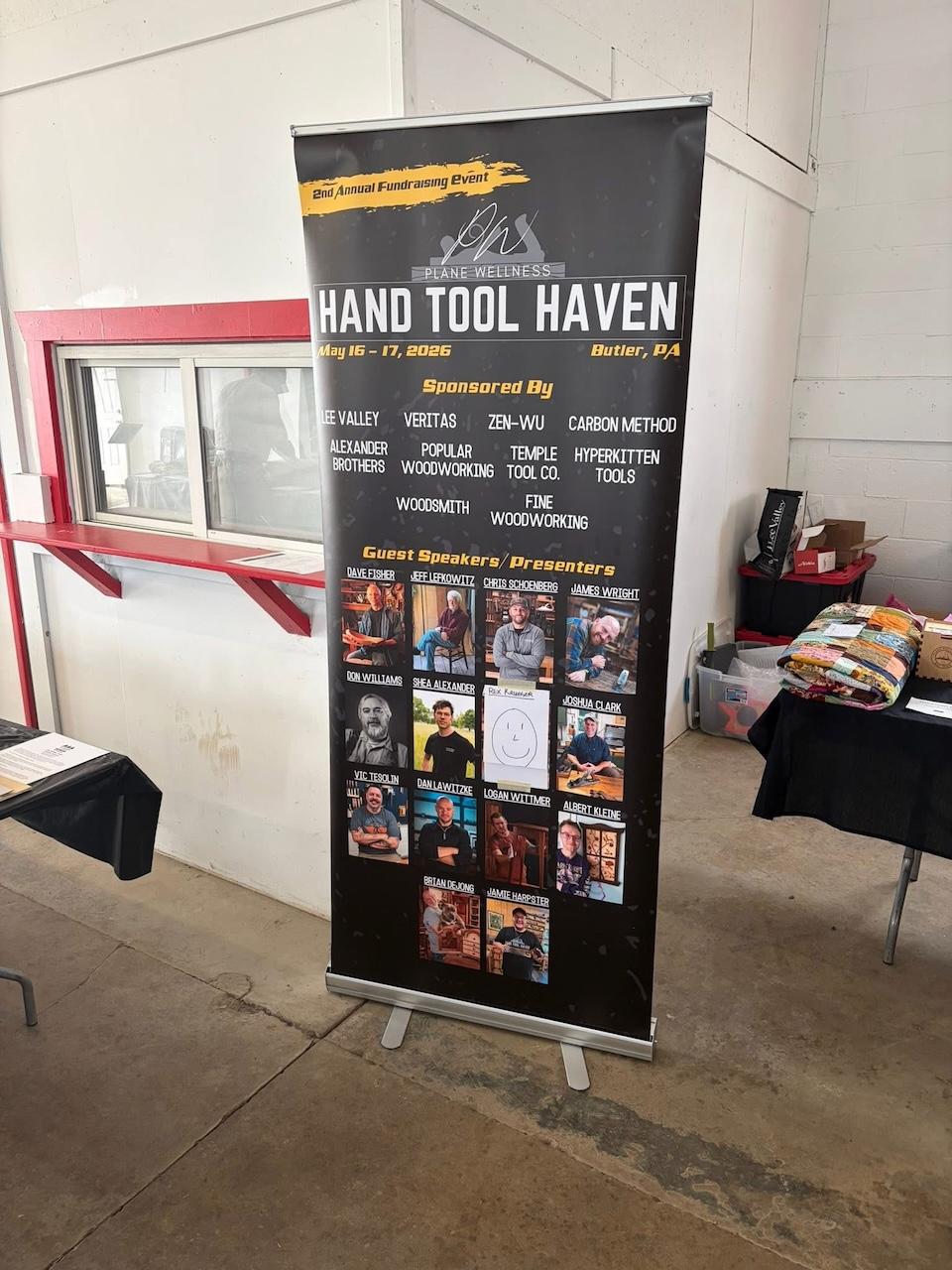
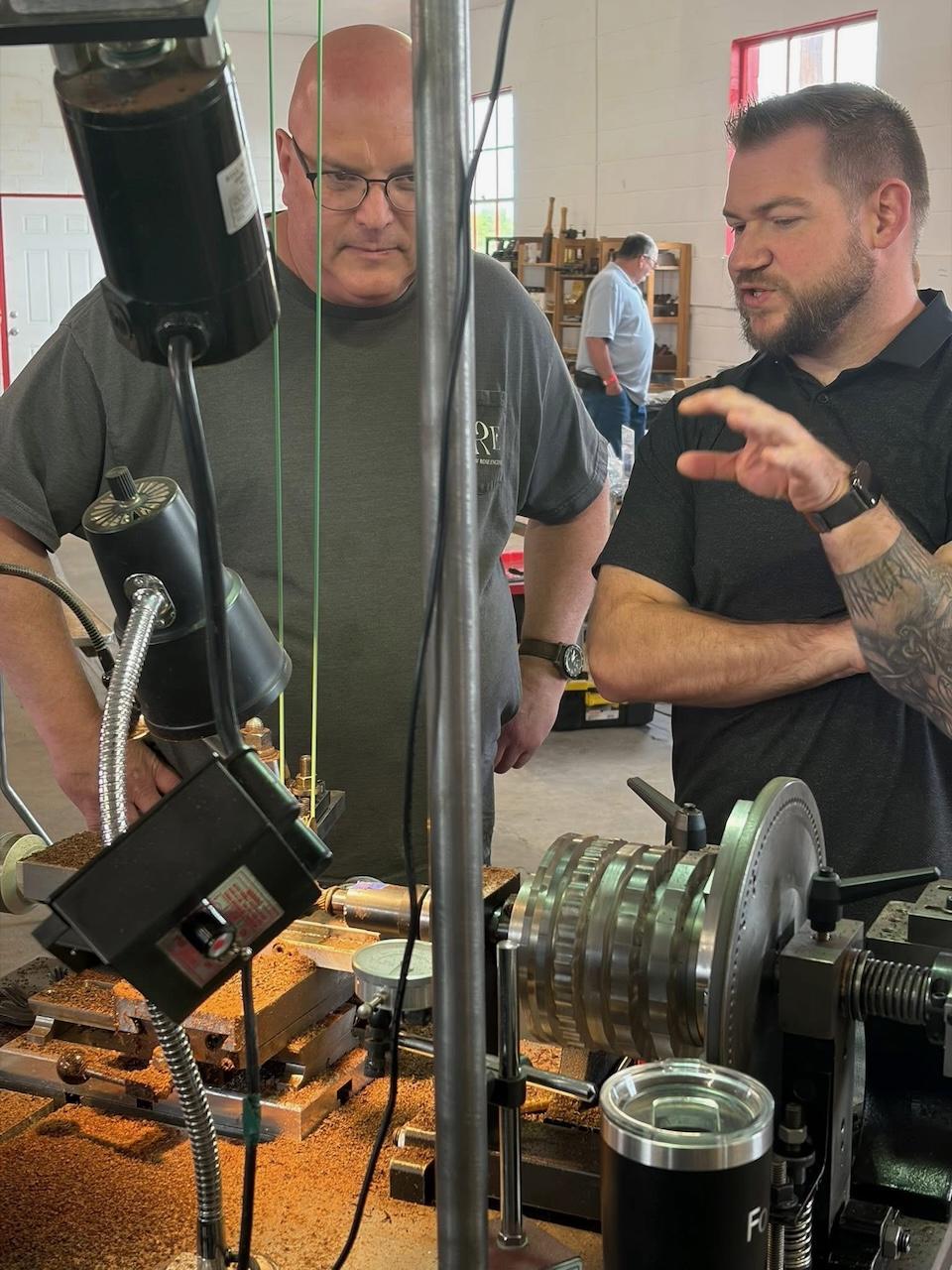
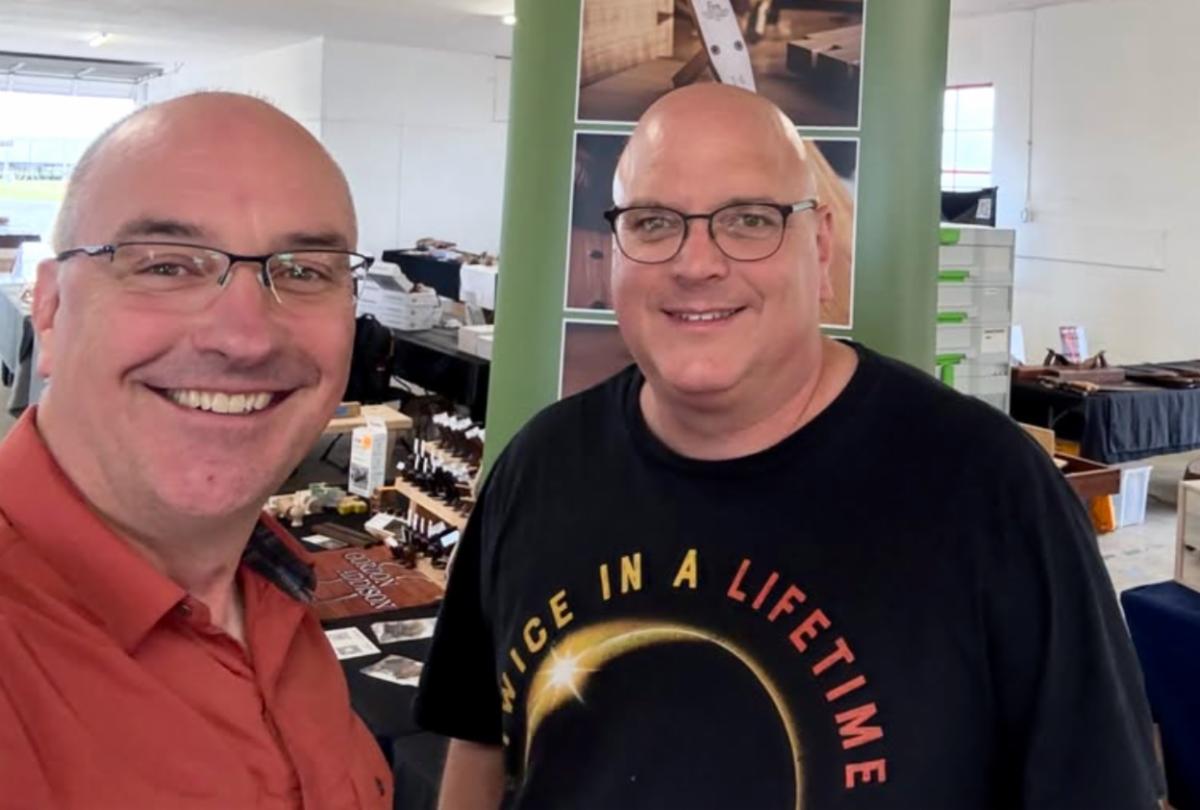
| | | | | Every detail is deliberate and carefully executed. The larger compositions allow for more room to play with contrasting material surfaces. Wrought iron plates left textured from forging contrast with carefully filed components in both iron and brass with sharp details and soft, hand finished grain. The result of this deliberation and care is a consistent, distinct aesthetic language tying all of Seth’s work together. Just seeing this work up close, walking around it to see how the light hits different surfaces, is an invaluable lesson to any craftsperson. And, the maker is there happy to answer any questions. | | We ended the Open Shop with a presentation from Seth on his career in metal the metal arts, covering pivotal projects, turns, and breakthroughs. Each project is a study and a challenge, paving the way for further ambition and exploration in the next project. He took us through the progression of forged locks, to lock boxes, to exquisite puzzle boxes with many stages of mechanical security to hold genuine buried treasure. Skills are collected with discipline and respect for traditional methods. He traveled to Japan twice to study the traditional art of nunome zogan overlay, which has become another defining texture in the dictionary of his work to great effect. But, this is only after years of immersion and patient reps. There was also a theme of collaboration. When sharing his clock project, Seth described the privilege of having a craft community eager to help. A number of horologists in the community, including Nathan Bower who was also here for the Open Shop, were happy to answer his questions and help to ease the learning curve on his first clock movement. Keep up with the clock project and everything else Seth is working on by following him on Instagram. | | It was an engaging presentation that ended with an insightful Q&A conversation with the audience of fellow craftspeople.Thank you to Seth for joining our Open Shop and his generosity in sharing his experience! | | Plumier member Geoff Saver showing his great grandson Carson around the Plumier workshop which he put over 1700 volunteer hours into building | | Geoff with great grandson Carson and grandson "Little" Jeff, Carson's father | | Our next Open Shop Saturday is coming right up on June 13! | We will be joined by special guest Lauri Vaher, a true polymath artist, architect, furniture conservator, and lecturer at Malmstens Linköping University in Sweden. Lauri will present on his exploration of antique rippling molding and what he has learned from making his own machine. | We are looking forward to another great Open Shop—you won’t want to miss it! | | | Member clockmaker Nathan Bower stayed for a few days to continue work on his 18th tall clock movement restoration, which he last came out to work on in February. The job this time was the brass dial. David gave Nathan and Seth a crash course in cold silver plating. Nathan worked the finishing process until an appropriate effect for the period was achieved. He also applied black shellac to the engraved numbers. There is still some work to be done, but the clock looks back to life. | | | Work on our second-floor jewelry and metalworking studio is advancing! | | The Plumier team framed out and began enclosing what will become the dirty room for casting and polishing. Since nothing is square or straight in the old McIlwain Warehouse, the room needed to be framed in place with careful layout and some slow fitting to ensure that the finished room would be square and true. New ceiling joists were run ignoring the existing old beams to create a level plane for a drywall ceiling. | | The room will be fitted with ventilation hoods, a sheet steel floor for fire safety, and custom work benches and tool storage to fit all the stations that we need to into the small space. Enclosing this space is the first major step in transforming the studio into a safe and efficient studio packed with capabilities. The goal is for a resident or student to have anything they could need in pursuit of ambitious projects. The space will also be an adaptable classroom for all manner of instruction. We cannot wait to share what we already have planned! | | To keep the cost of the studio down while sparing no expense in quality of equipment, and to fully customize the space to our needs, the Plumier team will be doing as much of the work ourselves as possible with the help of our volunteers. Like the rest of the building project, this will be a community effort. You can help by becoming a member or by making a targeted donation through our building project GoFundMe. If you want to donate a tool you think we may need, reach out to info@plumier.org. | | The imperative is to keep this project moving so students can start making beautiful objects as soon as possible! | | Plumier joined the second annual Hand Tool Haven in Butler, PA. The weekend woodworking convention is a fundraiser for Plane Wellness, a nonprofit that offers free woodworking instruction to people with physical disabilities and mental health challenges. David brought a rose engine to introduce attendees to complex turning. The event had an impressive lineup of guest presenters and vendors, drawing a strong crowd of enthusiasts of all things woodworking. Check out the Plane Wellness website for more information about their work and signup for their newsletter or follow them on Instagram so you don’t miss announcements on next year’s Hand Tool Haven. | David with his friend Chris Kuehn of Sterling Tool Works, whose French curves are on the wall of the Plumier shop in the next picture | | | |
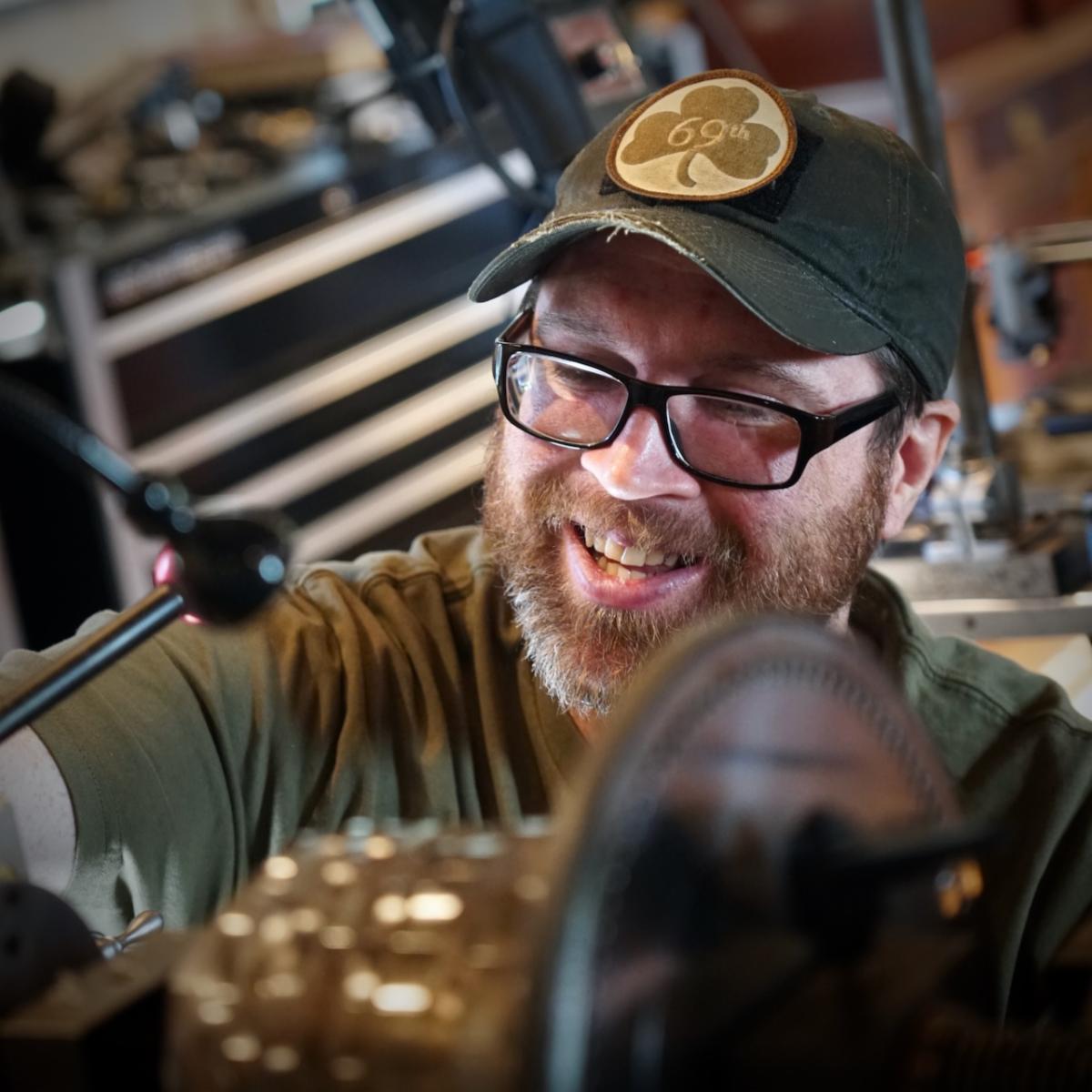
Plumier member Joe Acierno came out for a week this month! Joe has been a close member of the Plumier community since our very first Fall Gathering. He spent the week doing some engine turning and getting inspiration and mechanical design insight for his own custom tooling. It was a great time having Joe in the shop again and we look forward to his next visit. | | | |
|
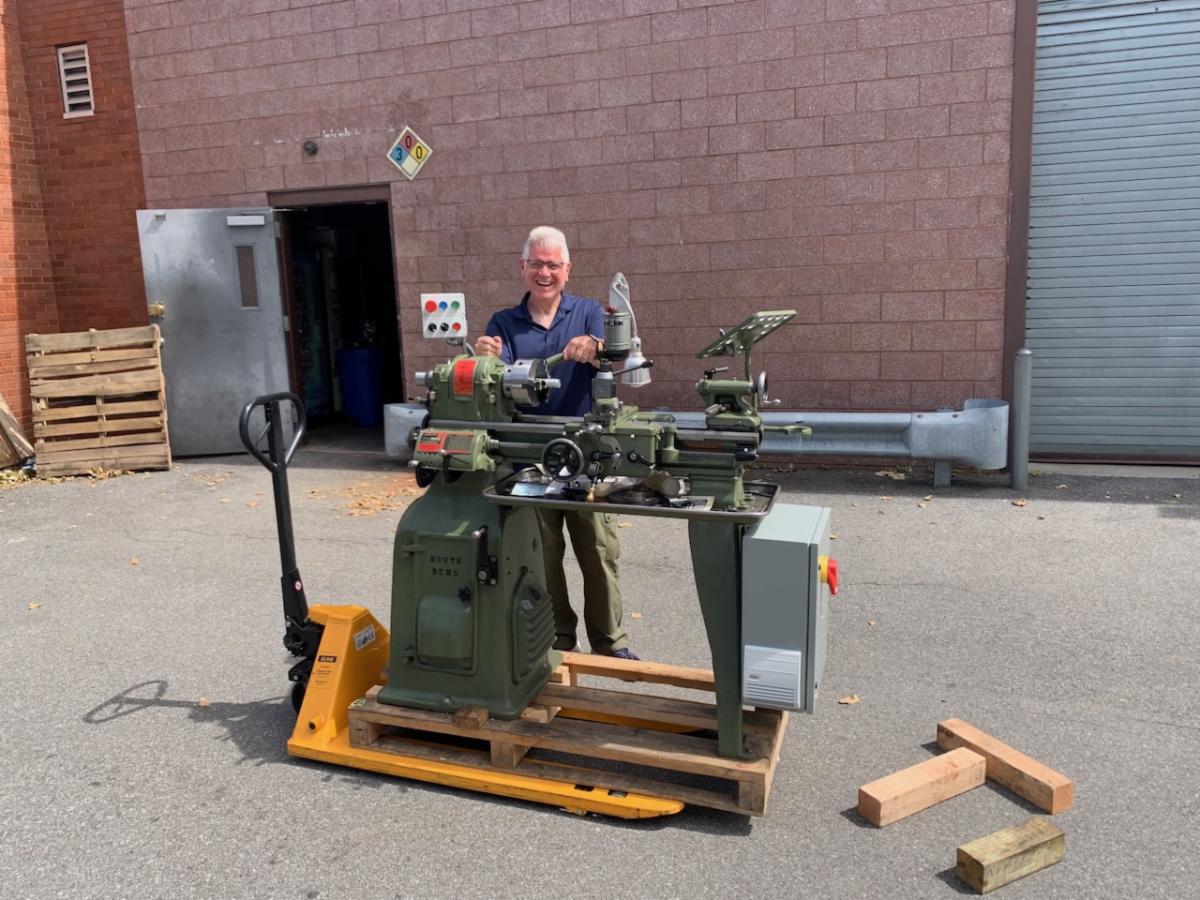
Another happy customer to the Plumier Exchange! Plumier member and board member Anthony Nappi purchased this beautiful South Bend Heavy 10 through the Plumier Exchange from a seller who has sold and donated an equal number of machines through the Exchange. The seller was determined to find a suitable home for the lathe that he had so lovingly restored. Plumier made the connection and earned a commission. Anyone who has experience in the world of machinery buying and selling knows that it is rare to see smiles all around!
The Plumier Exchange puts tools in the hands of craftspeople who will use them while benefiting our mission of craft education. If you would like to sell or donate a machine through the Plumier Exchange, email info@plumier.org. Members in search of a particular machine can also let us know and we will keep an eye out.
|
| | |
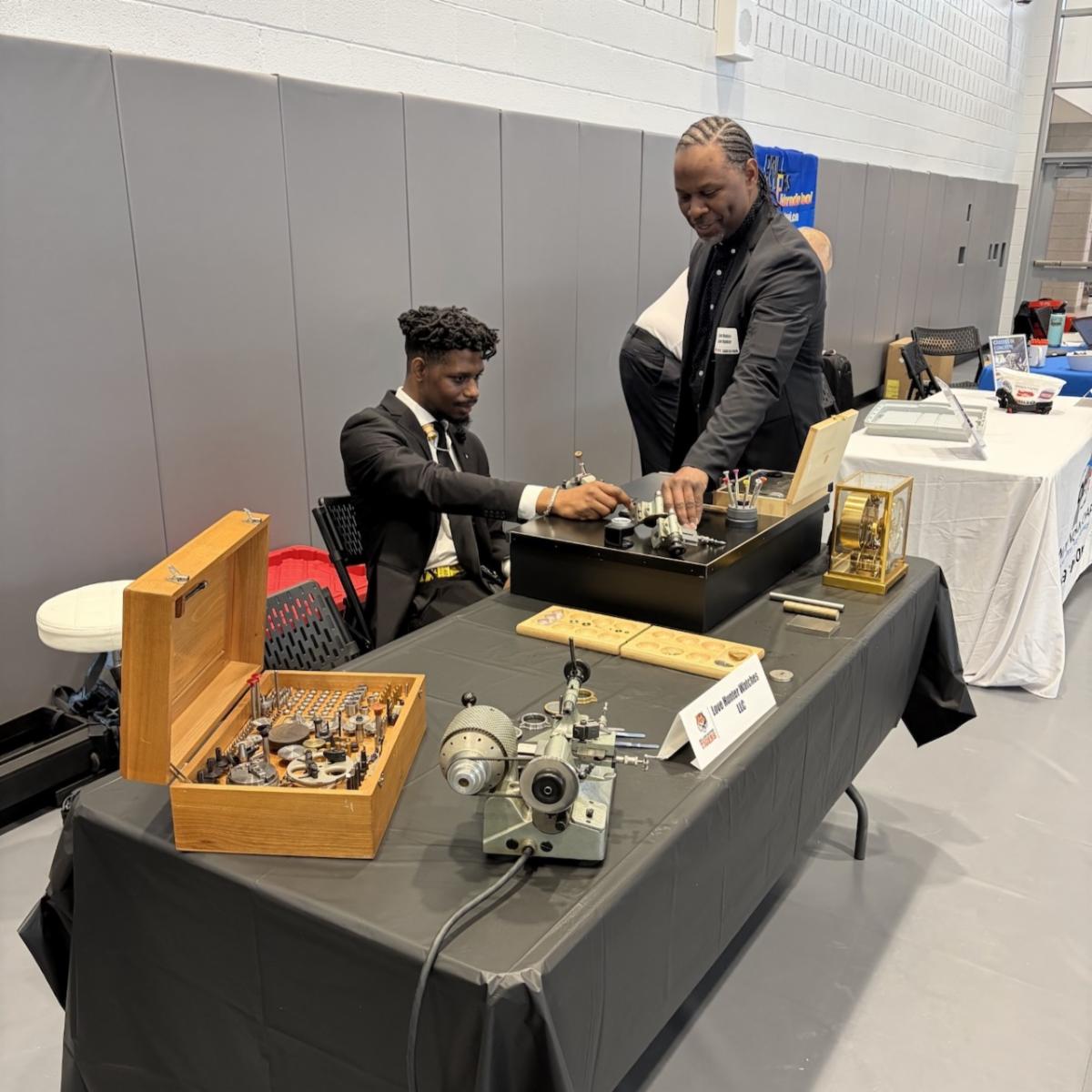
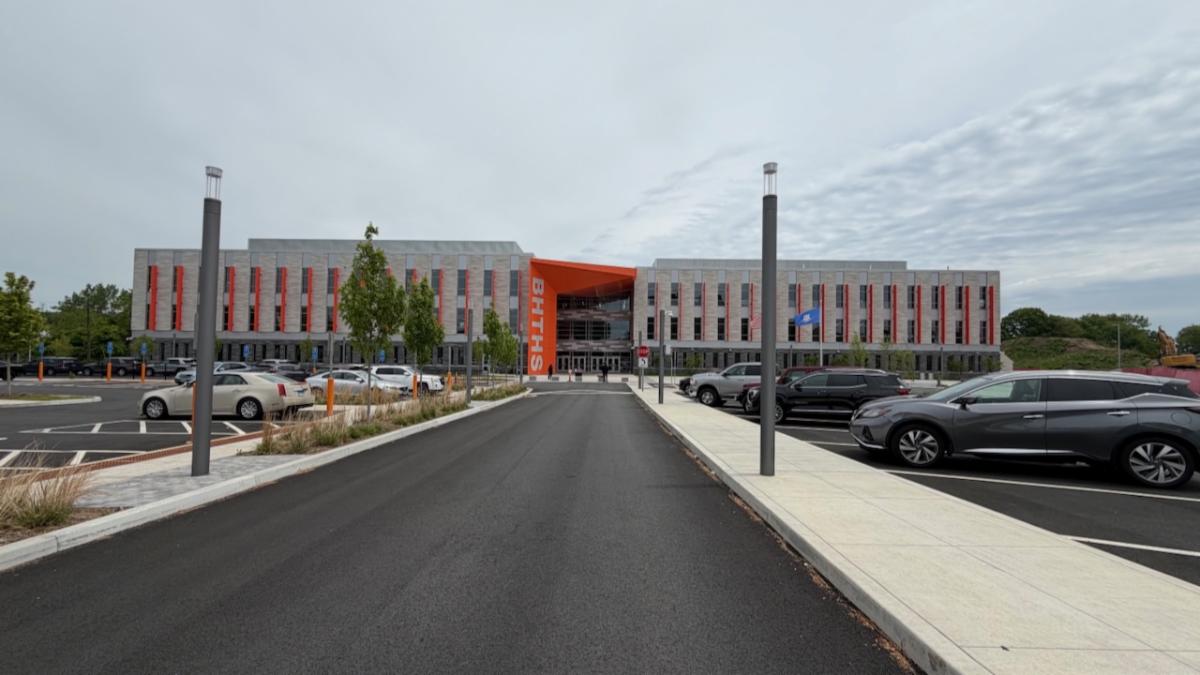
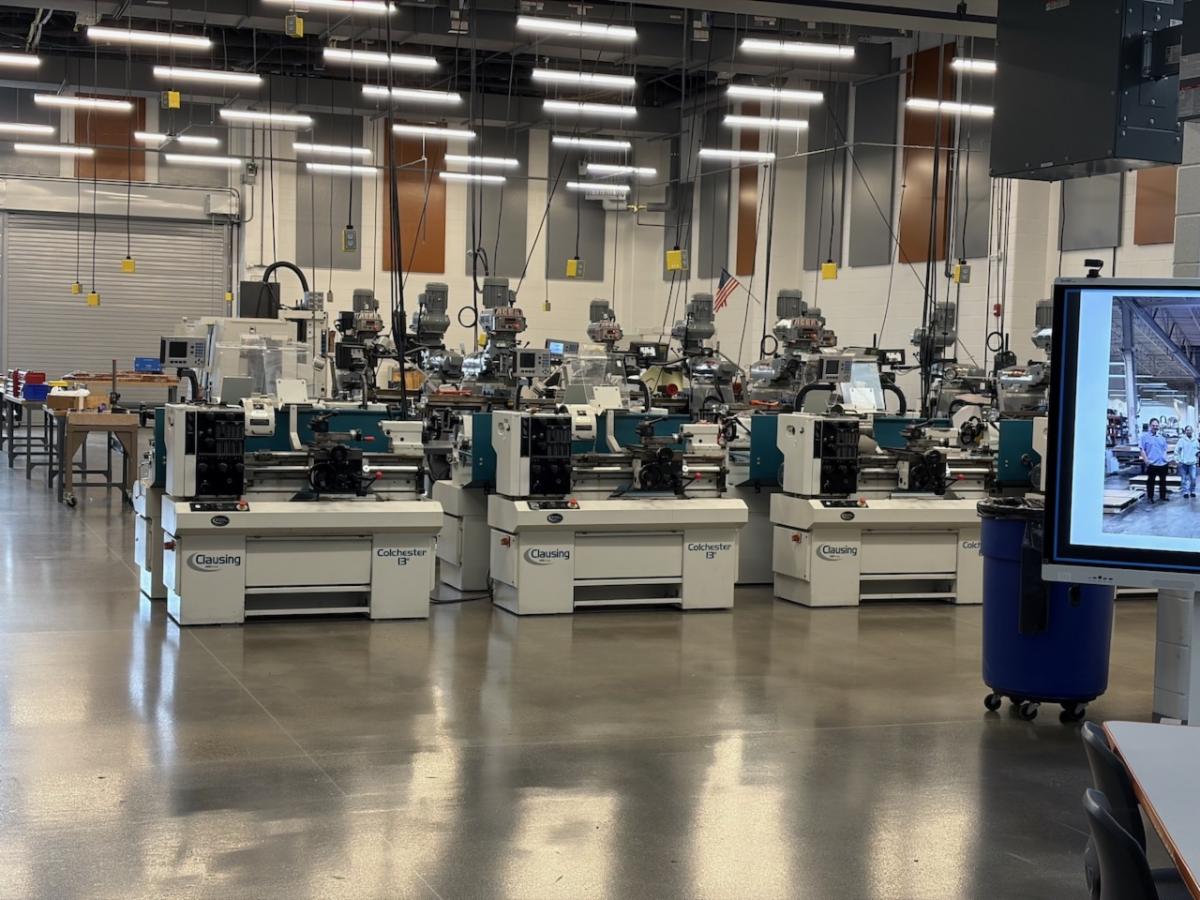
The father-son independent watchmaking team of Love and Mic Hunter set up a table for the the job fair at Bullard-Havens Technical High School in Bridgeport, CT. They introduced students to the world of micro-machining, bringing along the Boley F1 watchmaker’s lathe lent by Plumier to demonstrate with. The goal was to introduce the students to the excellent career opportunities in watchmaking as well as expose them to the possibilities in a vocation that they may never have considered despite having applicable skillsets. | Bullard-Havens Technical High School has a student body of about 800 students grade 9-12 as well as adult education programs. Their mission is to provide these students with a well-rounded education plus career programs in 13 trades that are in high demand in Connecticut. These trades range from architecture and masonry to cosmetology and health technology. They have a precision machining program that boasts an impressive workshop and teaches both manual and CNC machining. Graduating students earn 1500 hours towards an apprenticeship. It is great to see that a city synonymous with American machining, which has struggled like most of the country’s former industrial hubs, has such an impressive program for the next generation of machinists! | From the job fair, Love Hunter Watches is taking on three manufacturing students for the summer who will be paid to work and learn through the Workplace Summer Youth Program. These students may also be able to stay employed during the school year. This is an incredible opportunity for these students, and a great potential benefit to the American watch making industry in desperate need of the next generation of skilled watchmakers. | In case you missed it, Love and Mic were the subjects of a fantastic article in the New York Times last month. Email info@plumier.com for a gift link if you are not a Times subscriber and would like to read the article. | | | Plumier member John Hurn successfully defended his thesis and completed his student show this month, which were the last hurdles in earning his Masters of Fine Arts from Southern Illinois University, Edwardsville. | | |
John, who turns 75 in June, began this journey about five years ago with introductory metal working classes at the university. He was quickly hooked, and, with some encouragement from a few great teachers, John decided to pursue his MFA with a concentration in metals. This “non-traditional student” was hungry to learn, taking on a full course load of required subjects covering the range of art education while also taking as many metal working and related classes as he could. He even became an instructor for the entry level metal working course. While it is certainly extraordinary for anyone to earn a masters degree in their seventies, this followed something of a trend for John. After retiring from a career in computer consulting and corporate IT, John decided to take his creative pursuits more seriously. Woodworking was a natural life-long craft for John, who came of age working at a lumber yard in Olney, Illinois, which had been the family business since 1877. At the time, the lumber yard had a full window and door shop where John learned basic woodworking skills and how to assemble and glaze wooden window sashes. Pursuing woodworking further was the obvious best use of his time in retirement, but the casual approach of a hobbyist was not for John. Instead he chose a more focused, rigorous, and academic route. In 2010, John went to school for wood finishing and conservation, falling under the mentorship of the prominent woodworker and conservator Don Williams. John ran a wood finishing shop for about a decade before fate came with a new
creative hook that took him in a different direction.
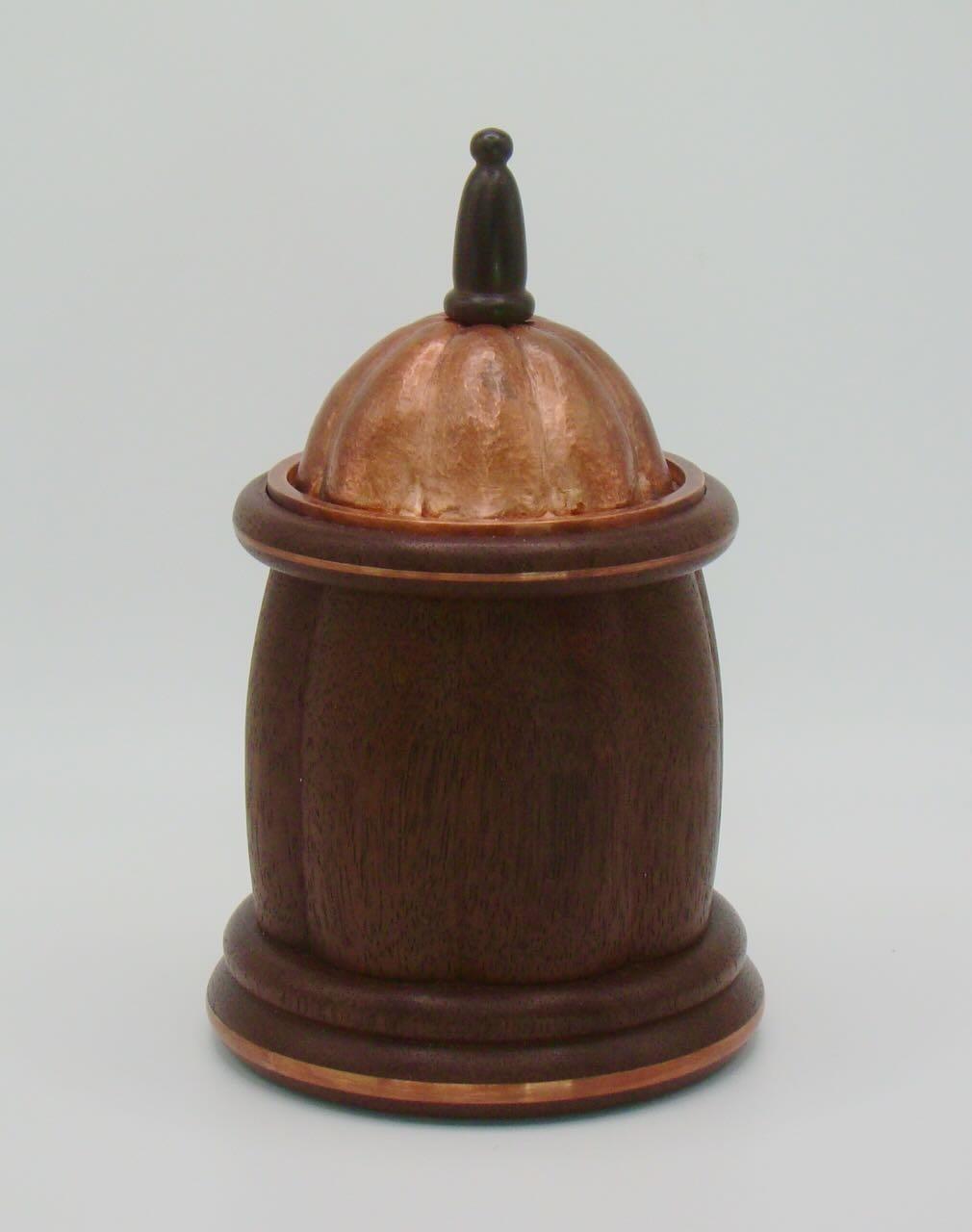
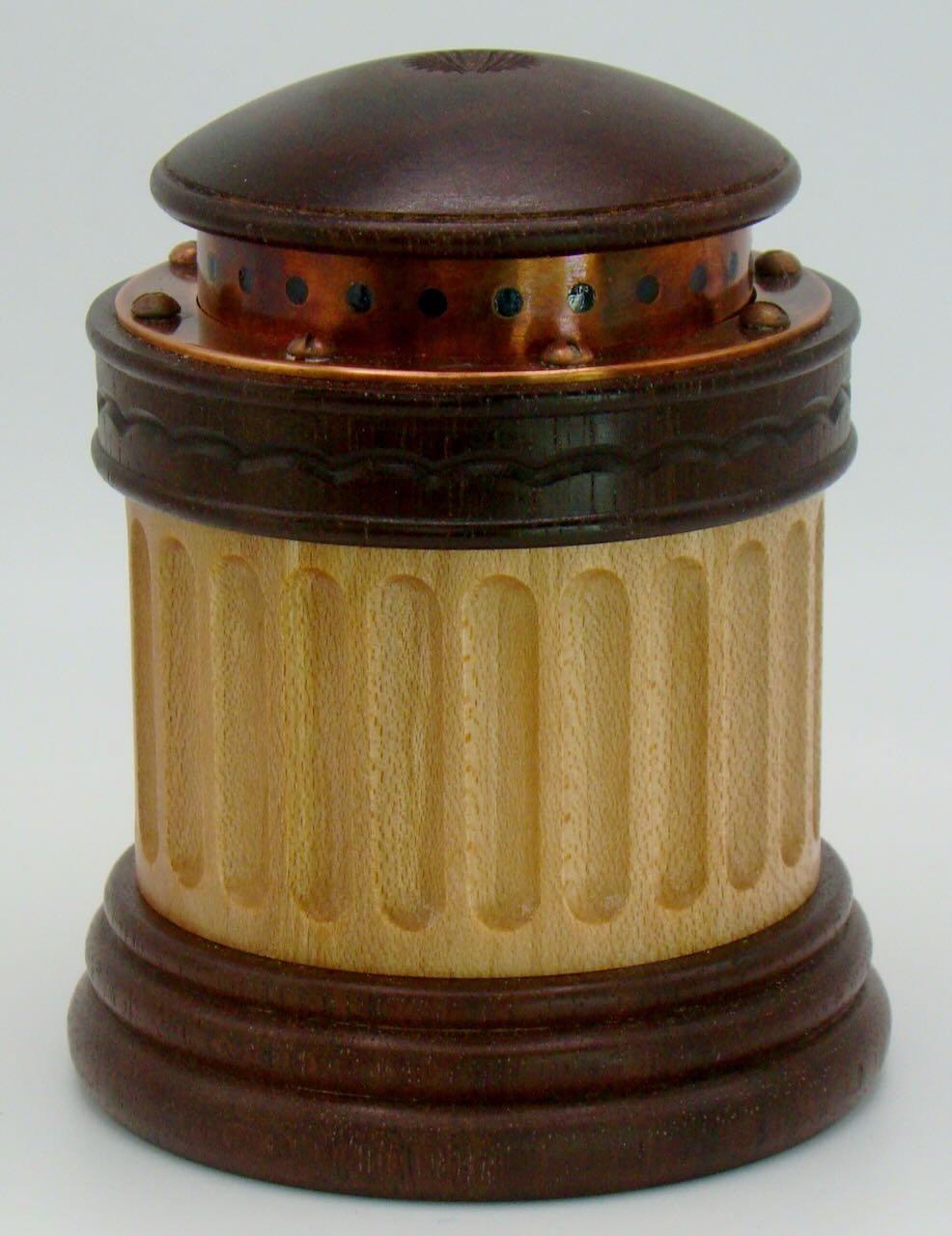
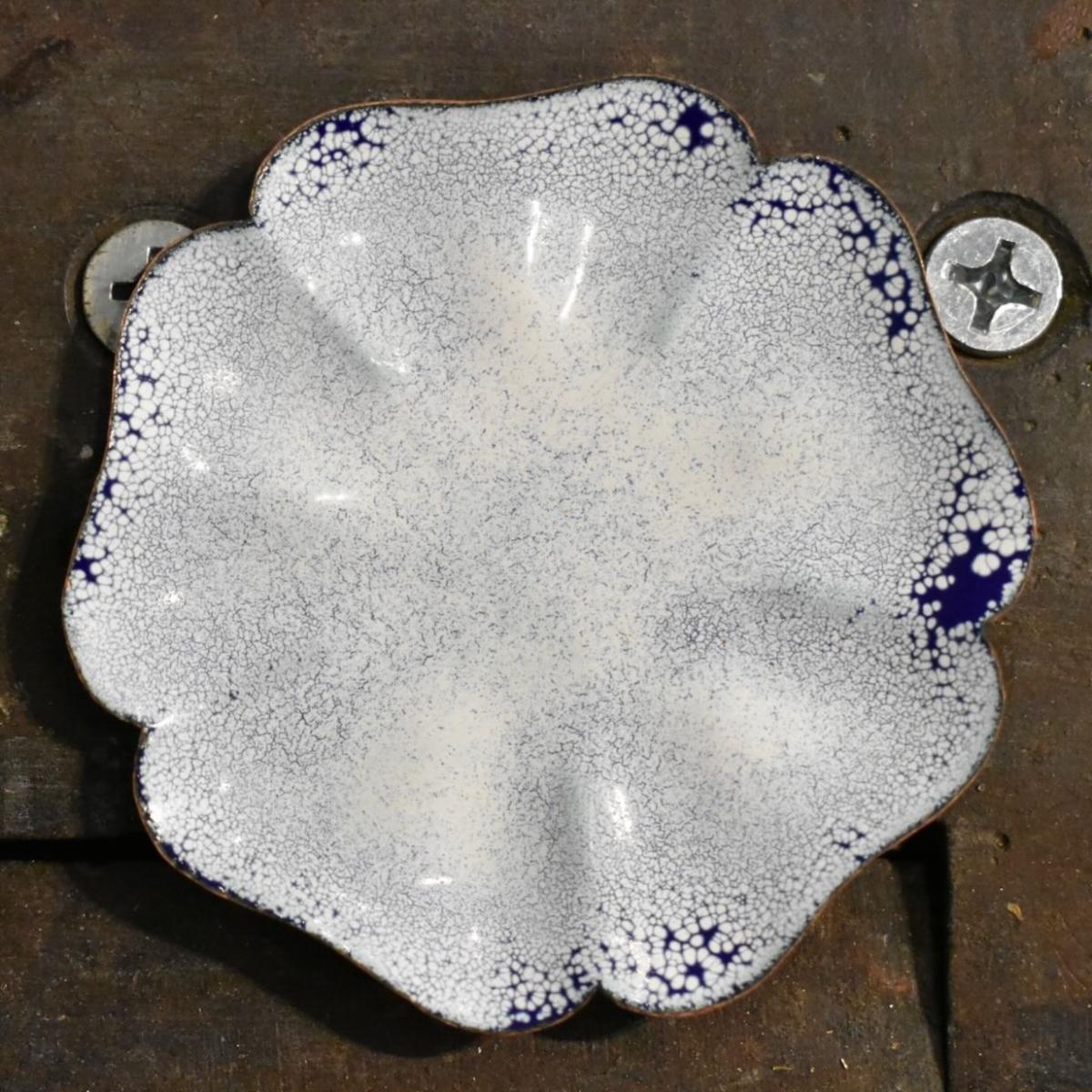
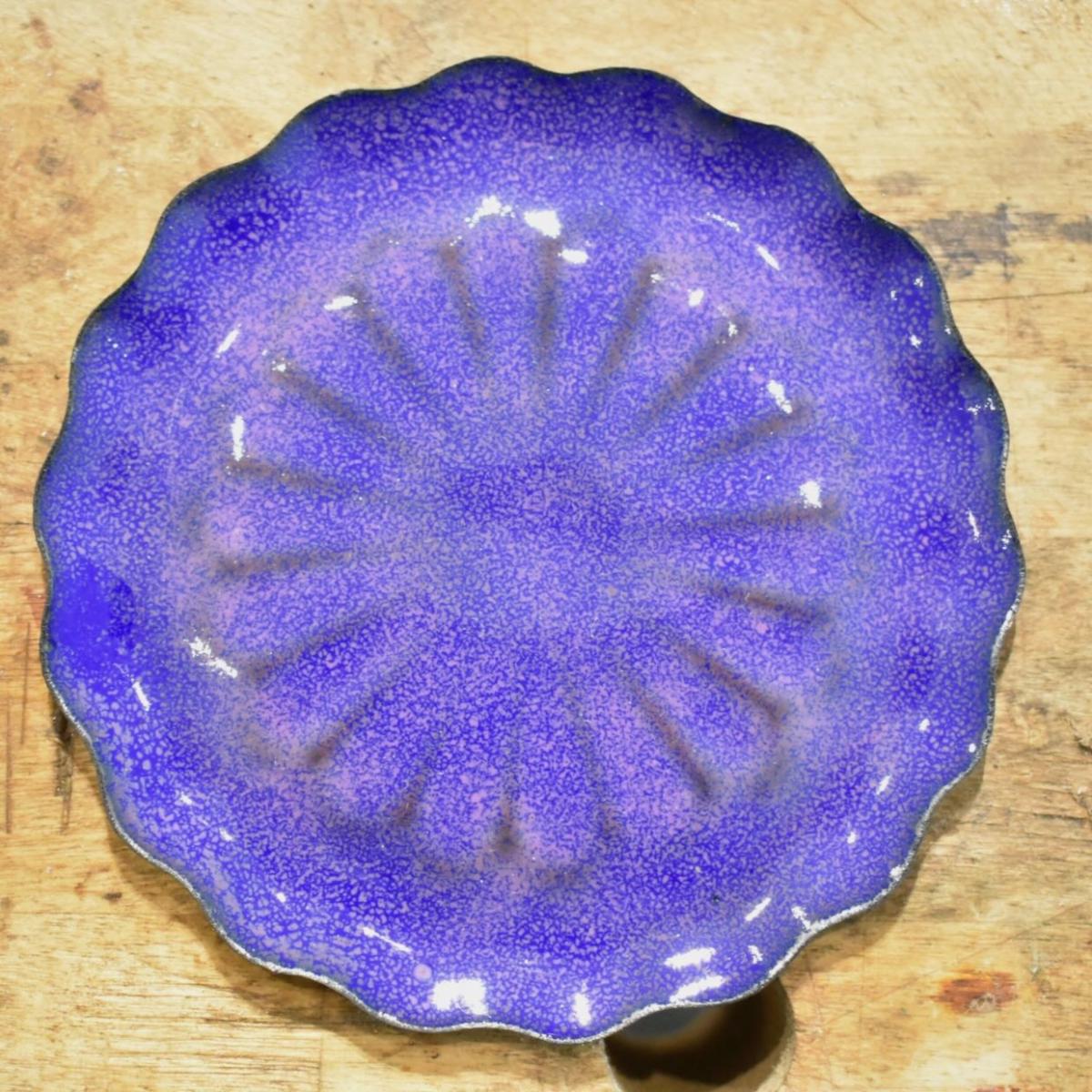
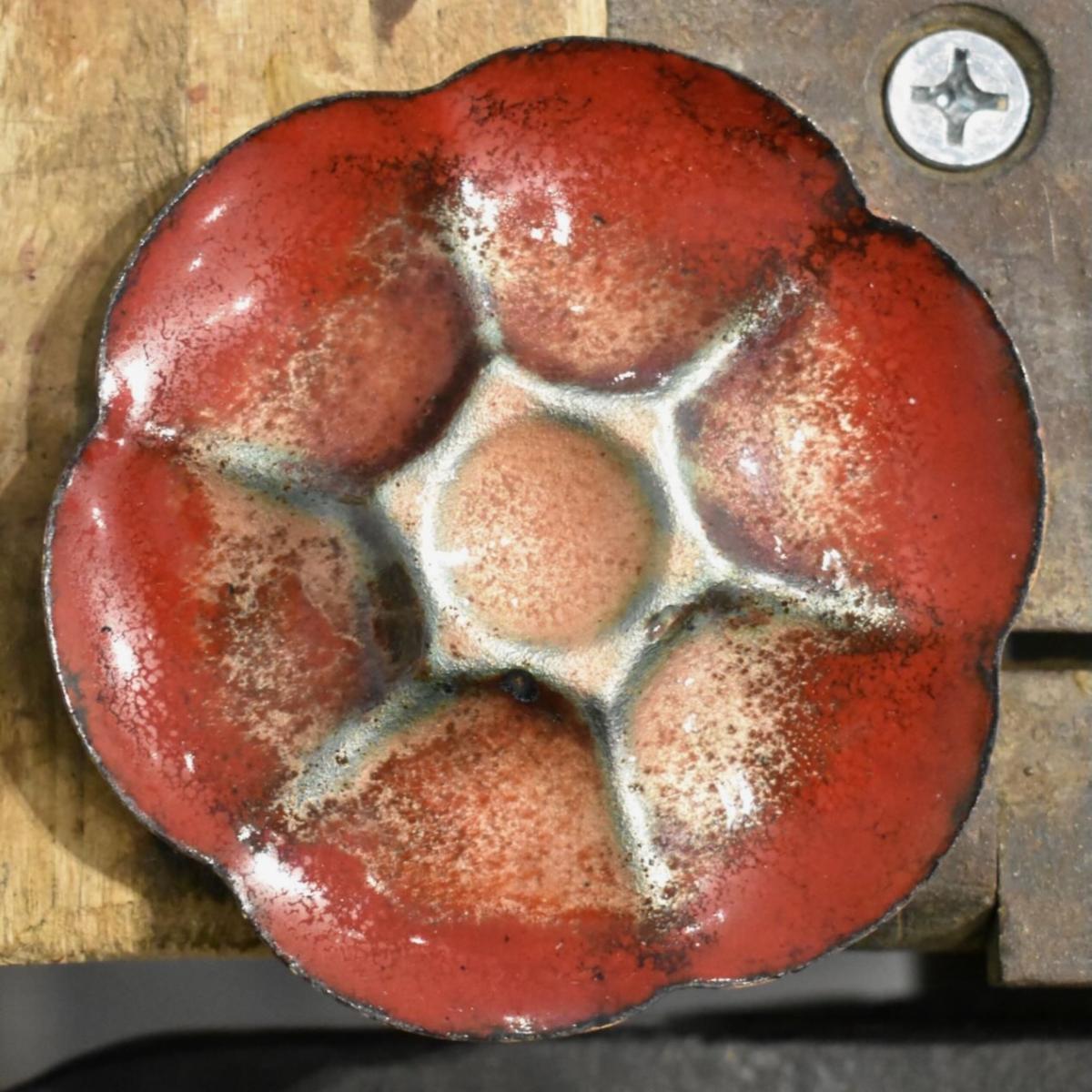
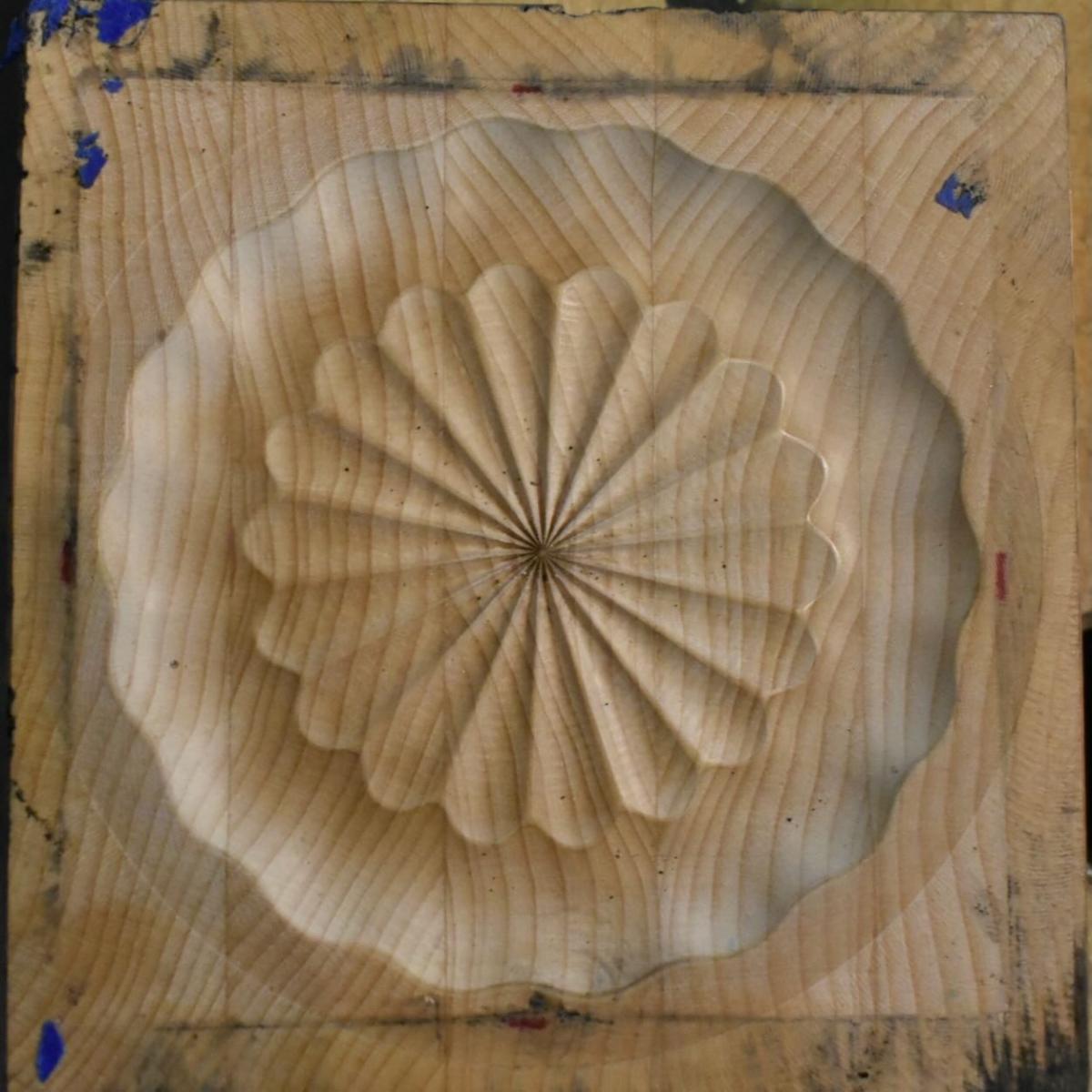
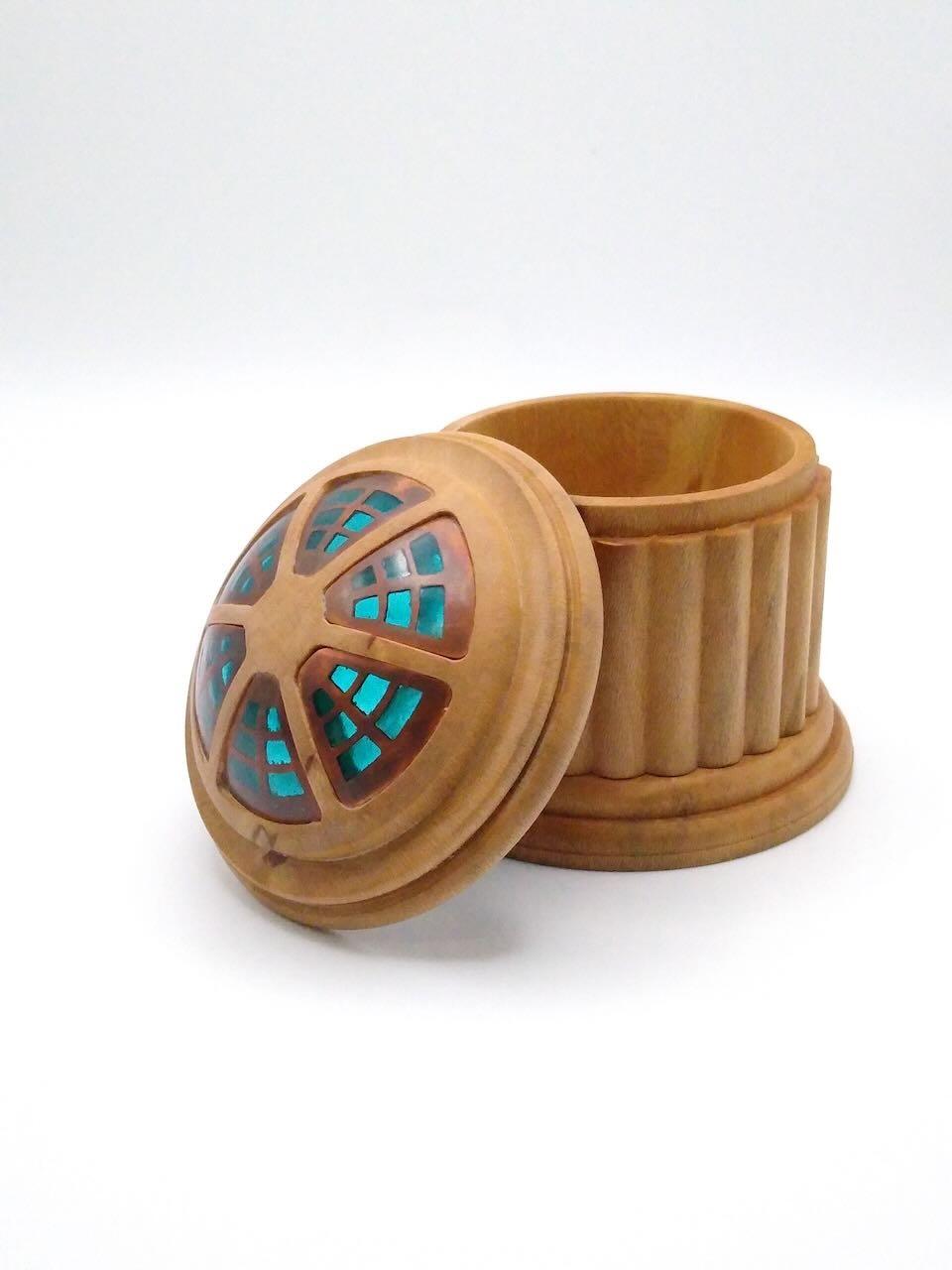
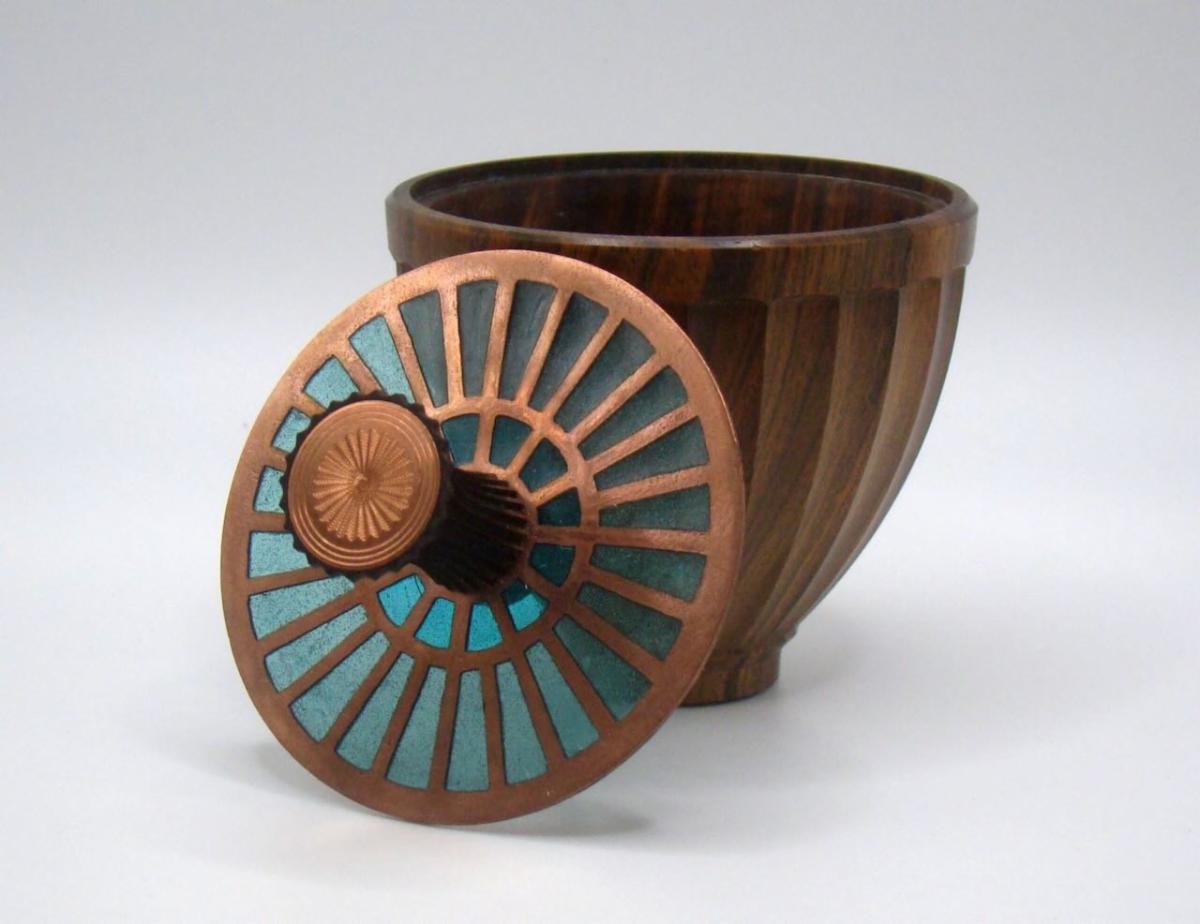
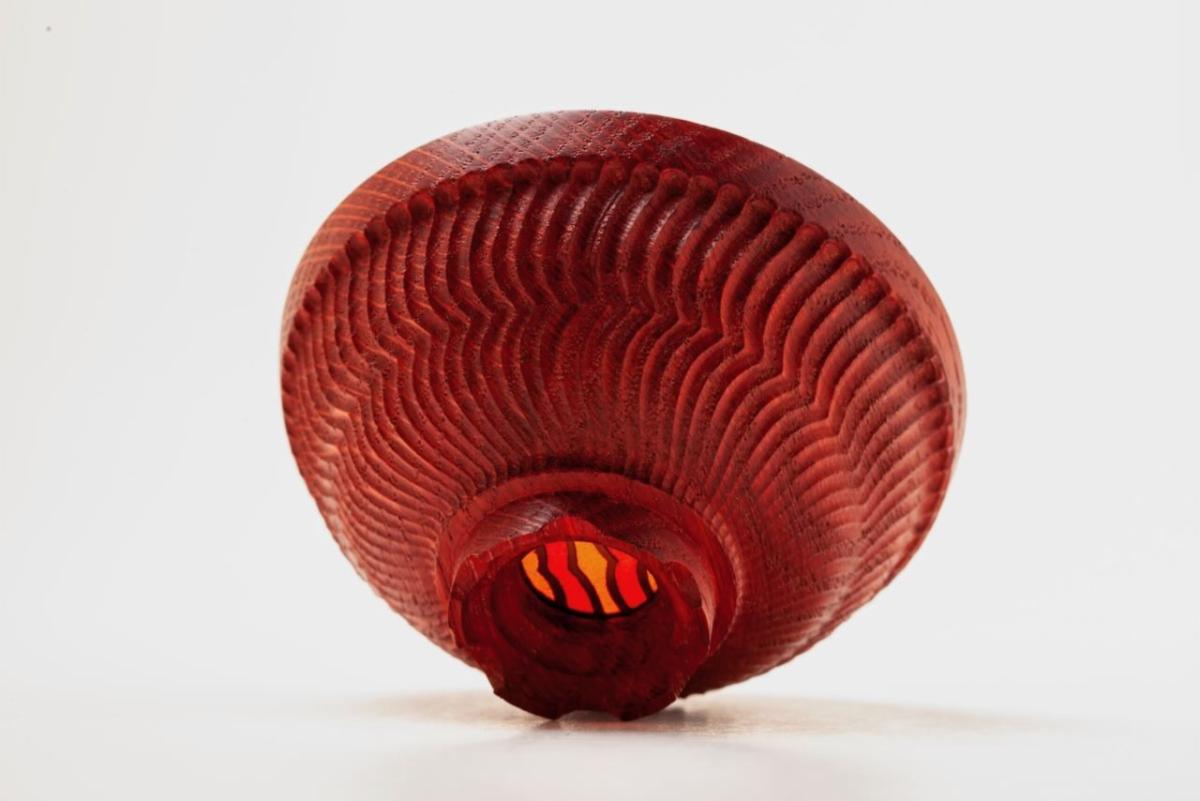
| | Turned box with copper dome top hydraulically formed and then chased | | Ornamentally turned box with copper band and plique-à-jour windows forming a clerestory lid | | One year, Don and a group of his students got together to make ripple molding machines. John was running into some issues with his machine. As it happens, a friend of his at church had talked about his brother who was building rose engines. Paul Lindow, who has since passed away, introduced John to his brother David, who was more than happy to take a look at John’s ripple machine and apprise him of certain design deficiencies while introducing him to the wider world of complex turning. Before too long, John was on his way to a turning event in Chicago where Plumier members Scott Barrett and Brad Davis brought their LREs to demonstrate—John was irrevocably hooked. | | While a lifelong love of woodworking had brought him to that turning meeting in Chicago, what had really captivated John were the perfect, shining patterns cut in brass. It was through engine turning that John fell in love with the metal arts. You may be drawn down the labyrinthine hole of complex turning chasing one rabbit, but, before you know it, you’re madly chasing another. it’s a game of vocational Plinko—it’s the intersection of a thousand detours. Engine turning was John’s lure into the metal arts, and he followed that calling to the highest academic level. | | | | Copper ring dishes shaped with wooden turned form and enameled | | Along the way, John learned all manner of metal forming and fabricating along with enamel work including plique-à-jour. He built a body of work that often combined his new found metalworking skills with woodworking and complex turning into striking sculptural pieces. He did it all with academic rigor and his own aesthetic and artistic style that developed along with his technical education. John self-deprecatingly describes his CV as a “warning against dilettantism,” but anyone who can appreciate the dedication with which he pursues his varying interests knows that this is not true. John takes craft very seriously and has a reverence for our inherited skills. Through his academic approach, John seeks out these foundational skills rather than the “quick and dirty” or the “DIY.” However, he ascribes no such motive to himself.“When I get right down to it, I enjoy learning more than anything,” John says of his journey—“I just want to learn.” | | | | Complex turned vessels with copper and plique-a-jour fenestrations | | John’s master's thesis is on the divide between the world of fine art and the world of craft, building on his own experience coming into the art world from the craft world and constructing a rigorous academic framework to help better understand it. From Plato to Tolkien, and Brunelleschi to Rothko, John explores the development of art in Western civilization from pure aesthetics and technical skill, essentially a craft, to art as statement. Coming to the art world from the world of craft, particularly historic craft, John never saw his work as what he calls, “capital a Art.” But, having to learn the language of the art world and translate its meanings gave him better insight into this distinction. Some of his work plays with these ideas on what makes art “Art,” poking a bit of fun at the art world in its own language. | |
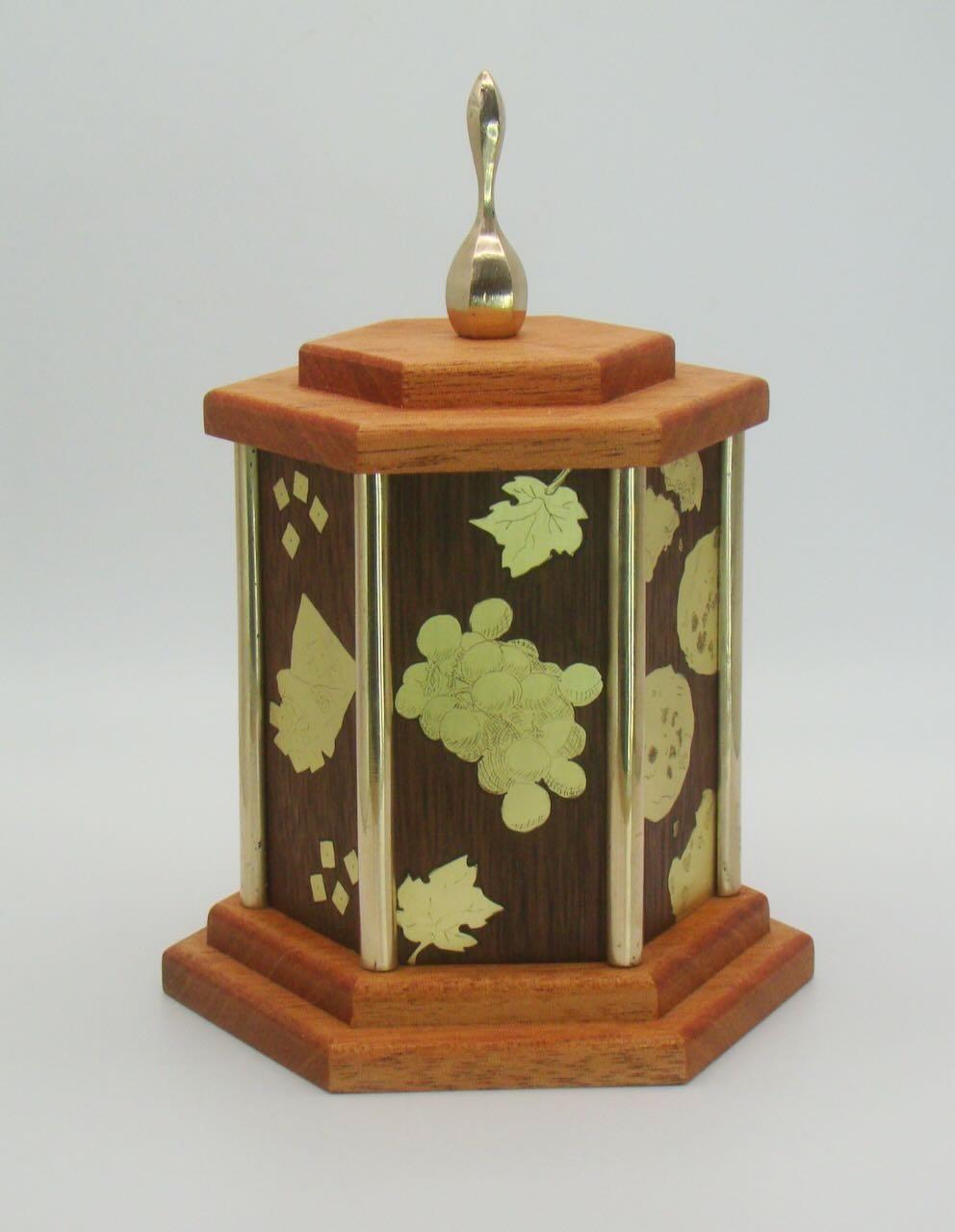
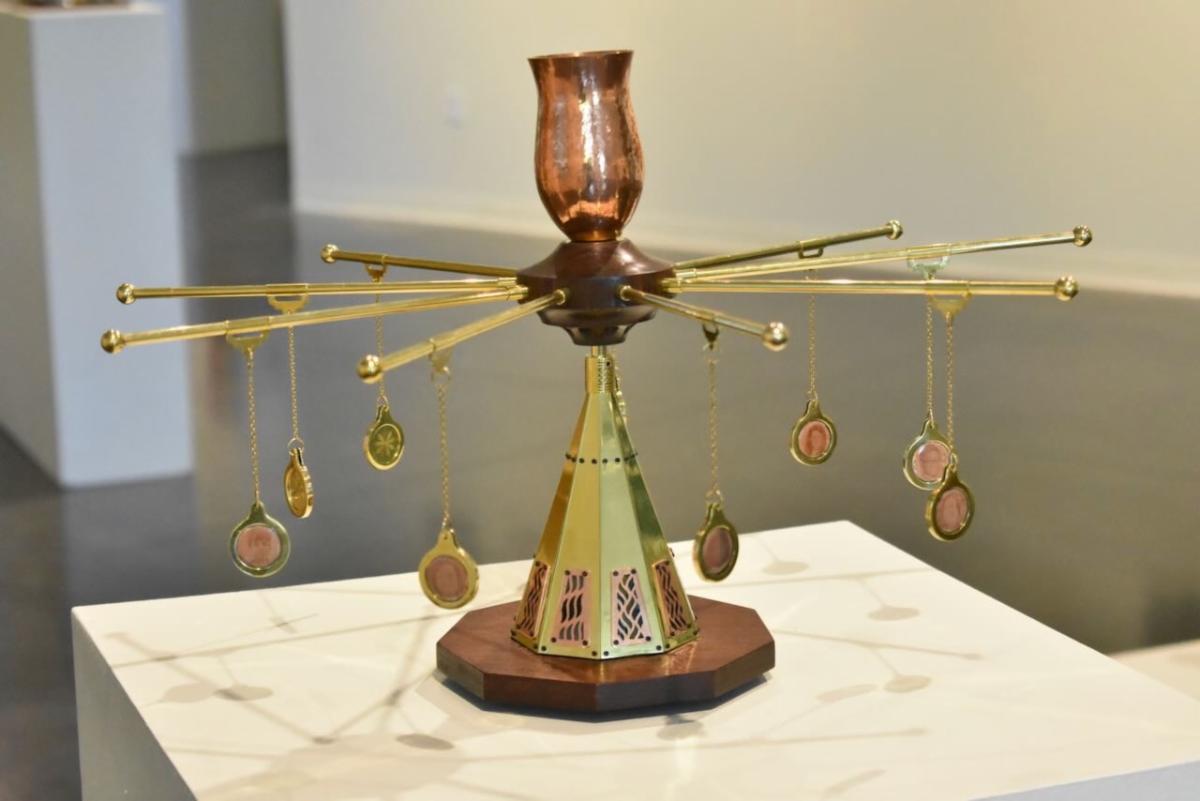
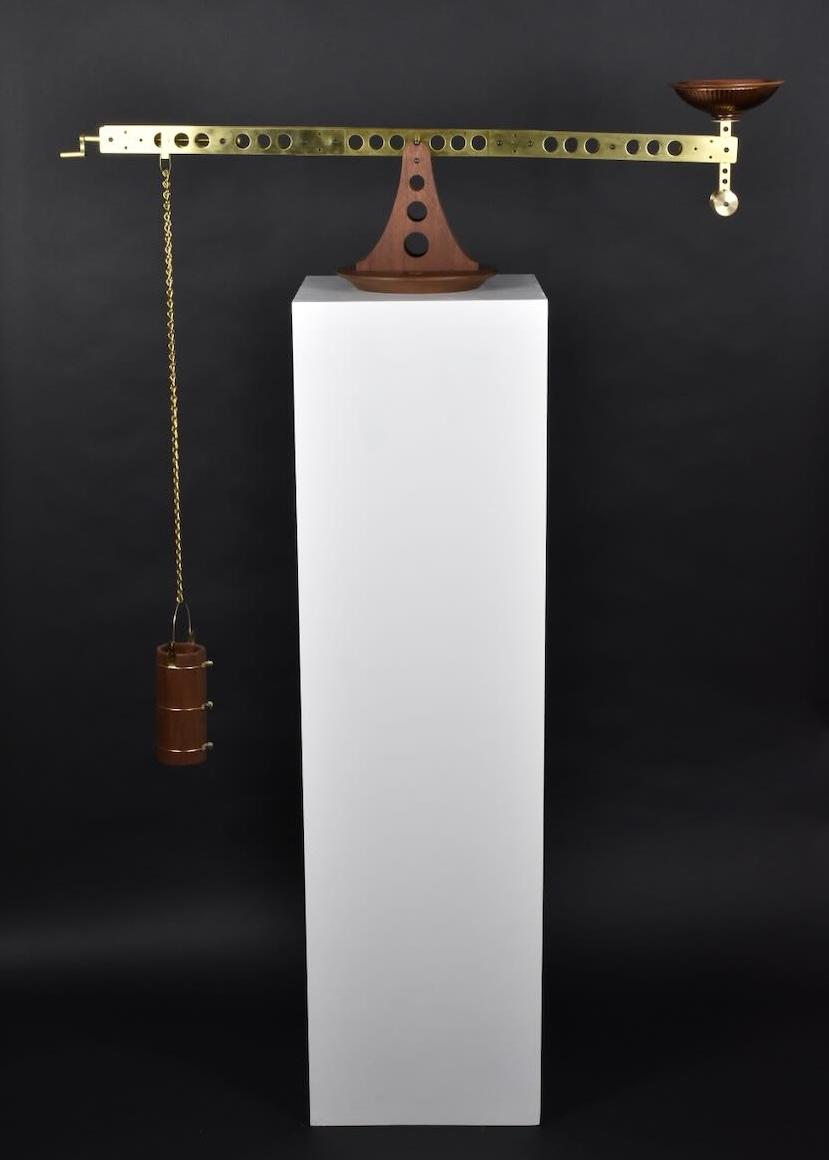
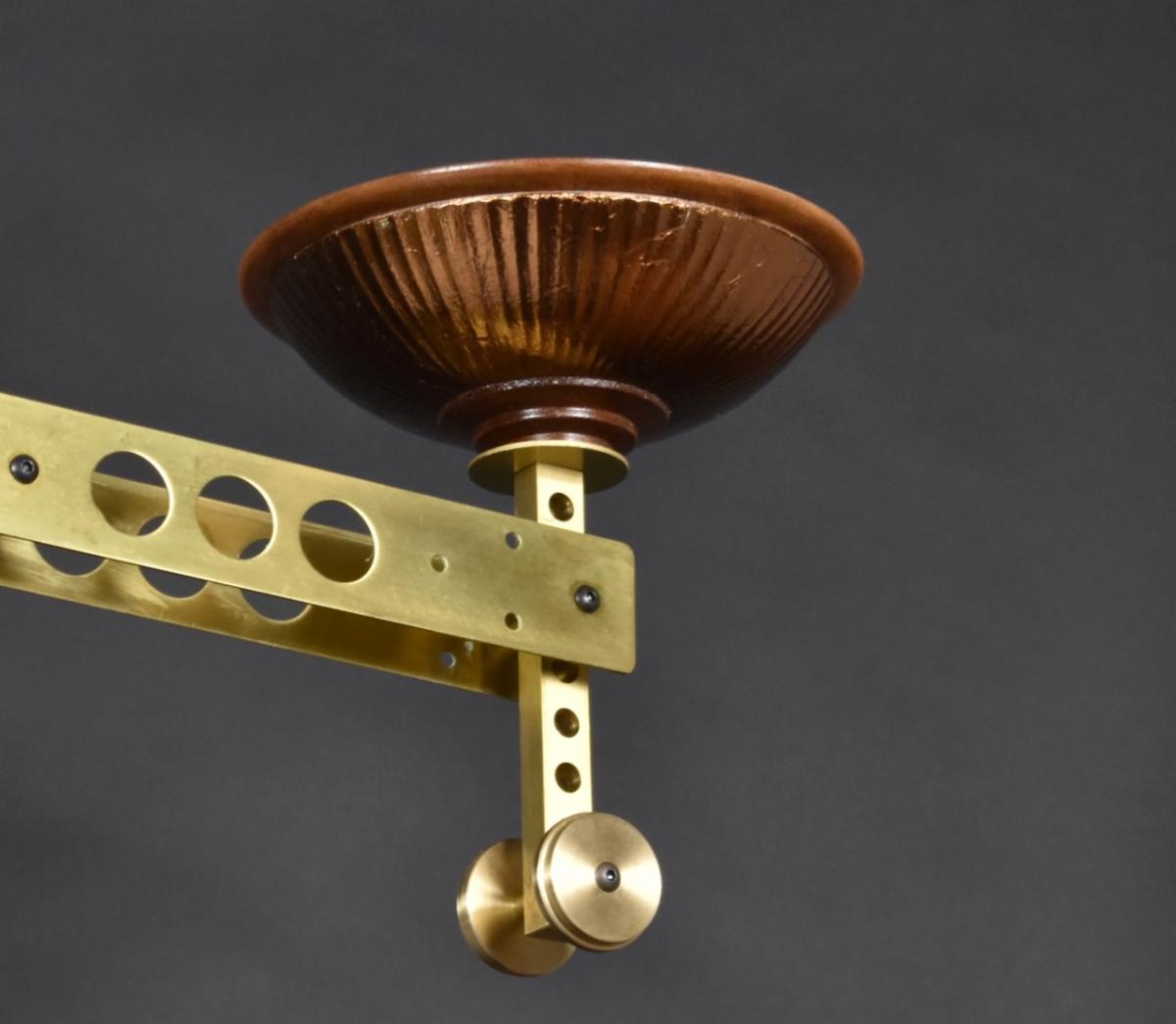
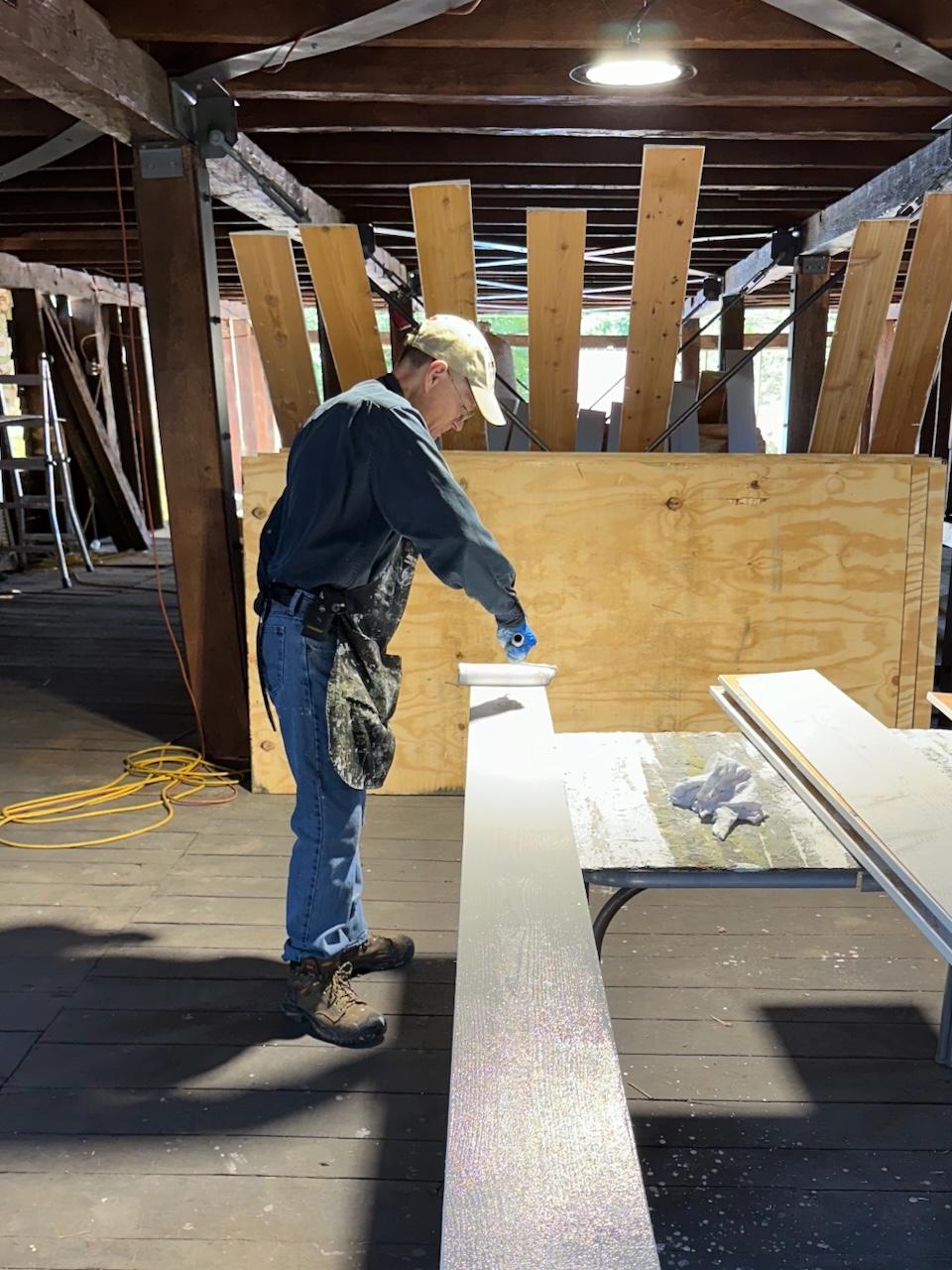
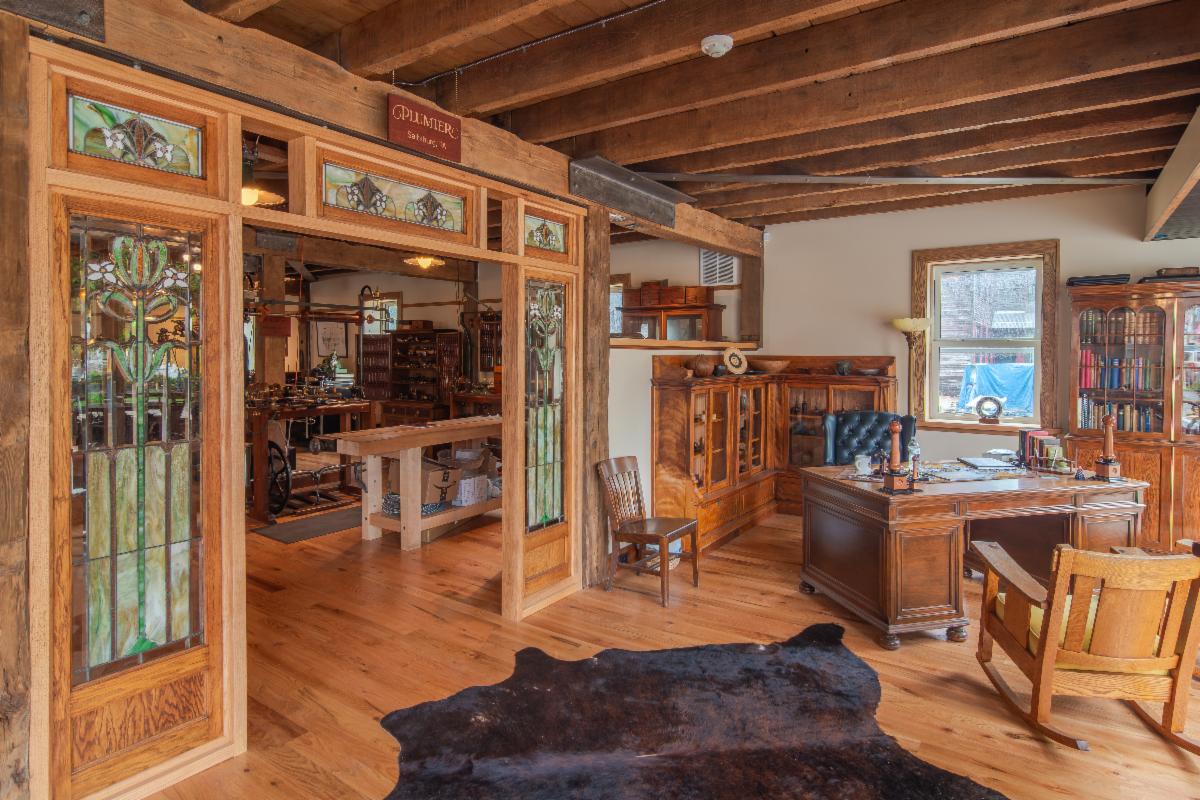
Vessel titled "Lunch Box" with brass inlays of food in the style of "Boulle work" after 17th c, French cabinet maker André-Chalres Boulle. The piece plays with the contrasting themes of opulence and mundanity. | | Ultimately, John believes a broader definition of art is needed that is more inclusive of the world of craft. And, he thinks Plumier is in a position to address this need and bridge these two worlds. | | Sculpture titled "Opposing Forces" with enamel images of family members acting as opposing counter weights as a copper cup threatens to spill over. | | "Over the Edge" continues with the theme of balance with an Erector Set inspired brass and wood scale with copper dish. This piece plays with the idea of the pedestal in art, which defines a work as "Art" to the audience while confining their relationship to it. This piece precariously enters the space of the viewer. | | | | John spent two separate weeks volunteering on our building project, one summer week painting siding up with the trapped heat of the third floor loft, and another week making French cleat tool storage and hooking up our dust collection. He also donated (and delivered) the massive walnut desk in the front room of Plumier, which was given to his father by a banker friend. It has made for the perfect place for both solitary reading and gathering to converse. Perhaps some of these questions on the meaning or art and Plumier’s role in promoting the value of craft will be hashed out at this desk over the years to come. | | |
The Plumier Foundation joins with our community in congratulating John on his incredible achievement! We look forward to seeing where the rabbit hole takes him next.
| | |
The 2026 Plumier Fall Gathering is less than five months away! | |
October 23-25
You won’t want to miss our biggest event of the year—save the date! Take a look back at the 2025 Fall Gathering if you unfamiliar with the event.
| |
Watch your inbox for an email about the Fall Gathering coming soon!
| | | |
Support craft, support Plumier.
The best way to support is by joining us as a member today.
One-time contributions can also be made through our website or GoFundMe. Also, consider making a targeted contribution to our Scholarship Fund.
A check sent to the address below is also a welcomed form of donation.
| |
| | | |