|
Written by Kieran Delamont, Associate Editor, London Inc. | |
ETHICS
The Pope says I don’t have to use Claude
Don’t want to use AI at work? Tell your boss it goes against your religion
| | |
POPE LEO XIV, the newly anointed head of the Catholic Church, is not a big AI fan — one of his first big moves as pope was a 42,000-word encyclical, offering theological opinions and interpretations of the rapidly advancing technology, reaffirming the value of humanity, and so on.
It is all very much in line with what you might expect a religious cleric to say when faced with a new form of quasi-intelligence and its impact on the social and economic order. And apparently it got some Catholics out there thinking, “If the Pope says I shouldn’t use AI, could I get a religious exemption to avoid using it?”
Well, as Jesus said in John 16:24: “Ask, and you will receive, and your joy will be complete.” Earlier this month, reports surfaced of a North Carolina-based software engineer named Erin Maus — a Unitarian Universalist — requesting, and receiving, a workplace accommodation that exempted her from using any generative AI tools.
“I’m writing my code and reviewing my code by hand, which seems crazy to say,” the engineer said. So far, she says it hasn’t caused her any issues at work; noting that “AI doesn’t really seem to be this game changer,” and adding that “your principles matter.”
One story does not a full trend make, but there seem to be signs that the religious exemption angle — certainly a strong one, given our society’s tendency to protect individual religious liberties — might expand, especially as more AI use is mandated by businesses.
“The funniest possible outcome of the AI mandate era is about to be HR departments discovering that ‘sincerely held religious belief’ under Title VII has a much lower bar than they assumed,” wrote startup founder Corey Quinn. “Pope Leo handed every Catholic employee a written excuse.”
Employment lawyers here in Canada say we might see this start to play out here. “Employees can cite those religious reasons as reasons to be accommodated and not have to use AI,” Canadian employment lawyer Christopher Achkar told Global News.
Aaron Zaltzman, another employment lawyer, told the news outlet the hardest part of this from a legal perspective is no longer proving that the religious exemption is valid, but that the employee’s religious belief is legitimate. “If it is a religious belief,” he said, “then the employee would be entitled to reasonable accommodation.”
More than anything, employers are on shaky ground to deny the request. “Playing priest, and telling employees their request isn't legitimate, does not tend to bode well for companies,” said Ashley Herd, a former McKinsey counsel. “A jury doesn't like it when employees get made fun of by managers or HR.”
Eagle-eyed religion watchers might have flagged another thing: Prime Minister Mark Carney, who appears to be a fan of AI from an economic development perspective, is also a practicing Catholic. That, however, seems to be unlikely to change Carney’s push for a national AI embrace.
However, Carney and Pope Leo XIV have spoken about the subject. “They discussed the imperative that AI must serve humanity, beginning with the protection of the individual,” reads a statement from the Prime Minister’s Office. “Prime Minister Carney expressed Canada’s desire to lead internationally on responsible AI and tools to benefit the global community.”
So, no exemption required for the PM.
| |
TECHNOLOGY
Whoop, there it is
A coder hacked his fitness tracker to measure which colleagues stress him most. Now he’s got a running list of the worst offenders
| | |
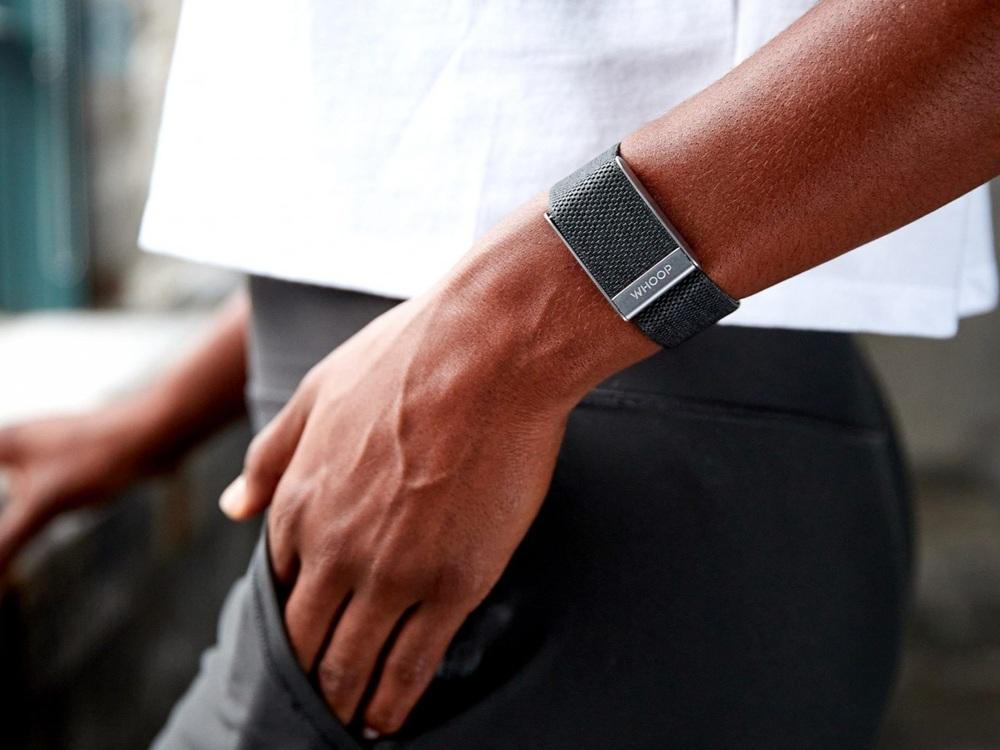
FITBITS, GARMINS AND all the other fitness trackers are wonderful things. They’re good for workouts and step tracking and taking your heart rate and all that, but as one tech worker recently demonstrated, they can do fun things as well — like, be linked together with your meeting calendar to measure your stress during interactions with your coworkers, which you can then rank on a leaderboard, thus determining (somewhat) objectively which of your coworkers really, really suck.
This particular little gem came to us from software engineer Pankaj Tanwar, who posted on LinkedIn last week that he had “reverse engineered Whoop [the fitness tracker] to pull per minute heart rate, and matched spikes with cal events and attendees,” he wrote, along with a screenshot of the results.
Over nine meetings, a growth project manager topped the list, and the app named them a “prime suspect” for elevated stress; a senior developer, on the other hand, brought average heart rates down. “I now have a leaderboard, and I think about it daily,” Tanwar posted.
It is, arguably, the vibe-coding era in its very best light: stupid, inconsequential projects brought to life quickly. Reporters started getting a hold of Tanwar’s other projects, too — according to Business Insider, he’s got “a tool that tells airplane passengers which side to sit on to avoid getting baked by the sun, a Chrome extension that makes users scream ‘I’m a loser’ before opening social media apps and an AI bot that likes his mom’s Instagram posts.” (If there is a better case than this for learning to vibe-code, I’m not seeing it.)
“I’ve got a ton of dumb fun ideas, some of them actually useful,” Tanwar told Business Insider. “I mostly build because my brain finds it funny, and sometimes it ends up solving my own problems.”
Whether this particular application was insightful or not remains an open question — Tanwar was also asked if the results surprised him, to which he responded, “not really.” Seems it doesn’t take an AI hack to tell you which coworkers suck, after all.
| |
| |
Terry Talk: The real cost of covering up — lost trust, lost results
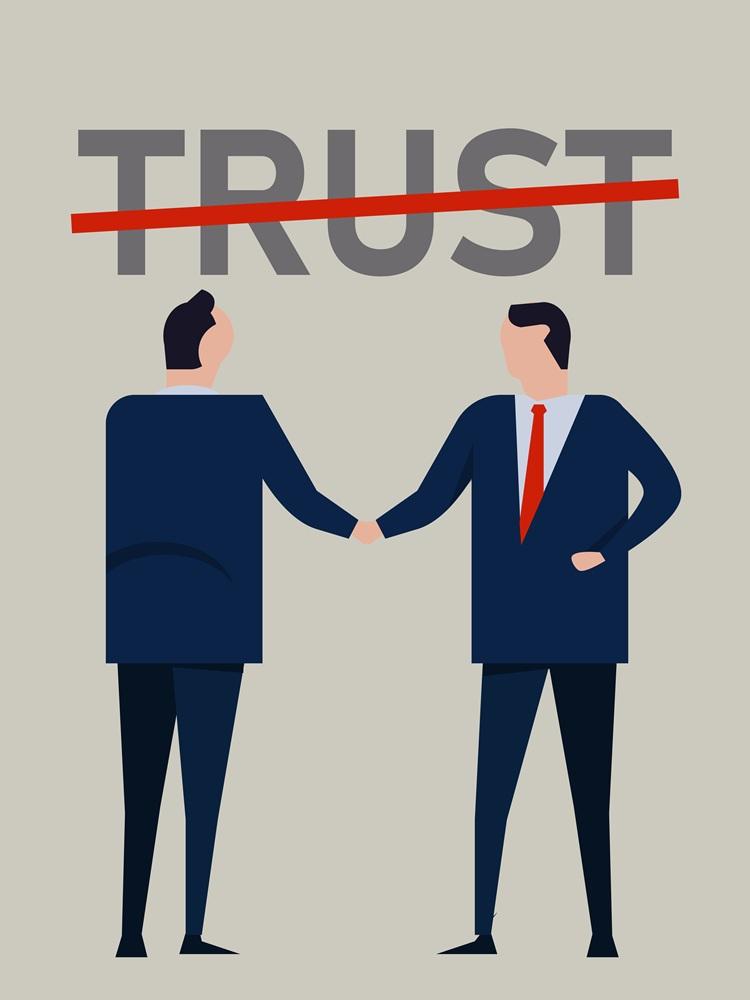
| A flight delay is one thing. A misleading explanation is another. In this Terry Talk, Ahria Consulting president & CEO Terry Gillis reflects on a recent travel experience and what it reveals about trust in organizations. When we blur the truth to protect appearances, we erode credibility, accountability and ultimately performance. Trust is not built on perfection. It is built on honesty. Do what you say you will do and results will follow. How do you and your organization maintain trust in challenging times? | | | |
CYBERSECURITY
Here’s how not to do a phishing test
A Newfoundland Health Services phishing awareness exercise used the promise of an additional paid day off as the hook for employees. What could go wrong with that?
| | |
THE NEWFOUNDLAND HEALTH department is facing a lot of grumpy employees this month after they received an email offering them an extra day of paid time off — only to discover the email was a trick, designed to be a phishing test.
The email, with the subject line ‘June Holiday,’ went out to staff, offering them recognition for their work implementing a new digital health information system and promising them a paid day off.
“Thank you for the care, professionalism, and commitment you continue to bring to N.L. Health Services,” the email wrote. Then, the rug pull: when employees clicked the button to book the time off, they learned it was just a phishing test.
“It is not in good taste,” said Yvette Coffey, the head of the nurse’s union. “It is very insensitive and very disrespectful to our members, and someone has to be held accountable for this.”
The howls from the unions and the employees didn’t stop there. Jerry Earle, president of the Newfoundland and Labrador Association of Public Employees, called it “nothing short of cruel” to use a day off promise as a phishing test, saying also that many employees were denied vacation because of the digital health information system implementation. “Our members deserve better than to be taunted with the promise of a day off after the incredible amount of work and sacrifice,” he said.
Doctors jumped into the fray as well, with the Newfoundland and Labrador Medical Association saying that “to learn this was a test has left many feeling demoralized at a time when morale is already fragile.”
Needless to say, while you could argue that the test worked — nobody who received the email can claim to be ignorant of phishing attempts now — the approach seems to have blown up in management’s face, with the CEO of Newfoundland and Labrador Health Services Ron Johnson somewhat sheepishly admitting it may have missed the mark, and that they were “trying to understand how this happened.”
However, if they want some free advice, it might be this: scrap the trick emails altogether — a 2025 study found that not only do the majority of recipients of such emails never click the link, the majority of those the few that do tend to close the page within about 10 seconds. Then again, as one commenter put it: “All this discussion that has come out of this test raises awareness of cybersecurity. So, test successful.” Try telling that to a tired nurse, though.
| |
HEALTH & SAFETY
Are family jobs safe for teens?
The explosion of AI investment is triggering a data centre building boom — and an urgent need for skilled construction workers
| | |
|
SUNDAY WAS THE first day of summer, meaning high school exams will have wrapped up, and teenagers will be about to head into their summer jobs over the next few weeks. Some of those will be heading into jobs at the family business.
Cushy, easy, safe gig, you might be thinking? Not so, says some new research from the University of Calgary and Concordia University. “Our recent research suggests that family employment does not automatically make work safer,” write Nick Turner (of the University of Calgary) and Steve Granger (of Concordia), in The Conversation. “In some cases, working for a parent may make safety conversations less frequent and may be linked to a greater risk of injury.”
It’s a counterintuitive finding — one might think teenagers at the family business would be, if not coddled and protected, at least beneficiaries of an extra layer of concern from their parental superiors. But what the researchers found was a complicated set of dynamics at play that, in many cases, mean that safety discussions either don’t come up or are relaxed.
“While parental influence can bolster safety behaviour, even beyond that of supervisors or coworkers, dual-role relationships may also lead to the relaxation of formal protocols,” the researchers wrote in their study. “Depending on the nature of the work arrangement, safety knowledge may be conveyed more as moral advice rather than as practical instruction, or omitted entirely.”
The researchers argue that while there are lots of benefits to family jobs, things get complicated when it comes to safety. In many cases, the teenager has been in the workspace before — sometimes frequently. “They may know the physical space, the people in the business and the rhythms of working there. That familiarity can be useful, but it can also produce dangerous assumptions,” the researchers said. “Parents may assume their child already knows what to do.” Plus, safety advice from a parent might register as a parental lecture, rather than actual safety advice.
But the researchers don’t want to see families stop hiring their teens for the summer (the current youth unemployment situation doesn’t want that, either). “The message for parents and family businesses is not to avoid hiring young family members. It is to stop assuming that love, trust and familiarity are enough,” they explained. “Parents should treat the job as a real job. A family job can be a good summer job. It just shouldn’t be an informal one.”
|
| | | | |