|
August was Overdose Awareness Month and, yesterday, International Overdose Awareness Day. In recognition of these events, MedChi joined organizations around the world to honor those whose lives have been lost to overdose, support families and communities affected by substance use disorders, and encourage evidence-based approaches that save lives.
Physicians, like anyone else, can struggle with alcohol or drugs. Research suggests that 10-15% of physicians experience an alcohol use disorder during their careers. In a 2021 survey, one in seven physicians reported using alcohol or controlled substances at work to cope with job-related stress.
Substance use can impair a physician’s ability to practice safely and may affect patients, colleagues, the workplace, malpractice liability, and medical licensure.
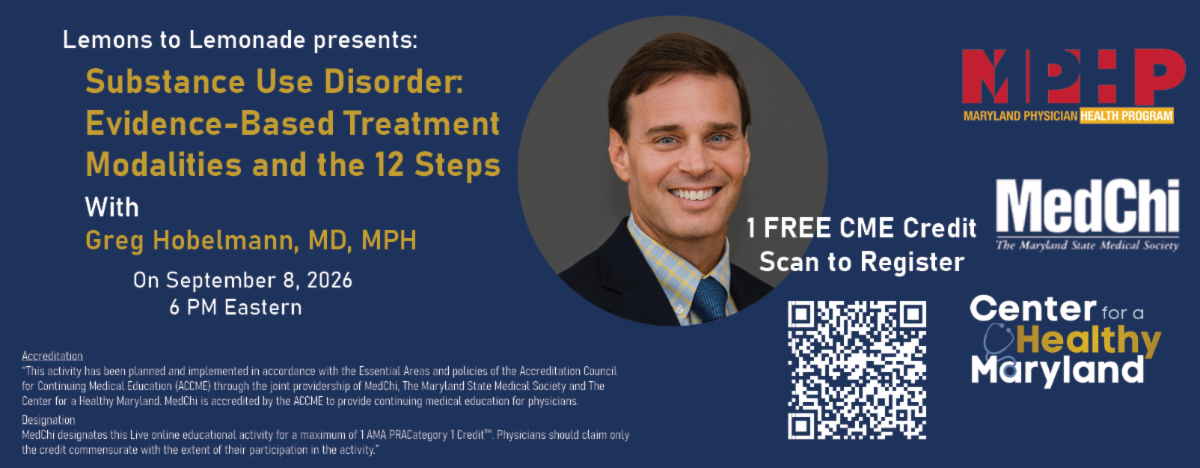
If you or a colleague need help, know that you do not have to do this alone. The Maryland Physician Health Program (MPHP) provides a safe, confidential, and nonjudgmental place for physicians and other healthcare professionals to seek assistance. MPHP offers assessments, referrals, monitoring, and support for those facing substance-related concerns. By working with MPHP, physicians can obtain the help they need without needing to self-report or being reported to the licensing board.
Professional support is essential to recovery. Take the first step by contacting MPHP at phpinfo@medchi.org or call Mike Llufrio at 410-878-9534.
Physicians also play a vital role in addressing substance use disorders through early screening, patient education, evidence-based treatment, responsible prescribing practices, and connecting patients with behavioral health and recovery resources. Equally important is reducing the stigma, often preventing individuals from seeking help.
Encourage your patients and community to:
- Learn to recognize the signs of an overdose and respond quickly by calling 911.
- Keep overdose-reversal medications, such as naloxone, available when appropriate.
- Safely store and properly dispose of prescription medications to reduce the risk of misuse.
- Talk openly with healthcare professionals about concerns related to substance use, mental health, or addiction.
- Support individuals in recovery with compassion and understanding, recognizing that recovery is possible.
“Every overdose represents a person, a family, and a community forever changed,” Dr. Eric Wargotz, President of MedChi said. “International Overdose Awareness Day reminds us that substance use disorder is a medical condition—not a moral failing. As physicians, we are committed to providing compassionate, evidence-based care while working to prevent overdose deaths and expand access to treatment and recovery services.”
MedChi encourages all Marylanders to remember those lost to overdose, support those in recovery, and work together to build healthier, stronger communities where every individual has access to the care and support they deserve.
Gene M. Ransom III
CEO
MedChi, The Maryland State Medical Society
|