|
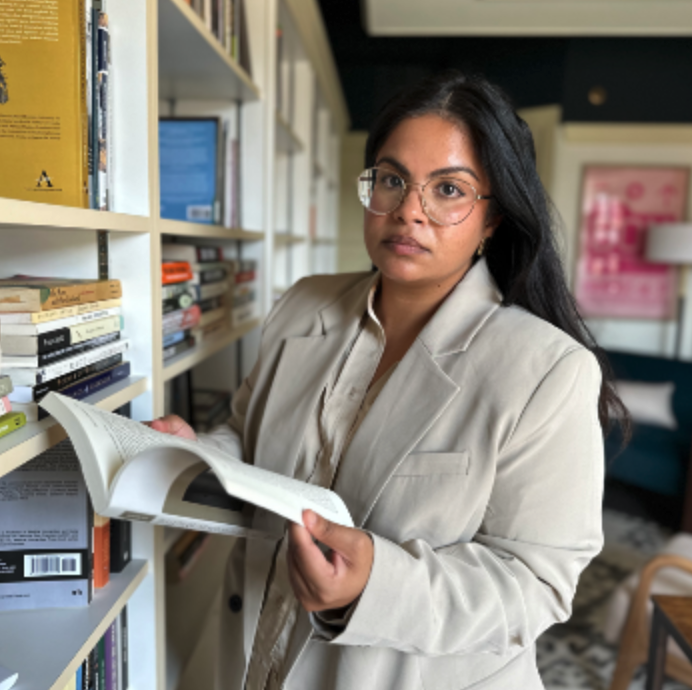
Lakshmi Krishnan wanted to be writer early in life but chose to pursue medicine because she wanted to have a more direct, one-to-one impact on people’s lives. Now, as a cultural historian of medicine, physician, and Founding Director of the Georgetown Medical Humanities Initiative, she does both. Dr. Krishnan practices inpatient medicine at Medstar Georgetown University Hospital, teaches, and is writing a book about the history of diagnosis. In this interview, she helps us understand how the humanities can be an important companion to science-based medicine.
What is the medical humanities? What are its goals?
Because it encompasses so many different fields, we continue to grapple with what medical humanities is, which is exciting. I think of the health humanities or medical humanities as being a partner to biomedical sciences. It provides contexts. It answers questions about health, illness and healthcare practice that science and the biomedical sciences really can't. It is a 60-year-old field that started with this idea that practitioners and patients were becoming increasingly detached from each other. Born out of that crisis of detachment, the field initially aimed to humanize practitioners and patients. In the last 10 or 20 years, medical humanities has evolved into a more critical field that raises questions and develops innovative answers. It focuses not just on improving healthcare but also aims to develop a more holistic understanding of the human condition.
How did you find your way into the field?
I have loved literature, words, and language since I was young. I was born in India, and we moved a lot when I was growing up, so I didn't have stable social circles. Reading connected me to the world and helped me feel less alone. Language has the power to critique and to persuade. As I got older, I liked the sciences and wanted to help people directly. In college, I studied English literature and was pre-med. I started to see the overlap between the two fields. Both are essentially about being human. I earned a doctorate in literature, went to medical school, and trained further in the history of medicine. My current research focuses on diagnosis, which science has struggled to comprehend. The humanities help us understand what happens when a practitioner diagnoses a patient, both for the patient and the practitioner. This has direct impact on health outcomes: diagnostic errors and diagnostic bias cause significant harm. I am also part of an interdisciplinary group including diagnosis scholars, clinical researchers, and social scientists. We are working together to better grasp this complex issue because the interdisciplinary humanities excel at handling complexity.
Can you say more about the idea that the humanities handle complexity well?
We are trying to understand the stories people tell about themselves, how they think and express themselves. We deal with interconnection, contingency, understanding social and cultural phenomena. For example, reading and analyzing a diagnosis textbook from 1830 is a humanities skill. Similarly, my colleagues like AHP director, Julia Langley are art historians, artists, and creative thinkers. They teach us ways of viewing things which aren't learned in science. Seeing this way attunes us to all kinds of dynamics that are often invisible in healthcare.
Many students at Georgetown University are doing the medical humanities minor. Could you tell us a bit about them? What are you hearing from them about why they’re choosing this focus?
Our students say that the field of medical humanities expands their knowledge and perspective. They realize just how important context is to understanding current scientific practices and shaping the future of health and care. Declared minors come from a wide variety of academic backgrounds: we have humanities, social sciences, nursing, and public health majors, pre-law and pre-med students. They find that our diverse classrooms are a huge asset. In what other program are medical students and undergraduates taking classes together? Medical Humanities teaching assistants and research fellows studying history of medicine, global infectious disease, medicine, and law are valuable role models and peer mentors for our undergraduates. We’re building vertical and horizontal relationships across Georgetown.
|