When certain legislative payment provisions (“extenders”) are scheduled to expire, CMS directs all Medicare Administrative Contractors (MACs) to implement a temporary claims hold. This standard practice is typically up to 10 business days and ensures that Medicare payments are accurate and consistent with statutory requirements. The hold prevents the need for reprocessing large volumes of claims should Congress act after the statutory expiration date and should have a minimal impact on providers due to the 14-day payment floor. Providers may continue to submit claims during this period, but payment will not be released until the hold is lifted.
Absent Congressional action, beginning October 1, 2025, many of the statutory limitations that were in place for Medicare telehealth services prior to the COVID-19 Public Health Emergency will take effect again for services that are not behavioral and mental health services. These include prohibition of many services provided to beneficiaries in their homes and outside of rural areas and hospice recertifications that require a face-to-face encounter. In some cases, these restrictions can impact requirements for meeting continued eligibility for other Medicare benefits. In the absence of Congressional action, practitioners who choose to perform telehealth services that are not payable by Medicare on or after October 1, 2025, may want to evaluate providing beneficiaries with an Advance Beneficiary Notice of Noncoverage. Practitioners should monitor Congressional action and may choose to hold claims associated with telehealth services that are not payable by Medicare in the absence of Congressional action. Additionally, Medicare would not be able to pay some kinds of practitioners for telehealth services.
Click here for more information.
CMS notes that the Bipartisan Budget Act of 2018 allows clinicians in applicable Medicare Shared Savings Program Accountable Care Organizations (ACOs) to provide and receive payment for covered telehealth services to certain Medicare beneficiaries without geographic restriction and in the beneficiary’s home. There is no special application or approval process for applicable ACOs or their ACO participants or ACO providers/suppliers. Clinicians in applicable ACOs can provide these covered telehealth services and bill Medicare for the telehealth services that are permissible under Medicare rules during CY 2025, irrespective of further Congressional action.
Click here for more information.
MACs will continue to perform all functions related to Medicare Fee-for-Service claims processing and payment.
| |
Stalemate centers largely on health coverage under the Affordable Care Act and Medicaid
Threats of a federal government shutdown have gone from being an October surprise to a recurring theme. This time around, though, the stakes are higher.
Federal funding ran out at midnight on Oct. 1, after Congress failed to pass even a stopgap budget while negotiations continued.
Now the question is how long the deadlock will last, with Democrats pitted against Republicans and a presidential administration that has broken with constitutional norms and regularly used political intimidation and primary threats to achieve its ends. Because Republicans hold only a slim majority in the Senate, any deal will need to attract at least a few Democratic votes.
Click here to read the full article.
| | |
CMS issued the proposed rule CMS-1832-P on July 16, 2025, titled Medicare and Medicaid Programs; CY 2026 Payment Policies Under the Physician Fee Schedule and Other Changes to Part B Payment and Coverage Policies; Medicare Shared Savings Program Requirements; and Medicare Prescription Drug Inflation Rebate Program.
On September 11, 2025, ASIPP submitted a comment letter advocating for the following:
- Elimination of proposed efficiency adjustment, which is inappropriate, and efficiency is rather decreasing than increasing.
- Due to escalating costs, practice expense cuts applicable to independent physicians need to be addressed.
- Ambulatory Specialty Model (ASM) appears to be without any evidence and inappropriate, putting independent physicians at high risk for survival; consequently, this should be eliminated or conducted on a voluntary trial for five years.
-
Telehealth services must be made permanent.
Here are ASIPP’s detailed comment letter, Chairman Comer’s recent letter to CMS and OMB, and 3 published articles addressing this issue:
| | Stay up-to-date with news that impacts you - visit our website or follow us on these social media platforms: | | |
October and November
ASIPP Webinars Announced!
| The American Society of Interventional Pain Physicians (ASIPP) is pleased to invite Residents and Fellows to participate in our new Resident and Fellow Mentorship Program. This initiative has been developed to provide you with meaningful connections, guidance, and professional development opportunities as you advance in your training and prepare for your career in pain medicine. These meetings are designed to provide an open forum where you can seek advice on clinical challenges, career planning, research involvement, and strategies for professional success. | |
Join ASIPP on October 18, 2025, for an important webinar: Unveiling the Complexities of Controlled Substance Management in Interventional Pain Management (IPM).
Controlled substance management continues to present challenges for pain physicians, from evolving regulations and compliance requirements to balancing patient care with risk mitigation. This webinar will provide expert guidance to help you navigate these complexities and strengthen your practice.
| | |
Don’t miss the opportunity to engage with leading experts on October 21, 2025 as we explore how AI is transforming electronic health records and prescribing practices. This webinar is the first in a six-part series: the Modernizing Your Practice Through Medical Technology.
Each session focuses on a timely topic shaping the future of patient care—from electronic health records and AI prescribing to emerging tools that enhance efficiency, accuracy, and outcomes. Stay engaged each month and gain insights you can put into practice right away.
| | |
Join ASIPP on November 1, 2025, for our webinar Strategies for Successful Practice Management. This program will focus on practical approaches to strengthen your practice through improved documentation, compliance strategies, and effective practice-building techniques.
Whether you are looking to optimize workflows, ensure regulatory readiness, or position your practice for long-term growth, this webinar will provide valuable insights to support your success.
| |
In Southern Hemisphere, the vaccine offered 50% protection
against influenza-like illness
| |
Join Us in New Orleans for ASIPP 2026
Earn CMEs, Expand Networks, and Explore the Future of Pain Management
| | |
It is our pleasure to invite you to the American Society of Interventional Pain Physicians’ 2026 Annual Meeting, where we will continue to shape the future of Interventional Pain Management.
This 28th Annual Meeting will take place Thursday, March 19 through Saturday, March 21, 2026, at the Hilton New Orleans Riverside in New Orleans, Louisiana.
The 2026 Annual Meeting will provide the tools, knowledge, and connections you need to thrive in the evolving field of interventional pain management.
| | JOIN or RENEW your ASIPP Membership for the best registration rates. | |
Tariffs would not apply to companies building manufacturing plants in the U.S.
President Donald Trump on Thursday said he will put import taxes of 100% on pharmaceutical drugs starting on Oct. 1.
The posts on his social media site showed that Trump's devotion to tariffs did not end with the trade frameworks and import taxes that were launched in August, a reflection of the president's confidence that taxes will help to reduce the government's budget deficit while increasing domestic manufacturing.
Under the Trade Expansion Act of 1962, the administration launched a Section 232 investigation in April about the impacts on national security from pharmaceutical drugs and other imports.
Click here to read the full article.
| | |
It’s not uncommon for me, when discussing a GLP-1 medication with patients, to have them inquire about the drug’s purported risk in increasing suicidal ideation. What has never occurred? Patients asking about the possible benefits of GLP-1 medications to mood and to their decreasing the risk of suicidal ideation.
On the face of existing data, that’s odd considering there is far more substantial evidence that GLP-1 users see improvements in mood: with no increase —and possibly decreased — risk of suicide. It’s not odd, though, when considering things through the lens of how risk is overestimated by the public along with the lens of weight bias where, at least with obesity medications, negative findings — however small, tenuous, or early — tend to be readily internalized and amplified, while positive findings are often minimized and ignored.
Where and how did the concern about suicide arise? On July 11, 2023, the European Medicines Agency (EMA) released a statement that, consequent to the Icelandic medicines agency’s highlighting three case reports involving suicide among GLP-1 users, they would be investigating further.
Click here to read the full article.
| | |
Only three test dates left this year - Apply today!
October 25, November 15,
& December 13
Four (4) hour virtual exam
- ABIPP Path – Combined CCPM/ CSM Exam
For those with subspecialty in Pain Medicine
Two (2) hour virtual exam
- ABIPP Competency Exam in IPM
For those without primary board certification
Two (2) hour virtual exam
- ABIPP Competency Exam in Regenerative Medicine
Two (2) hour virtual exam
- Controlled Substance Management Competency Exam
Two (2) hour virtual exam
- Documentation, Coding, Compliance, Practice Management Competency Exam
Two (2) hour virtual exam
| | |
Physicians and health organizations are reassuring patients that acetaminophen is safe to use during pregnancy after President Donald Trump said on Monday that the FDA will notify doctors that using the drug during gestation can be associated with a “very increased risk of autism.”
Critics were quick to denounce the administration’s assertions, reassure patients, and point to decades of evidence contradicting Trump’s claims.
Linking use of acetaminophen during pregnancy to autism is “irresponsible when considering the harmful and confusing message they send to pregnant patients, including those who may need to rely on this beneficial medicine during pregnancy,” said Steven J. Fleischman, MD, MBA, president of the American College of Obstetricians and Gynecologists (ACOG), in a statement.
Click here to read the full article.
| | |
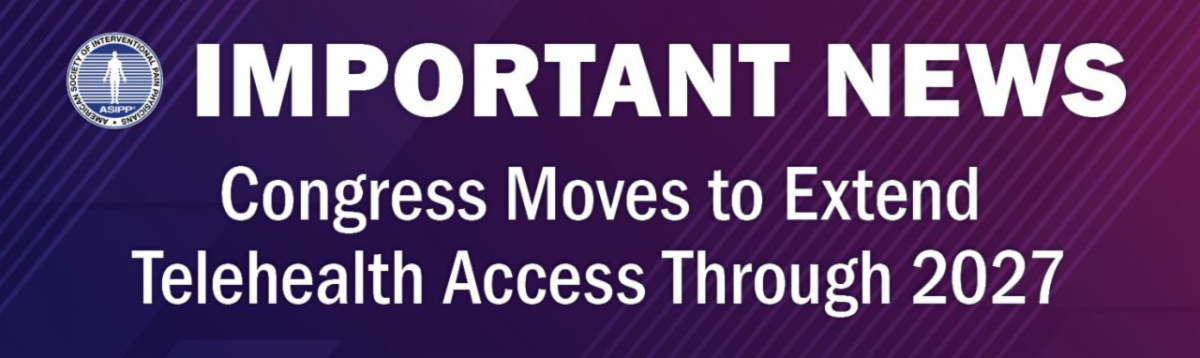
Bipartisan and bicameral bills have been introduced to extend telehealth access through fiscal year 2027.
Telehealth services have become a crucial part of modern medical practice, especially since the COVID-19 pandemic. They provide numerous benefits to patients, helping to address issues like transportation barriers, missed work for caregivers, and financial strains. Medicare has played a key role in expanding access to telehealth, benefiting not only rural Americans but also the broader population, as most insurers—except United Healthcare Commercial— have adopted these policies.
The Telehealth Modernization Act of 2025, led by Reps. Buddy Carter (R-GA) and Debbie Dingell (D-MI), ensures continued access to telehealth services for seniors and patients nationwide. A companion bill is being advanced in the Senate by Sens. Tim Scott (R-SC) and Brian Schatz (D-HI).
Lawmakers emphasized the critical role of telehealth in reducing barriers to care, improving access for rural and underserved patients, and modernizing healthcare delivery.
This legislation represents a major step toward securing long-term telehealth access for Medicare patients and strengthening its place in the U.S. healthcare system.
| | Stay up-to-date with news that impacts you - visit our website or follow us on these social media platforms: | | |
Phase III trial shows efficacy, but lacks comparison
with other active treatments
| | | |
We're excited to let you know that the new ASIPP Community, hosted by DocMatter, is now live!
The ASIPP Community on DocMatter will serve as a place for members to collaborate around clinical and research topics to advance the care of their interventional pain patients.
Click here to be a part of the conversation!
| | |
The FDA recently cleared, for the first time, a blood test for Alzheimer's. This is very exciting news that has made many headlines. I think we have to exercise caution, care, and make sure patients and the families of patients with Alzheimer's, or worrying about Alzheimer's, really understand what this test is and is not.
This test is not a predictor of who's going to get Alzheimer's before symptoms have appeared. It is not intended to do that. If you think that your relative is exhibiting signs of Alzheimer's or has received a diagnosis of Alzheimer's, this blood test will confirm, through looking for amyloid plaques — the things that gunk up the brain in Alzheimer's — that they have gotten into the bloodstream.
It can test for their presence and help confirm that what may be behavioral change, forgetfulness, or whatever the symptoms are, really is in fact Alzheimer's. It's exciting because I'm not sure current tests to confirm Alzheimer's are as accurate, but they're definitely more expensive. They often involve an MRI, trying to look at the brain and see if plaques are there. A blood test, I think, will be better as a way to confirm that Alzheimer's really is the correct diagnosis.
Click here to read the full article.
| | |
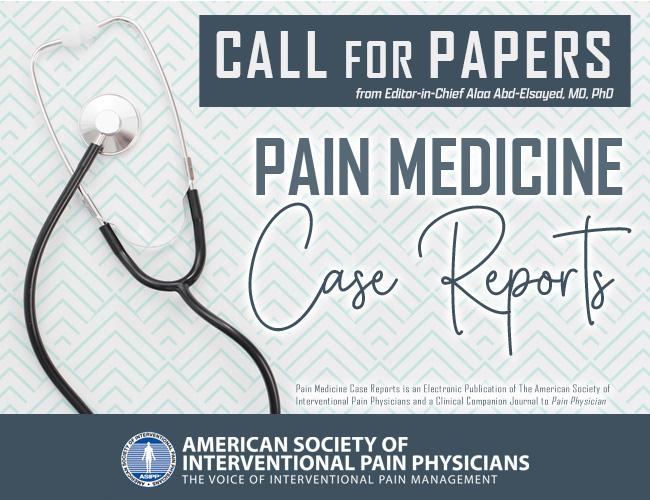
Pain Medicine Case Reports (PMCR) and Editor-in-Chief Alaa Abd-Elsayed, MD, PhD would like to invite you to submit case reports and case series to the PMCR journal. Your article will be published free of charge.
Open access journals are freely available online for immediate worldwide open access to the full text of published articles. There is no subscription fee for open access journals. Open access journals are no different from traditional subscription-based journals: they undergo the same peer review and quality control as any other scholarly journal.
Interested in becoming a member of the PMCR Editorial Board?
Editorial board members are asked to review 2-6 manuscripts per year. Please submit your most up-to-date CV to sgold@asipp.org for consideration.
For more information or to submit your articles, click here.
| | |
We are excited to announce that Pain Medicine Case Reports (PMCR) journal (eISSN 2768-5152) has been accepted for inclusion in MEDLINE and PubMed, the prestigious bibliographic database of the U.S. National Library of Medicine. PMCR, a companion publication to the prestigious Pain Physician journal by ASIPP, joins its counterpart in achieving indexing in both MEDLINE and PubMed, marking ASIPP’s dual presence in these renowned databases.
The inclusion of PMCR journal in MEDLINE signifies a higher level of selectivity, as MEDLINE consists of the top 5,200 biomedical journals. This indexing also means that articles from PMCR will be searchable using NLM Medical Subject Headings (MeSH terms) and other metadata.
The selection for MEDLINE follows a rigorous evaluation process by reviewers from the Literature Selection Technical Review Committee (LSTRC). According to their criteria, the scientific quality of a journal’s content is the primary factor considered for indexing.
We extend our congratulations to the Pain Medicine Case Reports Editor-in-Chief, Deputy Editor-in-Chief, Journal Team, and Editorial Board for this achievement, which underscores the significance and excellence of this esteemed journal.
| | | | |
|
Laxmaiah Manchikanti, MD, Mahendra Sanapati, MD, Amol Soin, MD, Alan D. Kaye, MD, PhD, Alaa Abd-Elsayed, MD, Christopher G. Gharibo, MD, Allen Dennis, MD, and Joshua A. Hirsch, MD
| | HEALTH POLICY PERSPECTIVES | | |
Laxmaiah Manchikanti, MD, Mahendra Sanapati, MD, Paul J. Hubbell, III, MD, Ann Conn, MD, Mayank Gupta, MD, Ramarao Pasupuleti, MD, Alaa Abd-Elsayed, MD, and Alan D. Kaye, MD, PhD
| | |
Laxmaiah Manchikanti, MD, Mahendra Sanapati, MD, Vidyasagar Pampati, MSc, Paul J. Hubbell, III, MD, Ann Conn, MD, Ramarao Pasupuleti, MD, Mayank Gupta, MD, Alan D. Kaye, MD, PhD, Alaa Abd-Elsayed, MD, Annu Navani, MD, Miles Day, MD, Devi Nampiaparampil, MD, Christopher G. Gharibo, MD, and Joshua A. Hirsch, MD
| | |
Laxmaiah Manchikanti, MD, Massab Bashir Khaira, MS, Amol Soin, MD, Alan D. Kaye, MD, PhD, Nebojsa Nick Knezevic, MD, PhD, Alaa Abd-Elsayed, MD, Mahendra Sanapati, MD, Vivekanand A. Manocha, MD, and Joshua A. Hirsch, MD
| | | | |