|
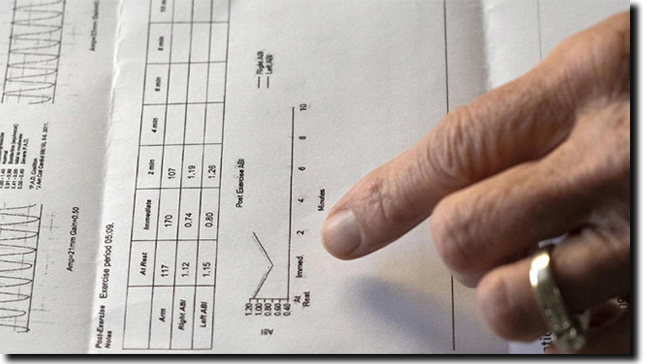
Medicare Advantage plans received $50 billion in payments between 2018 and 2021 for "questionable diagnoses" insurers added to medical records, a Wall Street Journal investigation published July 8 has found.
The Journal investigated billions of Medicare Advantage records and found that some conditions were diagnosed at a much higher rate among Medicare Advantage beneficiaries than among traditional Medicare beneficiaries. For example, diabetic cataracts were diagnosed much more often among Medicare Advantage beneficiaries than among traditional Medicare beneficiaries, the Journal found.
The federal government pays Medicare Advantage plans a rate per beneficiary based on their diagnoses.
Read More
| |
ASIPP State Society Meeting: | |
|
Register for the OHSIPP/KYSIPP Annual Meeting between July 9–14 and use discount code: AWS80 to receive a limited-time 10% discount on registration!
Offer only available for new registrations for
physician member and staff registration types.
Earn up to 15 CMEs while learning from experts and exchanging ideas with colleagues in beautiful downtown Cincinnati this August 9–11.
| |
|
AMA unmoved by Missouri surgeon's proposal to soften code of ethics
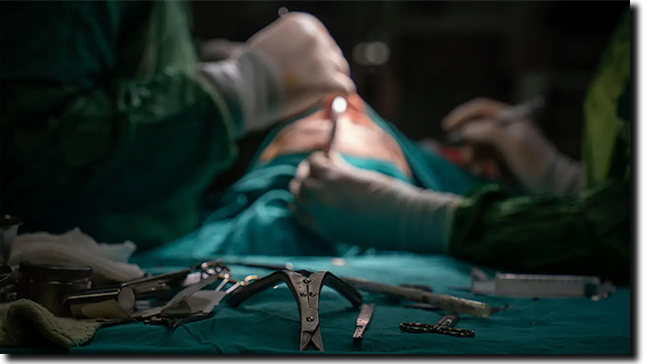
A few years ago, plastic surgeon Edmond Cabbabe, MD, was preparing for a follow-up cosmetic procedure on his wife. Mercy Hospital South, a major hospital in St. Louis, Missouri, had put her on the operating room schedule, just as it had done when he operated on her before.
But on the day of surgery, Cabbabe said, the hospital called him and cancelled her procedure. Administrators told him the hospital's new policy would not allow physicians to operate on family members, he said.
He tried other hospitals where he had operated on family members before, only to learn that they, too, had changed their policies. In St. Louis, "all of the hospitals now have a sudden ban on us doing surgery on family," he said.
Read More
| |
|
The real answer is long, complicated, and not measurable in this one-dimensional way
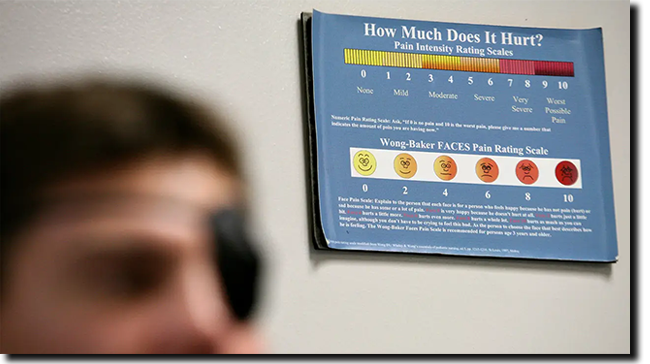
Over the past 2 years, a simple but baffling request has preceded most of my encounters with medical professionals: "Rate your pain on a scale of zero to 10."
I trained as a physician and have asked patients the very same question thousands of times, so I think hard about how to quantify the sum of the sore hips, the prickly thighs, and the numbing, itchy pain near my left shoulder blade. I pause and then, mostly arbitrarily, choose a number. "Three or four?" I venture, knowing the real answer is long, complicated, and not measurable in this one-dimensional way.
Pain is a squirrely thing. It's sometimes burning, sometimes drilling, sometimes a deep-in-the-muscles clenching ache. Mine can depend on my mood or how much attention I afford it and can recede nearly entirely if I'm engrossed in a film or a task. Pain can also be disabling enough to cancel vacations, or so overwhelming that it leads people to opioid addiction. Even 10+ pain can be bearable when it's endured for good reason, like giving birth to a child. But what's the purpose of the pains I have now, the lingering effects of a head injury?
Read More
| |
|
In late June, the Ontario Government announced that it is consulting with the College of Nurses of Ontario, Toronto, Ontario, Canada, on expanding the scope of practice for nurse practitioners. The changes are being considered as one measure to help address the critical shortage of primary care in the province.
Ontario currently has more than 5000 nurse practitioners. While nurses' scope of practice varies across provinces, nurse practitioners can already diagnose, refer patients to specialists, and prescribe medication in Ontario and several other provinces.
The proposed changes include allowing nurse practitioners to apply a defibrillator and cardiac pacemaker therapy, perform electrocoagulation to remove skin tags and treat lesions, and sign blood testing forms for specific infectious diseases. The government is also considering making changes to end-of-life care by allowing nurse practitioners to certify death in all circumstances or any registered nurse to certify an expected death (such as in during palliative care).
Read More
| |
|
Virtual
August 31 & September 28
Click here for the complete list of upcoming exams.
ABIPP Part I; ABIPP Path - Combined DCCPM/CSM virtual exam;
ABIPP Competency Exam in IPM; ABIPP Competency Exam in Regenerative Medicine;
CSM Competency Exam; DCCPM Competency Exam
In Person
October 18, 2024
ABIPP Part II - Practical Examination
Lab Venue: MERI, 44 S. Cleveland Street, Memphis, TN 38104
| |
|
You have more in common with Olympic athletes than you think. You're both highly trained and do physically and mentally demanding work. You may not be performing for billions of viewers, but your stakes are higher, sometimes life or death.
How do Olympians deal? They work with top sports psychologists to build mental skills for high-stress moments — and their techniques work. Those same techniques can help you perform at your peak, too.
"There's a lot we can learn, and have learned, from how they approach performance optimization in elite sports," said Dimitrios Stefanidis, MD, PhD, a professor of surgery at Indiana University School of Medicine, Indianapolis.
Read More
| |
Registration is open for
ASIPP's 2025 Annual Meeting
We would love it if you would register and join us in Orlando!
| |
|
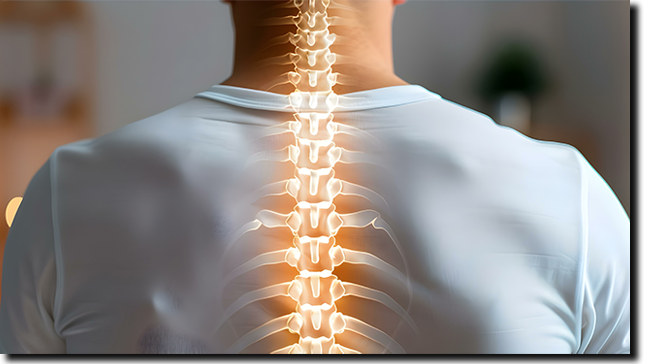
Facet joint inflammation is linked to a more than threefold increase in the risk for subsequent ankylosis at the same spinal location in patients with axial spondyloarthritis (axSpA).
METHODOLOGY:
- Researchers assessed the association between posterior element inflammation, particularly in facet joints, and new facet joint ankylosis in patients with radiographic axSpA in the prospective Sensitive Imaging in Ankylosing Spondylitis cohort.
- Overall, 58 patients (mean age, 49 years; 84% men) with at least one radiographic spinal syndesmophyte who underwent MRI assessments at baseline, 1-year, and 2-year follow-ups were included.
- Inflammatory lesions and facet joint ankylosis were assessed per vertebral unit level in 23 vertebral units by three independent readers.
Read More
| |
|
By
Chris Centeno, MD
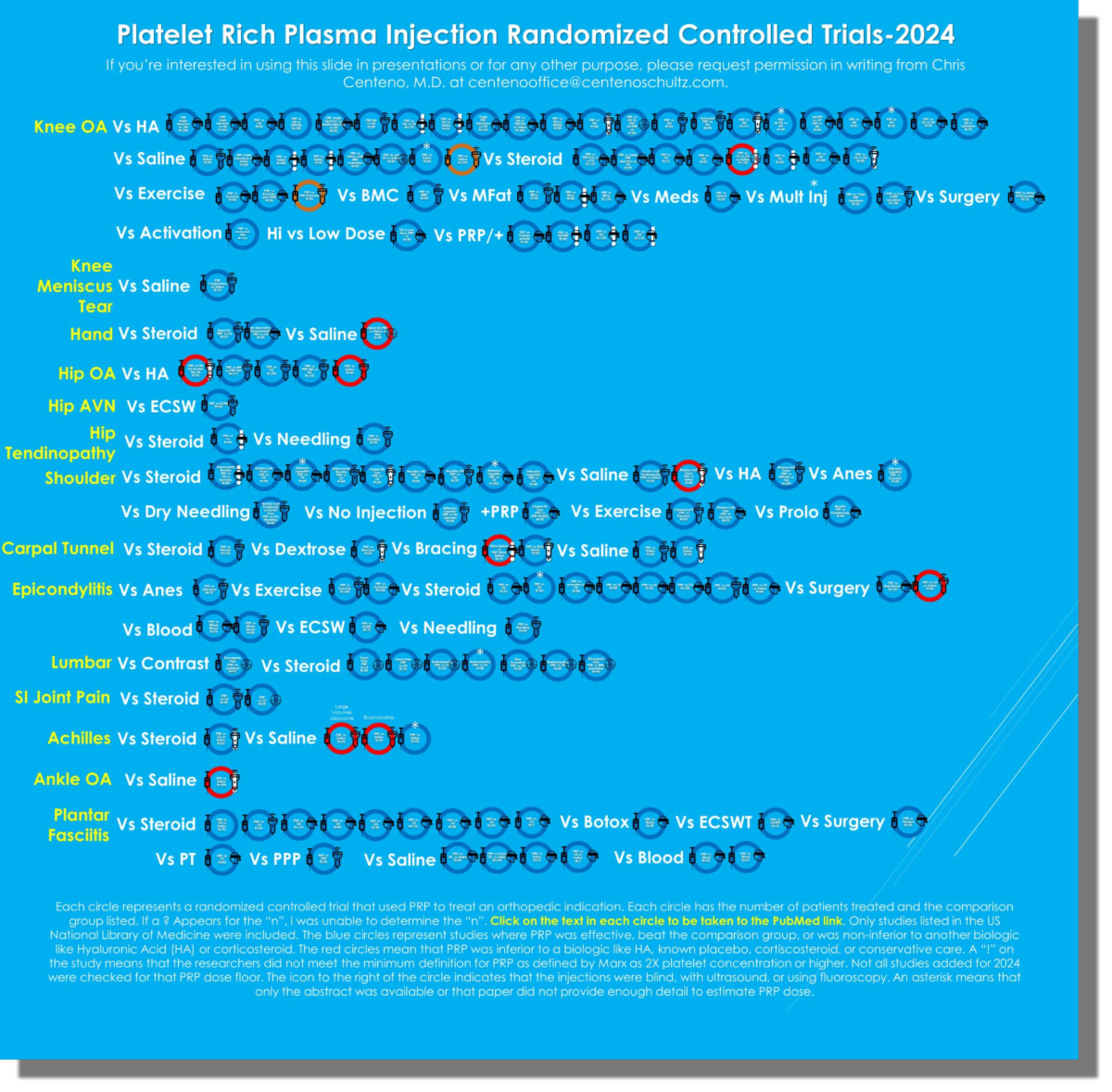
Every year, I perform a deep dive into the orthobiologic literature to see what’s been published. This is part of my job as CMO of Regenexx, and it’s also a great opportunity to produce an infographic that others in the orthobiologics community can use. This is my 2024 edition of the PRP randomized controlled trials literature, which adds another several dozen studies over 2023. Let’s dive in.
Past PRP Infographics
I’ve been at this PRP infographics creation gig since 2019. That’s because 2018 was a banner year for PRP RCTs as this was when the clinical science behind PRP began to coalesce and mature. Here are my past infographics:
Read More
| |
ASIPP State Society Meeting: | |
- ASIPP Members Only Site Information - | |
-
To log in for the first time you will need to click “forgot password” at the bottom of the login window.
- Check your email and then log in as directed.
-
If you have problems logging into your account, click here.
| |
|
Pain Medicine Case Reports (PMCR) and Editor-in-Chief Alaa Abd-Elsayed, MD, PhD would like to invite you to submit case reports and case series to the PMCR journal. Your article will be published free of charge.
Open access journals are freely available online for immediate worldwide open access to the full text of published articles. There is no subscription fee for open access journals. Open access journals are no different from traditional subscription-based journals: they undergo the same peer review and quality control as any other scholarly journal.
Interested in becoming a member of the PMCR Editorial Board?
Editorial board members are asked to review 2-6 manuscripts per year. Please submit your most up-to-date CV to sgold@asipp.org for consideration.
For more information or to submit your articles, click here.
| |
|
Esha Jain, MD, Erica Eldon, DO, Lisa Witkin, MD, and Julia Cron, MD
Abstract
BACKGROUND: The following case describes management of severe persistent vulvar pain from postherpetic neuralgia through a ganglion impar block.
CASE REPORT: A 21-year-old female patient initially presented with genital lesions consistent with herpes simplex virus-1 (HSV-1) and antibody testing suggestive of primary HSV-1 infection. After her genital lesions resolved, she continued to have severe persistent vulvar pain and was diagnosed with postherpetic neuralgia, approximately one year after initial presentation. After unsuccessful medical management with her gynecologist and primary care physician, she was referred to a specialty pain management clinic, where a ganglion impar block was performed and provided significant pain relief.
CONCLUSIONS: Genital HSV-1 is a rare cause of postherpetic neuralgia which can cause debilitating pain. Its management requires a multidisciplinary approach, including gynecology, pain management, physiatry, and if appropriate, behavioral health.
KEY WORDS: Vulvar pain, postherpetic neuralgia, ganglion impar block, genital pain, case report
Read More
| |
|
Lin Hui, MD, Wang Chu X, MD, Zhao Wei, MD, Ma Ying, MD, Liu Yong Q, MD, Lin Xiang H, MD, Huang Bing, MD, and Fang Xiang M, PhD
Abstract
BACKGROUND: Glossopharyngeal neuralgia (GPN) is a condition that causes simultaneous headache and facial pain. The treatment for GPN is similar to the treatment for trigeminal neuralgia. Craniotomy microvascular decompression (MVD) or radiofrequency (RF) therapy is needed if conservative treatment with oral drugs fails. Therefore, the choice of radiofrequency therapy target is essential when treating GPN. However, finding the glossopharyngeal nerve simply by styloid process positioning is challenging.
STUDY DESIGN: Prospective, clinical research study.
SETTING: Department of Anesthesiology and Pain Medical Center, Jiaxing, China.
OBJECTIVE: To compare the clinical effects of computed tomography (CT)-guided RF treatments on GPN when the triple localization of cervical CT, the transverse process of the atlas, and the styloid process is used to those achieved when the treatments are guided by the styloid process alone.
METHODS: From August 2016 to December 2019, 19 cases of GPN neuralgia were treated by radiofrequency under the guidance of CT guided by the styloid process only. (These patients comprised the single localization (SL) of styloid process group, in whom the target of the RF treatments was the posterior medial side of half of the styloid process). From January 2020 to December 2022, 16 cases of GPN were treated by RF under the guidance of CT with cervical CTA (CT angiography), the transverse process of the atlas, and the styloid process. (These patients were placed in the TL group, in whom the target of RF therapy was the gap between the internal carotid artery and the internal jugular vein behind the horizontal styloid process at the lower edge of the transverse process of the atlas). Two percent lidocaine was injected subcutaneously at the needle insertion site, and a stylet with a 21-gauge blunt RF needle (model: 240100, manufacturer: Englander Medical Technology Co., Ltd.) was slowly advanced toward the target. After that, an RF probe was introduced, then low (2 Hz)- and high (50 Hz)-frequency currents of the RF instrument (model: PMG-230, Canada Baylis company) were applied to stimulate. A successful test was defined as a 0.5-1.0 mA current stimulation that could induce the original pain area in the pharynx, the inner ear, or both, without any abnormal irritation of the vagus or accessory nerves. If the first test was unsuccessful, then in the SL group, the needle tip’s position was adjusted to the distal end of the styloid process, and in the triple localization (TL) group, the needle tip depth’s was fine-tuned. A continuous RF treatment was given after a successful test. The RF temperature was 95ºC for 180 seconds. The time that the first puncture reached the target, the puncture paths, the success rate of the first test, the time that the glossopharyngeal nerve was found, the frequency of adjustments to the position of the RF needle, the incidence of intraoperative and postoperative complications, and the therapeutic effects were recorded.
RESULTS: There were no significant differences in demographic data such as age, medical history, lateral classification, and pain score between the groups, but the TL group had a higher proportion of women than did the SL group. All patients’ puncture targets were identified according to the designed puncture path before the operation. There was no difference between the 2 groups in the time of the first puncture to the target (5.05 ± 1.22 vs. 5.82 ± 1.51, P = 0.18), and the designed puncture depth (3.65 ± 0.39 vs. 4.04 ± 0.44). The difference in puncture angles (13.48 ± 3.56 vs. 17.84 ± 3.98, P < 0.01) was statistically significant, and in 8 cases in the SL group, the glossopharyngeal nerve could not be found after 60 minutes of testing, so the RF treatment was terminated. Meanwhile, this problem occurred in only 2 cases in the TL group. There were 3 cervical hematoma cases and 2 cases of transient hoarseness and cough in the SL group, whereas the TL group had, respectively, 0 and one cases of those issues. There was no death in either group.
LIMITATIONS: More clinical data should be collected in future studies.
CONCLUSION: When using RF as a treatment for GPN, the glossopharyngeal nerve is easier to find by using the triple positioning of the cervical CTA, the transverse process of the atlas and the styloid process as the target to determine the anterior medial edge of the internal carotid artery behind the styloid process at the level of the lower edge of the atlas transverse process. The glossopharyngeal nerve is more difficult to locate when only the posterior medial edge of the styloid process is targeted. The single-time effective rate of 180 seconds of RF ablation at 90ºC for GPN can reach 87.5% (14/16), suggesting the treatment’s potential for clinical application.
KEY WORDS: Glossopharyngeal neuralgia, radiofrequency ablation, CT-guided, styloid process, atlas transverse process, cervical CTA
Read More
| |
|
Nimesh Patel, MD, Katherine Nowak, PhD, Ashwin Vaidyanathan, MD, Hannah Milad, MD Candidate, Katie Adlaka, MD Candidate, Cameron Rubino, MD Candidate, Erika Taco Vasquez, MD, Lakshmi Nerusu, MD, Behnoosh Rahavard, MD, Mohamed Fayed, MD, Patrick Forrest, MD, Sarah Money, MD, Samvid Dwivedi, MD, Lara Zador, MD, Roger Haddad, Do, Daanish Khaja, MD, Nabil Sibai, MD, and Rohit Aiyer, MD
Abstract
BACKGROUND: Lumbar medial branch blocks (MBB) are some of the most commonly performed pain procedures in the United States. Diagnostic MBBs are performed to confirm if the generator of low back pain is the facet joint. However, with diagnostic injections, false positive blocks may occur.
OBJECTIVES: Our prospective observational study aims to investigate the effects of midazolam sedation on patients’ perceived intensity of pain relief following lumbar MBB.
STUDY DESIGN: This is a single-center multi-site prospective observational study registered on clinicaltrials.gov (NCT04453449).
SETTING: The study was approved by the Henry Ford Health System Institutional Review Board (IRB) in June 2020 (IRB# 14010) and registered on clinicaltrials.gov in July 2020 (NCT04453449). This manuscript adheres to the applicable EQUATOR STROBE guidelines for an observational cohort study.
METHODS: Patients that underwent MBB without sedation were compared to sedated patients. Patients were asked to complete the Numeric Rating Scale (NRS) at baseline, one day after their diagnostic blocks, as well as 4 weeks and 8 weeks after their lumbar radiofrequency ablation (RFA). The primary outcome is the difference between baseline NRS pain scores and the lowest reported score in the 8 hours following MBB. For patients who proceed to RFA, the frequency of false positive blocks was evaluated. A patient was considered to have a false positive block when they failed to achieve 50% pain relief from RFA after 2 successful sequential MBBs.
RESULTS: There was no significant difference in the NRS pain score change between the sedated and non-sedated groups for diagnostic block one (P = 0.167) and diagnostic block 2 (P = 0.6145). There was no significant difference of false positive rates between non-sedation and sedation patients at 4-weeks post-RFA (P = 0.7178) and at 8-weeks post-RFA (P = 1.000).
LIMITATIONS: Some of the limitations of this study include its nonrandomized design, patient self-reported pain scores, as well as the small variability in the injection technique of proceduralists and in the anatomical location of the injection site.
CONCLUSIONS: This study showed that midazolam did not change patients’ perceived intensity of pain following MBB, as well as false positive rates after RFA. Larger studies are required to draw definitive conclusions.
KEY WORDS: Medial branch blocks, diagnostic, radiofrequency ablation, back pain, chronic pain, facet joint, medial branch ablation
Read More
| |
|
ASIPP is now in collaboration with Curi Medical Liability Program
| |
|
Since this malpractice insurance program officially launched in November 2018, ASIPP has signed up hundreds of providers with an average savings of 30%. This is professional liability insurance tailored to our specialty and will stand up for us and defend our practices.
Curi is a full-service advisory firm that serves physicians and their practices. Their valued advice is grounded in your priorities and elevated in your outcomes. They are driven by a deep understanding of your specific circumstances in medicine, business, and life. To read a few important points to keep in mind about the program, including discounts, administrative defense, cyber coverage, aggressive claims handling, and complimentary risk management CME activities, visit our website.
| | |
|
Group Purchasing Organization Offer Better Pricing and Creates Added Value
ASIPP has formed a partnership with Henry Schein and PedsPal, a national GPO that has a successful history of negotiating better prices on medical supplies and creating value-added services for independent physicians. Working with MedAssets, PedsPal provides excellent pricing on products like contrast media that alleviate some of the financial pressures you experience today.
Learn More
| |  |
|
ASIPP, Fedora Billing,
and Revenue Cycle Management Partnership
ASIPP is now offering our members the benefit of a unique revenue cycle management/ billing service.
We have received a tremendous amount of interest in the ASIPP® billing and coding program.
Click here to learn more about the negotiated rate for practices and more!
| |
|
Like and follow ASIPP® on Facebook, X, and LinkedIn for the most
up-to-date news related to you, your practice, and your patients!
| | | | |