|
DEA Gets an Earful About Telehealth Prescribing of Controlled Substances
Proposed in-person visit requirements raises concern for psychiatry groups
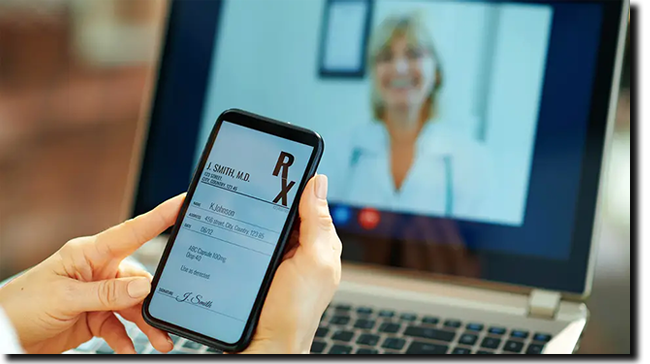
Should the Drug Enforcement Administration (DEA) require a prior in-person visit before allowing clinicians to prescribe controlled substances via telemedicine? That was one of the issues that DEA officials heard conflicting testimony on during a "listening session" Tuesday.
"Arbitrary one-time in-person evaluation requirements do not prevent abuse and diversion," said Helen Hughes, MD, medical director of the Office of Telemedicine at Johns Hopkins Medicine, in Baltimore. "Telemedicine controlled substance prescribing happens in a variety of settings across Johns Hopkins Medicine, often without a previous in-person encounter," such as pediatric patients being prescribed attention deficit-hyperactivity disorder (ADHD) medications and elderly patients who are receiving palliative care.
"The ability for these providers to prescribe controlled substances and use their medical judgment for telemedicine without a prior in-person visit allows patients to receive clinically appropriate, essential care via a convenient and patient-centered modality, and we strongly believe the in-person medical requirement should be removed in its entirety," she said. "While the proposed rule would prevent or limit prescribing in the above scenarios, it does nothing to prevent a provider who saw a patient one time in person -- even 10 years ago -- from recklessly prescribing controlled substances via either telemedicine or in-person care."
Read More
| |
Attention Residents and Fellows:
There's still time to register for tonight's webinar series!
| |
|
ASIPP Submits Comments on the 2024 Physician Fee Schedule
ASIPP emphasized multiple factors and issues:
- Telehealth Services
- Conversion Factor
- Determination of Practice Expense (PE) Relative Value Units (RVUs)
- Treatment of Opioid Use Disorder (OUD)
- Electronic Prescribing of Controlled Substances (EPCS)
- CY 2024 Medicare Physician Payment Schedule Updates to the Quality Payment Program (QPP)
For detailed comments, please click here to see ASIPP’s letter.
ASIPP and SIPMS Submit Comments
on the ASC Payment Rule
ASIPP and SIPMS emphasized the following:
1. Average Rate of Data
2. Intensive Procedure Policy for ASCs
3. Inadequate Payment for Certain Nerve Block Procedures
- Trigeminal Nerve Block (CPT 64400)
- Greater Occipital Nerve Block (CPT Code 64405)
- Suprascapular Nerve Block (CPT 64418)
- Ilioinguinal/Iliohypogastric Nerve Block (CPT 64425)
- Femoral Nerve Block (CPT 64447)
For the complete letter, please click here.
| |
Interventional Techniques in IPM
Review Course & Cadaver Workshop
| |
Regenerative Medicine
Review Course & Cadaver Workshop
| |
|
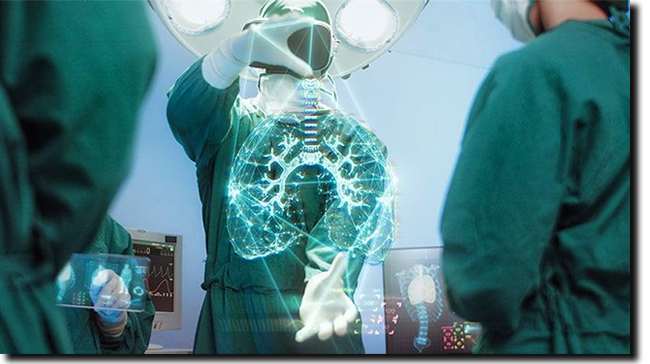
From Sci-Fi to Reality: Robotic Surgery's 'Exciting' Time
On her flight to Atlanta, Robin Pollack nibbled gummy bears and sipped a cranberry juice cocktail. It had been a week since she'd gotten robotic surgery to remove a cancerous stomach tumor at MD Anderson Cancer Center in Houston, and she was heading home — feeling surprisingly good.
The surgery required five small cuts. "I now have four little dots and a 2-inch slit that he superglued shut," Pollack said. "After surgery, I woke up hungry."
She was out of bed and walking in a day, and out and about town with her husband within a week, enjoying crème brûlée and eggs Florentine.
"I have not had one bit of pain since," she said 2 weeks after surgery. "I have not taken pain medication, not even one Tylenol. I walked 2 miles yesterday."
Read More
| |
|
Virtual
September 30 & October 28
ABIPP Part I; ABIPP Path - Combined DCCPM/CSM virtual exam; ABIPP Competency Exam in IPM; ABIPP Competency Exam in Regenerative Medicine
| |
|
How inflation will affect Social Security increases, income-tax provisions for 2024
Inflation has cooled in recent months, but there's still enough in the pipeline to affect Social Security benefits, some income-tax provisions and other items that can affect your budget.
As planning comes into focus for 2024, here are some issues to watch, plus a few other tax reminders.
Social Security increases to cool off
The Social Security Administration announced a COLA, or cost-of-living adjustment, of 8.7% for 2023, but the increase for 2024 might not be even half that much.
Read More
| |
|
Coffee Component Boosts Memory
Trigonelline (TG), a plant alkaloid found in coffee, as well as in fenugreek seed and radish, was anticipated to possess cognitive enhancement properties.
In this study, researchers led by the University of Tsukuba investigated the effects of TG on memory and spatial learning (acquiring, retaining, structuring, and applying information related to the surrounding physical environment) from both a cognitive and molecular biology perspective in an integrated manner using a senescence-accelerated mouse prone 8 (SAMP8) model.
Following oral administration of TG to SAMP8 mice for 30 days, the Morris water maze test indicated a significant improvement in spatial learning and memory performance compared with SAMP8 mice that did not receive TG.
Read More
| |
|
People With Long COVID Have Specific Blood Biomarkers, Study Says
People with long COVID have specific biomarkers in their blood, a study published Monday in Nature said.
The findings may be a step toward creating blood tests to positively identify people with long COVID so specialized treatments can be employed, researchers said.
"This is a decisive step forward in the development of valid and reliable blood testing protocols for long COVID," said David Putrino, PhD., lead author and Professor of Rehabilitation and Human Performance and Director of the Abilities Research Center at Icahn Mount Sinai Health System.
Read More
| |
Abstract submissions are open for
ASIPP's 2024 Annual Meeting!
The submission deadline is January 22, 2024.
Don't miss your chance to be part of an exceptional event,
sharing insights and discoveries that shape the future of pain management.
| |
Plan Your Participation Now!
| |
|
Brain’s Blue Spot, Locus Coeruleus, Is A Key Player in Sleep Quality and Memory
We’ve known for a long time that sleep is good for the brain. We also know that light is not just for seeing, but also plays an important role in other aspects such as mood. What we don’t know is how all this happens in our brains.
Two separate studies, carried out by researchers at the University of Liège using the 7 Tesla MRI on the GIGA-Centre de Recherche du Cyclotron platform, offer the premises of an explanation.
A scientific team from the ULiège Cyclotron Research Centre /In Vivo Imaging (GIGA-CRC-IVI) has just demonstrated that the quality of our REM sleep (the part of sleep during which we dream the most) is linked to the activity of the locus coeruleus. This small brain nucleus, the size of a 2cm-long spaghetti, is located at the base of the brain (in the brainstem).
Read More
| |
|
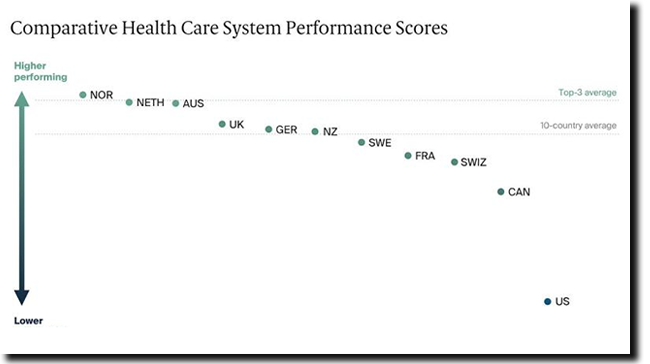
In recent weeks, some have been quick to criticize health policy decisions in the U.S. by pointing to decisions made in other countries.
For example, the U.S. has a broad recommendation for the fall COVID-19 vaccine, while the U.K. has a more targeted policy. This conversation is bleeding into flu vaccines and COVID-19 isolation and testing policies, as similar contrasts exist.
It’s fair to wonder why. We are all high-income countries. We all have the same vaccines. We are all looking at the same data. How could public health officials come to different conclusions across countries?
Read More
| |
|
Heart Societies Ready to Split From ABIM Over Long-Standing MOC Disputes
What if cardiology were no longer an internal medicine subspecialty? Four leading cardiology societies have announced plans to create a new certification process that is independent of the American Board of Internal Medicine (ABIM) maintenance of certification (MOC) system.
As envisioned, the new "independent, self-governed" entity would supplant the ABIM's long-standing and widely criticized MOC system and establish cardiology as its own specialty with its own subspecialties. Long in coming, it is only the latest response to many in the field who for years have charged that the MOC system is needlessly burdensome and expensive.
"It's time to have a dedicated cardiovascular medicine board of our own," said B. Hadley Wilson, MD, in the group's announcement. "Cardiology is a distinct medical specialty, and physicians want and deserve a clinical competency and continuous certification program that is meaningful to their practice and patients."
Read More
| |
- ASIPP Members Only Site Information - | |
-
To log in for the first time you will need to click “forgot password” at the bottom of the login window.
- Check your email and then log in as directed.
-
If you have problems logging into your account, click here.
| |
|
Here's Another Racial-Ethnic Disparity in Back Pain Care
Nonwhite patients who overuse opioids are given nonpharmacologic alternatives less often
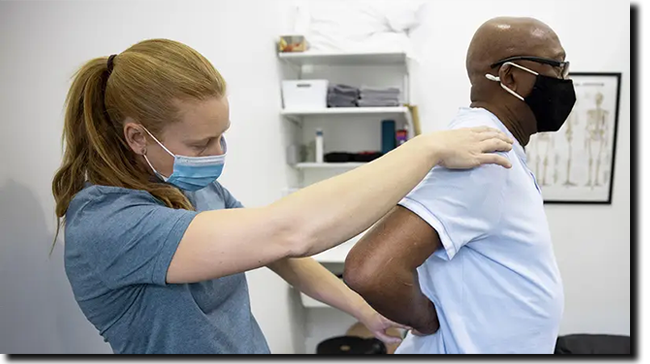
Among Medicare beneficiaries with chronic low back pain and opioid use disorder (OUD), white patients were dramatically more likely to have received nonpharmacologic treatments such as physical therapy or chiropractic care than most other racial-ethnic groups, researchers found.
In particular, patients classified as Black or Hispanic received these nondrug alternatives at about half the rate for white patients, with adjusted odds ratios of 0.46 (95% CI 0.39-0.55) and 0.54 (95% CI 0.43-0.67), respectively, according to Patience Moyo, PhD, of Brown University in Providence, Rhode Island, and colleagues.
But it was also notable that use of nonpharmacologic pain therapies was low overall, at just 10.2% of patients in the population-based study, the group reported in JAMA Network Open.
Read More
| |
|
National Study to Document Changes in Physician Practice Expense
The American Medical Association (AMA) is undertaking a new national study, supported by 173 health care organizations, to collect representative data on physician practice expenses. The aim of the Physician Practice Information Survey is to better understand the costs faced by today’s physician practices to support physician payment advocacy. The study will serve as an opportunity to communicate accurate financial information to policymakers, including members of Congress and the Centers for Medicare & Medicaid Services (CMS). The AMA has contracted with Mathematica, an independent research company with extensive experience in survey methods as well as health care delivery and finance reform, to conduct the study.
The Medicare physician payment schedule, maintained by CMS and used by many other payers, relies on 2006 cost information to develop practice expense relative values, the Medicare Economic Index and resulting physician payments. As the U.S. economy and health care system have undergone substantial changes since that time, including inflation and the wide-spread adoption of electronic health records and other information technology systems, practice expense payments no longer accurately reflect the relative resources that are typically required to provide physician services.
The study will rely on financial experts in the practice to complete an online financial information survey. The number of direct patient care hours is a critical component of the Medicare payment methodology. Therefore, thousands of individual physicians will receive a short patient care hours survey from either their practice directly or from Mathematica. The input from physician practices and individual physicians that are randomly selected to participate in this study is critical for its success. Participation will ensure that practice expenses and patient care hours are accurately reflected.
Read More
| |
Pain Medicine Case Reports (PMCR) and Editor-in-Chief Alaa Abd-Elsayed, MD, PhD would like to invite you to submit case reports and case series to the PMCR journal. Your article will be published free of charge.
Open access journals are freely available online for immediate worldwide open access to the full text of published articles. There is no subscription fee for open access journals. Open access journals are no different from traditional subscription-based journals: they undergo the same peer-review and quality control as any other scholarly journal.
Interested in becoming a member of the PMCR Editorial Board?
Editorial board members are asked to review 2-6 manuscripts per year. Please submit your most up-to-date CV to sgold@asipp.org for consideration.
For more information or to submit your articles, click here.
| |
|
| CASE REPORT |
Luisa A. Bastian, MD, Nathan D. Clements, MD, Zack Brooke, MS, Annmarie Jaghab, DO, and Christopher Yopp, MD
For accessing the cervical epidural space, the contralateral oblique (CLO) view under fluoroscopy at 50 degrees (CLO50) has been described as a safe and effective view for obtaining epidural access, with some studies suggesting it is superior to the lateral and anteroposterior (AP) views for correct needle tip placement (1). Because false loss of resistance can still occur using this approach, contrast medium needs to be injected prior to medication administration to ensure correct placement. It is important to recognize spread patterns within the meningeal layers to distinguish between proper placement into the epidural space and unintended spread into the subdural or intrathecal space.
Currently, there are limited images in the literature of the appearance of subdural injections of contrast medium and none are in the contralateral oblique view. The goal of this study is to assist readers in recognizing subdural injections and ultimately avoid its potential harmful complications and lack of therapeutic benefit.
Read More
| |
|
| OBSERVATIONAL TRIAL |
Effectiveness of Intermediate Cervical Plexus Block in Whiplash-Associated Disorder: A Prospective Observational Trial in Fifty Patients
Arul James, MD, Hayun Lee, FRCA, Shruti Niraj, DClinPsy, Yuvraj Kukreja, FRCA, Manish Mittal, FRCA, and G Niraj, MD
Abstract
BACKGROUND: Whiplash trauma can result in a range of symptoms, including chronic neck pain, headache, facial pain, upper back pain, and tinnitus, which comprises whiplash-associated disorder (WAD). Intermediate cervical plexus block (iCPB) is a novel intervention that targets the upper cervical nerves and anecdotal reports suggest benefits in WAD.
OBJECTIVES: We hypothesized that the cervical plexus may have a role in the pathogenesis of WAD and blocking the cervical plexus may provide analgesia.
STUDY DESIGN: Prospective observational trial.
SETTING: Tertiary pain medicine unit at a university teaching hospital.
METHODS: Adult patients who presented with refractory chronic neck pain following whiplash were included in a prospective observational trial. The pragmatic trial studied the effectiveness of 2 sequential cervical plexus blocks (iCPB with local anesthetic [iCPB-LA] and iCPB with steroid and LA mixture [iCPB-Steroid]) in refractory chronic neck pain following whiplash. Patients who reported < 50% relief at 12 weeks after iCPB-LA were offered iCPB-Steroid. Primary outcome was “neck pain at its worst in the last 24 hours” at 12 weeks. Secondary outcomes included change in neck disability index, employment status, and mood.
RESULTS: After excluding cervical zygapophyseal joint dysfunction, 50 patients underwent the iCPB-LA between June 2020 and August 2022. Five patients reported > 50% relief (durable relief) at 12 weeks and 3 patients were lost to follow-up. Forty-two patients received iCPB-Steroid. iCPB-Steroid was associated with significant reduction in neck pain, neck disability, and improvement in mood at 12 weeks when compared to the block with LA. In addition, iCPB-Steroid was associated with significant reduction in neck pain and disability at 24 weeks. Due to functional improvement, 34 patients (34/50, 78%) were able to maintain employment.
LIMITATIONS: This is an open-label, observational, single-center study in a limited cohort under a single physician. Cervical facet joint dysfunction was ruled out clinically and radiologically.
CONCLUSIONS: Cervical plexus may play a central role in the pathogenesis of WAD. iCPB could potentially be a treatment option in this cohort.
KEY WORDS: Intermediate cervical plexus block, whiplash, trigemino-cervical complex, whiplash-associated disorder, neck pain, chronic headache
Read More
| |
|
| PROSPECTIVE STUDY |
Anesthetic Spread of Ultrasound-Guided Paraspinal Blocks in Video-Assisted Thoracoscopic Surgery: A Three-Dimensional Reconstruction Image Study
Qi Chen, MD, Han Yang, MD, Daqiang Zhao, MD, Xixi Tang, MD, and Hongliang Liu, PhD
Abstract
BACKGROUND: Anesthetic spread of ultrasound-guided paraspinal blocks is still unknown.
OBJECTIVES: To compare the drug diffusion qualities of intertransverse process block (ITPB) and erector spinae plane block (ESPB) in clinical practice.
STUDY DESIGN: Prospective computed tomography (CT)-3-dimensional (3D) reconstruction image study.
SETTING: Operation room in hospital.
METHODS: Twenty patients undergoing thoracoscopic pulmonary wedge resection or segmentectomy were enrolled. These procedures require localization of pulmonary nodules using CT-guided needle puncture immediately before surgery. The patients were divided into 2 groups, each consisting of 10 patients. Group I underwent ITPB, while group E underwent ESPB. These interventions were performed 30 minutes before surgery using 20 mL of 0.25% bupivacaine with 2 mL iohexol. Sensory loss of the thoracic dermatomes was assessed using cold stimulation before general anesthesia. Patients’ CT localization images were used for 3D reconstruction after surgery, and the diffusion of the drug in each cross-section of the CT images was evaluated.
RESULTS: Three-dimensional imaging of the drug showed that in group E, drug diffusion was improved in the cephalocaudal area compared to group I (10 vs 4.5 segments). Drug diffusion in group I was improved anteriorly and laterally ([10/10, 100%] in the paravertebral and intercostal spaces) and reached the front of the vertebral body along the thoracic fascia in certain segments (6/10, 60%). In group E, very few segments of the drug reached the paravertebral (2/10, 20%) and intercostal (3/10, 30%) spaces. All patients in group I had clear signs of loss of cold sensation on the lateral and anterior chest walls, with an average of 4 thoracic dermatomes. In group E, 3 patients had definite lateral and anterior chest wall cold stimulation signs, the thoracic dermatome was discontinuous, and the effect was only present between 1-2 segments. The blocking effect of the paraspinal zone was excellent (100%) in both groups.
LIMITATIONS: However, this study has some limitations. First, the sample size was small, and clinical trials with larger samples are required to further verify the effects of ITPB and ESPB. Second, the same local anesthetic drug concentration and volume were used for both techniques in this study, and the effect of volume or concentration on drug diffusion was not further explored.
CONCLUSIONS: Compared with ESPB, ITPB yielded increased stability in lateral and anterior chest wall block with improved anterior and intercostal spread, but reduced cephalocaudal spread.
KEY WORDS: Erector spinae plane block, intertransverse process block, 3-dimensional imaging, paraspinal block, drug diffusion, video-assisted, thoracoscopic surgery, 3D reconstruction
Read More
| |
|
ASIPP is now in collaboration with Curi Medical Liability Program
| |
|
Since this malpractice insurance program officially launched in November 2018, ASIPP has signed up hundreds of providers with an average savings of 30%. This is professional liability insurance tailored to our specialty and will stand up for us and defend our practices.
Curi is a full-service advisory firm that serves physicians and their practices. Their valued advice is grounded in your priorities and elevated in your outcomes. They are driven by a deep understanding of your specific circumstances in medicine, business, and life. To read a few important points to keep in mind about the program, including discounts, administrative defense, cyber coverage, aggressive claims handling, and complimentary risk management CME activities, visit our website.
| | |
ASIPP® has formed a partnership with Henry Schein and PedsPal, a national GPO that has a successful history of negotiating better prices on medical supplies and creating value-added services for independent physicians. Working with MedAssets, PedsPal provides excellent pricing on products like contrast media that alleviate some of the financial pressures you experience today.
| |  |
ASIPP® is now offering our members the benefit of a unique revenue cycle management/ billing service.
We have received a tremendous amount of interest in the ASIPP® billing and coding program.
Click here to learn more about the negotiated rate for practices and more!
| |
up-to-date news related to you, your practice, and your patients!
| | | | |