An exciting Advocacy Session has been added to our 2025 Annual Meeting
| |
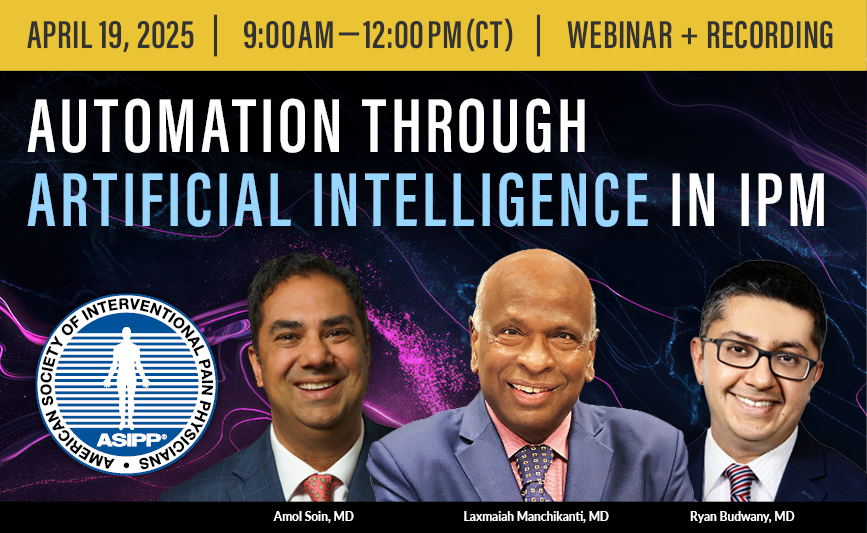
This Saturday, Discover the Role of AI in IPM
| |
WEBINAR - APRIL 19
Please join us for ASIPP’s exclusive webinar:
Automation Through Artificial Intelligence in IPM
Learn how AI-powered tools are transforming documentation, communication, patient engagement, revenue cycle management, procedure training, and more.
| | |
In 2025 alone, doctors and legislators across the country have already introduced more than 100 pieces of legislation meant to reform prior authorization. The cumbersome approval process is a leading cause of burnout among doctors, and changing it is a top priority of the American Medical Association (AMA). According to a 2024 survey, 93% of physicians say that prior authorization has led to patient harm.
Leaders in the health-tech arena believe prior authorization is ripe for an artificial intelligence (AI)-driven transformation. The problem is that most doctors aren’t on board.
In February, the AMA reported that 61% of physicians believe that using AI in prior authorization will increase denial rates and delay patient care. Moreover, medical associations in at least five states have introduced legislation meant to limit AI’s use in patient decisions.
Read More
| |
|
Patients are not lines on a balance sheet
Private equity (PE) has become a powerful and often invisible force reshaping how care is delivered across the country. A recent report from the Private Equity Stakeholder Project shines a light on one of the latest, and most concerning, developments: the growing role of PE in services for people with intellectual and developmental disabilities (IDD).
This trend is alarming not just because of the populations involved, but because of what it reveals about how healthcare is increasingly being treated -- not as a social good, but as a business opportunity ripe for financial exploitation.
The Lifeline of Medicaid-Funded IDD Services
Many of the services supporting individuals with IDD -- residential facilities, home care, adult day programs, physical and occupational therapy, and more -- are funded primarily through Medicaid. For nearly 10 million Americans with IDD, these programs represent far more than care: they are the foundation of daily life, independence, and survival. Historically, these services have been provided primarily by non-profits and religious organizations.
Read More
| | |
New 2025 Dates
Mark your calendars!
April 26, May 31, & June 28
Four (4) hour virtual exam
- ABIPP Path – Combined CCPM/ CSM Exam
For those with subspecialty in Pain Medicine
Two (2) hour virtual exam
- ABIPP Competency Exam in IPM
For those without primary board certification
Two (2) hour virtual exam
- ABIPP Competency Exam in Regenerative Medicine
Two (2) hour virtual exam
- Controlled Substance Management Competency Exam
Two (2) hour virtual exam
- Documentation, Coding, Compliance, Practice Management Competency Exam
Two (2) hour virtual exam
| |
When patients are scheduled for surgery at Cleveland Clinic in Cleveland, clinicians check the person’s prescription drug history embedded in the electronic health record. This history provides scores intended to predict the likelihood a patient will misuse or abuse opioids.
Experts agree the algorithm-generated scores may have some benefits. But clinicians, researchers, and patient advocates fear its adoption has come without adequate scientific validation of those benefits. Critics say the lack of demonstrated value has raised the possibility clinicians may be withholding appropriate pain medication from some patients.
Other tools and algorithms “are all very rigorously developed and validated; we know the literature well, and we rely upon that, and that really doesn’t exist for this score,” said Scott Weiner, MD, MPH, the director of emergency department–based substance use disorder initiatives at Brigham and Women’s Hospital in Boston. “If someone isn’t familiar with the literature, they might assume that this is a well validated tool, and unfortunately, it’s not.”
Read More
| | - ASIPP Members Only Site Information - | |
-
To log in for the first time you will need to click “forgot password” at the bottom of the login window.
- Check your email and then log in as directed.
-
If you have problems logging into your account, click here.
| | |
Fremanezumab shows safety, efficacy in phase III trial of pediatric patients
Fremanezumab (Ajovy) cut monthly migraine days in children and adolescents with episodic migraine, according to the SPACE trial.
The phase III study showed a reduction in monthly migraine days in patients (mean age about 13 years) with fremanezumab treatment versus placebo (-2.5 vs -1.4 days per month, P=0.0210), said Christina Szperka, MD, of Children's Hospital of Philadelphia.
Treatment also reduced headache days and increased the number of patients achieving a 50% or higher reduction in monthly migraine days. But reductions in disability and improvement in quality of life (QoL) did not reach statistical significance, she reported at the American Academy of Neurology annual meeting.
Read More
| |
|
Research on the gut microbiome — and clinical attention to it — has focused mainly on bacteria, but bacteriophages and fungi play critical roles as well, with significant influences on health and disease, experts said at the Gut Microbiota for Health (GMFH) World Summit 2025.
Fungi account for < 1% of the total genetic material in the microbiome but 1%-2% of its total biomass. “Despite their relative rarity, they have an important and outsized influence on gut health” — an impact that results from their unique interface with the immune system, said Kyla Ost, PhD, of the Anschutz Medical Campus, University of Colorado, in Denver, whose research focuses on this interface.
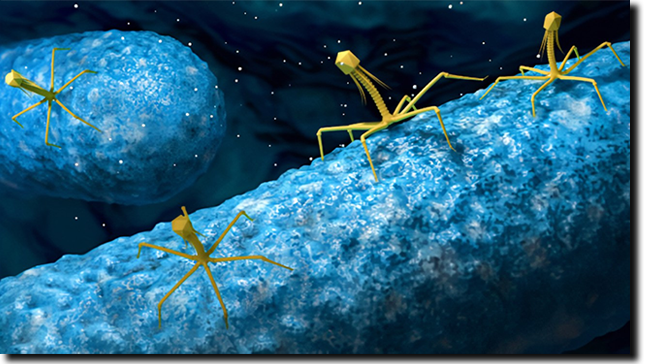
And bacteriophages — viruses that infect and kill bacteria — are highly abundant in the gut. “Bacteriophages begin to colonize our GI [gastrointestinal] tract at the same time we develop our own microbiome shortly after birth, and from that time on, they interact with the bacteria in our GI tract, shaping [and being shaped by] the bacterial species we carry with us,” said Robert (Chip) Schooley, MD, distinguished professor of medicine at the University of California San Diego School of Medicine.
Read More
| | |
Pain Medicine Case Reports (PMCR) and Editor-in-Chief Alaa Abd-Elsayed, MD, PhD would like to invite you to submit case reports and case series to the PMCR journal. Your article will be published free of charge.
Open access journals are freely available online for immediate worldwide open access to the full text of published articles. There is no subscription fee for open access journals. Open access journals are no different from traditional subscription-based journals: they undergo the same peer review and quality control as any other scholarly journal.
Interested in becoming a member of the PMCR Editorial Board?
Editorial board members are asked to review 2-6 manuscripts per year. Please submit your most up-to-date CV to sgold@asipp.org for consideration.
For more information or to submit your articles, click here.
| | |
We are excited to announce that Pain Medicine Case Reports (PMCR) journal (eISSN 2768-5152) has been accepted for inclusion in MEDLINE and PubMed, the prestigious bibliographic database of the U.S. National Library of Medicine. PMCR, a companion publication to the prestigious Pain Physician journal by ASIPP, joins its counterpart in achieving indexing in both MEDLINE and PubMed, marking ASIPP’s dual presence in these renowned databases.
The inclusion of PMCR journal in MEDLINE signifies a higher level of selectivity, as MEDLINE consists of the top 5,200 biomedical journals. This indexing also means that articles from PMCR will be searchable using NLM Medical Subject Headings (MeSH terms) and other metadata.
The selection for MEDLINE follows a rigorous evaluation process by reviewers from the Literature Selection Technical Review Committee (LSTRC). According to their criteria, the scientific quality of a journal’s content is the primary factor considered for indexing.
We extend our congratulations to the Pain Medicine Case Reports Editor-in-Chief, Deputy Editor-in-Chief, Journal Team, and Editorial Board for this achievement, which underscores the significance and excellence of this esteemed journal.
| | | | |
|
ASIPP is now in collaboration with Curi Medical Liability Program
Since this malpractice insurance program officially launched in November 2018, ASIPP has signed up hundreds of providers with an average savings of 30%. This is professional liability insurance tailored to our specialty and will stand up for us and defend our practices.
Curi is a full-service advisory firm that serves physicians and their practices. Their valued advice is grounded in your priorities and elevated in your outcomes. They are driven by a deep understanding of your specific circumstances in medicine, business, and life. To read a few important points to keep in mind about the program, including discounts, administrative defense, cyber coverage, aggressive claims handling, and complimentary risk management CME activities, visit our website.
| | |
|
Group Purchasing Organization Offer Better Pricing and Creates Added Value
ASIPP has formed a partnership with Henry Schein and PedsPal, a national GPO that has a successful history of negotiating better prices on medical supplies and creating value-added services for independent physicians. Working with MedAssets, PedsPal provides excellent pricing on products like contrast media that alleviate some of the financial pressures you experience today.
Learn More
For updated information concerning tariffs on products, click here.
| |  |
|
ASIPP, Fedora Healthcare Solutions Partnership
ASIPP offers our members the benefit of a unique revenue cycle management/ billing service.
We have received a tremendous amount of interest in the ASIPP billing and coding program.
Click here to learn more about the negotiated rate for practices and more!
| | Like and follow ASIPP® on Facebook, X, LinkedIn, and YouTube for the most up-to-date news related to you, your practice, and your patients! | | | | |