Save 25% on your meeting registration
| |
Cuts include $18 billion to NIH budget
Health groups and members of Congress mostly panned a fiscal year 2026 "skinny" budget proposal released Friday by the Trump administration that cuts millions of dollars from HHS programs and other agencies.
"If enacted, the preview of the president's budget request released today would yield to cancer, Alzheimer's, diabetes, and other health threats facing Americans by dismantling federal support for medical research, public health, and health professions' education that keeps the country healthy," Danielle Turnipseed, JD, MPP, chief public policy officer of the Association of American Medical Colleges, said in a statement. "Retreating on health issues where we have made progress and where so many depend on their government to offer promising cures is not the American way."
"This budget is Donald Trump's latest blueprint to rip away the services that millions of Americans rely on, leaving families less safe and less healthy," Sen. Ron Wyden (D-Ore.), ranking member of the Senate Finance Committee, said in a statement. "The only winners here will be corporations wanting to pollute your clean air and drinking water and rich tax cheats. One hundred days in, the Trump administration is doubling down on its agenda to help corporations and billionaires get wealthier while everyone else gets left behind."
Read More
| | |
The United States filed a complaint last week under the False Claims Act (FCA) against three of the nation’s largest health insurance companies — Aetna Inc. and affiliates, Elevance Health Inc. (formerly known as Anthem), and Humana Inc. — and three large insurance broker organizations — eHealth, Inc. and an affiliate, GoHealth, Inc., and SelectQuote Inc. The United States alleges that from 2016 through at least 2021, the defendant insurers paid hundreds of millions of dollars in illegal kickbacks to the defendant brokers in exchange for enrollments into the insurers’ Medicare Advantage plans.
Under the Medicare Advantage (MA) Program, also known as Medicare Part C, Medicare beneficiaries may choose to enroll in health care plans (MA plans) offered by private insurance companies, such as defendants Aetna, Anthem, and Humana. Many Medicare beneficiaries rely on insurance brokers to help them choose an MA plan that best meets their individual needs. Rather than acting as unbiased stewards, the defendant brokers allegedly directed Medicare beneficiaries to the plans offered by insurers that paid brokers the most in kickbacks, regardless of the suitability of the MA plans for the beneficiaries. According to the complaint, the broker organizations incentivized their employees and agents to sell plans based on the insurers’ kickbacks, set up teams of insurance agents who could sell only those plans, and at times refused to sell MA plans of insurers who did not pay sufficient kickbacks.
Read More
| | |
| |
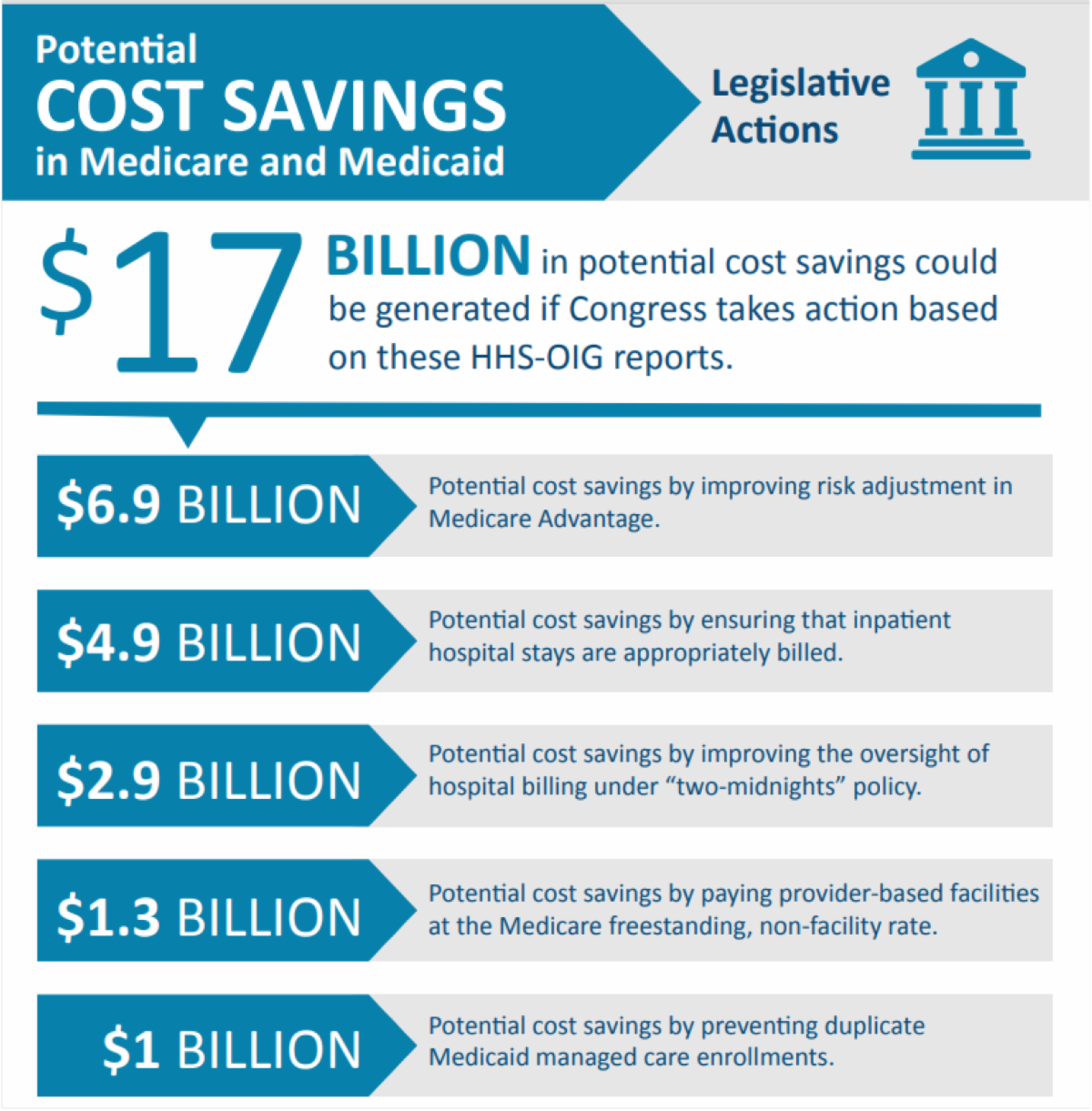
The $17 billion in potential cost savings is based on a select subset of recent OIG reports that highlight significant opportunities for improving HHS programs. Some of the reports recommend legislative actions while others recommend program or process changes that Congress could address. The potential savings reflect the conditions and timeframes within the scope of each report.
| | | |
IMPORTANT UPDATE
SPR is happy to announce an important update regarding Humana Medicare Advantage. As of May 1, Humana is now recognizing SPRINT as a PNS therapy. Previously, SPRINT was categorized as PNT (Percutaneous Nerve Stimulation), which allowed denials on the grounds that the therapy fell outside the NCD.
Additional details are as follows:
Payer: Humana Medicare Advantage (click here to view policy)
Policy Title: Peripheral Nerve Stimulators
Policy changes: SPRINT no longer misclassified as PNT and is now appropriately classified as PNS. Humana is applying the Noridian Medicare LCD criteria to ALL PNS devices – Including SPRINT PNS!
Effective Date: 5/1/2025
Click here to view a PDF of the official policy update.
| |
Findings highlight need to closely monitor patients, especially before and after treatment
Gabapentinoid use did not appear to be linked directly with self-harm risk, a population-based, self-controlled case series study showed.
Risk of self-harm rose in the 90 days before gabapentinoid treatment (incidence rate ratio [IRR] 1.69, 95% 1.55-1.85), persisted during the early treatment period before dropping to a reference level (IRR 1.06, 95% CI 0.98-1.13), then rose again within 14 days after treatment stopped (IRR 3.02, 95% CI 2.53-3.60), reported Kenneth Man, PhD, of the University College London in England, and co-authors.
"The association between gabapentinoids and risk of self-harm seems to be multifaceted: an elevated risk of self-harm is present before initiation of gabapentinoid treatment, which persists during the initial phase of the treatment period, and rises again shortly after treatment discontinuation," Man and colleagues wrote in The BMJ.
Read More
| | |
Mark your calendars!
May 31, & June 28
Four (4) hour virtual exam
- ABIPP Path – Combined CCPM/ CSM Exam
For those with subspecialty in Pain Medicine
Two (2) hour virtual exam
- ABIPP Competency Exam in IPM
For those without primary board certification
Two (2) hour virtual exam
- ABIPP Competency Exam in Regenerative Medicine
Two (2) hour virtual exam
- Controlled Substance Management Competency Exam
Two (2) hour virtual exam
- Documentation, Coding, Compliance, Practice Management Competency Exam
Two (2) hour virtual exam
| |
However, CDC researchers recommend continued surveillance
Detections of H5N1 avian influenza have slowed in both animals and humans, but continued surveillance is warranted, CDC researchers said.
In dairy cattle, cases surged over the fall and early winter but eased in January, while cases in poultry flocks fell after February, and came down last month in backyard flocks, according to data on CDC's website that was shared during a clinician outreach and communication activity (COCA) call on Tuesday.
"Most of our human cases are known to be associated with animal exposures, so fewer infections in the animals leads to fewer infections in people," Alicia Budd, MPH, team lead of the national surveillance and outbreak response team at the National Center for Immunization and Respiratory Diseases (NCIRD), said during the call.
Read More
| | | |
We're excited to let you know that the new ASIPP Community, hosted by DocMatter, is now live!
The ASIPP Community on DocMatter will serve as a place for members to collaborate around clinical and research topics to advance the care of their interventional pain patients.
Click here to be a part of the conversation!
| | - ASIPP Members Only Site Information - | |
-
To log in for the first time you will need to click “forgot password” at the bottom of the login window.
- Check your email and then log in as directed.
-
If you have problems logging into your account, click here.
| | |
In 2023, nearly 1 in 4 US adults were living with chronic pain, and 8.5% experienced pain severe enough to limit daily life or work activities. This is up from 20% and 6.9% in 2020, respectively, and reflects a broader upward trend over the past two decades.
Chronic pain — defined as pain that persists or recurs for more than 3 months — also exacts an enormous economic toll. Analyses of commercial claims data from over a million patients with chronic pain show an average annual cost of nearly $24,000 per patient. Nationally, the economic burden of managing patients with chronic pain totals more than $725 billion each year, without factoring in additional costs associated with missed work time and lost productivity.
Indeed, chronic pain is “the leading cause of years lost to disability worldwide, by a large margin,” Steven P. Cohen, MD, president-elect of the American Society of Regional Anesthesia and Pain Medicine, told Medscape Medical News.
Read More
| |
|
Whatever’s ailing you, a vacation might just be the cure. Yes, getting away can improve your health, according to research published in in 2023. It might help combat symptoms of aging, suggested a 2024 study in Journal of Travel Research. But it could also have even more powerful psychological and physical benefits, transforming your life before you pack a bag and long after you return home.
Medscape Medical News spoke with two healthcare professionals who believe in the healing power of travel. They shared which personal “diagnoses” they have successfully treated with faraway places and how this therapy might work for you.
Stacey Funt, MD, NBC-HWC, a radiologist at Northwell Health in Long Island, New York, started the boutique wellness adventure travel company, LH Adventure Travel, in 2023. Funt curates and leads small groups to destinations like Peru, Guatemala, Morocco, and Italy. Each tour incorporates tenets of lifestyle medicine, including healthy eating, movement, stress management, and community building.
Read More
| | |
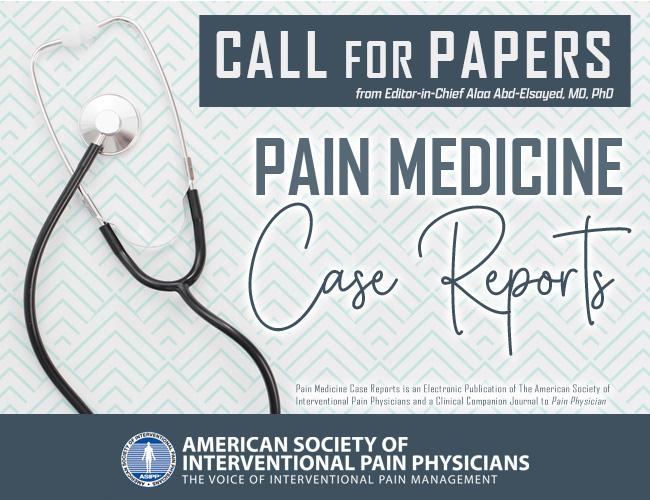
Pain Medicine Case Reports (PMCR) and Editor-in-Chief Alaa Abd-Elsayed, MD, PhD would like to invite you to submit case reports and case series to the PMCR journal. Your article will be published free of charge.
Open access journals are freely available online for immediate worldwide open access to the full text of published articles. There is no subscription fee for open access journals. Open access journals are no different from traditional subscription-based journals: they undergo the same peer review and quality control as any other scholarly journal.
Interested in becoming a member of the PMCR Editorial Board?
Editorial board members are asked to review 2-6 manuscripts per year. Please submit your most up-to-date CV to sgold@asipp.org for consideration.
For more information or to submit your articles, click here.
| | |
We are excited to announce that Pain Medicine Case Reports (PMCR) journal (eISSN 2768-5152) has been accepted for inclusion in MEDLINE and PubMed, the prestigious bibliographic database of the U.S. National Library of Medicine. PMCR, a companion publication to the prestigious Pain Physician journal by ASIPP, joins its counterpart in achieving indexing in both MEDLINE and PubMed, marking ASIPP’s dual presence in these renowned databases.
The inclusion of PMCR journal in MEDLINE signifies a higher level of selectivity, as MEDLINE consists of the top 5,200 biomedical journals. This indexing also means that articles from PMCR will be searchable using NLM Medical Subject Headings (MeSH terms) and other metadata.
The selection for MEDLINE follows a rigorous evaluation process by reviewers from the Literature Selection Technical Review Committee (LSTRC). According to their criteria, the scientific quality of a journal’s content is the primary factor considered for indexing.
We extend our congratulations to the Pain Medicine Case Reports Editor-in-Chief, Deputy Editor-in-Chief, Journal Team, and Editorial Board for this achievement, which underscores the significance and excellence of this esteemed journal.
| | | | |
|
Jun-Han Kim, MD, Jeong-mo Koo, MD, Dong-Eun Shin, MD, and Tae-Keun Ahn, MD
| | |
Yong Yu, MM, Jing Wang, MD, Chuanxi Peng, MB, Chengxing Qian, MM, Renbo Shen, MM, Yanqing Zuo, MB, Weibang Liang, PhD, Jie Chen, MB, and Yulong Chong, MD
| | |
Boqing Chen, MD, PhD, Daniel H. Cho, BS, Kevin W. Tang, BS, Malaka Badri, DO, Patrick M. Foye, MD, and Todd P. Stitik, MD
| | | | |