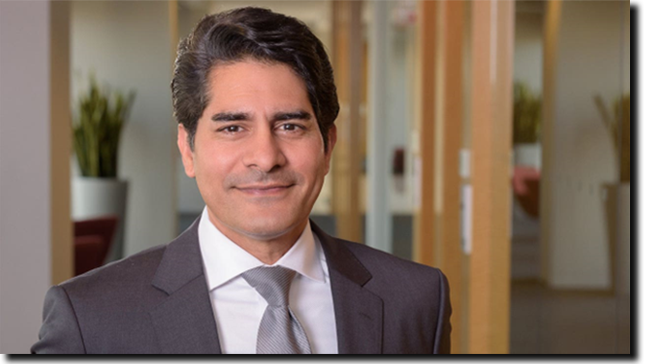
Bobby Mukkamala, MD, was diagnosed with grade 2 glioma after experiencing aphasia at AMA meeting
When he started to notice a couple of things about himself that were "off," Bobby Mukkamala, MD, president-elect of the American Medical Association (AMA), chalked it up to getting older.
"I'd be talking to patients in the exam room, or just having a casual conversation, and then having that moment of maybe 15-to-20 seconds of just trying to find the right words, getting lost in what I was trying to say," said Mukkamala, 53. "I really thought that this was a senior moment, right? Or I'm taking a shower, and I close my eyes in the shower, and you lose that balance for just a couple of seconds, and I just thought, 'That's just normal. That's just me getting older. I should start doing some balance exercises.' This is what I tell my patients all the time."
But in hindsight, he realizes what it really was -- "seizure activity related to this tumor in my brain."
Read More
| |
Abstract submissions are open for
ASIPP's 2025 Annual Meeting!
The abstract submission deadline is March 10, 2025.
Don't miss this opportunity to share your insights
and help shape the future of pain management.
| |
|
Balancing aspiration risk with the consequences of medication discontinuation
Since the modern practice of anesthesia has evolved, providers have been concerned about pulmonary aspiration -- when gastric contents enter the lung, resulting in severe complications including pneumonitis, and aspiration pneumonia, resulting in hypoxia, and potentially leading to excessive morbidity or death.
Since the inception of general anesthesia, healthcare providers have adhered to strict fasting rules: nothing by mouth after midnight. However, over the last decade, there has been a paradigm shift allowing clear liquids up to 2 hours prior to surgery for a procedure requiring anesthesia or sedation. In 2023, the American Society of Anesthesiologists (ASA) updated and liberalized its standards to allow healthy adults to drink carbohydrate-containing clear liquids up to 2 hours before elective procedures with general anesthesia, regional anesthesia, or procedural sedation.
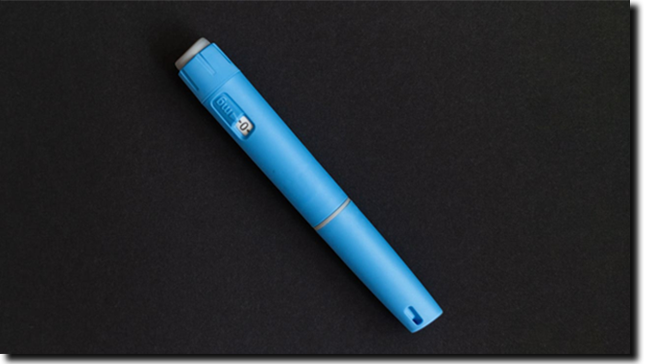
Even more recently, the ASA addressed the issue of glucagon-like-peptide-1 (GLP-1) receptor agonists before procedures that may require anesthesia or sedation. While originally prescribed for the treatment of type 2 diabetes, several drugs in this class of medications are now approved for weight loss. As a result, use of these game-changing drugs has exploded. Estimates suggest that approximately 12% of the U.S. population has already tried these drugs -- the equivalent of one in eight people. This class of medications modulates the receptors that help us feel full and delays stomach emptying, which leads to the reduction of caloric intake and results in weight loss.
Read More
| |
|
Digital convenience can foster an illusion of competence and knowledge
You don't need to know the role of the artery of Adamkiewicz or mechanisms of liver failure. You can Google it. And, you don't need to remember it once you've looked it up -- Google will remember for you!
The internet, with its limitless trove of content, revolutionizes the concept of memory -- including within medicine. For medical students and physicians, the presence of unlimited information that exists just a click away has diminished the need for internal memory, or the retention of facts in our brains. Many of us quickly turn to digital resources like Google, UpToDate, or PubMed when confronted with complex medical questions or to confirm a differential diagnosis. Having these tools is empowering, as we're now able to complete within minutes research tasks that once required hours of poring through medical libraries. But this convenience often comes at a cost.
The availability of a "web-base" of external knowledge allows us to bypass the more labor-intensive task of memorizing information that can easily be retrieved later. Ideally, online tools can serve as an adjunct for clinicians, supplementing brain-based, internal medical knowledge and memory so we are less burdened by the need to remember every lab value or rare syndrome.
Read More
| |
|
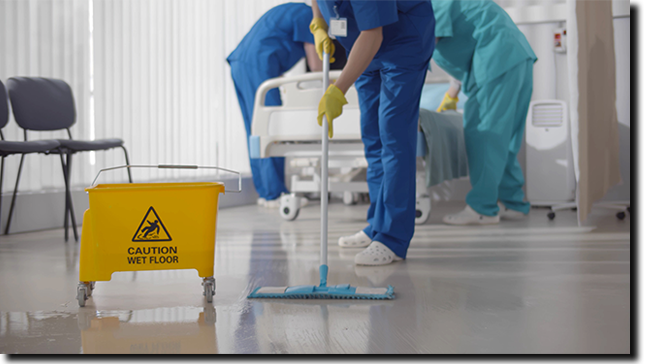
The viral burden of SARS-CoV-2 on floors, even in healthcare worker–only areas, was strongly associated with COVID-19 outbreaks in two acute-care hospitals, according to a new study from Ontario, Canada.
With every 10-fold increase in viral copies, the chance of an impending outbreak of COVID-19 rose 22-fold. The results suggest that frequent floor sampling could play an important role in a more localized surveillance of the virus, the authors wrote.
“These data add to the mounting evidence that built environment detection for SARS-CoV-2 may provide an additional layer of monitoring and could help inform local infection prevention and control measures,” they wrote.
Read More
| |
|
Virtual
December 14
Four (4) hour virtual exam
- ABIPP Path – Combined CCPM/ CSM Exam
For those with subspecialty in Pain Medicine
Two (2) hour virtual exam
- ABIPP Competency Exam in IPM
For those without primary board certification
Two (2) hour virtual exam
- ABIPP Competency Exam in Regenerative Medicine
Two (2) hour virtual exam
- Controlled Substance Management Competency Exam
Two (2) hour virtual exam
- Documentation, Coding, Compliance, Practice Management Competency Exam
Two (2) hour virtual exam
2025 Exam Dates Coming Soon!
| |
|
Farm workers who have been exposed to animals with bird flu should be tested for the virus even if they do not have symptoms, the U.S. Centers for Disease Control and Prevention said on Thursday.
The change to the agency's testing recommendation comes as the U.S. Department of Agriculture is also expanding its testing of milk for bird flu, signaling concern by both agencies about the ongoing spread of the virus on dairy and poultry farms.
Bird flu has infected nearly 450 dairy farms in 15 states since March, according to USDA data.
Read More
| |
Registration is open for
ASIPP's 2025 Annual Meeting
We would love it if you would register and join us in Orlando!
| |
Rule would also make provider directories easier to compare
Medicare Advantage plans' prior authorization rules and coverage criteria would become publicly available under a proposed rule issued Tuesday by the Centers for Medicare & Medicaid Services (CMS).
The Biden Harris administration has "worked over the last 3 years to reform the way that Medicare Advantage plans can use prior authorization to ensure that patients can access the care they need," Meena Seshamani, MD, PhD, director of the Center for Medicare, said on a call with reporters. "Today, we are taking an additional step further to address the inappropriate use of prior authorization."
"Data reported to CMS by MA [Medicare Advantage] plans indicates that, on average, MA plans overturn 80% of their decisions to deny claims when those claims are appealed to the plan," she continued. "But these data also show that less than 4% of denied claims are appealed in the first place, meaning that many more denials could potentially be overturned by the plan if they were appealed. And what this means is that more patients could likely have access to care if inappropriate prior authorization did not block it."
Read More
| |
- ASIPP Members Only Site Information - | |
-
To log in for the first time you will need to click “forgot password” at the bottom of the login window.
- Check your email and then log in as directed.
-
If you have problems logging into your account, click here.
| |
|
Pain Medicine Case Reports (PMCR) and Editor-in-Chief Alaa Abd-Elsayed, MD, PhD would like to invite you to submit case reports and case series to the PMCR journal. Your article will be published free of charge.
Open access journals are freely available online for immediate worldwide open access to the full text of published articles. There is no subscription fee for open access journals. Open access journals are no different from traditional subscription-based journals: they undergo the same peer review and quality control as any other scholarly journal.
Interested in becoming a member of the PMCR Editorial Board?
Editorial board members are asked to review 2-6 manuscripts per year. Please submit your most up-to-date CV to sgold@asipp.org for consideration.
For more information or to submit your articles, click here.
| |
|
Grant Allbritten, DO, Joshua Bigham, DO, Michael E. Harned, MD, and Christopher J. Mallard, MD
Abstract
BACKGROUND: Intrathecal drug delivery systems (ITDDS) are an option for the treatment of chronic pain syndromes or spasticity that are refractory to other conservative measures; however, they are not without complications. Seroma formation is one of the possible complications following implantation of an ITDDS.
CASE REPORT: We present 3 separate cases of patients with recalcitrant seroma formation at their IT pump sites that were successfully treated with doxycycline pleurodesis.
CONCLUSIONS: Pump site seroma formation is a possible complication following implantation of an ITDDS. Typically, these are self-limiting, but if not addressed can result in complications which include pain, infection, and difficulty filling. We propose a case series of 3 patients who suffered from recurrent seroma formation following ITDDS implantation that were successfully treated with doxycycline-based sclerotherapy.
KEY WORDS: Intrathecal drug delivery systems, seroma, pleurodesis, chronic pain, case report
Read More
| |
New PNS Guidelines NOW AVAILABLE! | |
|
Laxmaiah Manchikanti, MD, Mahendra R. Sanapati, MD, Amol Soin, MD, Alan D. Kaye, MD, PhD, Adam M. Kaye, PharmD, Daneshvari R. Solanki, MD, Grant H. Chen, MD, Devi Nampiaparampil, MD, Nebojsa Nick Knezevic, MD, PhD, Paul Christo, MD, Alexander Bautista, MD, Jay Karri, MD, Shalini Shah, MD, Standiford Helm II, MD, Annu Navani, MD, Bradley W. Wargo, DO, Christopher G. Gharibo, MD, David Rosenblum, MD, Komal Luthra, MD, Kunj G. Patel, MD, Saba Javed, MD, Warren Reuland, MD, Mayank Gupta, MD, Alaa Abd-Elsayed, MD, Gerard Limerick, MD, PhD, Ramarao Pasupuleti, MD, Gary Schwartz, MD, Matthew Chung, MD, Konstantin V. Slavin, MD, Vidyasagar Pampati, MSc, and Joshua A. Hirsch, MD
Abstract
BACKGROUND: Peripheral nerve stimulation (PNS) has been used for over 50 years to treat chronic pain by delivering electrical pulses through small electrodes placed near targeted peripheral nerves those outside the brain and spinal cord. Early PNS systems often required invasive neurosurgical procedures. However, since 2015, the Food and Drug Administration (FDA) approved percutaneously implanted PNS leads and neurostimulators offering a much less invasive, non-opioid option for managing recalcitrant chronic pain.
The following FDA-cleared PNS systems are commercially available in the United States for the management of chronic, intractable pain:
• Freedom® Peripheral Nerve Stimulator (PNS) System (Curonix LLC, 2017)
• StimRouter® Neuromodulation System (Bioness, now Bioventus, 2015)
• SPRINT® PNS System (SPR® Therapeutics, Inc., 2016)
• Nalu™ Neurostimulation System (Nalu Medical Inc., 2019)
• ReActiv8® Implantable Neurostimulation System (Mainstay Medical Limited, 2020)
The American Society of Interventional Pain Physicians (ASIPP) has published evidence-based consensus guidelines for the application of PNS systems in managing chronic pain.
OBJECTIVE: The guidelines aim to provide evidence-based recommendations for the utilization of peripheral nerve stimulation (PNS) in the management of moderate to severe chronic pain. These guidelines exclude field stimulation, or sacral nerve stimulation.
METHODS: A multidisciplinary panel of experts in various medical and pharmaceutical fields, convened by ASIPP, reviewed the evidence, considered patient perspectives, and formulated recommendations for implantable peripheral nerve stimulation in chronic pain management.
The methodology included developing key questions with evidence-based statements and recommendations. The grading of evidence and recommendations followed a modified approach described by ASIPP, the Grading of Recommendations Assessment, Development and Evaluation (GRADE) method, and the Agency for Healthcare Research and Quality (AHRQ) strength of recommendations methods. The evidence review includes existing guidelines, systematic reviews, comprehensive reviews, randomized controlled trials (RCTs), and observational studies on the effectiveness and safety of implantable peripheral nerve stimulation in managing chronic pain. The quality of published studies was assessed using appropriate instruments for systematic reviews, RCTs, and observational studies.
In the development of consensus statements and guidelines, we used a modified Delphi technique, which has been described to minimize bias related to group interactions. Panelists without a primary conflict of interest voted to approve specific guideline statements. Each panelist could suggest edits to the guideline statement wording and could suggest additional qualifying remarks or comments as to the implementation of the guideline in clinical practice to achieve consensus and for inclusion in the final guidelines, each guideline statement required at least 80% agreement among eligible panel members without primary conflict of interest.
RESULTS: A total of 31 authors participated in the development of these guidelines. Of these, 23 participated in the voting process. A total of 8 recommendations were developed. Overall, 100% acceptance was obtained for 8 of 8 items. Thus, with appropriate literature review, consensus-based statements were developed for implantable peripheral nerve stimulation in chronic pain management.
In preparation of these guidelines, evidence synthesis included 7 systematic reviews, 8 RCTs, and 9 observational studies covering all PNS treatments. The evidence was developed using GRADE criteria or certainty of evidence, and qualitative synthesis based on the best available evidence. The evidence level and recommendations are as follows:
For implantable peripheral nerve stimulation systems following a trial or selective lumbar medial branch stimulation without a trial, the evidence is Level III or fair with moderate certainty.
Evidence Level: Fair; Strength of Recommendation: Moderate
For temporary peripheral nerve stimulation for 60 days, the evidence is Level III or fair, with moderate certainty.
Evidence Level: Fair; Strength of Recommendation: Moderate
Based on the available evidence, it is our recommendation to expand the existing PNS related local coverage determination (LCD) to include craniofacial pain, phantom limb pain, and nociceptive pain in the lower back as present evidence shows Level III or fair with moderate certainty.
LIMITATIONS: The primary limitation of these guidelines is the paucity of the available literature.
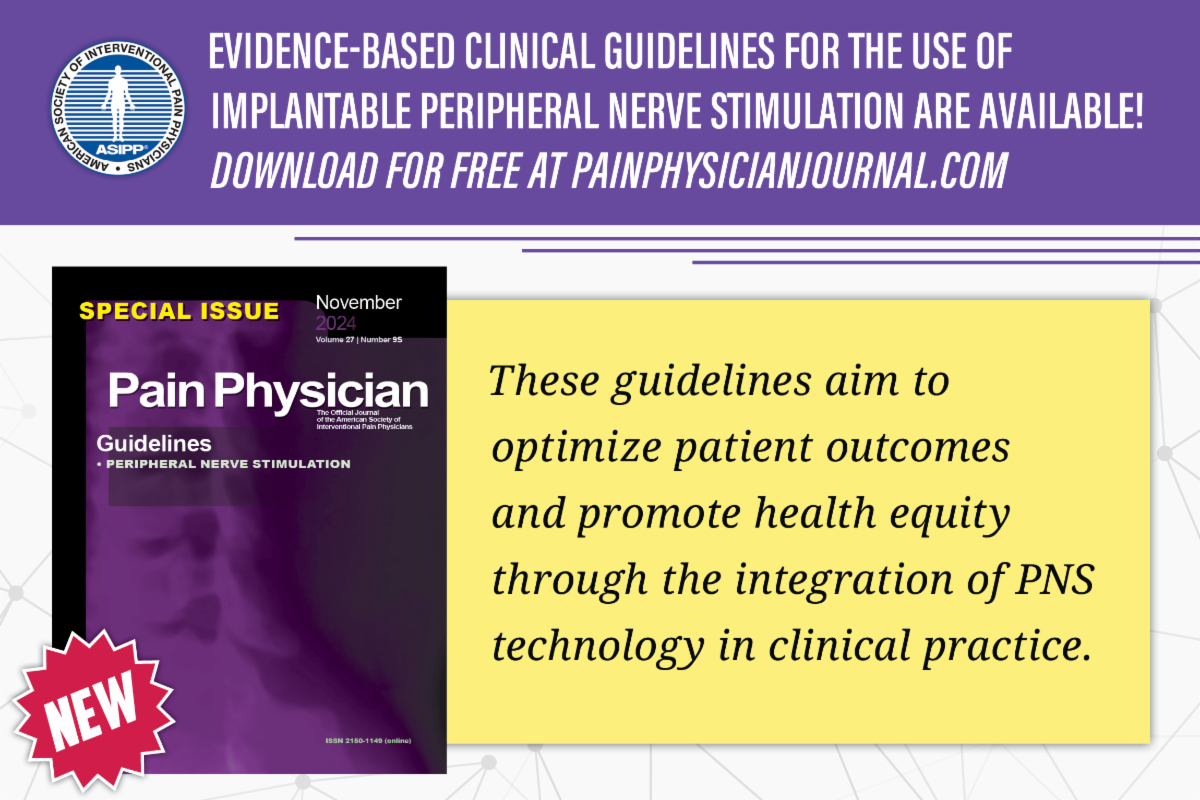
CONCLUSION: These evidence-based guidelines support the use of implantable peripheral nerve stimulation leads and neurostimulators in patients with moderate to severe chronic pain refractory to two or more conservative treatments. These guidelines aim to optimize patient outcomes and promote health equity through the integration of PNS technology in clinical practice.
KEY WORDS: Chronic pain, interventional techniques, peripheral neuropathy, peripheral neuropathic pain, peripheral nerve stimulation, selective lumbar medial branch stimulation
DISCLAIMER: These guidelines do not constitute inflexible treatment recommendations. Clinicians are expected to establish a plan of care on a case-by-case basis, considering an individual patient’s medical condition, personal needs, and preferences, and the physician’s experience. Consequently, these guidelines do not represent a “standard of care.”
Read More
| |
|
ASIPP is now in collaboration with Curi Medical Liability Program
| |
|
Since this malpractice insurance program officially launched in November 2018, ASIPP has signed up hundreds of providers with an average savings of 30%. This is professional liability insurance tailored to our specialty and will stand up for us and defend our practices.
Curi is a full-service advisory firm that serves physicians and their practices. Their valued advice is grounded in your priorities and elevated in your outcomes. They are driven by a deep understanding of your specific circumstances in medicine, business, and life. To read a few important points to keep in mind about the program, including discounts, administrative defense, cyber coverage, aggressive claims handling, and complimentary risk management CME activities, visit our website.
| | |
|
Group Purchasing Organization Offer Better Pricing and Creates Added Value
ASIPP has formed a partnership with Henry Schein and PedsPal, a national GPO that has a successful history of negotiating better prices on medical supplies and creating value-added services for independent physicians. Working with MedAssets, PedsPal provides excellent pricing on products like contrast media that alleviate some of the financial pressures you experience today.
Learn More
| |  |
|
ASIPP, Fedora Healthcare Solutions Partnership
ASIPP offers our members the benefit of a unique revenue cycle management/ billing service.
We have received a tremendous amount of interest in the ASIPP billing and coding program.
Click here to learn more about the negotiated rate for practices and more!
| |
|
Like and follow ASIPP® on Facebook, X, and LinkedIn for the most
up-to-date news related to you, your practice, and your patients!
| | | | |