|
Pain management in the ‘inherited’ patient
The ‘inherited’ patient – one who switches to a new doctor – is often encountered in general practice or in specialist pain clinics.
Some inherited patients present to their new general practitioner (GP) without the benefit of a formal clinical handover (e.g., a referral letter). This situation exposes the patient and GP to increased risk, especially in relation to assessment and selection of opioid analgesics.
The principles that apply to people with chronic non-cancer pain (CNCP) initiating an opioid trial also apply to managing the inherited patient, particularly one taking ≥100 mg/day oral morphine equivalent.
Read More
| |
And the findings should be made public when situations emerge that raise alarm
Health professionals often perform the "eyeball test" when they first meet a patient. Through the power of observation, pixels of information are gathered quickly and often unconsciously to determine whether a patient is unwell.
We listen to the cadence of their speech; we watch their mannerisms, posture, and gait; we scan their faces, skin turgor, and complexion -- we make an immediate evaluation as to whether the patient is ill or not. It is a crude tool, but it works. It may not provide a complete diagnosis, but it can signal to clinicians that the patient is in need of help.
It appears that the nation performed this "eyeball test" during a presidential debate in June and an assassination attempt in July -- and we determined that more information was needed. Following the debate, there was intense examination by party leaders, the public (especially from donors), and the media on President Biden's cognitive fitness. Without clear information on his health status, calls for him to step down rung out. Meanwhile, the Trump campaign left the public in the dark for days after the assassination attempt on former President Donald Trump, refusing to discuss his condition or release a medical report.
Read More
| |
|
Augmented intelligence (AI)—often called artificial intelligence—was a valuable tool within health care long before the advent of ChatGPT. AI has helped with predictive modeling, ambient listening, and radiology, but the release and widespread availability of generative AI platforms like ChatGPT have sparked an AI revolution.
"When generative AI came out, people really started to notice this new technology, and it brought a lot of attention to health care organizations, to physicians, and to technology stakeholders," said Margaret Lozovatsky, MD, vice president of digital health innovations at the AMA. "We are now seeing this amazing capability of the technologies that are out there to address administrative burdens and to help with cognitive burdens that physicians are experiencing."
The rise of AI has also forced medical schools to take notice, with programs across the country are navigating how to prepare physicians to understand AI and work with it. Dr. Lozovatsky and Kimberly Lomis, MD, vice president of medical education innovations at the AMA, spoke about this curricula challenge in a recent episode of “AMA Update.”
Read More
| |
|
Key Points
Question: Is access to cannabis, via medical or recreational legalization, associated with changes in dispensing of prescription medications to treat mental health disorders in a commercially insured population?
Findings: This cross-sectional study of 9,438,716 commercially insured patients found statistically significant reductions in benzodiazepine dispensing after increases in both medical and recreational cannabis access. However, evidence suggests increases in other types of psychotropic dispensing.
Meaning: This study suggests that cannabis laws may be significantly associated with the population-level use of prescription drugs to treat mental health disorders, although the associations vary by drug class and state.
Read More
| |
|
Think COVID is a thing of the past? Think again.
After a summer surge of the virus, and as cold season approaches, attention is back on the illness, prompting questions about what to do if you test positive and how to protect yourself.
Here's what to know for fall 2024:
New COVID vaccine
Last month, the Food and Drug Administration approved updated COVID-19 vaccines from Pfizer and Moderna for the 2024 fall season.
Moderna and Pfizer's shots were revised this year to target the KP.2 variant of SARS-CoV-2, the virus that causes COVID-19, as part of a now-annual process undertaken by the FDA and health authorities around the world to update the vaccines to protect against newer strains of the virus.
Read More
| |
|
Virtual
September 28, October 26,
November 9 & December 14
Click here for the complete list of upcoming exams.
ABIPP Part I; ABIPP Path - Combined DCCPM/CSM virtual exam;
ABIPP Competency Exam in IPM; ABIPP Competency Exam in Regenerative Medicine;
CSM Competency Exam; DCCPM Competency Exam
In Person
October 18, 2024
ABIPP Part II - Practical Examination
Lab Venue: MERI, 44 S. Cleveland Street, Memphis, TN 38104
| |
|
Fueling denial of the realities of aging comes at a great cost
"I can't tell my patients the truth any longer because they get upset, as if I were insulting them."
This is what a colleague of mine said after his 85-year-old patient, whom I will call Kathy*, expressed dissatisfaction with the office visit. Attributing her knee pain to degenerative joint disease and explaining that this is a common occurrence "later in life" was apparently perceived as a slight. The x-ray report, clearly documenting the changes of arthritis, was not enough to satisfy Kathy who, reportedly, could not understand why her symptoms or condition should be attributed "just to old age." She was tired of hearing that so many of her ailments were part of the aging process.
I'm not foreign to this type of interaction, where patients seem to reject that physical and cognitive decline are expected with aging. Perhaps they are just in profound denial regarding the effects of age. Although the aging process differs significantly from person to person, it seems disingenuous that our patients could believe that age will have little to no effect on their functional abilities. "No one wants to admit they're old," my colleague concluded.
Read More
| |
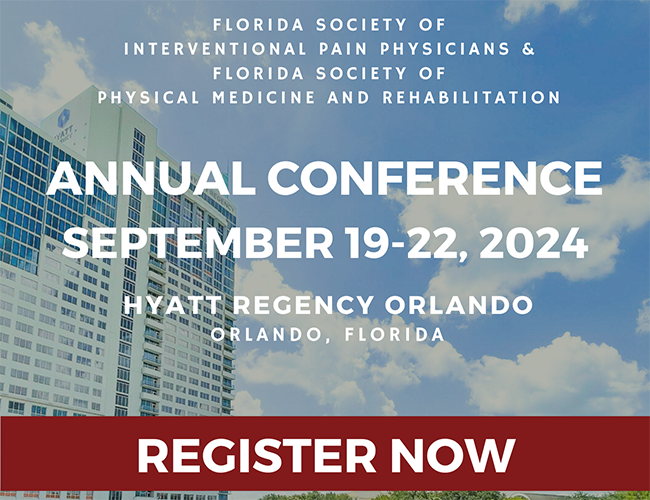
Registration is open for
ASIPP's 2025 Annual Meeting
We would love it if you would register and join us in Orlando!
| |
|
Medicare Advantage provides health coverage to more than half of the nation's older adults, but some hospitals and health systems are opting to end their contracts with MA plans over administrative challenges.
Among the most commonly cited reasons are excessive prior authorization denial rates and slow payments from insurers.
In 2023, Becker's began reporting on hospitals and health systems nationwide that dropped some or all of their Medicare Advantage contracts.
Read More
| |
ASIPP State Society Meeting: | |
|
Primary care physicians know the complexities of treating older patients, from increased complications from medications and procedures to comorbidities stemming from having multiple medical conditions. The Beers Criteria were established by the American Geriatrics Society as a guide for physicians about medications that may possess more risks than benefits in older patients, specifically those aged 65 years and older.
There are approximately 100 medications on the list. Criteria used to establish the list include medications to avoid over the age of 65 in an outpatient setting, medications to avoid in certain medical conditions, medications to avoid that may interact with other medications, medications to avoid with renal impairment, and medications to avoid where harmful side effects outweigh the possible benefits. The American Geriatrics Society updates the list as new published evidence becomes available.
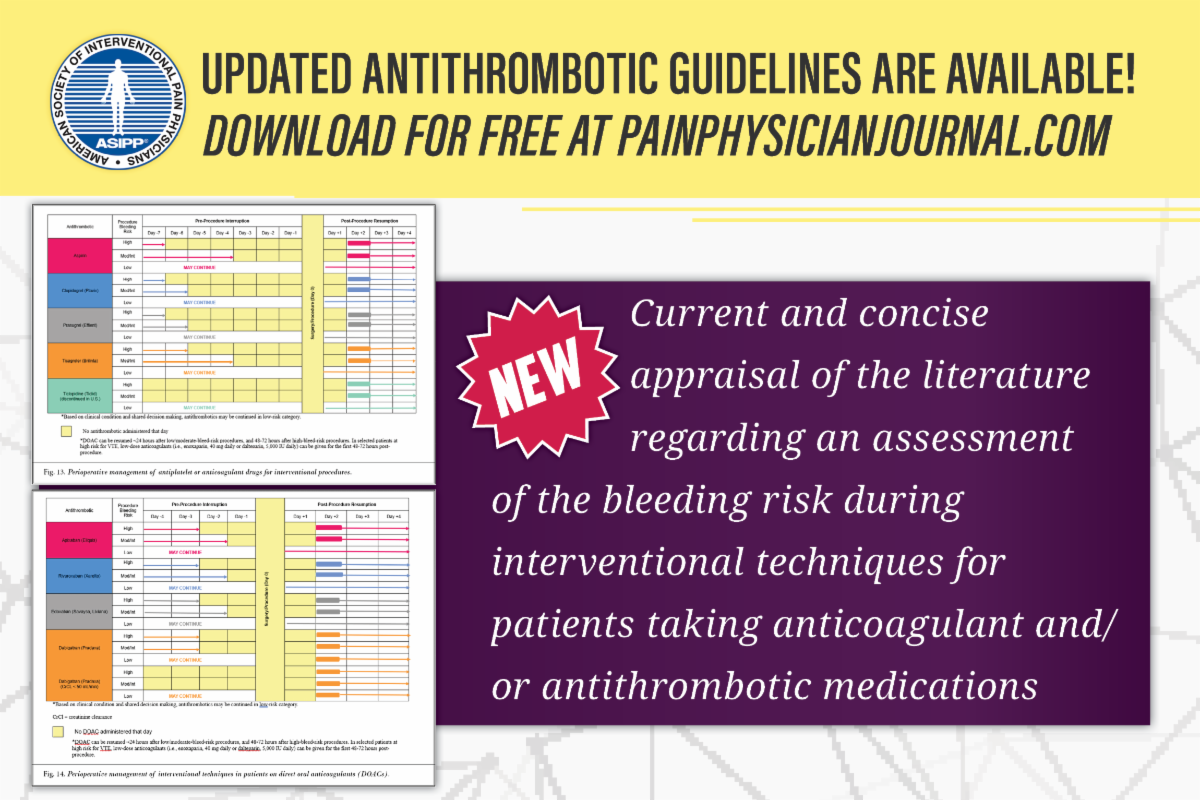
The latest updates to the Beers Criteria include several medications commonly used in primary care. Regarding anticoagulation, warfarin should be avoided as initial therapy and apixaban should be used in patients with reduced renal function. These guidelines looked particularly at antithrombotic medications because of new evidence arising in nonvalvular atrial fibrillation and venous thromboembolism. In addition to the previous recommendations, the use of aspirin is no longer recommended in older adults.
Read More
| |
- ASIPP Members Only Site Information - | |
-
To log in for the first time you will need to click “forgot password” at the bottom of the login window.
- Check your email and then log in as directed.
-
If you have problems logging into your account, click here.
| |
Prior authorization has remained a significant source of administrative burden, physicians say
Physicians frequently cite prior authorization requirements as a significant source of administrative burden. Now, UnitedHealthcare, one of the largest U.S. insurance companies, says it will launch a national "Gold Card" program in an effort to improve the process.
The program -- set to launch October 1 -- is part of the company's efforts to "modernize the prior authorization process and simplify the healthcare experience for consumers and providers," a spokesperson for UnitedHealthcare said in an email.
"Provider groups don't need to apply to be part of the UnitedHealthcare Gold Card program," the spokesperson added. "Qualification is awarded if eligibility criteria are met."
Read More
| |
|
Pain Medicine Case Reports (PMCR) and Editor-in-Chief Alaa Abd-Elsayed, MD, PhD would like to invite you to submit case reports and case series to the PMCR journal. Your article will be published free of charge.
Open access journals are freely available online for immediate worldwide open access to the full text of published articles. There is no subscription fee for open access journals. Open access journals are no different from traditional subscription-based journals: they undergo the same peer review and quality control as any other scholarly journal.
Interested in becoming a member of the PMCR Editorial Board?
Editorial board members are asked to review 2-6 manuscripts per year. Please submit your most up-to-date CV to sgold@asipp.org for consideration.
For more information or to submit your articles, click here.
| |
|
Sagar Patel, BA, Courtney Tran, BA, Sarah Stevens, BA, Carly Liquori, BA, and Jonathan Eskander, MD
Abstract
BACKGROUND: The erector spinae plane block (ESPB) is an ultrasound-guided approach for acute pain management in patients with single or multiple rib fractures. The addition of a dexmedetomidine and dexamethasone (Dex-Dex) solution to an ESPB injection has been shown to provide longer-lasting pain control in rib-fracture patients. Adding a Dex-Dex adjunct to an ESPB injection diminishes the need for more invasive techniques used in longer-lasting pain management, such as ESPB catheter placements.
CASE REPORT: We present 2 cases of rib fractures, one in a 79-year-old woman and the other in an 82-year-old-man. Both patients received a single ESPB injection with Dex-Dex to provide longer-lasting pain control. After the procedure, both patients reported a significant reduction in pain and no complications to the intervention.
CONCLUSION: The successful analgesic management of both patients’ conditions suggests that a single ESPB injection with Dex-Dex can be used as an alternative to traditional management techniques such as catheter placements.
KEY WORDS: Erector spinae plane block, dexmedetomidine and dexamethasone, rib fractures, respiratory distress
Read More
| |
|
Ying Ren, MD, Zhen Zhang, MD, Hong-Ping Li, MD, Peng-Ju Zhang, MD, Jietai Duo, MD, and Hao Kong, MD
Abstract
BACKGROUND: Over the past 3 decades, clinicians and scholars have used and studied the stellate ganglion block (SGB) extensively, making this field a highly anticipated research hot spot. To the best of our knowledge, there has been no bibliometric analysis of the SGB until now.
OBJECTIVE: Our study aimed to complete multiple tasks regarding SGB research: identify the collaboration and impact of countries, institutions, journals, and authors, evaluate the knowledge base, trace the trends in hot spots, and explore the emerging topics relevant to the field.
STUDY DESIGN: A bibliometric analysis.
METHODS: Publications that were associated with the SGB and published between the years of 1993 and 2022 were retrieved from the Web of Science Core Collection on September 21st, 2023. CiteSpace 6.1.R6 and VOSviewer 1.6.18 were used to perform bibliometric and knowledge-map analyses.
RESULTS: This study found a total of 837 publications originating from 51 countries and 1006 institutions. These articles were published in 393 journals. The United States was the country that produced the most articles focused on SGB, and the University of California, Los Angeles was the institution associated with the greatest number of publications. The anesthesiology and cardiology journals surveyed for this study published the most articles and received the most citations. Among the authors whose works were examined, Kitajima T had the greatest number of published articles, and Lipov E was the most frequently cited co-author. Five main domains of SGB research included electrical storm and refractory ventricular arrhythmia, breast cancer and climacteric medicine, post-traumatic stress disorder, pain management, and cerebrovascular diseases. The latest hot topics involving this field focused on SGB’s anti-arrhythmic and anti-cerebral vasospasm effects and its treatment of long COVID syndrome.
LIMITATIONS: Data were retrieved only from the WoSCC; therefore, publications in other databases might have been missed.
CONCLUSION: This comprehensive bibliometric analysis conducted a complete overview of SGB research, which was helpful in furthering our understanding of research trends and locating research hot spots and gaps in this domain. This field is developing rapidly and will garner significant and continuous attention from future scholars.
KEY WORDS: Stellate ganglion block, bibliometric, knowledge-map, VOSviewer, CiteSpace, post-traumatic stress disorder, electrical storm, hot flashes
Read More
| |
|
Ye Jiang, MD, Tengfei Liu, MD, Yuhang Mao, MD, Lutao Yuan, MD, Cong Luo, MD, Chen Li, MD, Yifan Tang, MD, and Yong Yu, MD, PhD
Abstract
BACKGROUND: Spinal cord stimulation is an established technique wherein diverse electrode types are strategically implanted within the spinal epidural space for neuromodulation. Traditional percutaneous puncture cylindrical electrodes (PEs) are predominantly implanted by interventionalists utilizing a percutaneous technique under the monitor of radiation, which is a nonvisualized procedure.
OBJECTIVE: Our study aimed to assess the feasibility of percutaneous endoscope-assisted visualized implantation approach for PEs, delineating its specific merits and demerits compared to the traditional method.
STUDY DESIGN: Laboratory study with Institutional Review Board Number B2023-056
SETTING: Clinical Anatomy Research Center, Fudan University.
METHODS: Eight freshly procured adult cadavers (4 women and 4 men) were operated on in this study. They were divided into either Group A or Group B, each encompassing 4 cadavers. Group A was subjected to endoscope-assisted PEs implantation, whereas Group B followed the conventional PEs implantation route.
In both groups the operative time of introducer needles placement (OTNP), total operative time (TOT), fluoroscopy time of introducer needles placement (FTNP), and total fluoroscopy time (TFT) were documented and analyzed. Furthermore, the precise positioning of the PEs and any ensuing complications were systematically examined.
RESULTS: Both Group A and Group B successfully executed all predetermined surgical steps. A total of 16 PEs were implanted (dual electrodes in each cadaver): 8 using the percutaneous endoscope-assisted visualized approach (Group A) and 8 via the traditional methodology (Group B). Group A’s mean ± SD durations for OTNP, TOT, FTNP, and TFT were 10.25 ± 1.03 minutes, 31.63 ± 5.87 minutes, 4.58 ± 1.35 seconds, and 43.73 ± 14.46 seconds, respectively. In contrast, Group B exhibited mean ± SD times of 11.55 ± 2.81 minutes, 44.75 ± 7.85 minutes, 23.53 ± 4.16 seconds, and 66.30 ± 6.35 seconds for the same metrics. No discernible statistical difference in OTNP and TOT emerged between the groups. However, Group A demonstrated reduced durations for both FTNP and TFT compared to Group B. The optimal position of the PEs was verified via fluoroscopy, with no recorded instances of dura rupture. These outcomes suggest that this endoscope-assisted technique neither increases surgical time nor compromises efficacy. Instead, it leads to a marked reduction in fluoroscopic duration relative to the traditional methodology.
LIMITATIONS: Anatomical study on a human cadaver, the quantity of cadavers, and the procedure’s steep learning curve.
CONCLUSION: With the assistance of percutaneous spinal endoscopy, introducer needles can be punctured through the ligamentum flavum at the anticipated interlaminar window locus under direct visualization, improving the convenience of the puncture and reducing fluoroscopic exposure. It is a viable alternative for surgeons from diverse training backgrounds to implant PEs, particularly benefiting those well-versed in endoscopic spine surgery techniques.
KEY WORDS: Percutaneous endoscopic, puncture cylindrical electrodes, spinal cord stimulation, anatomical study
Read More
| |
|
ASIPP is now in collaboration with Curi Medical Liability Program
| |
|
Since this malpractice insurance program officially launched in November 2018, ASIPP has signed up hundreds of providers with an average savings of 30%. This is professional liability insurance tailored to our specialty and will stand up for us and defend our practices.
Curi is a full-service advisory firm that serves physicians and their practices. Their valued advice is grounded in your priorities and elevated in your outcomes. They are driven by a deep understanding of your specific circumstances in medicine, business, and life. To read a few important points to keep in mind about the program, including discounts, administrative defense, cyber coverage, aggressive claims handling, and complimentary risk management CME activities, visit our website.
| | |
|
Group Purchasing Organization Offer Better Pricing and Creates Added Value
ASIPP has formed a partnership with Henry Schein and PedsPal, a national GPO that has a successful history of negotiating better prices on medical supplies and creating value-added services for independent physicians. Working with MedAssets, PedsPal provides excellent pricing on products like contrast media that alleviate some of the financial pressures you experience today.
Learn More
| |  |
|
ASIPP, Fedora Healthcare Solutions Partnership
ASIPP offers our members the benefit of a unique revenue cycle management/ billing service.
We have received a tremendous amount of interest in the ASIPP billing and coding program.
Click here to learn more about the negotiated rate for practices and more!
| |
|
Like and follow ASIPP® on Facebook, X, and LinkedIn for the most
up-to-date news related to you, your practice, and your patients!
| | | | |