Follow Us On

Facebook  X  Linkedin  YouTube


Impact of "One Big Beautiful Bill" on Physician Payment Reform


The budget reconciliation package passed on Thursday, May 22, and included several provisions that would significantly impact physician payments and healthcare overall. Unfortunately, there is no unequivocally good news; rather, we are faced with a mix of potentially good, bad, and ugly developments.


Maybe Good News

Medicare Physician Fee Schedule Updates:

 1. Initial Increase: The bill proposes a 2.25% Medicare pay update for physicians in 2026, based on 75% of the Medicare Economic Index (MEI), at a projected cost of $8.9 billion for that year.


Bad News

1. Future payment updates would be tied to the MEI, which tracks inflation and physician practice costs.


However, while linking payment updates to the MEI is a step in the right direction, concerns persist that the proposed MEI updates—capped at 10% annually—will not keep pace with actual inflation and rising practice expenses. This could result in effective increases of less than 0.5%.


2. The physician payment conversion factor is based on three components, including:

•         An inflationary index, which is currently projected as 0% for 2025.

•         A budget neutrality adjustment would apply solely to physician payments.

•         Payments would continue to be influenced by the Merit-Based Incentive Payment System (MIPS). Consequently, CMS retains the authority to convert even minimal positive inflation adjustments into negative adjustments.


3. The continuation of 2% sequestration cuts, initially implemented after the Affordable Care Act, is set to extend through 2032.


4. Broader healthcare provisions will also affect physicians. These include Medicaid cuts, implementation of work requirements, and reductions in multiple assistance programs, which are likely to lead to decreased Medicaid enrollment.


What Is Ugly?

  • What is particularly troubling is the ongoing instability of the physician payment system and the continued imposition of 2% sequestration cuts.
  • Overall payment reductions could reach as high as 6%, despite the proposed MEI-based increases.


We find ourselves in a critical situation. ASIPP has long been engaged in addressing these challenges through a non-partisan proposal to reform the physician payment system and safeguard telehealth services. The bill is now before the Senate. Please contact your senator individually, through your group, patients, or staff—and urge them to support meaningful reform of the physician payment system. You may also use this convenient link set up by ASIPP.


Click here to read ASIPP's letter to Senator Bill Cassidy.


Could weight loss drugs help prevent cancer? Here's what a new study found.


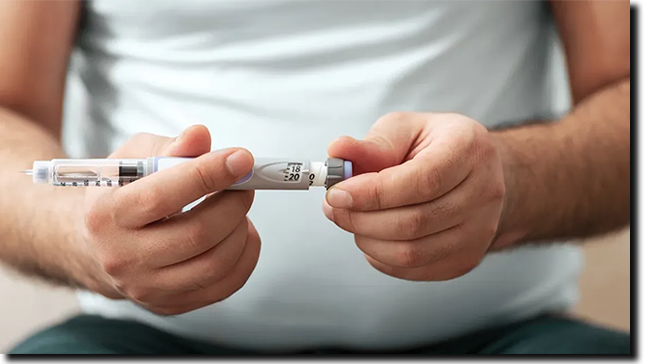
Studies have shown the popular weight loss drugs known as GLP-1 agonists may be helpful for more than just curbing appetite — and new research is looking at their potential impact on cancer risk. GLP-1 drugs include popular brand names like Ozempic, Wegovy and Zepbound.


In the observational study, released Thursday ahead of being presented at the 2025 American Society of Clinical Oncology conference, researchers found GLP-1s may modestly reduce the risk of 14 obesity-related cancers, especially colorectal cancer, when compared to a different type of medication often used to treat diabetes, known as dipeptidyl peptidase-4 (DDP-4) inhibitors, which don't have the same weight loss effect.


"Patients who took GLP-1 receptor agonists had a 7% lower risk of developing an obesity-related cancer and an 8% lower risk of death from any cause compared to those who took a DDP-4 inhibitor," the authors noted. 


Read More

Click Here to Read ASIPP's Non-Partisan Proposal for Budget Reconciliation

ASIPP Submits Letters to Carelon and Humana Regarding Coverage for Interventional Pain Management Procedures

NEW WORKSHOP ANNOUNCED!

‘Outright murder’: UnitedHealth pressured nurses to DNR patients who didn’t want to die


It’s safe to say UnitedHealth isn’t the most beloved company out there. The for-profit insurance company has ruined (and ended!) countless lives, been embroiled in many controversial denials of care, has faced SEC investigation for fraud, fought legal action for overbilling Medicare, and routinely humiliates those who rely on it for medical treatment.


All of which meant that when Brian Thompson was executed on the streets of New York on Dec. 4, 2024, few shed a tear. Now the Guardian has released a shocking new investigation that indicates the company has expanded its scope from run-of-the-mill cruelty to outright murder.


The article details how UnitedHealth secretly paid nursing homes massive bonuses to “slash hospital transfers for ailing residents”, effectively denying them hospital treatment to save the insurer a few bucks. The reporting found that many of those denied transfer suffered long-term medical issues, with one patient receiving permanent brain damage.


Read More

JOIN or RENEW your ASIPP Membership for the best registration rates.

Our Sponsor


Shingles is awful, but here’s another reason to get vaccinated: It may fight dementia


A vaccine to fight dementia? It turns out there may already be one – shots that prevent painful shingles also appear to protect aging brains.


A new study found shingles vaccination cut older adults’ risk of developing dementia over the next seven years by 20%.


The research, published Wednesday in the journal Nature, is part of growing understanding about how many factors influence brain health as we age – and what we can do about it.


“It’s a very robust finding,” said lead researcher Dr. Pascal Geldsetzer of Stanford University. And “women seem to benefit more,” important as they’re at higher risk of dementia.


Read More


Mark your calendars!

June 28


  • ABIPP Part I

Four (4) hour virtual exam


  • ABIPP Path – Combined CCPM/ CSM Exam

For those with subspecialty in Pain Medicine

Two (2) hour virtual exam


  • ABIPP Competency Exam in IPM

For those without primary board certification

Two (2) hour virtual exam


  • ABIPP Competency Exam in Regenerative Medicine

Two (2) hour virtual exam


  • Controlled Substance Management Competency Exam

Two (2) hour virtual exam


  • Documentation, Coding, Compliance, Practice Management Competency Exam

Two (2) hour virtual exam

Exam Dates


Best Intensive Care Unit Sedative? Head-to-Head Trial Weighs In

Trial compares dexmedetomidine, clonidine, and propofol


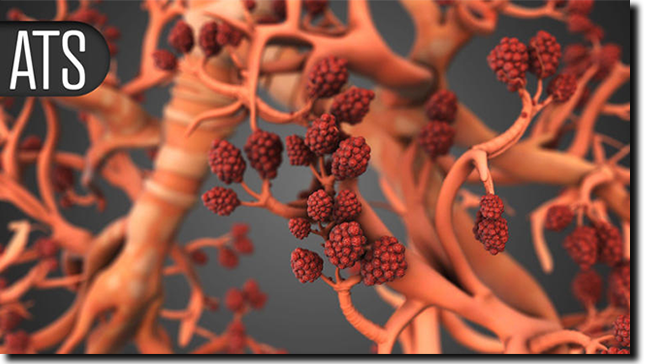
Alpha2-adrenergic receptor agonists didn't get critically ill patients off the ventilator quicker than propofol in the head-to-head A2B trial.


Median time from randomization to successful extubation came in at 136 hours for dexmedetomidine and 146 hours for clonidine -- neither significantly faster than propofol, which came in at 162 hours (P=0.20 and 0.34, respectively).


Nor was there better sedation quality or less delirium over 180 days with the two alpha2-adrenergic receptor agonists, reported Timothy S. Walsh, MD, of the Royal Infirmary of Edinburgh in Scotland, at the American Thoracic Society annual meeting in San Francisco. Results were simultaneously published in JAMA.


Read More


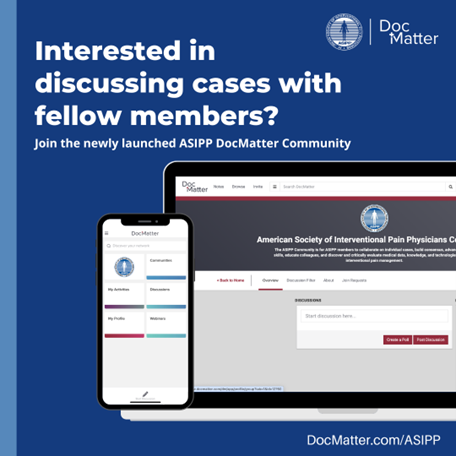
We're excited to let you know that the new ASIPP Community, hosted by DocMatter, is now live!


The ASIPP Community on DocMatter will serve as a place for members to collaborate around clinical and research topics to advance the care of their interventional pain patients.


Click here to be a part of the conversation!

- ASIPP Members Only Site Information -
  1. To log in for the first time you will need to click “forgot password” at the bottom of the login window.
  2. Check your email and then log in as directed.
  3. If you have problems logging into your account, click here.


Is Research Required to Get a Good Residency?


Cooper Stone, DO, spent hundreds of hours over the course of medical school and residency conducting research and then writing and rewriting manuscripts. Stone was determined to see all his findings on medical education through to publication — and some of his work has since been widely cited. But now, as a practicing psychiatrist in Philadelphia, “I almost regret it,” he told Medscape Medical News.


Stone, who finished residency in summer 2024, is among the many medical students who feel pressure to research so that their residency application stands out — a pressure that only increased as Step 1 and medical school moved to pass-fail, leaving very few ways for students to differentiate themselves.


But the question is: Does it work? Do medical students who scramble to add research to their heavy medical school load actually get into their preferred residency more often? The evidence is conflicting and is highly dependent on the specialty and the institution.


Read More

Did you miss ASIPP's AI webinar?


You can watch it for FREE on ASIPP's YouTube channel!


Click here to watch it now!

Pain Medicine Case Reports (PMCR) and Editor-in-Chief Alaa Abd-Elsayed, MD, PhD would like to invite you to submit case reports and case series to the PMCR journal. Your article will be published free of charge.


Open access journals are freely available online for immediate worldwide open access to the full text of published articles. There is no subscription fee for open access journals. Open access journals are no different from traditional subscription-based journals: they undergo the same peer review and quality control as any other scholarly journal.


Interested in becoming a member of the PMCR Editorial Board?

Editorial board members are asked to review 2-6 manuscripts per year. Please submit your most up-to-date CV to sgold@asipp.org for consideration.


For more information or to submit your articles, click here.

We are excited to announce that Pain Medicine Case Reports (PMCR) journal (eISSN 2768-5152) has been accepted for inclusion in MEDLINE and PubMed, the prestigious bibliographic database of the U.S. National Library of Medicine. PMCR, a companion publication to the prestigious Pain Physician journal by ASIPP, joins its counterpart in achieving indexing in both MEDLINE and PubMed, marking ASIPP’s dual presence in these renowned databases.


The inclusion of PMCR journal in MEDLINE signifies a higher level of selectivity, as MEDLINE consists of the top 5,200 biomedical journals. This indexing also means that articles from PMCR will be searchable using NLM Medical Subject Headings (MeSH terms) and other metadata.


The selection for MEDLINE follows a rigorous evaluation process by reviewers from the Literature Selection Technical Review Committee (LSTRC). According to their criteria, the scientific quality of a journal’s content is the primary factor considered for indexing.


We extend our congratulations to the Pain Medicine Case Reports Editor-in-Chief, Deputy Editor-in-Chief, Journal Team, and Editorial Board for this achievement, which underscores the significance and excellence of this esteemed journal.


CASE REPORTS

Sternal Nonunion Treated by Radiofrequency Thermocoagulation of the Anterior Cutaneous Branch of the Intercostal Nerve: A Case Report

Tatsunori Watanabe, MD, and Hiroshi Baba, MD, PhD


Peripheral Nerve Stimulation for Acute Vertebral Compression Fracture Pain: A Case Report

Tony K. George, DO, and Alfred J. Tria, MD


NEW ISSUE NOW AVAILABLE!


BIBLIOMETRIC ANALYSIS

Research Focus Involving and Trends in Artificial Intelligence for Spinal Pain: A Bibliometric Analysis

Chaobo Feng, MD, Zhuoxi Zhou, MBBS, Yongen Miao, MBBS, Sheng Yang, MD, Guoxin Fan, MD, and Xiang Liao, MD


EXPERT OVERVIEW

Mode of Action of Amitriptyline Against Neuropathic Pain via Specific NF-kB Pathway Suppression

YouMi Hwang, MD, PhD, and So Young Kwon, MD, PhD


ASIPP is now in collaboration with Curi Medical Liability Program


Since this malpractice insurance program officially launched in November 2018, ASIPP has signed up hundreds of providers with an average savings of 30%. This is professional liability insurance tailored to our specialty and will stand up for us and defend our practices. 


Curi is a full-service advisory firm that serves physicians and their practices. Their valued advice is grounded in your priorities and elevated in your outcomes. They are driven by a deep understanding of your specific circumstances in medicine, business, and life. To read a few important points to keep in mind about the program, including discounts, administrative defense, cyber coverage, aggressive claims handling, and complimentary risk management CME activities, visit our website.


IMPORTANT UPDATE

SPRINT no longer misclassified as PNT 


SPR is happy to announce an important update regarding Humana Medicare Advantage. As of May 1, Humana is now recognizing SPRINT as a PNS therapy. Previously, SPRINT was categorized as PNT (Percutaneous Nerve Stimulation), which allowed denials on the grounds that the therapy fell outside the NCD.


Additional details are as follows:

Payer: Humana Medicare Advantage (click here to view policy)

Policy Title: Peripheral Nerve Stimulators

Policy changes: SPRINT no longer misclassified as PNT and is now appropriately classified as PNS. Humana is applying the Noridian Medicare LCD criteria to ALL PNS devices – Including SPRINT PNS!

Effective Date: 5/1/2025


Click here to view a PDF of the official policy update.


Group Purchasing Organization Offer Better Pricing and Creates Added Value


ASIPP has formed a partnership with Henry Schein and PedsPal, a national GPO that has a successful history of negotiating better prices on medical supplies and creating value-added services for independent physicians. Working with MedAssets, PedsPal provides excellent pricing on products like contrast media that alleviate some of the financial pressures you experience today.


Learn More


For updated information concerning tariffs on products, click here.


ASIPP, Fedora Healthcare Solutions Partnership


ASIPP offers our members the benefit of a unique revenue cycle management/ billing service.


We have received a tremendous amount of interest in the ASIPP billing and coding program.


Click here to learn more about the negotiated rate for practices and more!

Like and follow ASIPP® on Facebook, X, LinkedIn, and YouTube for the most up-to-date news related to you, your practice, and your patients!