As financial pressures mount and competition intensifies, hospitals and health systems are increasingly pursuing mergers and acquisitions to diversify their portfolios, strengthen bargaining power and pursue economies of scale.
From rural communities to major metropolitan areas, hospital consolidation is expected to gather momentum in the coming quarters. Yet as consolidation accelerates, so too does the debate over its effects on pricing, competition and patient outcomes.
Click here to read all '50 things to know about hospital consolidation' and what it means for the future of healthcare.
| |
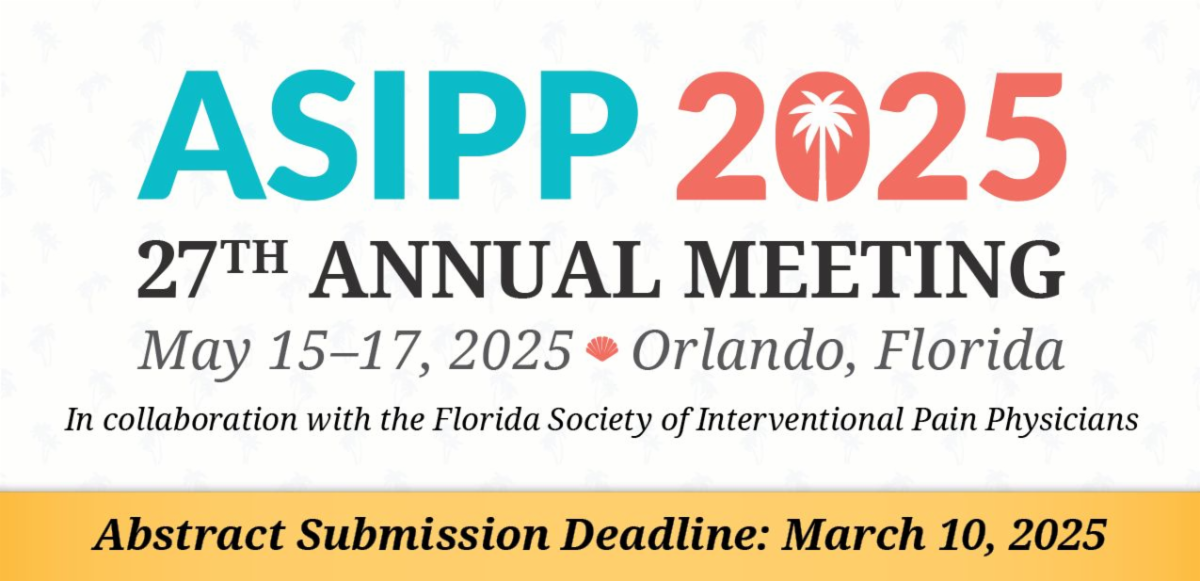
Abstract submissions are open for ASIPP's 2025 Annual Meeting!
The abstract submission deadline is March 10, 2025.
Don't miss this opportunity to share your insights and
help shape the future of pain management.
| |
|
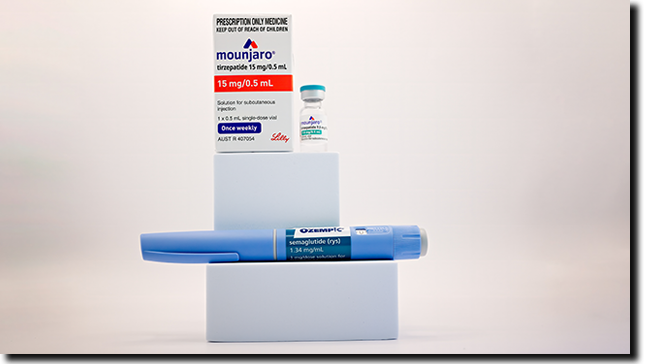
Diabetes and weight loss drugs like Mounjaro and Ozempic may also help patients suffering from addiction, according to a new study.
In the study, published Thursday in the scientific journal Addiction, researchers found people with opioid or alcohol use disorder who take Ozempic or similar medications appear to have a 40% lower rate of opioid overdose and a 50% lower rate of alcohol intoxication compared to people who aren't on the medications.
Dr. Céline Gounder, CBS News medical contributor and editor-at-large for public health at KFF Health News, said these are "significant clinical impacts for patients."
The study used a large data set, looking at almost 10 years of data from patients in over 100 health systems across the country.
Read More
| |
|
Study: It's not deprivation per se, but intervening factors that go with it
Associations found in previous studies between osteoarthritis (OA) knee pain severity and neighborhood disadvantage may be explained, not by poverty itself, but by worsened sleep that comes with living under such conditions, researchers said.
While Area Deprivation Index (ADI) scores did not correlate directly with pain severity, they did correlate significantly with sleep efficiency, which in turn correlated significantly with pain scores, according to Felicitas Huber, PhD, of Washington University in St. Louis, and colleagues.
Neighborhood features such as crime (and fear of it), noise, light pollution, and poor walkability likely underlie impaired sleep that previous studies have linked with chronic pain severity, the group observed in Arthritis Care & Research. "Future research should explore which environmental factors (e.g., safety, noise) are most salient for sleep and pain outcomes," they wrote.
Read More
| |
|
Addressing the IV Fluid Shortage
Late last month, Baxter International’s major manufacturing plant in North Carolina was impacted by the devastation of Hurricane Helene, leading to a massive shortage of IV fluids and peritoneal dialysis solutions.
In an action led by the Society of Critical Care Medicine, the American College of Chest Physicians calls on the Food and Drug Administration to coordinate efforts to mitigate these supply chain challenges, including:
- Establishing a clear communication channel among manufacturers, distributors, and health care facilities to share updates on supply availability and timelines for recovery
Read More
| |
|
Nashville, Tenn.-based HCA Healthcare has reported a modest reduction in prior authorization denials for accounts with two midnights or more, but still has "way too many denials," with large Medicare Advantage payers driving a significant portion of these denials, CEO Sam Hazen said during the company's third-quarter earnings call on Oct. 25.
The 187-hospital, for-profit system has doubled down on denial mitigation strategies through its revenue cycle in recent years, but noted that commercial payers have ramped up the intensity of their denial activities.
"However, given our focus and investment in these areas, we've been able to moderate the rate of growth in denial write-offs this year compared to the prior year," Mr. Hazen said. "We are now starting to get some of our first-quarter denials through the entire adjudication process … and are pursuing these cases through dispute resolution. Dispute resolution can take one to two years to fully complete, so we will need to continue with this strategy going forward."
Read More
| |
|
Virtual
November 9 & December 14
Click here for the complete list of upcoming exams.
ABIPP Part I; ABIPP Path - Combined DCCPM/CSM virtual exam;
ABIPP Competency Exam in IPM; ABIPP Competency Exam in Regenerative Medicine;
CSM Competency Exam; DCCPM Competency Exam
| |
|
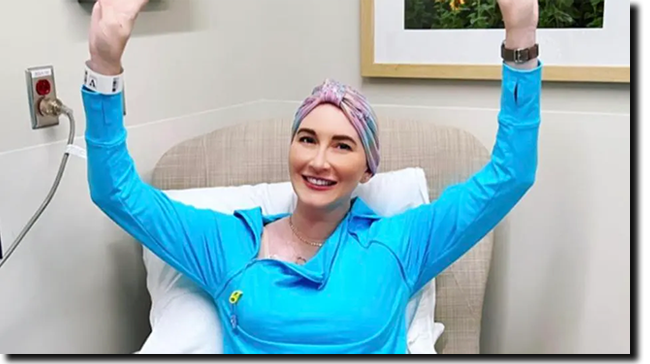
You’d think that finding a lump in your breast would be enough reason to get you scheduled for a mammogram like pretty darn soon. And that you would not have to wait months to get such breast imaging. But that’s the kind of delay in care that Clea Shearer, the star of the Netflix show “Get Organized with The Home Edit,” initially faced after she had discovered a very worrisome lump while doing a breast self-exam in the shower.
She had just turned 40 years of age, the age at which the U.S. Preventive Services Task Force recommends women begin getting biennial screening mammograms. She was also coming off what she described as the “best moment” in her career to date: the selling of her company Home Edit to Hello Sunshine. But on February 22, 2022, just four days after the company had closed the deal, her joy closed up pretty quickly when she made the discovery in the shower. “I felt pretty certain that the lump was breast cancer,” Shearer recalled.
So, the next obvious step was to get a mammogram as soon as possible to evaluate the lump, right? Yeah, that’s how a healthcare system is supposed to work. But that’s not what Shearer experienced. She experienced, oh, kind of the exact opposite. “I called my gynecologist,” she recounted. “The receptionist said that the mammogram schedule was totally filled until April and that the May books hadn't opened, yet.”
Read More
| |
Registration is open for
ASIPP's 2025 Annual Meeting
We would love it if you would register and join us in Orlando!
| |
|
Eric Dickson, MD, president and CEO of Worcester, Mass.-based UMass Memorial Health, is predicting that, without significant change, more hospitals in the state will close, The Boston Globe reported Oct. 25.
The prediction comes amid the closures of Carney Hospital in Dorchester and Nashoba Valley Medical Center in Ayer, both of which shut down on Aug. 31, resulting in layoffs of 753 and 490 employees, respectively. These hospitals were part of Dallas-based Steward Health Care, which filed for Chapter 11 bankruptcy in May. Steward's bankruptcy has led to some hospitals closing and others transferring to new ownership through restructuring.
On Oct. 23, Dr. Dickson cautioned a small group of Boston business leaders that nonprofit hospitals in Massachusetts could face similar problems without systemic changes to the state’s Medicaid reimbursement structure, according to the Globe. He argued that the current system permits annual cost increases across health systems, which disproportionately raise costs at higher-cost hospitals while underfunding lower-cost facilities.
Read More
| |
- ASIPP Members Only Site Information - | |
-
To log in for the first time you will need to click “forgot password” at the bottom of the login window.
- Check your email and then log in as directed.
-
If you have problems logging into your account, click here.
| |
|
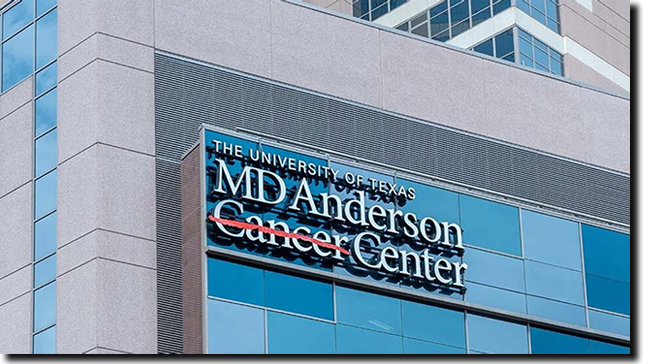
Blue Cross Blue Shield of Texas is terminating its Medicare Advantage and managed Medicaid contracts with MD Anderson Cancer Center, effective Nov. 1.
"While MD Anderson welcomes the opportunity to remain in-network for these plans, our goal is to ensure continuity of care for those in active treatments," a spokesperson for the Houston-based hospital told Becker's. "The institution is in touch with affected patients and is working with Blue Cross Blue Shield on coordination of care for these patients."
It is unclear how many individuals are impacted by the contract termination. BCBS Texas has more than 9,200 members with a Medicare Advantage HMO plan in the state, according to CMS. BCBS Texas administers Medicaid in the state's Travis and Central regions, which include Austin and Waco.
Read More
| |
|
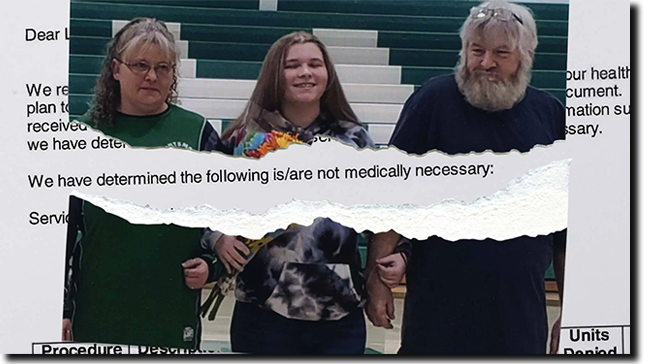
When companies like Aetna or UnitedHealthcare want to rein in costs, they turn to EviCore, whose business model depends on turning down payments for care recommended by doctors for their patients.
Every day, patients across America crack open envelopes with bad news. Yet another health insurer has decided not to pay for a treatment that their doctor has recommended. Sometimes it’s a no for an MRI for a high school wrestler with a strained back. Sometimes for a cancer procedure that will help a grandmother with a throat tumor. Sometimes for a heart scan for a truck driver feeling short of breath.
But the insurance companies don’t always make these decisions. Instead, they often outsource medical reviews to a largely hidden industry that makes money by turning down doctors’ requests for payments, known as prior authorizations. Call it the denials for dollars business.
The biggest player is a company called EviCore by Evernorth, which is hired by major American insurance companies and provides coverage to 100 million consumers — about 1 in 3 insured people. It is owned by the insurance giant Cigna.
Read More
| |
|
Last year, the US Centers for Disease Control and Prevention (CDC) reported a 3% decline in the number of drug overdose deaths, the largest decrease in 5 years. Officials called the numbers “heartening” but stopped short of saying the decline was a sign of a larger trend.
But now, as drug overdose deaths have continued to drop through the first 5 months of 2024, public health officials may have reason to believe that the decrease in 2023 is more than just an anomaly.
Predicted provisional deaths from drug overdoses declined by 12.7% between May 2023 and May 2024, dropping to 98,820 from a record high of 111,029 in 2022.
Read More
| |
|
Pain Medicine Case Reports (PMCR) and Editor-in-Chief Alaa Abd-Elsayed, MD, PhD would like to invite you to submit case reports and case series to the PMCR journal. Your article will be published free of charge.
Open access journals are freely available online for immediate worldwide open access to the full text of published articles. There is no subscription fee for open access journals. Open access journals are no different from traditional subscription-based journals: they undergo the same peer review and quality control as any other scholarly journal.
Interested in becoming a member of the PMCR Editorial Board?
Editorial board members are asked to review 2-6 manuscripts per year. Please submit your most up-to-date CV to sgold@asipp.org for consideration.
For more information or to submit your articles, click here.
| |
|
Alaa Abd-Elsayed, MD, Clara Nemr, MS, Max Y. Jin, BS, and Matthias Wiederholz, MD
Abstract
BACKGROUND: Peripheral neuropathy is a leading cause of chronic pain and can result in cephalalgia when upper cervical nerves or their branches are injured. This condition often shows resistance to typical treatment methods used for long-term pain management. Peripheral nerve stimulation (PNS) is an effective way to treat neuropathic pain; however, there’s limited literature available regarding the wireless modality at the cervical level.
CASE REPORT: This was a retrospective case series involving 3 patients who received wireless PNS at the C2-C3 level for treating occipital neuralgia and/or axial neck pain. Average Visual Analog Scale scores decreased by 63.9% after trial (P < 0.001) and 78.3% (P < 0.001) at one-year postpermanent implantation.
CONCLUSIONS: Our study adds to the growing evidence supporting wireless PNS as an efficacious intervention at the cervical level for patients with occipital neuralgia-induced neuropathic pain who fail conventional management.
KEY WORDS: Peripheral nerve stimulation, headache, occipital neuralgia, chronic pain, case series
Read More
| |
RANDOMIZED CONTROLLED TRIAL | |
|
Yu-Ting Lin, MD, Ying-Chen Kuo, MD, Xin-Ni Wu, MD, Ya-Fang Liu, PhD, and Lin-Fen Hsieh, MD
Abstract
BACKGROUND: The current mainstream treatment for frozen shoulder is a combination of physiotherapy and intraarticular corticosteroid injections (IACIs). Recently, the ultrasound-guided suprascapular nerve block (SSNB) has developed as a notable alternative option to the mainstream treatment.
OBJECTIVE: We aimed to compare ultrasound-guided SSNBs’ effectiveness to IACIs’ as treatments for frozen shoulder.
STUDY DESIGN: This study was conducted as a prospective single-blind, randomized controlled trial.
SETTING: Department of Physical Medicine and Rehabilitation, Shin Kong Wu Ho-Su Memorial Hospital, a medical center in Taipei, Taiwan.
METHODS: Patients with frozen shoulder (n = 76) were enrolled as participants and allocated to either an SSNB group (n = 38) or an IACI group (n = 38). Both groups received 2 injections of 20 mg of triamcinolone and 3 mL of 1% lidocaine at 2-week intervals and underwent the same physiotherapy protocol for 3 months. The primary outcome measure was the Shoulder Pain and Disability Index (SPADI). The secondary outcome measures were the Shoulder Disability Questionnaire (SDQ), the active and passive range of motion (ROM) of each patient’s affected shoulder, and the 36-item Short Form Health Survey (SF-36). Evaluations were performed at baseline and at 4 and 12 weeks after starting treatment.
RESULTS: Both groups achieved significant improvements in all outcome measures, except the general health subscale of the SF-36 at 4 and 12 weeks after starting treatment. For time and group interaction, the results for the SDQ (P = .047) and SF-36 (bodily pain, P = .025) indicated significant differences that favored IACIs. Additionally, the IACI group achieved more favorable outcomes than did the SSNB group on the SPADI (P = .094) and in ROM (i.e., abduction [P = .190] and external rotation [P = .081]) as well as on 2 subscales of the SF-36: bodily pain (P = .059) and role-emotional (P = .072).
LIMITATIONS: Our study is limited by the lack of participant stratification based on the stages of frozen shoulder and the 12-week follow-up period.
CONCLUSIONS: A combination of ultrasound-guided IACIs and physiotherapy should be attempted first as a frozen shoulder treatment.
KEY WORDS: Frozen shoulder, adhesive capsulitis, shoulder pain, intraarticular corticosteroid injection, suprascapular nerve block, ultrasound-guided intervention, physiotherapy, pain management
Read More
| |
RANDOMIZED CONTROLLED TRIAL | |
|
Min Xu, MD, Guangchao Zhang, MBBS, Rui Wang, MD, Yong Liu, MBBS, Bin Du, MD, and Jing Yang, MD
Abstract
BACKGROUND: Thoracic paravertebral block (TPVB) is frequently used to treat pain following a pediatric Nuss procedure but is associated with various undesirable risks. The erector spinae plane block (ESPB) also provides postoperative analgesia, which is purported to be easier to administer and has a favorable safety profile. However, it remains unknown whether ESPB provides analgesia comparable to the TPVB technique post pediatric Nuss procedure.
OBJECTIVE: This study aimed to compare the analgesic effects of ultrasound-guided ESPB and TPVB in children undergoing the Nuss procedure.
STUDY DESIGN: A prospective, randomized, noninferiority trial.
SETTING: A university hospital in the People’s Republic of China.
METHODS: A total of 68 children aged 4 to 18 scheduled for the Nuss procedure were enrolled in the study. They were randomly assigned to receive a single-injection ultrasound-guided bilateral T5-level ESPB or TPVB with 0.5 mL/kg of 0.25% ropivacaine post anesthesia induction. All patients received postprocedure multimodal analgesia. The primary outcomes were pain scores at rest and 24 hours postprocedure. The secondary outcomes included total rescue morphine milligram equivalents, emergence agitation, chronic postprocedure pain, and side effects.
RESULTS: The median difference in pain scores at rest 24 hours postprocedure was 0 (95% CI, 0 to 1), demonstrating the noninferiority of ESPB to TPVB. In addition, the difference in oral morphine milligram equivalents at 24 hours postprocedure was -4.9 (95% CI, -16.7 to 7.9) with the ESPB group consuming median (interquartile range) 37.7 mg (12–53.2) vs 36.9 mg (23.9–58.1) for the TPVB group. We concluded that the non-inferiority of ESPB with regard to opioid consumption as the 95% CI upper limit of 7.9, which was within the predefined margin of 10. We found no significant differences in pain scores at rest or during coughing, incidences of chronic postoperative pain, emergence agitation, or side effects.
LIMITATIONS: We did not evaluate the effect of analgesic protocols on patient-centric outcomes, such as resuming functional status and emotional wellbeing. Also, the sample size is small to some extent.
CONCLUSIONS: Preoperative ESPB, when combined with multimodal analgesia, was noninferior in analgesic effect compared with TPVB in terms of pain scores and opioid consumption in pediatric patients undergoing the Nuss procedure.
KEY WORDS: Erector spinae plane block, thoracic paravertebral block, pectus excavatum, pain management
Read More
| |
|
ASIPP is now in collaboration with Curi Medical Liability Program
| |
|
Since this malpractice insurance program officially launched in November 2018, ASIPP has signed up hundreds of providers with an average savings of 30%. This is professional liability insurance tailored to our specialty and will stand up for us and defend our practices.
Curi is a full-service advisory firm that serves physicians and their practices. Their valued advice is grounded in your priorities and elevated in your outcomes. They are driven by a deep understanding of your specific circumstances in medicine, business, and life. To read a few important points to keep in mind about the program, including discounts, administrative defense, cyber coverage, aggressive claims handling, and complimentary risk management CME activities, visit our website.
| | |
|
Group Purchasing Organization Offer Better Pricing and Creates Added Value
ASIPP has formed a partnership with Henry Schein and PedsPal, a national GPO that has a successful history of negotiating better prices on medical supplies and creating value-added services for independent physicians. Working with MedAssets, PedsPal provides excellent pricing on products like contrast media that alleviate some of the financial pressures you experience today.
Learn More
| |  |
|
ASIPP, Fedora Healthcare Solutions Partnership
ASIPP offers our members the benefit of a unique revenue cycle management/ billing service.
We have received a tremendous amount of interest in the ASIPP billing and coding program.
Click here to learn more about the negotiated rate for practices and more!
| |
|
Like and follow ASIPP® on Facebook, X, and LinkedIn for the most
up-to-date news related to you, your practice, and your patients!
| | | | |