However, both expected and unexpected adverse events of various grades occurred
Use of the investigational non-opioid analgesic resiniferatoxin appeared to improve pain control in patients with advanced cancer who had intractable pain, though all patients experienced adverse events (AEs), according to an interim analysis of a first-in-human phase I trial.
Among 19 patients with refractory cancer pain localized to the abdomen and/or lower extremities, a total of 213 treatment-emergent AEs were reported with a single intrathecal injection of resiniferatoxin, including 37 serious AEs in 14 patients, and at least one AE in all patients, reported Andrew J. Mannes, MD, of the NIH, and colleagues.
As for efficacy, resiniferatoxin was associated with a 38% reduction in worst pain intensity, and a 57% reduction in opioid consumption by day 15 after treatment, they noted in NEJM Evidence.
Read More
| |
ASIPP Submits Letters to Carelon and Humana Regarding Coverage for Interventional Pain Management Procedures | |
Impact of "One Big Beautiful Bill" on Physician Payment Reform
The budget reconciliation package passed on Thursday, May 22, and included several provisions that would significantly impact physician payments and healthcare overall. Unfortunately, there is no unequivocally good news; rather, we are faced with a mix of potentially good, bad, and ugly developments.
Maybe Good News
Medicare Physician Fee Schedule Updates:
1. Initial Increase: The bill proposes a 2.25% Medicare pay update for physicians in 2026, based on 75% of the Medicare Economic Index (MEI), at a projected cost of $8.9 billion for that year.
Bad News
1. Future payment updates would be tied to the MEI, which tracks inflation and physician practice costs.
However, while linking payment updates to the MEI is a step in the right direction, concerns persist that the proposed MEI updates—capped at 10% annually—will not keep pace with actual inflation and rising practice expenses. This could result in effective increases of less than 0.5%.
2. The physician payment conversion factor is based on three components, including:
• An inflationary index, which is currently projected as 0% for 2025.
• A budget neutrality adjustment would apply solely to physician payments.
• Payments would continue to be influenced by the Merit-Based Incentive Payment System (MIPS). Consequently, CMS retains the authority to convert even minimal positive inflation adjustments into negative adjustments.
3. The continuation of 2% sequestration cuts, initially implemented after the Affordable Care Act, is set to extend through 2032.
4. Broader healthcare provisions will also affect physicians. These include Medicaid cuts, implementation of work requirements, and reductions in multiple assistance programs, which are likely to lead to decreased Medicaid enrollment.
What Is Ugly?
- What is particularly troubling is the ongoing instability of the physician payment system and the continued imposition of 2% sequestration cuts.
- Overall payment reductions could reach as high as 6%, despite the proposed MEI-based increases.
We find ourselves in a critical situation. ASIPP has long been engaged in addressing these challenges through a non-partisan proposal to reform the physician payment system and safeguard telehealth services. The bill is now before the Senate. Please contact your senator individually, through your group, patients, or staff—and urge them to support meaningful reform of the physician payment system. You may also use this convenient link set up by ASIPP.
Click here to read ASIPP's letter to Senator Bill Cassidy.
| | |
Sandeep Patel, Shivam Gahlaut, Tarkik Thami, Devendra Kumar Chouhan, Ashish Jain, Mandeep Singh Dhillon
Abstract
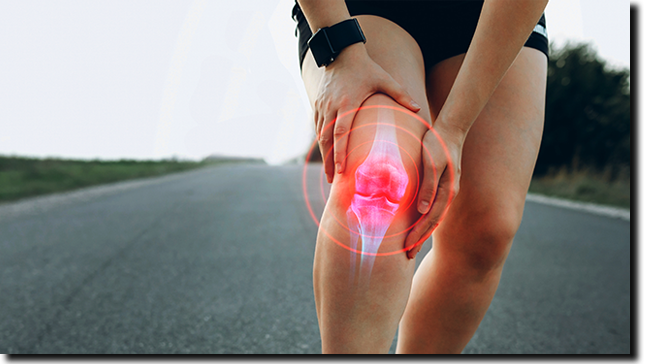
Background: Confusion persists regarding the ideal dosage of platelet-rich plasma (PRP) injection for knee osteoarthritis (OA).
Purpose/hypothesis: The purpose of the study was to compare the efficacy of 2 different single-injection PRP dosages in patients with early knee OA-a conventional 4 mL dose and a superdose of 8 mL. It was hypothesized that 8 mL of PRP would be superior to 4 mL of PRP in this patient population.
Study design: Randomized clinical trial; Level of evidence, 1.
Methods: Patients with early knee OA (Kellgren-Lawrence grades 1 and 2) who met the inclusion criteria were randomly divided into 2 groups: Group A (n = 50 knees) received a 4-mL PRP injection, and group B (n = 49 knees) received an 8-mL PRP injection, both prepared using the same procedure. Patients were evaluated at the baseline, 6 weeks, 3 months, and 6 months using the Western Ontario and McMaster Universities Arthritis Index (WOMAC), the WOMAC-Pain subscale, the visual analog scale for pain, the Knee injury and Osteoarthritis Outcome Score, and patient satisfaction, and results were compared between the groups.
Click to read more
| | JOIN or RENEW your ASIPP Membership for the best registration rates. | | |
As a young child in the 1980s, Jiwa Farrell earned the moniker “Little Apple Cheeks” because her face was always so “cute and pink.” But by the time she was 6 years old, she had already begun recognizing that something else distinguished her from other kids besides her bright pink complexion.
“I had flu-like symptoms all throughout my childhood and always felt very fatigued,” Farrell told Medscape Medical News. “My muscles ached, my joints ached, and I remember thinking as a kid to myself, ‘If I feel this way and other people don’t feel this way, what’s wrong with me?’”
The answer to that question would take a decade for Farrell and her family to discover, and for most of those years, Farrell’s mother, Sharon, had grown so frustrated with doctors that she started letting them know at the start of each appointment the word that would cause her to turn around and walk right back out. “Don’t you dare say the word ‘hypochondria’ to me,” Sharon would tell the doctors. “She was so angry,” Farrell said, with her mother nodding beside her, “because she knew something was wrong.”
Read More
| |
It will probably become dominant in the U.S. this summer, experts say
A new COVID variant driving a surge of infections in China and other parts of Asia has been detected by U.S. airport screening programs, and experts say it may drive a summer wave in the U.S.
NB.1.8.1 was recently named a "variant under monitoring" by the World Health Organization, and as of mid-May it represented 10.7% of sequences globally.
"While still low numbers, this is a significant rise in prevalence from 2.5% four weeks prior," the WHO stated.
The dominant strain in the U.S. is currently LP.8.1, which Moderna recently selected as the strain to be included in its COVID shot for the fall. (Pfizer also selected this strain for its fall booster, but has only applied to European regulators for approval thus far.)
Read More
| | |
Mark your calendars!
June 28
Four (4) hour virtual exam
- ABIPP Path – Combined CCPM/ CSM Exam
For those with subspecialty in Pain Medicine
Two (2) hour virtual exam
- ABIPP Competency Exam in IPM
For those without primary board certification
Two (2) hour virtual exam
- ABIPP Competency Exam in Regenerative Medicine
Two (2) hour virtual exam
- Controlled Substance Management Competency Exam
Two (2) hour virtual exam
- Documentation, Coding, Compliance, Practice Management Competency Exam
Two (2) hour virtual exam
| | |
MRI is central to the early detection and diagnosis of axial spondyloarthritis (axSpA), but years-long diagnostic delays are still common.
Now, experts are warning that misinterpretation of MRI findings is contributing to significant increases in false-positive diagnoses in patients presenting with back pain that may be caused by other, noninflammatory conditions.
The good news is that studies show that diagnostic accuracy in the interpretation of MRI findings can be significantly improved when rheumatologists provide radiologists with all the clinical information relevant to a diagnosis of axSpA.
Read More
| | | |
We're excited to let you know that the new ASIPP Community, hosted by DocMatter, is now live!
The ASIPP Community on DocMatter will serve as a place for members to collaborate around clinical and research topics to advance the care of their interventional pain patients.
Click here to be a part of the conversation!
| | - ASIPP Members Only Site Information - | |
-
To log in for the first time you will need to click “forgot password” at the bottom of the login window.
- Check your email and then log in as directed.
-
If you have problems logging into your account, click here.
| | |
To reduce the risk for complications, the use of dopaminergic agonists in the treatment of severe restless legs syndrome (RLS) has become less common.
RLS is characterized by an irresistible urge to move the legs, often accompanied by unpleasant sensations such as itching, tingling, or electric paresthesia, which typically affect the lower limbs. It affects 8% of the French population, predominantly women.
New guidelines from the American Academy of Sleep Medicine (AASM) no longer recommend the use of these drugs as first-line treatments.
Read More
| | |
Pain Medicine Case Reports (PMCR) and Editor-in-Chief Alaa Abd-Elsayed, MD, PhD would like to invite you to submit case reports and case series to the PMCR journal. Your article will be published free of charge.
Open access journals are freely available online for immediate worldwide open access to the full text of published articles. There is no subscription fee for open access journals. Open access journals are no different from traditional subscription-based journals: they undergo the same peer review and quality control as any other scholarly journal.
Interested in becoming a member of the PMCR Editorial Board?
Editorial board members are asked to review 2-6 manuscripts per year. Please submit your most up-to-date CV to sgold@asipp.org for consideration.
For more information or to submit your articles, click here.
| | |
We are excited to announce that Pain Medicine Case Reports (PMCR) journal (eISSN 2768-5152) has been accepted for inclusion in MEDLINE and PubMed, the prestigious bibliographic database of the U.S. National Library of Medicine. PMCR, a companion publication to the prestigious Pain Physician journal by ASIPP, joins its counterpart in achieving indexing in both MEDLINE and PubMed, marking ASIPP’s dual presence in these renowned databases.
The inclusion of PMCR journal in MEDLINE signifies a higher level of selectivity, as MEDLINE consists of the top 5,200 biomedical journals. This indexing also means that articles from PMCR will be searchable using NLM Medical Subject Headings (MeSH terms) and other metadata.
The selection for MEDLINE follows a rigorous evaluation process by reviewers from the Literature Selection Technical Review Committee (LSTRC). According to their criteria, the scientific quality of a journal’s content is the primary factor considered for indexing.
We extend our congratulations to the Pain Medicine Case Reports Editor-in-Chief, Deputy Editor-in-Chief, Journal Team, and Editorial Board for this achievement, which underscores the significance and excellence of this esteemed journal.
| | | | |
Epidural Lysis of Adhesions: What Every Interventional Pain Physician Needs to Know
Standiford Helm II, MD, Carl Noe, MD, and Gabor B. Racz, MD
| |
A Systematic Review of Self-Reported Pain Rating Scales for Children and Adolescents
Joshua Calvano, DO, Reza Ehsanian, MD, PhD, Jordan A. Buttner, BS, Adi Balk, BS, Deborah Lai, BS, Matt McGillivray, BS, Todd Jaffe, MD, and Shuhan He, MD
| | | | |
|
ASIPP is now in collaboration with Curi Medical Liability Program
Since this malpractice insurance program officially launched in November 2018, ASIPP has signed up hundreds of providers with an average savings of 30%. This is professional liability insurance tailored to our specialty and will stand up for us and defend our practices.
Curi is a full-service advisory firm that serves physicians and their practices. Their valued advice is grounded in your priorities and elevated in your outcomes. They are driven by a deep understanding of your specific circumstances in medicine, business, and life. To read a few important points to keep in mind about the program, including discounts, administrative defense, cyber coverage, aggressive claims handling, and complimentary risk management CME activities, visit our website.
| | |
IMPORTANT UPDATE
SPR is happy to announce an important update regarding Humana Medicare Advantage. As of May 1, Humana is now recognizing SPRINT as a PNS therapy. Previously, SPRINT was categorized as PNT (Percutaneous Nerve Stimulation), which allowed denials on the grounds that the therapy fell outside the NCD.
Additional details are as follows:
Payer: Humana Medicare Advantage (click here to view policy)
Policy Title: Peripheral Nerve Stimulators
Policy changes: SPRINT no longer misclassified as PNT and is now appropriately classified as PNS. Humana is applying the Noridian Medicare LCD criteria to ALL PNS devices – Including SPRINT PNS!
Effective Date: 5/1/2025
Click here to view a PDF of the official policy update.
| | |
|
Group Purchasing Organization Offer Better Pricing and Creates Added Value
ASIPP has formed a partnership with Henry Schein and PedsPal, a national GPO that has a successful history of negotiating better prices on medical supplies and creating value-added services for independent physicians. Working with MedAssets, PedsPal provides excellent pricing on products like contrast media that alleviate some of the financial pressures you experience today.
Learn More
For updated information concerning tariffs on products, click here.
| |  |
|
ASIPP, Fedora Healthcare Solutions Partnership
ASIPP offers our members the benefit of a unique revenue cycle management/ billing service.
We have received a tremendous amount of interest in the ASIPP billing and coding program.
Click here to learn more about the negotiated rate for practices and more!
| | Like and follow ASIPP® on Facebook, X, LinkedIn, and YouTube for the most up-to-date news related to you, your practice, and your patients! | | | | |