The model could make things worse, observers say
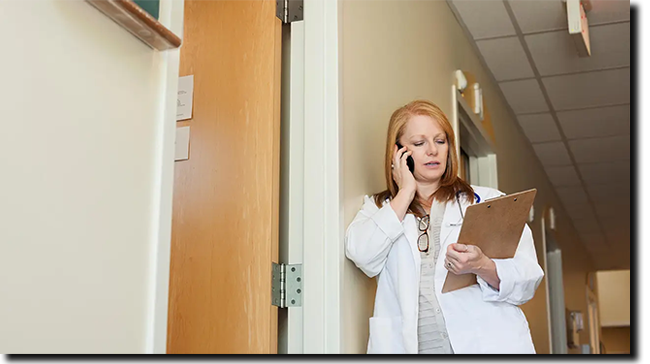
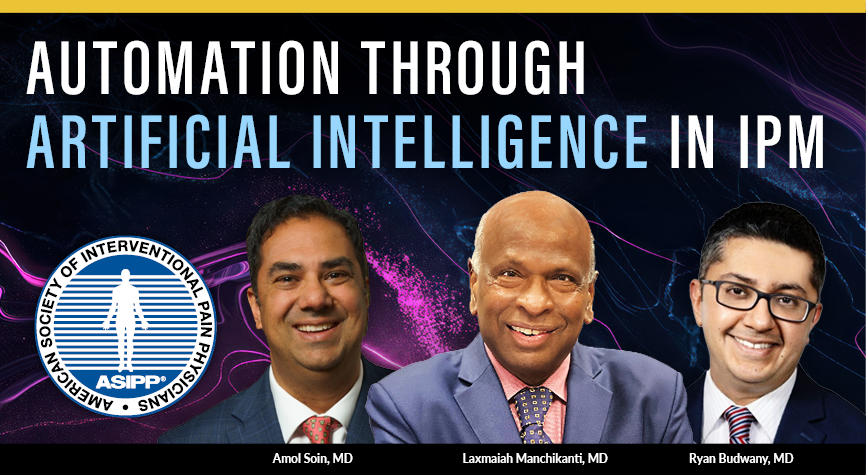
The Centers for Medicare & Medicaid Services (CMS) announced a new experimental model late last week to streamline some prior authorizations under the traditional Medicare program, but some politicians and experts are concerned that it could result in more delays in care.
Under the model, known as the Wasteful and Inappropriate Service Reduction (WISeR) Model, "CMS will partner with companies specializing in enhanced technologies to test ways to provide an improved and expedited prior authorization process" under traditional Medicare, the agency said Friday in a press release, adding that the model will help "patients and providers avoid unnecessary or inappropriate care and [will safeguard] federal taxpayer dollars."
The WISeR Model will test new technologies including artificial intelligence to see whether they can expedite the prior authorization processes for certain items and services "that have been identified as particularly vulnerable to fraud, waste, and abuse, or inappropriate use," the press release noted. "These items and services include, but are not limited to, skin and tissue substitutes, electrical nerve stimulator implants, and knee arthroscopy for knee osteoarthritis."
Read more
| | ATTENTION FELLOWS & RESIDENTS | |
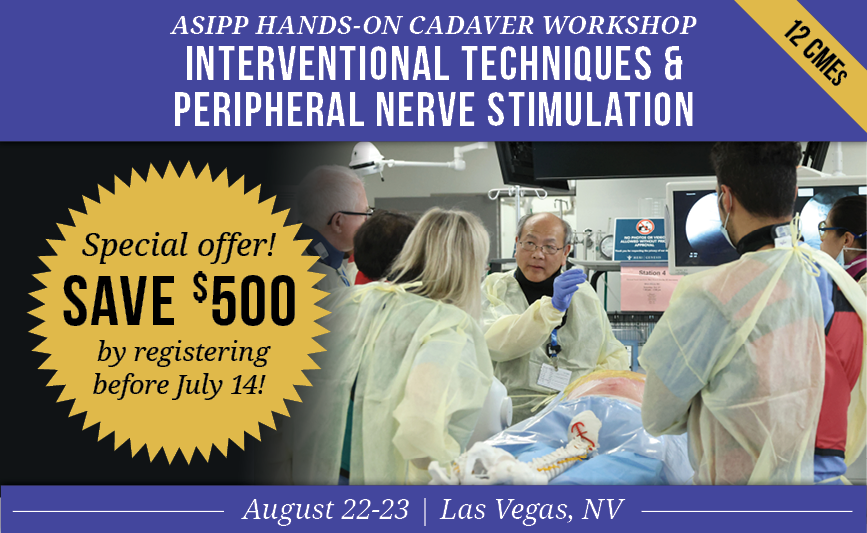
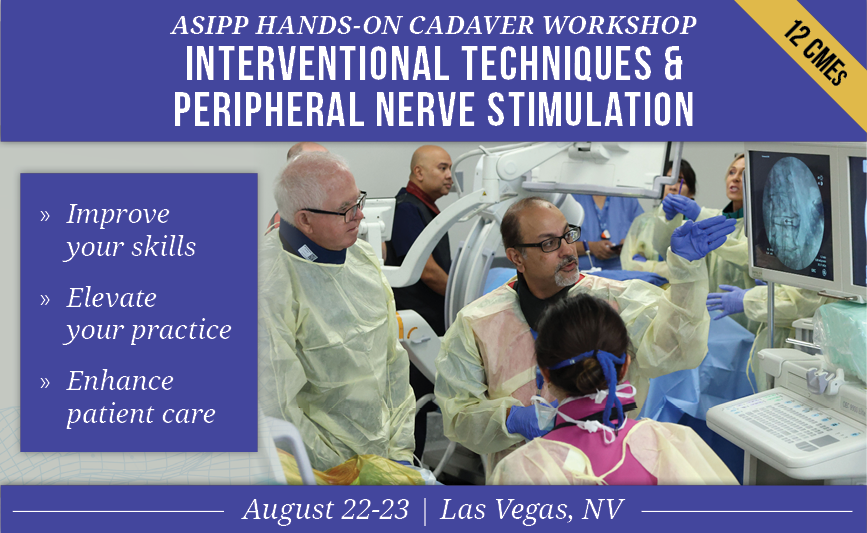
Join ASIPP for a weekend of hands-on training in exciting Las Vegas!
This Cadaver Workshop is designed to help you refine your interventional techniques with expert-led instruction.
Why Attend the Cadaver Workshop?
- Improve interventional techniques in a hands-on lab environment
- Learn from nationally recognized leaders in pain management
- Stay current on evolving best practices
- Reconnect with colleagues and expand your professional network
Special Fellow Rate: $250 (A $3,500 value!)
Don’t miss this opportunity to elevate your skill set and engage with the leaders shaping the future of interventional pain medicine.
| |
ABIPP Certification:
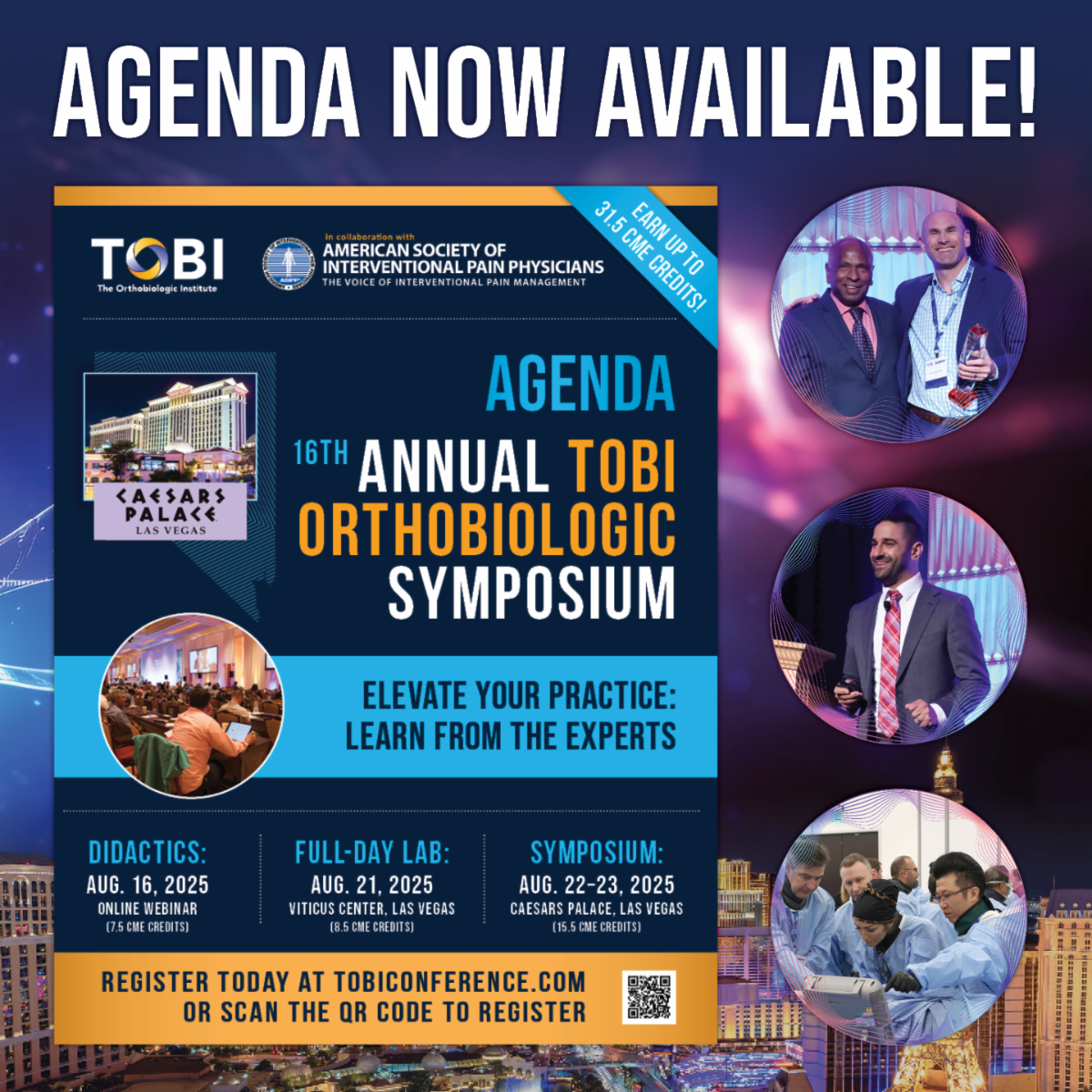
The 31.5 CME credits available through the TOBI Regenerative Medicine Review Course Webinar, Hands-On Cadaver Lab, and 2-Day Symposium meet the certification requirements for the American Board of Interventional Pain Physicians (ABIPP) competency certification in regenerative medicine. To apply for this certification, please visit abipp.org to submit the necessary documentation.
| | |
Spices have been valued for centuries in Ayurvedic and Chinese medicine because of their healing properties. In small amounts used for cooking, cinnamon, turmeric, and ginger are generally safe and may provide health benefits, depending on their quality and preparation methods. However, at higher therapeutic doses, they can interact with medications or cause side effects; therefore, long-term use should be monitored by a healthcare professional.
Cinnamon
Cinnamon spice is extracted from the bark of various species of the cinnamon tree, and essential cinnamon oil is obtained from the bark or leaves. Active constituents include cinnamaldehyde, eugenol, and coumarin. Cinnamon provides antioxidant, anti-inflammatory, antimicrobial, antiviral, antihypertensive, blood sugar-regulating, and antitumor properties, which may reduce the risk for heart disease and improve brain function. Traditionally, it has also aided digestion and fought infections.
Combined with lysozyme, essential oils from Cinnamomum verum and clove (Syzygium aromaticum) have been shown to reduce the minimum inhibitory concentrations of gentamicin and imipenem against multidrug-resistant Pseudomonas aeruginosa and Klebsiella pneumoniae, thereby enhancing antibiotic efficacy and modifying resistance. Its use in patients with breast cancer could be promising, but further studies are needed.
Read more
| | JOIN or RENEW your ASIPP Membership for the best registration rates. | | |
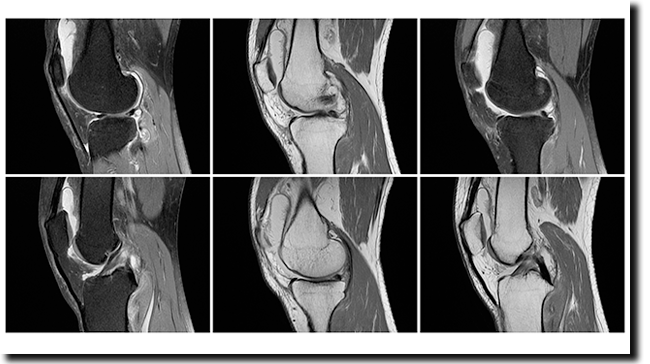
The whole-body MRI revealed similar inflammation levels in both patients with new arthralgia and those with new inflammatory arthritis after exposure to immune checkpoint inhibitors (ICIs), showing three distinct patterns of inflammation.
METHODOLOGY:
- Researchers conducted a prospective imaging study from 2021 to 2024 including 60 patients (mean age, 65 years; 57% men; all White) from regional oncology services at a UK hospital who developed new musculoskeletal symptoms — arthralgia or inflammatory arthritis — after exposure to ICIs.
- Those with no history of rheumatologic autoimmune disease, active cancer, or recent joint pain served as healthy control individuals (n = 20; mean age, 62 years; 60% men).
- Participants underwent whole-body MRI to assess joint, tendon, bursal, entheseal, and spinal lesions, with imaging patterns analyzed over a 6-month follow-up.
Read More
| | |
Health systems across the U.S. are rapidly adopting AI to enhance patient care, streamline operations and reduce administrative burdens.
From AI-powered documentation to using AI to to filter patient portal messages, health systems are finding innovative ways to integrate the technology into everyday workflows. Here’s a look at how seven health systems are leveraging AI to transform their operations, as reported by Becker’s since June 17.
-
Stanford Health Care has launched a pilot program combining ambient AI and real-world data to give physicians clinical evidence within minutes during patient visits.
-
Cleveland Clinic is using AI-powered scribes to help reduce physicians’ documentation workload, with 4,000 of its physicians already using the technology. The tool has been able to significantly ease administrative tasks and improve physician-patient interactions, according to the health system.
- Lebanon, N.H.-based Dartmouth Health has built AI to filter patient portal messages and respond to patients.
Read More
| | |
New Dates Just Announced
Mark your calendars!
July 26, August 30,
September 27, October 25,
November 15, & December 13
Four (4) hour virtual exam
- ABIPP Path – Combined CCPM/ CSM Exam
For those with subspecialty in Pain Medicine
Two (2) hour virtual exam
- ABIPP Competency Exam in IPM
For those without primary board certification
Two (2) hour virtual exam
- ABIPP Competency Exam in Regenerative Medicine
Two (2) hour virtual exam
- Controlled Substance Management Competency Exam
Two (2) hour virtual exam
- Documentation, Coding, Compliance, Practice Management Competency Exam
Two (2) hour virtual exam
| | |
"His legacy is indelible," one physician said
Lucian Leape, MD, considered by many to be the father of the patient safety movement, died Monday in Lexington, Massachusetts. He was 94. The cause of death was heart failure, his son James told the New York Times.
Leape was an adjunct professor of health policy in Harvard University's Department of Health Policy and Management and published over 100 papers on patient safety and quality care. He was a member of the Institute of Medicine's (now the National Academy of Medicine's) Quality of Care in America Committee when it published two seminal reports on patient safety and medical errors -- "To Err Is Human" in 1999 and "Crossing the Quality Chasm" in 2001.
"He was a true giant," Robert Wachter, MD, chair of the department of medicine at the University of California San Francisco, wrote in an email to MedPage Today. "He had a towering intellect, a forceful personality, and the guts to take on the medical establishment ... Even into his 90s, his passion for safety and for the primacy of the patient's voice never waned." Wachter served for about a decade on the board of the Lucian Leape Institute.
Read More
| | | |
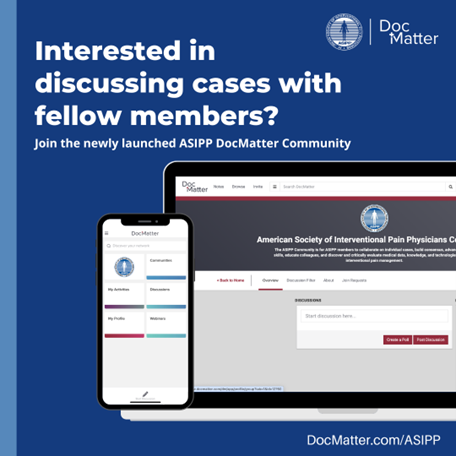
We're excited to let you know that the new ASIPP Community, hosted by DocMatter, is now live!
The ASIPP Community on DocMatter will serve as a place for members to collaborate around clinical and research topics to advance the care of their interventional pain patients.
Click here to be a part of the conversation!
| | - ASIPP Members Only Site Information - | |
-
To log in for the first time you will need to click “forgot password” at the bottom of the login window.
- Check your email and then log in as directed.
-
If you have problems logging into your account, click here.
| | |
Pain Medicine Case Reports (PMCR) and Editor-in-Chief Alaa Abd-Elsayed, MD, PhD would like to invite you to submit case reports and case series to the PMCR journal. Your article will be published free of charge.
Open access journals are freely available online for immediate worldwide open access to the full text of published articles. There is no subscription fee for open access journals. Open access journals are no different from traditional subscription-based journals: they undergo the same peer review and quality control as any other scholarly journal.
Interested in becoming a member of the PMCR Editorial Board?
Editorial board members are asked to review 2-6 manuscripts per year. Please submit your most up-to-date CV to sgold@asipp.org for consideration.
For more information or to submit your articles, click here.
| | |
We are excited to announce that Pain Medicine Case Reports (PMCR) journal (eISSN 2768-5152) has been accepted for inclusion in MEDLINE and PubMed, the prestigious bibliographic database of the U.S. National Library of Medicine. PMCR, a companion publication to the prestigious Pain Physician journal by ASIPP, joins its counterpart in achieving indexing in both MEDLINE and PubMed, marking ASIPP’s dual presence in these renowned databases.
The inclusion of PMCR journal in MEDLINE signifies a higher level of selectivity, as MEDLINE consists of the top 5,200 biomedical journals. This indexing also means that articles from PMCR will be searchable using NLM Medical Subject Headings (MeSH terms) and other metadata.
The selection for MEDLINE follows a rigorous evaluation process by reviewers from the Literature Selection Technical Review Committee (LSTRC). According to their criteria, the scientific quality of a journal’s content is the primary factor considered for indexing.
We extend our congratulations to the Pain Medicine Case Reports Editor-in-Chief, Deputy Editor-in-Chief, Journal Team, and Editorial Board for this achievement, which underscores the significance and excellence of this esteemed journal.
| | | | |
|
Shahin Azizov, MD, Mehmet Okcu, MD, and Hamit Goksu, MD
| | RETROSPECTIVE OBSERVATION | | |
Christopher File, BSA, Remi Nader, MD, Alejandro Villasante-Tezanos, PhD, Rowaid Ahmed, MD, Sean Pappolla, Fauwad Ahmed, MD, Ernesto G. Miranda-Morales, PhD, Yingxin Zhao, PhD, Xiang Fang, MD, PhD, Alan D. Kaye, MD, PhD, and Miguel A. Pappolla, MD, PhD
| | | | |
|
ASIPP is now in collaboration with Curi Medical Liability Program
Since this malpractice insurance program officially launched in November 2018, ASIPP has signed up hundreds of providers with an average savings of 30%. This is professional liability insurance tailored to our specialty and will stand up for us and defend our practices.
Curi is a full-service advisory firm that serves physicians and their practices. Their valued advice is grounded in your priorities and elevated in your outcomes. They are driven by a deep understanding of your specific circumstances in medicine, business, and life. To read a few important points to keep in mind about the program, including discounts, administrative defense, cyber coverage, aggressive claims handling, and complimentary risk management CME activities, visit our website.
| | |
IMPORTANT UPDATE
SPR is happy to announce an important update regarding Humana Medicare Advantage. As of May 1, Humana is now recognizing SPRINT as a PNS therapy. Previously, SPRINT was categorized as PNT (Percutaneous Nerve Stimulation), which allowed denials on the grounds that the therapy fell outside the NCD.
Additional details are as follows:
Payer: Humana Medicare Advantage (click here to view policy)
Policy Title: Peripheral Nerve Stimulators
Policy changes: SPRINT no longer misclassified as PNT and is now appropriately classified as PNS. Humana is applying the Noridian Medicare LCD criteria to ALL PNS devices – Including SPRINT PNS!
Effective Date: 5/1/2025
Click here to view a PDF of the official policy update.
| | |
|
Group Purchasing Organization Offer Better Pricing and Creates Added Value
ASIPP has formed a partnership with Henry Schein and PedsPal, a national GPO that has a successful history of negotiating better prices on medical supplies and creating value-added services for independent physicians. Working with MedAssets, PedsPal provides excellent pricing on products like contrast media that alleviate some of the financial pressures you experience today.
Learn More
For updated information concerning tariffs on products, click here.
| |  |
|
ASIPP, Fedora Healthcare Solutions Partnership
ASIPP offers our members the benefit of a unique revenue cycle management/ billing service.
We have received a tremendous amount of interest in the ASIPP billing and coding program.
Click here to learn more about the negotiated rate for practices and more!
| | Like and follow ASIPP® on Facebook, X, LinkedIn, and YouTube for the most up-to-date news related to you, your practice, and your patients! | | | | |