Follow Us On

Facebook  X  Linkedin  YouTube


ASIPP is advocating strongly on behalf of interventional pain physicians, sending letters to Congress urging revisions to the proposed 2025 Physician Payment Rule from the Centers for Medicare & Medicaid Services (CMS). While ASIPP supports CMS’s goals of reducing waste, improving quality, and strengthening chronic disease management, the current proposal would have devastating consequences for interventional pain practices. These sweeping cuts risk accelerating healthcare consolidation, reducing patient access to pain specialists, and worsening physician burnout, at a time when practice costs are soaring, staff wages are rising, and reimbursement rates continue to fall.


Since 2001, interventional pain physicians have experienced some of the steepest cuts across all specialties, 41% through 2025, projected to reach 45% with the new rule. Even with modest office-based payment relief projected for 2026, the cumulative losses remain unsustainable.


In addition, CMS is introducing an Ambulatory Specialty Model (ASM) that will begin a trial phase in select states starting January 2027 and continue for five years through December 31, 2031.


This pilot will focus on two chronic conditions, low back pain and heart failure, with the following objectives:


1.  Prevent the worsening of chronic conditions

2.  Identify risks and early signs of chronic conditions

3.  Improve patient experience

4.  Reduce unnecessary procedures and surgeries


The specialties included are interventional pain management, anesthesiology, neurosurgery, orthopedic surgery, and physical medicine and rehabilitation. During the first payment year, adjustments will range from -9% to +9%, with all participants subject to this risk. Participation is mandatory, not optional.


However, there is no established or evidence-based guidance for this model, which significantly increases the risk for pain specialists. Pain specialists do not manage acute pain and have no control over many of the associated costs, yet they would still be held accountable for overall patient spending. These payment adjustments may apply to all Medicare services.


ASIPP urges CMS to eliminate the ASM until appropriate criteria are established and the model’s effectiveness is demonstrated.


ASIPP is urging Congress to:

  • Reverse the proposed 2.5% efficiency adjustment to work RVUs and stop the cycle of devastating cuts every three years.
  • Promote equitable treatment of independent pain practices in practice expense allocations, especially for services provided in Ambulatory Surgery Centers.
  • Ensure the permanent extension of telehealth access beyond 2025, critical for chronic pain patients in rural and underserved areas.
  • Direct CMS to distinguish reimbursement reductions between hospital-employed and independent physicians, protecting small pain practices from disproportionate harm.
  • Ask CMS to withdraw this provision pending the development of appropriate criteria and validation of the model's effectiveness.


Without these revisions, independent interventional pain practices, already under audit pressure and burdened by prior authorization requirements, face an uncertain future. Preserving their viability is essential to maintain patient access to timely, high-quality pain care and to prevent further healthcare consolidation that continues to drive up costs by 200–300%.


SAMPLE LETTER TO SEND TO REPRESENTATIVES IN CONGRESS

ASIPP has prepared a sample letter you can personalize and send to your representatives in Congress.

Click here to find your congressional members.


By speaking out, you can help stop devastating cuts, protect independent interventional pain practices, and preserve patient access to high-quality pain care.

Please click here for a sample letter to send to your representatives.


SAMPLE LETTER TO SUBMIT COMMENTS TO CMS

For your convenience, we are enclosing a sample letter for you to customize and send to CMS to express concerns with the 2025 Medicare Physician Fee Schedule.

Please click here for a sample letter to submit your comments to CMS.


INFORMATION FOR SUBMITTING YOUR COMMENT LETTER

In commenting, please refer to file code CMS-1832-P.

Comments must be received no later than 5 p.m. on September 12, 2025.

Click here to submit electronic comments on this regulation.


Please do not hesitate to contact us if you have any questions or would like additional information.


Thank you,


Laxmaiah Manchikanti, MD

Chairman of the Board and Chief Executive Officer, ASIPP and SIPMS

drcm@asipp.org


Mahendra Sanapati, MD

ASIPP President

drs@apccweb.com


JOIN or RENEW your ASIPP Membership for the best registration rates.


Americans to Gain New Access to Real-Time Prescription Drug Price Information


Yesterday, leaders at the U.S. Department of Health and Human Services (HHS) celebrated a regulatory breakthrough that will give doctors and their patients unprecedented real-time access to prescription drug information. The reform will help them identify the most appropriate, cost-effective treatments while preventing health insurers from blocking physician-approved care. Thanks to this rule change taking effect October 1, millions of Americans for the first time will be able to compare drug prices, view out-of-pocket costs, and access prior authorization requirements.


HHS’ final rule ensures that health care providers using certified health IT systems are able to submit prior authorizations electronically, select drugs consistent with a patient’s insurance coverage, and exchange electronic prescription information with pharmacies and insurance plans. It complements important policies advanced by the Centers for Medicare & Medicaid Services (CMS) in recent years and expands interoperability for patients, health care providers, and payers to ease administrative burdens. The rule was finalized through the HHS Assistant Secretary for Technology Policy/Office of the National Coordinator for Health Information Technology (ASTP/ONC).


This victory for the American people follows a June 2025 roundtable meeting between Secretary of Health and Human Services Robert F. Kennedy, Jr., CMS Administrator Dr. Mehmet Oz, Director of Medicare Chris Klomp, and major health insurers covering nearly eight in 10 Americans. Health insurers pledged six key reforms to cut red tape, accelerate care decisions, and enhance transparency for patients and providers participating in Medicare Advantage, Medicaid Managed Care, Medicare Part D, Health Insurance Marketplace® and commercial plans.


Click here to read the full article.

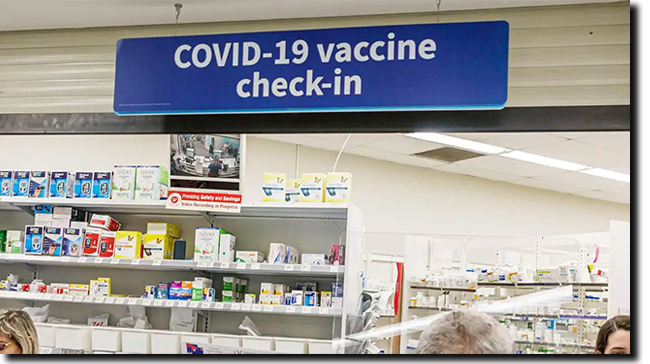
Getting a COVID Shot Just Became Much More Difficult. Here's Why.

State statutes, clashing recommendations create challenges for pharmacists, patients


The FDA approved updated fall COVID vaccines this week with significant new restrictions; however, those criteria won't be the only barrier to access, since pharmacists' ability to vaccinate in some states is dictated by CDC recommendations, which will not be released until next month at the earliest.


CVS and Walgreens are not currently offering COVID vaccines without a prescription in more than a dozen states, even for people who meet the FDA's more restrictive criteria, and in some states the large pharmacy chains have halted COVID vaccinations altogether.


A spokesperson for CVS cited "the current regulatory environment" as the reason.


Click here to read the full article.

Analysis of NEJM Abstracts Confirms

the Value of Peer Review

59% of abstracts were improved after peer review, blinded independent reviewers say


Key Takeaways


• Nearly 60% of randomized trial abstracts were improved after peer review, according to blinded independent reviewers.


• Among abstracts that were eventually published in top medical journals, 72% improved in at least one domain versus 48% of those published in other journals.


• These findings are important in the context of the rise of preprint servers, which raise concerns about the reliability of unvetted research.


Most abstracts for reports of randomized trials originally submitted to the New England Journal of Medicine (NEJM) that were later published benefited from peer review, an analysis found.


In total, 59% of abstracts that were submitted in 2022 were improved after peer review as deemed by blinded independent reviewers, improving in 0.9 of four key domains on average, reported Christos Kotanidis, MD, DPhil, of the University of Oxford in England, and colleagues.


Among abstracts that were eventually published in NEJM or other top medical journals with the highest impact factors, 72.1% improved in at least one domain compared with 48.3% of those published in other journals, they noted in the Annals of Internal Medicine.


Click here to read the full article.

Our Sponsor

Our Sponsor


Use of DataDerm for AI-Based Rare Disease Detector Being Expanded


Patients with rare skin disorders often go years without a diagnosis, in part because symptoms might be too diffuse to connect to a particular disease. But an artificial intelligence (AI)-powered platform being trained on an American Academy of Dermatology (AAD) database has been making strides at identifying patterns that could make it simpler to accurately diagnose patients.


The AI platform — OM1’s PhenOM — has had access to a de-identified data export from the AAD’s DataDerm registry since 2023, when OM1 and the AAD first began a collaboration. At that time, the AAD said in a press release, OM1’s Patient Finder tool (which uses PhenOM) would support the AAD’s Generalized Pustular Psoriasis (GPP) Education Initiative.


Making a GPP diagnosis is especially vexing. The rare form of psoriasis causes widespread, painful pus-filled blisters, which can lead to life-threatening complications such as kidney, heart, or respiratory failure. The condition can occur in patients who have the more common plaque psoriasis or a certain gene variant and is more common in middle age and in women. But it is frequently not diagnosed or is misdiagnosed.


Click here to read the full article.


Mark your calendars!


September 27, October 25,

November 15, & December 13


  • ABIPP Part I

Four (4) hour virtual exam


  • ABIPP Path – Combined CCPM/ CSM Exam

For those with subspecialty in Pain Medicine

Two (2) hour virtual exam


  • ABIPP Competency Exam in IPM

For those without primary board certification

Two (2) hour virtual exam


  • ABIPP Competency Exam in Regenerative Medicine

Two (2) hour virtual exam


  • Controlled Substance Management Competency Exam

Two (2) hour virtual exam


  • Documentation, Coding, Compliance, Practice Management Competency Exam

Two (2) hour virtual exam

Exam Dates


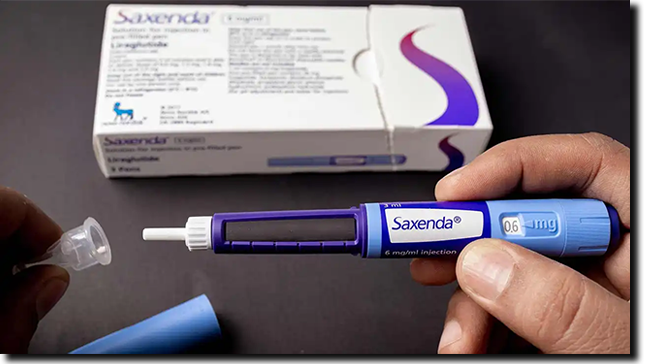
First Generic GLP-1 Injection OK'd for Weight Loss

Approval can help address "increased demand," drugmaker says


The FDA approved the first-ever generic form of a GLP-1 receptor agonist specifically indicated for weight loss, Teva Pharmaceuticals announced Thursday.


The generic form of liraglutide (Saxenda) is indicated for adults with obesity or overweight with at least one weight-related comorbidity in combination with diet and exercise, as well as for adolescents ages 12 to 17 who are over 132.2 lb with obesity.


Liraglutide was first approved in 2014 for chronic weight management in adults, and this indication was expanded in 2020 to include teens.


Click here to read the full article.


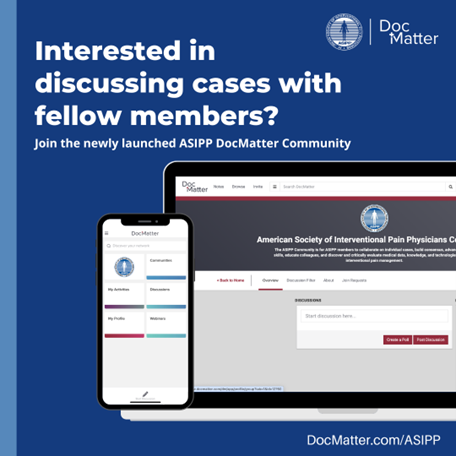
We're excited to let you know that the new ASIPP Community, hosted by DocMatter, is now live!


The ASIPP Community on DocMatter will serve as a place for members to collaborate around clinical and research topics to advance the care of their interventional pain patients.


Click here to be a part of the conversation!

Pain Medicine Case Reports (PMCR) and Editor-in-Chief Alaa Abd-Elsayed, MD, PhD would like to invite you to submit case reports and case series to the PMCR journal. Your article will be published free of charge.


Open access journals are freely available online for immediate worldwide open access to the full text of published articles. There is no subscription fee for open access journals. Open access journals are no different from traditional subscription-based journals: they undergo the same peer review and quality control as any other scholarly journal.


Interested in becoming a member of the PMCR Editorial Board?

Editorial board members are asked to review 2-6 manuscripts per year. Please submit your most up-to-date CV to sgold@asipp.org for consideration.


For more information or to submit your articles, click here.

We are excited to announce that Pain Medicine Case Reports (PMCR) journal (eISSN 2768-5152) has been accepted for inclusion in MEDLINE and PubMed, the prestigious bibliographic database of the U.S. National Library of Medicine. PMCR, a companion publication to the prestigious Pain Physician journal by ASIPP, joins its counterpart in achieving indexing in both MEDLINE and PubMed, marking ASIPP’s dual presence in these renowned databases.


The inclusion of PMCR journal in MEDLINE signifies a higher level of selectivity, as MEDLINE consists of the top 5,200 biomedical journals. This indexing also means that articles from PMCR will be searchable using NLM Medical Subject Headings (MeSH terms) and other metadata.


The selection for MEDLINE follows a rigorous evaluation process by reviewers from the Literature Selection Technical Review Committee (LSTRC). According to their criteria, the scientific quality of a journal’s content is the primary factor considered for indexing.


We extend our congratulations to the Pain Medicine Case Reports Editor-in-Chief, Deputy Editor-in-Chief, Journal Team, and Editorial Board for this achievement, which underscores the significance and excellence of this esteemed journal.


CASE REPORTS

Steroid Injection in the Treatment of Foreign Body-Associated Chronic Flexor Tenosynovitis: Never Without Ultrasound


Hasan Ocak, MD, and Alp Cetin, MD


Ultrasound-Guided Steroid Injection for Low Back Pain Caused by Bilateral Pars Interarticularis Defects With Fluoroscopic Confirmation, A Case Report


Jose Uriel Perez, MD, Derek Cooper, BSc Kin, BEd, Karamjot Sidhu, MD, Alex Wasserman, MD, Arun Gupta, MD, and George Deng, MD


SCOPING REVIEW

Chronic Tendinopathy Driven by Neoinnervation: The Role of the Paratenon, Upregulated Neural Biomarkers, and Evolving Evidence – A Scoping Review

Suwannika Palee, MD, Atthakorn Jarusriwanna, MD, Danielle Lee, MD, Ugur Yener, MD, Alan D. Kaye, MD, PhD, Naum Shaparin, MD, and Sayed E. Wahezi, MD


CADAVERIC STUDIES

Innervation Patterns of the Anterior and Posterior Ligamentous Region of the Sacroiliac Joint: Insights from a Cadaveric Study

Yubo Sun, PhD, Nizhou Jiang, MD, Zhijin Wang, MD, Yu Liu, BD, and Jian Jiang, PhD

Feasibility of Epidural Localization Using the EpiFaith® Syringe: A Cadaveric Study

Alaa Abd-Elsayed, MD, Amol Soin, MD, and Jeremy Zbili, MD


ASIPP is in collaboration with Curi Medical Liability Program


Since this malpractice insurance program officially launched in November 2018, ASIPP has signed up hundreds of providers with an average savings of 30%. This is professional liability insurance tailored to our specialty and will stand up for us and defend our practices. 


Curi is a full-service advisory firm that serves physicians and their practices. Their valued advice is grounded in your priorities and elevated in your outcomes. They are driven by a deep understanding of your specific circumstances in medicine, business, and life. To read a few important points to keep in mind about the program, including discounts, administrative defense, cyber coverage, aggressive claims handling, and complimentary risk management CME activities, visit our website.


IMPORTANT UPDATE

SPRINT no longer misclassified as PNT 


SPR is happy to announce an important update regarding Humana Medicare Advantage. As of May 1, Humana is now recognizing SPRINT as a PNS therapy. Previously, SPRINT was categorized as PNT (Percutaneous Nerve Stimulation), which allowed denials on the grounds that the therapy fell outside the NCD.


Additional details are as follows:

Payer: Humana Medicare Advantage (click here to view policy)

Policy Title: Peripheral Nerve Stimulators

Policy changes: SPRINT no longer misclassified as PNT and is now appropriately classified as PNS. Humana is applying the Noridian Medicare LCD criteria to ALL PNS devices – Including SPRINT PNS!

Effective Date: 5/1/2025


Click here to view a PDF of the official policy update.


Group Purchasing Organization Offer Better Pricing and Creates Added Value


ASIPP has formed a partnership with Henry Schein and PedsPal, a national GPO that has a successful history of negotiating better prices on medical supplies and creating value-added services for independent physicians. Working with MedAssets, PedsPal provides excellent pricing on products like contrast media that alleviate some of the financial pressures you experience today.


Learn More


For updated information concerning tariffs on products, click here.


ASIPP, Fedora Healthcare Solutions Partnership


ASIPP offers our members the benefit of a unique revenue cycle management/ billing service.


We have received a tremendous amount of interest in the ASIPP billing and coding program.


Click here to learn more about the negotiated rate for practices and more!

Like and Follow ASIPP® on Facebook, X, LinkedIn,

and YouTube for the most up-to-date news

related to you, your practice, and your patients!