ABIPP Certification:
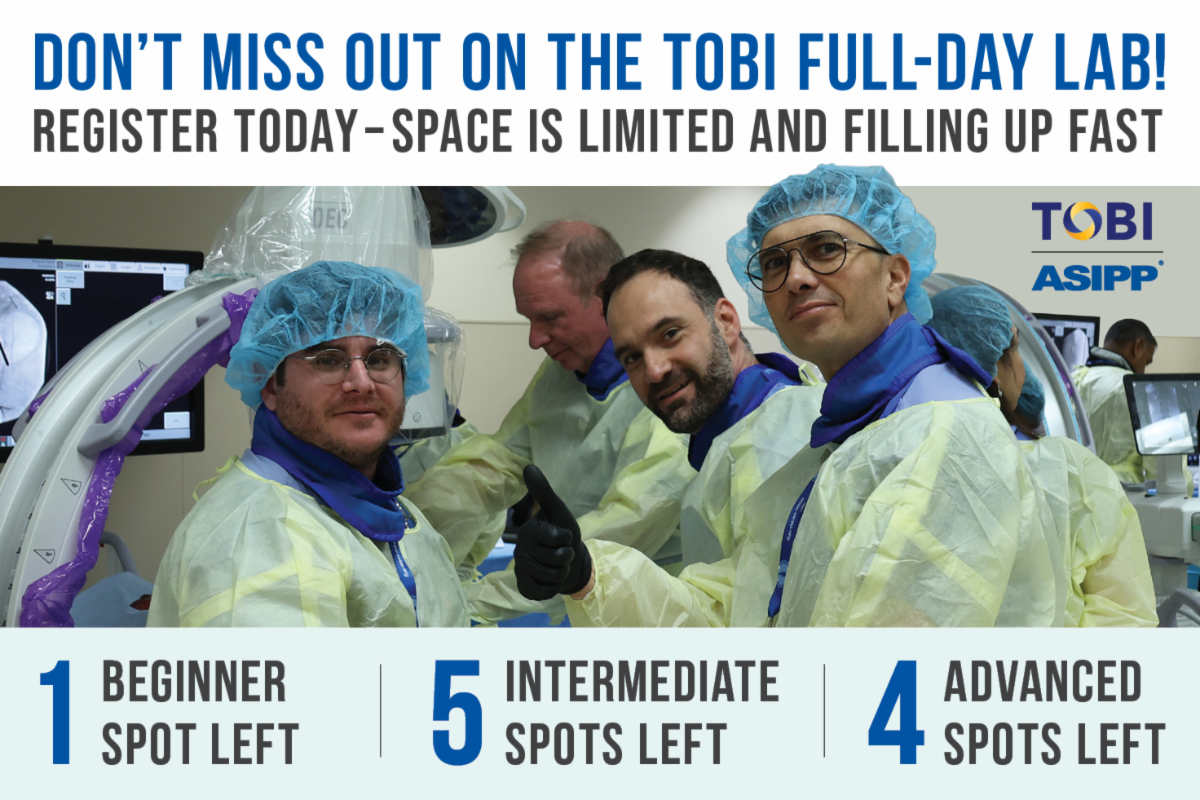
The 31.5 CME credits available through the TOBI Regenerative Medicine Review Course Webinar, Hands-On Cadaver Lab, and 2-Day Symposium meet the certification requirements for the American Board of Interventional Pain Physicians (ABIPP) competency certification in regenerative medicine.
To apply for this certification, please visit abipp.org to submit the necessary documentation.
| |
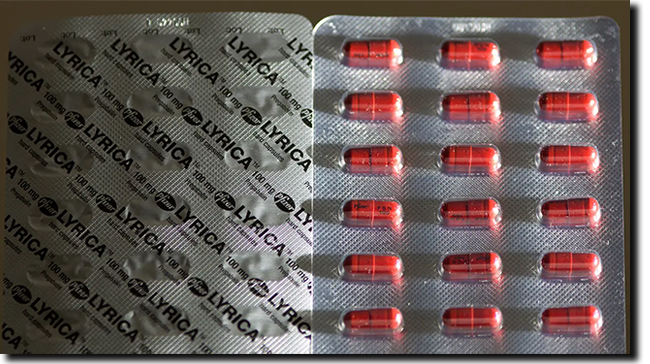
New labeling will require drugs to warn against long-term use of the addictive analgesics
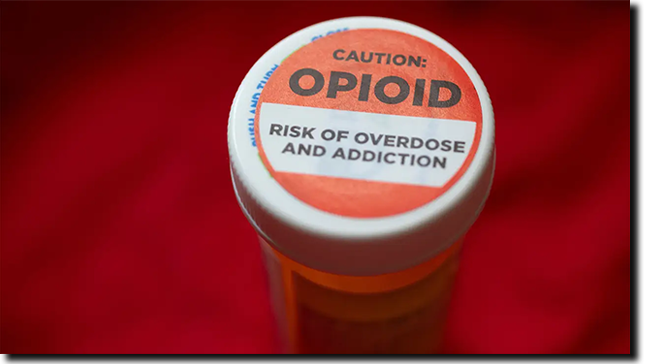
Opioid medications will be required to have their labeling updated to highlight the safety risks of long-term use, the FDA announced on Thursday.
The agency is requiring opioid manufacturers to add to the prescribing information that higher doses are associated with increased risk of serious harm, and that the risks of serious harms persist over the course of therapy, among other changes.
Based on results of two postmarketing observational studies -- and the FDA advisory committee meeting discussing them this May -- new quantitative estimates of the risks of addiction, abuse, misuse, and fatal and non-fatal overdose in patients taking opioid analgesics long-term are also expected in labeling updates.
Click here to read the full article.
| | |
Activation of the body’s opioid system may be required for ketamine’s antidepressant effects, new research hinted.
In a small study of adults with major depressive disorder, taking the opioid blocker naltrexone before a low-dose ketamine infusion both blunted the surge in glutamate — a key brain chemical linked to mood — and reduced ketamine’s rapid antidepressant benefit the next day.
“These results suggest that opioid receptors help mediate ketamine’s effects and that blocking opioid receptors may lessen ketamine’s acute mood-lifting action,” lead researcher Luke Jelen, MBBS, clinical lecturer in psychiatry, King’s College London, London, England, told Medscape Medical News.
Click here to read the full article.
| | JOIN or RENEW your ASIPP Membership for the best registration rates. | |
Benefits lasted more than 3 years in randomized trial
| | |
Drug-related deaths involving co-use of stimulants and opioids has surged in the US and Canada, with a higher annual rise in drug-related mortality than use of opioids or stimulants alone, a new study showed. Researchers said the findings point to a “silent epidemic” that warrant action by policymakers to increase awareness.
METHODOLOGY:
- US data regarding opioid and stimulant overdose-related trends for unintentional and intentional deaths from 1999 to 2021 were collected from the National Institute on Drug Abuse.
- Canadian data on opioid (2016-2022) and stimulant (2018-2022) overdose-related trends for unintentional and intentional deaths were obtained from the Public Health Agency of Canada and Alberta Substance Use Surveillance System.
- Google Trends relative search interest (RSI) was used to measure public interest over time (2004-present) for search terms related to opioids and psychostimulants.
- Opioid- and stimulant-related death trends and the potential relationship between RSI and drug-related deaths were evaluated.
Click here to read the full article.
| |
Medicare claims analysis supports prior warnings about nonopioid drug
| | |
New Dates Just Announced
Mark your calendars!
August 30, September 27, October 25,
November 15, & December 13
Four (4) hour virtual exam
- ABIPP Path – Combined CCPM/ CSM Exam
For those with subspecialty in Pain Medicine
Two (2) hour virtual exam
- ABIPP Competency Exam in IPM
For those without primary board certification
Two (2) hour virtual exam
- ABIPP Competency Exam in Regenerative Medicine
Two (2) hour virtual exam
- Controlled Substance Management Competency Exam
Two (2) hour virtual exam
- Documentation, Coding, Compliance, Practice Management Competency Exam
Two (2) hour virtual exam
| | |
"My registered name is Hemerson Dantas dos Santos, but you can add ‘Pataxó Hãhãhãi’ at the end, which is the Indigenous people I belong to."
This is how the interview began, conducted by Medscape’s Portuguese edition, with the researcher behind a study that catalogued 175 medicinal plants used by the Pataxó Hãhãhãi people from southern Bahia, Brazil. Of these plants, 43 are specifically used to treat the three most common health issues at the community’s health center: diabetes, hypertension, and intestinal worms.
Published in the Journal of Ethnobiology and Ethnomedicine, the study bridges traditional knowledge with contemporary scientific evidence. Notably, the work was led entirely by an Indigenous ethnobotanist — from planning to data collection in the field — with the goal of recovering and documenting his people's medicinal knowledge.
Click here to read the full article.
| | | |
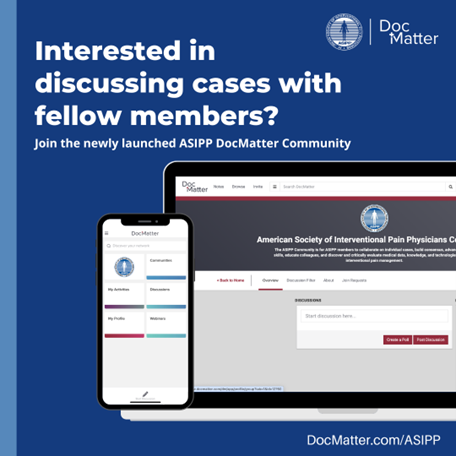
We're excited to let you know that the new ASIPP Community, hosted by DocMatter, is now live!
The ASIPP Community on DocMatter will serve as a place for members to collaborate around clinical and research topics to advance the care of their interventional pain patients.
Click here to be a part of the conversation!
| | |
Pain Medicine Case Reports (PMCR) and Editor-in-Chief Alaa Abd-Elsayed, MD, PhD would like to invite you to submit case reports and case series to the PMCR journal. Your article will be published free of charge.
Open access journals are freely available online for immediate worldwide open access to the full text of published articles. There is no subscription fee for open access journals. Open access journals are no different from traditional subscription-based journals: they undergo the same peer review and quality control as any other scholarly journal.
Interested in becoming a member of the PMCR Editorial Board?
Editorial board members are asked to review 2-6 manuscripts per year. Please submit your most up-to-date CV to sgold@asipp.org for consideration.
For more information or to submit your articles, click here.
| | |
We are excited to announce that Pain Medicine Case Reports (PMCR) journal (eISSN 2768-5152) has been accepted for inclusion in MEDLINE and PubMed, the prestigious bibliographic database of the U.S. National Library of Medicine. PMCR, a companion publication to the prestigious Pain Physician journal by ASIPP, joins its counterpart in achieving indexing in both MEDLINE and PubMed, marking ASIPP’s dual presence in these renowned databases.
The inclusion of PMCR journal in MEDLINE signifies a higher level of selectivity, as MEDLINE consists of the top 5,200 biomedical journals. This indexing also means that articles from PMCR will be searchable using NLM Medical Subject Headings (MeSH terms) and other metadata.
The selection for MEDLINE follows a rigorous evaluation process by reviewers from the Literature Selection Technical Review Committee (LSTRC). According to their criteria, the scientific quality of a journal’s content is the primary factor considered for indexing.
We extend our congratulations to the Pain Medicine Case Reports Editor-in-Chief, Deputy Editor-in-Chief, Journal Team, and Editorial Board for this achievement, which underscores the significance and excellence of this esteemed journal.
| | | | |
|
Laxmaiah Manchikanti, MD, Mahendra Sanapati, MD, and Joshua A. Hirsch, MD
| | |
Laxmaiah Manchikanti, MD, Mahendra Sanapati, MD, and Joshua A. Hirsch, MD
| | | | |
The Efficacy of the Minimally Invasive Lumbar Decompression (MILD®) Procedure: A PRISMA-compliant Systemic Review and Meta-analysis
Xin-yu Zhang, MD, Jian-li Zhao, MD, PhD, Ya-jing Wang, MD, PhD, Jie Luan, MD, Hong-qi Lin, MD, PhD, and Dajie Wang, MD
| | |
Mihir Jani, MD, Eli Dayon, DO, Nimesha Mehta, DO, Kunal Aggarwal, MD, Joseph D. Fortin, DO, Karoline Zektser, DO, Joshua Lewis, MD, PhD, Marco Lawandy, DO, Ricky Ju, DO, Ugur Yener, MD, Jonathan D. Krystal, MD, Reza Yassari, MD, Alan D. Kaye, MD, PhD, and Sayed E. Wahezi, MD
| | | | |
|
ASIPP is in collaboration with Curi Medical Liability Program
Since this malpractice insurance program officially launched in November 2018, ASIPP has signed up hundreds of providers with an average savings of 30%. This is professional liability insurance tailored to our specialty and will stand up for us and defend our practices.
Curi is a full-service advisory firm that serves physicians and their practices. Their valued advice is grounded in your priorities and elevated in your outcomes. They are driven by a deep understanding of your specific circumstances in medicine, business, and life. To read a few important points to keep in mind about the program, including discounts, administrative defense, cyber coverage, aggressive claims handling, and complimentary risk management CME activities, visit our website.
| | |
IMPORTANT UPDATE
SPR is happy to announce an important update regarding Humana Medicare Advantage. As of May 1, Humana is now recognizing SPRINT as a PNS therapy. Previously, SPRINT was categorized as PNT (Percutaneous Nerve Stimulation), which allowed denials on the grounds that the therapy fell outside the NCD.
Additional details are as follows:
Payer: Humana Medicare Advantage (click here to view policy)
Policy Title: Peripheral Nerve Stimulators
Policy changes: SPRINT no longer misclassified as PNT and is now appropriately classified as PNS. Humana is applying the Noridian Medicare LCD criteria to ALL PNS devices – Including SPRINT PNS!
Effective Date: 5/1/2025
Click here to view a PDF of the official policy update.
| | |
|
Group Purchasing Organization Offer Better Pricing and Creates Added Value
ASIPP has formed a partnership with Henry Schein and PedsPal, a national GPO that has a successful history of negotiating better prices on medical supplies and creating value-added services for independent physicians. Working with MedAssets, PedsPal provides excellent pricing on products like contrast media that alleviate some of the financial pressures you experience today.
Learn More
For updated information concerning tariffs on products, click here.
| |  |
|
ASIPP, Fedora Healthcare Solutions Partnership
ASIPP offers our members the benefit of a unique revenue cycle management/ billing service.
We have received a tremendous amount of interest in the ASIPP billing and coding program.
Click here to learn more about the negotiated rate for practices and more!
| | |
Like and Follow ASIPP® on Facebook, X, LinkedIn,
and YouTube for the most up-to-date news
related to you, your practice, and your patients!
| | | | |