Requesting support to CMS and Congressional Members to Revise Proposed Physician Payment Rule to Separate the Cuts Applied for Hospital-Based Physicians from Independent Physicians
ASIPP is advocating strongly on behalf of interventional pain physicians, sending letters to Congress urging revisions to the proposed 2025 Physician Payment Rule from the Centers for Medicare & Medicaid Services (CMS). While ASIPP supports CMS’s goals of reducing waste, improving quality, and strengthening chronic disease management, the current proposal would have devastating consequences for interventional pain practices. These sweeping cuts risk accelerating healthcare consolidation, reducing patient access to pain specialists, and worsening physician burnout, at a time when practice costs are soaring, staff wages are rising, and reimbursement rates continue to fall.
Since 2001, interventional pain physicians have experienced some of the steepest cuts across all specialties, 41% through 2025, projected to reach 45% with the new rule. Even with modest office-based payment relief projected for 2026, the cumulative losses remain unsustainable.
ASIPP is urging Congress to:
- Reverse the proposed 2.5% efficiency adjustment to work RVUs and stop the cycle of devastating cuts every three years.
- Promote equitable treatment of independent pain practices in practice expense allocations, especially for services provided in Ambulatory Surgery Centers.
- Ensure the permanent extension of telehealth access beyond 2025, critical for chronic pain patients in rural and underserved areas.
- Direct CMS to distinguish reimbursement reductions between hospital-employed and independent physicians, protecting small pain practices from disproportionate harm.
Without these revisions, independent interventional pain practices, already under audit pressure and burdened by prior authorization requirements, face an uncertain future. Preserving their viability is essential to maintain patient access to timely, high-quality pain care and to prevent further healthcare consolidation that continues to drive up costs by 200–300%.
SAMPLE LETTER TO SEND TO REPRESENTATIVES IN CONGRESS
ASIPP has prepared a sample letter you can personalize and send to your representatives in Congress.
Click here to find your congressional members
By speaking out, you can help stop devastating cuts, protect independent interventional pain practices, and preserve patient access to high-quality pain care.
Please click here for a sample letter to send to your representatives.
SAMPLE LETTER TO SUBMIT COMMENTS TO CMS
For your convenience, we are enclosing a sample letter for you to customize and send to CMS to express concerns with the 2025 Medicare Physician Fee Schedule.
Please click here for a sample letter to submit your comments to CMS.
INFORMATION FOR SUBMITTING YOUR COMMENT LETTER
In commenting, please refer to file code CMS-1832-P.
Comments must be received no later than 5 p.m. on September 12, 2025.
Click here to submit electronic comments on this regulation.
Please do not hesitate to contact us if you have any questions or would like additional information.
Thank you,
| |
Laxmaiah Manchikanti, MD
Chairman of the Board and Chief Executive Officer, ASIPP and SIPMS
Director, Pain Management Centers of America
Ambulatory Surgery Center and
Pain Care Surgery Center
Clinical Professor
Anesthesiology and Perioperative Medicine
University of Louisville, Kentucky
Professor of Anesthesiology-Research
Department of Anesthesiology, School of Medicine
LSU Health Sciences Center
Shreveport, LA
2831 Lone Oak Road
Paducah, KY 42003
Phone: 270-554-8373 ext. 4101
Fax: 270-554-8987
drcm@asipp.org
| |
| |
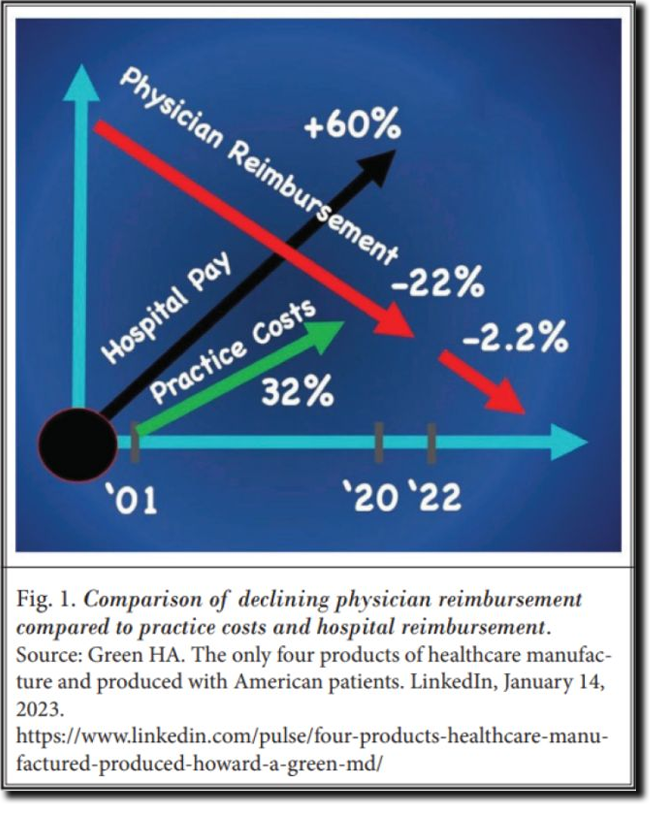
Physician payments have declined significantly due to budget neutrality rules and reimbursement cuts. Since 2001, Medicare payments to physicians have dropped by 33% when adjusted for inflation. These reductions have been compounded by 2% annual sequestration cuts introduced after the Affordable Care Act (ACA), which continues through 2032. Despite their long-term impact, sequestration cuts receive little public attention.
Congress has historically delayed or softened these cuts. However, in 2025, a bill that would have adjusted payment rates was removed from the continuing resolution, resulting in continued reductions. Meanwhile, insurance premiums have risen nearly 400%, highlighting the disparity between healthcare costs and physician compensation.
| | |
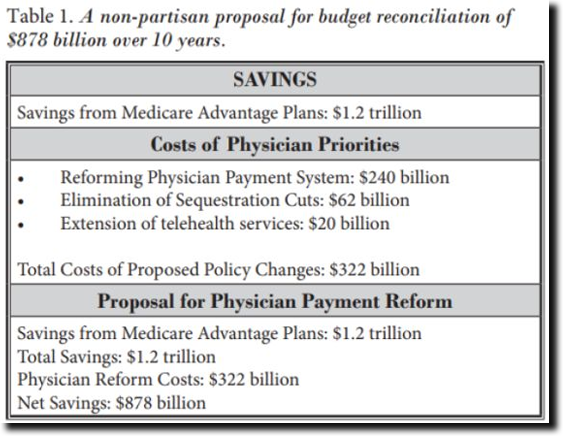
Ironically, while physicians face significant payment cuts, the Centers for Medicare & Medicaid Services (CMS) proposed on January 10, 2025, a 4.3% payment increase for Medicare Advantage plans, totaling $21 billion in 2026 and an estimated $210 billion over the following decade starting in calendar year 2026. This proposal comes amid ongoing concerns about Medicare Advantage overpayments, estimated at nearly $100 billion annually, and additional funding through annual premiums of $198 from all Medicare beneficiaries, amounting to roughly $13 billion per year.
In response, the American Society of Interventional Pain Physicians (ASIPP) submitted a nonpartisan reform proposal advocating for telehealth protections and elimination of sequester cuts - measures that have received strong bipartisan support in Congress.
Both the House of Representatives and the Senate voted to pass a reconciliation bill, nicknamed the “Big Beautiful Bill”, which has been signed into law by the President recently. It proposes an $8.9 billion investment in the Medicare Physician Fee Schedule, with a 2.25% update in 2026.
The proposal does not address the budget neutrality provision, growing practice costs, inflationary pressures, or ongoing sequestration and pay-as-you-go (PAYGO) cuts. It also fails to resolve issues with the Medicare Access and CHIP Reauthorization Act (MACRA), particularly within the Merit-Based Incentive Payment System (MIPS).
On November 1, 2024, CMS finalized a 2.8% cut to physician payments, an estimated $20 billion, while also eliminating telehealth services. These cuts continue to threaten physician sustainability and patient access to care.
Click here to read the full Pain Physician journal article.
| | |
The prevalence of chronic and high-impact chronic pain increased significantly in US adults from 2019 to 2023, with long COVID accounting for approximately 13% of both increases, new research showed.
METHODOLOGY:
- Researchers analyzed data for more than 90,000 adults from three cross-sectional waves of the National Health Interview Survey (2019, 2021, and 2023).
- The primary outcomes were chronic pain (pain on most or every day over the previous 3 months) and high-impact chronic pain (pain that limits activities on most or every day).
- Also assessed were six site-specific types of pain: back pain; arm, shoulder, or hand pain; hip, knee, or leg pain; headache or migraine; abdominal, pelvic, or genital pain; and tooth or jaw pain.
- Covariates included demographics, socioeconomic status, health behaviors, physical health conditions, mental health, health insurance type, and long COVID.
Click here to read the full article.
| | JOIN or RENEW your ASIPP Membership for the best registration rates. | |
At least six people have died and over 100 have been sickened in a Legionnaires' outbreak in nearby Harlem.
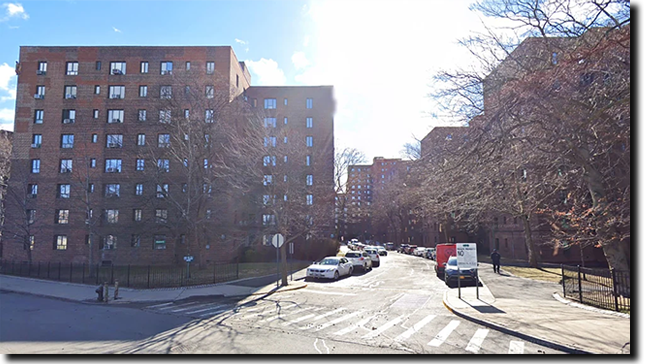
Health officials in New York City are investigating a Bronx apartment complex after two residents tested positive for Legionnaires' disease.
The city health department began an evaluation of the Parkchester North Condominiums after, it said, two residents tested positive for Legionnaires' disease within 10 months.
The Legionella bacteria are growing in the building's hot water system and were identified after officials investigated the building's engineering systems, the health department said in a statement.
Click here to read the full article.
| | |
The administration has done little to nothing to meaningfully reduce overdoses
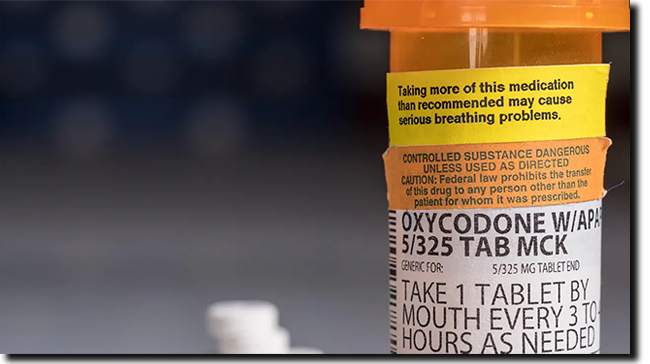
The FDA recently announced new requirements for opioid medications to be labeled to emphasize "the safety risks of long-term use. " The labeling updates are based on two required postmarketing observational studies on all new opioid analgesics for chronic noncancer pain.
While the labeling changes are intended for patients, FDA also cautioned prescribers and stated that patients should undergo periodic checks for signs of addiction, abuse, or misuse of opioid prescriptions. FDA also requires an additional prospective, randomized, controlled clinical trial to directly examine the benefits and risks of long-term opioid use.
In the press release for this new requirement, FDA Commissioner Marty Makary, MD, MPH, invoked references to "failures of public health" in regard to opioid prescribing, which has been a primary focus for policymakers in addressing overdoses. Yet, this pointed blame misses the actual drivers of the overdose crisis. Based on empirical data and past experience, we can expect the labeling changes to have little to no effect on meaningfully reducing overdose rates. The administration would be wise to concentrate its efforts elsewhere.
| | |
Retirement may present challenges for physicians, but knowing what to expect and thinking ahead can make for an easier transition and a fulfilling future.
1. It’s Not Just a Job
For some physicians, medicine is a calling and their identity is deeply tied to their role as caregivers. Stepping away from practice can be an opportunity to discover more about who they are without a stethoscope.
2. Financial Security
Physicians could feel pressure to maintain the lifestyle that their current income provides. This can be particularly stressful if they have dependents. Start organizing retirement funds early with the help of a financial advisor.
Click here to read the full article.
| | |
Mark your calendars!
September 27, October 25,
November 15, & December 13
Four (4) hour virtual exam
- ABIPP Path – Combined CCPM/ CSM Exam
For those with subspecialty in Pain Medicine
Two (2) hour virtual exam
- ABIPP Competency Exam in IPM
For those without primary board certification
Two (2) hour virtual exam
- ABIPP Competency Exam in Regenerative Medicine
Two (2) hour virtual exam
- Controlled Substance Management Competency Exam
Two (2) hour virtual exam
- Documentation, Coding, Compliance, Practice Management Competency Exam
Two (2) hour virtual exam
| | |
Aging is the strongest risk factor for most chronic diseases; however, medicine has historically treated each condition individually. Geroscience is a new discipline that aims to define and modify aging-related biological pathways, slow age-related disability, prevent age-related diseases, and increase disability-free survival.
A review in JAMA outlines the aims, methods, recent advances, and ongoing challenges of geroscience.
The review was authored by Stephen B. Kritchevsky, PhD, Department of Internal Medicine, Section of Gerontology and Geriatric Medicine, Sticht Center for Healthy Aging and Alzheimer’s Prevention, Wake Forest University School of Medicine, Winston-Salem, North Carolina, and Steven R. Cummings, MD, California Pacific Medical Center Research Institute, San Francisco, and Department of Epidemiology and Biostatistics, University of California, San Francisco.
Click here to read the full article.
| | | |
We're excited to let you know that the new ASIPP Community, hosted by DocMatter, is now live!
The ASIPP Community on DocMatter will serve as a place for members to collaborate around clinical and research topics to advance the care of their interventional pain patients.
Click here to be a part of the conversation!
| | |
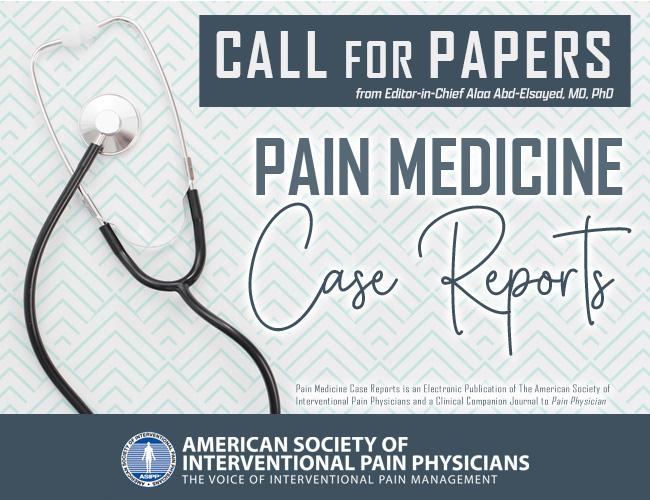
Pain Medicine Case Reports (PMCR) and Editor-in-Chief Alaa Abd-Elsayed, MD, PhD would like to invite you to submit case reports and case series to the PMCR journal. Your article will be published free of charge.
Open access journals are freely available online for immediate worldwide open access to the full text of published articles. There is no subscription fee for open access journals. Open access journals are no different from traditional subscription-based journals: they undergo the same peer review and quality control as any other scholarly journal.
Interested in becoming a member of the PMCR Editorial Board?
Editorial board members are asked to review 2-6 manuscripts per year. Please submit your most up-to-date CV to sgold@asipp.org for consideration.
For more information or to submit your articles, click here.
| | |
We are excited to announce that Pain Medicine Case Reports (PMCR) journal (eISSN 2768-5152) has been accepted for inclusion in MEDLINE and PubMed, the prestigious bibliographic database of the U.S. National Library of Medicine. PMCR, a companion publication to the prestigious Pain Physician journal by ASIPP, joins its counterpart in achieving indexing in both MEDLINE and PubMed, marking ASIPP’s dual presence in these renowned databases.
The inclusion of PMCR journal in MEDLINE signifies a higher level of selectivity, as MEDLINE consists of the top 5,200 biomedical journals. This indexing also means that articles from PMCR will be searchable using NLM Medical Subject Headings (MeSH terms) and other metadata.
The selection for MEDLINE follows a rigorous evaluation process by reviewers from the Literature Selection Technical Review Committee (LSTRC). According to their criteria, the scientific quality of a journal’s content is the primary factor considered for indexing.
We extend our congratulations to the Pain Medicine Case Reports Editor-in-Chief, Deputy Editor-in-Chief, Journal Team, and Editorial Board for this achievement, which underscores the significance and excellence of this esteemed journal.
| | | | |