|
The American Medical Association (AMA) and a bipartisan group of Congressional leaders are looking to stop unfair prior authorization practices from health plans.
Introduced by Rep. Suzan DelBene (D-Washington), the Improving Seniors’ Timely Access to Care Act (PDF) is intended to modernize prior authorization in Medicare Advantage (MA). It is sponsored by 130 members from the House and 42 Senators.
“We’ve made important incremental headway in helping seniors get the medical care they deserve with the administration’s prior authorization regulations,” said DelBene in a statement. “However, we must go further and enshrine these advancements into law.”
Read More
| |
You still have time to register for
the full-day lab and 2-day symposium!
| |
|
Move follows a pause of its open heart surgery program after immediate jeopardy citation
Wynn Hospital in Utica, New York, will no longer allow physician assistants (PAs) to perform invasive procedures, according to news reports.
"This includes the operating room, all procedural areas, and the bedside. Please note regular PA duties, however, may continue. More information will be provided once it becomes available," read an internal memorandum sent to medical staff on June 6 that was first reported by the Daily Sentinel. The news organization obtained a copy of the memo and verified it with health system officials.
In an emailed statement, Patricia Charvat, senior vice president of marketing and strategy for the hospital's parent company Mohawk Valley Healthcare System (MVHS), noted that its Quality Department is reviewing and updating credentials of its medical staff.
Read More
| |
ASIPP State Society Meetings | |
|
Attorneys general in several states have sued businesses for false claims
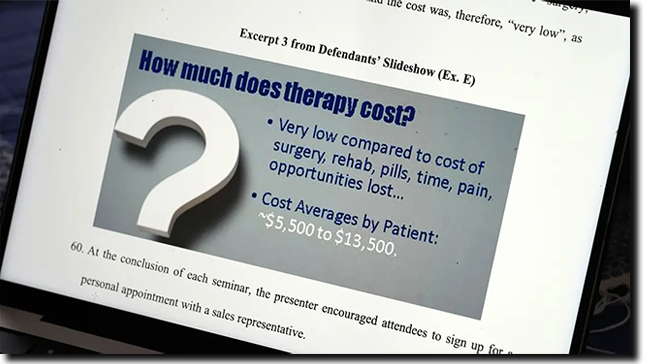
The mailings promised "Life Without Pain!" via stem cell injections or IVs administered in a patient's own home. The allure was obvious: more than 20% of U.S. adults endure chronic pain.
The flyers invited Iowans to free dinners across the state. Afterward, sales people traveled to potential customers' homes for high-pressure pitches disguised as pre-screenings, according to prosecutors. More than 250 people signed up, paying $3,200 to $20,000 each for a total of $1.5 million. For this, a nurse practitioner came to their homes to administer injections and IVs filled with stem cells derived from umbilical cords.
Yet experts and regulators have alternately labeled such treatments as ripoffs, scams, or simply unproven. In some cases, studies have documented real harm.
Read More
| |
|
Virtual
August 31
Click here for the complete list of upcoming exams.
ABIPP Part I; ABIPP Path - Combined DCCPM/CSM virtual exam;
ABIPP Competency Exam in IPM; ABIPP Competency Exam in Regenerative Medicine;
CSM Competency Exam; DCCPM Competency Exam
In Person
October 18, 2024
ABIPP Part II - Practical Examination
Lab Venue: MERI, 44 S. Cleveland Street, Memphis, TN 38104
| |
|
Policy change follows new rules from state and federal players
Indiana University (IU) Health will eliminate noncompete clauses for its primary care physicians in a new policy effective December 15.
The move will affect nearly 400 physicians, according to IU Health, following both a recent Federal Trade Commission (FTC) ruling and state legislation banning the clauses specifically for primary care physicians.
"This proactive measure goes beyond recent legislative requirements and highlights IU Health's commitment to fostering an environment of professional growth and patient-centered care," the healthcare system said in an emailed press release.
Read More
| |
Registration is open for
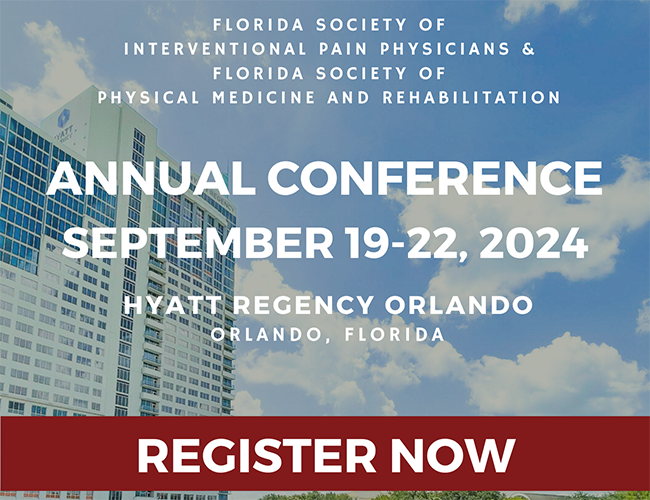
ASIPP's 2025 Annual Meeting
We would love it if you would register and join us in Orlando!
| |
|
The largest US physician organization wrestled with the professional risks and rewards of artificial intelligence (AI) at its annual meeting, delaying action even as it adopted new policies on prior authorization and other concerns for clinicians and patients.
Physicians and medical students at the Annual Meeting of the American Medical Association (AMA) House of Delegates in Chicago intensely debated a report and two key resolutions on AI but could not reach consensus, pushing off decision-making until a future meeting in November.
One resolution would establish "augmented intelligence" as the preferred term for AI, reflecting the desired role of these tools in supporting — not making — physicians' decisions. The other resolution focused on insurers' use of AI in determining medical necessity.
Read More
| |
|
Adam Gaffney, MD, MPH;
Stephanie Woolhandler, MD, MPH;
David U. Himmelstein, MD
Celebrating a Medicare Advantage (MA) milestone—enrollment in those private plans surpassed 30 million—the health insurance industry’s trade group proclaimed MA “a good deal for members and taxpayers. The first part of that claim is debatable, while the second part is false. Medicare Payment Advisory Commission (MedPAC), the nonpartisan agency reporting to Congress, recently estimated that MA overpayments added $82 billion to taxpayers’ costs for Medicare in 2023 and $612 billion between 2007 and 2024.
Read More
| |
- ASIPP Members Only Site Information - | |
-
To log in for the first time you will need to click “forgot password” at the bottom of the login window.
- Check your email and then log in as directed.
-
If you have problems logging into your account, click here.
| |
|
The CMS Actuaries’ newest spending projections are challenging healthcare as never before
by Mark Hagland
The level of Jungian synchronicity was rather astonishing, really: at the Healthcare Innovation Rocky Mountain Summit on Wednesday, I had literally just referenced the fact that I was anticipating an announcement at any minute from the Medicare program actuaries on their projections for overall U.S. healthcare system spending, projections that they share every year at this time. And within an hour of my referencing the actuaries, CMS (the Centers for Medicare & Medicaid Services) had announced to the press under embargo, the new numbers.
And the numbers are mindblowing. As Senior Contributing Editor David Raths wrote in an article posted later that day, “National health spending for 2023 is projected to have grown at a rate of 7.5 percent, with expenditures reaching $4.8 trillion, according to a study from the Office of the Actuary (OACT) at the Centers for Medicare and Medicaid Services (CMS). Health spending over the course of 2023–32 is expected to grow 5.6 percent per year on average, leading to a projected $7.7 trillion in overall spending by 2032.”
And that eye-popping $7.7 trillion surpasses what the actuaries had projected a year ago this week, on June 14, 2023: that “total national health spending will reach $7.2 trillion by 2031 and grow from the 18.3 percent of gross domestic product (GDP) that it was in 2018, to 19.6 percent by 2031.” The new numbers from CMS also indicate that the percentage of GDP will rise from the previous 18.3-percent estimate to 19.7 percent by 2032. Indeed, if the U.S. economy were not in a sustained period of expansion right now, that percentage might have been even higher.
Read More
| |
|
Pain Medicine Case Reports (PMCR) and Editor-in-Chief Alaa Abd-Elsayed, MD, PhD would like to invite you to submit case reports and case series to the PMCR journal. Your article will be published free of charge.
Open access journals are freely available online for immediate worldwide open access to the full text of published articles. There is no subscription fee for open access journals. Open access journals are no different from traditional subscription-based journals: they undergo the same peer review and quality control as any other scholarly journal.
Interested in becoming a member of the PMCR Editorial Board?
Editorial board members are asked to review 2-6 manuscripts per year. Please submit your most up-to-date CV to sgold@asipp.org for consideration.
For more information or to submit your articles, click here.
| |
|
Esther Benedetti de Marrero, MD, Tho Chi Le, MD, Bradley Jones, MD, Andres Missair, MD, Edmond Benedetti, MD, and Alejandra Mayorga, MD
Abstract
BACKGROUND: The vacuum phenomenon is a radiologic finding that results from gas accumulation within degenerated discs, joints, or vertebrae. This gas can herniate, causing back pain and/or radiculopathy. Asymptomatic imaging abnormalities can be coincidental and/or non-concordant with clinical presentation therefore warranting close evaluation.
CASE REPORT: This 45-year-old man, previously diagnosed with lumbar facet arthropathy, returned to the clinic for left-sided axial low back pain. Imaging revealed that a gas filled mass in the right lateral recess was affecting the traversing right L5 and S1 nerve roots. Given the exclusive axial symptoms consistent with lumbar zygapophyseal joint arthropathy, the patient was treated with a repeat L3-4 medial branch and L5 dorsal ramus radiofrequency ablation and experienced subsequent near-complete pain resolution.
CONCLUSIONS: Careful consideration must be taken when conducting clinical evaluation, imaging, diagnosis, and treatment of patients with low back pain given the significant frequency of abnormal, often nonconcordant, radiological findings.
KEY WORDS: Pneumorrhachis, vacuum disc phenomenon, low back pain, case report
Read More
| |
|
Mi Geum Lee, MD, PhD, Seung Hyun Chung, MD, PhD, Ae Ryoung Lee, MD, PhD, Su Ran Yu, MD, Wol Seon Jung, MD, PhD, Dong Chul Lee, MD, PhD, Hee Yeon Park, MD, PhD, and Yun Suk Choi, MD, PhD
Abstract
BACKGROUND: Transforaminal epidural steroid injection (TFESI) is commonly used for radicular pain, but can lead to an unintentional injection into the retrodural Space of Okada (RSO), an extradural space located dorsal to the ligamentum flavum, instead of the epidural space.
OBJECTIVES: To determine the prevalence and describe the fluoroscopic imaging features of an unintentional injection into the RSO during a TFESI and to review the history of injections into the RSO.
STUDY DESIGN: Observational study and original research.
SETTING: This work was conducted at Jeju National University School of Medicine, Jeju, Republic of Korea.
METHODS: A total of 5,429 lumbar TFESIs performed from September 1, 2018 through October 31, 2021 were analyzed for unintentional RSO injections using fluoroscopic-guided contrast medium patterns.
RESULTS: The rate of unintentional injection into the RSO was 0.20% (11 incidents). Contrast medium patterns in the RSO had a sigmoid or ovoid shape confined to the affected facet joint, or a butterfly-shaped pattern extending into the contralateral facet joint, but rarely extending beyond the upper or lower level.
LIMITATION: The rarity of unintentional injection into the RSO prevented a randomized controlled study design.
CONCLUSIONS: Careful fluoroscopic examination of contrast medium patterns during lumbar TFESI is crucial to identify needle placement in the RSO. If detected, the procedure can be corrected by slightly advancing the needle into the foramen.
KEY WORDS: Contrast pattern, epidural space, facet joint, fluoroscopy, Space of Okada, transforaminal epidural steroid injection
Read More
| |
|
Ji H. Hong, MD, PhD, Ki Beom Park, MD, PhD, Jae Y. Lee, MD, and Ji H. Park, MD, PhD
Abstract
BACKGROUND: The erector spinae plane block (ESPB) is an interfascial plane block for managing neuropathic thoracic pain. Although the ESPB is applied widely in various clinical situations, no studies have evaluated the association between the analgesic outcomes of the ESPB and the numerical changes in the perfusion index (PI) and PI ratio.
OBJECTIVES: The purpose of this study is to investigate the association between the clinical response following ESPB and other possible factors, including changes in the PI and PI ratio.
STUDY DESIGN: A prospective, nonrandomized, and open-label study.
SETTING: The pain clinic of a tertiary university hospital.
METHODS: This study included 92 patients with neck or arm pain who received T2 ESPB using 20 mL of 0.2% ropivacaine. To aid in the prediction of clinical outcomes, the PI was measured at the blocked side for 30 minutes as soon as the ESPB was finished. Various demographic data were also analyzed to predict the clinical outcomes.
RESULTS: Among 92 patients, 59 patients (64%) showed successful treatment outcomes (> 50% reduction in the numerical rating scale score or > 30% reduction in the neck disability index). The baseline PI of the responders was statistically higher than the nonresponders’ (P < 0.05). Also, the responders’ PI demonstrated statistically higher values than the nonresponders’ at the time points of 4, 6, and 8 minutes after the ESPB. Multivariate logistic regression analysis revealed that a higher baseline PI (OR, 1.91; 95% CI, 1.27-2.86; P = 0.002) was an independent factor associated with a successful outcome.
LIMITATIONS: Only a small number of patients with nonspinal diseases were included, except for those who had cervical radiculopathy. Therefore, it is hard to conclude that thoracic ESPB has any therapeutic benefits to patients with nonspinal diseases such as complex regional pain syndrome, adhesive capsulitis, or post-thoracotomy pain syndrome.
CONCLUSION: A successful outcome at 4 weeks after T2 ESPB was achieved in 64% of patients with cervical radiculopathy. A higher baseline PI value was an independent factor associated with a successful response to T2 ESPB.
KEY WORDS: Erector spinae plane block, perfusion index, numerical rating scale, Neck Disability Index
Read More
| |
|
ASIPP is now in collaboration with Curi Medical Liability Program
| |
|
Since this malpractice insurance program officially launched in November 2018, ASIPP has signed up hundreds of providers with an average savings of 30%. This is professional liability insurance tailored to our specialty and will stand up for us and defend our practices.
Curi is a full-service advisory firm that serves physicians and their practices. Their valued advice is grounded in your priorities and elevated in your outcomes. They are driven by a deep understanding of your specific circumstances in medicine, business, and life. To read a few important points to keep in mind about the program, including discounts, administrative defense, cyber coverage, aggressive claims handling, and complimentary risk management CME activities, visit our website.
| | |
|
Group Purchasing Organization Offer Better Pricing and Creates Added Value
ASIPP has formed a partnership with Henry Schein and PedsPal, a national GPO that has a successful history of negotiating better prices on medical supplies and creating value-added services for independent physicians. Working with MedAssets, PedsPal provides excellent pricing on products like contrast media that alleviate some of the financial pressures you experience today.
Learn More
| |  |
|
ASIPP, Fedora Billing,
and Revenue Cycle Management Partnership
ASIPP is now offering our members the benefit of a unique revenue cycle management/ billing service.
We have received a tremendous amount of interest in the ASIPP® billing and coding program.
Click here to learn more about the negotiated rate for practices and more!
| |
|
Like and follow ASIPP® on Facebook, X, and LinkedIn for the most
up-to-date news related to you, your practice, and your patients!
| | | | |