|
Medicare Physician Fee Schedule
& Ambulatory Surgery Center Rule
| | | CMS proposes a 3.8% payment increase for physicians, the first in 5 years, along with a 2.6% increase for ASC payments and an 8%–10% increase for office-based services. However, payments for hospital and ASC-based physician services are reduced by 8%–10%. | | | |
On July 14, 2025, the Centers for Medicare & Medicaid Services (CMS) released the proposed rule for the Calendar Year (CY) 2026 Medicare Physician Fee Schedule (PFS). The rule introduces significant changes to physician payment policies and updates to the Quality Payment Program (QPP), including the Merit-based Incentive Payment System (MIPS) and Alternative Payment Models (APMs).
Read More
| |
ABIPP Certification:
The 31.5 CME credits available through the TOBI Regenerative Medicine Review Course Webinar, Hands-On Cadaver Lab, and 2-Day Symposium meet the certification requirements for the American Board of Interventional Pain Physicians (ABIPP) competency certification in regenerative medicine. To apply for this certification, please visit abipp.org to submit the necessary documentation.
| |
Nutrition, not genetics, should be a big focus, according to Marty Makary
The culture of academic medicine needs to change, FDA Commissioner Marty Makary, MD, MPH, said at an event sponsored by The Hill.
"The culture of academic medicine in the United States has been defined by the culture of NIH, the Francis Collins culture mindset that the gene is responsible for most of our problems and the gene can solve most of our problems," Makary said at the event on Wednesday, referring to the former NIH director, who is a geneticist. "And while we need to do work on genetics, and we have a very robust gene editing and rare disease program at the FDA," that's not where the problem lies.
On the other hand, he said, "31% of kids have insulin resistance or prediabetes or diabetes. It's not their fault. No one has been talking about the fact that 70% of the food we as adults put in front of our nation's kids is ultra-processed."
Read more
| |
Surveyed adults thought AI-using doctors were less competent, trustworthy, empathetic
Physicians who use artificial intelligence (AI) are perceived less favorably than those who don't use it, a survey showed.
In a survey of 1,276 U.S. adults who were shown fake social media or billboard advertisements for family doctors, physicians portrayed to use AI were perceived as significantly less competent, trustworthy, and empathetic compared with those whose AI use was not mentioned, reported Moritz Reis, MSc, of the University of Wuerzburg in Germany, and colleagues.
Additionally, study participants said they were significantly less willing to make an appointment with a physician if any type of AI use was indicated, Reis and colleagues noted in JAMA Network Open.
Read more
| | JOIN or RENEW your ASIPP Membership for the best registration rates. | | |
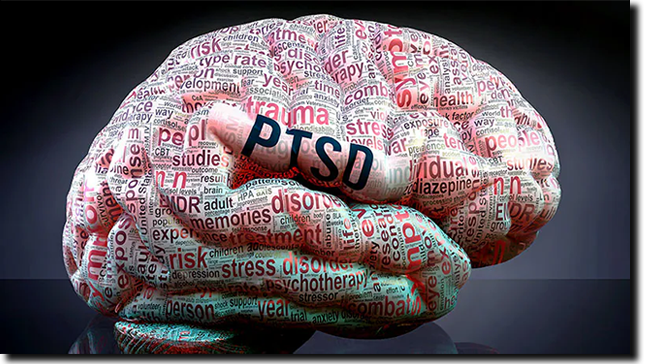
A large 20-year study — the longest and most detailed of its kind — shows that posttraumatic stress disorder (PTSD) symptoms can endure for decades, challenging conventional timelines for recovery and offering new insights to guide future treatment.
Researchers analyzed data from the World Trade Center Health Program (WTCHP), which is administered by the US CDC’s National Institute for Occupational Safety and Health (NIOSH), and found symptoms of PTSD persisted for as long as two decades in 10% of first responders involved in the World Trade Center disaster of September 2001.
Participation in the WTCHP is voluntary, but those who enroll receive free assessments, monitoring, and treatment, including psychiatric and behavioral healthcare. It is the longest and most detailed analysis of PTSD and includes 81,298 observations from 12,822 WTC responders.
Participants entered the WTCHP at different timepoints and were assessed annually. Not every enrollee was assessed every year, but the sheer number of participants and observations “just provides much greater density of data over that 20-year course than any previous study,” lead author Frank D. Mann, PhD, told Medscape Medical News.
Read More
| | |
Autoimmune diseases, especially in women, are associated with nearly a two-fold increased risk for affective disorders, new research showed.
An analysis of 1.5 million adults showed that the lifetime prevalence of self-reported diagnoses of depression, bipolar disorder, and anxiety was 28.8% among individuals with an autoimmune condition vs 17.9% among those without an autoimmune condition (q < .001).
“Our results suggest that people with autoimmune conditions may have nearly double the risk of experiencing mental health issues compared to the general population. So regular mental health screenings in this patient group may be useful for prevention and early detection of mental health conditions,” study investigator Arish Mudra Rakshasa-Loots, MD, Centre for Clinical Brain Sciences, University of Edinburgh, Edinburgh, Scotland, told Medscape Medical News.
However, he added, the study is observational in nature and direct inference of causal mechanisms cannot be made, so further research is necessary to translate these findings to the clinic, he added.
Read More
| | |
Dementia incidence higher for younger chronic back pain patients prescribed gabapentin
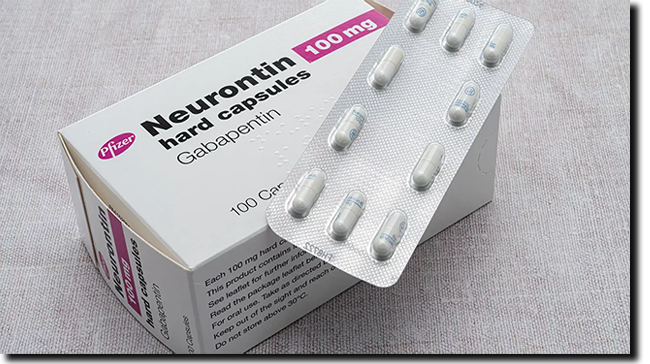
Gabapentin (Neurontin) prescriptions for chronic low back pain were linked with an increased risk of dementia and cognitive impairment, especially in younger people, an analysis of U.S. healthcare claims suggested.
Among more than 52,000 adults with chronic back pain who were followed for 10 years, those who had six or more gabapentin prescriptions had a higher incidence of dementia (risk ratio [RR] 1.29, 95% CI 1.18-1.40) and mild cognitive impairment (RR 1.85, 95% CI 1.63-2.10) than those not prescribed gabapentin, according to Chong Kim, MD, of MetroHealth Medical Center in Cleveland, Ohio, and co-authors.
Prescription frequency correlated with risk, Kim and colleagues reported in Regional Anesthesia & Pain Medicine. People with 12 or more gabapentin prescriptions had a higher incidence of dementia (RR 1.40, 95% CI 1.25-1.57) and mild cognitive impairment (RR 1.65, 95% CI 1.42-1.91) than those prescribed gabapentin three to 11 times.
Read More
| | |
New Dates Just Announced
Mark your calendars!
August 30, September 27, October 25,
November 15, & December 13
Four (4) hour virtual exam
- ABIPP Path – Combined CCPM/ CSM Exam
For those with subspecialty in Pain Medicine
Two (2) hour virtual exam
- ABIPP Competency Exam in IPM
For those without primary board certification
Two (2) hour virtual exam
- ABIPP Competency Exam in Regenerative Medicine
Two (2) hour virtual exam
- Controlled Substance Management Competency Exam
Two (2) hour virtual exam
- Documentation, Coding, Compliance, Practice Management Competency Exam
Two (2) hour virtual exam
| | |
Use of glucagon-like peptide 1 receptor agonists (GLP-1 RAs), particularly semaglutide and tirzepatide, was associated with a 37% reduced risk for dementia and a 19% reduced risk for ischemic stroke in adults with type 2 diabetes (T2D) and obesity compared to the use of other antidiabetic drugs in a new retrospective cohort study. The neuroprotective effects of GLP-1 RAs were more pronounced in older adults, women, and those with a BMI of 30-40.
METHODOLOGY:
- Investigators analyzed data on more than 60,000 adults aged 40 years or older with T2D and obesity and without type 1 diabetes or preexisting neurodegenerative or cerebrovascular diseases, obtained from electronic health records between 2017 and 2024.
- After propensity-score matching, participants receiving semaglutide or tirzepatide were assigned to the GLP-1 RA group (n = 30,430; mean age, 58 years; 50% women; 56% White individuals), and those receiving biguanides, sulfonylureas, alpha-glucosidase inhibitors, thiazolidinediones, dipeptidyl peptidase 4 inhibitors, and SGLT2 inhibitors were assigned to the “other antidiabetic drug” group (n = 30,430; mean age, 58 years; 51% women; 56% White individuals).
Read More
| | | |
We're excited to let you know that the new ASIPP Community, hosted by DocMatter, is now live!
The ASIPP Community on DocMatter will serve as a place for members to collaborate around clinical and research topics to advance the care of their interventional pain patients.
Click here to be a part of the conversation!
| | |
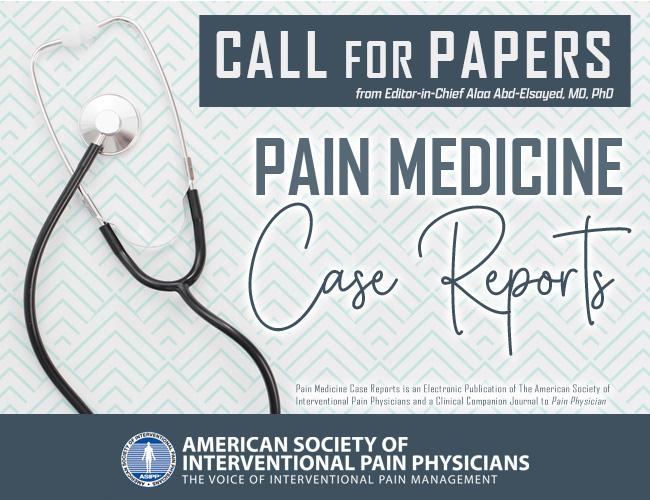
Pain Medicine Case Reports (PMCR) and Editor-in-Chief Alaa Abd-Elsayed, MD, PhD would like to invite you to submit case reports and case series to the PMCR journal. Your article will be published free of charge.
Open access journals are freely available online for immediate worldwide open access to the full text of published articles. There is no subscription fee for open access journals. Open access journals are no different from traditional subscription-based journals: they undergo the same peer review and quality control as any other scholarly journal.
Interested in becoming a member of the PMCR Editorial Board?
Editorial board members are asked to review 2-6 manuscripts per year. Please submit your most up-to-date CV to sgold@asipp.org for consideration.
For more information or to submit your articles, click here.
| | |
We are excited to announce that Pain Medicine Case Reports (PMCR) journal (eISSN 2768-5152) has been accepted for inclusion in MEDLINE and PubMed, the prestigious bibliographic database of the U.S. National Library of Medicine. PMCR, a companion publication to the prestigious Pain Physician journal by ASIPP, joins its counterpart in achieving indexing in both MEDLINE and PubMed, marking ASIPP’s dual presence in these renowned databases.
The inclusion of PMCR journal in MEDLINE signifies a higher level of selectivity, as MEDLINE consists of the top 5,200 biomedical journals. This indexing also means that articles from PMCR will be searchable using NLM Medical Subject Headings (MeSH terms) and other metadata.
The selection for MEDLINE follows a rigorous evaluation process by reviewers from the Literature Selection Technical Review Committee (LSTRC). According to their criteria, the scientific quality of a journal’s content is the primary factor considered for indexing.
We extend our congratulations to the Pain Medicine Case Reports Editor-in-Chief, Deputy Editor-in-Chief, Journal Team, and Editorial Board for this achievement, which underscores the significance and excellence of this esteemed journal.
| | | | |