But the increases could be slightly below inflation if access remains steady, report suggests
Medicare physician pay should be increased yearly, with the increase based on the Medicare Economic Index (MEI), a measure of healthcare inflation, the Medicare Payment Advisory Commission (MedPAC) said in a report to Congress released on Thursday.
"In our March 2025 report to the Congress, the commission recommended that the Congress, for 2026, replace current-law updates for PFS [physician fee schedule] services with a single update equal to MEI minus 1 percentage point," the report noted. "That recommendation applies only to one year -- 2026." For future years, "the commission recommends replacing the current-law updates to the PFS with an annual update based on a portion of the growth in the MEI, such as MEI minus 1 percentage point, based on the historical evidence suggesting that updates of full MEI have not been necessary to maintain beneficiary access to care."
"This recommendation would automatically adjust to changes in inflation, improve predictability for clinicians, beneficiaries, and policymakers, be simpler to administer, and balance beneficiary access with beneficiary and taxpayer financial burden," the authors wrote.
Read More
| |
ASIPP Submits Letters to Carelon and Humana Regarding Coverage for Interventional Pain Management Procedures | |
Impact of "One Big Beautiful Bill" on Physician Payment Reform
The budget reconciliation package passed on Thursday, May 22, and included several provisions that would significantly impact physician payments and healthcare overall. Unfortunately, there is no unequivocally good news; rather, we are faced with a mix of potentially good, bad, and ugly developments.
Maybe Good News
Medicare Physician Fee Schedule Updates:
1. Initial Increase: The bill proposes a 2.25% Medicare pay update for physicians in 2026, based on 75% of the Medicare Economic Index (MEI), at a projected cost of $8.9 billion for that year.
Bad News
1. Future payment updates would be tied to the MEI, which tracks inflation and physician practice costs.
However, while linking payment updates to the MEI is a step in the right direction, concerns persist that the proposed MEI updates—capped at 10% annually—will not keep pace with actual inflation and rising practice expenses. This could result in effective increases of less than 0.5%.
2. The physician payment conversion factor is based on three components, including:
• An inflationary index, which is currently projected as 0% for 2025.
• A budget neutrality adjustment would apply solely to physician payments.
• Payments would continue to be influenced by the Merit-Based Incentive Payment System (MIPS). Consequently, CMS retains the authority to convert even minimal positive inflation adjustments into negative adjustments.
3. The continuation of 2% sequestration cuts, initially implemented after the Affordable Care Act, is set to extend through 2032.
4. Broader healthcare provisions will also affect physicians. These include Medicaid cuts, implementation of work requirements, and reductions in multiple assistance programs, which are likely to lead to decreased Medicaid enrollment.
What Is Ugly?
- What is particularly troubling is the ongoing instability of the physician payment system and the continued imposition of 2% sequestration cuts.
- Overall payment reductions could reach as high as 6%, despite the proposed MEI-based increases.
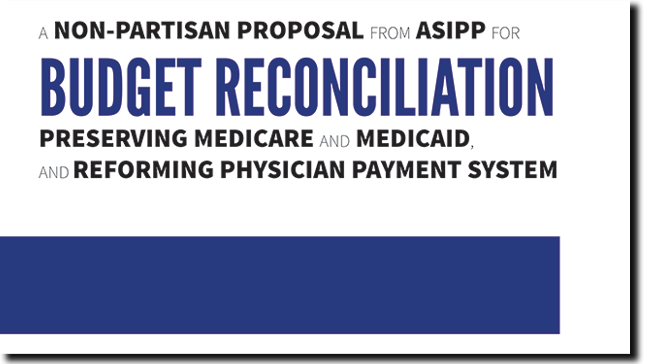
We find ourselves in a critical situation. ASIPP has long been engaged in addressing these challenges through a non-partisan proposal to reform the physician payment system and safeguard telehealth services. The bill is now before the Senate. Please contact your senator individually, through your group, patients, or staff—and urge them to support meaningful reform of the physician payment system. You may also use this convenient link set up by ASIPP.
Click here to read ASIPP's letter to Senator Bill Cassidy.
| |
Republicans want to curtail taxes states have imposed to increase payments to hospitals.
One of the most powerful lobbies in Washington is redoubling its efforts to avoid a cut to Medicaid payments in the GOP’s megabill.
Hospital executives weren’t happy last month when the House included a provision in its version of the bill freezing a loophole states have used to boost payments to hospitals serving the low-income patients enrolled in Medicaid. Hospitals have long enjoyed deference from lawmakers — since they both care for and employ their constituents.
But they were infuriated when Senate Republicans on the Finance Committee released their version of the bill on Monday. Their proposal went even further than the House measure in curtailing the ability of states to impose taxes on providers. States have used those taxes to gain a larger federal Medicaid contribution, which they have then directed back to hospitals with higher reimbursements.
Read more
| | JOIN or RENEW your ASIPP Membership for the best registration rates. | | |
Chronic low back pain is one of the most frequent and challenging conditions encountered in primary care.
Affecting nearly a quarter of adults worldwide at any given time, chronic low back pain not only diminishes individual quality of life but also contributes substantially to disability and health care costs.
For primary care providers, managing chronic low back pain effectively requires a shift from reactive treatment to proactive, comprehensive strategies that prioritize education, nonpharmacologic therapies, judicious pharmacologic use and timely referral for interventional pain procedures. Integrating newer minimally invasive treatments, such as basivertebral nerve ablation, can reduce opioid reliance and help avoid invasive spine surgeries, significantly improving long-term outcomes.
Read More
| |
TikTok points researcher toward signal of benefit
A rheumatology trainee who went on TikTok to find information on her own condition may have uncovered a novel and possibly tectonic approach to treating fibromyalgia, her presentation here suggested.
That experience led to an analysis of the massive TriNetX medical records database, which indicated that fibromyalgia patients who used glucagon-like peptide-1 (GLP-1) receptor agonist drugs were less likely to use opioids and to report pain, fatigue, and malaise compared with propensity-matched non-users, according to Nouran Eshak, MBChB, of the Mayo Clinic in Scottsdale, Arizona.
The findings were strong enough, Eshak told attendees at the European Alliance of Associations for Rheumatology annual meeting, that clinicians should "consider using GLP-1 agonists in fibromyalgia patients when comorbidities such as obesity, diabetes, or sleep apnea are present." Those are approved indications for such agents, and therefore patients would face fewer barriers to access.
Read More
| | |
New Dates Just Announced
Mark your calendars!
June 28, July 26, August 30,
September 27, October 25,
November 15, & December 13
Four (4) hour virtual exam
- ABIPP Path – Combined CCPM/ CSM Exam
For those with subspecialty in Pain Medicine
Two (2) hour virtual exam
- ABIPP Competency Exam in IPM
For those without primary board certification
Two (2) hour virtual exam
- ABIPP Competency Exam in Regenerative Medicine
Two (2) hour virtual exam
- Controlled Substance Management Competency Exam
Two (2) hour virtual exam
- Documentation, Coding, Compliance, Practice Management Competency Exam
Two (2) hour virtual exam
| | |
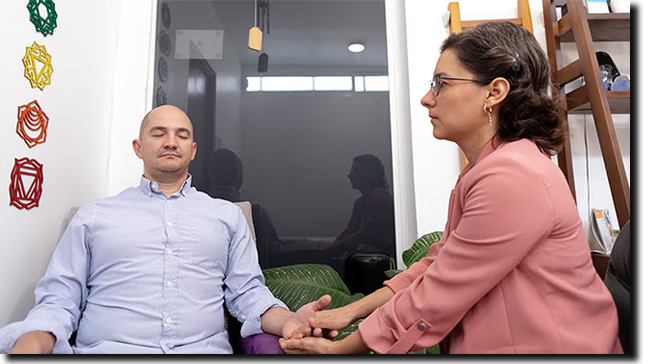
An international expert panel has developed the first consensus-based framework for reporting “set and setting” variables in psychedelic clinical trials.
The guidelines create a standardized protocol for psychedelic clinical trials that accounts for the mental state of the user and the environment in which the psychedelic experience takes place.
The Reporting of Setting in Psychedelic Clinical Trials (ReSPCT) guidelines were developed using the Delphi method and involved 89 experts in the field from 17 different countries. The expert panel included not only clinicians and researchers but also past clinical trial participants who provided the all-important lived experience.
Read More
| | | |
We're excited to let you know that the new ASIPP Community, hosted by DocMatter, is now live!
The ASIPP Community on DocMatter will serve as a place for members to collaborate around clinical and research topics to advance the care of their interventional pain patients.
Click here to be a part of the conversation!
| | - ASIPP Members Only Site Information - | |
-
To log in for the first time you will need to click “forgot password” at the bottom of the login window.
- Check your email and then log in as directed.
-
If you have problems logging into your account, click here.
| |
Researchers urge greater attention to "cold drink heart"
Avoiding ice water, smoothies, and ice cream seemed to work as a lifestyle change for some with atrial fibrillation (Afib or AF), according to the first cross-sectional survey of people with "cold drink heart" (CDH).
Among people who claimed to have ever had symptomatic Afib triggered by cold ingestion, 51.5% reported that their Afib episodes occurred only following cold drink or food consumption (as opposed to other triggers). In these patients, avoidance of cold ingestion reduced or eliminated their Afib episodes with 100% effectiveness (as opposed to 72.4% in people who also had a history of non-CDH Afib).
"When asked about avoidance, respondents reported several effective behavioral modifications in lieu of complete avoidance, such as reducing speed of ingestion or avoiding rapid gulping, eliminating straw use, allowing drinks to warm to room temperature, or warming liquids in their mouth before swallowing," reported David Vinson, MD, of Kaiser Permanente (KP) Northern California in Pleasanton, and colleagues in the Journal of Cardiovascular Electrophysiology.
Read More
| | |
Pain Medicine Case Reports (PMCR) and Editor-in-Chief Alaa Abd-Elsayed, MD, PhD would like to invite you to submit case reports and case series to the PMCR journal. Your article will be published free of charge.
Open access journals are freely available online for immediate worldwide open access to the full text of published articles. There is no subscription fee for open access journals. Open access journals are no different from traditional subscription-based journals: they undergo the same peer review and quality control as any other scholarly journal.
Interested in becoming a member of the PMCR Editorial Board?
Editorial board members are asked to review 2-6 manuscripts per year. Please submit your most up-to-date CV to sgold@asipp.org for consideration.
For more information or to submit your articles, click here.
| | |
We are excited to announce that Pain Medicine Case Reports (PMCR) journal (eISSN 2768-5152) has been accepted for inclusion in MEDLINE and PubMed, the prestigious bibliographic database of the U.S. National Library of Medicine. PMCR, a companion publication to the prestigious Pain Physician journal by ASIPP, joins its counterpart in achieving indexing in both MEDLINE and PubMed, marking ASIPP’s dual presence in these renowned databases.
The inclusion of PMCR journal in MEDLINE signifies a higher level of selectivity, as MEDLINE consists of the top 5,200 biomedical journals. This indexing also means that articles from PMCR will be searchable using NLM Medical Subject Headings (MeSH terms) and other metadata.
The selection for MEDLINE follows a rigorous evaluation process by reviewers from the Literature Selection Technical Review Committee (LSTRC). According to their criteria, the scientific quality of a journal’s content is the primary factor considered for indexing.
We extend our congratulations to the Pain Medicine Case Reports Editor-in-Chief, Deputy Editor-in-Chief, Journal Team, and Editorial Board for this achievement, which underscores the significance and excellence of this esteemed journal.
| | | | |
|
Anand S. Patil, DO, Mayank Gupta, MD, Nebojsa Nick Knezevic, MD, PhD, Whitman Oehlermarx, DO, Sudhir Diwan, MD, Rany T. Abdallah, MD, PhD, Mahendra Sanapati, MD, Amol Soin, MD, and Alaa A. Abd-Elsayed, MD
| | |
Wenqin Sun, MM, Zhejia Hu, MM, Lei Peng, BM, Huajing Guo, BM, Quan Zhou, MM, Daobo Pan, MM, Xuefeng Wu, BM, and Hao Wang, MD
| | |
Jimmy Wen, BA, Jared Leapart, BS, Won Jin Choi, BS, Shannon Dwyer, BA, Muhammad Karabala, MS, Ramy Khalil, BS, Daniel Razick, BS, Muzammil Akhtar, BS, and Vinay Reddy, MD
| | |
Robin Raju, DO, Jesse Reynolds, MS, Jiani Zhu, BS, Sergio Uriel Mosquera Limas, DO, and Whinkie Leung, MS
| | | | |
|
ASIPP is now in collaboration with Curi Medical Liability Program
Since this malpractice insurance program officially launched in November 2018, ASIPP has signed up hundreds of providers with an average savings of 30%. This is professional liability insurance tailored to our specialty and will stand up for us and defend our practices.
Curi is a full-service advisory firm that serves physicians and their practices. Their valued advice is grounded in your priorities and elevated in your outcomes. They are driven by a deep understanding of your specific circumstances in medicine, business, and life. To read a few important points to keep in mind about the program, including discounts, administrative defense, cyber coverage, aggressive claims handling, and complimentary risk management CME activities, visit our website.
| | |
IMPORTANT UPDATE
SPR is happy to announce an important update regarding Humana Medicare Advantage. As of May 1, Humana is now recognizing SPRINT as a PNS therapy. Previously, SPRINT was categorized as PNT (Percutaneous Nerve Stimulation), which allowed denials on the grounds that the therapy fell outside the NCD.
Additional details are as follows:
Payer: Humana Medicare Advantage (click here to view policy)
Policy Title: Peripheral Nerve Stimulators
Policy changes: SPRINT no longer misclassified as PNT and is now appropriately classified as PNS. Humana is applying the Noridian Medicare LCD criteria to ALL PNS devices – Including SPRINT PNS!
Effective Date: 5/1/2025
Click here to view a PDF of the official policy update.
| | |
|
Group Purchasing Organization Offer Better Pricing and Creates Added Value
ASIPP has formed a partnership with Henry Schein and PedsPal, a national GPO that has a successful history of negotiating better prices on medical supplies and creating value-added services for independent physicians. Working with MedAssets, PedsPal provides excellent pricing on products like contrast media that alleviate some of the financial pressures you experience today.
Learn More
For updated information concerning tariffs on products, click here.
| |  |
|
ASIPP, Fedora Healthcare Solutions Partnership
ASIPP offers our members the benefit of a unique revenue cycle management/ billing service.
We have received a tremendous amount of interest in the ASIPP billing and coding program.
Click here to learn more about the negotiated rate for practices and more!
| | Like and follow ASIPP® on Facebook, X, LinkedIn, and YouTube for the most up-to-date news related to you, your practice, and your patients! | | | | |