April 2026 - Investment Newsletter

KEY TAKEAWAYS

>>  The Iran war entered a critical phase in April 2026, marked by a fragile ceasefire, stalled peace negotiations, and an escalating U.S. naval blockade of Iranian ports that kept the Strait of Hormuz largely closed. Despite ongoing diplomatic efforts, the conflict intensified through military buildup and economic pressure, leading to significant global trade disruptions, rising energy risks, and mounting humanitarian and financial costs.

>> Global growth in April 2026 diverged sharply across regions. Investment-led expansions in parts of Asia, supported by technology spending, domestic demand, and targeted fiscal support, contrasted with slower momentum in the U.S., Europe, and Japan, where tighter financial conditions, softer manufacturing activity, and aging demand profiles weighed on output.

>> PCE inflation rose to 3.5% in March, its highest level since 2023, driven largely by higher energy prices tied to the Iran war. The inflation backdrop reinforced expectations for a sustained Federal Reserve policy pause while giving hawkish policymakers room to argue for renewed tightening later in the year.

>> The Federal Reserve held its policy rate steady at 3.50%–3.75% at the April FOMC meeting, but the decision featured four dissents, the most divided meeting in three decades. Chair Jerome Powell announced he would step down as Fed Chair while remaining on the Board, creating an unorthodox leadership transition as Kevin Warsh prepares to assume the role.

  • U.S. Treasury yields moved higher across the curve in April 2026 amid rising inflation concerns, elevated oil prices, and policy uncertainty at the Fed. The move was accompanied by late-month volatility, modest curve steepening, and weaker auction demand.


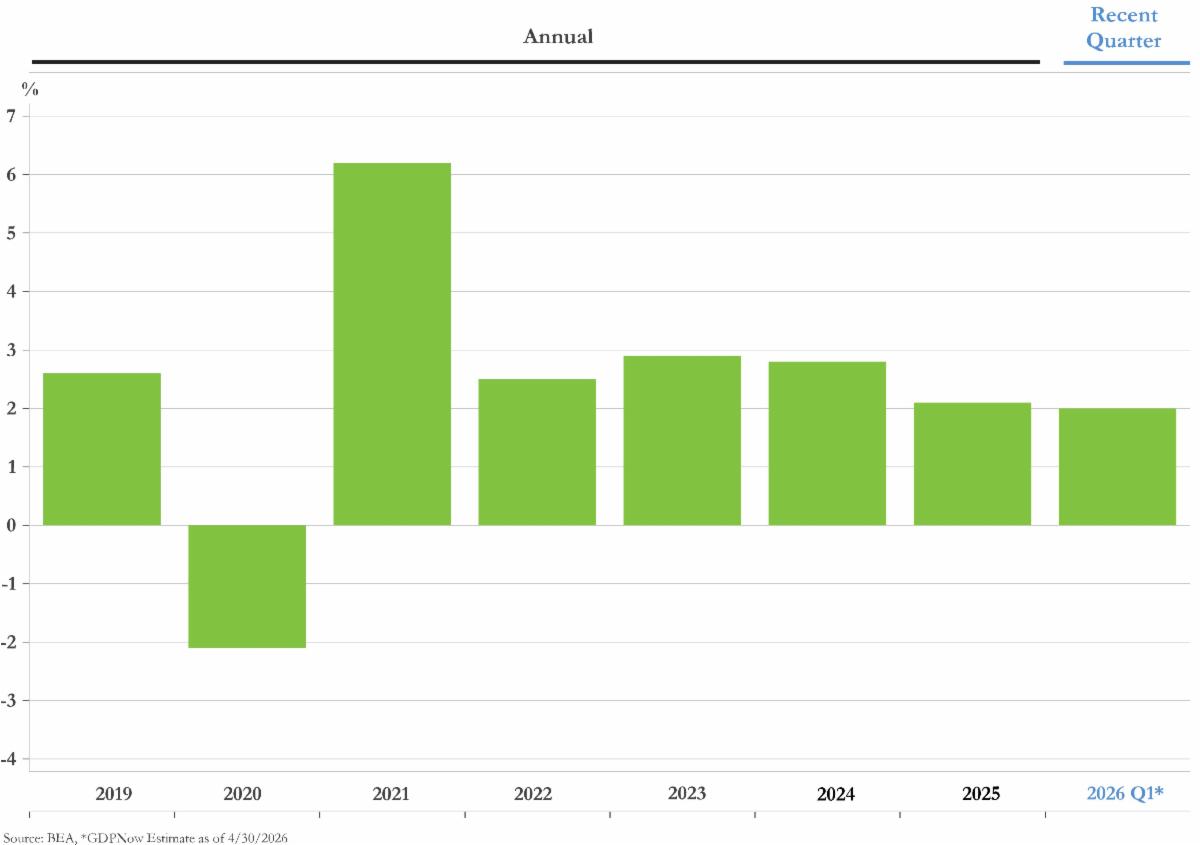
  • U.S. real GDP grew at a 2.0% annualized rate in Q1 2026, below expectations but rebounding from Q4. Growth was supported by strong business investment, particularly in AI, despite slower consumer spending and mounting inflation pressures.


  • Initial jobless claims fell to 189,000 for the week ending April 25, the lowest level since 1969. Layoffs remained historically low despite geopolitical stress, elevated inflation, and policy uncertainty, underscoring surprising durability in the U.S. labor market.


  • U.S. consumer sentiment deteriorated sharply in April, with the University of Michigan index falling to a record low of 49.8 from 53.3 in March. The decline reflected rising inflation expectations and concerns over the economic fallout from the Iran war and higher gasoline prices.


  • U.S. equity markets posted their strongest monthly performance since November 2020 in April 2026, with the S&P 500 and Nasdaq rising to record highs. Gains were driven by robust mega-cap earnings and AI-related momentum, reflecting investor confidence in growth resilience despite geopolitical and policy headwinds.


  • International equity markets delivered solid gains in April, though most regions trailed U.S. performance. Emerging markets stood out, rising roughly 10% for the month, outperforming developed markets amid stronger growth dynamics and greater commodity exposure.


  • Fixed income markets faced headwinds in April 2026 as rising Treasury yields weighed on bond prices, resulting in muted returns for core fixed income. Credit markets were more resilient, with high yield and emerging market bonds outperforming amid continued demand for income, though higher rate volatility and softer demand for government debt signaled a more challenging backdrop.


  • Despite heightened geopolitical risk, persistent inflation concerns, and policy uncertainty, financial markets and global growth have remained broadly supported, reinforcing the importance of maintaining a disciplined, long‑term investment approach. While risk assets have shown resilience, elevated valuations leave markets more sensitive to potential disappointments, making diversification and alignment with long‑term objectives, rather than short‑term headline‑driven reactions, particularly important in the current environment.

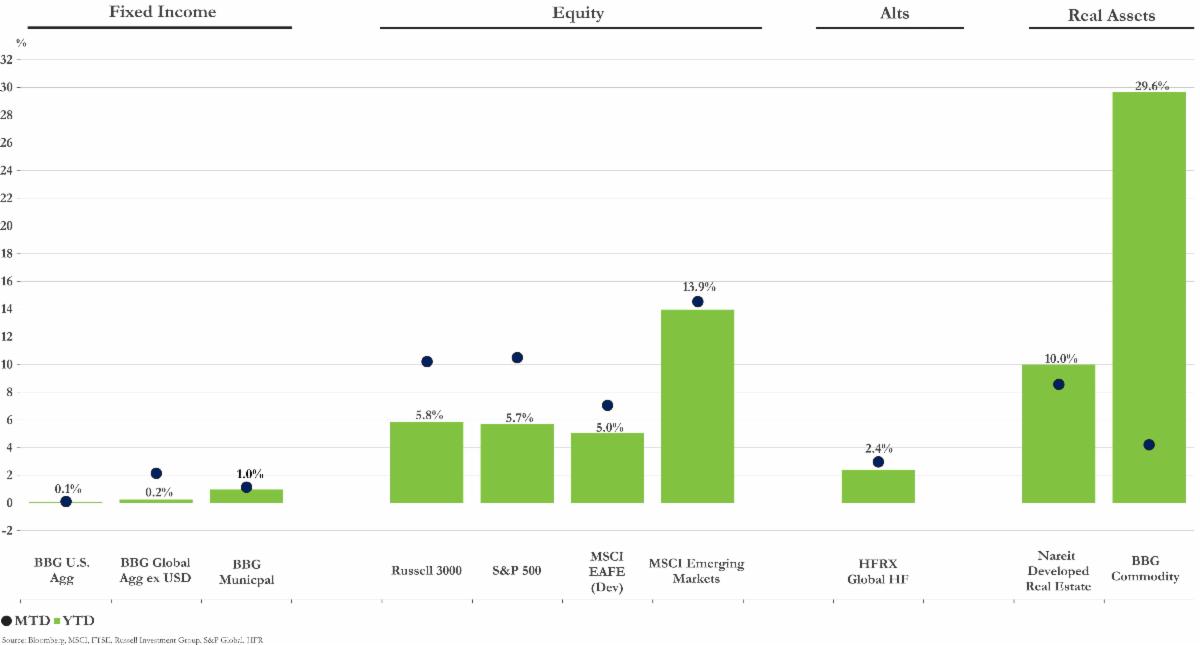
Asset Class Performance as of 4/30/2026

ECONOMY

Solid U.S. Real GDP Growth in Q1


  • U.S. real GDP grew at a 2.0% annualized rate in Q1 2026, falling short of expectations but rebounding from a weather and government shutdown impacted Q4, with year-over-year growth of 2.7%.


  • Growth was supported by robust AI-driven business investment, partially offset by a slowdown in consumer spending, which showed signs of fatigue amid rising inflation.


  • Inflation pressures intensified meaningfully, with the core PCE index accelerating sharply, contributing to a more challenging macro backdrop despite overall economic resilience.


U.S. GDP Growth

ISM PMI Divergent Performance


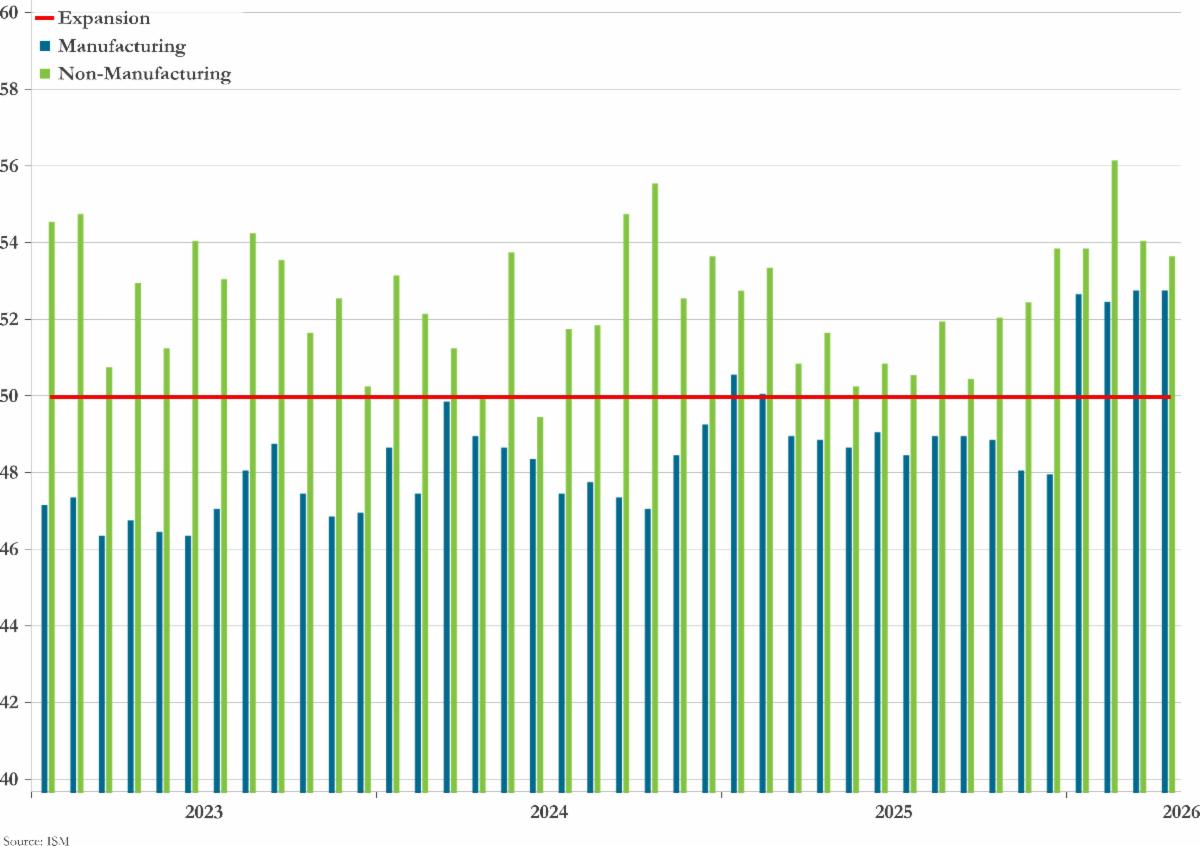
  • ISM data in April 2026 reflected a divergence across sectors, with manufacturing remaining in expansion territory while services activity showed signs of deceleration based on the latest available data.


  • Manufacturing resilience was evident in the headline PMI, though regional indicators were mixed, with pockets of contraction highlighting uneven industrial momentum.


  • The services sector faced mounting pressures, including a sharp rise in input costs and a notable contraction in employment, pointing to margin compression and operational strain.


  • Elevated energy prices linked to the Iran war emerged as a key driver, contributing to inflationary pressures and reinforcing concerns around stagflation, even as underlying demand remained relatively firm as reflected in strong new orders.


U.S. ISM Indices

USD Volatility


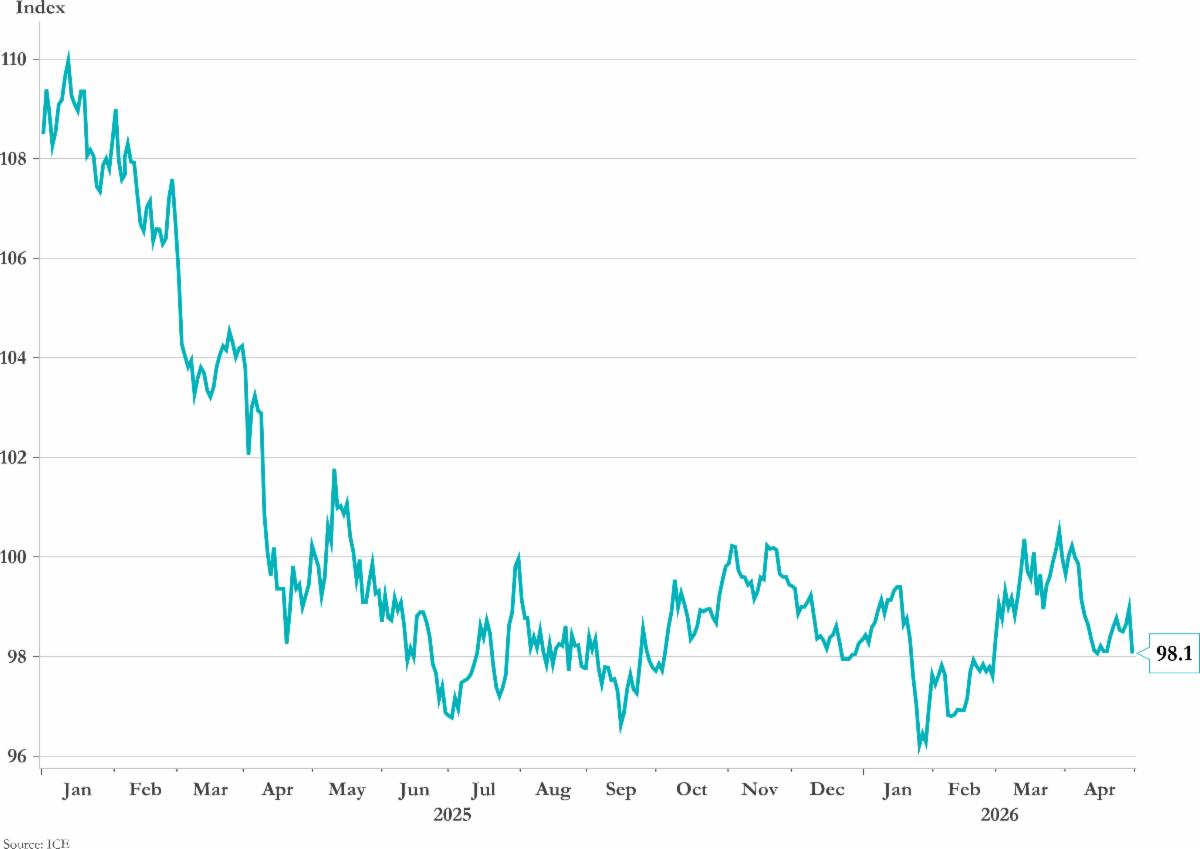
  • The U.S. dollar experienced significant volatility in April 2026, initially strengthening on safe-haven demand amid geopolitical tensions and a relatively hawkish Federal Reserve stance.


  • Despite early gains, the Bloomberg Dollar Spot Index declined over the month, reflecting a reversal in sentiment driven by softer economic data and rising stagflation concerns.


  • Broad-based dollar weakness was evident across major currency pairs, with the euro, British pound, and Mexican peso all strengthening, highlighting shifting global currency dynamics and diminishing support for the U.S. dollar.


U.S. Dollar Index (DXY)

MARKETS

Equities Rallied in April


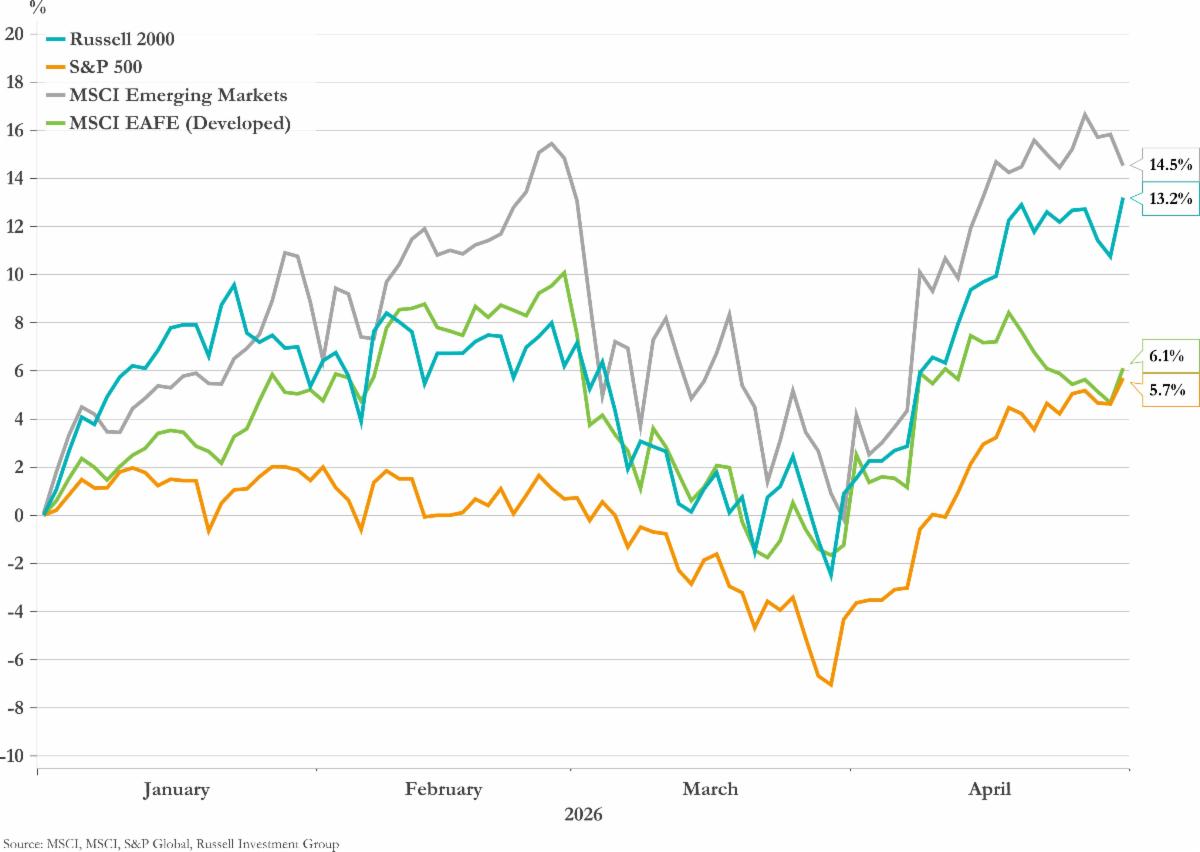
  • The S&P 500 surged 10.4% in April, marking the largest one-month percentage gain since November 2020 and the largest one-month point gain on record. The index closed at a record high of 7,209.01 on April 30th.


  • The AI investment boom showed up clearly in corporate results, particularly benefiting the communication services sector, which jumped 4% on the final day of the month.


  • MSCI Emerging Markets Index gained 10.0% in April, posting its best month since 2022. The rally was fueled by Asian technology on optimism over artificial intelligence demand, even as oil supply shocks persisted amid the U.S.-Iran standoff over the Strait of Hormuz.


  • MSCI EAFE Index rose 3.6% in April, with European markets leading the advance among developed regions.

Major Index Performance - Total Return

Fixed Income Headwinds


  • Fixed income markets faced headwinds in April 2026 as rising Treasury yields and elevated inflation expectations pressured bond prices, resulting in muted overall returns for core bond indices.


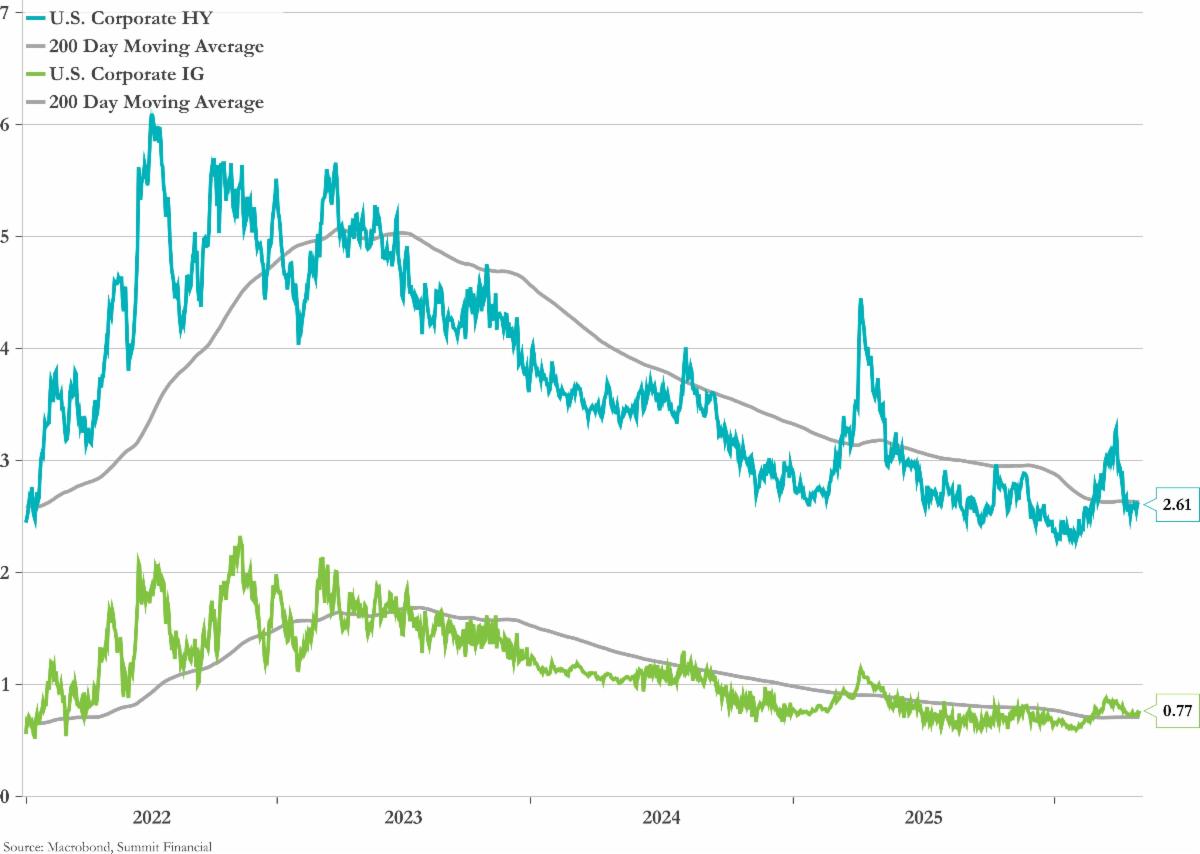
  • Credit markets demonstrated resilience, with high yield bonds outperforming and emerging market investment-grade spreads tightening to historically low levels, reflecting continued investor demand for yield.


  • The rise in Treasury yields contributed to volatility and challenged duration-sensitive assets, while weaker auction demand signaled some softening in investor appetite for government debt.


  • Despite active corporate issuance, signs of fatigue emerged in AI-related credit demand.


Credit Spreads

Commodities Remain Volatile


  • Commodity markets experienced significant volatility in April 2026, driven primarily by geopolitical tensions from the Iran war and disruptions to global energy supply.


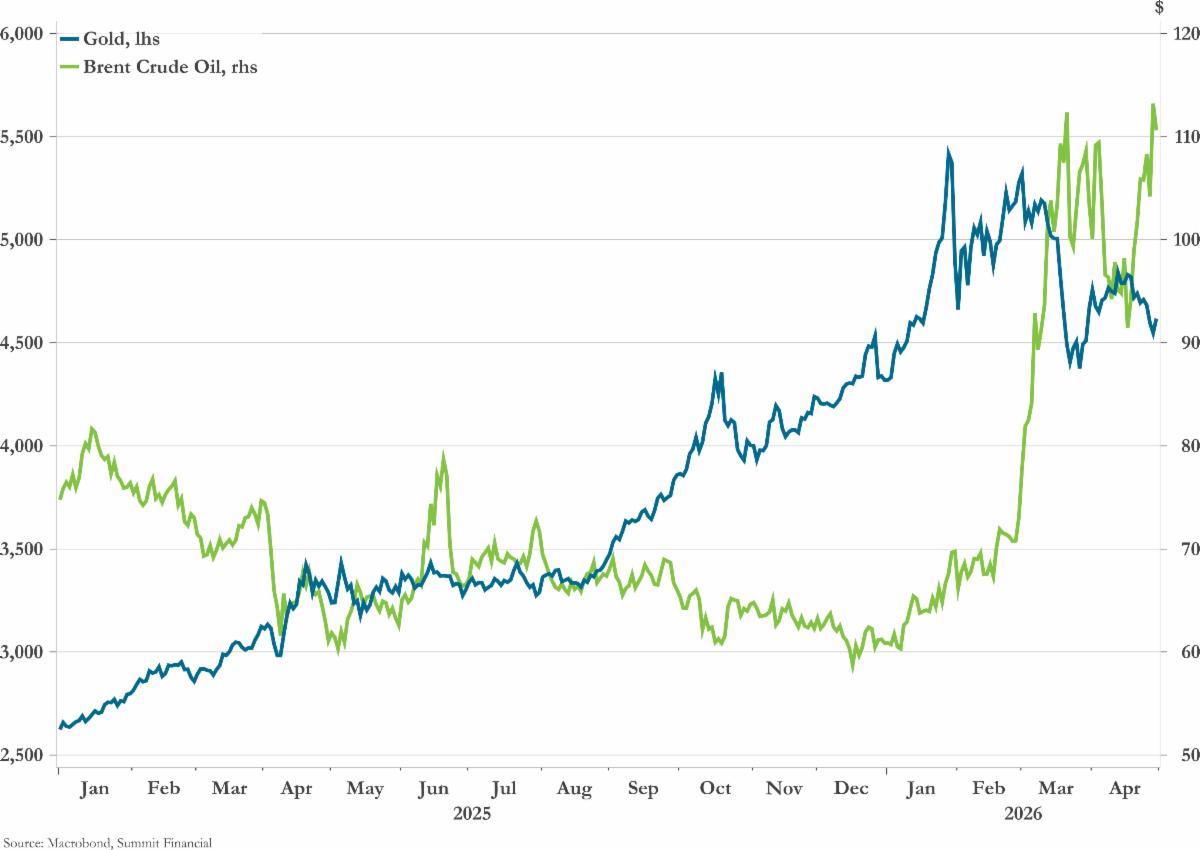
  • Oil prices exhibited sharp intramonth swings, reaching four-year highs amid concerns over the Strait of Hormuz blockade before ultimately declining for the month.


  • Gold posted a record two-month decline due to dollar strength and shifting risk sentiment, while natural gas prices remained relatively stable overall, with a late-month surge driven by supply and inventory dynamics.


  • Average U.S. gasoline prices surged to $4.30 per gallon on April 30, according to AAA, hitting a four-year high.

Gold & Brent Crude Oil - Spot Prices

DISCLAIMER

Compliance Code: 8913604.1


This commentary was authored by the investment team at Summit Financial, LLC., an SEC Registered Investment Adviser (“Summit”), headquartered at 4 Campus Drive, Parsippany, NJ 07054, Tel. 973-285-3600. It is provided for your information and guidance and is not intended as specific advice and does not constitute an offer to sell securities. Summit is an investment adviser and offers asset management and financial planning services. Indices are unmanaged and cannot be invested into directly.


Data in this newsletter is obtained from sources which we, and our suppliers believe to be reliable, but we do not warrant or guarantee the timeliness or accuracy of this information. Consult your financial professional before making any investment decision. Past performance is no guarantee of future results.


Diversification/asset allocation does not ensure a profit or guarantee against a loss. Economic and market forecasts presented herein reflect our judgment as of the date of this presentation and are subject to change without notice. Any forecasts are subject to high levels of uncertainty that may affect actual performance. Accordingly, forecasts should be viewed as merely representative of a broad range of possible outcomes. Forecasts are estimated, based on assumptions, and are subject to significant revision and may change materially as economic and market conditions change. Forecasts do not take into account the specific investment objectives, restrictions, tax and financial situation or other needs of any specific client.


DEFINITIONS & DESCRIPTIONS

BBG U.S. Agg

Bloomberg U.S. Aggregate Bond Index

The Bloomberg U.S. Aggregate Bond Index is a broad-based flagship benchmark that measures the investment grade, U.S. dollar-denominated, fixed- rate taxable bond market. The index includes Treasuries, government-related and corporate securities, MBS (agency fixed-rate pass-throughs), ABS, and CMBS (agency and non-agency).


BBG Global Agg ex USD

Bloomberg Global Aggregate Index

The Bloomberg Global Aggregate Index is a flagship measure of global investment grade debt from twenty-four local currency markets. This multi- currency benchmark includes Treasury, government-related, corporate, and securitized fixed-rate bonds from both developed and emerging markets issuers.


BBG Municipal

Bloomberg Municipal Bond Index

The Bloomberg Municipal Bond Index covers the U.S. dollar-denominated long-term tax-exempt bond market. The index has four main sectors: state and local general obligation bonds, revenue bonds, insured bonds, and pre-refunded bonds.


Russell 3000

Russell 3000 Index

The Russell 3000 Index measures the performance of the largest 3,000 U.S. companies representing approximately 98% of the investable U.S. equity market. It is constructed to provide a comprehensive, unbiased, and stable barometer of the broad market and is completely reconstituted annually to ensure new and growing equities are included.


Russell 2000

Russell 2000 Index

The Russell 2000 Index measures the performance of the small-cap segment of the U.S. equity universe. It is a subset of the Russell 3000 Index repre- senting approximately 10% of the total market capitalization of that index. It includes approximately 2,000 of the smallest securities based on a combi- nation of their market cap and current index membership.


S&P 500 

S&P 500 Index

The S&P 500 Index is a market capitalization-weighted index of 500 widely held stocks often used as a proxy for the stock market. It measures the movement of the largest issues. Standard and Poor’s chooses the member companies for the 500 based on market size, liquidity, and industry group representation. Included are the stocks of eleven different sectors.


MSCI EAFE (Dev)

MSCI EAFE Index

The MSCI EAFE Index (Europe, Australasia, Far East) captures large- and mid-cap representation across developed markets countries around the world, excluding the U.S. and Canada. The index covers approximately 85% of the free float-adjusted market capitalization in each country.


MSCI Emerging Markets

MSCI Emerging Markets Index

The MSCI Emerging Markets Index captures large- and mid-cap representation across emerging markets countries across the world. The index covers approximately 85% of the free float-adjusted market capitalization in each country.


HFRX Global HF

HFRX Global Hedge Fund Index

The HFRX Global Hedge Fund Index is comprised of funds representing the overall hedge fund universe. Constituent funds include but are not limited to convertible arbitrage, distressed securities, equity hedge, equity market neutral, event-driven, macro, merger arbitrage, and relative value arbitrage. The underlying strategies are asset-weighted based on the distribution of assets in the hedge fund industry.


Nareit Developed Real Estate

FTSE EPRA/NAREIT Developed Index

The FTSE EPRA/NAREIT Developed Index is designed to track the performance of listed real estate companies and REITS worldwide. Index constituents are free float-adjusted, subject to liquidity, size, and revenue screening for inclusion.


BBG Commodity

Bloomberg Commodity Index

The Bloomberg Commodity Index reflects commodity futures price movements and is calculated on an excess return basis. The index rebalances annually weighted 2/3 by trading volume and 1/3 by world production, and weight-caps are applied at the commodity, sector, and group level for diversification. The roll period typically occurs from the 6th-10th business day based on the roll schedule.


Consumer Confidence Index

Conference Board Consumer Confidence Index

The Consumer Confidence Index is a measure based on a survey administered by The Conference Board that reflects prevailing business conditions and likely developments for the months ahead. This monthly report details consumer attitude, buying intentions, vacation plans, and consumer expectations for inflation, stock prices, and interest rates.


U.S. Dollar Index (DXY)

U.S. Dollar Index (DXY)

The U.S. Dollar Index (DXY) is an index of the value of the United States dollar relative to a basket of foreign currencies, often referred to as a basket of U.S. trade partners' currencies. The Index goes up when the U.S. dollar gains "strength" (value) when compared to other currencies.


DJIA

Dow Jones Industrial Average

The Dow Jones Industrial Average (DJIA), commonly known as “The Dow”, is a price-weighted measure of 30 U.S. blue-chip companies. The index covers all industries except transportation and utilities.


ISM Manufacturing Index

ISM Manufacturing Index

The ISM Manufacturing Index, also known as the purchasing managers’ index (PMI), is a monthly indicator of U.S. economic activity based on a survey of executives covering all North American Industry Classification System’s businesses in the manufacturing sector.


ISM Non-Manufacturing Index

ISM Non-Manufacturing Index

The ISM Non-Manufacturing Index is a monthly indicator of U.S. economic activity based on a survey of executives covering all North American Industry Classification System’s businesses in the services (or non-manufacturing) sector.


QUESTIONS?

Our Wealth Management team is ready to answer your questions and help you prepare for your future with a suite of planning solutions focused on you.

View as Webpage


LinkedIn

6135 Memorial Drive Suite 103, Dublin, OH 43017 | 614.380.3800