|
Greetings from Georgia!
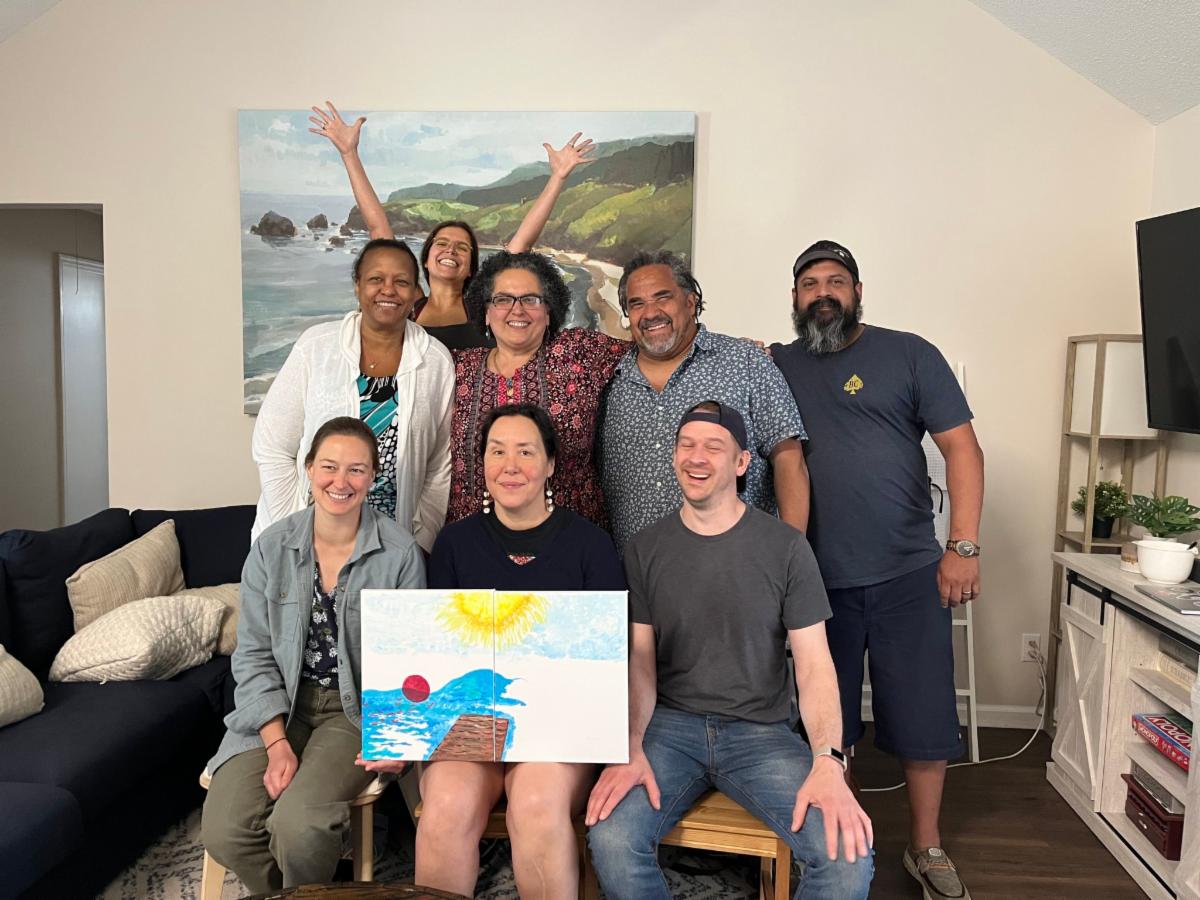
I had the honor of spending a few days last week in Savannah at our annual board retreat. This one was particularly special as we welcomed four new members to our board representing four different corners of North America. We have been aspiring to grow into our new name - the North American Marine Alliance - for the past few years. Not only was it important to us to have a board that represents a more geographically diverse organization, it was essential that our board be representative of the diversity of peoples who make up North America, in particular Indigenous peoples who have been fishing the waters of these coasts for millenia and been fighting against the privatization of fishing rights way before many of us put a name on the giveaway of our ocean commons.
We have more to do to really have a representative board that spans North America. For now, I’m so grateful for the inspiring people who are giving of their wisdom, energy, time, and experience to make NAMA a more effective and powerful organization.
| |
NAMA board members bottom row from left to right: Emily Farr, Melanie Brown, Ryan Horwath. Second row from L to R: Nicola Williams, Niaz Dorry, Jason Jarvis, Justin Solet. Top row extending her arms with joy: Shley Suarez Burgos. | |
|
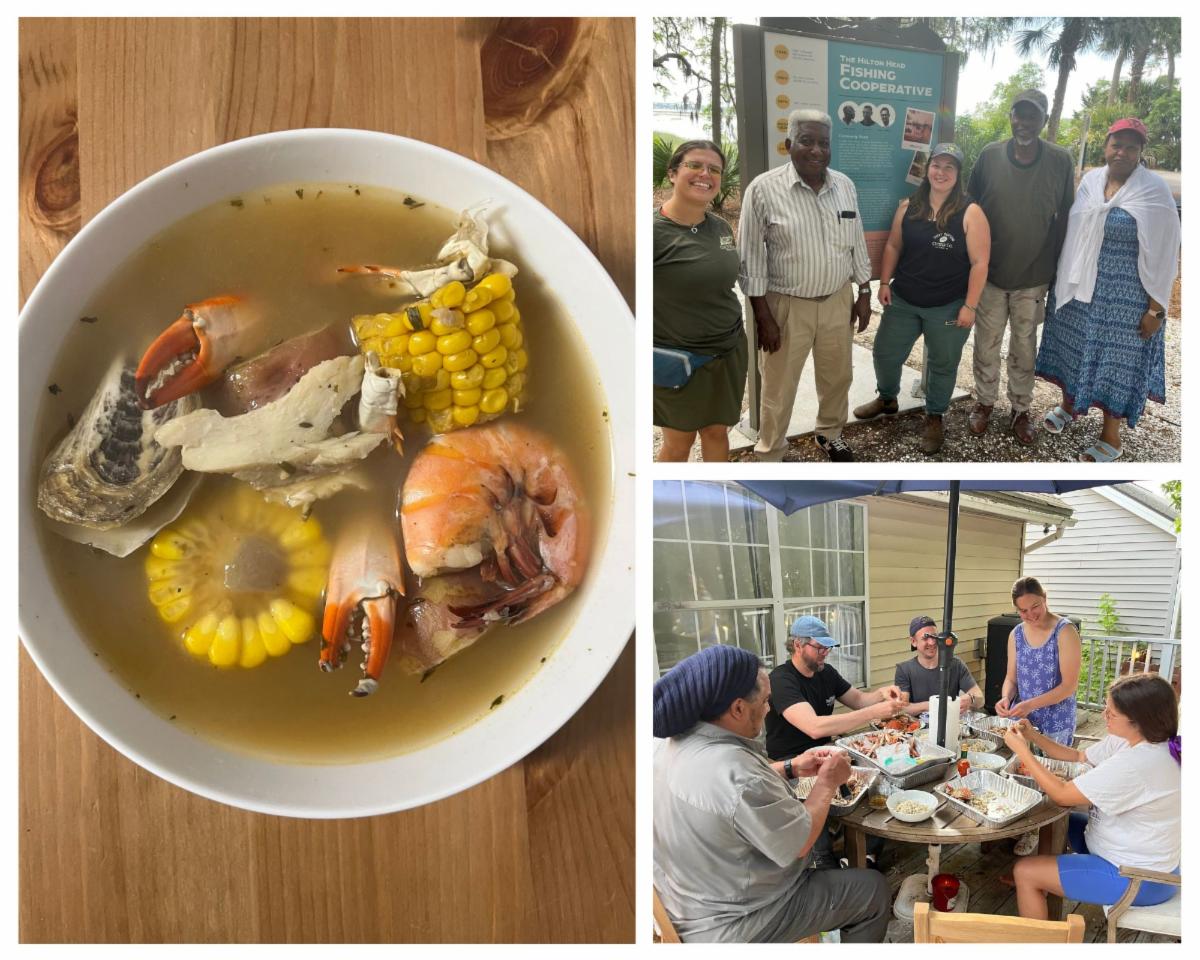
Although we greatly missed two of our existing board members, Emy Rodriguez Rancier and Paul Bogart, our time in Savannah was filled with storytelling, humor, learning about the Gullah Geechee people’s history, and cooking together (including an evening of picking crabs!) while building camaraderie with:
- Melanie Brown, an indigenous salmon fisher and wild salmon advocate born into a Bristol Bay fishing family that has been sustained by the Naknek River for countless generations. Her children are now part of her family’s setnet operation and she migrates with them to Bristol Bay from their winter home in Juneau annually;
- Emily Farr, based in Maine, focuses on building resilience in fishing communities and ecosystems in the Gulf of Maine and is grounded in partnership with coastal communities. She has an interdisciplinary background in fisheries management, coastal governance, climate science, and facilitation;
- Shley Suarez Burgos of Miami taps into her background of professional salmon fishing, filmmaking and yoga instruction to engage in creative eco-storytelling to create authentic conversations and events for diverse communities; and,
- Justin Solet, a tribal member of the United Houma Nation, commercial fisherman, and 10 year veteran of the Gulf oil fields whose biggest priority is to fight for all Peoples’ rights to live with healthy food, air, water and a piece of land they can call their home.
Please join me in welcoming them to the NAMA family!
With gratitude,
Niaz Dorry
Coordinating Director
|  | |
|
In This Issue
Niaz Dorry Recognized for Policy Advocacy!
Food System Disasters Show the Need to Downsize and Democratize!
Check Out Our Merch!
Black and Indigenous Leadership Gathering!
Addressing Aquaculture to Protect Coastal Communities
Industrial Salmon Farming News Round-Up
Why Is It So Hard to Find Local Fish (Even by the Water)?
| |
Niaz Dorry Recognized for Policy Advocacy! | |
|
The North American Marine Alliance (NAMA) and National Family Farm Coalition (NFFC) are pleased to announce that Niaz Dorry, Director of both organizations, has been recognized as a 2024 James Beard Foundation Leadership Award recipient in the Policy Advocacy category.
Niaz has played a pivotal role in grassroots movement-building and steering federal legislation towards recognizing and supporting family-scale, community-based, and Indigenous fishing and farming communities. The shared leadership and close partnership between NAMA and NFFC, spearheaded by Niaz, has helped to bridge the gap between sea and land food systems, emphasizing the importance of including both in comprehensive food system discussions.
Niaz has been a community organizer for over 30 years working for environmental, social, and economic justice causes. Before becoming NAMA’s Coordinating Director in 2008 and NFFC’s Executive Director in 2018, she was a community organizer with Greenpeace and interim COO with the Healthy Building Network. This breadth of experience demonstrated to her how consolidation and corporate takeover decimate rural communities and the planet. Niaz remains fiercely committed to exposing and challenging the threat of corporate domination across sectors.
Policy Advocacy is one of four new categories for the Beard Leadership Awards, and is awarded to policymakers or advocates who are advancing federal legislation and/or other regulations prioritizing a more sustainable and equitable food system. NAMA and NFFC thank the James Beard Foundation for recognizing Niaz’s tireless leadership and advocacy. Click here to read more about Niaz and the other recipients of the Leadership Awards at the Foundation’s website.
| |
Food System Disasters Show the Need to Downsize and Democratize | |
Jason Jarvis, NAMA’s board president, recently co-authored an op-ed in The Hill with Anthony Pahnke, vice president of Family Farm Defenders and member of NFFC. Their piece draws attention to the disastrous consequences of consolidation in fishing and farming — and uplifts bills that present some solutions. | |
Have you always wanted a NAMA hoodie? Now’s your chance! We’ve got hoodies, aprons, and onesies for the littlest fishes among our movement! Our merch is made in the US by Worx Printing Co-op, a worker-owned union coop and printed with water-based, organic, toxin-free, vegan ink. They’re PVC free, contain no phthalates and are safe for babies! | |
Black and Indigenous Leadership Gathering | |
Addressing Aquaculture to Protect Coastal Communities | |
|
Don’t Cage Our Oceans was featured in a National Fisherman article this month by Paul Molyneaux, about addressing aquaculture to protect coastal communities. Check it out!
| |
Industrial Salmon Farming News Round-Up | |
|
ICYMI, a few industrial salmon farming stories made headlines in recent months. Scientists found that, over the past decade, close to a billion farmed salmon have perished prematurely in mass die-offs. Furthermore, these die-offs are getting bigger and increasing in frequency in countries like Norway, Canada, and the UK — likely due to warming waters, growing reliance on AI and other technology, and attempts to move fish farms further offshore.
Another report found that, in order to produce fish feeds, salmon farms in Norway are taking huge amounts of wild forage fish from off the coast of West Africa, mining the food security of the region. According to the report, in 2020, Norwegian salmon farms required almost 2 million metric tons of edible wild fish for fish feeds — the wild fish harvested off West Africa alone could have fed up to 4 million people in local communities. Another recent study estimated that about half of the 1.1-2.2 trillion wild fishes caught globally each year are transformed into fishmeal and fish oil.
| |
Why Is It So Hard to Find Local Fish (Even by the Water)? | |
|
Check out this NYT article featuring Josh Stoll of Local Catch Network and Chef Dana Honn talk about the need for more regional infrastructure and introducing seafood lovers to more species like scup and hake so they don’t rely on menus that only serve a few over-marketed species like cod and tuna.
Wondering where to find seafood near you? Check out the Local Catch Seafood Finder. Want to dive deeper into the world of sustainable seafood? Check out our Sustainable Seafood Guide.
| |
NAMA is a fishermen-led organization building a broad movement toward healthy fisheries, and fishing communities.
We build deep, and trusting relationships with community based fisherman, crew, fishworkers, and allies to create effective policy, and market strategies.
| | | | |