UC MASTER GARDENERS OF L.A. COUNTY

Meet the Australian Dendrobium Orchid –

Some of the Best Orchids to Grow Outdoors!

Article and Photo by MG Jake S.

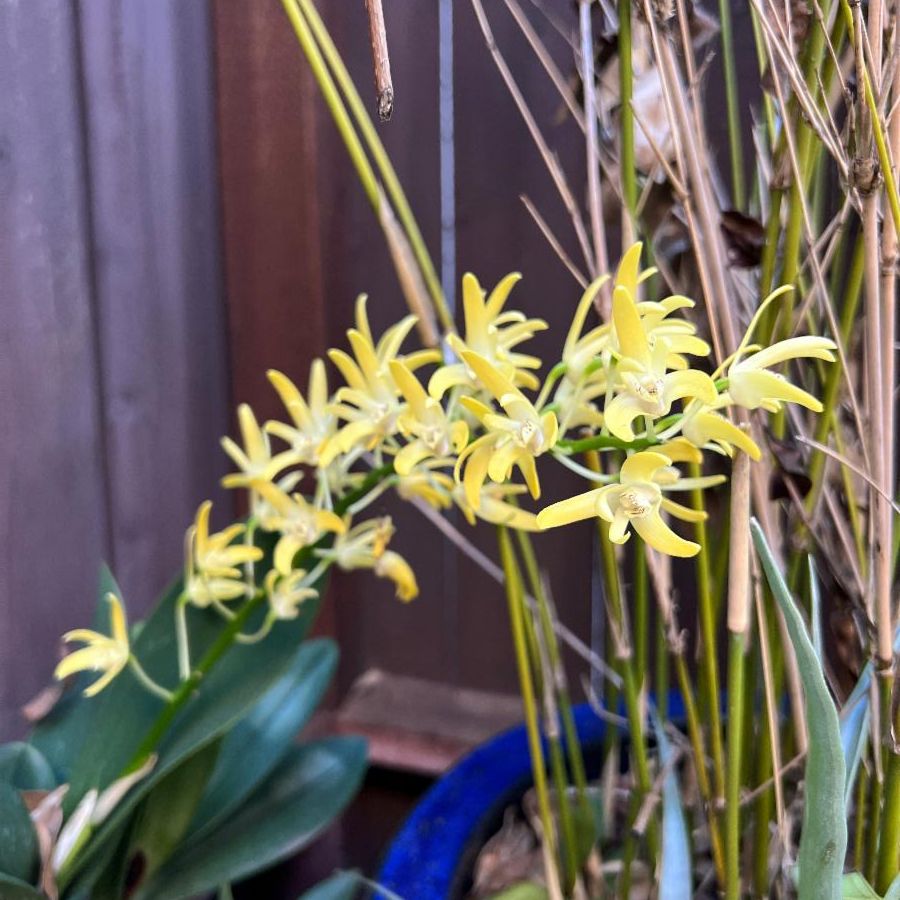
A cluster of small, yellow orchid blooms

While there are over 1500 species of Dendrobium orchids that come from all over Asia and the South Pacific, a select few species come from a very similar climate to that of SoCal - Australia!


Australian Dendrobiums can handle a wide range of temperatures from the low 30s to the low 100s, making them well suited to grow outdoors in almost all parts of LA County. Plus, they LOVE to bloom. It doesn’t matter how healthy your plant looks; these guys will always give you a Spring show. 


Here are some basic care requirements: 


Light: Aussie Dendrobiums love filtered, or indirect sunlight. So, they fare well under umbrellas, shade cloth, or trees. I grow them on my patio table under my umbrella and sheltered between or under other plants. Some direct morning sun is fine, but direct afternoon sun will scorch the leaves. 


Water:  Water once a week during the winter months and at least twice a week during the summer. If temperatures get into the 90’s you may want to increase watering to every other day. 


Fertilizer: Use a water-soluble fertilizer formulated for orchids and apply about once every two weeks. 


Potting: if potting is required, use a light, airy, well-draining orchid mix containing bark, perlite, and sphagnum moss or coco coir. These plants generally don’t require repotting and do well when they crowd the pot. If the plant or roots start to outgrow the pot, just nest it into a larger pot and the orchid will be happy as a clam.

That’s it! Easy-peasy, and beautiful. Try one out for yourself!


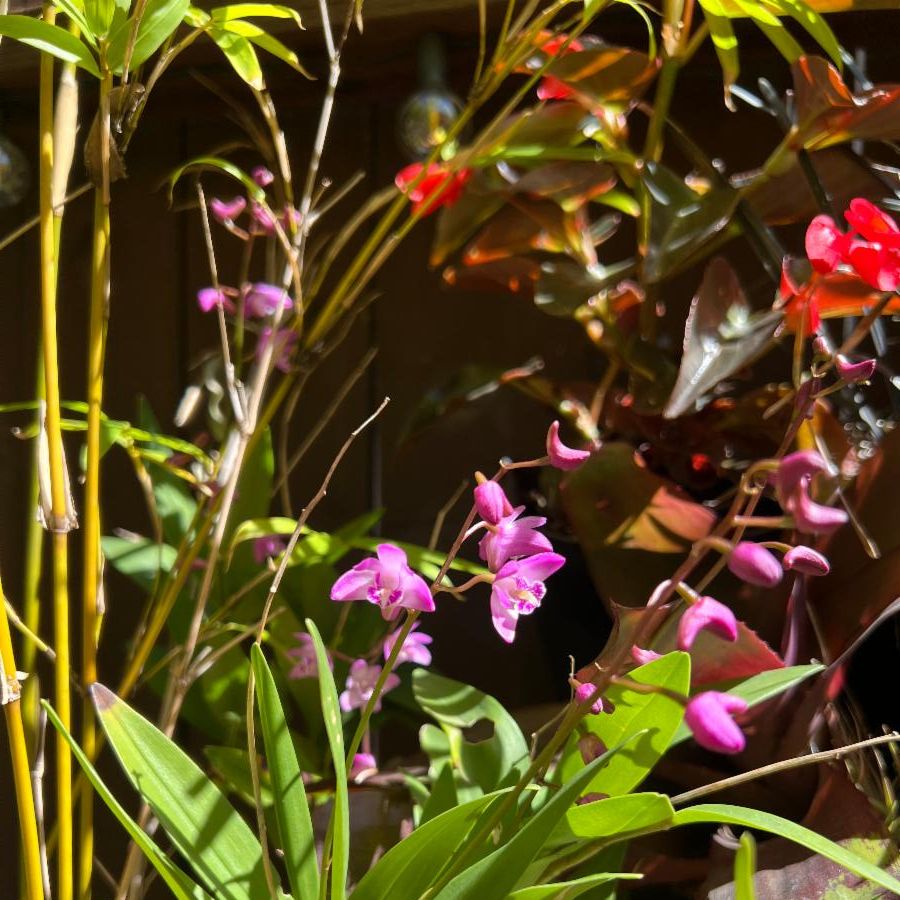
pink and red orchid blooms
 

Plant Collection Spurs Childhood Memories

 
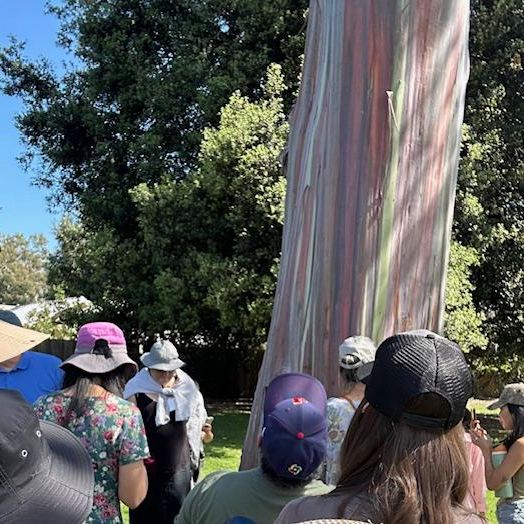
Group of people gathered in front of Rainbow Gum tree.

The 2026 UCMG-LA County trainees had a field trip to the grounds of the LA County Arboretum led by Donald R. Hodel, UCCE Environmental Horticulturist. 


The group gathered around this magnificent giant Eucalyptus deglupta (rainbow gum), a native to the Philippines and Papuasia. The tree trunk has a unique, peeling bark that reveals vibrant colors of pink, blue, purple and orange. I was in awe after learning that I was standing next to one of the special collections of trees at the LA County Arboretum that originate from the Philippines, where I grew up. 


Another landscape tree that brought back my childhood memories was the Ceiba speciosa (silk floss). Silk floss trees produce pink flowers in the fall. The large green fruit, which is not edible, will turn brown and contains soft fibers with seeds. These soft fibers were used to stuff sleeping pillows, which have since been replaced by synthetic fibers.


Text and photo by: MG Tess M.


Advice to Grow by---Ask Us!


Reach out to us with gardening inquiries via The Master Gardener helpline, available by email at mglosangeleshelpline@ucdavis.edu.


Find more science-backed, research-based gardening guidance at the MGLA website.

X Share This Email
LinkedIn Share This Email
Facebook  Instagram