|
PERFORMING ANIMAL WELFARE SOCIETY
Rescue. Advocacy. Sanctuary. For Life.
Since 1984
| |
|
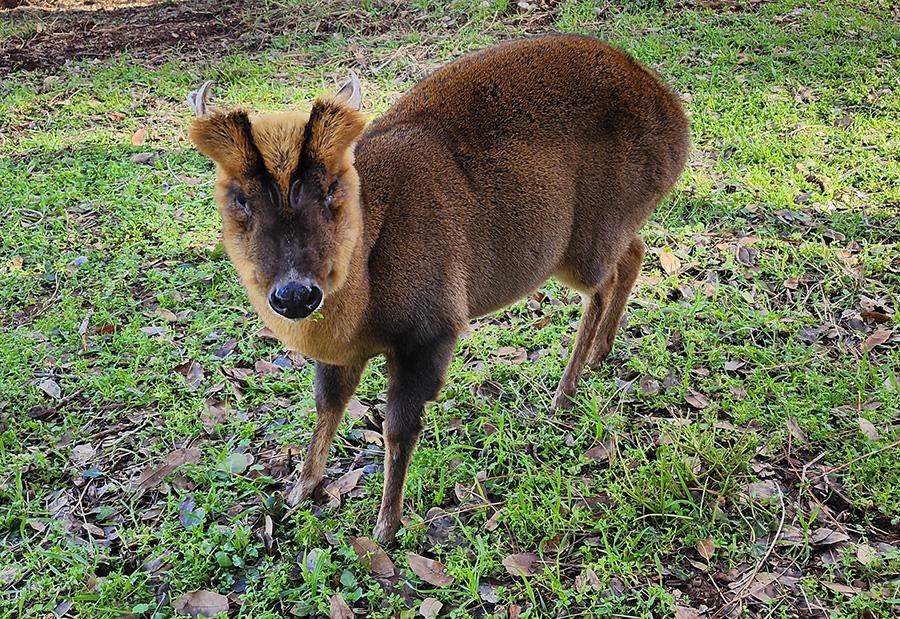
Mojo in his habitat at ARK 2000.
| |
Meet One of Our Smallest PAWS Residents:
Muntjac Mojo
| |
|
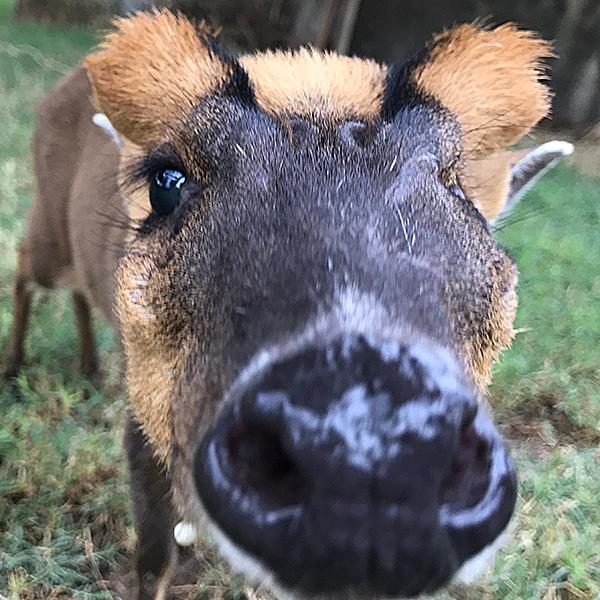
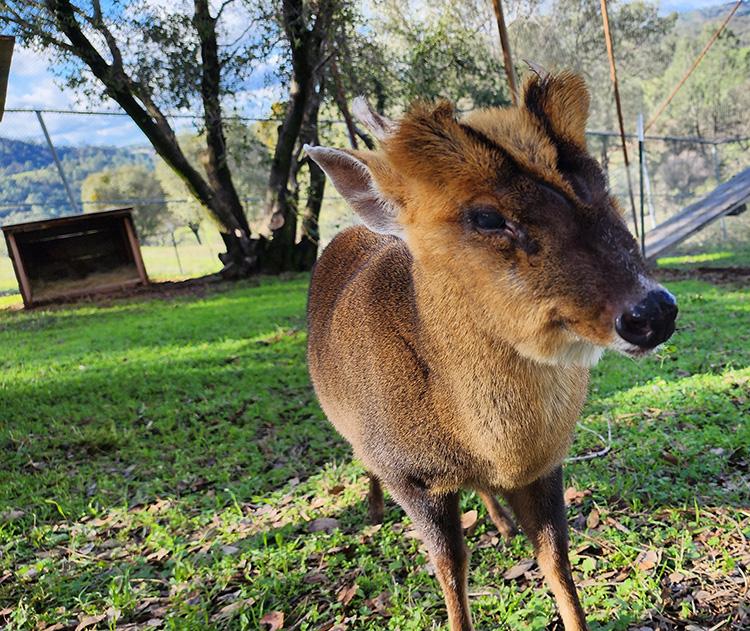
One of the least known animals at PAWS – and one of our older residents – is 21-year-old Mojo, an Indian muntjac. What is a muntjac? They are a small-size deer found throughout Asia, known for their distinct vocalizations that sound like a bark - hence the name “barking deer.”
There are several species of muntjacs, but Indian muntjacs are the most widespread, found in India, Sri Lanka, and parts of Southeast Asia. These small, agile deer stand about one and a half to two feet tall at the shoulder and weigh 15-20 pounds. They are found in a variety of habitats, from dense forests to open grasslands.
When vocalizing, muntjacs use a distinctive “bark”, rather than the bleats and grunts associated with their larger deer relatives. They bark to warn other members of the herd of potential danger and during mating season.
So how did PAWS acquire a muntjac in California?
Mojo arrived in 2007 after a nearby animal control agency confiscated him as an illegal “pet.” Muntjacs are illegal to own in most states without a permit. When Mojo arrived at PAWS he was nervous and suspicious, but today he is friendly and inquisitive and looks forward to visits from his caregivers to see what delicious foods they bring.
| |
Muntjacs have a delicate digestive system, eating grasses, leaves, and tender shoots in the wild. Our dedicated caregivers feed Mojo a balanced mixture of hay, pellets, vegetables, and hand-selected tender, leafy branches.
This year, Mojo was moved from our former sanctuary in Galt to ARK 2000. Although he is elderly, with limited eyesight and hearing, Mojo easily settled into his comfortable new habitat thanks to his dedicated caregivers. He has plenty of grass for grazing and a cozy, straw-bedded shelter to sleep in.
Keeping wild animals as “pets” is never recommended. These animals have complex needs that are challenging to meet even under the best conditions, and they often suffer in captivity. Trafficking and trading in wild animals for the exotic “pet” trade is illegal and unethical, and it often depletes natural populations. Those who keep wild “pets” are part of the problem – they only contribute to the harm and exploitation of these animals.
|
|
Year of the Bear:
Little Known (and Fascinating!) Facts About Bears
| |
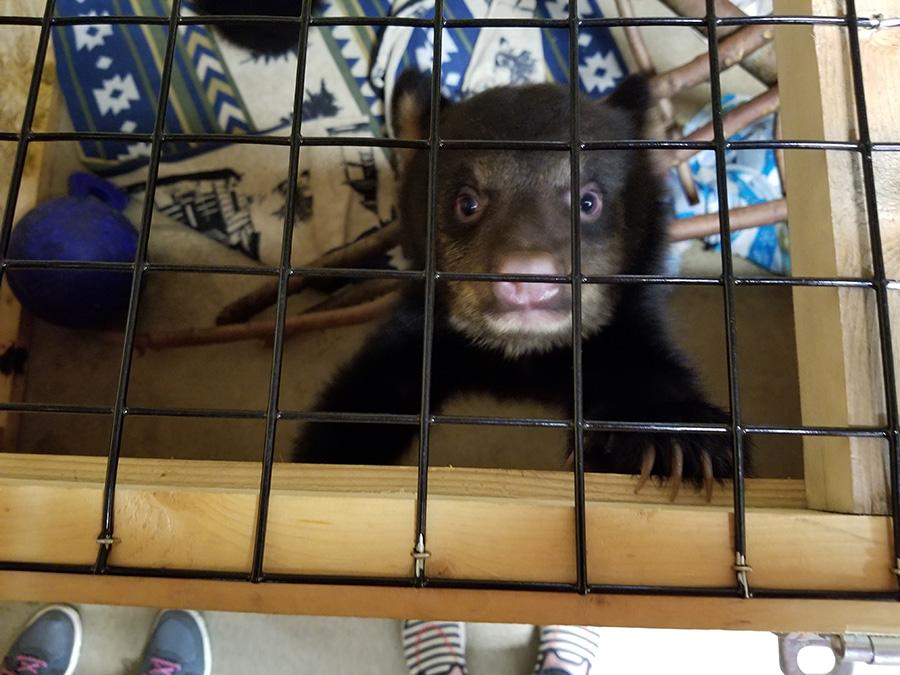
In our last newsletter, we announced our Year of the Bear campaign to educate people about bears - including their intelligence, agility, and complex behaviors - and to bring attention to their exploitation in captivity. Bears are often used for entertainment purposes, such as circus-like shows, roadside zoos (right), and other attractions.
Here are five facts about bears in North America:
-
Bears are among the most intelligent land animals in North America. Their intelligence compares with that of higher nonhuman primates.
-
Bears have excellent memory skills. They create mental maps of where and when to find preferred foods. They can remember the location of food sources for years and will repeatedly return to those areas.
-
They are problem solvers. This ability enables them to break into “bear-proof” trash cans, open door latches, and manipulate other barriers to obtain food.
-
Bears use tools. Grizzly bears have been observed using rocks to rub their faces, employing branches as back scratchers, and moving and manipulating a tree stump to access out-of-reach food.
-
Bears use vocalizations, body language, and scent-marking to express their state of mind. For example, cubs make motor-like sounds as they nurse (similar to a cat’s purr). Adult bears make this sound when they are especially comfortable or eating a special treat.
Despite their intelligence and behavioral complexity, bears are exploited for “entertainment”, held in dismal captive conditions, and used for cruel cub petting operations where people pay to hold and take photos with traumatized babies torn from their mothers.
Visit our Take the Pledge for Bears page where you’ll find information about bears in captivity and how you can help them. You can also sign our petition to stop bear cub petting operations that exploit baby bears for profit.
| | |
|
PAWS Collaborates with Harvard
Animal Law Clinic to Protect Elephants
| |
|
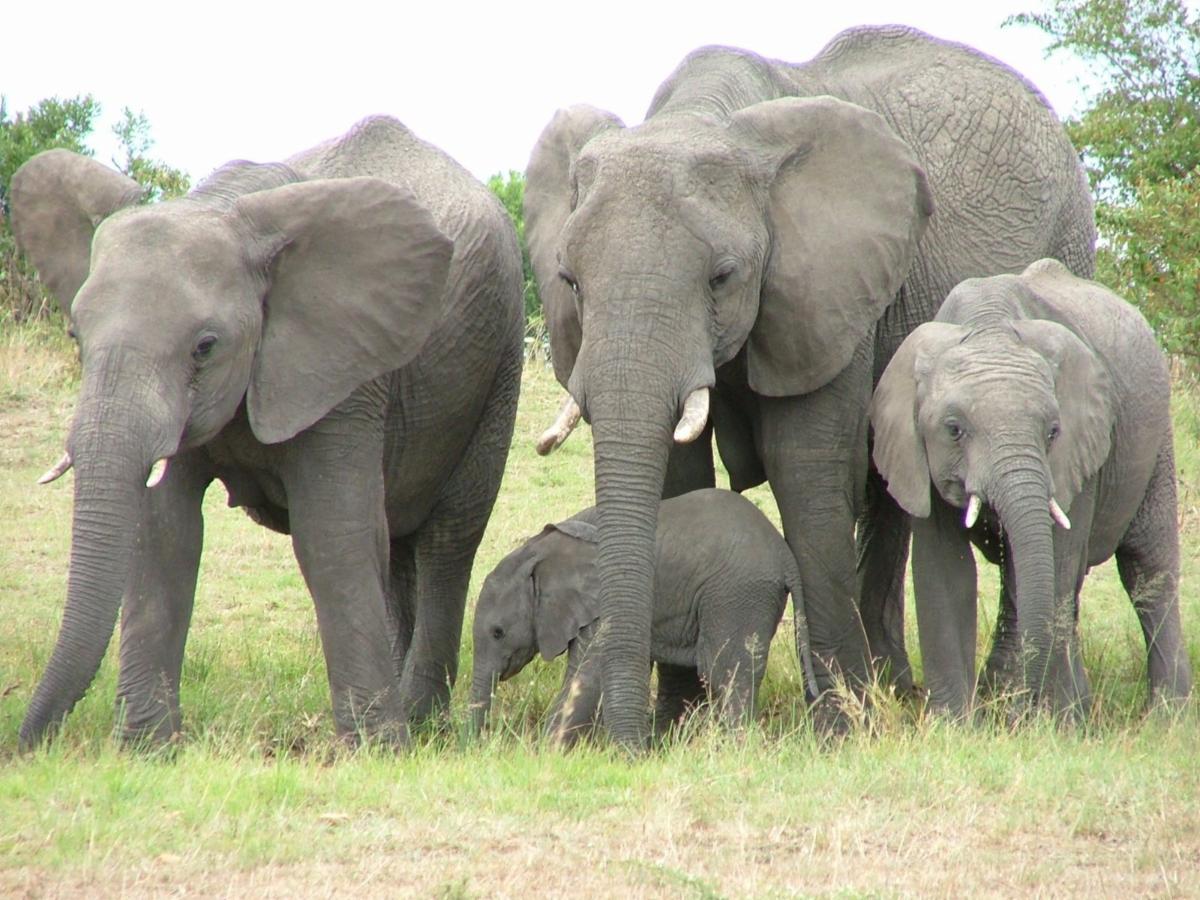
PAWS and Harvard Law School’s Animal Law and Policy Clinic jointly submitted comprehensive comments in response to the U.S. Fish & Wildlife Service’s (FWS) proposal to revise a special rule governing trade in live African elephants under the Endangered Species Act.
Pictured: Wild African elephant family
The comments make a strong case against the importation of wild caught African elephants, combining incisive legal arguments with information on the enormity of elephants’ biological and behavioral needs, problems associated with keeping them in captivity, and the brutal nature of elephant captures and transports to faraway countries. At the same time, we supported proposed rules that would benefit captive elephants already in the U.S. and made recommendations for strengthening them.
Also described are the detrimental effects of allowing the import of elephant parts, products, and grisly trophies. In fact, the U.S. plays a large role in the exploitation of wild elephants, with zoos importing elephants for display and American trophy hunters killing elephants for “sport.”
African elephant populations are in sharp decline and it is time that the exploitation and killing of these iconic animals comes to an end. We hope the comments will convince the FWS to act in the best interests of elephants.
Read more about the comments in this blog.
The comments were authored by PAWS Director of Science, Research, and Advocacy Catherine Doyle, and Harvard Animal Law & Policy Clinic Clinical Instructor Rachel Mathews, Clinical Fellow Rebecca Garverman, and student Jeremiah Scanlan, JD ’24.
The Animal Law & Policy Clinic was launched in 2019 to provide students with direct, hands-on training in legal advocacy on behalf of animals. It is led by Clinic Director and Visiting Assistant Clinical Professor Katherine Meyer along with Clinical Instructor Rachel Mathews and Clinical Fellow Rebecca Garverman. Learn more about the Clinic here.
Click here to read the submitted comments.
| |
|
THANK YOU!
March Amazon Wish List Donors:
| |
Joleene M. Ladyman: one 5 lb. bag of Missing Link Skin and Coat. Pamela Olsen: one bottle of Emcelle Tocopherol. Lynn Bruser: two 3 lb. bags of bazil nuts; one 2 lb. bag of pecans; two 1 lb. bags of dried blueberries; one 5 lb. bag of cashews. Anonymous Donors: three 8 oz. bottles of EicosaDerm; three bottles of AminAvast, 60#; one bottle of CosequinDS, 132#. | |
|
We have chosen specific items that are needed at the sanctuary, which you can purchase directly from Amazon. We have an ongoing need for many of the products listed. Click here to review the items and donate.
| |
PAWS provides lifetime care to the tigers, bears, elephants, and other animals who call our sanctuary home. Your kind support provides expert daily care, necessary veterinary treatments, and specialized nutritional support, all tailored to the individual needs of each animal. Your gifts make this excellent care possible. | |
There are many ways you can help PAWS animals: | |
|
Donate. Although we work closely with regulatory agencies on animal rescues, PAWS receives no government funding and must rely on your donations to continue our work. When you make a contribution for the wild animals at PAWS, it is unlike any other. How many people can say they’ve gifted elephants with spacious rolling hills and a more natural life, or made a present of a lush, tree-filled habitat for a tiger? Or given a bear a new chance at life? And you ensure we are prepared for the next wild animal in dire need of rescue. Three ways to give and every donation matters.
| |
|
PAWS is proud of its 4-star rating with Charity Navigator - the highest rating possible. We are part of an elite group of charities with an "exceptional" designation (at least four consecutive years of 4-star ratings), meaning that your gift will have the greatest impact possible. CharityWatch gives PAWS an "A" rating.
| |
|
Give to one of PAWS' ongoing MightyCause campaigns: Our "Dollars for Dirt" or "Give BIG for PAWS' Elephants" fundraisers for the elephants, or our "Help Captive Tigers" fundraiser to benefit the rescued tigers living at our ARK 2000 sanctuary.
Adopt A PAWS Animal. If you would like to help our animals, one of the best ways is to become an "adoptive parent," or give a PAWS adoption as a gift to an animal lover in your life. PAWS adoptions are symbolic adoptions only. No animal will be sent! Learn more
PAWS Partnerships. Help us change the life of a victim of captivity by becoming a PAWS Partner. PAWS partnerships help support our sanctuary operations and the day-to-day care of the animals. Learn more
Estates/Planned Giving. You can help us make sure captive wildlife in need of shelter will always have PAWS' sanctuary to call home! Learn more
Corporate Donations and Matching Fund Programs. Learn more about what is needed.
| |
|
Purchase PAWS apparel and merchandise. Clothing for adults, kids, toddlers and infants, as well as other fun merchandise like notecards and coffee mugs - available from our CafePress online gift shop.
PAWS Amazon Wish List. We have chosen specific items that are needed at the sanctuary, which you can purchase directly from Amazon. Many items are ongoing. The list is always current! View here.
EBAY Giving Works. Visit PAWS eBay page to view our current listings and to bid. List your items on EBAY and choose PAWS as your charity. Donate a percentage of each sale to the animals. Visit our EBAY charity listing page here. Start selling or buying!
| |
Shop online through IGive and raise money for PAWS! Up to 26% of your purchase - at more than 1,600 retailers - can be donated to PAWS. Learn more
| | | | |