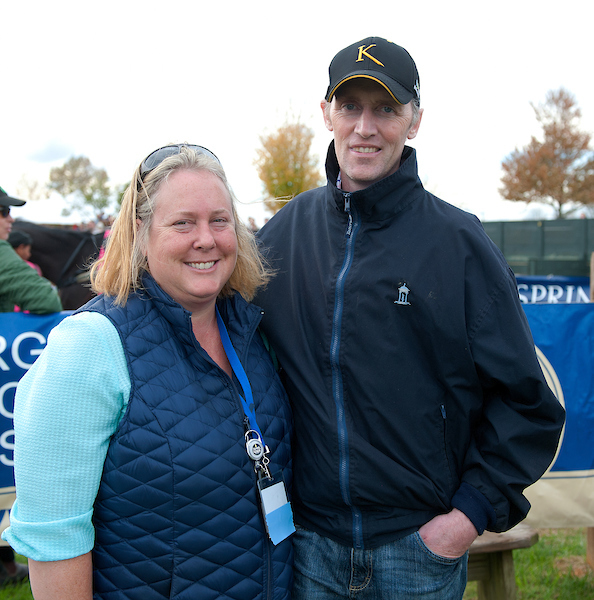
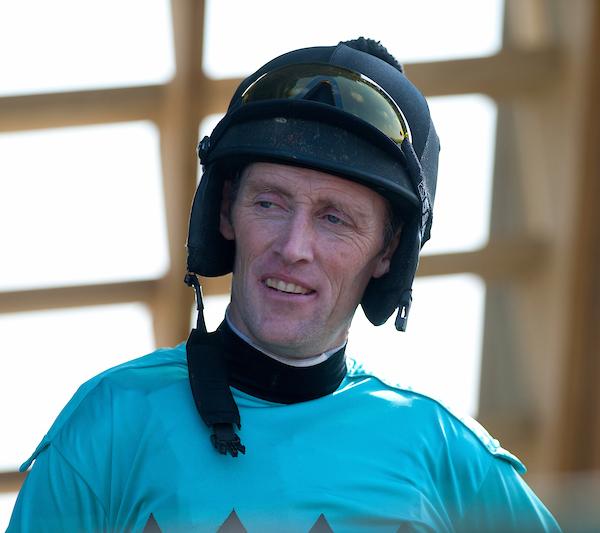
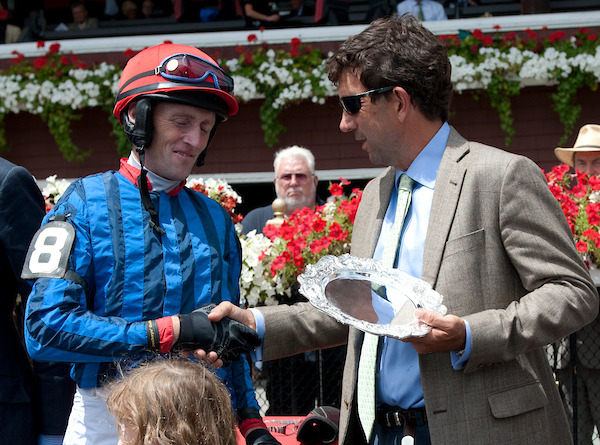
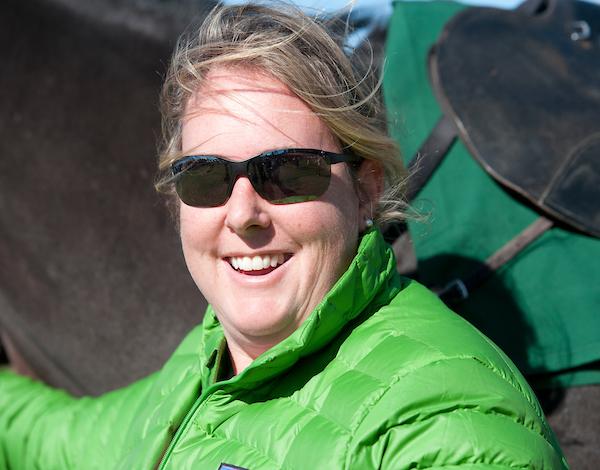
Meet the dream team: Five-time champion jockey Paddy Young, and standout trainer and syndicate-specialist Leslie Falini Young |
|
Things happen fast in horse racing, faster still when you’re talking about the dynamic duo of Leslie and Paddy Young. On this eve of the 90th Radnor Hunt Races, hear about their plans for Saturday, their opposing opinions about son Rory’s race aspirations, and both their memories of everything that’s happened in a tumultuous four years since Paddy Young was knocked off track from joining U.S. jump racing’s most elite corps.
Everybody agrees – It’s been a wild ride.
|
|
Paddy Young doesn’t remember much about the racing fall that could have taken his life four years ago almost to the day, but he has little mental snapshots from the 2017 Radnor meet.
Wife Leslie says it seems sometimes like he can conjure memories of running down to, up and over the 16th fence in the timber stake that took him from the edge of breaking 200 sanctioned wins to breaking his neck.
Other days, there's no recall at all.
"That's the new normal," says the Unionville, Pennsylvania-based trainer. "It's where we are right now. We were a team then, we're a team now, but it's all different.
"It's been a long, hard road," Leslie adds, stressing that the steeplechase community - friends, family, even strangers - showed their true colors in the weeks, months and years since the traumatic brain injury that took Paddy Young from five-time champion to practically helpless. He was in the hospital for months, in therapy for years and even now requires help and supervision because his decision-making process remains compromised.
Just a few weeks ago, Paddy went out for a walk, got lost and caused an hours-long manhunt before he was discovered strolling along a quiet Chester County back road.
Leslie, his kids and their farm life provide the stable touchstones that give him a reference point. "We're all in this together," she says.
Trace the winding paths of Paddy and Leslie Young to find out how he "decided to try - on a flyer" the American steeplechase circuit 18 years ago - and how he just never left, and how she "just could not resist" jumping back in to the jump game after college.
|
|
How’d we get here: Paddy Young |
|
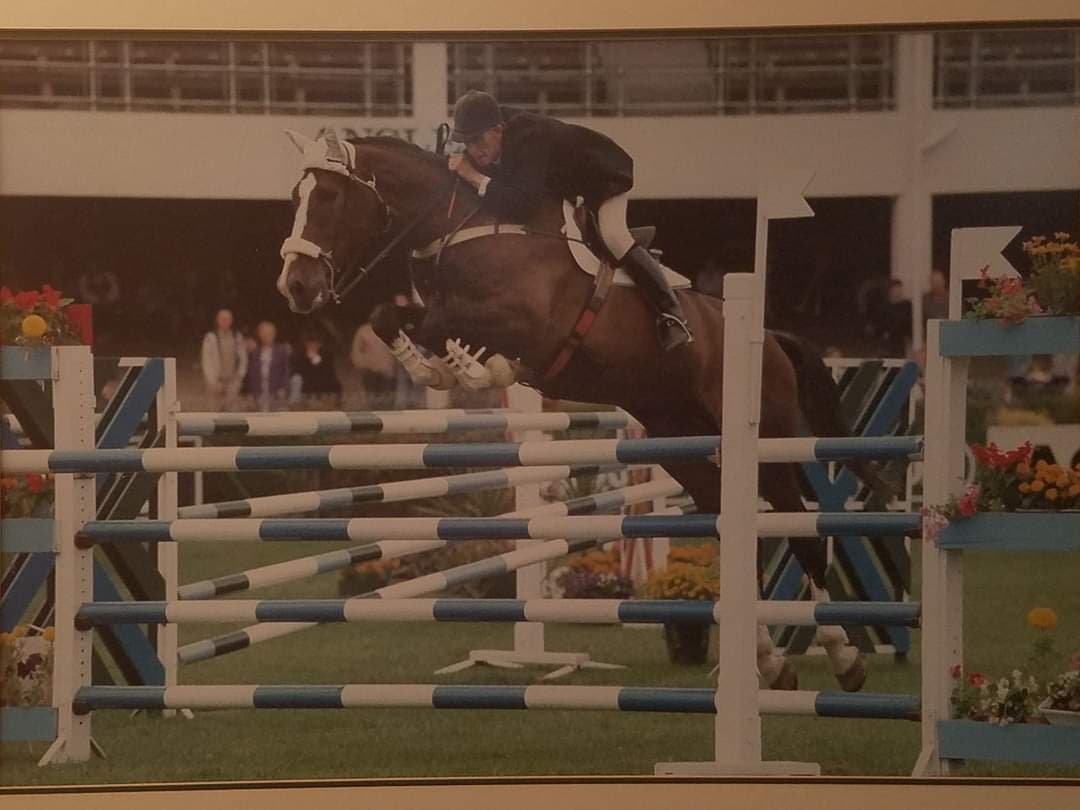
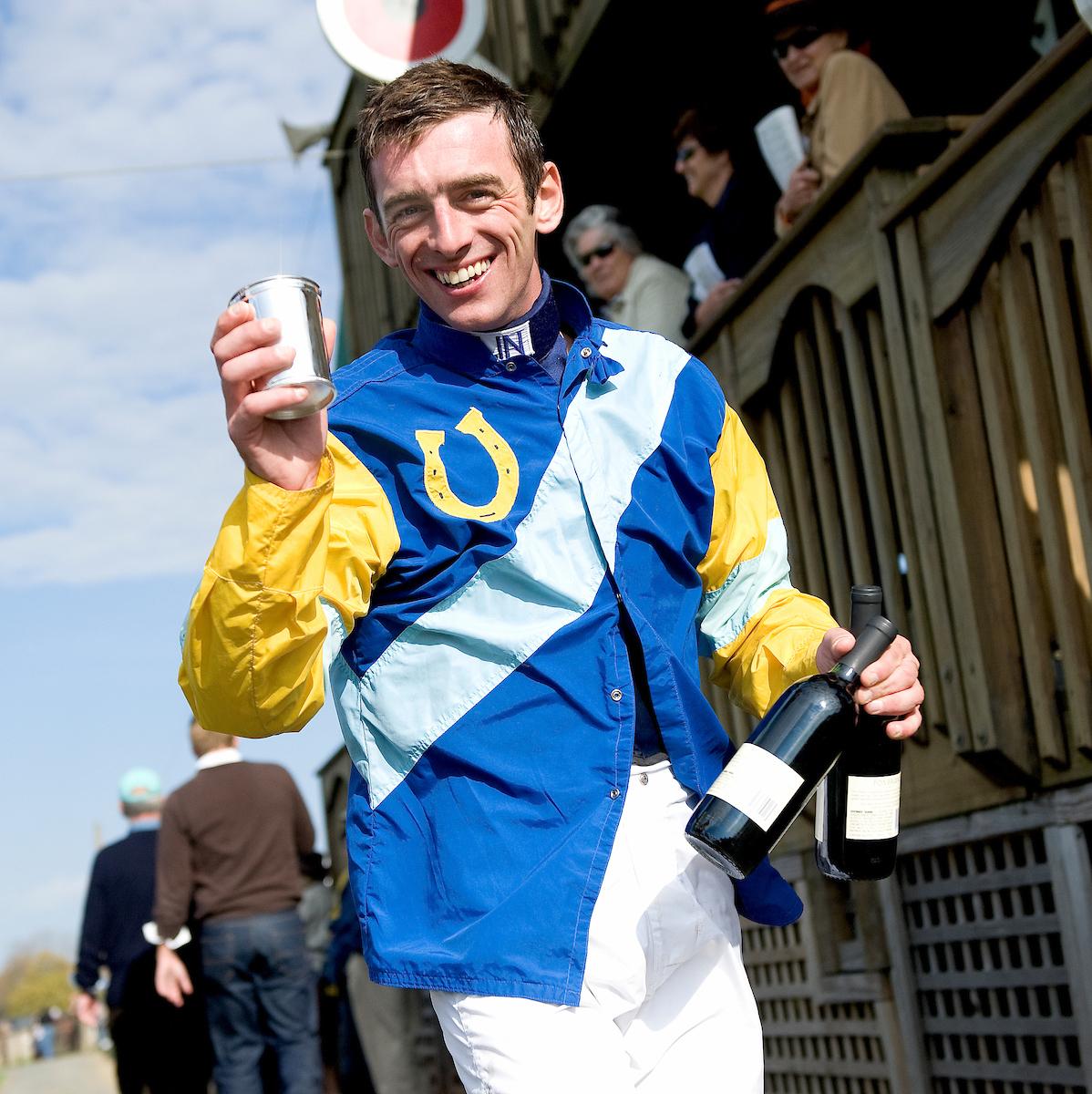
Born the son of farmer and permit-holder Leo Young, Paddy Young, 45, was groomed early for a career in the saddle. (Tod Marks photo, left) There were good horses to ride and thousands of open acres to explore around the family farm in Banbridge, County Down, southwest of Belfast in Northern Ireland.
“My biggest influence in my career was my dad, as I admired his horsemanship and he got me started in racing,” Young told an Irish racing paper. English trainer “Henrietta Knight helped me lots schooling a lot of her horses. Mick Fitzgerald was my idol.”
|
|
Paddy Young's father, Leo
Photo courtesy of Leslie Young
|
|
|
Though he could have gone into hunting or show jumping, Paddy took his dad’s lead, riding family horses as an amateur. He moved to Nicky Henderson’s in Lambourn, England, then spent five formative years with Knight in Oxfordshire near Wantage.
There, he schooled hundreds, maybe thousands, of horses, including future Cheltenham Gold Cup star Best Mate. His brother, Jeremy, ended up in England, too, assistant to trainer Paul Nicholls before setting up his own yard in Somerset.
|
|
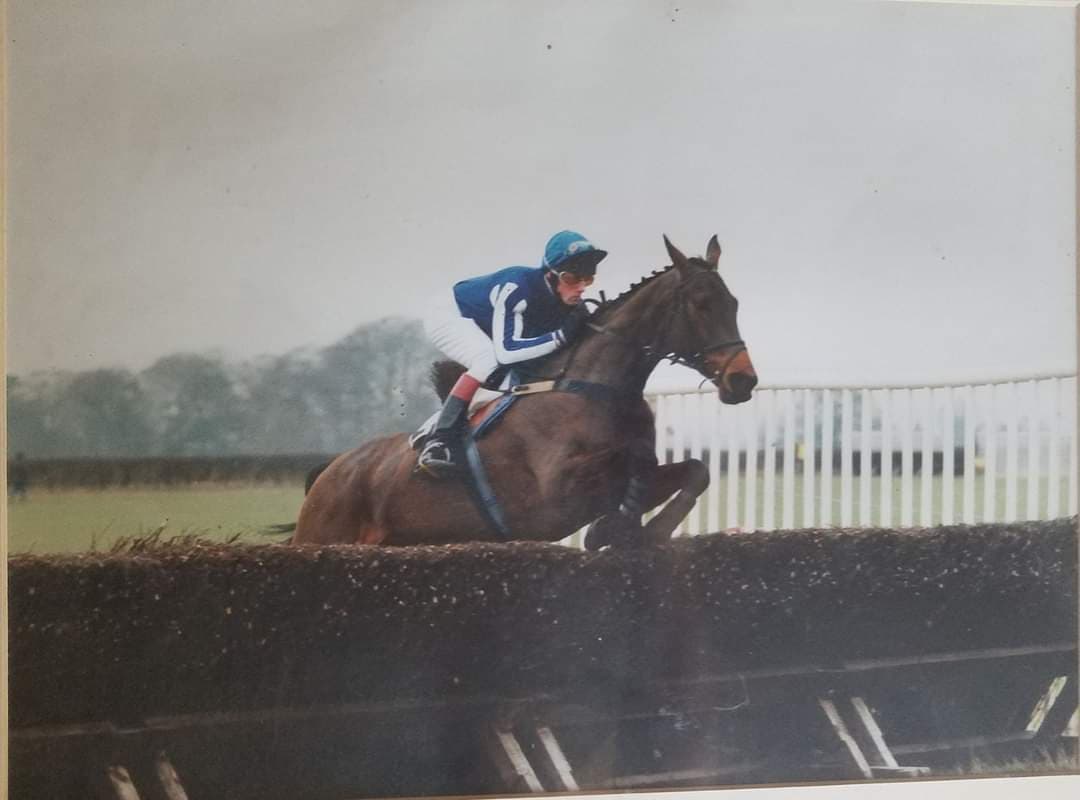
Paddy Young racing in Ireland
Photo courtesy of Leslie Young
|
|
|
Young first decided to try a foray on the American circuit on a whim, saying he was "a muppet when I came here" in 2003. He told This Is Horse Racing's Sean Clancy that "if I never came here? I'd probably be riding hunters, maybe schooling bumpers, pair of welly boots on, with no hat cover, plodding around the fields, riding leg long, whatever. It was the best move I ever made."
He landed at Jack Fisher's barn in Maryland and never looked back.
“When I first come over, it was to have some fun, ride as an amateur, maybe ride the Hunt Cup and call it quits, that was it,” Young told This Is Horse Racing. “Being champion jockey or anything like that was never there. I kept falling into good rides, it built more on luck than anything.
|
|
“Being in the right place and things opened. I owe Jack a lot, nobody else would have given me the opportunity he gave me, he gave a kid a chance.” (Tod Marks photo, left)
Young’s career took off; he rode for the sport’s leading lights – Hall of Fame trainer Jonathan Sheppard, Sanna Neilson, Neil Morris, Doug Fout, wife Leslie and dozens of others that eventually led to five rider titles.
With a notably quiet manner with people as well as horses, Paddy became a popular fixture on the American jump scene, a skillful, soft-spoken rider. He seemed shy until he got to know you, friends say, but, eventually, the Irish craic would emerge. “He was always very witty, with a great sense of humor,” recalls Brian Crowley, who rode the American circuit for several seasons and became one of Paddy’s best friends in and out of season. “He was rarely in a bad (mood.) He was always positive.”
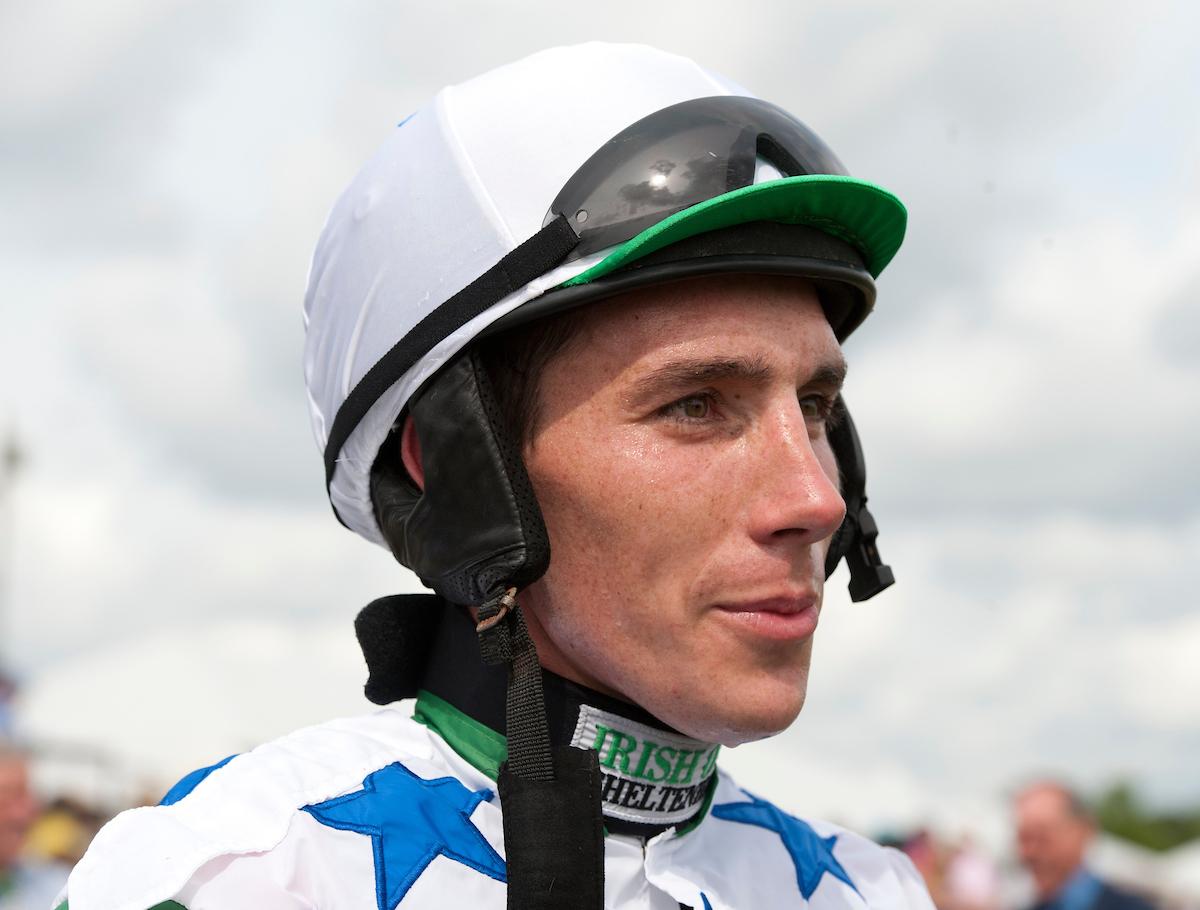
Paddy Young racked up five National Steeplechase Association rider titles - 2009, 2010, 2011, 2013 and 2015. He was second twice. He was, in the words of fellow rider Willie McCarthy, "simply the best."
|
|
How’d we get here: Leslie Falini Young |
|
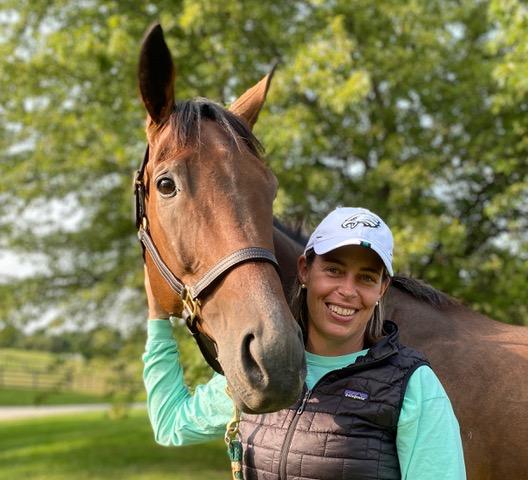
Leslie, 48, was raised in West Chester, Pennsylvania. (Tod Marks photo, left) Father Dominick Falini and mother Peggy were both school teachers – her mother taught phys ed, her dad taught U.S. history. Both were avid riders, hunting with the old Brandywine Hounds (disbanded in 2003). Dominick rode in point-to-points, and both Falinis supported young Leslie’s pony club, foxhunting and pony racing aspirations.
With the Cheshire Pony Club, Leslie won the Eastern Pennsylvania Region eventing rally – teaming with C3 contemporaries Braxton Jones and Catherine Fisher for team gold. She excelled at pony club games, and was nationally ranked in girls tetrathlon.
|
|
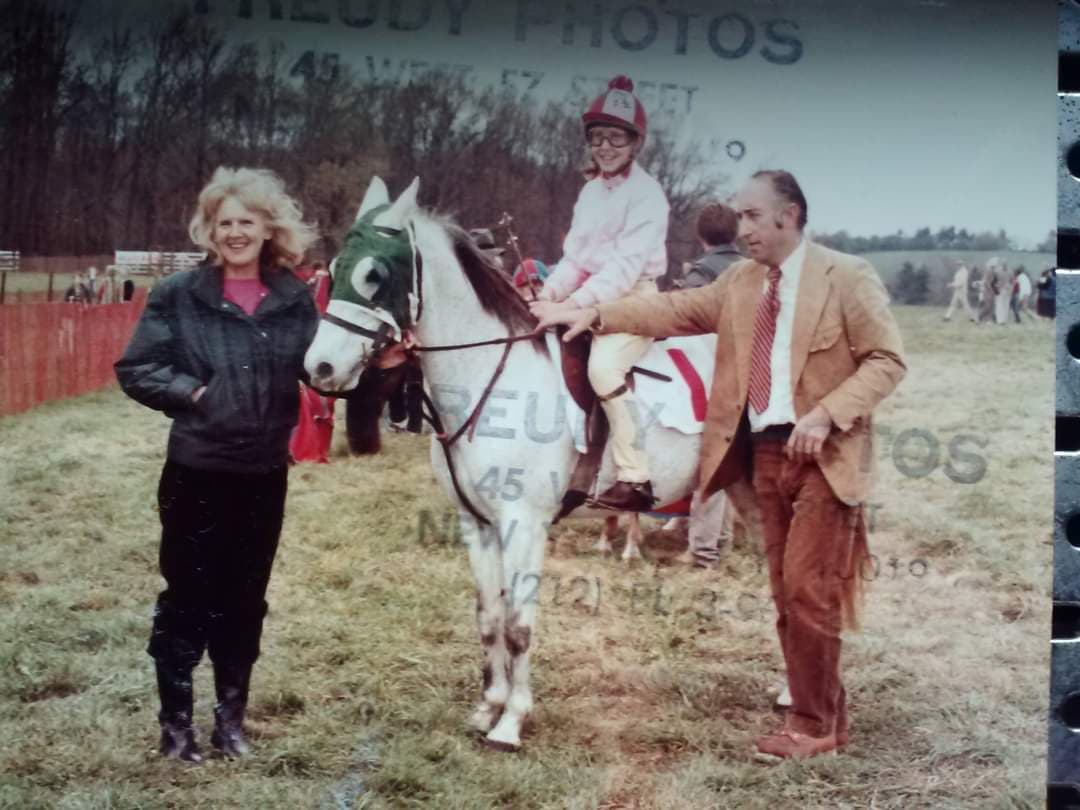
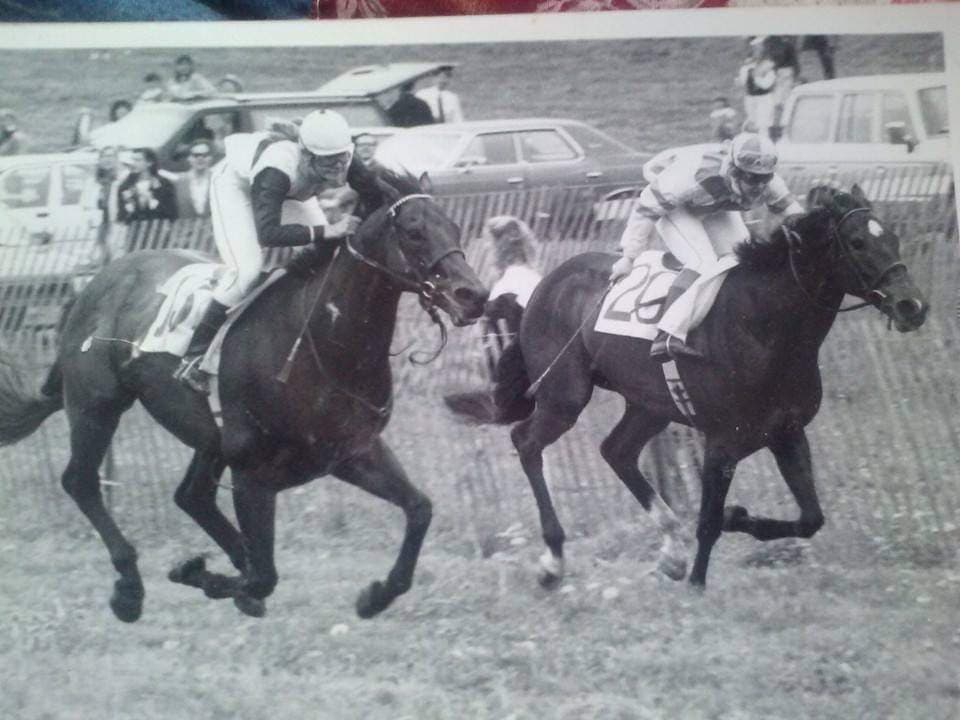
On the DelMarVa pony race circuit, she was “all out for blood” competing against the likes of Billy Meister, Ricky Hendriks and more. She was competitive and won with ponies small and large, claiming year-end titles with standout stars Winky, Phantom, Taboo and Jay. |
|
Leslie and her dad with small pony phenom, Phantom.
Freudy photo courtesy of Leslie Young
|
|
Helen Pitts on Rushwin (L) and Leslie on Posh By Gosh (R) in the Grand National junior race
Douglas Lees photo courtesy of Leslie Young
|
|
She amped it up, working high school summers for Hall of Fame neighbor Jonathan Sheppard, and galloped for Jack Fisher – newly inducted into the Hall of Fame – on weekends while she was a student at Oldfields.
Horses weren’t her only passion – Leslie excelled at lacrosse and field hockey, making All-Stars and All-American for both. And she figured she’d left the horse world behind, Leslie recalls, graduating Virginia’s Lynchburg College in 1995 with a degree in health science and athletic training. She worked in physical therapy clinic outside Philly and coached the Cardinal O’Hara girls lacrosse team to a championship season.
Horses weren’t part of the picture.
“So, I’m thinking horses are history, but then I went to the Brandywine Point-to-Point, and the party after, and realized how much I missed it,” Leslie says with a laugh. “I thought, ‘ugh'."
She got a job galloping for Sheppard, lived in the infamous 704 house, and dated then married jockey Roger Horgan in 2000. Leslie coached field hockey at Oldfields while Horgan worked for Tom Voss, and she got certified in equine massage, at last tying her degree to the horse world.
They based at Gulfstream Park with Sheppard in the winters, and Horgan worked for flat trainer Kenny McPeek.
“In all fairness, we got along great, but, God, you know that gypsy lifestyle is hard,” Leslie says of their breakup a few years later, something she reflects, today, was inevitable. “We just had different ideas.”
|
|
Leslie returned to Pennsylvania, "not really sure what" she'd do next. She became friends with Paddy Young, an Irish jump rider who'd joined the U.S. jockey colony in 2003. The match was great, their worlds and their personalities meshed, and the rest is history.
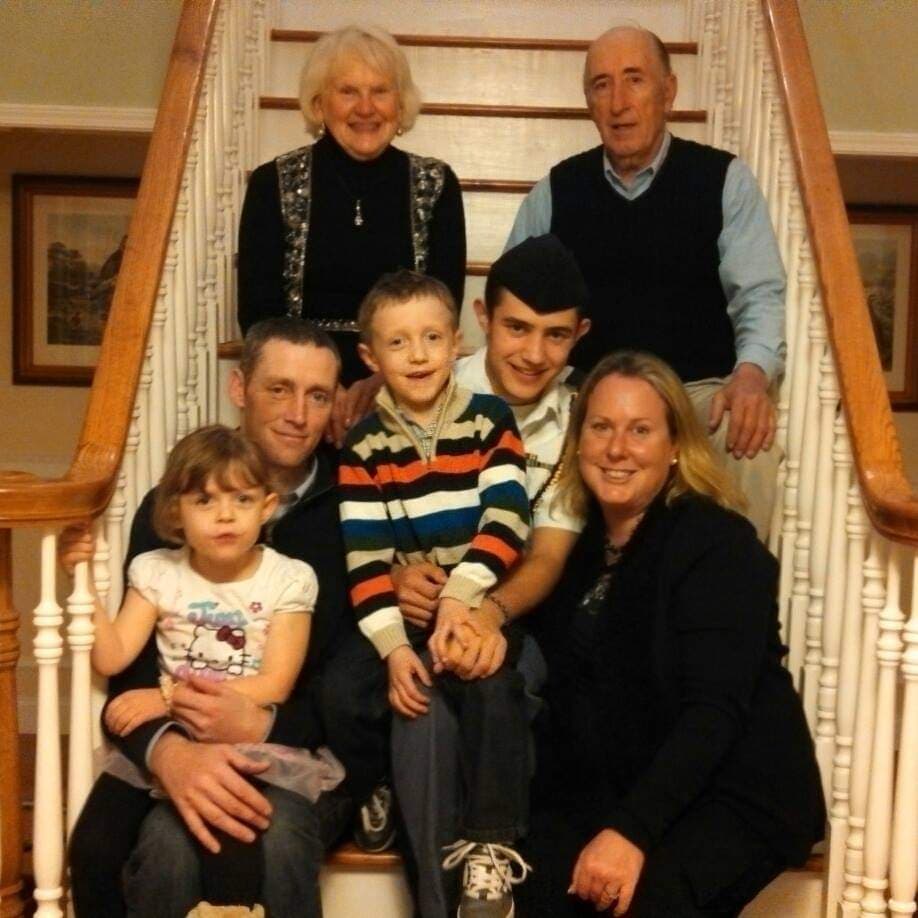
They married in 2007, the same year Leslie unexpectedly launched her training career. Son Rory was born in 2008, daughter Cece in 2009. Paddy’s older son, Tom, also moved to the U.S. (photo of the Young family courtesy of Leslie Young)
Like so many things, the giant step from gallop girl to trainer began from a backstretch conversation. They were at Keeneland for the Royal Chase in April, 2007 (Paddy was sixth on Chivite for owner Calvin Houghland and trainer Bruce Miller.) Leslie ran into an old friend, Silverton Hill trainer Darrin Miller, on the backside. “He said he had a horse for me, out of conditions on the flat but he thought would go jumping.”
|
|
She fasttracked her trainers’ license and saddled her first runner – and winner, at Saratoga that summer. Silverton’s Torlundy was her first stakes starter – and winner, in 2009, and the stats piled up from there. (Tod Marks photo of Torlundy and Paddy Young finishing second in the 2009 Appleton Hurdle Stakes at Far Hills)
She and Paddy made a great team, she says, naturally working towards common goals – trainer and rider, wife and husband, mother and father. “It was great,” Leslie says.
Until one day it wasn’t.
|
|
Traumatic Brain Injury – horse racing is as dangerous as full-contact football, scientists report |
Concussion occurs when the brain shifts within the skull. No matter how good the helmet is, it cannot stop this brain sloshing effect. Therefore, injury management is crucial.
As in many horse injuries, time is sometimes the only thing that allows full recovery.
It’s not easy to determine correlation vs. causation with regards to cognitive issues after head trauma, experts say. But consider five-time U.S. champion jump rider Paddy Young, hurt in a May, 2017 fall and who believes he’s “forever changed” since the spill: either way, the hard blow to his head has caused ongoing issues.
|
Paddy Young riding Mercoeur to victory just one race before his fall in May 2017. ©Tod Marks
|
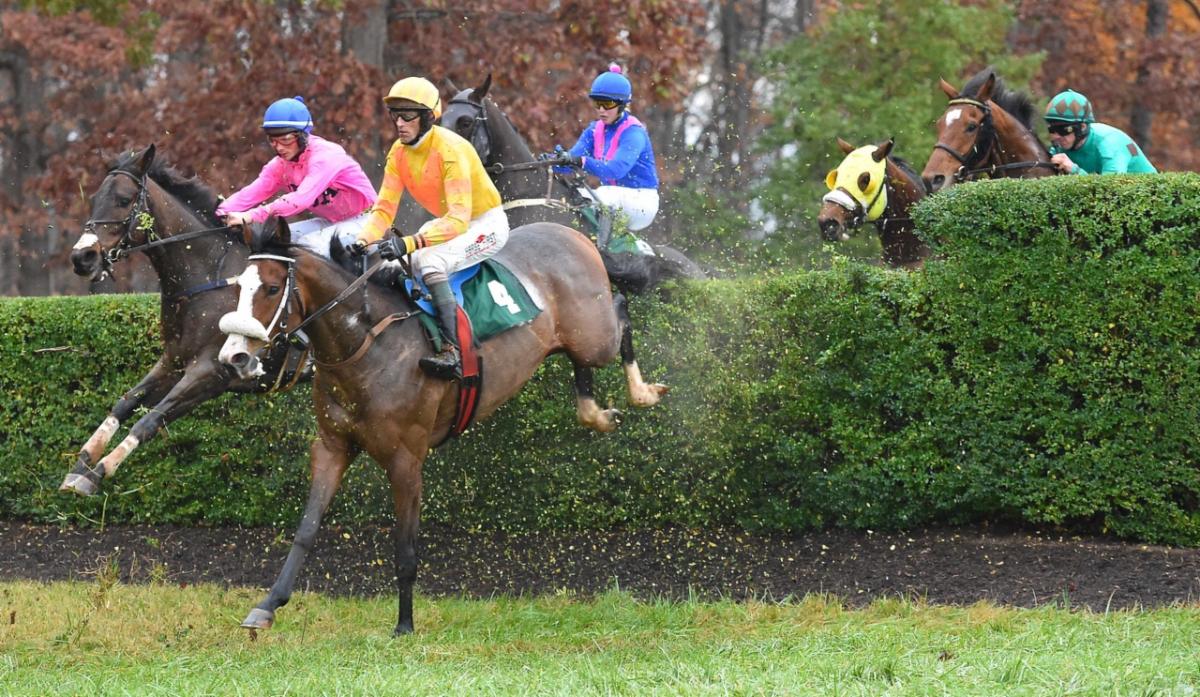
Global research shows horse racing has the highest concussion rate of any sport, surpassing even American football. Little wonder, given that the athletes are atop 1,200-pound animals traveling 40 miles per hour and can be thrown without warning.
Chronic traumatic encephalopathy is a relatively newly identified and poorly understood medical phenomenon related to Traumatic Brain Injury. CTE is characterized by atrophy in the brain and a loss of the tau protein that’s been tied to Alzheimer's. Sufferers report dramatic mood shifts, cognition problems and loss of coordination.
“Although it is clear that repetitive trauma can result in long-term neurological difficulty in athletes, the issue of why some athletes … experience difficulty while others do not is unknown,” Dr. Mark Lovell, an early researcher of CTE, told the Paulick Report. “Like most diseases (cancer, heart disease, etc.), multiple factors are involved, including a mixture of genetic and environmental factors. In other words, it is likely that factors other than the number of concussions are involved.”
It's unknown how many hits it takes to cause CTE, although research suggests a series of non-concussive blows to the head can mimic the disruption of a single, more violent trauma.
To complicate matters, CTE can only be confirmed with certainty after a patient is actually dead.
“Symptoms such as increased irritability, intolerance, impatience and mood swings can be related to the impact of the injury on the brain, but it can also be a reaction to difficulties in managing stimulation and daily activities in the early days after the injury,” a recent study from the Ontario Neurotrauma Foundation reported.
Scientists at Boston University identified common symptoms of brain injury are cognitive issues like short-term memory loss, and emotional and behavioral issues like anxiety or impulsivity.
"We're further along than we were," medical director of the Concussion Legacy Foundation and one of the foremost experts on head trauma, Robert Cantu, was quoted in a recent USA Today article. "But we're not where we want to be."
Medical researchers believe the brain is more vulnerable to further trauma while recovering from a concussion, Cantu said, similar to the “punch-drunk” syndrome of boxers and mixed martial arts fighters. This underlines the importance of not returning to the saddle too soon.
|
CTE researcher Lovell helped develop the Immediate Post-Concussion Assessment and Cognitive Testing system – ImPACT – to address this issue. The test, which can be taken on an iPad or laptop, measures an athlete's memory, reaction time and processing speed to gauge neurological function.
Lovell suggests all athletes take a baseline test before hitting the field or track to establish their 'normal' performance on the test, and then be tested following a suspected concussion to determine when brain function has returned to normal.
|
|
How’d we get here: A mistake, a measure of courage and the gauge of true friendship |
A third the way through the 2017 season, Leslie was perched in the top 10 on the trainers’ table headed into Radnor meet. Paddy’s season in the saddle had started slow, but he’d won at Winterthur and liked his chances on all four of his mounts that May 20. "Honestly, I thought there was a real chance Paddy was going to win with all of them,” Leslie says, three from their barn and one for Sanna Neilson. With 197 wins coming into the day, he might very well make the elite 200 Club, with 200 sanctioned wins joining just nine others in history to make that mark.
Mercouer won the opener, pushing Paddy to 198 lifetime wins under rules and putting 200 tantalizingly close.
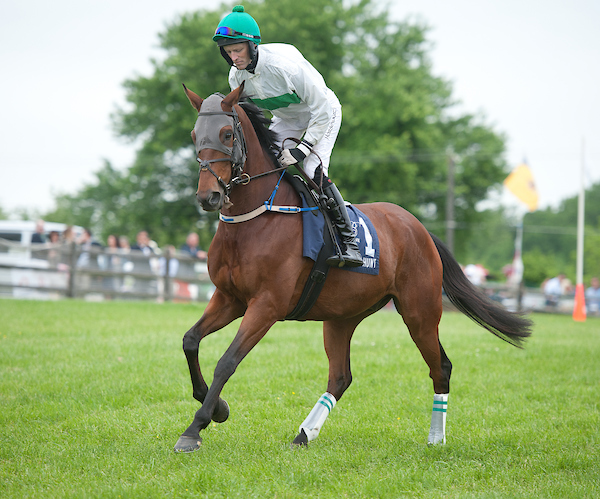
Kings Apollo had won for Paddy at Winterthur two weeks earlier. The horse was in good form coming into the Radnor Hunt Cup, co-feature on the packed card.
Paddy put Kings Apollo in his familiar stalking spot – the champ was famous for his timing. Second time around, he moved Kings Apollo even with pacesetter Lemony Bay to tee up a neatly executed stretch run. He hoped it would be win no. 199.
|
Paddy and Kings Apollo warming up for the Radnor Hunt Cup. ©Tod Marks
|
The pace quickened with a half-mile to run, Kings Apollo getting tight to the 16th, hitting the top rail and crumpling on landing.
Paddy bounced across the turf, his brand new A.P. McCoy jockey skull cap striking the ground first. He landed clear but was struck by the hoof of a trailing horse as it leapt to avoid the flailing legs of Kings Apollo.
Leslie was watching from the barn on the hill as she readying Jamarjo for the next. She recalls seeing the horse’s hindquarters flip up as he landed awkwardly. “I saw his back feet flick. Not good.”
But she’d been there before – her husband taking what looked like a serious fall but getting up, shaking it off, getting back on.
“I thought Paddy would get up. He always gets up. He’s an iron man.
“I got down there and (Kings Apollo’s trainer) Sanna Neilson is saying, ‘Les, it’s not good.’ I went, like, numb. I had three more to saddle, and they’re taking him away. Sanna’s trying to make me go with him, but I knew Paddy would be so mad if I scratched the horses we’d worked so hard to get there.
“I found Graham Watters and told him they’re his rides, and raced to the hospital.”
While she drove, Jamarjo won the hurdle stake; a half-hour later, Invocation won the ratings.
|
Invocation and Graham Watters after winning the ratings handicap hurdle at Radnor.
|
As it turned out, Paddy was almost sure to have made the 200 he so dearly coveted. But in a split-second, it went from half-expecting a big payoff to fighting for his life.
When she arrived at Paoli Medical Center, doctors told her Paddy had fractured his skull and broken the C7 vertebra. He seemed to have feeling in his hands and feet, but they’d removed a piece of his skull to relieve pressure and take pooling blood and fluid from his brain.
“It’s not easy. You feel helpless,” Leslie recalls the next weeks passing in a blur.
Outside the hospital and around the world, the steeplechase community jumped into action. Jockey Willie McCarthy launched a Go Fund Me page to offset expenses not covered by health insurance and the NSA rider policy. Friends scheduled to help run the barn. Others lined up child care and cooking.
Friends, fans – even strangers, donated money, time and effort to help the popular champion and his family weather this worst kind of storm.
It’s something that haunts every rider of every caliber, any athlete in any extreme sport – that you’ll get hurt and die.
Or get hurt and not die.
It was bad.
|
|
The steeplechase world circled the wagons, sending a powerful message to the Youngs.
“It was very humbling,” Leslie says. “We found out exactly who our real friends were. To see how many people care . . . I don’t think he realized that many people did.”
With hard work and determination that surprised no one, the champ began to pull through, began to improve. Doctors returned the piece of skull to his head, and physical, speech and occupational specialists put him through sometimes painful therapy to regain coordination and strength. Much of his brain function returned – though not all of his cognitive judgment did. After months in rehab, Paddy was able to return home and a new normal.
He can’t drive, can’t ride, and he has to be super careful around the horses. Sometimes the champ gets confused and frustrated. But, more often, he’s just happy and sort of quiet. He likes to walk, and loves being in the barn.
“I’m really happy,” echoes Paddy, a little weak-voiced and slightly slurred. “I’m doing my best. Doing my best.” He repeats himself often, not really realizing it becomes sort of a sing-song refrain. The three words sound like a sacred mantra.
|
|
“The horse fell over. I got kicked in the head.” He uses the most simple language to answer “what happened” to the horse in the timber stake that day because that’s what traumatic brain injury does. Paddy knows what happened, maybe deep down he even understands the implications of all that’s transpired since, but he finds it impossible to articulate. Doctors liken his communication level to that of a 4-year-old. Who knows, Leslie maintains, because sometimes he’s simple yet clear and concise. Other times it goes south, Paddy spiraling frustrated, petulant and sullen.
When the clouds pass, he expresses gratitude for the gift of the present. “I’m here now. I’m here to talk about it,” Paddy says, clipped sentences brushing aside the past for what’s in front of him in the moment.
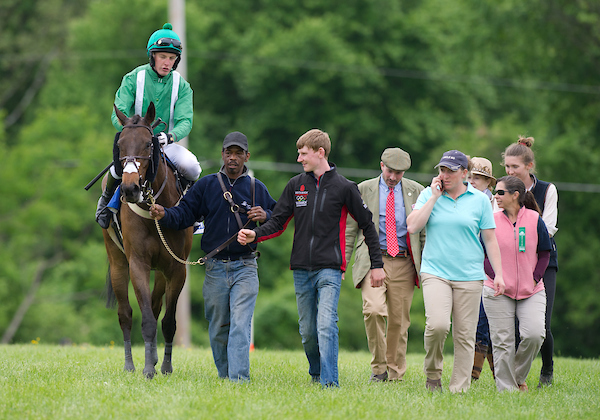
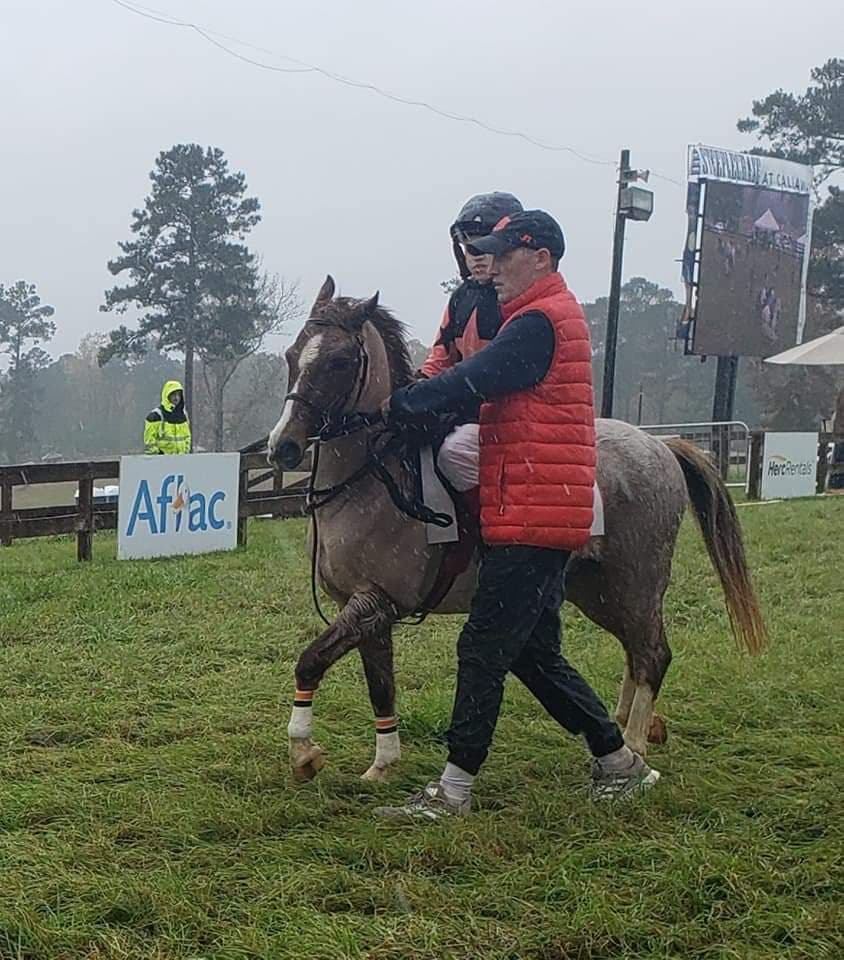
As for the future, Paddy thinks in days, not of a more grand scheme. Saturday, he’ll lead up – with help – maiden Cause For Pardon for Leslie to saddle in the first. “Paddy’s our good luck charm,” Leslie says, explaining that the Ballybristol runner won on the turf at Warrenton point-to-point in March with the champ on the shank. “We don’t want to break the spell.”
“I’ll do my best. Do my best,” Paddy refrains.
|
|
Paddy with Cause for Pardon and jockey Virginia Korrell in the win photo at the second Warrenton Point to Point.
©Douglas Lees
|
|
|
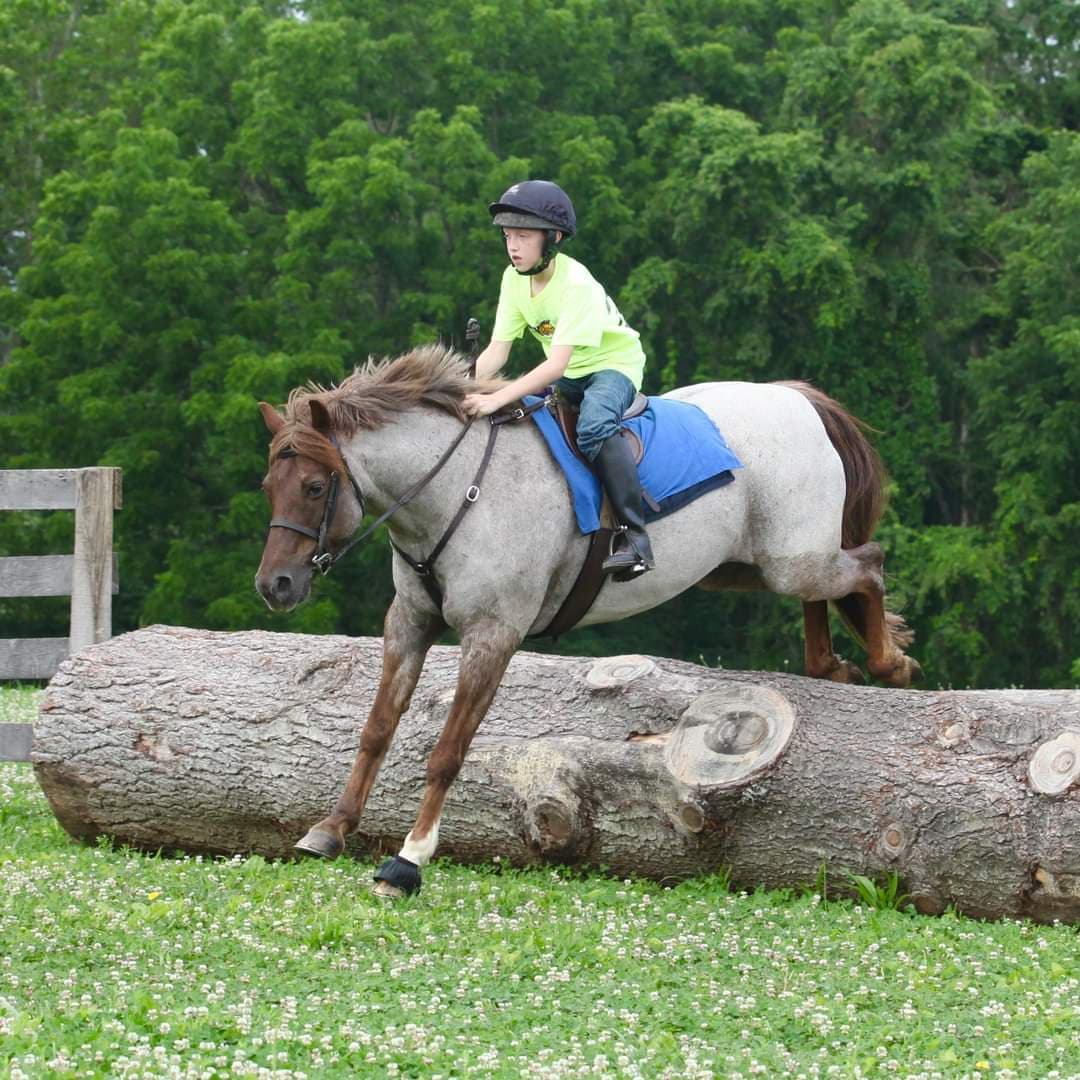
Talk turns to his children, and his voice becomes stronger. This is familiar territory. Oldest son Tom is in pre-vet at Auburn University. Youngest son Rory rides the pony race at Sunday’s Potomac point-to-point, and dad’s proud of both.
“Rory is a great rider,” he says. “His hands are great. He’s a real stylist.”
Leslie gives a little snort and begins to protest.
“Wait, no. No. No, he’s not,” Paddy self-corrects the embellishment of the level of Rory’s polish in the tack. “Not a stylist. Not a stylist. But he’s very relaxed on a horse.
“I get excited.”
|
|
Rory Young and his pony Pinkerton
Photo courtesy of Leslie Young
|
|
|
Leslie is more reserved. “I’m glad he likes it,” she says, fighting a tickle that tightens her throat when she faces her deepest fears for the future. She recognizes it’s at once irrational and empirical to think her son, like her husband, could get seriously hurt. “Knowing how quickly things can change, I hope Rory just keeps playing lacrosse, playing soccer, goes to college, keeps foxhunting.
“But the life of a professional jockey is tough. God, don’t I know how tough.”
|
Paddy leading Rory in the paddock for a pony race. Photo courtesy of Leslie Young |
“I love Leslie, every day and every night,” Paddy intones in a slightly deeper pitch, his voice stronger because he’s sure of his words again. “I’m glad I’m here with her. I’m here for her.” Leslie mists up.
“That’s the Paddy I know. That’s the Paddy I love.”
She says it’s been a roller-coaster ride. As sweet as he sounds, some days the former champ wakes up combative and negative, anxious and confused. “I just have to tell myself, this isn’t Paddy talking,” Leslie says. “It’s something else.
“So many people have been so important to us. (Neighbor, trainer and former jump rider) Willie Dowling has been a huge help, a real rock. He’s made so much time for Paddy. He’s had Paddy come down to Maryland to be cowboys for the day. Paddy has a ball. He loves it.
“I think, without Willie’s (continued) friendship, Paddy might be real lonely.
“I don’t know how we would have gotten through this without being so blessed with such wonderful owners and such great friends.”
|
Willie Dowling and Paddy Young
Photo courtesy of Leslie Young
|
By the numbers: Paddy Young |
🏆 Born in Banbridge, County Down, Northern Ireland
🏆 Father Leo was a point-to-point permit holder, a licensed trainer and a top level show jumper.
🏆 Paddy Young’s first U.S. race ride, and first out over timber, was a third with Hall of Angels for Jack Fisher at the old Fairfax fall meet in 2003. Fisher put him on his first American winner a week later, Indispensable in the stake at Shawan.
🏆 He rode 15 seasons, 198 sanctioned winners – 299 wins from 1,544 mounts (point-to-point and sanctioned)
🏆 Five NSA rider championships – 2009, 2010, 2011, 2013 and 2015. He was second in 2014 and 2016.
🏆 Five titles tie him with Hall of Famers Jerry Fishback and Paddy Smithwick. Only Hall of Famers Dooley Adams and Joe Aitcheson, with seven each, own more.
🏆 He rode winners of nearly $5.54 million.
|
Paddy Young on Bubble Economy, the Fisher trainee who just passed away this week.
|
By the numbers:
Leslie Falini Young
|
🏆 Born in West Chester, Pennsylvania
🏆 As a rider, won 16 of 43 races from 1979-1991
🏆 As a trainer, has won 146 races from 792 starts to date (point-to-point and sanctioned)
🏆 Trainer of 2019 NSA timber titlist Andi’Amu
🏆 Trainer of 2017 NSA distaff champ Lady Blanco
🏆 Trainer of 2014 NSA distaff champ Bittersweetheart
🏆 Trainer of 2013 Virginia Steeplechase horse of the year Gustavian (also an Eclipse finalist)
|
Leslie Young and 2019 timber champ Andi'Amu
©Douglas Lees
|
|
Leslie Young says she’s worked every angle to bring new owners – and reboot old ones – into the steeplechase game.
Tom Collins’ Ballybristol Farm got their first jumper in 2015, having met the Youngs when the Chicago businessman sponsored a race won by Irv Naylor’s Jamarjo. Ballybristol’s Andi’Amu was grade 1 stakes-placed over hurdles but really excelled when turned to timber in 2018. He won the 2019 NSA timber title, and though he’s on the shelf right now, Leslie says she’s eying an autumn return.
|
Andi’Amu and Paddy winning the 2015 Noel Laing Stakes at Montpelier.
©Douglas Lees
|
If bringing Ballybristol aboard as a brand new jump owner relied on an old-fashioned cold-call sales pitch, for the Leipers Fork syndicate, Leslie employed the tools of a Millennial.
“I knew of this horse (French-bred Querry Horse, running over fences in England) that I could get here for $25,000, door to door,” she says. “I really wanted him, really liked the form. I thought, how to get some interest.
“So I just put it out there on Facebook, and just said, ‘hey, great horse, who wants in’.”
It might not have worked 10 years ago, and wasn’t even a thing 20 years ago, but the Facebook post hit its mark, catching the newsfeed and the eye of former amateur rider and longtime Iroquois official Dana Burke. “Dana PM’ed me right away,” Leslie recalls a rapid-fire back-and-forth digital conversation that had Querry Horse on the next flight west. “Dana said she can’t fund the whole thing, but she has some friends that’d want in.”
Querry Horse rewarded his excited backers with four second-place finishes in four starts, including in the Appleton at the championship Far Hills meet, providing a “ton of fun” for the partners, says syndicate member Mark McMillan, another retired amateur owner-rider from the old Midwest circuit. “We had a great time.”
|
2021 Aintree Grand National-winning jockey Rachael Blackmore rode Querry Horse to a second place finish in the 2019 Appleton Hurdle Stakes at Far Hills.
|
Leslie went with a friends-and-family approach to lure former timber star Patrick Worrall to reboot his passion for jump racing. “Patrick and I have been best friends since we met at age 12 in our pony racing days,” Leslie says. “We did tetrathlon together, spent the summers at (former Chronicle of the Horse editor) John Strassburger’s place in Virginia. We ran around with (former jump riders) David and Peter DeMichele, Dawn Dugan (now Colgan.) It was such a blast.
“I knew he’d want back in.”
Worrall and former grade school carpool buddy John Greene took the plunge last year with Kentucky-bred Mr. Haire. The son of Einstein was placed over hurdles several times last fall, returning over timber this spring. He was second in his first try, and won at the May 9 Middleburg Hunt Point-to-Point.
|
Mr. Haire broke his maiden in The Louis Leith Memorial Maiden Timber with Tom Garner in the irons at the Middleburg Point to Point last weekend.
|
Worrall and Greene added a second timber prospect last week, Leslie purchasing Irish pointer Monbeg Stream from the April 23 Tattersalls Cheltenham sale.
“The Irish and English, and French, horses are usually bred to go a distance,” Leslie explains why she buys foreign for American jump prospects. “In the racing age sales, most of them – like Monbeg Stream, have run over fences so you don’t have to wonder if they can even jump. The European horses are trained different, more like our steeplechase horses in the U.S., even if they’re running on the flat. Turnout, turf gallops, long slow training. So all that’s not new to them.
“I like it that you can get a horse with a bit of form that’s not been (over-used.)”
“And this is the year to take a shot, you know,” with the pandemic still changing meet dates, conditions, training and travel. For her newest owner group – the Puddle Jumpers syndicate, Leslie bundled a group of horses paired with a one-time syndicate fee. “You know, it’s not so much about making money, necessarily,” she says. “It’s about participating, being part of this small group of people who are pretty much all really close, and friends.
“It’s fun, everybody has fun.”
|
|
What they're saying about Leslie and Paddy |
|
Former jump jockey Brian Crowley: |
|
“It (brings) back some great memories reflecting on Paddy. We’d bonded very well,” says former jump rider Brian Crowley. (Tod Marks photo) Crowley has long since retired and returned to their native Ireland where he now works as the stallion man at Glenview Stud in County Cork, Ireland.
But he has nothing but fond memories of the friendship and kinship they formed during their time on the jump scene here.
Crowley finished second to Paddy in the 2011 rider standings.
“Paddy was a little shy until he got to know you,” Crowley recalls. “He's one that would keep talking when the conversation was finished not wanting that awkward silence. I use give him stick about it.
“He’s very witty, with a great sense of humor, and rarely in a bad (mood.) He was always positive. He was actually the one (that) helped get me rides in my early days in the U.S. when no one even heard of me over there.”
Crowley says Paddy Young’s repeated successes were no surprise to the rider colony. “He read a horse, and a race, very well and if I was behind him, I knew I was in the right spot (because he was) always in the right place during a race.
“He was excellent over a jump, his body and hands so quiet.
“It was devasating news when I got the call on Sunday morning after Radnor. I couldn't believe it, and for days, it was touch and go whether Paddy would even survive.
“Leslie has done a fantastic job juggling Paddy, the kids and the business. I was delighted they both made it to my wedding in 2019 here in Ireland.
“He was most definitely the hardest working jock I know even to this day.”
|
|
The 2014 NSA champion rider, Willie McCarthy is now based in Australia, but he remembers Paddy Young as one of the true greats of the game. (Tod Marks photo)
“I rate Paddy as one of the best jump's riders globally, not just in the U.S.," McCarthy says. “He had everything a brilliant rider should have – perfect hands, could eye a stride from a mile out and always rode the shortest route in a race.
“But, most of all, he had a coolness that was personified. This is what made him the best. He loved his horses as a rider and still does.
“People have short memories in this game. He is the best champion the U.S will ever see.”
McCarthy insists he doesn’t need recognition for triggering the GoFundMe account. “I was happy to help a friend and a family in need at the time. God bless them.”
|
|
Former jockey, current owner Patrick Worrall: |
|
“I’ve known Leslie for 38 years,” Patrick Worrall says the two grew up pony racing together. “We’d been talking about getting a (steeplechase) horse for a long time, and she hooked me with her love of Einstein progeny.” When Leslie identified Mr. Haire as a timber prospect, Worrall says he was powerless to resist the urge. “I’m a steeplechasing addict and could not say no.” (Douglas Lees photo of a young Patrick Worrall)
Worrall has known John Greene for 42 years since they were in elementary school carpool together.
“When I was training, he’d voiced some interest in getting into the game. (So) when Leslie approached me, I approached John to come in for half.
“Now he has joined me in spending our children’s inheritance on steeplechase horses.”
Worrall recalls when Paddy Young moved to Butler, Maryland. “He lived near Charlie Fenwick’s barn, where I was riding out, and we became friends. I moved away. Paddy became champion jockey and married my good friend.
“What can I say, small world.”
|
|
Former jockey and current NSA safety committee member Gregg Morris: |
|
The 1987 champion rider, money won, Gregg Morris traded his riding career for work as a physician assistant in a big city emergency room. He teamed with Vanderbilt University Hospital surgeon Dr. Craig Ferrell to create, and refine, the “baseline concussion test” that NSA employs for riders. (Tod Marks photo)
“I will say that although Dr. Ed Dickinson’s response and treatment at the time of Paddy’s fall was exemplary, the severity of Paddy’s injury caused us to reevaluate the emergency medical protocols at all our race meets,” Morris says of the 2017 incident. “The result was the Guidelines document we developed in collaboration with the SJAA and the NSA safety committee.
“The fundamental precept of the Guidelines is the 30-second rule — that any rider who falls anywhere on a course should be seen by a medical provider (EMT, physician, PA or NP) within 30 seconds. We don’t always hit that metric, but most meets are coming pretty close,” which is going a long way, Morris adds, to protecting human athletes in the jump game as well as the equine athletes.
|
|
SJAA board member Dr. Erica Gaertner: |
|
The National Steeplechase Association and Steeplechase Jockeys Association of America have been working together to improve the recognition and evaluation of concussions in jockeys, says sports medicine physician and SJAA board member Dr. Erica Gaertner. “We use the IMPACT test as a baseline and as a return-to-ride tool after a jockey has been diagnosed with a concussion.
“Since Paddy had his fall (in May, 2017), we have implemented a new medical protocol to reach the jockeys and assess them in a timely manner.
“In addition, we’ve been updating our race day evaluation protocol that mirrors those used by other professional sports as sideline assessments including the NFL.”
SJAA created a database with rider information and prior injury reports in one spot. This is helpful to course doctors on race day, Gaertner says, as they have record of past falls.
“The SJAA is hoping that we can get this to be used as a standard by the NSA. (We’re) keeping up to date on the latest concussion research and adjusting our protocols accordingly. The riders are also starting to understand the significance of a concussion, which is a big step in the right direction.”
|
|
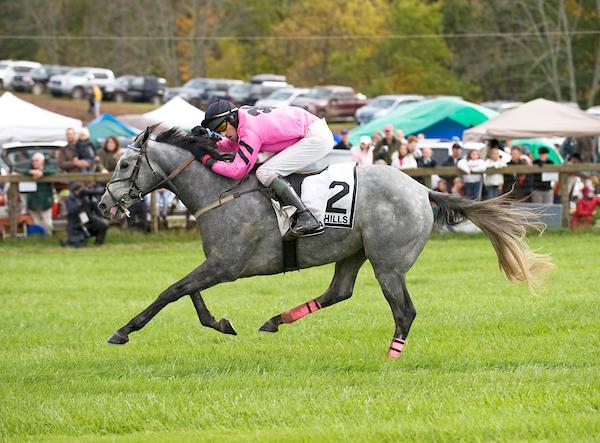
Paddy Young winning the Noel Laing Stakes at Montpelier on Andi'Amu for trainer Leslie Young in 2015. Andi'Amu won the Middleburg Hunt Cup Stakes, the Virginia Gold Cup Stakes and the National Sporting Library and Museum Cup Stakes in 2019 and was named NSA's Timber Champion.
©Douglas Lees
|
|
|
|
|
|
|