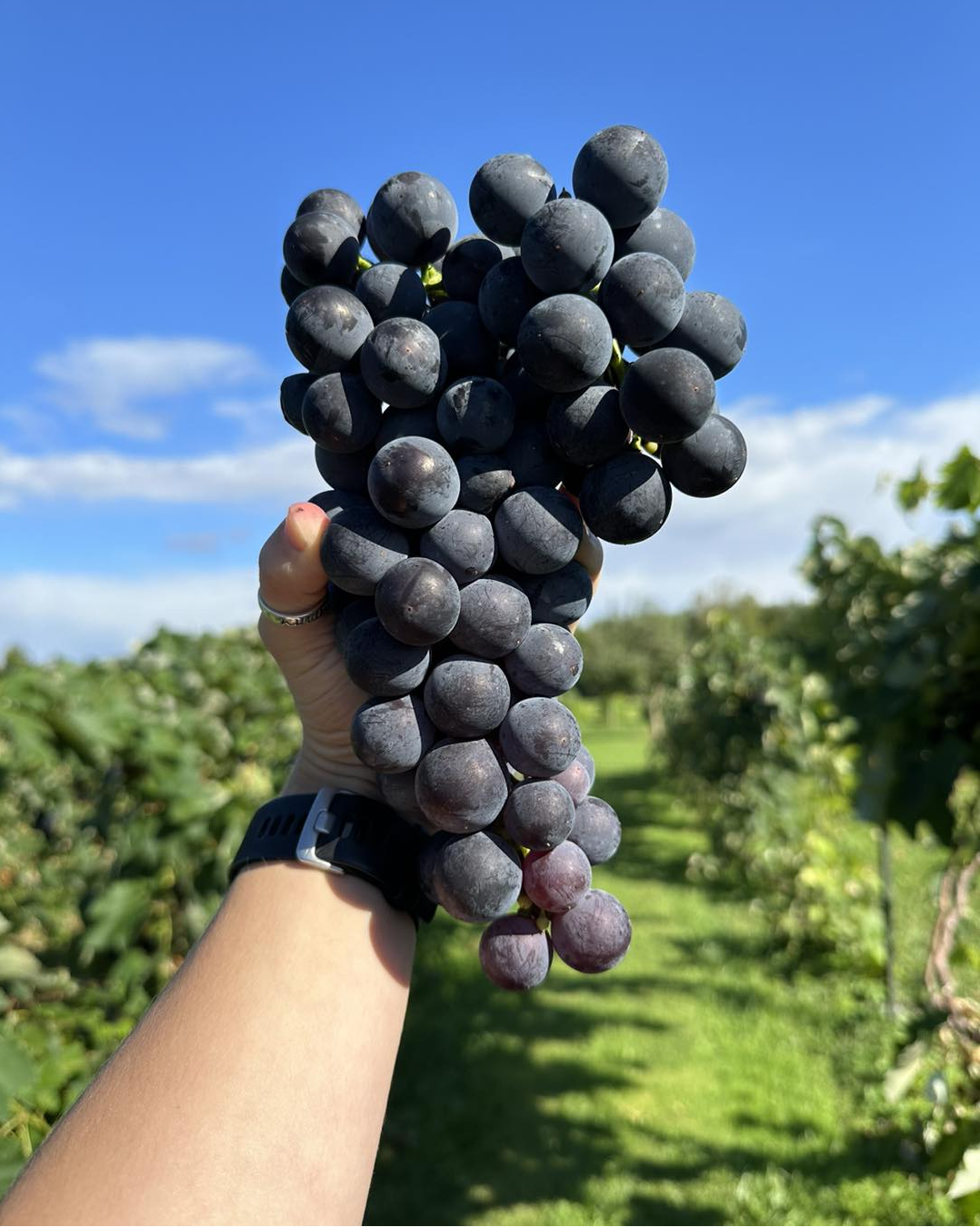
The mighty Everest grape.* | | |
With “national” being the operative word, members of the National Grape Research Alliance and I found ourselves in locations across the country this month, all in the pursuit of driving grape research.
In early May, I attended the Congressional Fly-In put on by WineAmerica, a founding NGRA member-organization. The event annually gathers wine industry members from regions coast to coast for meetings (more than 80 this year!) with Congressional leaders to discuss legislative priorities for wine. I was pleased to add to their itinerary a meeting with leaders across USDA’s Research, Education and Economics (REE) Mission Area, including Acting Deputy Under Secretary Spiro Stefanou and Director of the Office of the Chief Scientist Deirdre Chester, plus the Administrators (some in newly appointed Acting capacities) of the Agricultural Research Service, Economic Research Service, National Agricultural Statistics Service and National Institute of Food and Agriculture. Meetings like this are vitally important, as funding and staffing for research at USDA and other federal agencies have never felt more tenuous. We shared our concerns about the grape research that’s at stake and they were exceedingly receptive—and grateful for the engagement.
This week, NGRA held our Midyear Board of Directors Meeting at the Cornell Lake Erie Research and Extension Lab (CLEREL) in Portland, NY. Our meeting was immediately followed by the annual meeting, also hosted at CLEREL, of the NGRA-initiated, SCRI-funded HiRes Vineyard Nutrition project on which several NGRA members and I serve as industry advisors. We discussed the wealth of new knowledge in vineyard nutrition and variable rate vineyard nutrient management that has been gained over the course of this five-year project, and that will be the subject of an ASEV-NGRA symposium in June 2026. Stay tuned!
The back-to-back Board and project meeting put us in the heart of Concord and Niagara country for a few days. This slice of western New York along Lake Erie is home to Welch’s and the National Grape Co-operative of juice grape growers that owns this household brand and is a longstanding supporter of NGRA. Together with the HiRes team, NGRA Board Directors and I toured vineyards and met with growers. We learned about the contours and complexities of juice and wine grape production, and the priority need for more solutions to mechanize and automate vineyard management—especially urgent now, as the costs of operation go up and labor availability goes down.
As Chris Smart, Director of Cornell AgriTech, said in welcome remarks at the HiRes meeting, “There is a lot of anxiety to be shared, but I’ve never seen more innovative and entrepreneurial thinking.” Although she was speaking about her colleagues at Cornell, the words rang true for NGRA, too. Grape and wine industry headwinds and the worrisome situation at USDA were prominent topics of discussion at our Board meeting—as were NGRA strategies to meet the moment. We are more committed than ever to continuing to drive research to advance the industry, across all sectors and regions of the country. We will keep leveraging our national reach, engaged and active membership, and broad base of relationships to find solutions together.
| | | | |
*ABOUT THE IMAGE
This photo comes from Woznica Orchards near Syracuse, NY, and shows the awesome cluster and berry size of the seedless Concord grape variety called Everest, developed by recently retired Cornell professor and grape breeder emeritus Bruce Reisch. Intended as a table grape and released in 2018, Everest expands the market for Concord varieties. “Our community LOVES Everest,” says Amanda Woznica. “We have plans to plant more to keep up with demand!”
| | Register for the July 16 NVEELC Meeting! | | |
NGRA proudly supports the National Viticulture and Enology Leadership Community (NVEELC), which regularly gathers viticulture and enology extension and industry (non-sales) outreach specialists for professional development, best-practice sharing, research and regional reports, collaboration and dialogue on the unique challenges in V&E extension. The goal? To lift up, connect and support the important extension function for the American grape and wine industry.
Mark your calendar for any (or all!) of the three upcoming NVEELC virtual meetings between now and the in-person NVEELC Conference in April 2026. Each 90-minute virtual meeting will feature regional reports from two US production regions and a timely topic. Registration is now open for the first meeting, Wednesday, July 16, featuring California and the Northwest Region, and WineAmerica’s 2025 Economic Impact Study. See the full schedule and register for the July 16 meeting now!
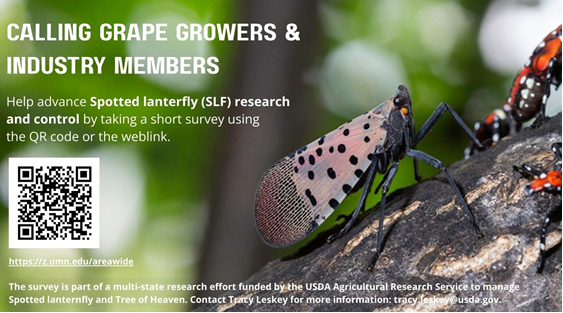
| | WineAmerica, a founding NGRA member-organization, has updated its economic impact study for the American wine industry for 2025. It finds that the production, distribution, sales and consumption of wine benefits many sectors of the U.S. economy, helping to preserve agricultural land, providing American jobs, attracting tourists, generating taxes for farming communities across the country and enhancing the quality of life for wine lovers coast to coast. The wine industry is a dynamic part of the U.S. economy, accounting for approximately $323.5 billion in economic output or around 1.1 percent of GDP. It employs about 1.8 million Americans who earn wages and benefits of about $102.1 billion. See more details, including study methodology and stats for every state. | | For the 12th season of the USDA Agricultural Research Service’s podcast, Science in Your Shopping Cart, the producers hit the virtual wine trail to learn the science behind winegrape-growing. Featuring interviews with stakeholders across the grape research landscape, each episode will cover how everything in our environment—wildfires, weather, bugs, dirt and more—can influence what pours into a glass of wine. The season, entitled “Cheers to Wine Grapes,” kicks off with NGRA’s Donnell Brown, giving an overview of “Where Wine Grape Research Is Needed Most.” | | Climate Change Data To Be Restored on USDA Website | The USDA will restore information about climate change that was scrubbed from its website earlier this year, according to court documents filed on May 12 in a lawsuit over the deletion. Among the data deleted from the website were sections of the Natural Resources Conservation Service site and the U.S. Forest Service’s “Climate Risk Viewer,” which included detailed maps showing how climate change might affect national forests and grasslands. The lawsuit, filed in February, said the purge denied farmers information they used to make time-sensitive decisions while facing business risks linked to climate change, such as heat waves, droughts, floods and wildfires. The suit was brought by the Northeast Organic Farming Association of New York, the Natural Resources Defense Council and the Environmental Working Group. | | USDA-ARS Researchers Make a Sweet Citrus Discovery | | Not grape research but a critical breakthrough on one of the world’s most intractable diseases of specialty crops: Scientists at the USDA-ARS U.S. Horticultural Research Laboratory in Fort Pierce, FL, have identified an orange cultivar that shows resistance to Huanglongbing (HLB), also known as citrus greening disease. The sweet orange cultivar, called Donaldson, is a selection from the USDA-ARS variety collection; it was planted on the farm more than 30 years and never commercialized. ARS scientists are investigating whether Donaldson has long-term HLB tolerance and could replace other varieties for commercial juice production. It’s a beacon of light for an industry that has suffered devastating losses from this bacterial disease. In Florida alone, HLB has decimated about 90% of citrus production since it was first detected in 2005. | | New Dean Announced at WSU CAHNRS | | Raj Khosla, a globally recognized researcher on precision agriculture, has been named the Cashup Davis Family Endowed Dean of Washington State University’s College of Agricultural, Human and Natural Resource Sciences. He will join the college, which encompasses the Department of Viticulture and Enology, on September 1. WSU Provost and Executive Vice President T. Chris Riley-Tillman announced Dr. Khosla’s selection on May 14. | | WSU CPAAS Has a New Director | Troy Peters is the new Director of Washington State University’s Center for Precision & Automated Agricultural Systems (CPAAS). Troy is a professor in the Biological Systems Engineering department and an internationally recognized expert in irrigation and water management. His research focuses on precision irrigation technologies, water use efficiency, and sustainable agricultural practices that support both agricultural productivity and environmental conservation for important Washington crops including apples and grapes. He succeeds Manoj Karkee, who was recently named the Norman R. and Sharon R. Scott Professor of Agriculture and Life Sciences at Cornell University. | | UCCE Viticulture Advisor George Leavitt Passes | | George M. Leavitt, Jr., UC Cooperative Extension (UCCE) viticulture advisor emeritus for Madera County, passed away in Paso Robles, CA, on April 21. He was 79. George served as the UCCE viticulture farm advisor for Madera County from 1975 until his retirement in 2006. During his 34-year career there, he was recognized as an exceptional plant pathologist specializing in grapevine trunk diseases like Botryosphaeria, Eutypa and Phomopsis dieback. Prior to becoming a UCCE viticulture farm advisor, he had worked as a staff research associate for the distinguished UCCE viticulture specialist Fred Jensen, in whose lab he helped to evaluate plant growth regulators and cultural operations for table grape production. He would go on to use the trial methodology in his own large field trials that became popular with local growers. | | Erath Family Foundation Funds Nine Undergraduate Scholars | | Thanks to the generous support of the Erath Family Foundation, an NGRA member-organization, nine undergraduate students will gain hands-on research experience in viticulture and enology at Oregon State University during the 2025-2026 academic year. The Erath Family Foundation Undergraduate Scholars will join the Oregon Wine Research Institute team and partner with OWRI scientists on research projects ranging from the analysis of USDA crop insurance participation to grape mealybug reproductive biology to microbial terroir. And they’ll have the opportunity to present their research findings at a professional conference. See the list of students, mentors and projects. | | Oregon Wine Board Funds Six Research Projects | | The Oregon Wine Board (OWB) announced this month that it is awarding funding for six scientific research projects that address OWB’s research aim of “championing the continuous improvement of Oregon’s capacity to produce world-class wines.” Total awards of more than $350,000 will support the continuation of five ongoing research projects and one new project to start in the next fiscal year. The projects span from Grapevine Red Blotch Virus to grape mealybug, rootstocks and water, and wine fermentation issues for Pinot noir. Find brief overviews of these projects on the OWB website. | | Nominate a Leader for WineBusiness Monthly’s Annual Leaders List | | WineBusiness Monthly is looking for leaders who pave a new way forward and/or inspire others to pioneer a new method, product or technology; start creative businesses; or rally behind causes they believe in. From up-and-comers to established industry members, the magazine seeks to recognize people who made a difference in the last year or are working to positively shape the industry in the future. Nominate someone by June 27. | | Battling Invasives Together: Your Input Matters | | Researchers at the USDA-ARS Appalachian Fruit Research Station are working in collaboration with Virginia Tech, Penn State, Rutgers University and others to conduct new areawide biological control agent studies as part of a multi-state project called “Areawide Management of the Invasive Spotted Lanternfly and Tree of Heaven.” The goal of the project is to suppress populations of both invasive species to increase ecosystem health, reduce insecticide inputs against SLF in vineyards, mitigate yield losses, and alleviate impacts on native pollinators and plant species. We invite you to join researchers in the fight against SLF by answering a few survey questions about the current or potential impact of SLF on your business if/as SLF spreads. Take the survey now. | | CA PD/GWSS Referendum Deadline Extended | | California winegrape growers are now voting on continuing the Pierce’s Disease and Glassy-Winged Sharpshooter Assessment for another five years through 2031. The deadline to return ballots has been extended to June 12. The annual value-based assessment, set at $1.25 per $1,000 of value for the past three years, funds critical research and activities that reduce the impact of winegrape pests and diseases. Every winegrape producer who paid the 2024 assessment should have received a ballot by mail, with growers operating multiple entities receiving separate ballots for each. The last referendum passed with an overwhelming 78% voter approval. This year’s results are expected in June. | | |
Hybrid Grapes: It’s All About the Story
By Catherine Dadmun
| | |
All wine needs a story, and hybrids tell a great one.
Some wines narrate tales of the land, whispering of rocky soils and steep cliffs. Others speak of heritage and tradition, showcasing techniques honed over centuries, proud family lineages, and ancient cellars. Some wines exude prestige, gracing glamorous dinners and commanding high prices at auctions. Each wine has its own story, yet the narrative can shift with the storyteller.
To me, hybrid wines tell a story of underdogs, of perseverance, and of creativity.
Current hybrid development focuses on cultivars that produce high-quality wine while addressing climate change, disease pressure, and reducing pesticide and fungicide use. By observing traditionally bred crosses and monitoring genetic markers, breeders aim to create cultivars with desirable fruit qualities of Vitis vinifera and resistance from other Vitis species against fungi, pests and diseases.
Hybrid grape cultivation dates back to the 1800s, initially using non-vinifera species for disease resistance, crucial for the wine industry’s expansion and combating the European phylloxera epidemic. Early hybrids had a negative stigma due to low-quality parents and undesirable aromas. Today, however, hybrid development prioritizes high-quality wine attributes, though they often remain “outsiders” compared to V. vinifera.
Increased interest in hybrids due to environmental pressures and their complex history necessitates evaluating their current status in the wine industry to uncover future potential. As a Ph.D. student at the Cornell Craft Beverage Institute (CCBI), I worked with Dan McCole from Michigan State University on a project to explore the perceptions of hybrid grapes and wines. ‘Hybrid’ can be a taboo term or an exciting concept, depending on the storyteller. We needed to assess their narrative.
We suspect that, while the industry has a complex view of hybrid grapes, consumers mainly care about the wine’s quality, not its grape ancestry. The story itself can influence consumer perception. To explore this potential disconnect, we interviewed five professional winemakers in New York’s Finger Lakes region.
It was immediately obvious that hybrids are critically important to the local wine industry. “If I didn’t have hybrid grapes, some years would have been tougher than others,” said Chris Stamp, co-owner at Lakewood Vineyards. Similarly, Phil Plummer, winemaker at Montezuma Winery, noted that “non-vinifera’s keeping the lights on, 100%.”
All winemakers we interviewed highlighted that hybrids, with their quality, versatility, lack of preconceived expectations and lower financial barriers, are ideal for experimentation and innovation. “The more people are willing to kind of step outside of the rigid recipe to make a 90-plus-point wine, the more cool stuff we’re gonna come up with,” Phil said. That’s a plus for younger drinkers, several winemakers noted.
The fact that hybrids create a more sustainable future for our industry, and are unique to and thrive in our region, helps create a particularly appealing narrative, as well.
Still, several potential pitfalls threaten the burgeoning hybrid renaissance. First, the price point. Historically, hybrid wines in the Finger Lakes have been priced lower than V. vinifera, which seems to cause some perception-related issues. By pricing hybrid wines lower, “We’re telling people their quality isn’t as good,” said Craig Hosbach, winemaker at Fox Run Vineyards. “We’re apologizing and we don’t realize we’re doing it.” Yet, it’s a challenging issue to address, as even a modest increase in price can lead to a significant drop in sales.
The second concern is confusion over the term “hybrid.” Many consumers confuse the term “hybrid” with “GMO,” which can incite bias. Plus, if the hybrid term is used, an explanation often needs to accompany it. “Why even mention it? It’s a locally grown grape—it’s that easy. Pinot Gris is a mutation of Pinot noir, but we don’t explain that. So why are we talking about ‘the hybrid’?” Craig mused.
The third concern is the range of hybrids grown and vinified. While many hybrids produce consistent, high-quality wines, this isn’t true for all. Three interviewees spoke of grapes planted in the Finger Lakes decades ago because they grew well, before the wine industry caught up. Early plantings of inferior varieties can overshadow the potential of newer, higher-quality hybrids.
The fourth and perhaps greatest challenge is the barrier hybrid-based wines face in wine magazines, liquor stores and restaurants. Winemakers unanimously felt that consumers have a positive perception of hybrids and either don’t know or don’t care about the parentage or species of the grape as long as wine quality delivers. But among industry tastemakers, hybrids are met with bias, leading winemakers to avoid submitting their hybrid wines for scoring and distribution altogether.
As the global conversation on hybrid grapes and wine grows amidst a rapidly changing climate, what story will we tell? How do we balance tradition and innovation in the evolving wine industry? As Ben Riccardi, owner of Osmote Winery, eloquently put it, “Not hybrids versus vinifera. Hybrids with vinifera. A unified path forward to increased acreage and better vineyard sustainability.”
Catherine Dadmun got her Ph.D. at the Cornell Craft Beverage Institute, part of Cornell’s College of Agriculture and Life Sciences. She is now a postdoctoral associate at the University of Burgundy Europe in Dijon, France, where she’s working to advance global research on hybrid grapes.
This article is excerpted from Catherine’s original piece, titled “New York Hybrid Grapes: Cheers and Challenges,” published April 8, 2025, on the Cornell CALS website. For additional insights and winemaker quotes, read her excellent original here.
| | Applications Open in June for PPA 7721 | | The USDA-APHIS Plant Protection Act Section 7721 (PPA 7721) Plant Pest and Disease Management and Disaster Prevention Program (PPDMDPP) will open for suggestions for funding in June. The newly released Fiscal Year 2026 Implementation Plan provides PPDMDPP background information, objectives and strategies of the six goal areas, and key details to assist in developing high-quality suggestions. The open period to submit suggestions will last eight weeks, until about early July. Get details, including a schedule of informational webinars. | | EDEN Annual Conference 2025 Call for Presentation and Poster Proposals | | Organizers for the Extension Disaster Education Network (EDEN) Annual Conference invite extension professionals and researchers to submit an abstract to be considered for the EDEN Conference, October 21-24 in Portland, ME. If you have best practices in disaster education, response, recovery, preparedness, etc., this may be the conference for you! But act fast: Abstracts are due June 1. | | |
Applying for a grant? Request a letter of support!
NGRA is pleased to provide letters of support for research projects that directly address our industry research priorities. Request a letter via our online request form at least two weeks prior to the grant deadline (or any internal deadline you may have). Requests are reviewed and approved by NGRA Research Committee leadership, so processing times may vary.
| | |
9 Federally Funded Scientific Breakthroughs That Changed Everything
May 16, 2025 | The New York Times
The impacts of federally funded research are all around us in everyday technologies like GPS, Google and even the screen you may be reading this post on. Scientific breakthroughs taxpayer dollars secured can also be seen in the conspicuous absence of invasive pests like the dreaded screwworm, a scourge of livestock the USDA eradicated in 1970. Click to read more about the science the US government has given us.
Immediate Pre-Bloom: Critical Period of Disease Management
May 15, 2025 | American Vineyard Magazine
Dean Volenberg of the University of Missouri Grape & Wine Institute urges grape growers to be ready to battle fungi. He explains that there are three major stages in the growth and development of grape berries: immediate pre-bloom, bloom and post-bloom. They represent your grape crop’s highest susceptibility to fungal pathogens. “Consider using your best disease management tools to control the grape disease complex,” he says.
30 Gophers a Night: Why Barn Owls Belong in Your Vineyard
May 15, 2025 | Sustainable Winegrowing Podcast
Barn owls mate for life and have up to eight owlets three times a year. Chicks can consume whole prey as soon as they’re two weeks old and go on to eat at least six to eight rodents each, every night. Inviting these voracious eaters into your vineyard with nest boxes is a sustainable way to control animal pests, Bob Peak of Pacific Wildlife Care explains. “Barn owls are a species that really keep things in check.”
From Challenge to Action: Grapevine Improvement in the Face of Climate Change
May 12, 2025 | Molecular Horticulture
This editorial from geneticists in Australia and Germany “underscores the potential and necessity of adopting genomics, epigenomics and new genomic technologies (NGTs) for accelerated grapevine improvement to secure the future of viticulture.” The authors acknowledge that “the wine industry and consumers remain hesitant about precision molecular breeding techniques and new released cultivars,” but basically, we’re running out of time. They include an explanation of the complexity of allowing “edited clones” to retain their renowned names.
Help for Vineyardists in the War of the Wounds
May 13, 2025 | Good Fruit Grower
When it comes to crown gall, research from University of British Columbia shows that the volume of pathogen matters. When inoculating greenhouse vines with the causal bacterium A. vitis, the PIs found that vines can fend off infection (or at least the formation of galls) when exposed to a low number of bacteria; larger amounts were far more likely to lead to visible galls. The team also developed a super-sensitive detection method for the soil-dwelling bacterium that, because of its ubiquitous, asymptomatic nature, is not a regulated plant pathogen.
The Evolution of Michigan Viticulture and Pruning Systems
May 8, 2025 | American Vineyard Magazine
With advances in vineyard management and a warming climate, the proportion of grapes grown in Michigan wine country is tipping more toward vinifera varieties, says Michigan State University Extension’s Paolo Sabbatini. He suggests that growers “may find renewed value in the adaptability of the Guyot (training) system as a forward-looking tool for resilient, quality-driven viticulture.” He gives 9 key principles for applying it effectively in the state’s cool-climate vineyards.
Deep Learning Empowers Genomic Selection of Pest-Resistant Grapevine
May 7, 2025 | Horticulture Research
Does AI have a part to play in grape breeding? According to new research from geneticists in China, yes! Combining deep learning/machine learning, plant phenomics, quantitative genetics and transcriptomics, they were able to predict pest-resistance traits in grapevine with nearly 96% accuracy. The study highlights the promise of machine-learning based genomic selection to improve the speed and precision of grapevine improvement for pest resistance and provides a roadmap for confirming other traits of interest.
Missouri S&T Researchers Developing AI System to Prevent Pests, Improve Crop Yield for Rural Farms
May 6, 2025 | Global AgTech Initiative
Computer scientists at Missouri S&T are developing an automated pest management system that uses insect traps with sensors to alert farmers of their presence via low-power, long-range radio frequency-based transmitters—no internet connectivity required. The system relies on an onsite edge computing device that processes data locally and uses machine learning to inform and continually improve its insights and alerts to farmers. “This system will also track diseases, soil conditions, weeds and weather patterns and how they affect crops,” says a co-PI on the project. “We could apply what we are developing to virtually any crop—even the grapes grown in vineyards not far from Missouri S&T.”
Gene-Edited Pigs Approved for US Market
May 5, 2025 | California Ag Network
Not grape research, but an interesting development in agriculture: The US Food and Drug Administration has approved for sale to consumers gene-edited pigs resistant to Porcine Reproductive and Respiratory Syndrome, a costly viral disease endemic to most pig-producing regions. Researchers removed a small section of the CD163 gene associated with the infection, leaving the rest of the molecule intact.
Red Blotch: A Disease that Defies Comparison
May 1, 2025 | Practical Winery & Vineyard Journal (Wine Business Monthly)
After extensive study, Cornell plant virologists Victoria Hoyle and Marc Fuchs can conclusively say that “red blotch is a disease with no comparison; its characteristics are distinct from any other known viral disease of grapevines.” It is vectored by a pest (the three-cornered alfalfa hopper) that isn’t a pest of cultivated grapevine; that pest’s transmission process is protracted and inefficient; and disease spread is inhibited by spring/summer rainfall…but not until three to four years later.
Vineyard Nitrogen and Potassium Impacts on Wine Quality
May 2025 | HiRes Vineyard Nutrition Podcast
Nutritional balance in the vineyard “equals higher grape quality which equals higher wine quality,” says Emily Hodson, winemaker at Veritas Vineyards and Winery and NGRA Vice Chair, on the HiRes Vineyard Nutrition podcast. “Potassium (helps) with stability of wine, and nitrogen (ensures) a healthy fermentation,” she explains. With fruit from “a healthy vine that’s balanced and has what it needs, you get even sugar accumulation, you get ripening that’s predictable and ‘happy,’ and all of the flavors and intensities are just there.” It’s one of the key ways “wine is made in the vineyard.”
Effect of Heat on Grapevine Production and Fruit Quality
April/May 2025 | Grape & Wine Magazine
Sunburn is just the tip of the iceberg when it comes to heat’s effects on grapevines. Here, UC Davis’ Megan Bartlett explains how high temperatures (>95 degrees F) affect fertilization and fruit development, coloration, sugar accumulation, photosynthesis and more. Water stress and light exposure further complicate grapevines’ response to heat, she says, making it hard to anticipate their ultimate impact on yield and quality. And more research is needed on intensity and duration. (Story on p. 24.)
Butterfly Effect: Oregon Winery Helps Save Native Insect from Extinction
April 30, 2025 | Oregon Wine Press
Van Duzer Vineyards created specialized habitats for the Fender’s blue butterfly, helping save it from extinction. After several years, the butterfly was recently reclassified as “threatened,” making it the first insect to be de-listed from the endangered list. “Though the butterfly is thriving on parts of the property not directly producing grapes, improving our estate has benefits that tie back to the wine,” said Van Duzer winemaker Eric Misiewicz. “Better stewardship leads to healthier grapes and superior wine.”
Top of the Glass: Chardonnay and Cabernet Sauvignon Were the Leading California Wine Grape Varietals Crushed in 2024
April 29, 2025 | USDA-ERS Charts of Note
According to the USDA National Agricultural Statistics Service’s annual California Grape Crush report, more than 100 varieties of wine grapes are grown in the Golden State. Chardonnay and Cabernet Sauvignon made up more than one-third of the 2.884 million tons of wine grapes crushed in 2024. And they averaged the highest price per ton: Cabernet Sauvignon, $2,182 and Chardonnay, $1,057. Click to see which six varieties accounted for almost two-thirds of the volume of last year’s crush.
For Over 100 Years, California Winemakers Called This Grape by the Wrong Name
April 25, 2025 | VinePair
Valdiguié, a grape native to France’s Languedoc-Roussillon region, was brought to California in the late 1800s. Wines made from the then little-known variety have soft tannins and juicy red fruit notes, so by the 1940s, it came to be called “Napa Gamay.” In 1980, as part of the establishment of the AVA system, French ampelographer Pierre Galet helped to form an authoritative list of grapes used to make American wine, correctly identifying the grape. Still, the “Napa Gamay” misnomer persisted on Valdiguié wines until 1999, when it was officially barred from wine labels.
What You Eat Is What We Need: Using Ants To Detect Spotted Lanternfly DNA
April 24, 2025 | Pest Management Science
Following the logic that “you are what you eat,” entomologists at Virginia Tech found that ants that consume the honeydew excreted by spotted lanternflies retain detectable SLF DNA for at least 5 days and as far away as 100 meters from the core SLF infestation. “These findings confirm that ants…are highly reliable SLF DNA samplers,” they write, useful in an “ant-derived DNA (antDNA) approach” to SLF detection.
UCCE Advisor Chen Works for Resilient Future for Viticulture in Northern California
April 15, 2025 | California Ag Network
How do research and extension support the grape and wine industry? Let Chris Chen count the ways. Wine grape production is central to the economy in Lake, Mendocino and Sonoma Counties, where Chris serves as UCCE integrated vineyard systems advisor, but it’s vulnerable to rising temperatures, water shortages and wildfires. “A significant part of my research is helping local vineyards adapt to these environmental shifts and working on ensuring the long-term sustainability for the industry,” he said. “It’s not just solutions to today’s problems we are investigating and educating stakeholders on, we also explore the challenges that are likely to become more prevalent in vineyards…so we are prepared to deal with them when they arrive.”
Understanding the Diversity of Nepoviruses in Small Fruits and Grapes in the Pacific Northwest and the Risk Associated with Their Nematode Vectors
April 2025 | Northwest Center for Small Fruits Research
A team of Pacific Northwest scientists used high throughput sequencing to search for previously unknown viruses lurking among grapes and small fruits in the region. Among their findings was a virus of grapevine belonging to the family Tymoviridae not previously reported in Oregon. They also discovered that “sampling for viruses associated with decline in grapevines must include cambial tissue from the rootstock. Sampling leaves alone might lead to missing the detection of viruses associated with the decline.”
Long Term Analysis of the Link between Practices and Vineyard Decline in Relation to Abiotic Factors
February 24, 2025 | Oeno One
Grape research from France’s Cognac region reveals that management practices can accelerate vineyard decline in the context of environmental stresses. Preventing decline requires adopting an integrated approach from matching variety to vineyard site, optimal irrigation, cover crop management and grubbing up (uprooting and removing old or unproductive vines). The authors recommend “putting the focus on vigor management, water and mineral status of the plant.”
New Innovations on the Grow for Muscadine Grapes
February 15, 2025 | Growing Produce
Retired University of Arkansas grape breeder John Clark began breeding muscadines there in 2006, ultimately conquering the “eyeball” texture to develop seedlings with crisp flesh. Since then, private research in North Carolina overcame the mismatch in the number of chromosomes between muscadines (which have 40) and bunch grapes (which have 38) to successfully cross the two to produce seedless berries. This innovation enables John’s successor at UofA, Margaret Worthington, to continue working on improved seedless muscadines with even crisper flesh, and “the potential to change this fruit from a limited market in the South to a much wider consumer audience,” John writes.
Find these stories and more, published every weekday, on our Facebook and X (Twitter) feeds. You can also find us on LinkedIn. Use #graperesearch to join and grow the conversation!
| | |
June 3, 2025
Sonoma County Vineyard Technical Group
Vineyard Development Masterclass
Forestville, CA
June 4, 2025
UC Davis Oakville Grape Day
Oakville, CA
June 16-19, 2025
ASEV National Conference
Monterey, CA
June 17, 2025
Smoke Taint Symposium
Monterey, CA
Co-located with the ASEV National Conference
June 18-22, 2025
Conference of the American Association of Wine Economists
San Luis Obispo, CA
June 26, 2025
UC ANR Innovate
VINE Connect Ag Tech Field Day
Five Points, CA
July 8-9, 2025
Global Sparkling Summit
Albuquerque, NM
July 8-10, 2025
ASEV-Eastern Section Conference
Athens, GA
July 15, 2025
West Coast Smoke Exposure Task Force
Virtual Smoke Summit
Virtual event
July 16, 2025
National Viticulture & Enology Extension Leadership Community (NVEELC) Meeting
Virtual event
July 20-23, 2025
Australian Wine Industry Technical Conference
Adelaide, Australia
July 24, 2025
WSU and Washington State Grape Society
Viticulture Field Day
Benton City, WA
July 27-31, 2025
GiESCO Conference
Geisenheim, Germany
August 12, 2025
Ohio State University
New Sprayer Technologies and Best Practices Field Day: Vineyards and Orchards
Berlin Heights, OH
August 21-22, 2025
Michigan State University
Dirt to Glass Conference
Traverse City, MI
August 25-26, 2025
North American Grape Breeders Meeting
Bloomfield, MN
| | | | |