Twitter  Instagram  Facebook

Meeting the Needs of Unaccompanied Minors in Schools

The number of unaccompanied minors that have crossed the border into the United States has increased dramatically over the last 10 years. The vast majority cross the southern border into the United States, and are referred to the federal Office of Refugee Resettlement (ORR). These children are then placed in a facility or shelter until released to a family member or sponsor which can be located anywhere in the country.


These minors do not receive legal immigration status. However, there are federal protections to ensure that these minors receive adequate health care and education. Often, these protections are difficult to access because of substantial barriers that can include:


  • a lack of proper paperwork that should have been documented by ORR 
  • Language and cultural incompetencies
  • a lack of knowledge on how to navigate schools and health care
  • Unstable housing
  • Multiple adverse childhood experiences (ACEs) that require specialized health and education services


Given the barriers above, these children would benefit from schools and health partners that are able to provide tailored supports that meet the unique needs of this population. Below are resources that are helpful in understanding the rights of unaccompanied minors, and how schools and health partners can build and maintain support services. We hope they are useful to you in your work.

Resources

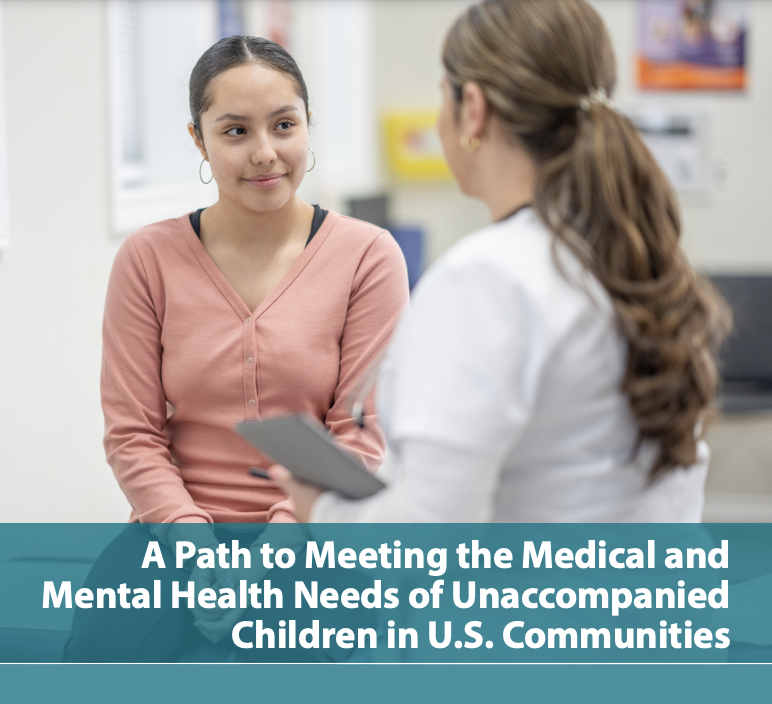
A Path to Meeting the Medical and Mental Health Needs of Unaccompanied Children in U.S. Communities

Developed by the American Academy of Pediatrics and the Migration Policy Institute

This report examines the barriers unaccompanied children face to accessing medical and mental health care—including those related to official policies, the complexities of the U.S. health-care system, and individual and community factors—and highlights promising practices that some regions have adopted to address these barriers.


It also presents recommendations for governments, health systems, schools, and communities that, if implemented, would substantially strengthen services for unaccompanied children.

Learn more 

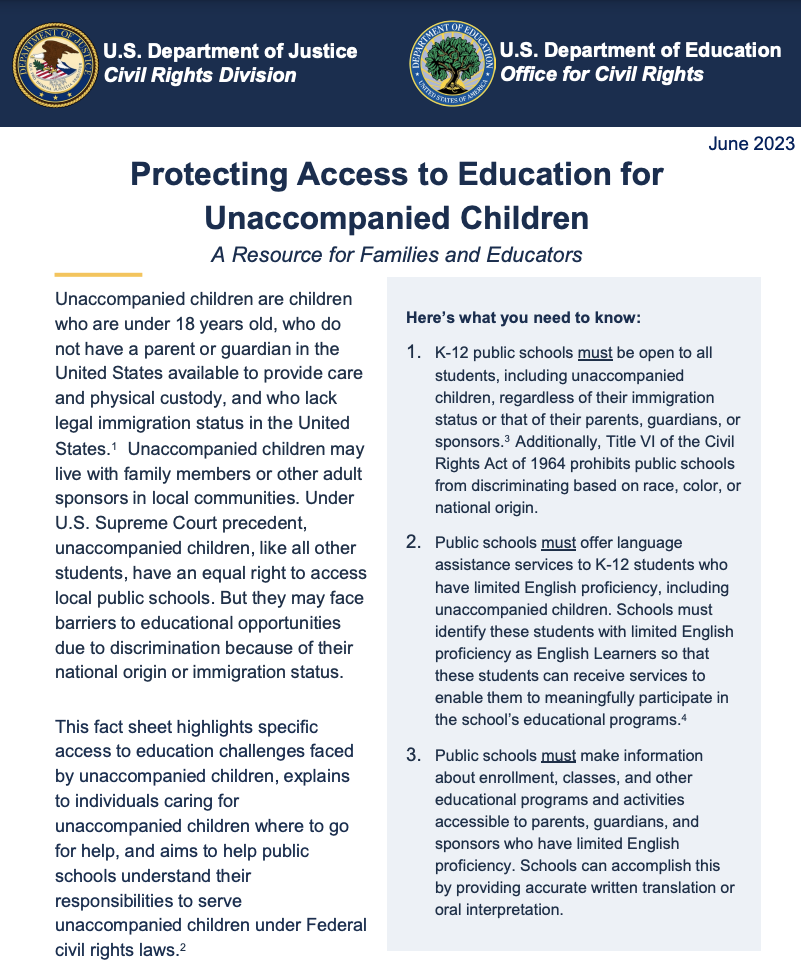
Protecting Access to Education for Unaccompanied Children

Developed by the Departments of Education and Justice

This fact sheet highlights specific access to education challenges faced by unaccompanied children, explains

to individuals caring for unaccompanied children where to go for help, and aims to help public schools understand their responsibilities to serve unaccompanied children under Federal civil rights laws

Learn more

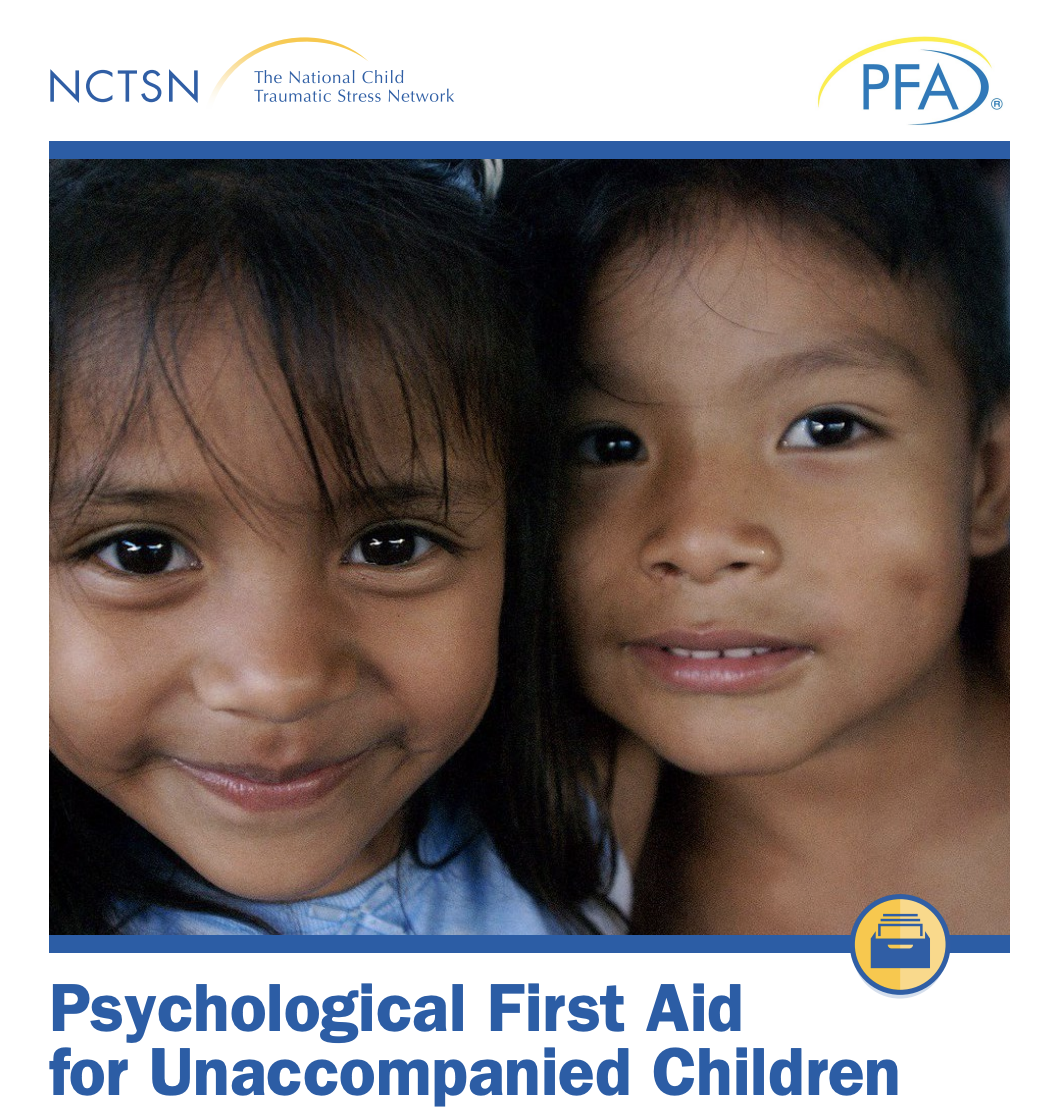
Psychological First Aid for Unaccompanied Children

Developed by the National Child Traumatic Stress Network

This evidence-based resource is used to assist unaccompanied children immediately after arriving in the United States. It includes a set of tools to assist staff in supporting unaccompanied children through early transitions and is useful for working with unaccompanied children preparing to reunite with family members, or transitioning to an Office of Refugee Resettlement (ORR) permanent program/shelter. This approach can also support staff and volunteers in caring for themselves while engaging in this challenging work.

Learn more

CHHCS Spotlight

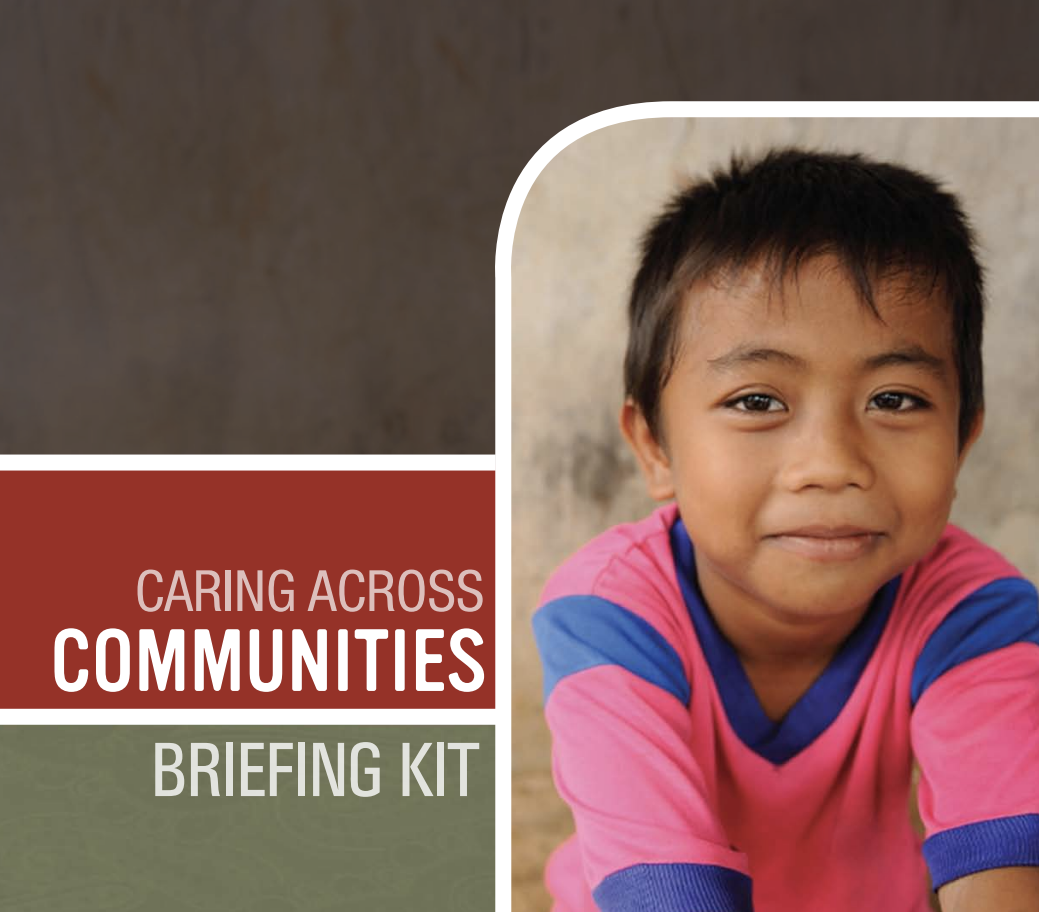
Caring Across Communities: Briefing Kit

The Center for Health and Health Care in Schools with support from the Robert Wood Johnson Foundation

We are proud of a past project where, with funding from the Robert Wood Johnson Foundation, we were able to be part of the program, Caring Across Communities: Addressing Mental Health Needs of Diverse Children and Youth. This was launched to reduce emotional and behavioral health problems among school children in low-income, immigrant and refugee families.


The kit provides an overview of Caring Across Communities, the context for its development, and fact sheets and stories from the 15 projects in the program. The kit can serve as a key resource for creating promotional materials, online information, press kits.

Read the Briefing Kit
Learn More about the Program

Grant Alerts

ACT on Health Equity: Community Solutions Challenge | AstraZeneca

Funding to advance health equity through the support of community-based non-profit programming that prioritize the needs of historically excluded and disenfranchised populations

Learn more

Deadline: July 7, 2023

Youth Homelessness | ACF - FYSB

Funding to support the design and delivery of community-based demonstration initiatives to prevent youth and young adults from experiencing homelessness

Learn more

Deadline: July 31, 2023

Full-Service Community Schools Program | OESE

Funding to provide academic and whole child supports to build and strengthen connections between schools, parents, families, and their surrounding communities.

Learn more

Deadline: August 7, 2023

Announcements

Practical Guide for Implementing a Trauma-Informed Approach

This new resource from SAMHSA expands on the Concept of Trauma and Guidance for a Trauma-Informed Approach Resource from 2014. The primary goal is to provide implementation strategies across multiple domains based on the original publication.

Learn more

Upcoming Meetings and Events

June 30, 2023 | 9:00-10:30am ET

Trauma-Informed Supervision & Resilience

Northwest Mental Health Technology Transfer Center (MHTTC) Network

July 11, 2023 | 3:00-4:00pm ET

Seeing Ourselves Alongside (not Beyond) Our LGBTQ+ Students: Self-Aware Frameworks for Inclusivity

National Center for School Mental Health | Mental Health Technology Transfer Center (MHTTC) Network

July 12, 2023 | 12:00-1:00pm ET

Promoting Internet Safety for Parents, Guardians and Communities (free 1 CME/CE)

Maryland Assembly on School-Based Health Care | Moses/Weitzman Health System, Inc.

The Center for Health and Health Care in Schools (CHHCS) Weekly Insider is a web-enhanced newsletter that offers news alerts, grant announcements and general web site updates delivered directly to your email box on a weekly basis. The Center is located at the Milken Institute School of Public Health at The George Washington University in Washington, D.C.

Subscribe
Share your Materials

© 2023 Center for Health and Health Care in Schools