|
An Update From the Mekong Fish Network
|
|
Dear colleagues,
We're happy to share another edition of the Mekong Fish Network newsletter with you. We have collected a number of new stories and projects featured on the Mekong Fish Network website (www.mekongfishnetwork.org), including summaries of some recent fisheries meetings that we hope you will find informative.
We encourage you to share your own stories, photos, and presentation slides with us (We've received lots of presentation views at SlideShare). Please contact us at info@mekongfishnetwork.org! You can also help the network grow by encouraging your colleagues to subscribe and contribute to this newsletter (click "Send to a Colleague" in the right hand sidebar to forward this newsletter).
Best wishes for a successful new year!
The
FISHBIO team on behalf of the Mekong Fish Network
|
|
Innovative Solutions for Fish Passage

Water infrastructure is being developed at an increasing rate in the Lower Mekong Basin (LMB), and fish passage technology may help alleviate some of the impacts on fish populations, thereby sustaining food security. The "Lower Mekong Fish Passage Conference: Applying Innovation to Secure Fisheries Productivity" held in Vientiane, Lao PDR, in November was hosted by the Living Aquatic Resources Research Centre (LARReC) in Lao PDR, and supported by the Australian Centre for International Agricultural. Research and the U.S. Agency for International Development.
This conference built on a previous fish passage conference hosted by the Lao government in 2013, and it brought together experts in river development, fish passage, and fisheries ecology experts from around the world, along with local government agencies and provincial and district leaders. The objective was to share current research and discuss opportunities for sustaining fish populations and healthy aquatic ecosystems during this period of dramatic economic development...
Read more >
|
|
Vital Signs: Assessing the Health of Fish Conservation Zones

Just like people need regular health checkups, a protected area needs regular assessments to make sure it's performing successfully. FISHBIO staff made this point during a recent workshop we hosted in Vientiane, Lao PDR, with the Lao Department of Livestock and Fisheries. The workshop served as a kick-off for a
project to create a guidebook for assessing Fish Conservation Zones (FCZs) in Lao PDR with funding from the
Critical Ecosystem Partnership Fund.
The goals of the workshop were to introduce the project to a broad group of stakeholders working on FCZs, and also to receive input from workshop participants on relevant indicators of FCZ success that they felt should be included in the guidebook. These indicators are like the vital signs of a healthy FCZ, and could include measurements such as fish abundance, community standard of living, or the level of FCZ regulation enforcement. The workshop was attended by more than 20 groups representing non-profit, government, and private sectors in Lao PDR, as well as two members of Conservation International in Cambodia, and a researcher from Charles Sturt University in Australia...
Read more >
|
|
Responsible Inland Fisheries and the Rome Declaration

Many people associate the term "fisheries" with boats on the ocean, but substantial fishing also takes place in rivers, lakes, and wetlands. These "inland fisheries" are often overlooked, but are important for food security, recreation, and livelihoods, especially in developing countries. Regardless of whether an inland fishery is large or small, it likely faces challenges regionally or globally. Many external factors can threaten inland fisheries, such as degraded water quality, rapid development in watersheds, and competition for water resources. Given the growing human population and our demand for both freshwater and fisheries resources, it will be increasingly important to effectively manage and sustain these fisheries.
The Global Conference on Inland Fisheries, held in Rome in January 2015, was hosted by the United Nations Food and Agriculture Organization (FAO) and Michigan State University to assess challenges and take stock of inland fisheries world-wide. The outcome of this meeting was synthesized in a recent publication called
The Rome Declaration: Ten Steps to Responsible Inland Fisheries
, which outlines a recommended path towards sustainable inland fisheries...
Read more >
|
|
E-book on Inter-Sectoral Governance of Inland Fisheries
From
Too Big To Ignore, a global partnership for small-scale fisheries, comes
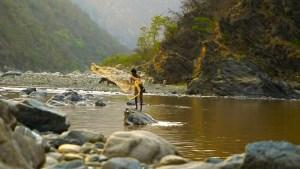
an online resource that explores governance issues facing inland fisheries. The many uses of freshwater, from agriculture, to domestic, to hydropower, involve multiple sectors and pose unique challenges for inland fish and fisheries.
Through a variety of case studies, this e-book explores tradeoffs, synergies, and lessons learned to address some of these challenges and improve inland fisheries governance. A new round of case studies is currently being added to the collection.
Learn more >
|
|
|
Celebrating World Fish Migration Day in Laos

in California and Asia about the importance of rivers and fishes at home and abroad...
Featured Project: Hot Fish: Climate Change Impacts on Inland Fisheries
The 'Hot fish' project aims at:
1) Providing information on the vulnerability of key tropical freshwater fishes to climate change.
2) Improving the capacity of local communities to conduct research projects, through provision of equipment and mentoring, as applicable.
We will use static respirometry to assess the thermal sensitivity of tropical freshwater fish at three locations: Brazil (Amazonian province), Uganda (Lake Victoria basin), and Cambodia (Lake Tonle Sap Lake)...
Read more >
|
Your Update Here!
Share your recent news with the Mekong Fish Network! Send your submission to:
|
|
|
16-18 March 2017
Phnom Penh, Cambodia
Universiti Putra, Malaysia
18-21 April 2017
New Delhi, India
|
|
International Business Times
|
|