Happening in two weeks!
I gained so much! Exactly what I needed to give me some direction in my writing.
--Zoom workshop student
July 17, 12-5,
$87.50
Sponsored by the Loft Literary Center, Mps
Learn how to organize your stories into a readable, interesting work via a simple formula that successful authors use to find the central conflict in their story, then plan, organize, and write scenes and chapters around it.
________________
August 22, 12-5, $87.50
Sponsored by the Loft Literary Center, Mps
Dialogue can be the make-or-break element of story-because good dialogue is really hard to write. We'll focus on purpose and placement of dialogue in fiction and memoir scenes, learning the mechanics, rhythm, and subtext of amazing dialogue.
________________
Summer
writing retreat
on Zoom
July 20-24!
Give yourself and your writing a week-long
immersion to finally make progress on your book.
Each morning, you'll enjoy a craft workshop on Zoom, with customized assignments from Mary that meet you where your book is right now--whether early draft or late revision. Two private coaching sessions give you time to discuss your writing and questions with Mary. You get substantial handouts to print and keep, plus resources and links to for book structure.
Limited class size to make things easy and an excellent virtual community to encourage and support you as you transform your work.
You can also pay a little more and get Mary's comments on up to 8000 words of your writing (only one more spot left for this option). Click dates below for more info.
Sponsored by Madeline Island School of the Arts
Join me for a summer writing workshop on Zoom!

I gained so much! Exactly what I needed to give me some direction in my writing.
--Zoom workshop student
July 17, 12-5,
$87.50
Sponsored by the Loft Literary Center, Mps
Learn how to organize your stories into a readable, interesting work via a simple formula that successful authors use to find the central conflict in their story, then plan, organize, and write scenes and chapters around it.
________________
August 22, 12-5, $87.50
Sponsored by the Loft Literary Center, Mps
Dialogue can be the make-or-break element of story-because good dialogue is really hard to write. We'll focus on purpose and placement of dialogue in fiction and memoir scenes, learning the mechanics, rhythm, and subtext of amazing dialogue.
______________
"Since taking classes with you, I've tried a couple of work-shopping classes with other teachers. It's just not the same. I have not yet found anyone of your caliber.
"You are generous
with your time, so thoughtful and insightful in knowing just what type of comments will move writers forward, and obviously knowledgeable
about book structure. Whatever it is you are doing to create such a supportive online community is NOT the norm. No other online class I've taken has come close to creating the kind of support
I've felt in
your classes."
--L.B., Boston
Start with a big love of words, add a generous helping of
Mary Carroll Moore,
mix with leavening from your peers, knead vigorously
for twelve weeks,
and voila!
Your book has risen!"
--Eric Utne, founder of Utne Reader and past attendee of Mary's classes
Laptop photo by Allie Smith, Upsplash
|
"The best writing book I've ever used." --P.W. ,CA
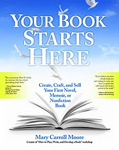
WINNER! 2011 NH LITERARY AWARDS--READER'S CHOICE
Buy a copy now |
|
| |
I love hearing from readers! If you have a question about writing or book structure, email me at mary[at]marycarrollmoore [dot]com and I'll happily respond in a blog post. (To read any posts you missed, visit my award-winning
website: www[dot] marycarrollmoore[dot]com.)
|
Memoir's Primary Argument--How to Make Sure Your Memoir Has Universal Meaning
Cheryl Strayed, author of Wild, once said, "The most powerful strand in memoir is not expressing your originality. It's tapping in to your universality."
A.M. Homes said, "Memoir is about more than you."
My aunt, who is in her 100th year, wrote her memoires. It was fun to read them, and I learned things about my father's family that I never knew. This style of memoir follows the Anglo-French definition: an "account of someone's life." A wonderful gift to pass on to those who know you and who want to hear your past.
But if you're gearing towards publishing outside of family and friends, you need to consider the wisdom of memoirists like Strayed and Homes. Modern memoir is not autobiography. It focuses on a salient part of a life, not the entire trajectory, as an autobiography might. And it contains a universal element, a meaning, that has nothing to do with the person writing it.
I'm teaching an afternoon workshop on memoir on July 17 on Zoom, and I've taught this workshop every summer for about five years. This time, I'm looking into the meaning element of memoir, that universality, and how the writer finds it.
I think there are three steps. First, I believe the writer needs to orient towards a snapshot, a certain pivotal period of time, that changed his or her life in a big way. Once you find that pivotal moment that your story orbits around, it's easier to reach out from it to find which storylines are part of the memoir--what might have happened years before which led to this moment, what happened years later that came as a result.
Second, I think the writer needs to
choose where to place the weight of the memoir. Some memoirists write about the time leading to the pivotal moment; some write about the aftereffects--the living with, surviving from, reconciling or not. A memoir can often be built on any of these, or sometimes all of them, with the event in the middle.
Once you find that pivotal moment that your story orbits around, it's easier to reach out from it to find which storylines are part of the memoir--what might have happened years before which led to this moment, what happened years later that came as a result.
Most writers feel they have to include all of their childhood, maybe twenty, thirty, forty years of smaller but significant (to the author) events. Otherwise, how will the reader understand the big change? This is where the storyboard comes in so handy. Memoirists create two or more storyboards, or maps of their storylines, then learn to weave them together like a braided rug.
But the most intriguing step, the one that fascinates me, is discovering the primary argument of the memoir. This is the key to its universality, and best described through example.
Girl, Interrupted, by Susanna Kaysen, is about mental illness, being confined to an institution. To me, it's primary argument is What is sanity, truly? The argument is not stated outright, not for a while, but it's clear even in the opening scenes. That's what draws us in, keeps us reading. The situation is personal, the argument leads to the universal.
H Is for Hawk, by Helen Macdonald, has three storylines: her training of a hawk, her father's death and her relationship with him, and the author T.H. White's falconry. Complex story, so I'm guessing at the primary argument, but it is tied to what drew me in: what we can control, what we can't, and how love appears within that empty space.
Writers often wonder what backstory to include, and where to put it. The argument tells you. Only backstory that elucidates it is needed. If Kaysen included stories of trips to the circus as a young girl but they didn't illustrate the question of sanity, they'd feel off to the reader--the writer stepping in where she wasn't wanted.
This takes incredible restraint. Because everything is fascinating to us, who lived it.
Dani Shapiro, author of
Inheritance, talks about the "frame" of a memoir. Which window will your memoir look out of? This is another way of getting to the primary argument and one I use in the workshop, because it's also fascinating. Shapiro's frame concept forces the writer to focus the story in some direction. Unlike an autobiography, it's heading towards a universal meaning.
This week, I'll share a writing exercise, a taste of what we'll be exploring in the workshop on
July 17. Set a timer or your phone alarm for 20 minutes and begin a list of the most important events in your life, so far. No censoring, no editing, no explanations needed, just it get on paper. Then begin to ask yourself if any are related or linked. Do they have a common argument, or theme, teaching you something about life?
If you're interested in joining me on Zoom on July 17 for more about memoir,
click here to go to the Loft's website for more information.
|
|
Rest Breaks for Creative Artists--How to Get Your Mojo Back
Perhaps you know these important signs of creative burn out: an overactive inner critic, a blue feeling about one's work, a sense of deep depletion despite relative safety and well-being.
Of course, relative is the word these days. But each of us has our baseline. And if the summer is rolling around with all of these symptoms, you might be giving so much out in your life, you haven't replenish the part of you that brings the good things back.
|
|
Writing through Anxiety--Write On! Video Featuring Author Shelby Kenney-Lang
I love these videos from the writing school in Boston, Grub Street, featuring their instructors sharing techniques they're using to keep writing during these unprecedented times.
Here's video from author Shelby Kenney-Lang, who describes a technique he used to write a new essay that was published in the
Green Mountain Review.
|
|
Anger and Grief and Their Place in Writing (an Actual Technique I've Used)
During the height of the riots and fires, I sought ease in mind-candy movies. One was
Tootsie, from the eighties. It kept me entertained, and although I moved on to another similar film very soon, one scene from
Tootsie stayed in my mind, reminding me of a great writing technique I'd used during time of intensity and crisis.
|
Jennifer Egan and Susan Choi on Productivity (or Lack of) during a Pandemic
One of my writing students sent me a link to this wonderful podcast, perfect for our chaotic times--which have only gotten more so. If you're concerned that you haven't made progress on your epic novel or other masterpiece, you're in good company.
|
Unexpected "Container" in an Award-Winning Novel: An Interview with Ginger Eager
Not just because she's a generous, insightful member of my monthly writer's group. Not just because her book won the coveted AWP award for the first novel. I fell in love with Ginger Eager's The Nature of Remains for the strong female characters and the unique place she writes about.
Not unusual for a Southern novelist to be enamored with place. Ginger Eager comes from Georgia and she set her novel in the fictional Georgia town of Flyshoals, but the larger setting of the book is its geological history. The soil in that part of Georgia is riddled with amethysts. The Nature of Remains is about the people who circle that geological wealth, both the criminals who dig and sell it, and the families affected by their passion.
|
|
Using the Enneagram's 9 Personality Types to Create Vivid Characters in Fiction and Memoir
No one likes to be categorized or typecast, but when it comes to creating vivid characters on the page, I find the personality system of the Enneagram a life saver.
Twenty-some years ago, when I first began studying this system, not many people knew about it. It had no huge institutes or psychologists tooting it, as it does now. It was Greek and new age, a little odd. My introduction was through
Eli Jaxon-Bear, whose book,
From Fixation to Freedom,
promoted an Eastern approach that appealed to me. Later I discovered the
more
Western approach
used like Myers-Briggs typing and promoted by Don Riso and Russ Hudson in their Enneagram Institute.
|
|
Unexpected Blessings of Writing by Hand: What Other Writers Find in Their Handwriting That's Not on Their Computer
Do you know "BrainPickings," the online newsletter/digest put together by Maria Popova? (If you don't, it's worth a look.) Popova recently wrote about her favorite books from 2019 and one was by the poet Ross Gay, called
The Book of Delights. In this
article, Popova discusses Ross Gay's enjoyment of writing by hand, something not usual to writers in this super-fast electronic era.
|
|
Creative Resistance to Hard Times--Guest Blog by Author Ellen Prentiss Campbell
Ellen Prentiss Campbell's Known By Heart: Collected Stories
, appeared May 1 (Apprentice House Press). In 2016 her debut novel The Bowl with Gold Seams
(Indy Excellence Award for Historical Fiction) and her story collection Contents Under Pressure
(National Book Award nominee) were published. Ellen's home in Washington D.C., hosting an online book group for children, writing essays, reading War and Peace
and mysteries, and making soup.
I've invited her to share her view on creativity and Covid times, as her new book launches.
Looking back, we see the signs. It was coming for us, not reserved for others, not restricted to Over There. But denial is a powerful force. The pandemic arrived stealthily, catching most of us absorbed in routine. Startling us, kidnapping us, blowing away our routine, our assumptions, our plans. The lights went out on Broadway; the stay-at-home mandates swept across the land. Even if we were lucky and healthy, we were hostages, grieving lost expectations, fearful, and uncertain.
|
Refining Your Writing Space for Sheltering at Home
One of my favorite writing treats when life seemed normal was an afternoon at our local coffee shop. Surrounded by a dozen others, all plugged into their laptops and earbuds, we wrote. Sun came in the big windows, I sank into my leather chair, and I sipped a new choice of tea in the coffee shop's huge mugs.
I wrote at home too, when my family was out of the house. But mostly at the coffee shop. I was insanely productive there, even with the music and crowd and cramped space.
|
Ways to Inch Back into Writing--If You've Stalled Out (Some Good Habits to Test Out during a Pandemic)
I subscribe to Jane Friedman's excellent newsletter and her recent article,
"Writing from the Bottom Rung." by guest writer Lisa Cooper Ellison hit home (if the link doesn't work, go to her website and search her blog for that title).
Jane discussed Maslow's hierarchy of needs: the bottom rung is food, shelter, and warmth, the top is self-actualization, where creativity happens.
|
|
Online Connection--How to Find Your Virtual Writing Tribe While Sheltering at Home
One of my students emailed me this week with a good question. He's been part of a writing group and loved the social and creative time. But now that he's sheltering from home, he wondered what else was available for writers?
So I'm running a past post this week, sharing my tips on how to find your virtual tribe. Hope they are helpful to those of you self-isolating and looking for writerly companionship.
|
|
Making Time for Writing When You Have Nothing to Do
Last week I taught my first Zoom class to five writers from across the U.S. when our weeklong retreat in Santa Fe was cancelled thanks to Covid. Three were working on memoirs, two on novels, all in progress. Each day, we gathered to learn and inspire each other virtually. I read their writing and offered feedback. They were patient as I practiced intricacies of teaching remotely. I think we all learned a lot.
Our final Zoom meeting was especially heart-opening.
|
|
Three Practices to Keep Creatively Healthy Right Now
I'm back to writing this week. You may not be, yet. I've heard from a steady stream of students and coaching clients and many are still stalled out, unable to resume a book project. Life in its new normal demands ridiculous amounts of time. A recent foray to shop for produce took five hours out of my day, given the protective gear, the controlled shopping experience, the time to clean everything when I got home.
It's understandable, too, that fear for self, family, friends, the world can prevent any creativity. Who has time or energy for it? And is it really that important, in the face of all that's happening?
|
Interview Your Characters: Character Lists Coax Them Out of Hiding
In one of my favorite, easy-read, writing-craft book, Write Away, mystery author Elizabeth George talks about her writing process as she begins a new book. She first writes detailed ideas about the plot. She also researches the setting, often with trips to the location she's thinking of using. And she always puts together a character list.
|
|
Are We There Yet? How to Tell When Your Book Is
Really
Done
Each book I write, I struggle with this question. And I'm not alone. Even with many publications behind me, it's incredibly difficult to tell when a book is really done.
There is an end point. Truly. Part subjective, part objective. But it can be confusing or depressing en route to that place. One of my students recently questioned whether her book could ever be ready. "Some ideas may not be worth the effort or the money," she told me.
|
|
Benefits of a Writing Group or Writing Partner--How They Can Improve Your Writing (and What to Watch Out For)
Some writers create in a vacuum. But most artistic types need human contact, if only for reality checks. Writing groups and writing partners have been a foundation for my creative life for decades. If you don't belong to such a collaboration, consider it! It's nearly impossible to make serious headway as a writer without constructive feedback.
|
|
Reading Your Writing Aloud--How It Gives You the Necessary Distance for Revision
Revising a book requires distance. Ideally, the writer has to detach enough from the emotional content of the writing, or the love of her characters, to "hear" the story as a reader would.
Revising without this distance usually means we repeat ourselves. We run the same track over and over.
Maybe words get tweaked. But the overall sense of the story doesn't change that much.
|
|
Staying Authentic with Your Intentions as a Writer--Not Always Easy?
I had a very lucky and much too fast beginning as a published author. My first book, now long out of print, was a huge success--the press's best seller and winner of a prestigious award. I was in my twenties, busy with a new relationship and a new business, and fairly ignorant about what was happening. It was just a fast train, I was on it, and I didn't know the writing life could be any different. That first book landed me an agent who helped me with several others. Out of it came
a nationally syndicated column and good income for a number of years.
|
|
Really Good Creative Writing Prompts--for Exercising Your Inner Author
This week I've been teaching on retreat at MISA West, Tanque Verde Ranch, in the beautiful Rincon Mountains outside Tucson. Along with the workshops and coaching each day, I always offer creativity-stretching sessions before dinner. A perennial favorite at these retreats is freewriting hour.
|
|
Setting Writing Goals for the New Year: Three Different Approaches
I'm a goal setter by nature, so I enjoy the chance each new year to look at what I've accomplished in the past twelve months and think about where I'd like to be with my writing in the next twelve. I've learned not to be too rigid with my writing goals: I don't know what I don't know, after all, and I may need to correct my direction if new ideas or information arrives midcourse.
|
|
Too Slow? Too Fast? How Are You Communicating? (And How to Tell When Your Pacing Is Off)
Storytelling is all about communication, right? You, the writer, have something to say. Ideally, you present it in a way that's authentic to you but also communicates to your readers exactly the meaning you're after.
If you "talk" your story too fast, readers can miss the point. Just like in real conversation, they may start to get confused or irritated, or disconnect entirely.
If you "talk" too slow, same problem. They'll skip sections. Ever do this yourself, when reading? You know what I mean.
|
|
How to Help Your Manuscript Submission Stand Out--Being Part of a "Discourse Community"
I often refer clients and students to Jane Friedman, clearly one of the most savvy publishing gurus out there today. Friedman is the former publisher of
Writer's Digest
magazine, and author of
The Business of Being a Writer, a primer on publishing that every hopeful author needs to read.
|
|
A Cool Character-Building Exercise from Comic-Artist Lynda Barry
January is often a good time to shake up the writing routine, examine different ways of approaching recurring problems in your book, get inspiration from those who bust the barrier, which is why last week's post from Mo Willems got me thinking about publishing in a new way.
|
|
Best-Selling Children's Book Author Shares How He Busted Tradition and Won Anyway
Winner of three Caldecott Medals (the best win in kid lit),
Mo Willems was rejected some billion times (his words) by publishers who said his work was "too unusual."
|
|
Getting Away from Your Life to "Entrain" at a New Level: Benefits of a Writing Retreat or Class Away from Home
Winter is the time of year when I think about entrainment. Entrainment, as it pertains to the writer's life, is the art and science of learning by proximity to writers who are working at a higher level than you. It's skill by osmosis, by community. For me, it's an absolute necessity.
|
Explicit or Implicit Interiority? How Much Should You Show or Tell about Your Characters' Inner Lives?
Interiority or "internals" is a fancy way to describe the reader's view into your characters' thoughts, feelings, and inner lives. Some genres require a lot of this (memoir), some much less (thrillers). Interiority is what makes a character real to the reader. Skilled writers reveal interiority in several ways. It's important to know what your genre requires and how to plant and build the interior lives, without having them slow the momentum of the story.
|
|
Can You Use Real Place Names in Your Novels? Can You Fictionalize Details?
Maggie is writing a novel about a group of people living in a made-up place, based on a real location. She faced a dilemma this month about how much freedom she has, as a fiction writer, to use real places in her story.
"The reader knows my novel takes place in Minnesota," Maggie told me. "I want to reference lakes, counties and towns that one of the characters--a realtor--covers. These places are my real-world reference points."
|
|
Finding a Writing Group or Writing Partner--From Afar (Online and On Demand)
Nikki, who travels a lot, took one of my writing workshops and recently emailed me with a great question: how do you find a writing group or writing partner when you can't physically meet regularly?
|
|
Wisdom from the Irreverent Anne Lamott--on Writing and the Writer's Life
We all need inspiration. Writing can be a solitary, even lonely, process, often discouraging. Thanks to my student Mary for this excellent inspiration break from the always-inspiring Anne Lamott, author of
Bird by Bird and many other books. She shares her wisdom in this TED talk. Enjoy. (And take notes!) I promise it'll give you writing fuel if you're even a wee bit stuck this week.
|
Should You Pursue Your Manuscript--Or Set It Aside--After Multiple Rejections (AKA Who Are You Writing This For?)
One of my students from Canada recently contacted me after the third small press rejected her memoir manuscript. The publisher was seriously interested but, after some thought. changed his mind. The press offered detailed feedback--in itself an encouragement--which she appreciated.
|
|
The Confusing World of Copyrights and Permissions--A Brief Overview for the New Author
Although I don't recommend spending much time on the legal aspects of publishing until you are close to that long-awaited time, there are some good rules of thumb to know about. Here are a few questions I get regularly.
|
|
On Hooks and Other Excellent Ways to Start Your Story
When I was shopping my first novel, Qualities of Light, to publishers, along with the rejections, I received an incredibly valuable piece of advice: start the story later.
|
|
Organizing Your Book: How I Learned to Love Scrivener
Books become unweildy fast. Unlike a poem, essay, or short story, a book may generate thousands of pages by the time it's revised down to three hundred and fifty. Most writers don't realize or remember this when starting a new book. But after a few revisions, there's just too much to keep track of.
I get this question in most of my classes: how do you organize your book-in-process?
|
|
Layers of Time in Fiction and Memoir: How Does a Writer Weave Past, Present, and Future into Scenes without Creating Too Much Exposition?
Your scenes have voltage, electric current, for readers. But in most novels and memoirs, there are layers of electricity, because there are layers of time. We move between past, present, and future in our real lives all the time, even more so on the page. One of those times will have the most electricity, and it's good to know that. But how do you bring in the less-alive times and make sure the reader knows enough about them, without delivering too much exposition?
|
|
How Do You Create Section Breaks--the White Space Pause--in Your Chapters or the Whole Book?
A great question, simple but important, this came my way from a former student who is working on the first draft of her memoir. When you construct chapters, when you look at the book as a whole, you do have the option to give the reader small moments of pause, usually created with a few paragraph returns and white space (in chapters) or a couple of blank pages (in the larger book).
What are the rules around doing this? How often, and why?
|
|
Creating Believable Characters on the Page--Tips for Fiction and Memoir Book Writers
I've been struggling with my antagonist. That might sound like a normal situation--antagonists create conflict--but my challenge is less about what he does than how believable he is on the page.
|
|
Famous Writers' Favorite Tips
I'm just back from a marathon teaching trip so this week's post will be short and sweet: a
wonderful article from the newsletter,
BrainPickings, on famous writers' favorite writing tips, compiled by The Guardian. (Thanks to reader Mary K. for the link.) Enjoy!
(If the link doesn't work, go to
www.brainpickings.org and search for Jeanette Winterson.)
|
|
To Storyboard or Not to Storyboard: How This Cool Planning Tool Compares to Outlines, Charts, and Maps
I'm working on my third novel, my fifteenth book, and I'm approaching it as many writers do: from nowhere! It's an exploratory process, and I don't really know what the book will be about. I have a good idea, a handful of characters I already love (and hate), and a kind of plot. But I do have my storyboard, and that's gotten me a lot further along than I would be without it.
|
|
Beta Readers--Who Are They, How Do They Help Your Book, How to Find Them
Linda is closing in on the finish line with her memoir and sent a great question this week: "I'd like to hear what you have to say about beta readers, particularly if it's a good idea to find complete strangers or folks I've already worked with (such as from online classes). Who makes good beta readers?"
|
|
| |
|