| |
| |
|
Growth is usually a positive sign. More customers, more locations, more transactions, and more people often mean the business is moving in the right direction.
But growth also adds complexity.
Over time, processes that once worked well can become harder to manage. Reporting takes longer. Teams rely more heavily on spreadsheets. Information lives in different systems. Leaders spend more time reconciling numbers before they can make decisions.
The challenge is knowing when those issues are simply part of a busy season and when they are signs that the systems supporting the business have reached their limit.
In this month’s Mendelson Insights, we explore how growing organizations can improve financial visibility, use AI to strengthen inventory decisions, recognize when their systems may need to change, and evaluate the next step with greater confidence.
| | | | |
|
As businesses grow, complexity tends to increase quietly.
A process that worked well for one location may become difficult to manage across several. Reporting that once took a few minutes may begin requiring spreadsheets, manual adjustments, and additional review. Teams may still be getting the work done, but with more effort and less confidence in the information.
That is often the point when leadership needs to look beyond the symptoms and ask a broader question: Are our systems still supporting the way the business operates today?
The answer does not always mean replacing software. Sometimes the right next step is improving reporting, connecting existing systems, or redesigning a process. Other times, growth has created requirements that the current environment can no longer support efficiently.
The important thing is to recognize the difference early. Good technology decisions begin with understanding where the friction is coming from and what the business needs to accomplish next.
| | |
Sincerely,
Mario Nowogrodzki, CPA.CITP
CEO and Founder
| |
| | | |
Financial Visibility Across Multiple Locations:
When Growth Makes Reporting Harder
| | |
As organizations add locations, entities, teams, and transactions, financial reporting often becomes more difficult before leadership realizes there is a larger systems issue.
What once worked with a few spreadsheets and manual reconciliations can become time-consuming and increasingly difficult to trust. When financial data lives in different places, leaders may spend more time validating numbers than using them to make decisions.
Our latest article explores how growing businesses can improve financial visibility across multiple locations, reduce reporting delays, and create a more consistent view of performance across the organization.
Why it matters
Growth should give leadership more insight into the business, not less. Reliable, timely financial information helps leaders identify trends, compare performance, and make decisions with greater confidence.
Read the full article →
| | | | |
| |
| |
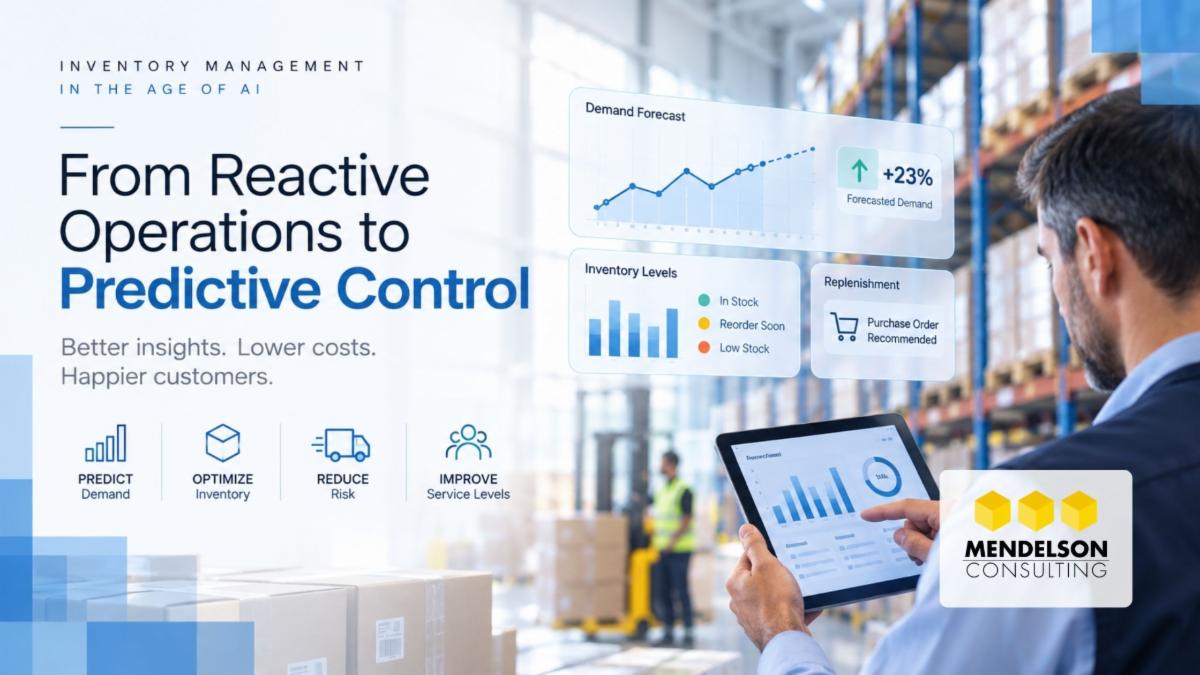
AI Inventory Management: From Reactive Decisions to Predictive Control | | |
Inventory management has always required balance. Carry too much, and working capital gets tied up. Carry too little, and stockouts can disrupt operations and customer service.
AI is changing how businesses approach that challenge by helping teams analyze demand patterns, improve forecasting, identify replenishment needs, and respond more quickly to changing conditions.
Our latest article explores how AI can support smarter inventory decisions without replacing the experience and judgment of the people responsible for managing the business.
Why it matters
Better inventory decisions can improve cash flow, reduce carrying costs, and strengthen service levels. The real value of AI is not simply automation. It is giving decision-makers better information, faster.
Read the full article →
| | | | |
Is It Time? How a Growing Business Knows When Its Systems Need to Change | | |
Growth can create pressure on systems long before the problem becomes obvious.
Reporting takes longer. Teams rely on more manual workarounds. Different departments or locations begin operating from different versions of the truth. At first, these issues may feel like the normal growing pains of a busy business. Over time, they can signal that the systems supporting the organization have reached their ceiling.
In this upcoming webinar, we will explore how business leaders can distinguish temporary operational strain from a deeper systems issue and use a practical framework to evaluate whether change is needed.
What you will learn
- How to recognize the signs that your current systems may be limiting growth
- How to separate process problems from technology problems
- What to evaluate before considering a new business system
- How to approach the next step with greater clarity and confidence
Register for the webinar →
| | | | |
Business Systems Assessment | |
Not Sure Whether the Problem Is Your Systems?
Start Here.
| | |
Operational friction does not always mean you need new software.
Sometimes the bigger opportunity is improving workflows, connecting existing systems, or reducing manual work. Other times, the business has reached a point where the current environment is actively limiting visibility, efficiency, and growth.
Our ERP & Operational Efficiency Assessment helps business leaders evaluate where those problems may be coming from before making an expensive technology decision. It looks at factors such as system connectivity, reporting delays, manual processes, leadership readiness, and operational complexity, then provides a recommended next step based on your responses.
Why it matters
The goal is not to push your business toward a new platform. It is to better understand where the friction exists and whether the right next step is process improvement, integration, or a more scalable system.
| | | | |
When Growth Requires More Than QuickBooks | | |
As organizations add locations, entities, teams, and operational complexity, the challenge is not always that QuickBooks stops working. Often, the issue is that the business begins asking more from its systems than they were originally designed to support.
For multi-unit and multi-entity organizations, that can mean longer reporting cycles, more manual consolidation, inconsistent processes across locations, and less visibility into performance.
Intuit Enterprise Suite is designed for growing businesses that need stronger financial management, deeper reporting, and more scalable multi-entity capabilities without taking on the complexity of a traditional enterprise ERP.
Why it matters
The right time to evaluate a more advanced platform is before operational friction becomes a barrier to growth. Understanding where your current systems are creating limitations can help you determine whether optimizing what you already have is enough or whether it is time to consider the next step.
Explore Business Systems for Multi-Unit Organizations
| | | | |
| |
Four Signs Your Systems May Have Reached Their Ceiling | | |
Growth creates complexity, but not every challenge requires a new platform. The key is recognizing when operational friction is becoming a recurring pattern rather than a temporary issue.
Ask yourself:
- Is reporting taking longer as the business grows?
- Are teams relying more heavily on spreadsheets or manual workarounds?
- Are different locations, departments, or systems producing different versions of the truth?
- Are decisions being delayed because information is difficult to consolidate or trust?
If several of these signs are becoming familiar, it may be time to evaluate whether your current systems are still supporting the way your business operates today.
The goal is not to replace technology for the sake of change. It is to identify where friction is coming from and determine whether the right next step is better processes, stronger integrations, improved reporting, or a more scalable platform.
|
| | | |
|
Growth does not always mean your business needs new technology. But it does mean the systems supporting the business should continue to evolve with it.
The most effective technology decisions are made before operational friction becomes a crisis. They begin with understanding where visibility is breaking down, where manual work is increasing, and where current processes are no longer keeping pace with the organization.
The goal is not simply to change systems. It is to make sure your technology continues to support the way your business operates today and where it plans to go next.
Need help evaluating your next step?
Whether you are trying to improve reporting, reduce manual processes, connect existing systems, or determine whether a more scalable platform is needed, our team can help you evaluate the options.
| | Know someone navigating business growth? | | If you found this edition of Mendelson Insights valuable, please share it with a colleague or business leader who may also benefit from these insights. | | | | |
| |
| |
| |