____________


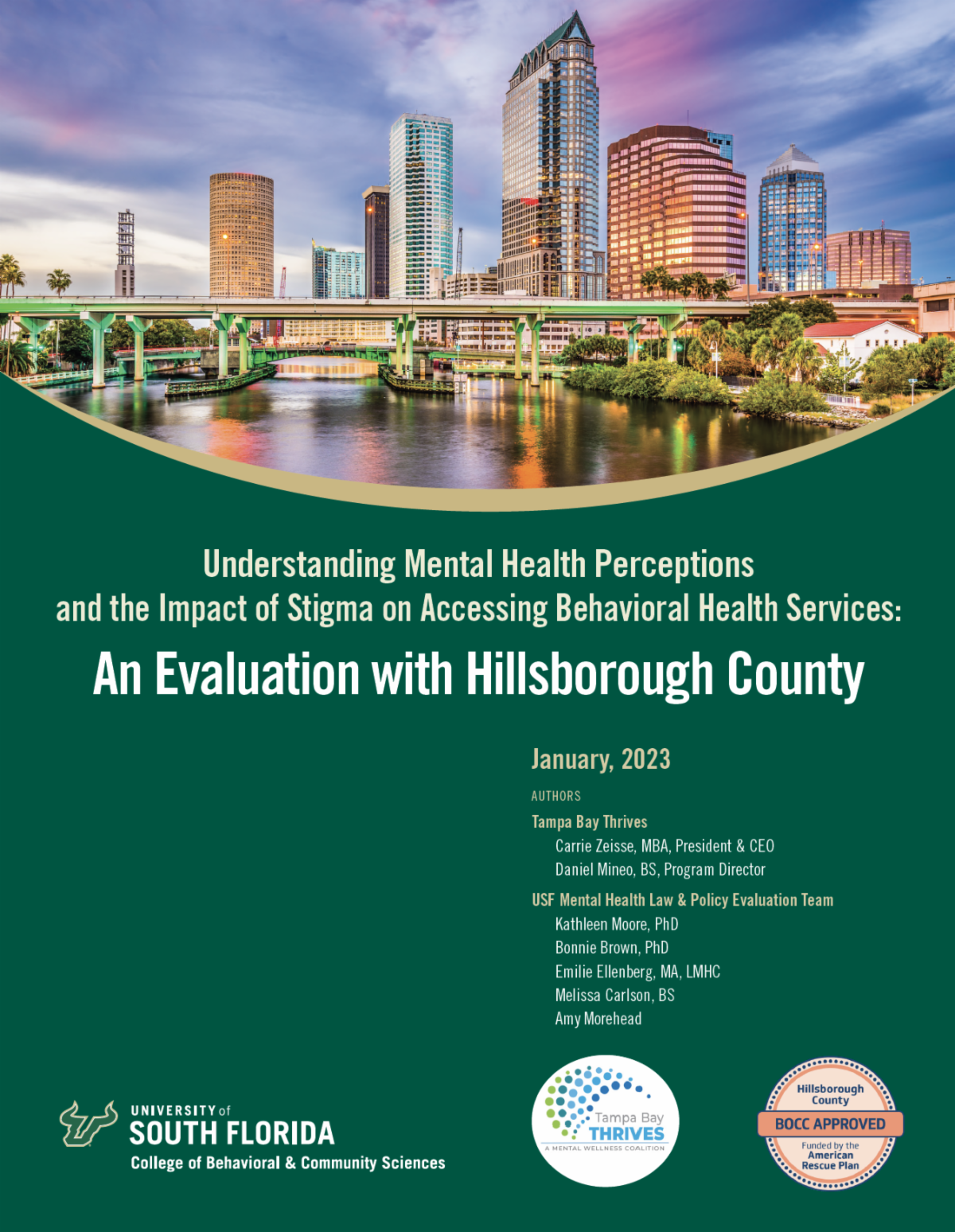
Tampa Bay Thrives commissioned a recent report in partnership with USF’s Mental Health Law & Policy evaluation team to explore Perceptions of Mental Health, Perceptions of Stigma, Barriers to Accessing Care in Hillsborough County, and

 Positive Experiences Relating to Accessing Care.

Read the full report here.


___________


Mental Health has been called the second pandemic to hit our country since the coronavirus.


Last year, the World Health Organization issued a wakeup call for all countries to step up mental health services and support after studies showed that the COVID-19 pandemic triggered a 25% increase in prevalence of anxiety and depression worldwide.


In this newly released CDC Youth Risk Survey, the 2021 data revealed that experiences of mental health and suicidal thoughts and behaviors worsened significantly; more than 40% of high school students reported feeling so sad or hopeless that they could not engage in their regular activities for at least two weeks during the previous year—a possible indication of the experience of depressive symptoms.


A segment of the population that has been hit particularly hard are teenagers. The number of teenage girls who reported “persistent feelings of sadness or hopelessness” spiked from 36% to 57% over the last decade, according to the Centers for Disease Control and Prevention.


But there is hope. Mental Health America's Young Mental Health Leaders Council 2022 Annual Report shares strategies for advocacy, leadership, and programming around mental health for teens.


Closer to home, we worked with the University of South Florida College of Behavioral & Community Sciences to Understanding Mental Health Perceptions and the Impact of Stigma on Accessing Behavioral Health Services in Hillsborough County. Read our full report here.


Does your organization invest in workers’ mental health and well-being?


In 2019, Mental Health America

launched the Bell Seal for Workplace Mental Health to recognize and support corporate leaders and advocates committed to worker mental health and well-being.


The submission deadline is Friday, March 31, at 11:59 p.m. ET.


Take this quick 2-minute assessment for preliminary results to see if your workplace qualifies.


Apply for Bell Seal today.

Learn more and join the ranks of the more than 115 Bell Seal-certified employers that exceed workplace

mental health expectations.


Curious if your workplace qualifies? Want to learn more about how past and current recipients achieved

Bell Seal recognition?


Join MHA for a free, 45-minute webinar to learn more about the application process, application process, program benefits, how past and current Bell Seal recipients contribute to worker well-being, and more.

Register for Webinar.


This is an exercise that develops energy and vitality by stimulating the nervous system. It increases circulation, toning of nerve function.


It’s highly effective to release tension in the neck and when you may be feeling heavy in the chest and body.


Click here to join Syd in the One-2-Ten breath.


According to the National Institute of Mental Health, nearly 1 in 5 adults in the U.S. experience mental illness. That means that at a company with 10 employees, at least 2 live with mental illness.


Mental health stigma can be a barrier for employees who wish to talk openly about their treatment and condition. There are several reasons an employee might not wish to disclose a mental illness, including fear of losing their job or missing out on a promotion and worry over coworkers and their managers judging them.


You can begin by breaking the silence. Lead by example, ask again, and become a mental health first aider. Read more about these three practical tips to starting the conversation at work with your teams.


Consider joining or establishing an Employee Resource Group for mental health. Organize a group of like-minded people who bring different perspectives, including race, gender, those with lived experience, and different levels within the organization. This group will have their fingers on the pulse of the company's mental health culture.


Host regular checkins with your staff. Here are some tips on how to ask questions without being invasive.


Be open to making reasonable accommodations. Consider offering flexible schedules, modified break schedules, and rest area/private spaces and more.


And if you're unsure how to respond after an employee shares a mental health challenge, here are three things to remember.


Have you heard of Let's Talk Tampa Bay? It's our free and confidential support line. Sign up for our Let's Talk monthly newsletter here.

Facebook  Instagram  LinkedIn  Twitter