Join us for our upcoming webinars & events | | | August 5 | August 12 | August 25 | | | |
Strengthening court-ordered treatment services
The Arizona Health Care Cost Containment System (AHCCCS), in partnership with the Western Interstate Commission for Higher Education, invites Arizona behavioral health providers to participate in a one-day in-person learning event.
Participants will learn about the court-ordered treatment training initiative, use of clozapine and roundtable discussions.
| | |
Understanding Early Childhood Development
This session focuses on the social, emotional, and developmental needs of preschool-age children.
Hosted by Mercy Care and Southwest Human Development, this training is part of a series covering children from birth to age 5. It provides an overview of mental health and early development for parents, caregivers, and behavioral health providers.
| | |
Building Connection Through STAR Peer Support
Join our upcoming OIFA lunch and learn. Learn about STAR’s peer services and how lived-experience-based support fosters connection, resilience, and recovery.
Discover real-world applications, hear success stories, and explore how peer support is making a meaningful impact for individuals, families, and communities.
| | | Employment Services
*Designed to enhance Provider competency in areas outlined in AHCCCS ACOM 447 & AMPM 1240J Employment policies | | | |
Vocational Rehabilitation (VR) Information
Training Session for all Mercy Care Providers
Overview of the Vocational Rehabilitation (VR) program to include:
- Purpose of VR
- VR process Orientation through Closure
- Questions/feedback
Please share with your team! If you have any questions, please feel free to contact or email:
EmploymentVocationalServices@mercycareaz.org
| | |
Member Engagement
Member Engagement
This training covers strategies to engage members around employment, including those interested in working and those who are not.
Participants will review the role of employment in daily life and its impact on recovery. The training supports provider competency aligned with AHCCCS ACOM 447 and AMPM 1240J policies.
| | | August 12 | August 19 | September 2 | | | |
Disability Benefits 101 (DB101)
This training highlights Disability Benefits 101 (DB101), an online tool that explains how employment income may affect Social Security benefits.
Participants will learn how DB101 supports members, how to connect with a Work Incentive Planning Assistant and review the SSI/SSDI estimator.
| | |
RSA/Vocational Rehabilitation (VR)
This training highlights the Vocational Rehabilitation program and its role in helping individuals with disabilities prepare for, enter and retain employment.
Participants will review program benefits, eligibility requirements and available services.
| | |
AHCCCS Covered Behavioral Health Services Guide
This training highlights the Covered Behavioral Health Services Guide (CBHSG), focusing on employment-related services and billing codes.
Participants will learn when Medicaid-funded employment and rehabilitation services apply and how to distinguish between pre- and post-employment services.
| | AHCCCS encounter keys newsletter now available Here | |
|
AHCCCS drug supply alert
AHCCCS is notifying providers of a reported detection of medetomidine, a veterinary sedative, in Arizona’s illicit drug supply. The substance was reportedly identified in a product believed to be fentanyl and may represent one of the first reported cases in the state. Providers should remain alert for atypical sedation or overdose presentations that may not fully respond to naloxone, reinforce harm reduction education, and report unusual clinical findings through appropriate channels. AHCCCS continues to monitor the situation and will provide additional guidance as more information becomes available.
| | | |
|
ALTCS focus groups: Thank you for your feedback
Over the past several months, Mercy Care has engaged provider partners through ALTCS-EPD focus groups to better understand experiences, identify opportunities, and gather valuable feedback. We sincerely appreciate everyone who took the time to participate and share candid insights. Your perspectives highlighted opportunities to strengthen communication, streamline processes, and enhance the experience for members, caregivers, and providers. The feedback gathered continues to inform us of our continuous improvement efforts, and we remain committed to listening, learning, and acting on what we heard. Thank you for your partnership and dedication to serving Arizona's ALTCS-EPD members.
| | | | |
Important update: Daily claims processing begins July 22
Mercy Care is pleased to announce an enhancement to our claims processing operations. Effective July 22, 2026, claims will be adjudicated and processed for payment daily for all lines of business.
This change is designed to improve processing efficiency and support more timely claims adjudication. Providers can continue to submit claims through existing channels, and no action is required on your part to benefit from this update.
We appreciate your continued partnership and remain committed to delivering efficient and reliable service. If you have any questions regarding this change, please contact mcprovidereducation@mercycareaz.org.
| | |
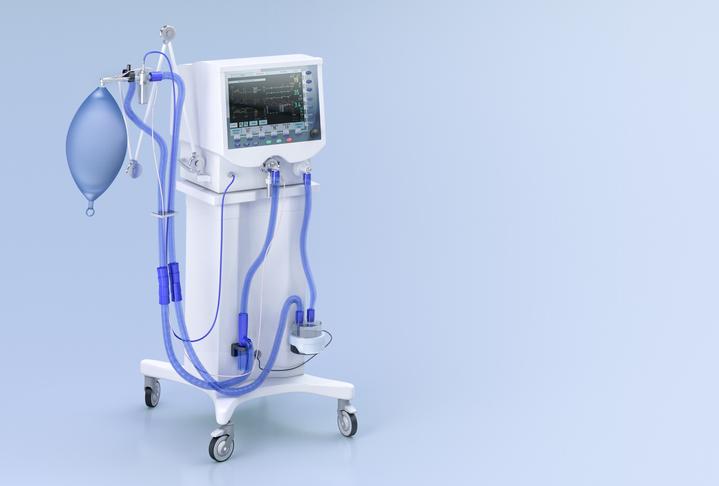
ResMed astral ventilator correction underway
ResMed has initiated a phased medical device correction for certain Astral 100 and Astral 150 ventilators manufactured before October 2024. The correction addresses a potential internal component issue that may cause therapy interruption. While the reported occurrence rate is low, ventilator-dependent patients could be at risk if alternative ventilation is not immediately available.
Correction Timeline and Next Steps
Due to supply constraints affecting replacement circuit board assemblies (PCBAs), ResMed is prioritizing inspections and corrective actions for patients at the highest clinical risk. No completion date has been announced. Providers should identify affected patients, assess individual risk, reinforce caregiver training, and ensure backup ventilation equipment is readily available and functional. ResMed will continue to provide updates and additional corrective action instructions as component availability improves.
For questions regarding affected devices or patient prioritization, contact your DME provider or referring provider.
| | |
|
Supported Employment: A path to independence and recovery
Supported Employment (SE) is an evidence-based practice that helps individuals with mental illness find and maintain meaningful, competitive employment in their communities. The program focuses on member choice, rapid job placement, individualized support, and ongoing coaching to help people achieve their employment goals.
Employment can increase independence, strengthen social connections, support symptom management, improve self-esteem, and may reduce intensive services. SE follows a zero-exclusion approach, meaning anyone interested in working can participate.
Mercy Care offers Employment services and resources and partners with specialty employment providers across Arizona to connect members with valuable employment opportunities and support services. Staff are encouraged to share the Employment Services pamphlets and brochures to help members learn how employment can support recovery, wellness, and long-term success.
Employment benefits and services vary depending on your connection to Mercy Care, whether you are living with a serious mental illness (SMI) designation, or have general mental health or substance use (GMH/SU) issues.
| |
Leading the connection - ALTCS newsletter
Mercy Care is pleased to share the latest edition of For the Record, a newsletter created by the ALTCS Workforce Alliance, which includes representatives from Arizona ALTCS health plans, AHCCCS, providers and community partners.
Published three times a year, For the Record keeps ALTCS providers informed about statewide workforce development initiatives and promotes collaboration across Arizona's long-term care network.
This issue includes updates on workforce development, provider engagement, abuse and neglect prevention, training opportunities, workforce planning and industry partnerships aimed at strengthening Arizona's health care workforce and improving member outcomes.
|
Help close care gaps & improve member outcomes
Mercy Care encourages providers to review the Care Gaps 2026 Provider Bulletin for resources and strategies to support preventive care, chronic condition management and quality improvement efforts.
Addressing care gaps helps ensure members receive recommended screenings, follow-up care and other essential services that contribute to better health outcomes. The bulletin includes information to help providers identify care gaps, improve care coordination and support quality performance measures.
For additional tools and guidance, visit the Mercy Care HEDIS webpage, which offers measure-specific resources, documentation and coding tips, and best practices for closing care gaps and improving quality outcomes.
Together, we can enhance member care, improve quality performance and support healthier communities.
Read the Care Gaps 2026 Provider Bulletin and visit the HEDIS webpage today.
|
Post‑Fracture Osteoporosis Care: A Key Opportunity
A fragility fracture signals higher risk for future fractures and offers an important
chance to support prevention.
After a fracture, consider:
- Order and review a DXA scan
- Assess fracture risk and evaluate for secondary causes
- Start or adjust treatment (e.g., bisphosphonates, calcium, vitamin D)
- Address fall risk (gait, vision, home safety)
Review risk factors and medications:
- Medications that increase fall or bone risk e.g., sedatives, opioids, corticosteroids, AIs/ADT, anticonvulsants, anticholinergics, antihypertensives (orthostasis)
- Clinical risk factors: Low BMI, tobacco or alcohol use, prior fractures, vitamin D deficiency, balance concerns
Incorporate routine screening (e.g., Annual Wellness Visits) and continue follow‑up after a fracture to help reduce future fractures and support long‑term bone health.
Refer to the references below for additional measure and coding details.
| | | |
|
Update: AHCCCS Covered Behavioral Health Service Guide (CBHSG)
See important updates from AHCCCS below.
| | | |
|
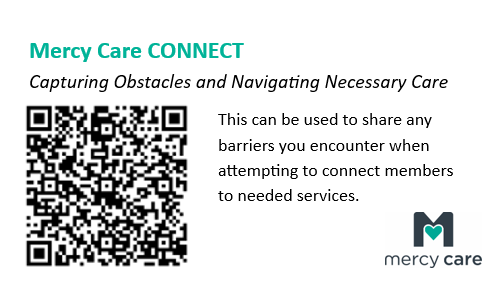
Mercy Care launches Mercy Care CONNECT (Capturing Obstacles and Navigating Necessary Care Transitions)
Mercy Care CONNECT is a provider-facing reporting mechanism that allows referring providers to notify Mercy Care when barriers are encountered while attempting to connect members with needed services. Through CONNECT, providers can share real-time challenges affecting member access to care.
Reported barriers are investigated and monitored by Mercy Care and used to identify opportunities to strengthen care coordination, address service gaps, and improve the overall member experience.
By partnering with providers through Mercy Care CONNECT, we can better understand obstacles to care and work collaboratively to develop solutions that help members receive the services they need, when they need them.
Use the QR code or link to report barriers.
| | | |
|
The following CPT codes require Prior Authorization effective 07/14/2026
33927 - IMPLTJ TOTAL RPLCMT HEART SYS W/RCP CARDIECTOMY
33928 - REMOVAL & RPLCMT TOTAL RPLCMT HEART SYS
33929 - REMOVAL TOTAL RPLCMT HEART SYS FOR HEART TRNSPL
L8698 - Miscellaneous component, supply or accessory for use with total artificial heart system
Prior Authorization (PA) requirements may change periodically.
To ensure you have the most current information, we recommend checking the ProPat tool before submitting requests.
You can quickly confirm whether a service requires PA using our online tools:
| | | |
|
Reminder: Use the Telehealth Codes For new and existing Patients
Note, this was effective 1/1/2025.
| | | | |
|
Reminder alert! Submission of medical records – one member per fax
To protect member privacy and ensure efficient processing, Mercy Care now requires providers to submit medical records for only one member per fax. Do not include records for multiple members in a single transmission. Faxes that include records for multiple members may be returned for correction and may delay processing.
Each fax must relate to one member and one request. Combining records may result in inappropriate exposure of Protected Health Information (PHI) and potential HIPAA violations.
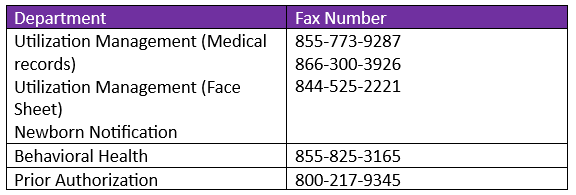
Fax requirements: Include member name, ID, date of birth, and authorization/reference number (if available).
Department fax numbers are listed below:rticle Heading
Place article copy here. Be sure to make the articles short and concise as people tend not to read much more than a couple of paragraphs. Place article copy here.
| | | | Miss an issue of The Inside Scoop? Click here to view past issues, articles, updates, and videos. | | Your feedback is important to us. Please send us your thoughts and suggestions below | | | | |