I love road maps. No, not the virtual kind, the tactile kind. The ones that fold like an accordion and fit neatly in a glove box and are nearly impossible to fold back up just as you found it. Perhaps I love them so much because my mom and my grandmother always leaned on me as a youth to be the passenger seat navigator. We would often drive to Maine or New York from home in Vermont and I studied the maps with attentiveness to the minute details—the miles between towns, where roads, creeks, rivers, ponds, lakes, and oceans were located vis-a-vis what I was seeing outside the window. I especially liked to study the elevations of nearby mountains, and if it was an especially good map, contour lines that enabled a better understanding of the terrain we were passing through, or what we were likely to expect up ahead. Among my fondest memories are of my grandmother gripping the steering wheel and I’d say something like, “Turn left here,” and she’d screech the tires on a quick turn into a driveway not intuitively knowing I meant the intersecting street just ahead. Or my mom simply arguing that the map just did not conform (in her mind) to what she was seeing around her and I had to gently request patience that things would turn out OK, because I generally knew where we were and where a next street would intersect to get us back on the right path. | |
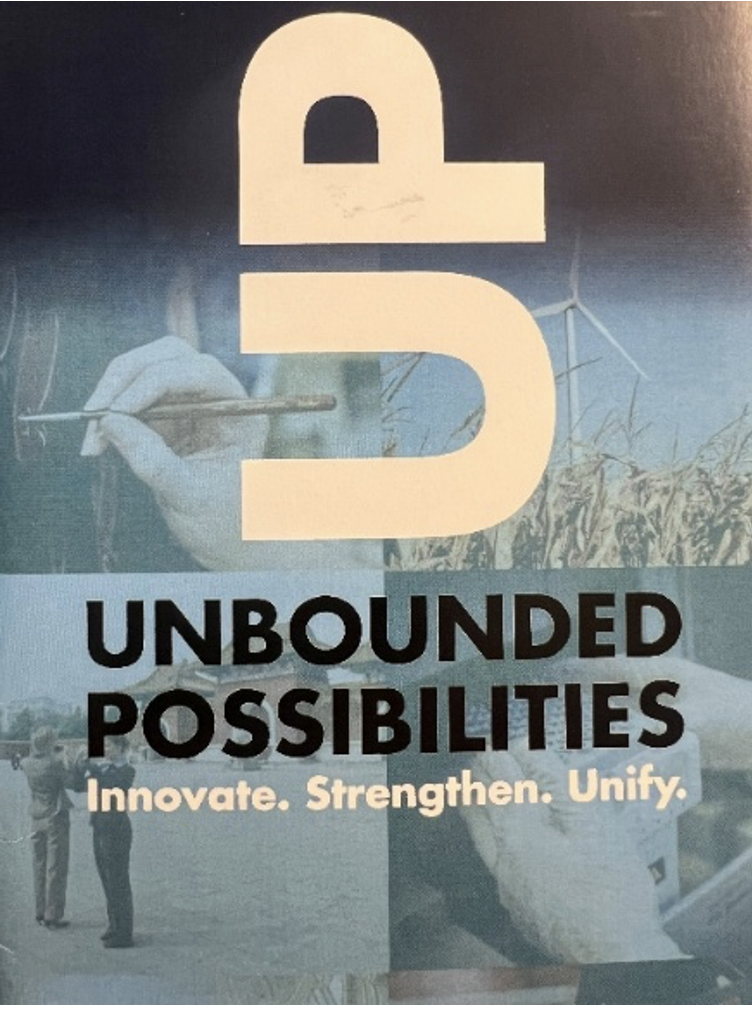
| |  | Perhaps my love of directions, and of mapping a course to a destination, is what led me to be fascinated by strategic planning processes. In my career, I’ve been through numerous ones. A few stand out. As a doctoral student, I had opportunity to get tapped by the system president of Indiana University, Myles Brand (famous for being the one to fire Bobby Knight and then shortly afterwards, to get hired as president of the NCAA), to travel around the state and study how the plan titled, A Strategic Charter to Become America’s New Public University, was being implemented. I interviewed countless people, learning how hard it is to focus energy, and of the criticality of buy-in and communication. My second example was one I had personal ability to shape at Indiana State University, titled Unbounded Possibilities, or UP for short. This one, for which the president deployed substantial investment, was designed to create interdisciplinary programs of distinction, built around wicked questions. For example:
-
How can the arts serve to support the economic and cultural vitality of a community?
-
What optimally aids students to think globally when their lives have largely been framed locally?
-
Who owns our genomes?
-
What will it take to address obesity in the Wabash Valley?
- What can be done to stimulate entrepreneurship in rural areas?
Some exciting projects, as well as some new centers and institutes, emerged from the plan and I spent much time engaging groups to think bigger than their frames of reference—a discipline or department, a division at the university, what could or could not be achieved with limited resources.
Today, we at William Paterson are shaping a new Strategic Plan to carry us through 2031. It has its set of wicked challenges (am taking a bit of liberty to “frame” the five frames that way here):
-
How do we ensure tomorrow’s students have access to and can afford a WP education?
-
Where can we leverage existing partnerships, internally and externally, to more effectively serve the Paterson and Passaic County communities and in a way that grows the pipeline of students from traditional-aged to adult?
-
What are opportunities to expand our program array that is collaborative and takes our student success efforts to an even higher level?
-
Big tech is here; how do we best keep up, invest, and support the enterprise called college responsibly?
- We’ve been through a lot together in recent years. How do we best strengthen community at WP, and externally?
Please, please, please, take advantage of input opportunities as described and will get updated over time on the Strategic Planning 2026-2031 website.
One of the questions I was commonly asked when teaching a unit on strategic planning to doctoral students in higher education was what makes a plan strategic. I often responded with a map analogy. Both a plan and a strategic plan are roadmaps with the intent of getting to some goal. But the latter, however, takes into consideration both the assets you bring (e.g., the kind of car you drive and the skills you have as a driver) and the nature of the terrain you are traveling (e.g., hilly, flat, paved, dirt, windy, location of filling stations). And strategic plans are intended to be dynamic. Simply put, circumstances aren’t static, but it doesn’t necessarily mean you can only turn left “here” or are lost.
| | |
Academic News
New and Revised Academic Programs. Our first program with an AI focus was approved at the last Faculty Senate meeting, advanced from CAHSS. Entitled AI Literacy & Ethics, and grounded in the UCC digital literacy Area I, these 1000- and 2000-level courses are part of a 9-credit undergraduate certificate. The certficate can get leveraged for higher level engagement in major programs, a number of which that are working on integrating such learning outcomes. CAHSS also advanced and had approved a graduate certificate in Emergency Management that will be offered in WP Online. Finally, the college revised its BA in Urban Planning and Policy in ways that are better aligned with career opportunities and student needs.
Assigned Release Time (ART) application process launches. ART is officially back and faculty are invited to browse the website for information about applying, the calendar dates associated with review and decision-making, and the criteria that inform proposal review. Thirty (30) opportunities are available for one semester, 3 or 4 credit course releases in AY2026-27.
Encourage your students to consider taking a Winter Session course. Winter Session can be a valuable way for a student to catch up or get ahead. The program offerings are carefully curated to be courses that can aid a student on a pathway to degree. Financial aid may also be available and students should not simply assume it is beyond their reach to take a class. Encourage them to talk to their advisor and financial aid counselor.
Come join the hike. If you are looking to do something quite different on Friday, November 7, come join the Trek for Success to Franklin Clove (winter home of the Lenape Indians) in the High Mountain Park Preserve from 1 to 3 p.m. Meet up is the parking lot at 1800 Valley Road. It’s for a good cause—raising money for student emergency grants. Here’s the link to register. Just two miles round-trip and not steep.
| | |
Facts & Figures
Some things you might not know about our colleges:
-
2024-25 grant revenue increases from prior year: CAHSS: 2,213 percent; CCOB: 624 percent; COE: 165 percent; COSH: 103 percent; CAPS: 302 percent. Folks want to invest in WP despite what you may hear!
-
2024-25 philanthropic giving across all of the Colleges: $1,756,464. Alumni, corporations, and others want to invest in WP!
-
Percentage of total course offerings across all Colleges that had free or low-cost materials (<$50): 41 percent. Last Year: 30 percent. Thank you faculty for helping make college more affordable for students while also staying true to your learning outcomes!
-
Percentage of graduating seniors that had at least one class in which they received credit for experiential learning: 55 percent. Thank you faculty and the Career Development Center for a great and growing partnership!
| | |
Quotables
If you don’t know where you are going, you might wind up someplace else.
—Yogi Berra, baseball player, manager, coach
The essence of strategy is choosing what not to do.
—Michael Porter, Harvard Business School
Three characteristics of effective academic strategic planning:
- An outward focus on the institution’s relation to the environment;
- A competitive stance; and
- A primary orientation to decisions (not plans, goals, analysis, and forecasts)
—George Keller, Academic Strategy (1983), the first strategy book applied to higher education
| | |
The Provost’s Office is Brenda, Claudia T., Claudia C., Jonathan, Kara, Rhonda, Sandy, and Josh. You can reach us at
973.720.2122 • provost@wpunj.edu
| | | | |