|
Saturday’s Express newspaper…
‘Starmer urged to 'do a Kemi’
SACK Wes Streeting
as Labour set to implode.'
He won't, he'll keep him close.
Labour turned up with slogans. Not much else. The pressures of the economy and world events is squeezing them beyond where they have the intellectual rigour or experience to cope.
Streeting sends the message… he thinks he’s better than Charmer and...
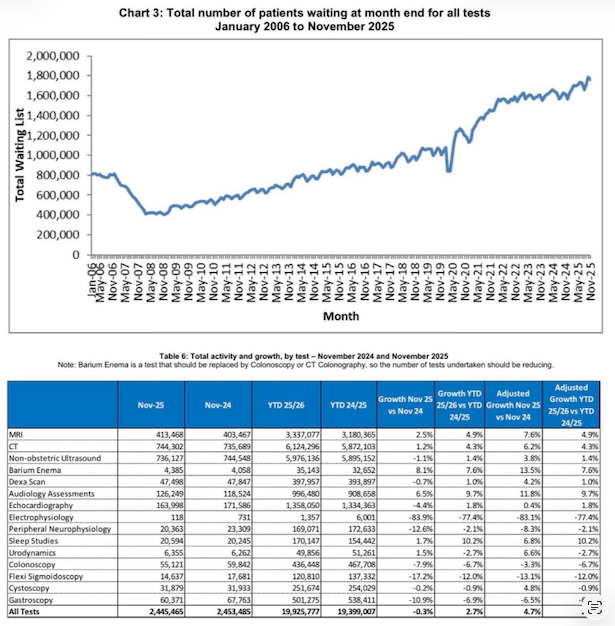
... wrongly grabs credit for progress on waiting lists, hubs, cutting backlogs and boosting appointments.
Mostly, these are continuations or consequences of policies and investments that pre-date his tenure.
Treatment hubs and community diagnostic centres were underway by Steve Barclay, Tory health secretary.
Deals with the independent sector to help cut waiting lists were a ‘thing’ before Covid.
The trajectory of modest reductions in waiting lists and ambulance performance happen anyway and might have done even better without his bellicose response to strikes.
More reports (I think over 25) many destined to add to the reports already on the shelf and too many to be implemented in the middle of a major reorganisation. Invest in scythes, to cut long-grass.
The NHSE reorganisation with no money for redundancy, no risk register or organisational plan is simply destructive chaos.
Streeting is my 21st health secretary and worse even than Lansley, by a country mile, but…
… he is ambitious…
… not for the NHS but for himself.
Ambition is a misunderstood force in careers and management.
Caricatured as naked self-interest, ladder-climbing, or vanity. Equally, it’s tempting to romanticise it as the engine of progress, reform and leadership.
In reality… ambition is neither virtue nor vice…
… it’s an energy that can be constructive or corrosive depending on context, temperament and restraint.
Ambition is often the driver of change. Organisations stagnate when everyone is content to manage decline.
Ambitious people ask uncomfortable questions. Challenge settled assumptions. Push against institutional inertia.
Ambition in politics and public services, can be the force that propels reform through systems that are otherwise designed to preserve themselves.
Many of the biggest improvements in health, education and social policy were championed by individuals who wanted influence, visibility and legacy. The Thatcher years for example… and Blair.
Without ambition, leadership becomes custodianship and custodianship never transforms anything.
Ambition also fuels resilience. Highly ambitious people tend to tolerate pressure, criticism and long hours better than most.
They see obstacles as tests rather than stop-signs. In senior roles, where the emotional and cognitive load is relentless, this matters.
Ambition is almost a prerequisite for surviving at the top. It provides purpose when the job becomes thankless and direction when the politics turns hostile.
However, ambition has a darker side.
Particularly when it becomes performative or impatient. When the next role matters more than the current one, decision-making becomes distorted.
Leaders prioritise headline-grabbing initiatives over slow, necessary groundwork.
Remind you of anyone?
They over-promise, under-deliver, or announce reforms before understanding the system they are trying to change...
... certainly true with the chaos you-know-who has created in the jobs, careers, and organisation around the NHS and he's ducked the big problem… social care.
In complex environments this is dangerous. Systems punish haste and expose superficiality.
There’s also, trust…
… people know when someone is ‘on manoeuvres’. When ambition is too visible, it breeds suspicion…
… every move examined for positioning. Every policy for self-promotion.
This corrodes collective effort...
... teams stop believing that decisions are being made for the organisation or the public good and start assuming they are being made for personal advancement.
Once that sets in, authority weakens, however talented the individual may be.
Another risk; premature ambition…
… experience matters. Leadership without sufficient exposure to failure, trade-offs and unintended consequences can become brittle. The most effective leaders are often those whose ambition has been tempered by time…
… by having been wrong, stuck and humbled by reality.
Ambition that outruns experience tends to produce certainty without wisdom. Confidence without depth.
The real test is not whether someone is ambitious but how their ambition is expressed.
-
Mature ambition is patient, grounded and focused on outcomes rather than optics.
-
Immature ambition is noisy, transactional, performative and restless.
Organisations and electors forgive ambition when it is clearly in service of delivery. They reject it when it’s an end in itself.
The language of ambition has to speak beyond the rhythm of the every day, without drowning it out.
It may break-step with us but has to find a away to make it easy for us all, to find a new pace and fall-in behind.
Ambition should be a means, not a message.
|