|
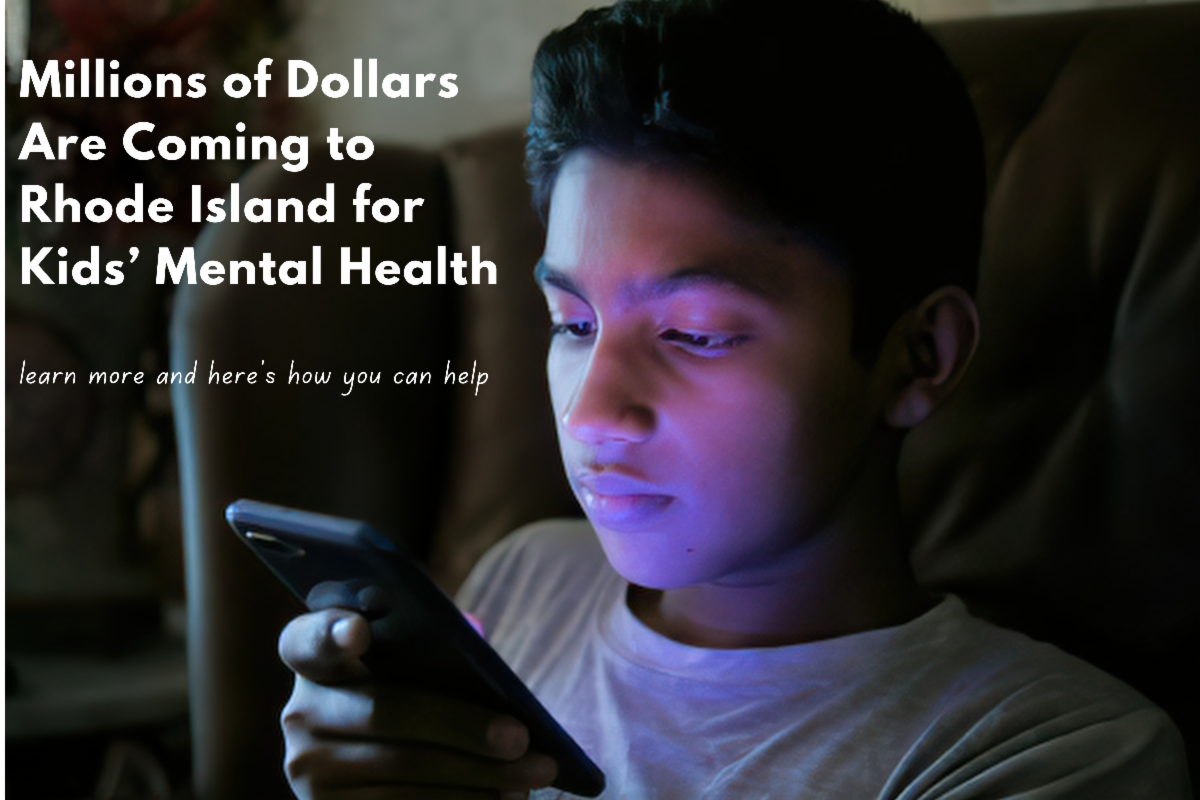
Rhode Island is getting a large amount of money to help kids’ mental health, and we need to make sure it’s spent the right way.
Attorneys general in 47 states brought a case against Meta, the company behind Facebook and Instagram, for creating and promoting apps that were intentionally addictive and harmful to kids and teens. Meta agreed to pay $17 billion to settle the case. Rhode Island’s share will be between $49.4 million and $64.5 million, paid out over the next ten years. This money is meant for youth mental health services and programs.
Rhode Island KIDS COUNT has spent years warning about the children’s mental health crisis. New research keeps proving what we have observed and discussed: screens and social media are a big part of the problem.
Here’s what the research shows:
- By age 2, 4 out of 10 kids already have their own tablet. By age 4, that jumps to almost 6 out of 10.
- Nearly all teens (97%) go online every day. 4 out of 10 say they’re online almost constantly, and much of that time is on social media.
- Kids from lower-income families spend almost twice as much time on screens as other kids do.
Doctors are seeing the effects. The American Academy of Pediatrics says young kids who use screens a lot, especially alone, are more likely to fall behind in talking, playing, and connecting with others. Older kids who use screens a lot are more likely to struggle in school and have trouble paying attention.
Bullying has moved online, too. In 2022, nearly half of U.S. teens (46%) said they had been cyberbullied. In Rhode Island in 2023, more than 1 in 4 middle schoolers (28%) and about 1 in 7 high schoolers (14%) said they had been bullied electronically.
This settlement is a chance to turn accountability into real help for kids. Young people have told us clearly what they want: more counselors--not cops, more high-quality programs after school and in the summer, and access to mental health services in their communities. The settlement allows the money to be used for crisis help, youth mental health, and afterschool and summer programs — exactly what young people are asking for.
Here’s the catch: the money goes into Rhode Island’s General Fund, not straight into these programs. That means it will take advocacy to make sure lawmakers spend it to increase access to kids’ mental health and afterschool programs.
At Rhode Island KIDS COUNT, we are already pushing for this. We’re working with young people, parents, and the RI Afterschool Network to expand access to afterschool and summer programs. We’re also working with youth, parents, the Anti-Racist Education Policy Collaborative, and the National Association of Social Workers to get funding for mental health professionals in schools. And we join community providers to ensure mental health services are accessible in the community for children, youth, and their families. Together, the RI Coalition for Youth Wellbeing is advocating for social media settlement funds to create a protected, youth-guided, statewide investment in youth well-being. We’re also excited to partner with the Hassenfeld Child Health Innovation Institute at Brown University on a new project called Own Your Screen. It will turn research into clear, practical advice to help families, schools, and leaders raise safer, wiser kids online.
Here’s how you can help:
|