May 1, 2026

Metropolitan's board adopts two-year budget with funding to rehabilitate aging infrastructure, invest in future reliability

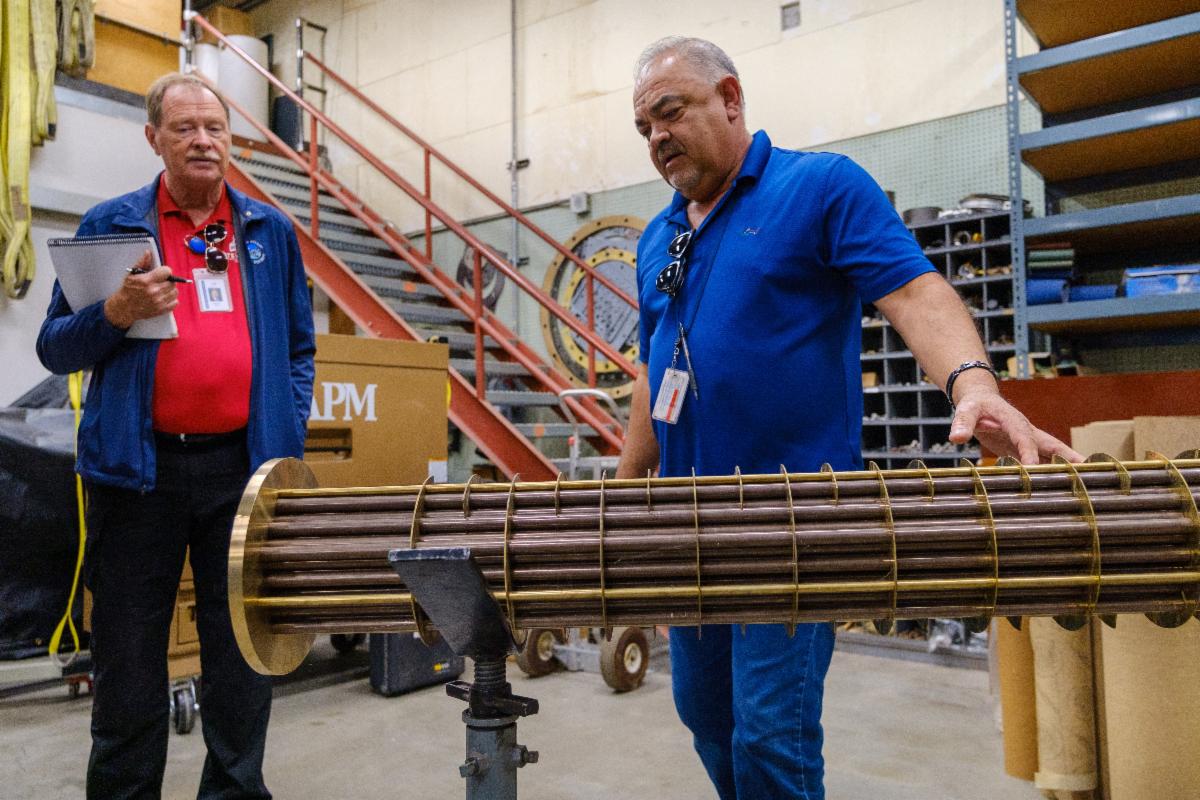
During a field inspection trip last fall focused on infrastructure reliability, Director Dennis Erdman listens as Pump Maintenance Team Manager Steve Solaiza explains how his team is rebuilding aging equipment at the Aqueduct Pump Maintenance Shop.

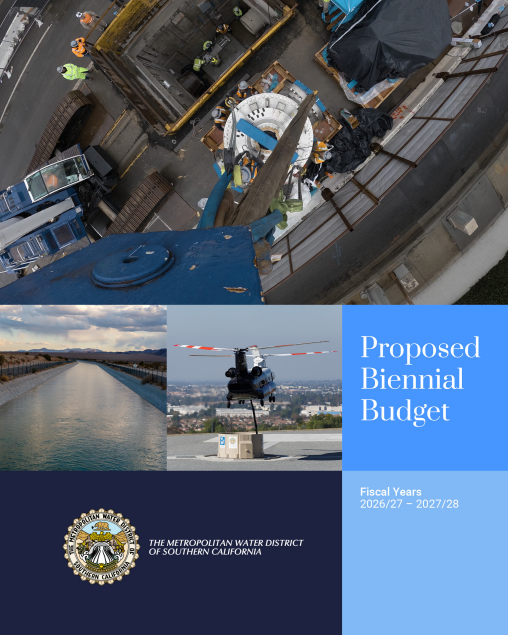
Following more than a year of discussions, field trips and workshops, Metropolitan's Board of Directors unanimously adopted a two-year budget on April 14.


The biennial budget includes funding to rehabilitate aging infrastructure, hire additional staff and advance planning of the Pure Water Southern California recycled water program.


“The budget approved today advances Metropolitan’s mission to prepare Southern California for the future, General Manager Shivaji Deshmukh said following the budget's passage. While we are reinvesting in the reliability of our existing water delivery system, we are also taking important steps to ensure the region has access to water supplies amid a changing climate.”


The new operating budget totals $2.3 billion in 2026/27 and $2.4 billion in 2027/28.The board approved overall rate increases of 6.2% on Jan. 1, 2027 and Jan. 1, 2028, charged to Metropolitan’s 26 member agencies.


The budget also anticipates a small increase to the voter-approved special tax Metropolitan levies on properties in its Southern California service area, amounting to an increase of approximately $12 a year for the average value home in the area.


Read the press release.

“Parts of our system are nearly 100 years old, and despite this age, Metropolitan staff have done a great job of reliably delivering water. Through this budget, we’re making an important investment in our continued ability to deliver water, so it is available to residents 24/7.”


Metropolitan board Chair Adán Ortega, Jr. 

Metropolitan celebrates Moab uranium tailings pile cleanup, protection of the Colorado River

Moab Cleanup

Watch the recap video featuring board Chair Ortega and former Congresswoman Grace Napolitano. They were in Moab, Utah last month to mark the completion of the uranium tailings cleanup more than 25 years after they began advocating for federal intervention.

Metropolitan Board Chair Adán Ortega, Jr. and staff joined former Congresswoman Grace Napolitano, the U.S. Department of Energy and city of Moab representatives at an April 9 ceremony to mark the completion of the Moab uranium tailings cleanup one of the most significant environmental remediation projects in the western U.S.


After a former uranium-ore processing facility left more than 16 million tons of radioactive waste less than 750 feet from the banks of the Colorado River, Metropolitan leaders joined with Napolitano and others to advocate for federal funding to relocate the pile and protect the river. The removal began in 2009.


"The Moab cleanup wasn't easy. It took funding fights across multiple administrations, bipartisan congressional champions who had to spend political capital, and two decades of bureaucratic persistence," Chair Ortega wrote in an op-ed published in the Moab Times-Independent.


"The cleanup succeeded because people decided the river mattered more than the argument," he wrote, arguing that same mentality will be needed to reach a basin-wide agreement on post-2026 rules governing operation of the Colorado River.


Read the op-ed.

Climate Action Plan: How Metropolitan is reducing its greenhouse gas emissions

Catastrophic fires, unpredictable hydrology, and diminishing snowpack have underscored the urgency of climate action and resilience.


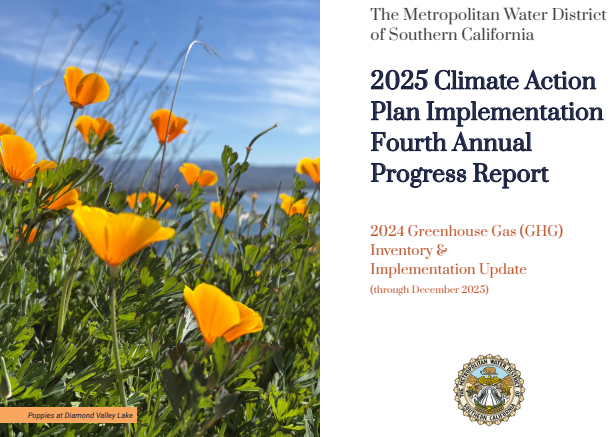
In its fourth annual Climate Action Plan Progress Report, Metropolitan highlights its efforts to reduce greenhouse gas emissions by 40% below 1990 levels by 2030 and reach climate neutrality by 2045.


Read the report.

Second long-term water supply agreement signed


The San Diego County Water Authority and Eastern Municipal Water District last month approved the region's second water transfer partnership.


EMWD will receive up to 10,000 acre‑feet of water each year for the next 21 years, plus 30,000 acre‑feet for later delivery. SDCWA will collect revenue from that exchange that will help reduce wholesale water rate pressure.


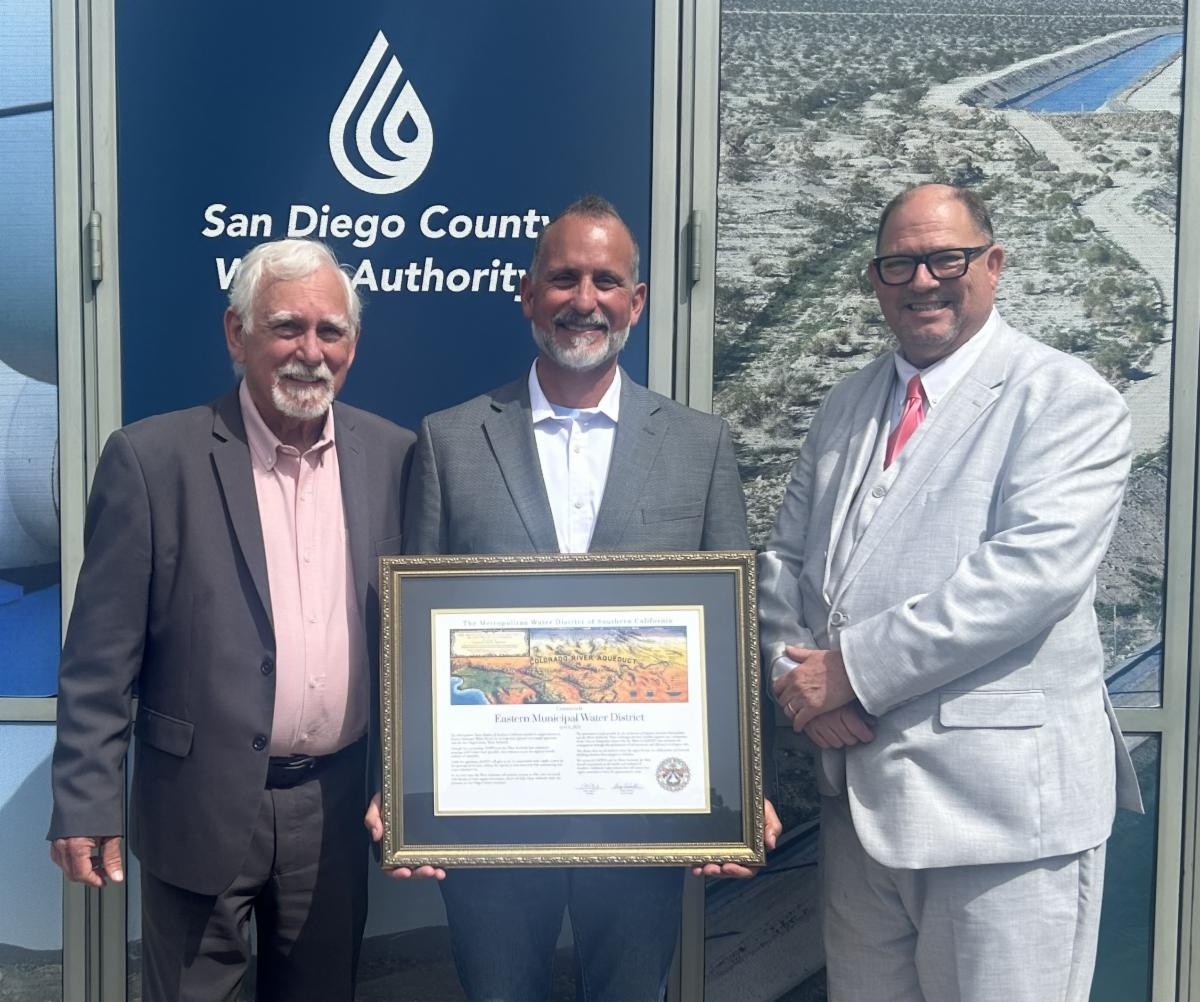
Metropolitan board Vice Chair Michael Camacho, middle, presents a commendation recognizing the exchange agreement to EMWD Board Directors Joe Grindstaff, left, and Philip E. Paule.

Metropolitan recognized for transparency and good governance

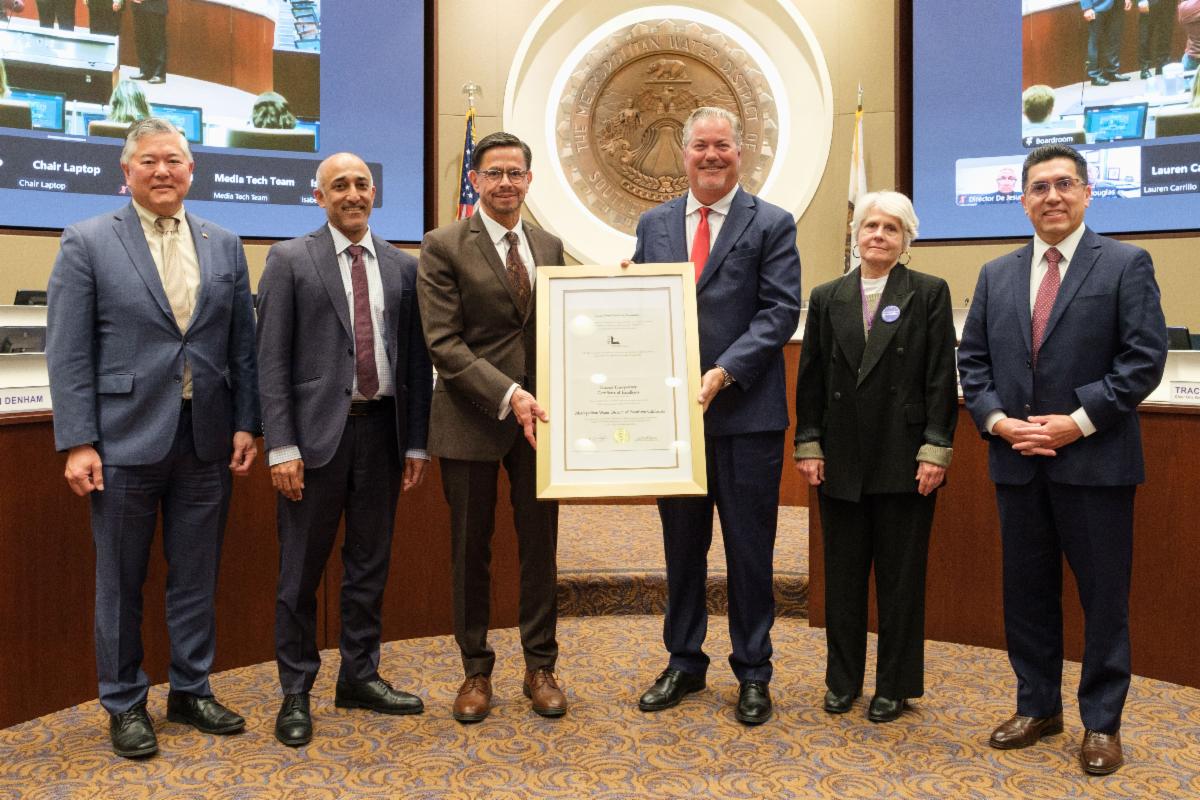
From left: General Auditor Scott Suzuki, General Manager Shivaji Deshmukh, Board chair Adán Ortega, Jr., California Special Districts Association's Chris Palmer, General Counsel Marcia Scully and Ethics Officer Abel Salinas.

Last month Metropolitan received the District Transparency Certificate of Excellence for its commitment to transparency and good governance. This honor, given by the Special Districts Leadership Foundation, recognizes Metropolitan for conducting ethics training for all board members, holding open and public meetings and timely reporting to the State Controller.

Metropolitan's new helicopter hydrant tapped to fight brush fire in Brea

In November, Metropolitan opened its first helicopter hydrant at the Robert B. Diemer Water Treatment Plant in Yorba Linda. Last month, it was put to use by the Orange County Fire Authority and CAL FIRE to help combat a brush fire in Brea’s Carbon Canyon. Watch the video.

Metropolitan_welcomes_public_participation_p5.png
Facebook  X  Instagram  Linkedin  Youtube