Behind the scenes: How Metropolitan keeps its system reliable | | |
For a few months each year, Metropolitan takes critical parts of its water infrastructure offline for inspections, maintenance and repairs. Metropolitan's system operates 24/7 so shutting down a major pump, pipeline or facility for even a few days takes considerable planning and collaboration. The work carried out during shutdowns keeps water deliveries safe and reliable now and into the future.
Watch the video.
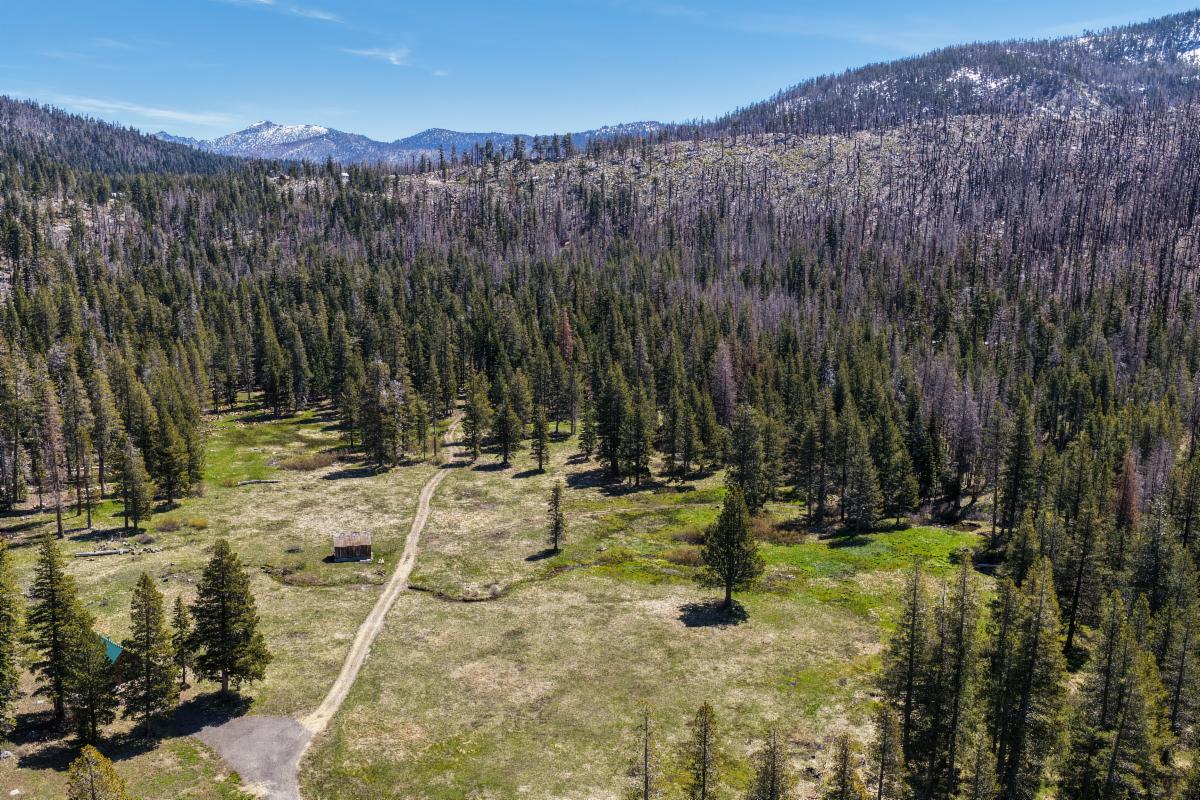
| | California increases State Water Project allocation, low snowpack complicates the forecast | | A drone view of where the California Department of Water Resources skipped its May snow survey at Phillips Station in the Sierra Nevada due to a lack of snow. Photo courtesy of DWR. | | |
Bolstered by spring rainstorms and full reservoirs, the Department of Water Resources increased the State Water Project allocation to 45% of requested supplies. That's up from 30% at the end of January.
Still, DWR said the state will need to use stored water carefully because most of the snowpack has melted. While reservoirs statewide were at 117% of average as of May, the Sierra snowpack, which serves as the state's frozen reservoir, was just 12% of average, bringing little additional water until next season.
Read Metropolitan's statement.
| | |
“Metropolitan will continue to strategically manage this year's water supply, including this increased allocation, to deliver reliable water to Southern California and maximize our water storage, preparing us for the challenges ahead.”
Metropolitan General Manager Shivaji Deshmukh
| |
GM Shivaji Deshmukh testifies before Congress on the benefit of federal investment in recycled water projects | | |
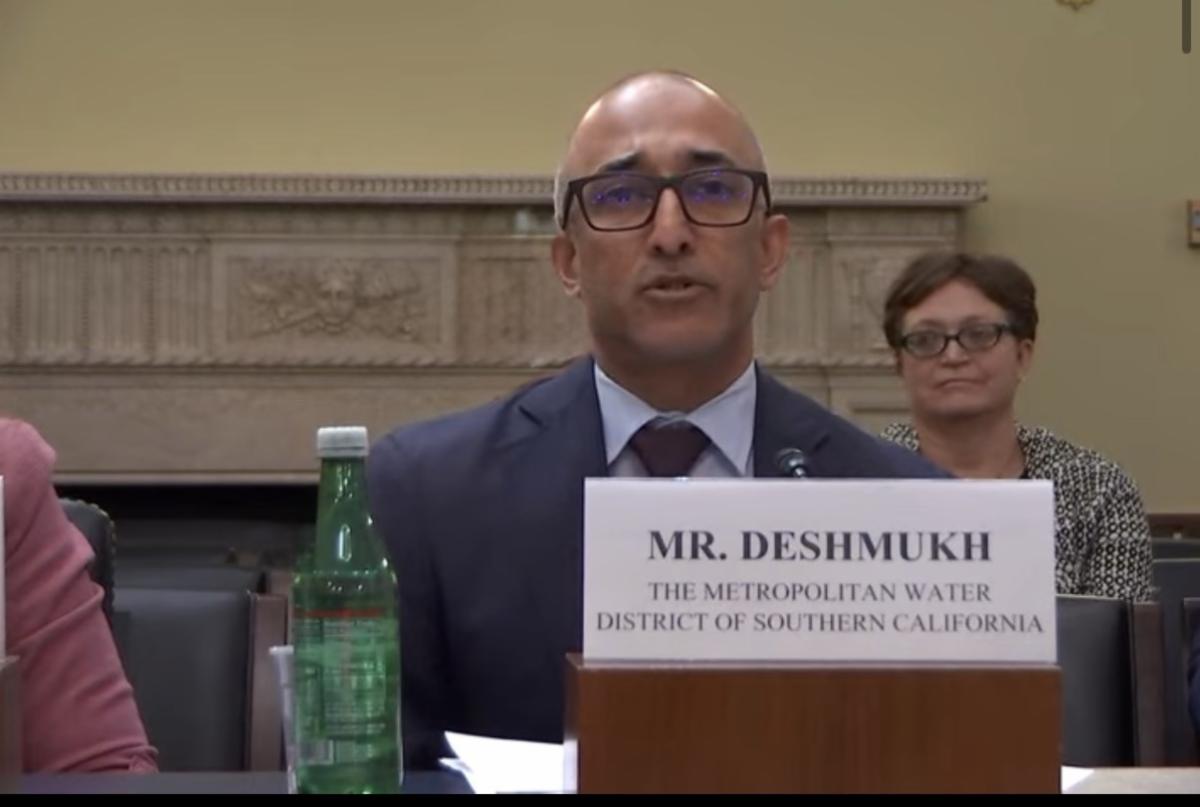
Last month, General Manager Shivaji Deshmukh was invited to speak about Pure Water Southern California to the House Natural Resources Subcommittee on Water, Wildlife, and Fisheries.
The hearing was focused on the future role of the U.S. Bureau of Reclamation. Deshmukh made the case for continued Reclamation support for recycled water programs.
Projects, such as Pure Water Southern California, are critical to making the West more resilient to drought and extreme hydrology. Major recycled water projects are often too costly for agencies to develop on their own, while the benefits of these projects can be far-reaching.
The $125 million grant for Pure Water that Metropolitan received from Reclamation’s Large-Scale Recycled Water Program in 2024 not only supports Southern California’s future water resilience, it could also support water supply resilience in Arizona, Nevada and the Colorado River Basin.
Watch the hearing.
| | Lower Basin states offer proposal for Colorado River operations, await U.S. Bureau of Reclamation post-2026 plan | | |
Metropolitan has been working for more than a year toward building a consensus among Colorado River water users for post-2026 operations. But all seven states have not been able to reach an agreement.
With current guidelines expiring in a few months and record-low snowpack in the Colorado River Basin, Metropolitan and our Lower Basin partners shifted to address the immediate critical hydrology.
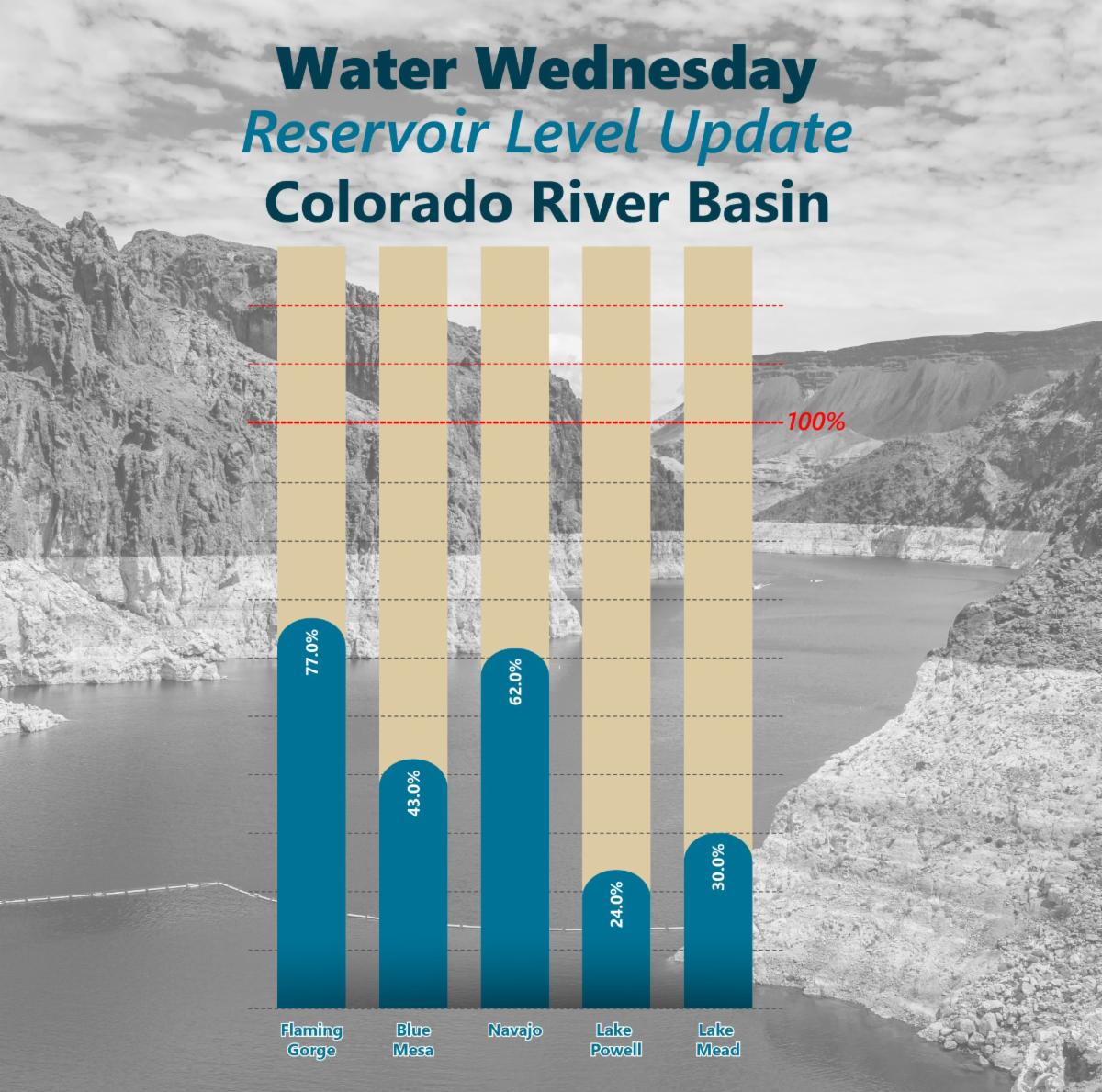
After the Basin was hit with the lowest snowpack in history, runoff into Lake Powell this year is forecast to be just 3.4 million acre-feet, 35% of normal and 1 million acre-feet less than what California alone is annually allocated from the river.
Last month, California, Arizona and Nevada submitted to the U.S. Bureau of Reclamation a short-term proposal to make 1.25 million acre-feet in annual reductions in 2027 and 2028 and support additional conservation actions. Discussions are ongoing on how this plan can be amended and supported by Reclamation and the states.
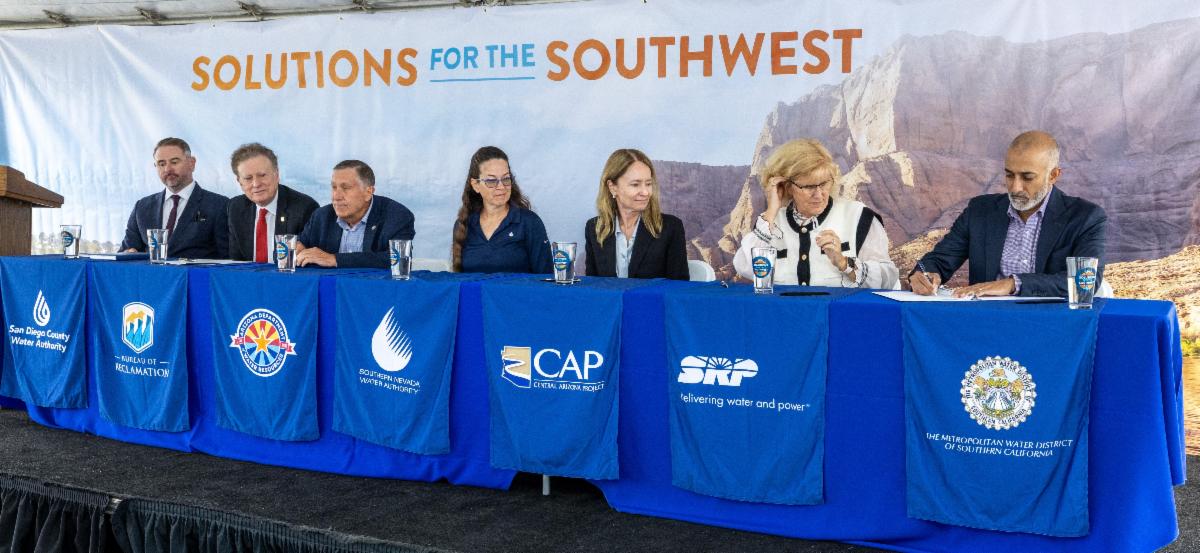
| | This graphic shared by the U.S. Bureau of Reclamation on May 20 shows the low reservoir levels at Lake Powell, second from the right, and Lake Mead, on the far right. | | Metropolitans joins effort to explore interstate water supply exchanges | | From left, San Diego County Water Authority General Manager Dan Denham, Acting Bureau of Reclamation Commissioner Scott Cameron, Arizona Department of Water Resources Director Tom Buschatzke, Southern Nevada Water Authority Deputy General Manager Colby Pellegrino, Central Arizona Project General Manager Brenda Burman, Salt River Project Associate General Manager and Chief Water Resources Executive Leslie Meyers, and Metropolitan General Manager Shivaji Deshmukh during the MOU signing on June 3. | |
In an effort to advance new water supply solutions for regions dependent on the Colorado River, the U.S. Bureau of Reclamation and agencies in California, Nevada and Arizona signed on Wednesday a Memorandum of Understanding to develop a framework that could allow for interstate water exchanges. Metropolitan and its member agency, the San Diego County Water Authority, were among the signatories on the MOU.
Today, at least 20% less water flows through the Colorado River system annually than was expected 100 years ago. Even less is expected in the future. That's led Metropolitan and other agencies to pursue alternative water supplies, including Pure Water Southern California.
"Across the Colorado River Basin, water users are developing new supply projects to reduce reliance on the river. But some of the larger projects require significant investment," General Manager Shivaji Deshmukh said. "The MOU demonstrates our commitment to discussing how to develop flexible partnerships across borders to pool funding, advance projects, and allow water to be shared when and where it is needed most."
Read the press release.
| | New City of Los Angeles director joins Metropolitan Board | | |
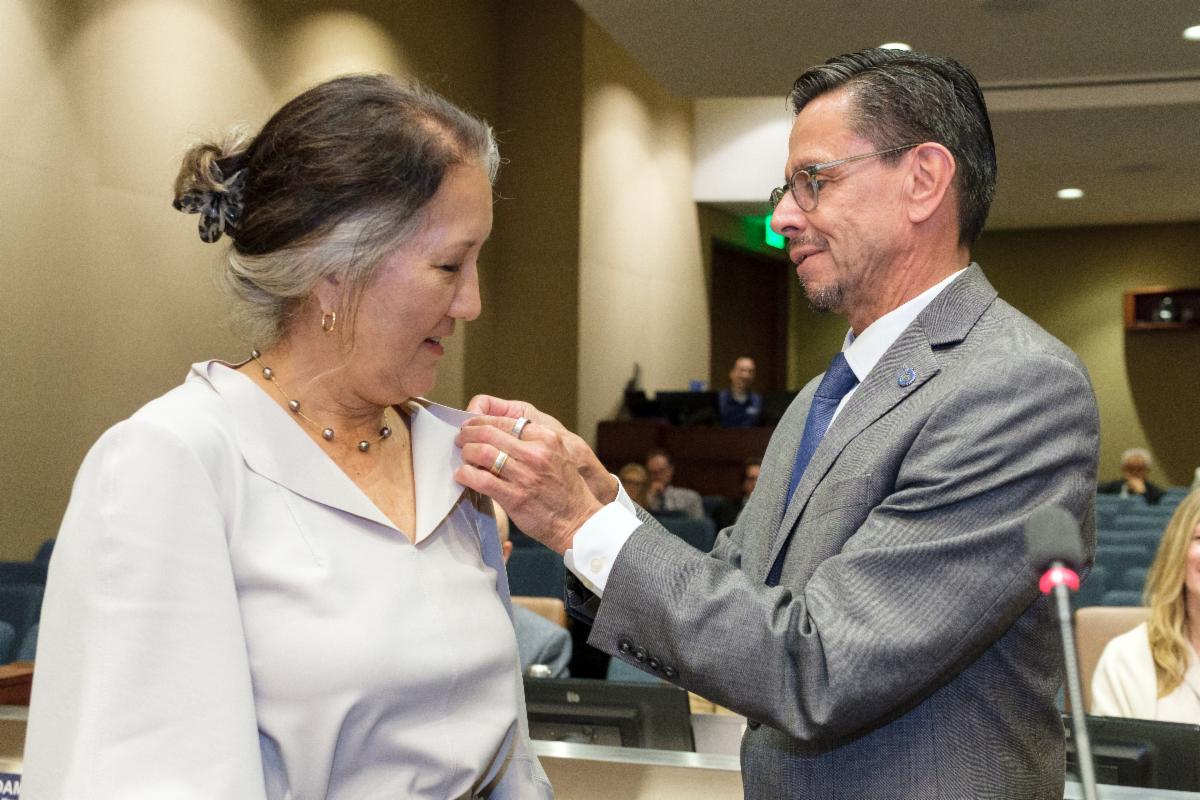
Paula Daniels receives her MWD Director's pin from Board Chair Adán Ortega, Jr. during the May 12 board meeting.
| | |
Sustainable food and water policy leader Paula Daniels was seated on May 12 as the City of Los Angeles’ newest representative on Metropolitan's Board of Directors.
Daniels has spent more than two decades working to advance public policy on food systems and sustainability in the government, academic and non-profit sectors.
Daniels was assigned to the board’s Finance, Affordability, Asset Management, and Efficiency Committee, the Ethics Committee, and the Special Committee on Ag and Tribal Partnerships.
Read the press release.
| | | |
Environmentalist Leah Thomas visited the Los Nogales Nursery, a partnership between the Audubon Center at Debs Park and the Theodore Payne Foundation, for spring crafting with beautiful, water-saving California native plants.
See more on Instagram.
| | |
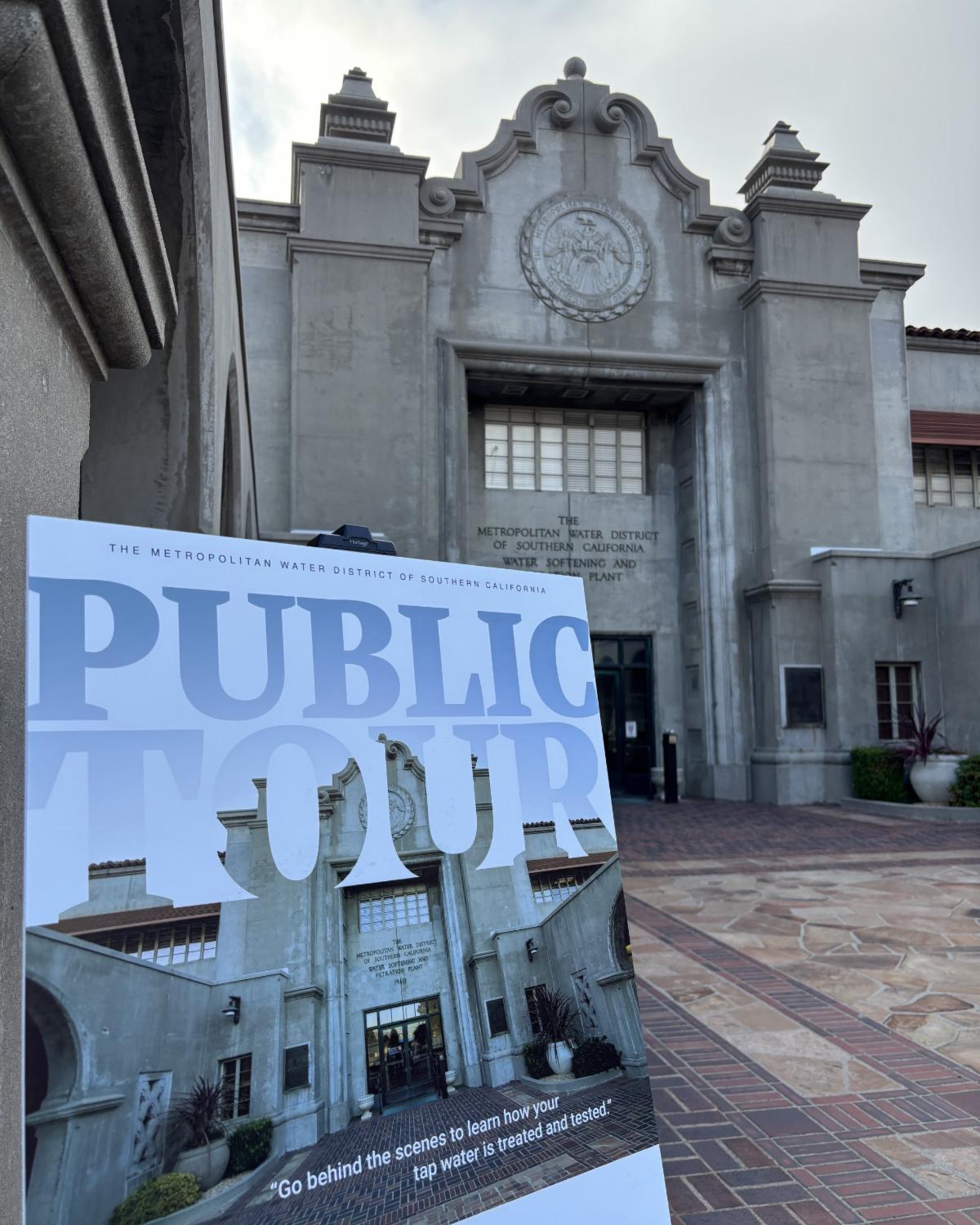
Our first public tour at the F.E. Weymouth Water Treatment Plant in La Verne was a hit. We'll have more opportunities in the future for the public to see and learn how we treat and test Metropolitan’s water.
See more on LinkedIn.
| | | | |