Fridays Labor Folklore
Con Carbon, the Minstrel of the Mine Patch
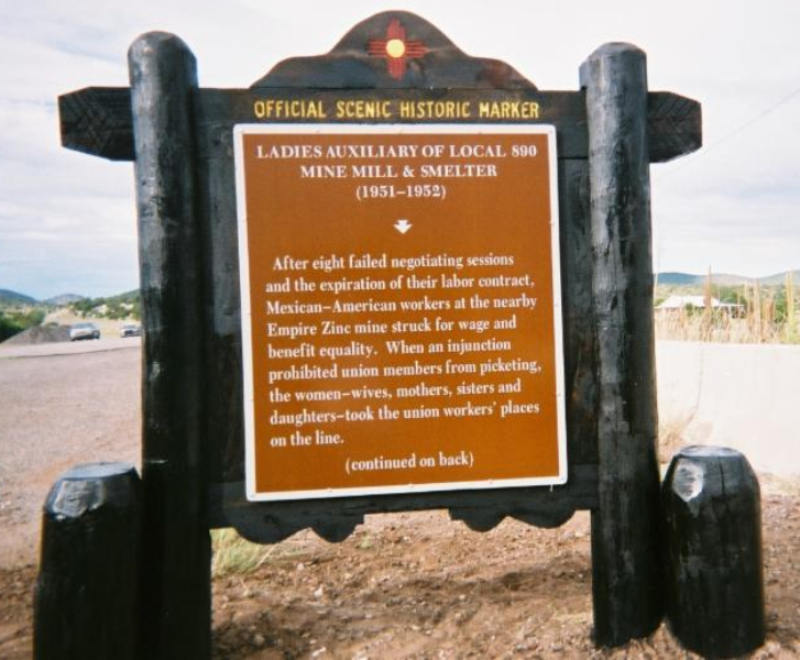
Ladies Auxiliary of Local 890
Mine, Mill & Smelter (1951-1952)

After eight failed negotiating sessions and the expiration of their labor contract, Mexican-American workers at the nearby Empire Zinc mine struck for higher wage and benefit equality. When an injunction prohibited union members from picketing, the women -- wives, mothers, sisters and daughters - took the union workers' places on the line.

(Back of Marker)

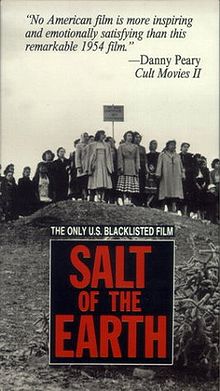
The "striking" women persevered despite life threatening situations, violence, incarceration and tension at home. Their determination made national news and resulted in the popular documentary film, Salt of the Earth. These courageous women not only survived in solidarity until the strike ended, but they commanded recognition as well as respect.      
 -- New Mexico Historic Marker
    (at the intersection of NM 152 & 356)

Salt of the Earth Trailer here.
Brave Saviors of the Strike
The role of the women commanding recognition as well as respect as the brave saviors of a strike on the verge of defeat is a singular and remarkable episode in New Mexico's labor history. Their action served as a catalyst for a quicker evolution of a civil rights movement among Mexican-Americans in the area. 

They gave incentive to
the creation of a cohesive
swing vote that gave Mexican-Americans a political voice for the first time in Grant County. Finally, the strike itself opened up the union to give its Mexican-American members more upward mobility.
        -- New Mexico Historic Marker Program
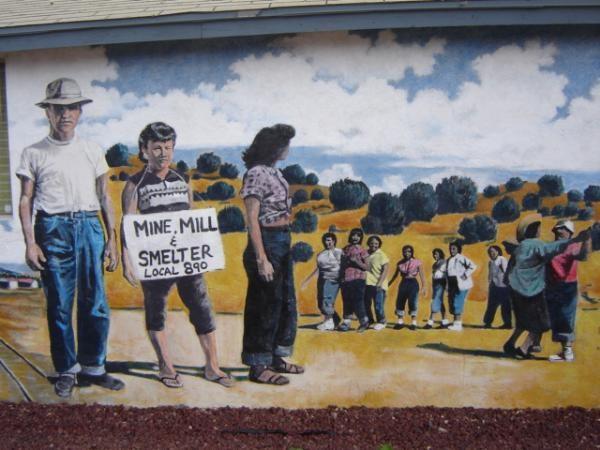
Bayard Union Hall Mural
Created by students and local artists to honor the workers who participated in the 15-month-long strike
at the Empire Zinc Mine. Bayard, New Mexico
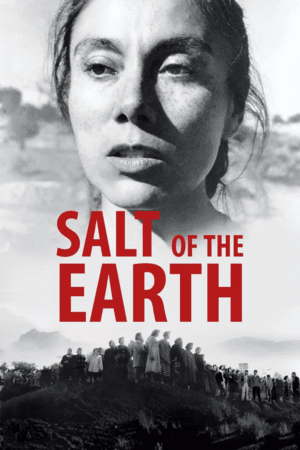
Rosaura Revueltas

In 1956 Mexican actress Rosario Revueltas was awarded Best Actress for her performance in Salt of the Earth by the Académie du cinéma de Paris. During the filming of Salt of the Earth Revueltas was arrested by immigration officials on an alleged passport violation and was forced to return to Mexico. After her exile she was labeled a Communist. The rest of Salt of the Earth had to be filmed using a double for Revueltas; the crew shot final footage of her in Mexico and then smuggled it like contraband over the border.. She never worked on an American film again.

Salt of the Earth - whose director and screenwriter were blacklisted during the McCarthy Period - was selected by the Library of Congress for its National Film Registry in 1996. This 1954 classic is available as a full-length movie (1 hr., 34 min) on YouTube.
Grab some popcorn and watch it here.
Ladies Auxiliaries
Ladies auxiliaries were women's organizations associated with trade unions in male-dominated industries. They played a central role in labor struggles since the end of the 19th century. 

Ladies auxiliaries helped to sustain and build the strength of the union. During strikes these women fed thousands of workers on the picket lines and organized clothing drives for striking needy families. They initiated letter-writing campaigns, participated in organizing and collectivized around various social issues such as child care and health care.

The Ladies Auxiliaries of the International Union of Mine Mill and Smelter Workers - the union depicted in Salt of the Earth - were a powerful force within the union in the United States and Canada.

In 1967 the Mine-Mill union merged with the United Steelworkers
of America.

Anita Torrez
This is our story.
Born and raised by farmworkers in Gila, New Mexico - about 40 miles from Bayard, where the Empire Zinc Mine was located - Anita Torrez was a participant in Salt of the Earth (the movie and the strike). Her husband was a striker; Anita walked the picket line and was active in the ladies auxilliary. In this interview (2013) she remembers how the strike inspired the film.

Credit goes to the following sources some of which I quoted directly: Wikipedia; Waymarking [online] ; New Mexico Dept. of Cultural Affairs, Historic Preservation Division; AFSCME Council 18; United Steelworkers of America; "New Mexico miners commemorate Salt of the Earth" by Roberta Wood in Peoples World [online] ; "Remembering Salt of the Earth 60 years later" by Ericka Wills in Labor and Working-Class History Association [online] ; "End of the line for Chino's storied union" by Olivier Uyttebrouck in Albuquerque Journal [online] ; "Copper giant Freeport-McMoRan destroys famous Salt of the Earth labor union in Southern New Mexico" by David Correia reprinted in Liberation [online.] Photo of Anita Torrez by Al Neal, Peoples World.