CBBS Summer E-Newsletter

DONATE
BECOME A MEMBER

 Artifacts and Ancestral Remains Returned to Mexico  

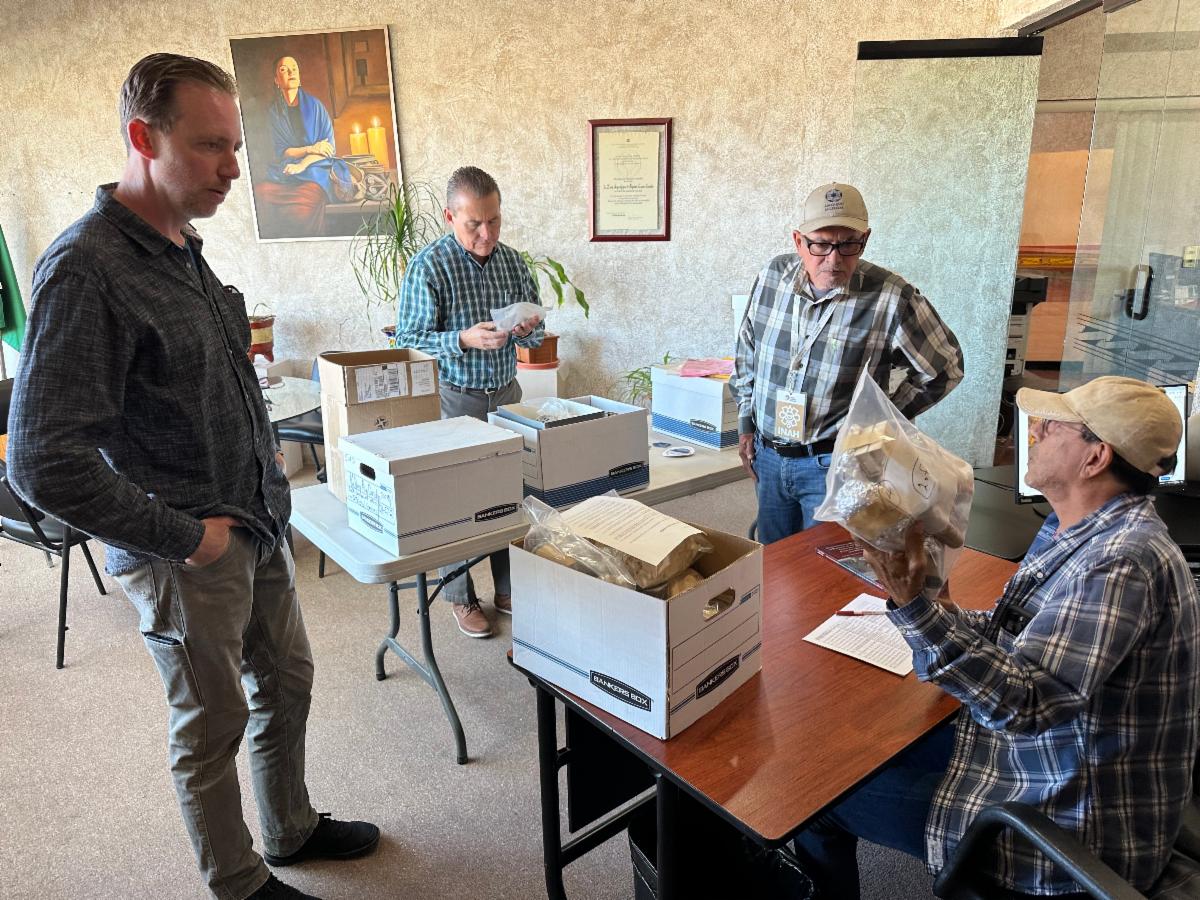
Dr. Devin Pettigrew with INAH Chihuahua colleagues looking through boxes of returned artifacts.

Photo: Dr. Devin Pettigrew (left) chatting with INAH Chihuahua archaeologists Dr. Jorge Carrera Roles, Mauricio Salgado Servín, and Eduardo Pío Gamboa Carrera (left to right) as they inventory returned artifacts.

This spring, the Center for Big Bend Studies (CBBS) reached across time and borders to complete work that the late J. Charles Kelley started 75 years ago by returning artifacts and ancestral remains to their rightful place in Mexico.

READ MORE

Research Continues at Spirit Eye Cave

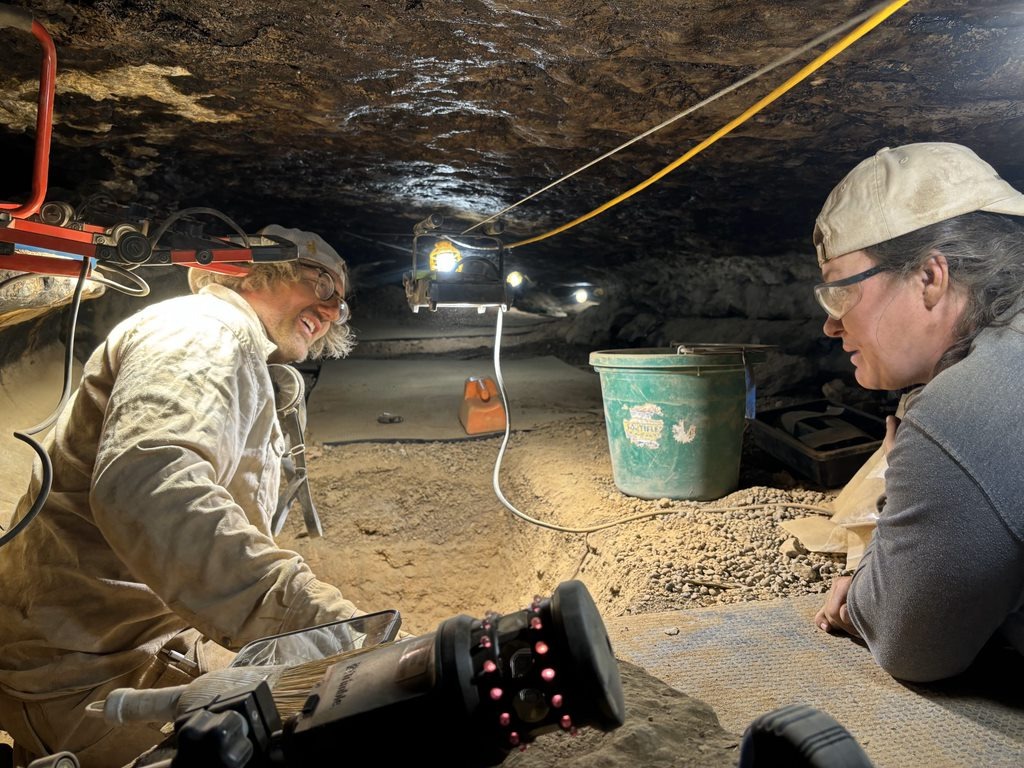
Photo: Dr. Bryon Schroeder (left) and Jasmine Kidwell (right) excavating in Shaft B of Spirit Eye Cave.

In early April, three visiting researchers joined CBBS archaeologists at Spirit Eye Cave to continue research. From The Mammoth Site in South Dakota, Dr. Jim Mead and Sandy Swift brought their expertise to expand the excavation started two years ago. The goal of this collaboration was to uncover additional samples of Pleistocene animals. The group uncovered tortoise shell fragments, the possible leg bones of an extinct variety of pronghorn and sloth bones, hair, and dung.  


Jasmine Kidwell, a PhD candidate in the Department of Geosciences at Baylor University, collected a column of samples to continue her research at the site: evaluating how the lipid leaf waxes in plants change through time in response to climate and human factors. Her work is focused on the Trans-Pecos region; Spirit Eye Cave is one of Jasmine’s study sites. Her work will provide an important window into how environmental conditions changed from the Pleistocene to the Holocene. Read more about CBBS work at Spirit Eye Cave here.

Book Spotlight:

The Marks They Left: Indigenous Biographic Rock Art and Early Ranching Boulder Glyphs Along the Rio Grande of Southwest Texas  

Center for Big Bend Studies Sul Ross State University Occasional Papers, No. 14 

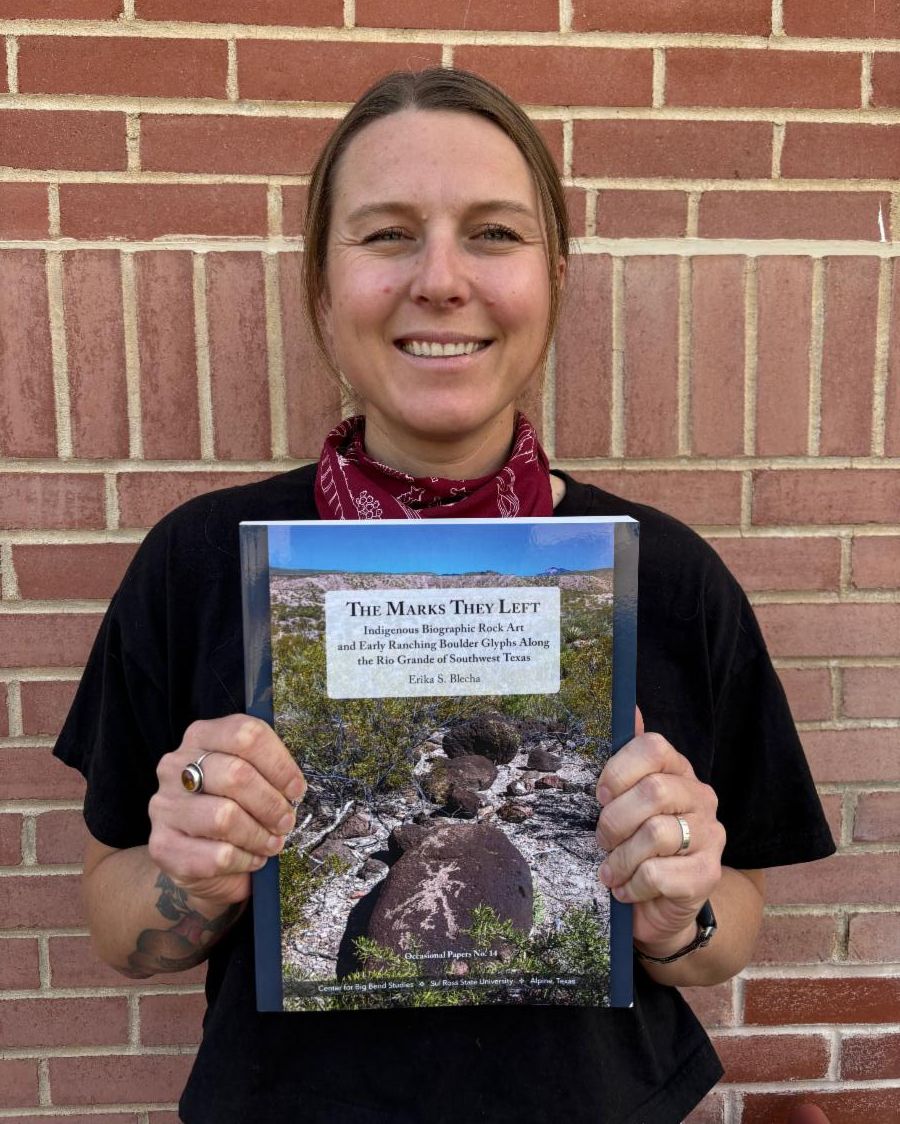
Erika Blecha holding the book The Marks They Left.

Hot off the press! CBBS archaeologist Erika S. Blecha’s just-released book describes nearly 400 petroglyphs on more than 200 boulders located along the Rio Grande, with plentiful color photos.  


In 2018 CBBS began a thorough investigation and documentation of 390 petroglyphs on 227 small, vesicular basalt boulders located in the Sierra Vieja breaks, a subset of the Chihuahuan Desert near the Rio Grande. The recorded figures on the boulders span from anthropomorphic and zoomorphic figures to enigmatic designs and historic brands, initials, and dates. Iconographic variation suggests that both Indigenous peoples and Anglo/Hispanic settlers were the artists. 


The petroglyphs offer the opportunity to study a time-transgressive phenomenon not previously reported from the region, with few corollaries outside the area. Many figures are depicted in combat and bear similarities to the Biographic rock art tradition more commonly seen throughout the Great Plains.  


The proximity of these glyphs to a series of sites interpreted as defensive gives insight into the interactions and social/political influences of pericolonial Indigenous people in the Big Bend from AD 1640–1880. This book discusses this evidence of Biographic rock art, pericolonial Indigenous violence and historic lifeways along the Big Bend-Rio Grande corridor. 


Blecha’s book is now available for purchase through the CBBS online store or in person at the office.   

CBBS Faculty Garners Two Sul Ross Research Grants

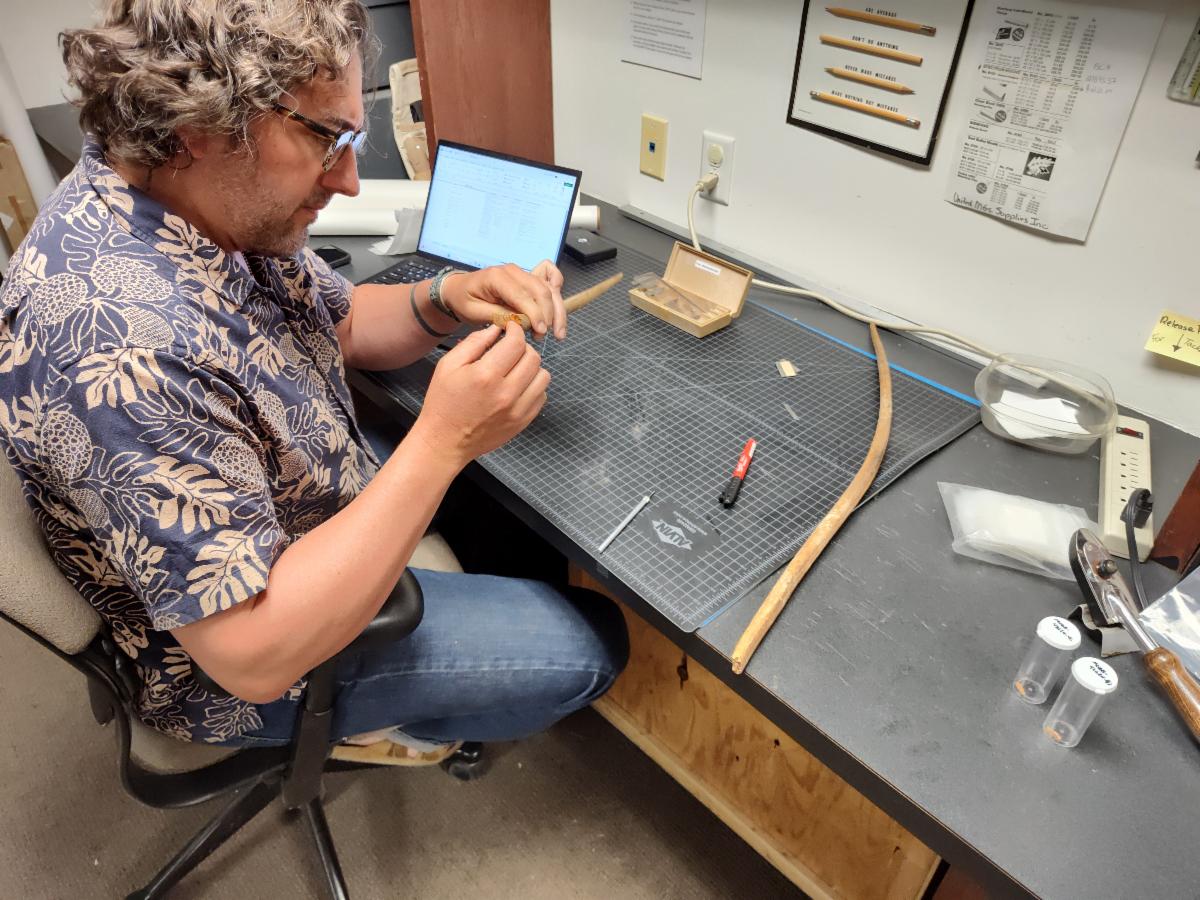
Dr. Bryon Shroeder looking at perishable artifacts from the Museum of the Big Bend.

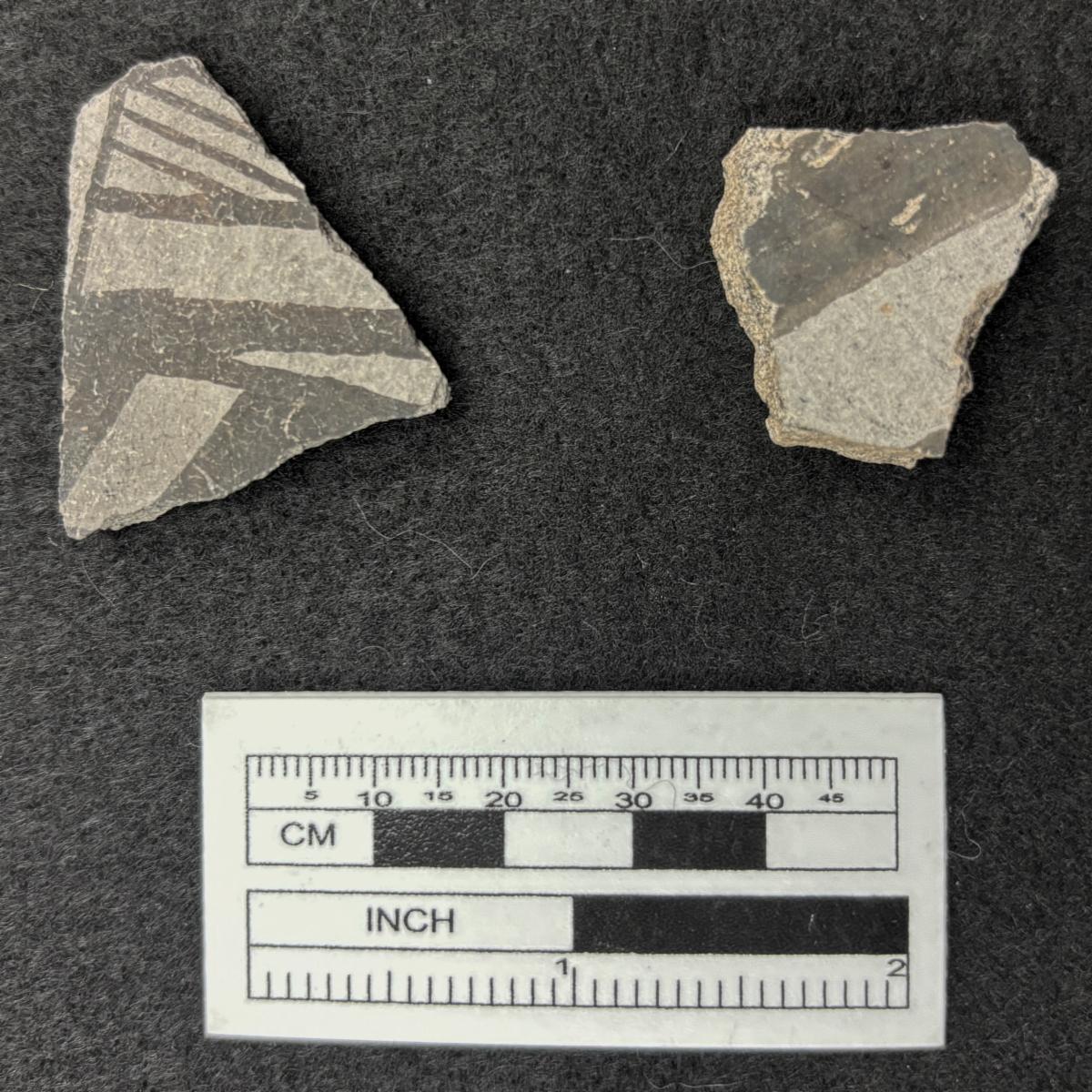
Photos: Above, Dr. Schroeder examines perishable weaponry from the Museum of the Big Bend. Below, two sherds of Chupadero Black-on-white ceramic from the Canta Arriba and Sundown sites.

Sul Ross State University recently awarded two coveted Research Enhancement Grants to three CBBS faculty members: Dr. Bryon Schroeder, Dr. Devin Pettigrew and Dr. Charles Koenig. 


Schroeder and Pettigrew are taking a new look at old finds at the Museum of the Big Bend to understand hunting weapon kits that were excavated/collected in the Big Bend through dating, species identification, glue composition, residues, and more. 


“In most places organic components do not preserve, but these form the majority of past technologies and other material culture,” Schroeder said. “Luckily, dry conditions in the Big Bend favor that type of preservation.”New scientific techniques have emerged to help find additional answers in collected artifacts. 


“This study will lead to a better understanding of the complexity and skill behind hunting weapon manufacturing and use through time,” Pettigrew said. 


Over the next year, Koenig’s project will involve radiocarbon dating and macrobotanical analysis at two sites near the Rio Grande (Sundown and Canta Arriba) to learn more about how earth ovens — and agave — were integrated into the La Junta food production systems. 


“Ethnohistoric accounts demonstrate Indigenous peoples at La Junta were practicing some form of agriculture by the 16th-17th century growing crops such as corn, beans and squash,” Koenig said. “Although we don’t know how long these agricultural-style systems incorporating introduced cultivars were in place along the Rio Grande and Rio Conchos, the frequent occurrence of earth oven processing sites at La Junta dating between AD 1200-1545 indicates that agave certainly served important roles within La Junta foodways.” 


Both sites contain Chupadero Black-on-white ceramics, indicating linkage with La Junta groups living at sites like Canta Recio.


The competitive Research Enhancement Grant accolade recognizes exceptional proposals with the potential to make significant contributions to their respective fields and faculty members who have demonstrated exemplary dedication to advancing knowledge and innovation through their proposed research projects. By providing financial support and resources, the grant empowers researchers to conduct rigorous inquiries, generate new insights and disseminate their findings to the broader academic community and society. 


“We are immensely proud of our faculty members who have been recognized with this prestigious grant,” said Dr. Lisa Thompson Sousa, chair of the Research Council at SRSU. “Their dedication to advancing knowledge and pushing the boundaries of scholarly inquiry exemplifies the spirit of inquiry and innovation that defines Sul Ross State University.”


SPOTLIGHT - Please Help Support the Homer Mills Research Endowment

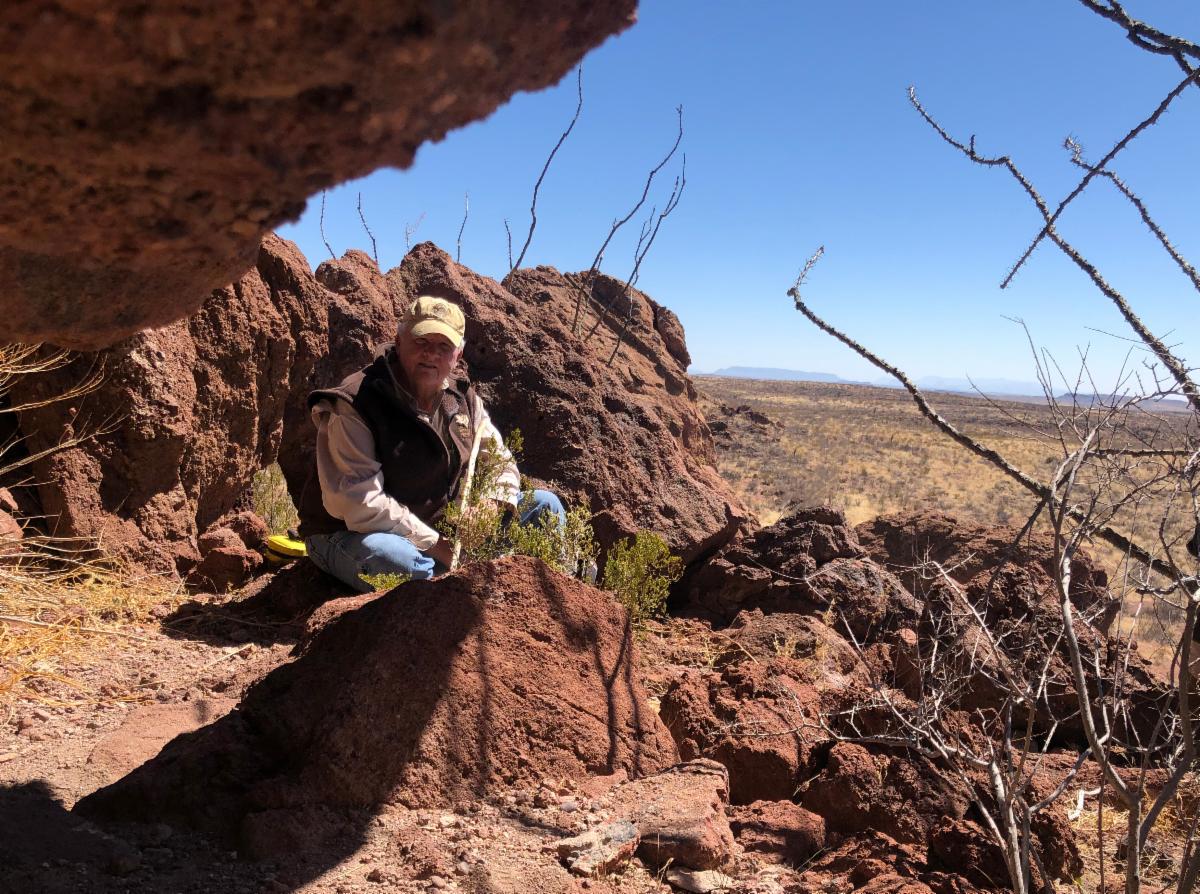
Homer Mills looking into a rockshelter.

Photo: Homer Mills looking into a rockshelter.

This year we lost a stalwart conservationist of the cultural resources in the Big Bend Region—O2 Ranch manager and CBBS board member Homer Mills. Homer loved the science of archaeology, frequently contributing his knowledge, passion, land access, and financial support to the Center. He discovered the oldest archaeological site ever found in West Texas—the Genevieve Lykes Duncan Site—where we are still finding amazing discoveries. To honor his passion, preserve his legacy, and foster his keen sense of wonder and enthusiasm in our SRSU anthropology students, we have established the Homer Mills Research Fund. This fund is currently $20k short of a $50k matching donation. We would love your support to ensure that future generations are inspired by Homer, just as we were. Donations can be directed to the Friends of the Center for Big Bend Studies—Homer Mills Research Fund via check or online donations through our store.

DONATE TODAY
Center For Big Bend Studies 432.837.8179 • cbbs@sulross.edu • https://cbbs.sulross.edu/
Ferguson Hall, Suite 114 • SRSU • P.O. Box C-71
Alpine, TX 79832
STAY CONNECTED
Facebook  Instagram  
Contact Us