ANTIPHOSPHOLIPID SYNDROME (APS) PROGRAM UPDATE

Thank you for your interest in and support of our APS Program! We continue to pursue personalized, proactive treatments for APS with a long-term goal of a cure. We do this work to make lives better, and we hope we can use these emails to build a community of others who want the same. We’re all in this together!

SAVE THE DATE!

Tuesday, June 9, 2026

6:00 pm - 7:30 pm EDT

Online Webinar via Zoom


How is the University of Michigan APS Program tackling today’s most important questions in APS? Join Drs. Jason Knight, Ray Zuo, Jackie Madison, and Ajay Tambralli—in collaboration with the APS Foundation of America (APSFA)—as we discuss APS, including the latest research shaping the future of care. Look for an agenda and a formal invitation in your inbox soon! 

APS 101

The APS 101 series, written by Dr. Jacqueline Madison, was created to help everyone better understand the ins and outs of APS, providing facts and key information. In this month’s edition, Dr. Madison, with co-author and hematologist Dr. Angela Weyand, discusses APS and its impact on contraceptive choices.


Read more

RESEARCH & CLINICAL TRIALS

Dietary Patterns in APS

We are excited to announce that our new study, Dietary Patterns in APS (HUM00290545), is officially recruiting participants! In collaboration with Dr. Alena Clark (Colorado State University), the Michigan APS Research Labs hope to better understand how nutrition affects those living with APS.


Although we plan to eventually distribute studies like this broadly, the current pilot phase will be limited to individuals who have been seen at the University of Michigan.


What Participation Involves

  • Data Review: We will securely collect data related to your APS diagnosis and treatments from your Michigan chart.
  • Surveys: You will complete a few brief online surveys (15 minutes) focused on your overall health.
  • Food Diary: You will keep a 3-Day Food Record (3DFR) of your typical meals, which we will teach you how to do.


You may be eligible to participate if you…

  • Are 18 years or older.
  • Have durably positive antiphospholipid antibodies.
  • Receive your APS care at the University of Michigan.


If you think that you may be eligible and would like to be considered for participation, you may contact us at csarosh@med.umich.edu or 734-647-5644.

Exciting Updates: DARE-APS

Since 2019, Drs. Knight, Madison, and the APS Research Labs have been working with Dr. Doruk Erkan and his team at the Hospital for Special Surgery, APS ACTION, and researchers at both the National Institutes of Health and the Immune Tolerance Network to develop a first-of-its-kind clinical trial for individuals living with APS. We are thrilled to share that the trial is active, and we are currently recruiting patients to participate!


DARE-APS Study: We all know that safer and more effective treatments for APS are needed. In this research study, we will learn about the safety of the drug Darzalex® (daratumumab) in patients with APS. We will also learn whether it reduces levels of the antiphospholipid antibodies that cause APS.


Eligibility: You may be eligible to participate in DARE-APS if you:

  • Are between the ages of 18 and 70
  • Have a diagnosis of APS
  • Have triple positivity with positive testing for lupus anticoagulant, anticardiolipin IgG antibodies, and anti-beta-2 glycoprotein I IgG antibodies
  • Do not have lupus


About the Study Drug: Daratumumab is an antibody that targets a protein called CD38, which is found on the surface of the immune cells that produce antiphospholipid antibodies (plasma cells). In APS, daratumumab may work by eliminating these antiphospholipid antibody-producing cells, thereby reducing damage to the body caused by antiphospholipid antibodies.


Participating in DARE-APS: This occurs in two phases. During the treatment phase, participants receive 8 weekly intravenous (IV) doses of daratumumab. The post-treatment follow-up phase lasts an additional 10 months, during which 6 monitoring visits occur.


Updates: So far, four individuals have participated at U-M. We are looking for someone to participate in the next dosing phase! We can only enroll one participant at a time, but we will keep a waitlist if there are many interested individuals. If you think that you may be eligible and would like to be considered for participation, you may contact us at csarosh@med.umich.edu or 734-647-5644.


To learn more, visit the DARE-APS website.

WHAT I’M READING IN APS RESEARCH 

What I’m Reading, written by Dr. Ajay Tambralli and Dr. Jason Knight, was created to provide information about some of the latest APS research and to help everyone better understand the ins and outs of these publications. In this month’s edition, Dr. Knight briefly discusses two recent articles relevant to APS that he thought might interest you.


Read More

SUPPORT OUR WORK

Donations to the APS Research Labs power the innovative pilot projects and essential infrastructure that are difficult to sustain through traditional grant funding alone. Your support truly keeps our science moving forward.


If you’ve found value in the content we share and have the means, then consider making a donation to the Michigan APS Research Fund. Every contribution, at any level, helps accelerate progress toward better treatments and ultimately a cure.

SPARK BARK:

WHAT’S SPARKY UP TO A-HOUND TOWN?

by Amelia K. Knight

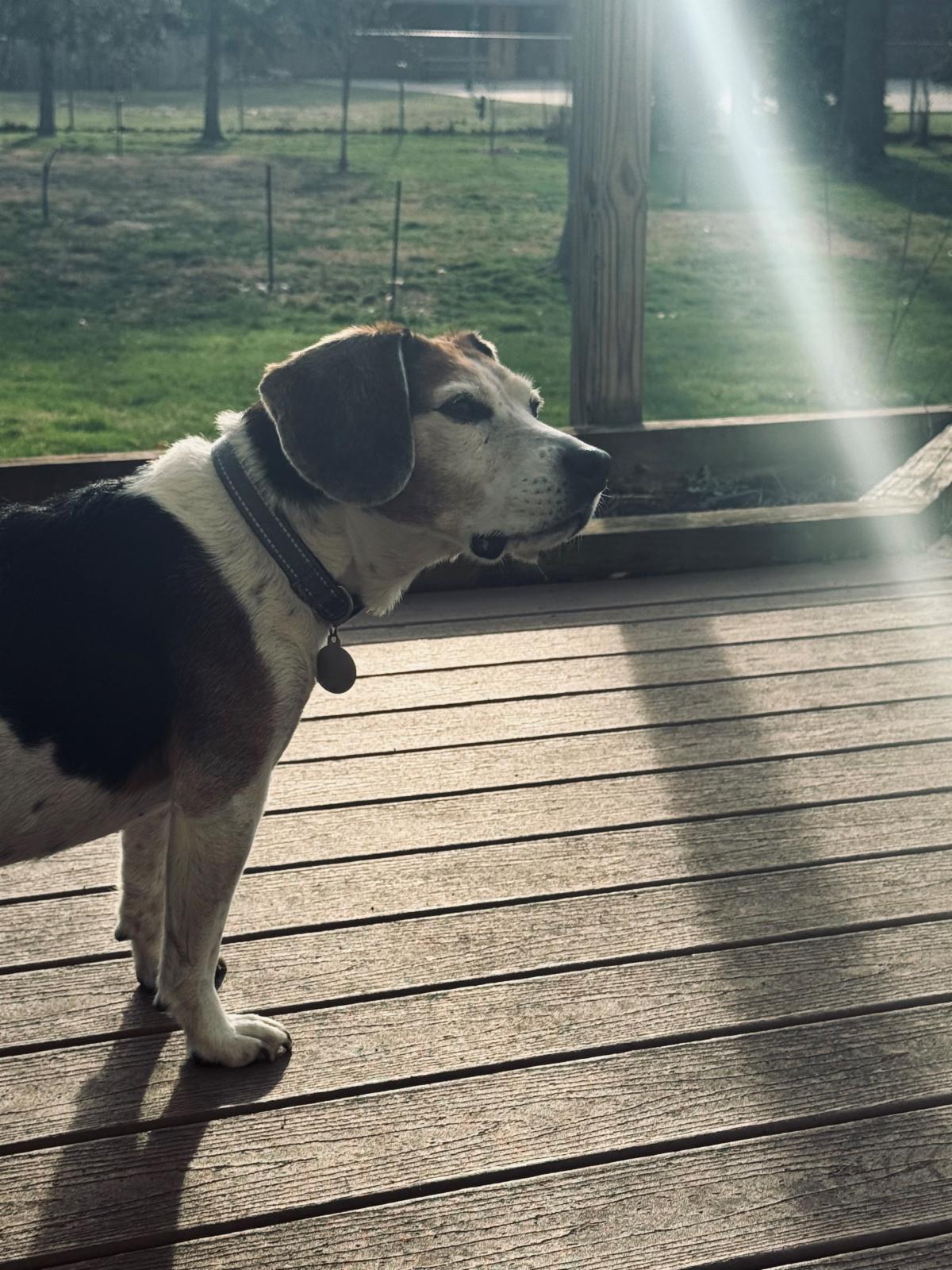
Hello everyone, and welcome to the April edition! If you’re new here, Sparky is a 9-year-old beagle we adopted 8 years ago. Throughout those 8 years, Sparky has been up to all sorts of shenanigans and mischief. 


These past couple of months have been a major turning point in Sparky’s life. He recently decided to retire, so he has been sleeping in a lot. Besides, of course, waking up for breakfast. While he may be retired, that has not stopped him from getting out to patrol the backyard. As the snow melted, he met back up with a lot of familiar foes. For example, the groundhog. After it made a brief appearance in our front yard as witnessed (loudly) from a living room window, Sparky has been on the prowl. He has run into some issues, though, such as not being able to fit into a groundhog hole, no matter how hard he tries. Nevertheless, he watches out every day. It seems Sparky’s retirement has yet to be fully realized by him. 


Along with the snow melting, it has also become much warmer. Sparky is a fan of this since it means more time outside. It appears that he has rediscovered “sunbathing” as he often finds a patch of sunny grass to fall asleep on. He is really one with nature, so his outdoor naps are his favorite. Acknowledging that it does seem a little unprofessional to be napping while he’s supposedly “on the hunt” for groundhogs, this discrepancy doesn’t seem to bother him too much.


Sparky’s evenings have recently cleared up since my mom and I finally finished watching a long-running TV show, and he no longer needs to curl up in front of the TV to watch along with us. In this newfound free time, he has picked up philanthropy. He has begun digging a bunch of holes, presumably to plant trees. Fortunately, no one has suggested this to be thinly veiled groundhog reconnaissance, as I am sure that would hurt Sparky’s feelings. We should be confident that now that he has been blessed with retirement, he has simply decided to give back to the community, however he can. 


Well, that’s all for now! Thanks for coming to this month's edition of Spark Bark. See you soon!


Editor’s note: Amelia started writing this column in middle school, but she will soon be leaving home for college. Therefore, June will be her last officially licensed Spark Bark. Be sure to tune in!

JOIN OUR EMAIL LIST


If someone shared this newsletter with you and you are interested in receiving it in the future, please join our email list.


CONTACT US


APS Research Labs

Michigan Medicine

1150 West Medical Center Drive, 5504 MSRB 1

Ann Arbor, MI 48109

MichiganANSWERS@med.umich.edu

SHARE OUR NEWSLETTER

X Share on X
LinkedIn Share on LinkedIn