|
A few words from Jill
Happy Michigan summer!
I hope you have the opportunity to enjoy some sunshine and time by the water while continuing the important work of serving your communities. Here at MCRH, things are as busy as ever, and we are excited to share updates, resources, and opportunities for Michigan Rural Health Clinics in this month's newsletter.
Registration is now open for the next Rural Health Clinic Quality Network Quarterly Meeting, taking place virtually on August 27 from 1:00-4:00 p.m. ET. We hope you can join us for updates on the Rural Health Transformation Program (RHTP), new resources, and educational opportunities designed specifically for Michigan RHCs.
If you missed our April Quarterly Meeting, recordings and presentation slides are available in the Michigan RHC Collective. Based on feedback from attendees, we recently added EMR-specific discussion spaces for Epic, eClinicalWorks (eCW), Cerner, and Allscripts. These groups provide a dedicated place to ask questions, share solutions, and learn from peers facing similar challenges.
Whether you're looking for guidance or have expertise to share, we encourage you to participate in the conversation. The Collective was created to strengthen connections among Michigan RHCs and support shared learning as we work together to serve rural communities across the state.
Thanks,
Jill
| | Centers for Medicare & Medicaid Services | CMS Updates | |
Medicare Telehealth Billing Changes for RHCs Effective October 1, 2026
CMS has released updated guidance on billing Medicare distant-site telehealth services in Rural Health Clinics (RHCs) and Federally Qualified Health Centers (FQHCs). CMS Change Request 14468
Beginning October 1, 2026, RHCs will no longer bill distant-site telehealth services using HCPCS code G2025. Instead, clinics must bill the specific CPT or HCPCS code that corresponds to the telehealth service provided, along with the appropriate telehealth modifier. List of Telehealth Services
Key billing requirements include:
- Modifier 93 for audio-only telehealth services
- Modifier 95 for audio-visual telehealth services
According to CMS, the change is intended to improve the identification and reporting of specific telehealth services, support participation in value-based care models, and provide more accurate claims data.
RHCs should review current telehealth billing workflows and work with billing teams, vendors, and Medicare Administrative Contractors (MACs) to prepare for implementation before the October 2026 effective date.
| |
Medicaid Community Engagement Requirements Rule
The Centers for Medicare & Medicaid Services (CMS) has released an interim final rule implementing the Medicaid community engagement requirement established by Public Law 119-21.
Under the rule, certain adults enrolled through Medicaid expansion programs will be required to complete at least 80 hours per month of qualifying activities, such as employment, education, job training, or community service, as a condition of maintaining Medicaid eligibility. The rule also outlines exemptions, hardship exceptions, beneficiary reporting requirements, and state responsibilities for verifying compliance.
While implementation details will vary by state, rural healthcare providers may see impacts related to Medicaid enrollment, coverage continuity, and patient access to care as states develop and implement these requirements.
The rule takes effect July 31, 2026, and CMS is accepting public comments through July 31, 2026.
Additional resources are available through the CMS fact sheet, KFF's Medicaid work requirements tracker, Georgetown University's Medicaid Work Requirements Tracker, and NRHA's Medicaid policy hub.
| |
Proposed Changes to RHC Recertification Process
CMS has proposed allowing Rural Health Clinics to complete a self-attestation process in place of routine on-site recertification surveys conducted by State Survey Agencies. While the proposal has not been finalized, clinics would remain responsible for maintaining compliance with all Conditions for Certification regardless of any future survey changes.
In comments submitted to CMS, The National Rural Health Association (NRHA) encouraged the agency to proceed cautiously and consider alternative approaches to reducing administrative burden while maintaining quality oversight. RHC leaders should continue routine compliance monitoring, policy reviews, staff training, quality assurance activities, and documentation oversight. Strong compliance programs help support quality care, patient safety, and long-term organizational stability.
MCRH encourages Michigan RHCs to stay informed as this proposal develops and to continue prioritizing compliance readiness. If you have questions about RHC certification requirements, compliance, or operational impacts related to this proposal, please contact Jill Oesterle, MCRH's Director of Provider Solutions, for assistance and technical support.
| | RHC Leader Certification Program Starts July 15 | | |
One of the biggest challenges facing rural health clinics is that many leaders step into leadership roles for the first time without formal training or ongoing support. Highly skilled clinicians and staff members suddenly find themselves responsible for operations, finance, staffing, compliance, and team leadership.
The NRHA Rural Health Clinic Leader Certification Program was designed to give rural clinic leaders a head start by equipping them with practical leadership, operational, financial, and quality-improvement knowledge they can immediately apply within their organizations. Participants also have the opportunity to connect and collaborate with peers from rural clinics across the country who face many of the same challenges.
The next cohort begins July 15th, 2026.To learn more about the program or enroll, contact Billy Auxier at william@crhleadership.com.
| |
Thank You, Michigan RHCs!
2026 NARHC Policy Survey Report Now Available
| | |
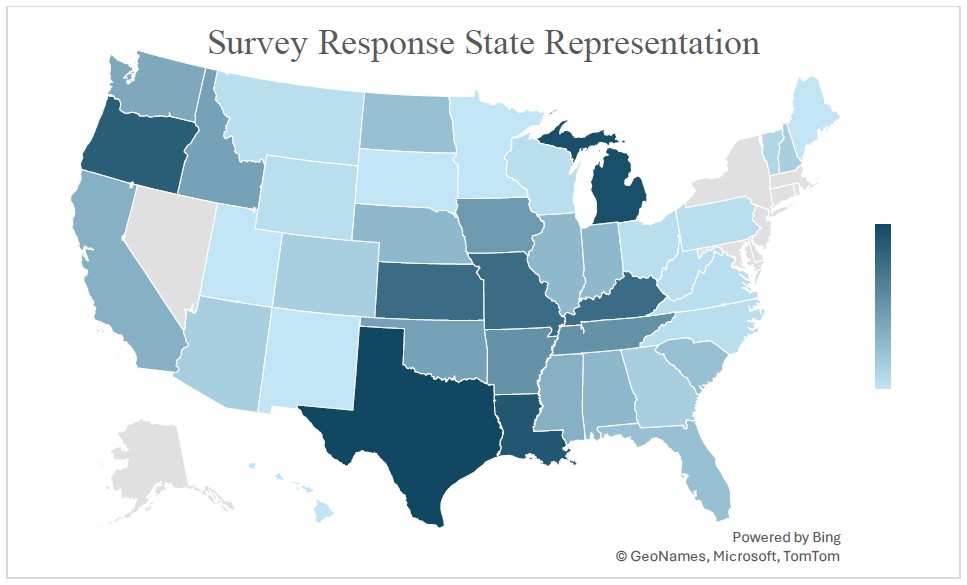
Thank you to Michigan's Rural Health Clinics for helping ensure our state's voice was represented in the National Association of Rural Health Clinics' (NARHC) 2026 Policy Survey. Michigan was among the states with strong participation, providing valuable insight into the challenges, opportunities, and priorities facing RHCs across the country.
The newly released report summarizes responses from RHCs nationwide and offers a snapshot of the current rural healthcare landscape. Topics include payer mix, telehealth utilization, Medicare Advantage contracting and reimbursement, value-based care participation, workforce and operational challenges, and other trends affecting clinic sustainability.
The survey findings help inform national advocacy efforts and provide valuable benchmarking data for RHC leaders as they navigate an evolving healthcare environment.
We appreciate the Michigan clinics that took the time to participate and contribute to this important national resource!
| | Fact Sheets from Michigan League for Public Policy Show Food Access by County | | |
The Michigan League for Public Policy has released new county-level fact sheets highlighting food insecurity, food access, and Supplemental Nutrition Assistance Program (SNAP) participation across Michigan.
The fact sheets come at a time when many communities are facing rising food costs and concerns about the impact of recent federal SNAP changes on families and children. The resource provides county-specific data on food insecurity, child food insecurity, and SNAP participation, offering a local perspective on food access challenges throughout the state.
Several northern and rural Michigan counties report some of the highest rates of child food insecurity in Michigan, underscoring the importance of community partnerships and efforts to address social factors that influence health outcomes.
| | Rural Health Clinics may find these fact sheets useful for community health assessments, grant applications, partnership development, and local advocacy efforts. Organizations and community members can also use the data to help inform conversations about food security and community needs. | | Now Open: Michigan's Opioid Treatment Access Internship Stipend Program | | |
The Michigan Department of Health and Human Services (MDHHS) is accepting applications for the Michigan Opioid Treatment Access Internship Stipend Program which provides financial support to students completing unpaid internships that lead to careers in substance use disorder (SUD) treatment and opioid recovery services.
Eligible students enrolled in accredited degree programs for social work, professional counseling, marriage and family therapy, nurse practitioner, or physician assistant professions may receive stipends of up to $20,000, depending on the number of internship hours required. Internship placements must be unpaid.
The program is designed to expand Michigan’s substance use disorder treatment workforce by supporting students committed to providing SUD services to Michigan residents after graduation. Applicants must sign a letter of intent indicating their commitment to serve Michigan residents and participate in program evaluation activities.
MDHHS has allocated $3.5 million for the program, which could support up to 350 students statewide. Funding is provided through the Michigan Opioid Healing and Recovery Fund using resources from national opioid settlements.
Applications and supporting documentation are due June 15, 2026. Applicants will be notified of their acceptance status within seven weeks of the deadline.
For assistance with any questions, contact Dan Kelly at kelly@micounties.org.
| | On-Demand Rural Grant Writing Training from NOSORH | | The National Organization of State Offices of Rural Health (NOSORH) offers Level I: Fundamentals of Rural Grant Writing, a three-part, self-paced training series covering grant writing terminology, project development, and strategies for identifying rural health funding opportunities. This training is ideal for individuals who are new to grant writing or looking for a refresher. | | $50K Per Provider Lost to Documentation: What AI Scribing Misses in Rural Health | | |
Tuesday, June 16, 1:00 - 2:00 pm CST
Documentation burden is costing rural hospitals more than $50,000 per provider each year while driving burnout and putting retention at risk. AI scribing is helping reduce time spent on notes, but it does not solve the full documentation workflow.
In this session, Steven Sica brings nearly two decades of experience working with Critical Access Hospitals, Rural Health Clinics, and community-based providers nationwide to break down what AI can and cannot do in real-world rural settings. He walks through the gaps that still exist across pre-charting, EHR integration, and compliance, and how rural organizations are closing those gaps to improve accuracy, protect revenue, and give providers time back.
Walk away with a clear framework to evaluate your current approach and the questions you need to ask before investing in AI documentation solutions.
| | |
July 16, 2026 | Gaylord
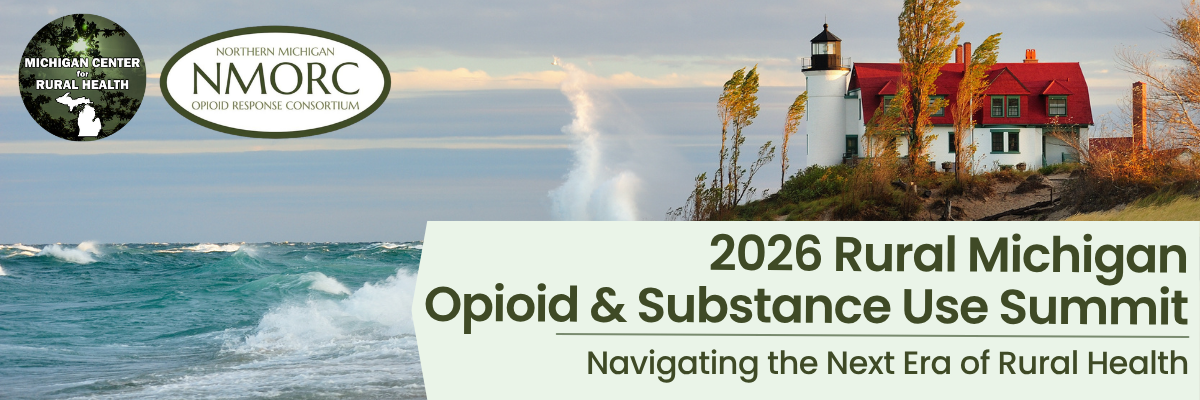
Join healthcare, behavioral health, public health, community, and recovery partners from across Michigan for a day focused on addressing substance use in rural communities. The Rural Michigan Opioid & Substance Use Summit will feature expert speakers, emerging strategies, and opportunities to connect with others working to strengthen prevention, treatment, and recovery efforts across the state.
MCRH is applying to receive CME, Social Work, Community Health Worker, and MCBAP Credits, 4-6 credits depending on approval.
| | |
September 24, 2026 | Grayling
The inaugural Rural Michigan Palliative Care Summit will bring together healthcare providers, administrators, and community partners to explore strategies for expanding and sustaining palliative care services in rural communities. Attendees will learn from Michigan leaders and peers who are advancing patient-centered care for individuals with serious illness and their families.
MCRH is applying to receive CME, Social Work, and Community Health Worker Credits, 4-6 credits depending on approval.
| | Register for Session 3 of the 2026 Kidney Series Grand Rounds: Integrating CKD into Cardiometabolic Continuum | | |
Happening virtually on June 17th | 12:15–1:15PM EST.
Visit the National Kidney Foundation of Michigan's Healthcare Professionals page for additional clinical resources, education opportunities, and details on upcoming Kidney Series Grand Rounds.
1.0 contact hour available for physicians, nurses, and healthcare professionals.
| | Rural Healthcare Provider Transition Project Applications Open | | From the National Rural Health Resource Center, applications have opened for the Rural Healthcare Provider Transition Project. Participants in this program – including small rural hospitals, Critical Access Hospitals, and Centers for Medicare and Medicaid Services (CMS)-certified Rural Health Clinics – receive virtual and on-site technical assistance to shift from a traditional fee-for-service model focused on volume to a Value-Based Care model. The Project accepts applications on an ongoing basis, with a cut-off of August 14 for the next cohort. | Exploring the Power of Collaboration: Pathways to Transformative Rural Health Partnerships | |
June 22, 2026 | 2:00 p.m. EST
From the National Association of Community Health Centers, this virtual webinar will highlight how rural hospitals, health centers, and community partners can work together to strengthen access to care, address workforce challenges, and improve long-term sustainability. Through real-world examples and panel discussions, participants will gain practical insights into building successful rural health partnerships.
| | RHIhub Updated Resource & RHTP Webinar | | The Rural Health Information Hub (RHIhub) just updated their topic guide with information and resources on how and where to find rural and rural-relevant data resources. It also covers how to navigate specific statistics on data.census.gov, details related to comparing data across geographic areas, and other factors to consider when searching for and using rural health data. | | Join RHIhub on Monday, June 22nd, at 12:00 p.m. Central to hear Keith Mueller from Rural Health Value discuss Rural Health Transformation Program (RHTP) activities that link to value-based payment arrangements in rural communities and relevant resources, strategies, and models to support this work. Register to attend today! | | Medicare Advantage Enrollment Update 2025 | | |
From the RUPRI Center for Rural Health Policy Analysis a new report on the percentage of rural Medicare beneficiaries enrolled in Medicare Advantage (MA) plans by metropolitan and nonmetropolitan location and plan type, from 2015-2025.
Key Findings
- MA enrollment in 2025 grew 1.5 percent from 2024, marking the smallest annual increase in a decade. However, growth remained higher in nonmetropolitan counties (2.5 percent) than metropolitan counties (1.4 percent).
- Despite past projections, nonmetropolitan MA penetration did not exceed 50 percent in 2025. Instead, it reached 49.2 percent, compared to 56.8 percent in metropolitan counties.
- Much of the growth in nonmetropolitan MA enrollment remains in local preferred provider organization (PPO) plans.
| | |
This newsletter is designed for Rural Health Clinics in mind, but we know the value doesn’t stop at your inbox.
If you find these updates helpful, consider forwarding the newsletter to others on your team or in your network who work in or support Rural Health Clinics. Whether it’s a provider in your primary care clinic, a biller or coder managing RHC claims, or a colleague interested in rural health - sharing is a simple way to strengthen connections and keep everyone informed.
Know someone who should be added to the list? They can subscribe here or reach out to us directly.
| |
A SPECIAL THANK YOU TO MCRH'S
2026 ORGANIZATIONAL SPONSORS
| | Stay updated by visiting the Michigan Center for Rural Health's website and following us on social media. | | | | |