Attaining High Energy Efficiency with Less Materials Using
Smaller-Diameter, Inner-Grooved Copper Tubes
|
|
“NET ZERO CARBON" GOALS ASSISTED BY SMALLER-DIAMETER COPPER TUBES
|
|
HXSim Simulations Help Optimize Heating and Cooling Performance |
|
Free Webinar
Webinars by
Optimized Thermal Systems
Thursday, April 15, 2021
1:00 to 2:00 p.m. EDT
|
Free Software
HXSim version 3.2 from
ICA and SJTU
|
|
“Green deals” are gaining popularity among citizens as well as governments, corporations and philanthropists around the globe. Net Zero Carbon is the rallying cry for the management of greenhouse gases (GHGs). The European Union has a package of initiatives known as the “European Green Deal” [1]. Meanwhile, In the United States, a full two-thirds of the population “thinks government should do more on climate,” according to a report from the Pew Research Center [2]. Globally, the Paris Agreement as well as the Kigali Amendment provide frameworks for climate change action.
|
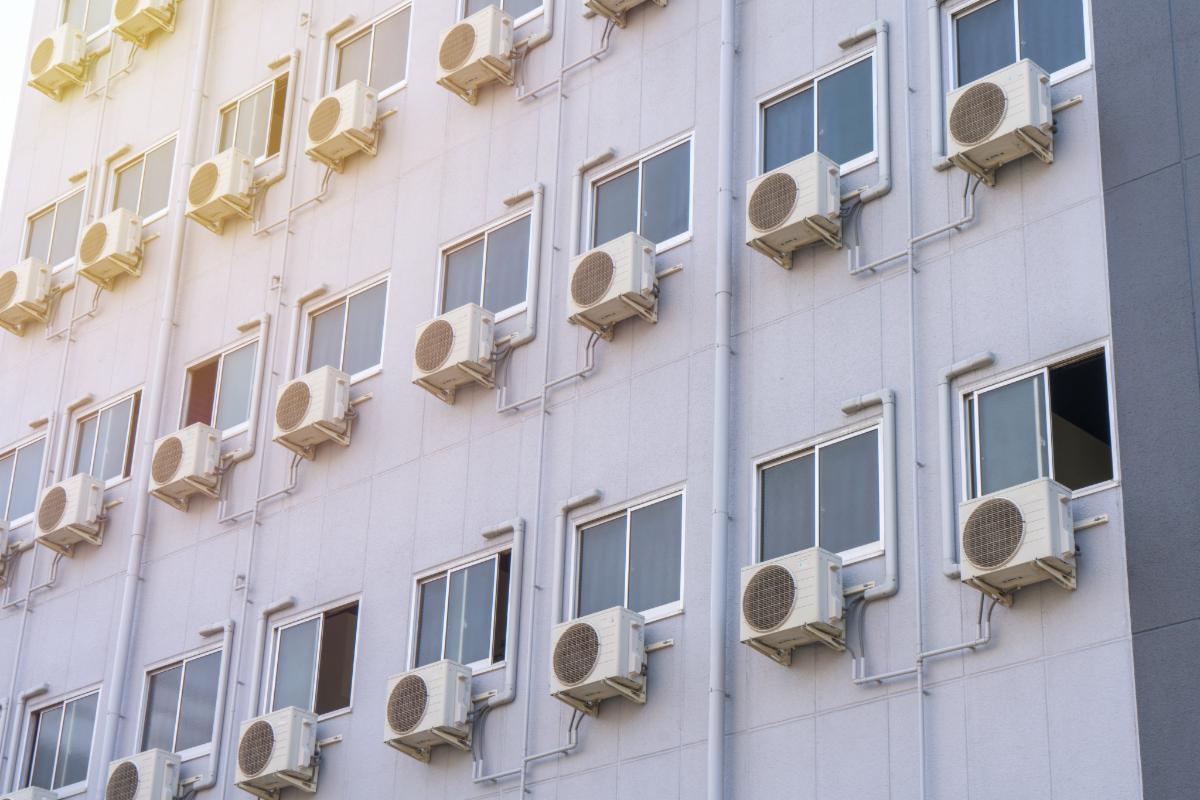
Figure 1 — Ecofriendly AC Systems are needed to mitigate global warming.
|
|
Adopted by 196 Parties on 12 December 2015 and entered into force on 4 November 2016, the Paris Agreement within the United Nations Framework Convention on Climate Change (UNFCCC) deals with GHG emissions mitigation, adaptation, and finance [3]. The Kigali Amendment to the Montreal Protocol is an international agreement to gradually reduce the consumption and production of hydrofluorocarbons [4].
Although carbon dioxide (CO2) emissions pose the gravest threat to the atmosphere, CO2 is not the only molecule that behaves as a GHG when released into the atmosphere. The potency of GHGs is measured in terms of global warming potential (GWP). The GWPs of hydrofluorocarbons (HFCs or "F-Gases") are typically hundreds or thousands of times greater than the GWP of carbon dioxide (CO2). Synthetically produced HFCs are still widely used as refrigerants in air conditioning and refrigeration equipment.
Ecofriendly design of heating and cooling appliances supports not only energy efficiency but Decarbonization, F-Gas reduction and Energy Efficiency. The design community in particular can make significant contributions toward reducing GHG emissions. The use of ecofriendly heating and cooling appliances can aid the planet-wide transition to Net Zero Carbon (Fig. 1).
Select HXSim simulation examples demonstrate the ecofriendly and energy efficient advantages of smaller diameter copper tubes. For more on HXSim, see the earlier white paper on computer simulations of heat exchanger performance [5].
|
|
Electrification Leads to Decarbonization
Net Zero Carbon cannot be achieved solely through the electrification of vehicles and heating and cooling appliances. Nonetheless, electrification is essential to decarbonization. The use of heat pumps and electric vehicles allows for coal, natural gas and petroleum to be phased down and replaced by renewable energy sources such as solar, wind and hydroelectric.
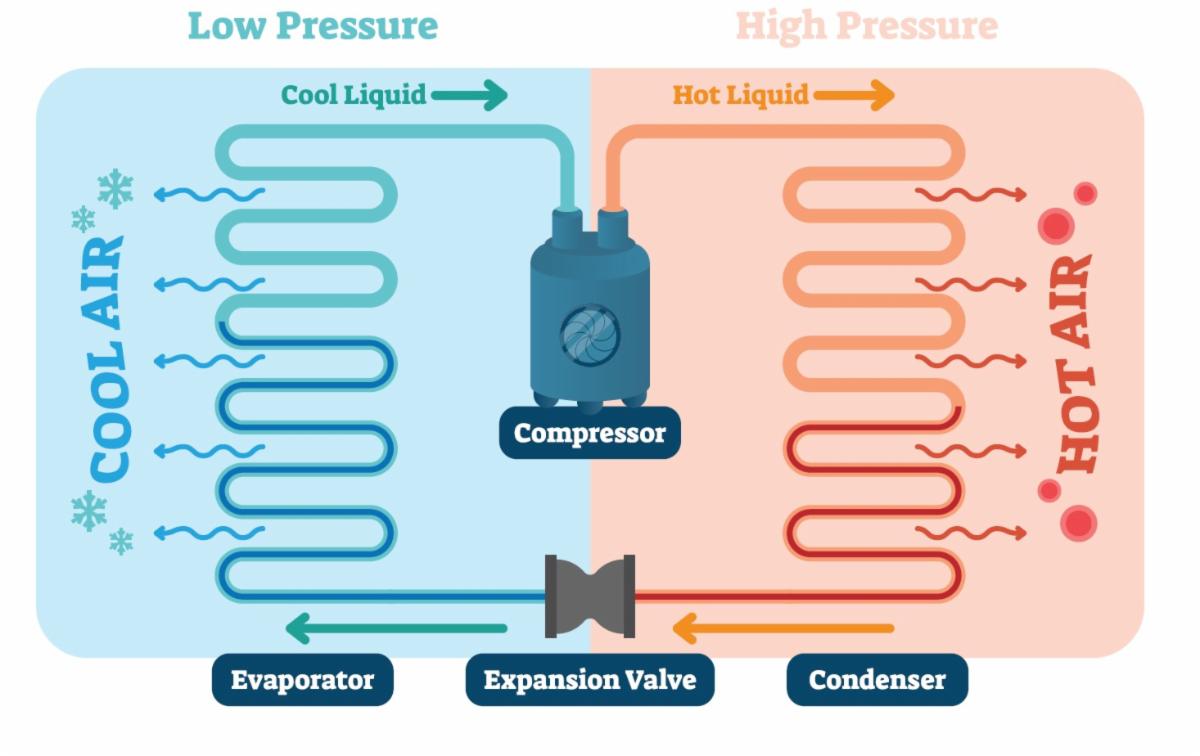
A heat pump is a cooling cycle in reverse (Fig. 2). Heat-depleted refrigerant is passed through an expansion valve and the cold low pressure refrigerant flows into the evaporator, where it absorbs energy from the environment. The warmed refrigerant then enters the compressor, which performs work on the refrigerant, further increasing its temperature and pressure; the hot refrigerant is "pumped" or transported to the condenser where it is used to heat spaces or water. The energy gained by the refrigerant at the evaporator and the compressor having been released for heating, the cycle is then repeated.
|
|
Figure 2 — A heat pump extracts energy from the ambient well in excess of the electrical energy provided to the compressor.
|
|
In this manner, a well-designed heat pump can operate with a coefficient of performance (COP) greater than three, producing three times or more heat-energy output than the electrical energy drawn by compressor. In contrast, burning fossil fuels in a furnace or boiler is extremely inefficient: High-grade, high temperature energy resources are used to produce low-grade, low-temperature heat, with a COP less than one. This is wasteful of our energy resources.
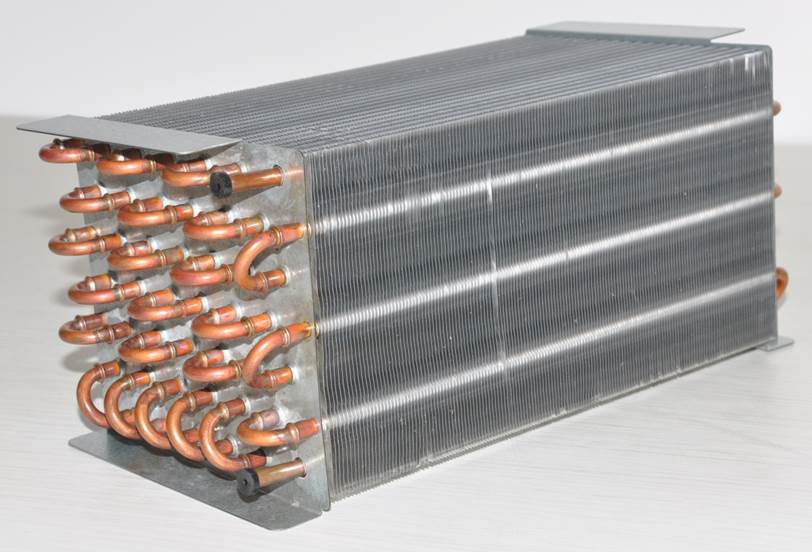
Spirotech, which now is a division within the LU-VE Group, has been making heat exchangers for heat pumps for a variety of appliances. For example, Figure 3 shows a heat exchanger that uses small-diameter copper tubes in a condenser for a clothes dryer application. Current designs of evaporators and condensers for clothes dryers are included in the 2020 LU-VE product catalogue [6].
|
|
Figure 3 — This heat exchanger for a heat pump clothes dryer uses 5 mm diameter copper tubes.
|
|
While progress is being made, much work needs to be done. The IEA Sustainable Development Scenarios (SDS’s) were developed in alignment with the UN Sustainable Development Goals. An SDS tracks various aspects of global energy usage with quantifiable targets for minimizing the adverse effects of climate change [7]. Heating is one sector that is “Not on Track” with respect to the numbers in June 2020 [8]. Here is an excerpt from a recent IEA report on heating:
The heating equipment market continues to be dominated by fossil fuel-based equipment and less-efficient conventional electric heating technologies, which make up almost 80% of new sales. However, sales of heat pumps and renewable heating equipment such as solar hot water systems have increased, representing more than 10% of overall sales in 2019. To be in line with the SDS, the share of clean heating technologies – heat pumps, district heating, renewable and hydrogen-based heating – needs to more than double to 50% of sales by 2030.
The adoption of heat pump water heaters (HPWHs) is an important tactic for reducing GHGs globally. See the “In the Spotlight” column in this issue for more on HPWHs.
|
|
Driving Down F-Gas Usage
The development of heat pumps is promising from an environmental perspective but most heat pump appliances on the market today still use high-GWP hydrofluorocarbons (i.e., HFCs or F-Gases). Most F-gases are nonflammable (A1). R32 is a mildly flammable F-Gas that has a GWP of “only” 675. Certain mildly flammable HFOs have very low GWPs and therefore R32-HFO blends can be developed with GWPs less than 675. Many OEMs now use R32 or R32-HFO blends as a means of meeting F-Gas regulations in the near term.
R32, HFOs and HFO-R32 blends all belong to the A2L flammability subclass. They are considered flammable, hence the A2 designation, but their “burn rate” is slower than typical A2 refrigerants, according to certain standard tests. The A2L “mildly flammable” designation sits between the A1 and A2 designation and allows for less stringent use conditions compared to A2 (flammable) or A3 (highly flammable) refrigerants. The differences between A1, A2L, A2 and A3 safety classes are summarized in a “Factsheet” jointly published by the United Nations Environment Programme and ASHRAE [9].
For commercial refrigeration, the transition to hydrocarbon refrigerants is already underway. The adoption of R290 in light commercial refrigeration equipment is a remarkable success story for the reduction of F-Gases and for MicroGroove technology. Smaller-diameter copper tubes allow for a given cooling capacity using less refrigerant. This advantage can be easily demonstrated with HXSim simulations.
Although propane (R290) is an A3 (highly flammable) refrigerant, it was approved for use many years ago, subject to a charge limit of 150 grams (5.29 ounces). Manufacturers of light commercial refrigeration equipment have been quick to transition to R290. This charge limit was sufficient to spur the design and development of a wide array of commercial refrigeration equipment including cold display cases.
MicroGroove technology developed in parallel with the transition to low-charge R290 refrigeration equipment and is an enabling technology for many R290 refrigeration applications [10] [11].
More recently the International Electrotechnical Commission (IEC) voted to increase the charge limit for A3 refrigerants (e.g., propane) from 150 to 500 grams in self-contained commercial refrigeration equipment. IEC is an international body whose standard 60335-2-89 is the basis for all other standards for commercial refrigeration equipment but will not immediately affect products in the United States. Nonetheless, this higher charge limit presents many opportunities for new commercial refrigeration technologies as the U.S. develops its own guidelines based on the IEC standard in the years ahead.
The wide variety of designs of heat exchangers for refrigeration equipment makes HXSim a valuable tool for appliance designers. Using HXSim one can vary the tube size, pitch, fin type and density and block dimensions of condensers and evaporators to fit the exchanger precisely to the application.
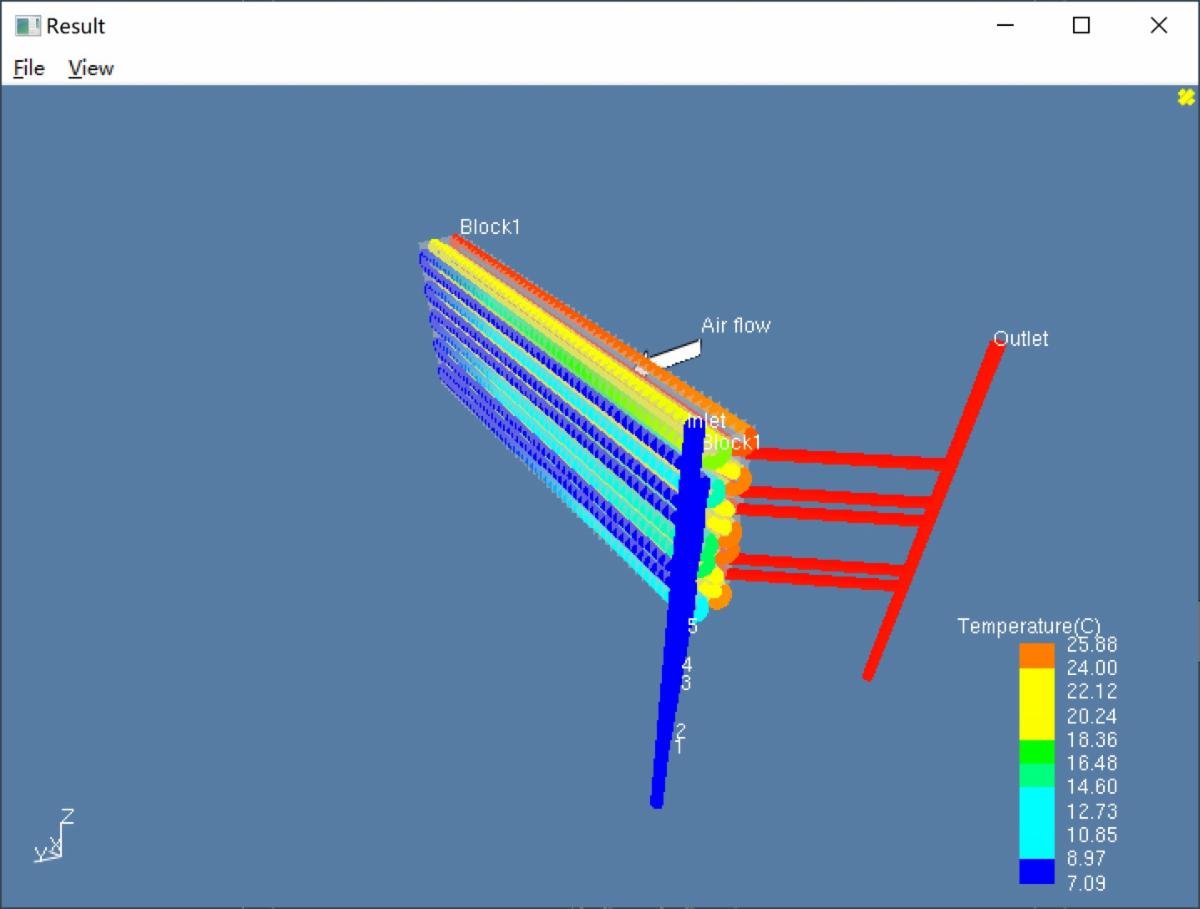
Figure 4 gives an example of a heat exchanger design for a refrigeration application using 500 grams of propane .
|
|
Figure 4 — The HXSim design tool simulates the performance of a heat exchanger in a refrigeration system using smaller diameter copper tubes with 500 g of propane as the refrigerant.
|
|
The Importance of Energy Efficiency
Air conditioners require larger refrigerant charges than light commercial refrigeration systems. Consequently, most OEMs have resisted highly flammable refrigerants such as propane and opted instead for R32 or HFO-R32 blends. Nonetheless, especially in Asia, including China and India, air conditioners using propane as a refrigerant are being manufactured in volume.
A special virtual technical conference was held jointly with shecco (organizer of ATMOsphere events) and the Danish Technological Institute (DTI) on “The Future of Air Conditioning” in June 2020 [12]. Of special note was the discussion of air conditioners that use propane as a refrigerant. The transition to energy-efficient split ACs with R290 refrigerant will play a key role in creating a more sustainable HVAC&R sector, according to a market assessment titled "R290 Split Air Conditioners Resource Guide" published in 2019 by GIZ Proklima and Umweltbundesamt [13].
The Guide says the following:
“Leapfrogging to high-efficiency appliances using R290 reduces the energy consumption and GHG emissions and thus provides a significant opportunity to contribute to national climate action plans. A market share of 50% [by] 2050 may cut down total GHG emission by 25%.”
Daniel de Graaf from the German Environmental Agency (UBA) noted that Midea received the Blue Angel ecolabel for its All Easy Series R290 units in 2018 in Germany and that Midea now has better units. Midea intends to have these new units Blue Angel-certified and bring them to the European market. Two split-AC units from Midea qualified for the Blue Angel ecolabel in Germany, with cooling capacities of 2.6 kW (0.7 TR) and 3.5 kW (1.0 TR), respectively, and each uses 380 grams of R290. According to de Graaf, 700,000 R290 room ACs have worked in India with no problems and it should also be possible to install and operate them safely in Europe [14].
As noted in the article, “MicroGroove Coils Span the Globe: Smaller Diameter Copper Tubes Thrive In India,” when the Bureau of Energy Efficiency revised its Star Labeling to encourage higher efficiency air conditioners in India, AC manufacturers began to specify condensers and evaporators that transfer heat efficiently [15]. Laboratory experiments showed that heat transfer coefficients (HTCs) are highest for smaller-diameter inner-grooved copper tubes compared to larger diameter tubes and smooth tubes. Higher HTCs result in more efficient AC systems that also use less material and less refrigerant.
MicroGroove coils made from smaller diameter, inner-grooved copper tubes deliver an unprecedented combination of compactness and energy efficiency. They are more affordable than traditional designs because they use less material. Typical MicroGroove copper tube outer diameters are 7 mm, 6.35 mm (0.25 inch) and 5 mm.
MicroGroove copper tubes are the preferred tubes for India because of their corrosion resistance. A decade ago larger-diameter copper tubes began to lose market share to aluminum and a low point was reached in 2014. But the corrosion resistance of copper prevailed and copper heat exchangers are recapturing market share. The trend back toward copper has been dramatic as end users of aluminum microchannel experienced many cases of failure and leakage. The industry is rapidly switching to MicroGroove as a practical, economical, eco-friendly alternative to microchannel.
Although India is both a large consumer and large producer of air conditioners, the global outlook for sustainable cooling strongly depends on the actions of China and the United States. Two crucial IEA reports on the “Future of Cooling” are worth noting by appliance designers [16] [17].
According to these detailed reports, all countries should focus on labelling programmes and Minimum Energy Performance Standards (MEPS) to raise energy efficiency of ACs and other cooling equipment. Countries need to quickly tap into the energy efficiency potential already possible using air-conditioning technology available in markets today. Governments should complement these with measures that “accelerate the transformation of the AC market towards high-efficiency products, including targeted programmes and research, development, demonstration and deployment.”
The takeaway for OEMs and HVAC&R appliance designers is that more efficient AC designs are needed. The effects of increasing the efficiency of appliances are significant when multiplied over tens of millions of units.
One means for increasing the efficiency of appliances is through the use of smaller diameter copper tubes. The HXSim software can be used to compare the efficiencies of various heat exchanger designs.
|
|
Help is on the Way
The world faces daunting challenges on the way to Net Zero Carbon. Renewable energy sources need to be developed. Whatever the renewable energy sources, electrification and energy efficiency are essential to obtaining Net Zero Carbon. Also, the HVAC&R industry faces the unique challenges of phasing out conventional F-Gas refrigerants that have high GWPs; most low GWPs are either mildly flammable (HFOs) or highly flammable (hydrocarbons) or else they require high pressures (R744).
In sum, many scenarios have been quantified to track progress toward sustainable development goals. Residential heating and cooling and domestic water heaters have been identified as major contributors to energy consumption. Appliance designers can help to hit vital targets by designing electrical appliances that meet minimal efficiency performance standards (MEPS) using ecofriendly refrigerants.
Meanwhile, the HXSim simulation tools can help to evaluate heat exchanger efficiency and accelerate the design process.
|
|
HEAT PUMP WATER HEATERS OFFER EXTRAORDINARY ENERGY SAVINGS |
|
At the 2020 AHR Expo, which was held in Orlando, Florida, just prior to pandemic lockdowns, many OEMs exhibited Heat Pump Water Heaters (HPWHs). Notable were residential appliances from A.O. Smith, General Electric Appliances, Gree, Rheem, Rinnai, Stiebel Eltron and others. Bradford White Water Heaters, provider of the AeroTherm™ Series Heat Pump Water Heater, acquired the production assets from the HPWH heater operations of GE Appliances (GEA), a Haier company.
Heat pumps have received much attention from the U.S. Department of Energy (DOE), the California Energy Commission (CEC), the European Heat Pump Association (EHPA), the IEA International Heat Pump Forum, the American Council for an Energy-Efficient Economy (ACEEE) and many other government agencies and non-governmental organizations (NGOs).
The U.S. DOE is authorized to establish and amend energy conservation standards and test procedures for consumer water heaters [1].
Yoram Shabtay presented a well-received paper on the use of smaller-diameter copper tubes in high-efficiency heat pump designs at the 12th IEA Heat Pump Conference in Rotterdam [2]. Commonly asked questions about MicroGroove technology in heat exchangers are answered in a brochure titled “MicroGroove Heat Pump Q&A” [3].
Manufacturers prefer round-tube, plate-fin (RTPF) heat exchangers in outdoor evaporators for heat pumps because the open design drains easily and is less susceptible to icing in cold seasons compared to brazed aluminum heat exchangers. The serpentine-fin design of so-called "microchannel" heat exchangers can trap condensate, which freezes in cold climates.
|
|
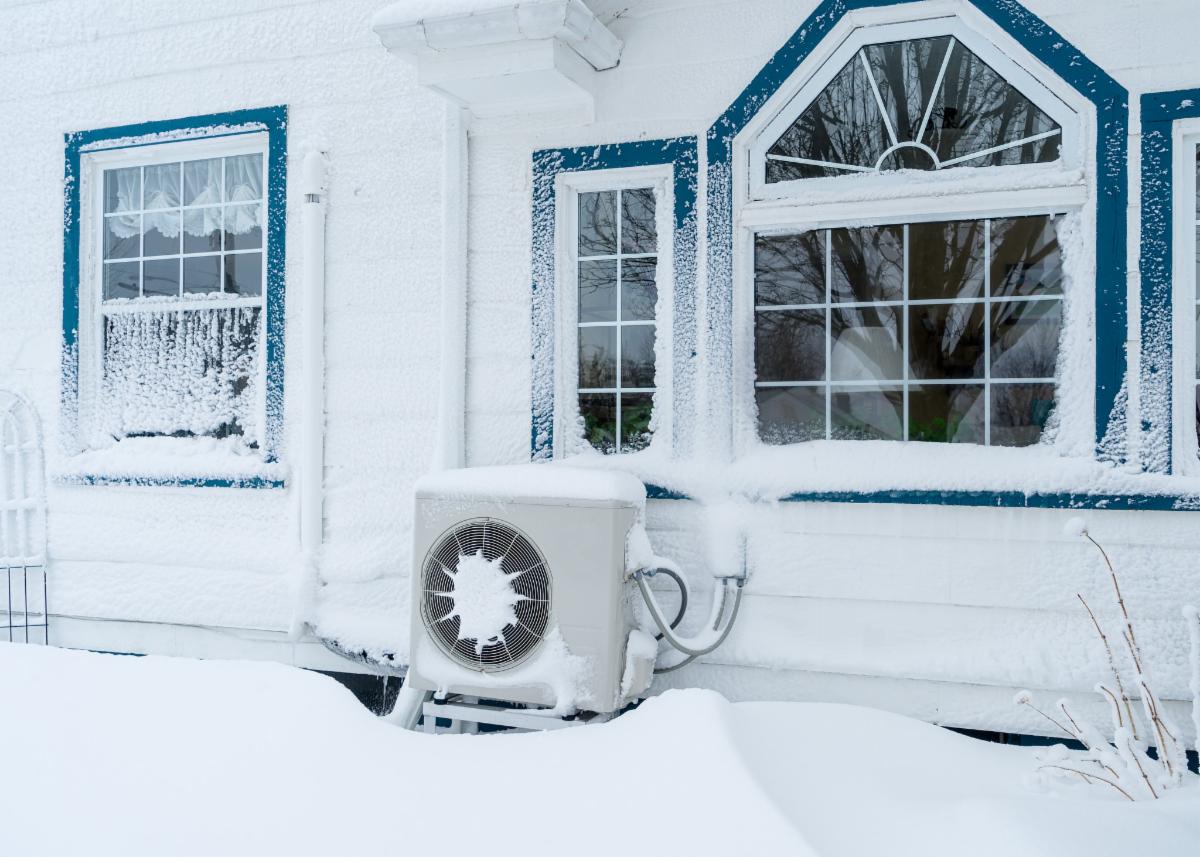
Heat pump for a residential application in the winter. |
|
The COP Advantage
As an example of the high coefficient of performance (COP) available from HPWHs, there is a type of heat pump that drives the compressor with a gas turbine. The waste heat from the gas turbine is recovered and used for heating; additionally, the gas turbine performs work through the compressor acting on the refrigerant from the evaporator; the compressed refrigerant flows to the condenser where even more energy can be used for heating; the refrigerant then passes through a throttling valve, expands and picks up energy as it passes through the evaporator.
Thus, a gas-turbine-driven heat pump takes advantage of an abundant supply of natural gas (e.g., from fracking and other sources in the USA) yet couples this resource with a heat pump that serves as an energy multiplier.
Instead of natural gas, of course, electricity could be used to power the compressor. In either case, the heat pump multiplies the energy that would be obtained from natural gas burning or electrical resistance heating alone. Both systems contain the basic components of compressor, condenser, throttling valve and evaporator with the difference being the driving force on the compressor.
Another instructive example of an ecofriendly heat pump is EcoCute, which uses CO2 as a refrigerant. The first commercial domestic EcoCute was marketed in Japan in May 2001 and 1.5 million units had been sold in Japan by October 2008; and total sales in Japan exceeded six million units as of June 2018 [4].
The market success of ecofriendly EcoCute products encouraged the development of CO2 heat pumps globally. For the latest developments on the use of CO2 as a refrigerant, shecco’s recently published “World Guide to Transcritical Refrigeration” in three parts is available online at no charge [5].
|
|
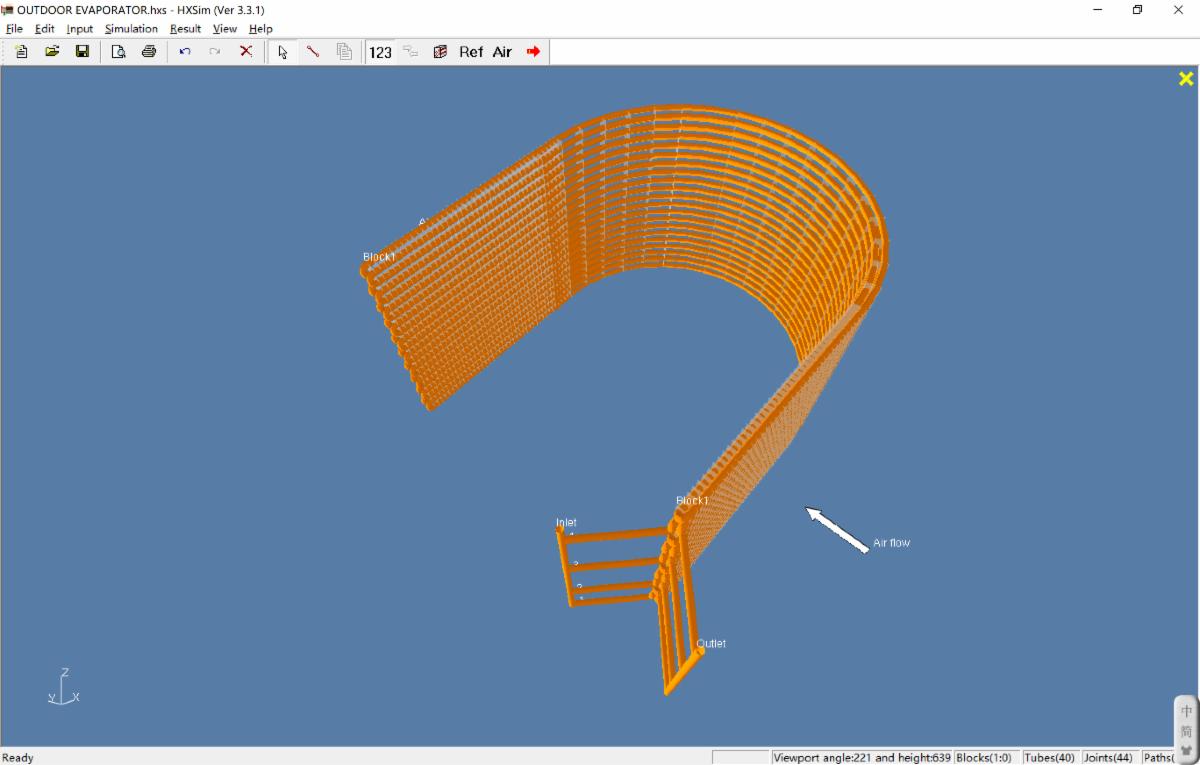
HXSim allows for a 3D representation of a C-shaped heat exchanger block with smaller diameter copper tubes for use in a heat pump. |
|
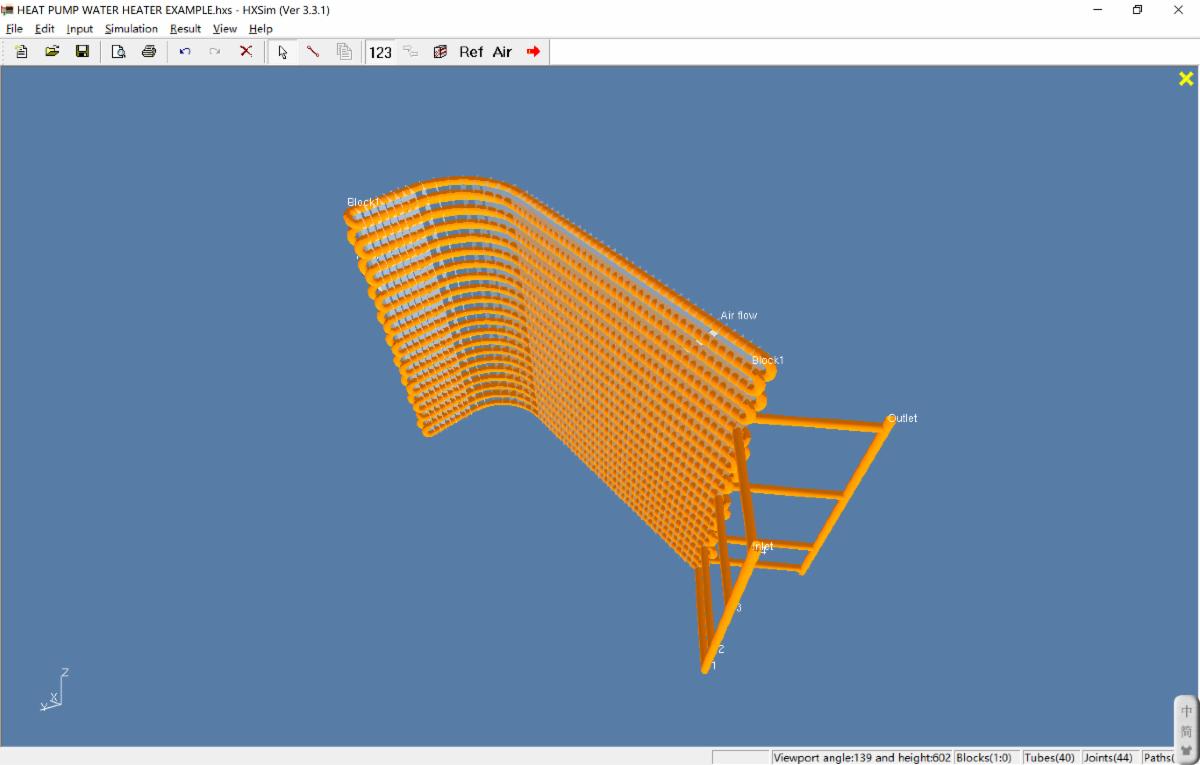
The HXSim heat exchanger simulation software is used to design an L-shaped heat exchanger block with 5 mm diameter copper tubes for a heat pump application. |
|
Rising to Meet the Challenges
The challenge is the high initial cost compared to conventional electrical-resistance water heaters or natural gas burners [6] [7]. With COPs exceeding 3.0 for HPWHs compared to COPs less than one for electric or gas water heaters, the long-term saving cannot be denied. The technology exists now but incentives and subsidies are required to accelerate adoption.
Outdoor evaporators for heat pumps come in many shapes and sizes. In the United States, they are typically C-Type heat exchangers similar to the outdoor condenser for a residential central air conditioning system. Simple I-Type (flat slab) heat exchangers also can serve as evaporators in split systems.
|
|
Webinars by Optimized Thermal Systems
Thursday, April 15, 2021
1:00 to 2:00 p.m. EDT
|
|
MicroGrooveTech YouTube Channel |
|
Two New White Papers Recently Published in Appliance & HVAC Report
|
|
Yoram Shabtay and Kerry Song, “Smaller-Diameter Copper Tubes Support Three Trends in Ecofriendly Appliance Design,” Appliance & HVAC Report, Vol.3, No. 1 (January 2021) pp. 43-51.
|
|
Yoram Shabtay and Kerry Song, “Heat-Exchanger Simulations Fast-Track Adoption of MicroGroove Copper Tubes,” Appliance & HVAC Report, Vol. 2, No. 4 (September / October 2020) pp. 14-21.
|
|
2020 ATMOsphere America Virtual Conference (slideshow)
Yoram Shabtay, “Heat Exchanger Simulation Tools Help to Optimize the Use of Natural Refrigerants with MicroGroove Smaller-Diameter Copper Tubes,” 2020 ATMOsphere America Virtual Conference.
|
|
References for "Main Article"
1. European Commission, “A European Green Deal.”
2. Pew Research Center, June, 2020.
“Two-Thirds of Americans Think Government Should Do More on Climate,” 39 pp.
3. UNFCCC, “The Paris Agreement”
4. The Kigali Amendment.
5. Yoram Shabtay and Kerry Song, "Heat-Exchanger Simulations Fast-Track Adoption of MicroGroove Copper Tubes," Appliance and HVAC Report, September 2020.
6. 2020 Lu-VE product catalogue, Section on domestic applications. Page 137.
7. IEA, “World Energy Model: Sustainable Development Scenario,” October 2020.
8. IEA, Heating: Tracking Report, June 2020.
9. “Update on New Refrigerants Designations and Safety Classifications.”
10. Nigel Cotton and Yoram Shabtay, "MicroGroove Contributes to the Success of Propane in Refrigeration Appliances," International Appliance Manufacturing, 2017.
11. “MicroGroove Gains Momentum in Refrigeration Applications for Supermarkets and Convenience Stores," MicroGroove Update, Volume 7, Issue 2. https://microgroove.net/microgroove-update-newsletter
12. shecco ATMOsphere and Danish Technological Institute, The Future of Air Conditioning Technical Conference, June 2020,
13. Leon Becker & Philipp Munzinger (GIZ Proklima) and Daniel de Graaf (Umweltbundesamt), “R290 Split Air Conditioners Resource Guide” (2019).
14. Daniel de Graaf, German Environment Agency (UBA), "Supporting the Use of Natural Refrigerants in Air Conditioning," ATMO-DTI, June 23, 2020. Policy Panel Presentation.
16. EIA, “The Future of Cooling in China: Delivering on action plans for sustainable air conditioning describes the challenge
17. EIA, “The Future of Cooling: Opportunities for energy efficient air conditioning.”
|
|
References for "In the Spotlight" Column
1. The DOE’s energy conservation standards for consumer water heaters are prescribed in title 10 of the Code of Federal Regulations (“CFR”) part 430, section 32(d).
2. Yoram Shabtay, IEA Heat Pump Conference, Rotterdam (2017) Slideshow Presentation.
3. “MicroGroove Heat Pump Q&A.”
4. Devin Yoshimoto, “Japan – Eco Cute and C-Stores Lead NatRefs Growth,” ACCELERATE, June 27, 2019.
http://r744.com/articles/9060/japan_andndash_eco_cute_and_c_stores_lead_natrefs_growth
6. Jonathan Trout, “Are heat pump water heaters worth the cost? How it works, how much it’ll cost you and how much you’ll save,” Consumer Affairs (Updated September 28, 2020).
|
|
|
|
|
|
|