View this email in your browser

Gaples Institute logo
Animated spoonfuls of colorful microgreens slide into place behind the words "Microgreens: A Nutritional Punch Above Their Weight?"

We've long known that vegetables support good health. Now, microgreens are adding a fresh twist to the story. Once considered a specialty item mostly restricted to farmers' markets, microgreens are now available in many supermarkets.

Small but flavorful, these delicate plants can add a bright, zesty flavor to almost any dish. You may also have heard about their impressive nutritional value—and there’s a good story to tell there as well. But the full picture is a bit more nuanced.

What are microgreens?

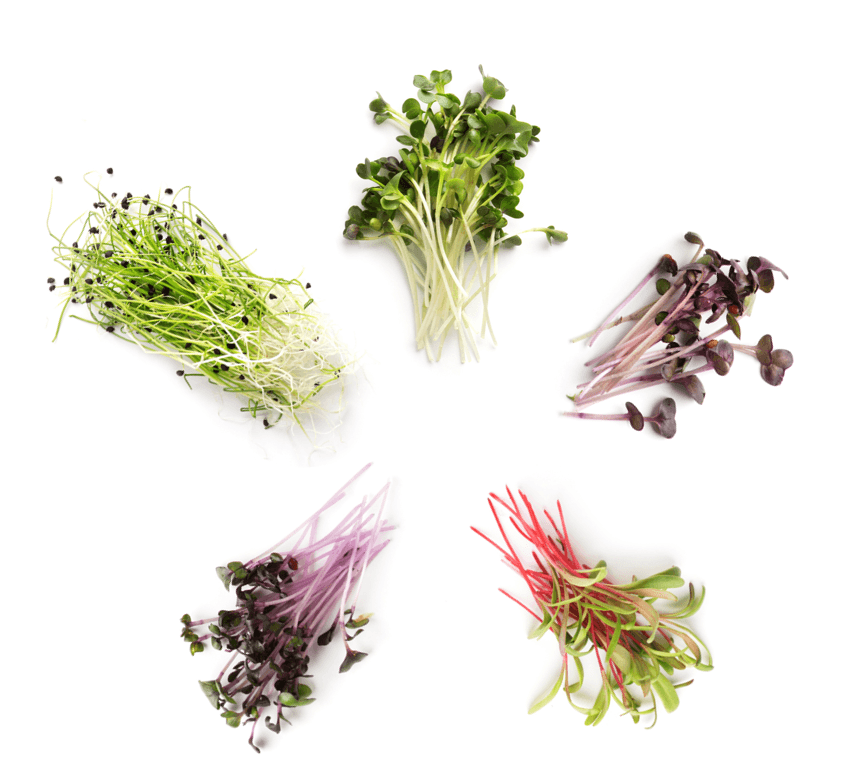
Five small bunches of microgreens arranged in a circle

Microgreens are young plants harvested soon after their first leaves appear, usually within 1 to 3 weeks of planting. They are sometimes mistaken for sprouts, but sprouts are harvested earlier and eaten whole, including the seed and root. Microgreens, by contrast, are typically eaten as just the stem and leaves. 


Microgreens can be grown from many familiar plants, including broccoli, radish, peas, basil, cilantro, and cabbage. Most are only a few inches tall.

What's the nutritional appeal?

Microgreens are nutritious because the entire young seedling is harvested at a stage when it is actively growing and rich in vitamins, minerals, and protective plant compounds. By equal weight, several studies find microgreen nutrient content to be many times greater than the mature plant. For example, cauliflower microgreens have an overall sixfold greater nutrient content compared to an equal weight of mature cauliflower. Higher levels of nutrients such as Vitamin C, zinc, and copper have been documented across multiple types of microgreens.

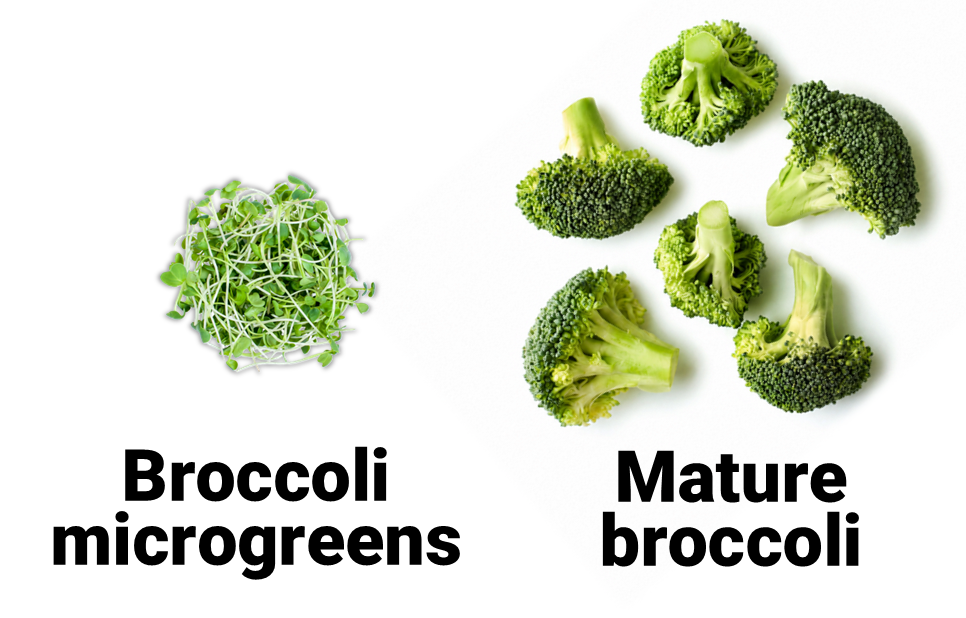
A serving of broccoli microgreens next to a serving of mature broccoli

But here's an important point to keep in mind: although microgreens can have a higher nutrient density than the mature plant, people usually eat much more of the mature vegetable. For instance, a typical sprinkling of broccoli microgreens on a sandwich is only about a third of an ounce, while a standard serving of mature broccoli is around nine times that, 3 full ounces.

So while microgreens are a nutritious addition, the mature plant likely provides even more total nutrition overall because it is typically eaten in a much larger serving.

Culinary applications

Toast topped with microgreens

Microgreens are best used raw, typically as a finishing touch: sprinkled over soups and salads or layered into sandwiches. Strongly flavored varieties like radish and mustard add a peppery bite, and all forms add a pop of color and texture that can make dishes more appealing.

Many supermarkets carry microgreens in 2-ounce containers, enough for several toppings. Costco, true to form, even carries jumbo (for microgreens) 6-ounce packages.

Closing sprinkles

Rather than replacing conventional vegetables, microgreens are best used as a small but flavorful nutrient boost. If you haven’t already, give them a shake!

Food Is Medicine
Toolkit

The Food Is Medicine Toolkit logo, represented by a stethoscope, a heart, and colorful fruits and vegetables

We are pleased to share a new toolkit on Food is Medicine programs, developed by the Tufts Food is Medicine Institute and Kaiser Permanente. Designed for clinicians, health system leaders, and communities, the toolkit offers practical guidance on using food-based interventions to support health.


We're honored that the Gaples Institute's work is included among the resources featured.


"Food is Medicine" refers to a broad range of approaches that help ensure people have access to health-promoting foods tailored to their individual needs. These approaches include federal nutrition programs, medically tailored meals, produce prescriptions, and other strategies that connect nutrition more directly to health care.


View the toolkit


Follow us on social media for news and tips on healthy nutrition and lifestyle!

Facebook  LinkedIn
The Gaples Institute logo, alongside the words: "A physician-led educational nonprofit devoted to advancing the role of nutrition and lifestyle in healthcare."

Home | Donate | Contact Us