|
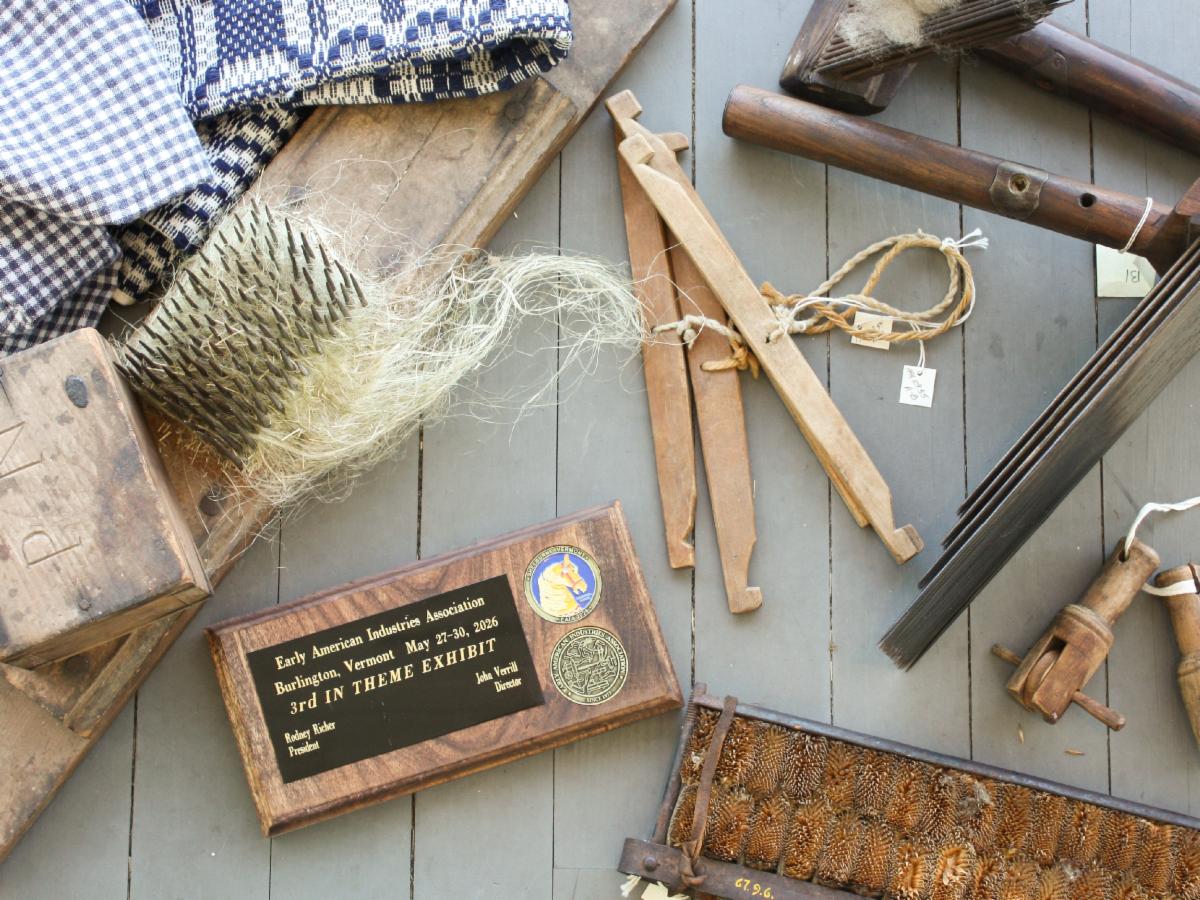
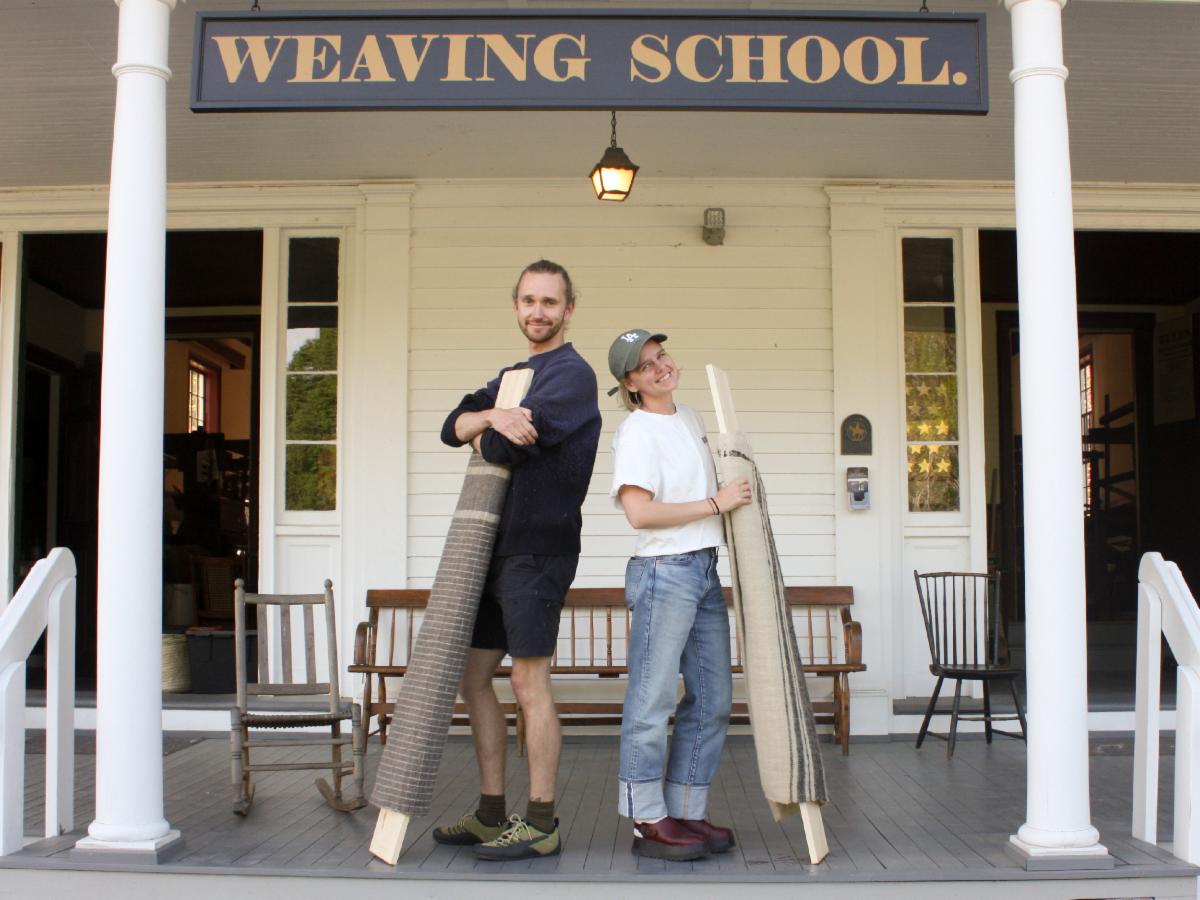
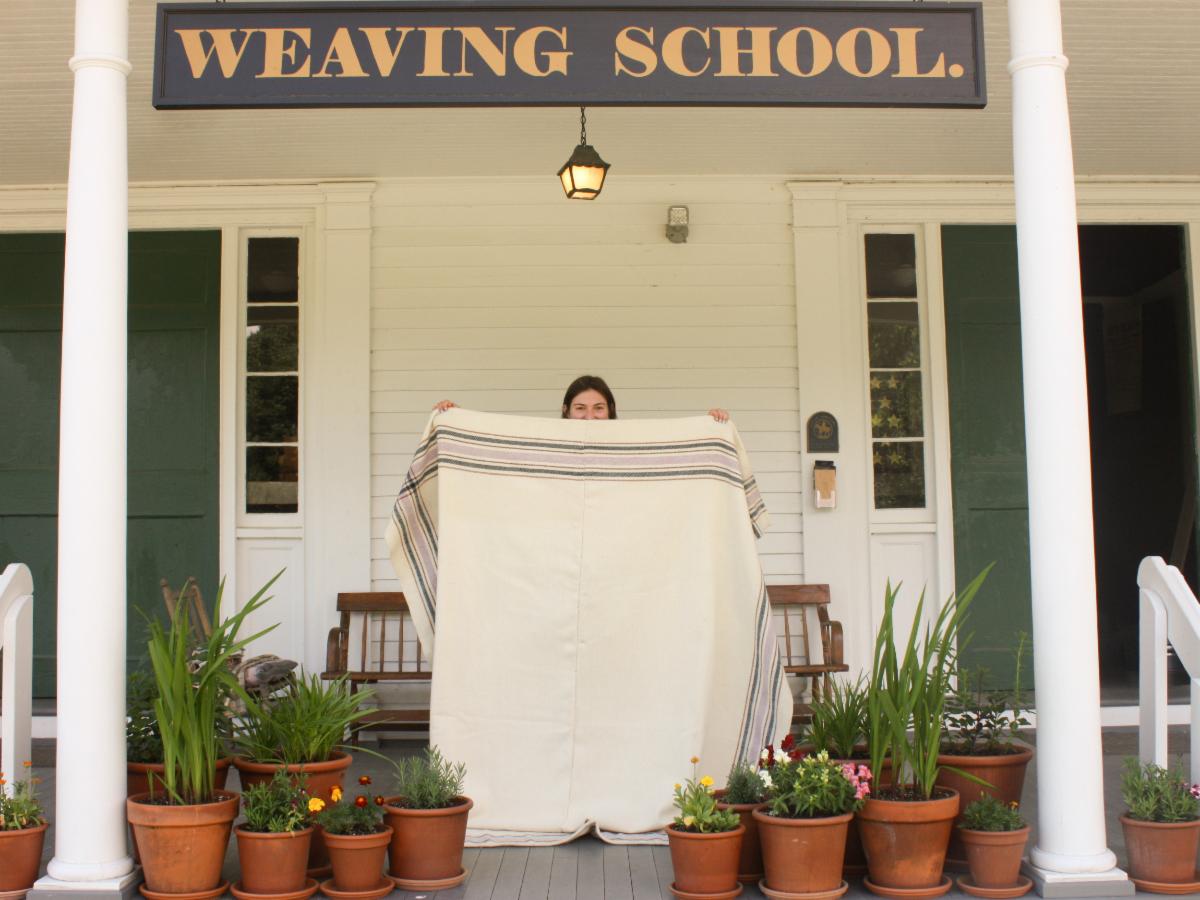
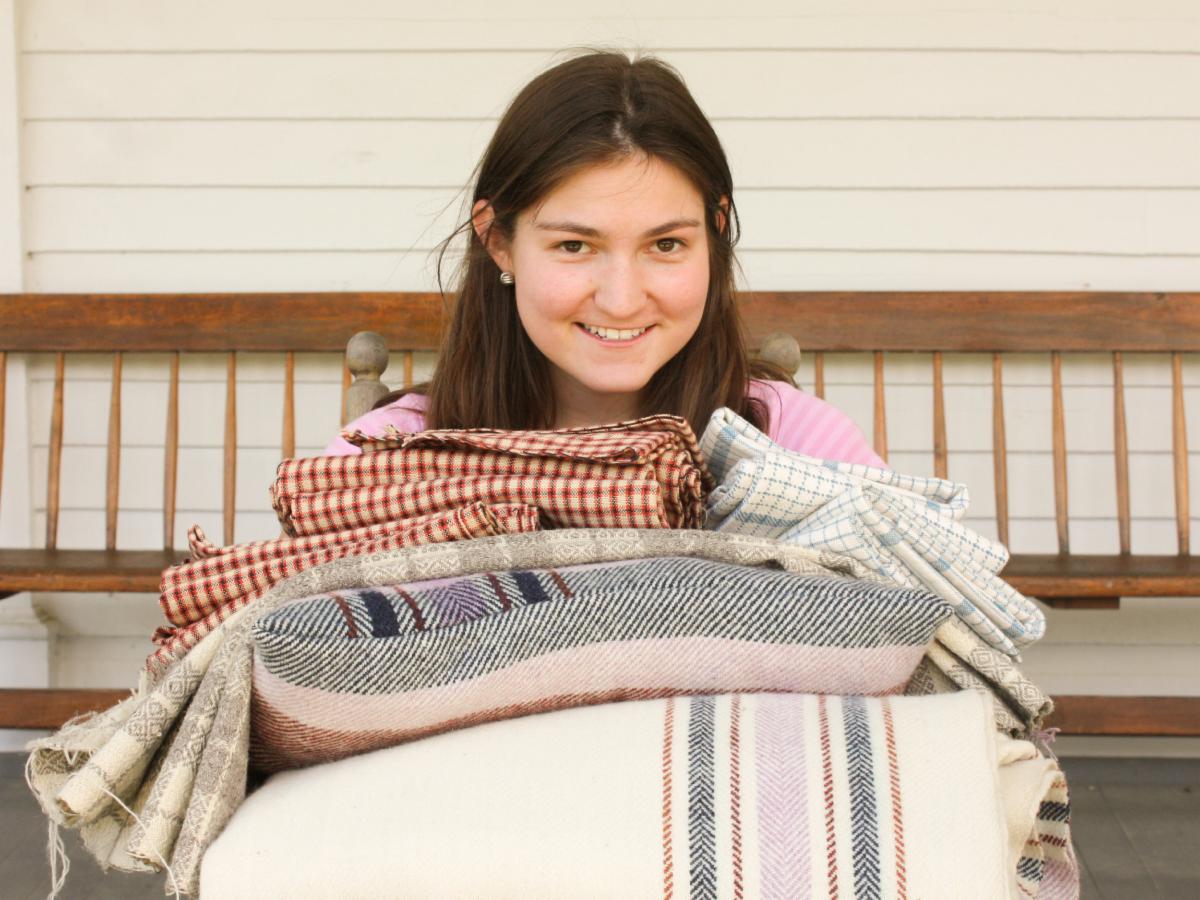
Pictured above: A snapshot of some items we took to the Early American Industries Association's annual conference in Burlington, Vermont this May, along with our plaque for 3rd place exhibit in this year's theme: Life on a 19th-Century Farm. If you're interested in preserving craft, or just want to geek out about hand tools, please do check out this fantastic organization, and attend a workshop near you! |
| |
Dear Friends,
Hello! It's been a minute, but rest assured we're still out here weaving away. The 2026 season has been bustling with students and projects, and we've somehow already blazed right past our halfway mark. The cosmos sulphureus and linum usitatissimum are blooming out front, and the blankets are blooming in the workshop (see photos further down in this newsletter for proof of the latter, and stop by in person some time for proof of the former).
We're starting to plot the 2027 season, which means you should see our website restocked sometime in late August or early September. We have been watching our "back in stock" requests carefully, and it's clear that there is increasing interest in more Foundations sessions! We hope to do just that, while also fine-tuning our advanced course options for those of you who are anxious to dig into that delicious complexity.
Moving forward, you can expect to hear more from me (Emma), as Justin and I share more of these out-facing duties. In fact, you've already been hearing from me on our social media pages since last spring and didn't even know it! I look forward to continuing to connect with more of you in this way, and hopefully weave with you, too. But don't fret—Justin's voice isn't going anywhere! You'll still hear from him often.
Speak of the devil: continue reading for an update from Justin on our flag project, and a glimpse at what our students have been up to in the past couple of months. Thank you as always for your continued support of our work and students. We are both so grateful to get to steward this special little spot in the weaving world.
With gratitude on behalf of the team,
Emma Geddes
Office Clerk & Instructor
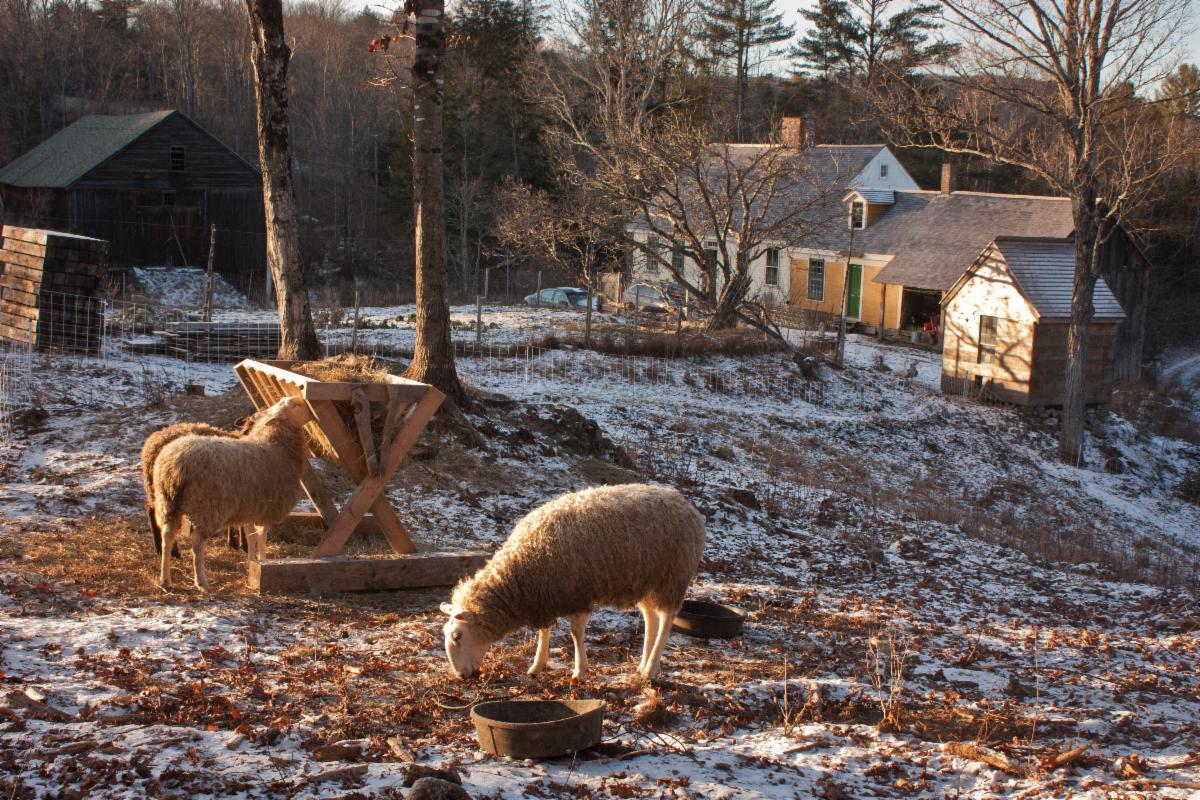
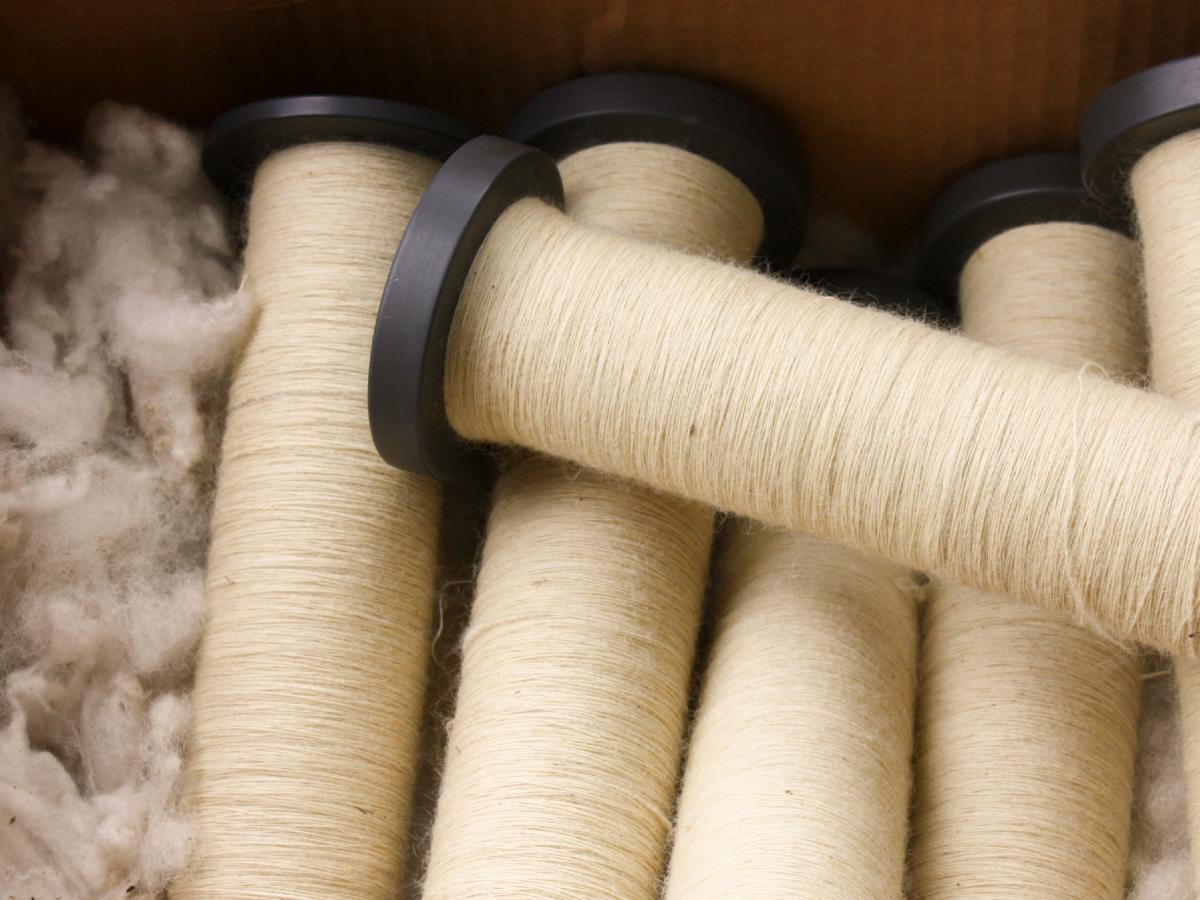
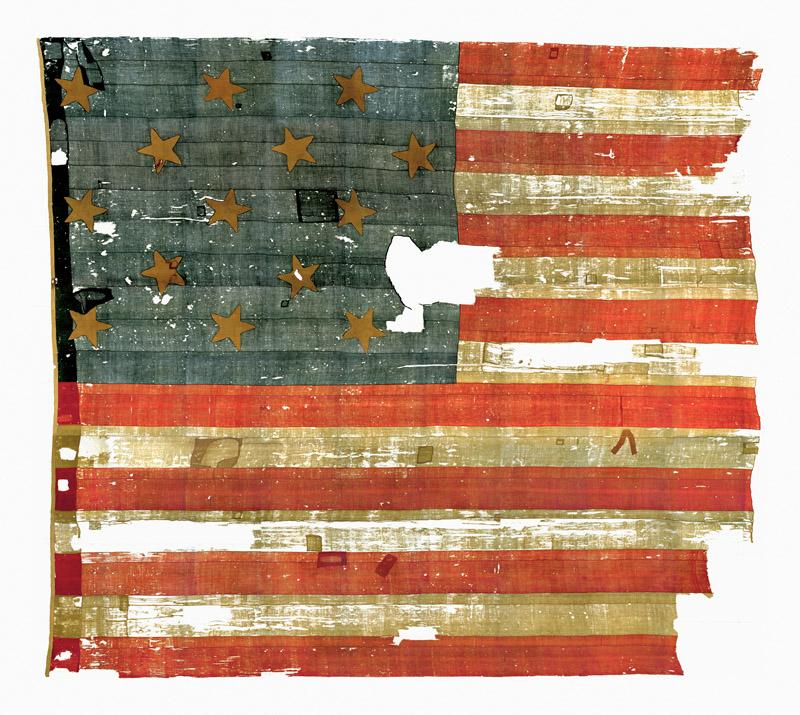
| | Spaces are filling fast for many of this year's programs, but we still have some space left in a handful of our classes, including the following: | | Newbury's Star-Spangled Banner | | Above: The source of the Newbury grown wool for our flag in colder weather. | | Were you expecting our flag to debut on July 4? So were we, but the best laid plans of mice and flag makers often go awry, as Robert Burns so famously (kinda) said. In our case, a technological breakdown put our spinner out of commission just before he was about to spin our weft yarn. As we've already waited 250 years for this particular national anniversary, what's another few months? | | As we shared in our last newsletter, we're weaving our flag bunting out of a 1/11 worsted yarn, which (as you all know from the yarn count systems talk during Foundations) is 6,160 yards per pound. Where did that number come from? By doing a little math from the figures provided in this report on the Star-Spangled Banner. Suzanne Thomassen-Krauss states that the buntings (the flag was constructed of cloth from several different sources) have singles warps of 23–28 epi, and singles wefts of 25–30 ppi. With original dimensions of 30 x 42 feet it's possible to estimate the total yards of yarn in the original. At an average of 25.5 epi, there were roughly 128,520 yards of yarn in the warp direction, and the average 27.5 ppi required 138,600 yards of yarn for the weft, giving a total of 267,120 yards of yarn in the entire flag. It's estimated that the flag weighed 40–45 pounds when it was new, so 267,120 yards divided by 42.5 pounds gives us a yarn around 6,285 yards per pound. Dividing again by the worsted count of 560 yards equals 11.22, or a 1/11 worsted. | | |
Now, with our beautiful 1/11 worsted yarn spun by Nobletown Fiber Works from wool off my (Justin's) Border Leicesters, our next task is to weave the bunting.
What's bunting?
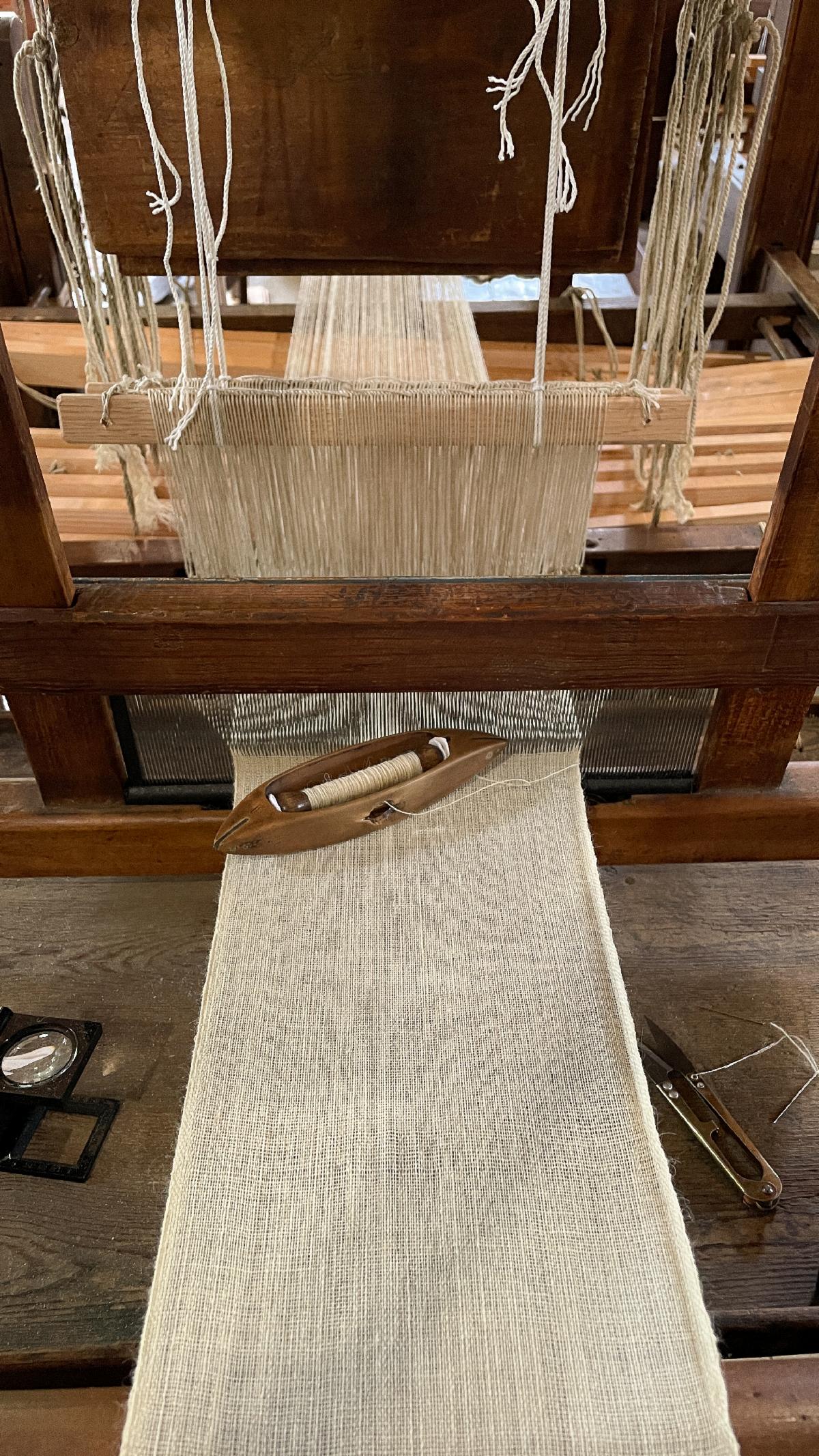
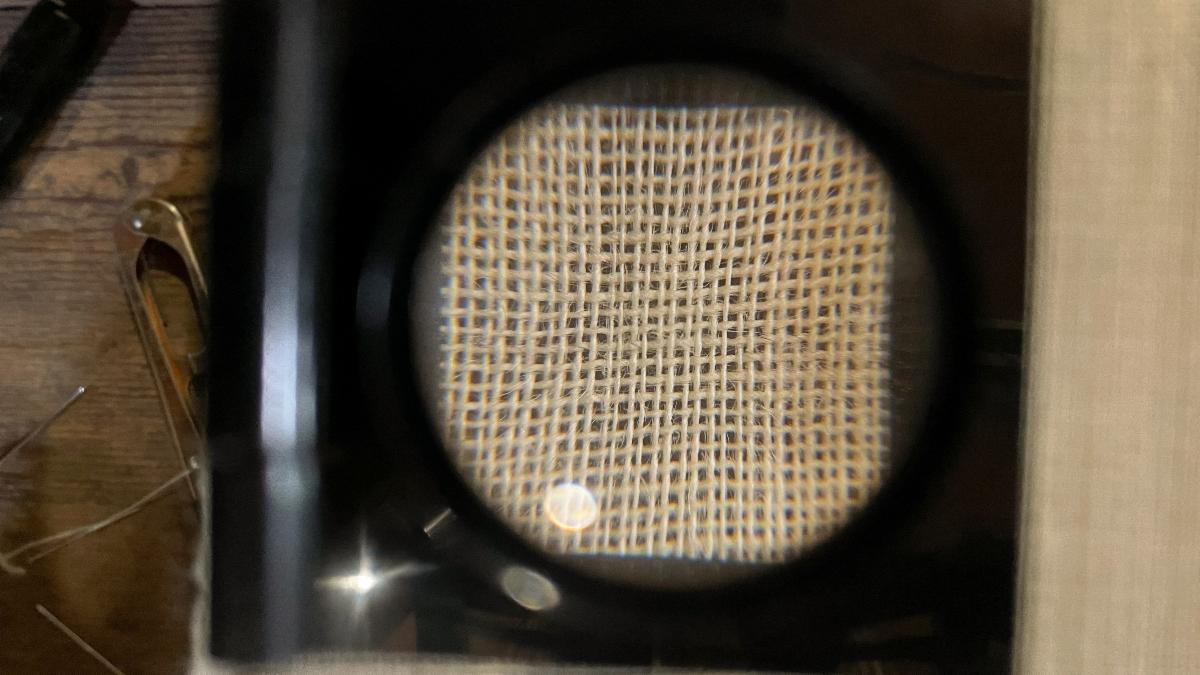
Glad you asked. Bunting is a plain weave worsted wool textile with a loose, open structure, usually woven in widths from 11–22 inches. Where did the bunting for early American flags come from? Not here! Bunting wasn't successfully woven in America until 1865, and only then thanks to tariffs that made it competitive with English goods. That pre-1870 English bunting was hand spun and woven by women and children in their homes in places like Sudbury, Suffolk, England. Until very recently, flags were used almost exclusively by the military and for ship's colors, they weren't the sort of thing that people casually flew in front of their houses. As such, bunting manufacture ebbed and flowed not only with the seasonal demands of agricultural work, but by distant politics. There was lower demand during peacetime, but when conflict broke out, so did the bunting makers in Sudbury, producing cloth that would be used for flags on both sides of war. The Star-Spangled Banner itself was made from English bunting, flown over a Baltimore fort, and fired on by English warships. A textile's allegiance is easily swayed by whichever way the wind is blowing.
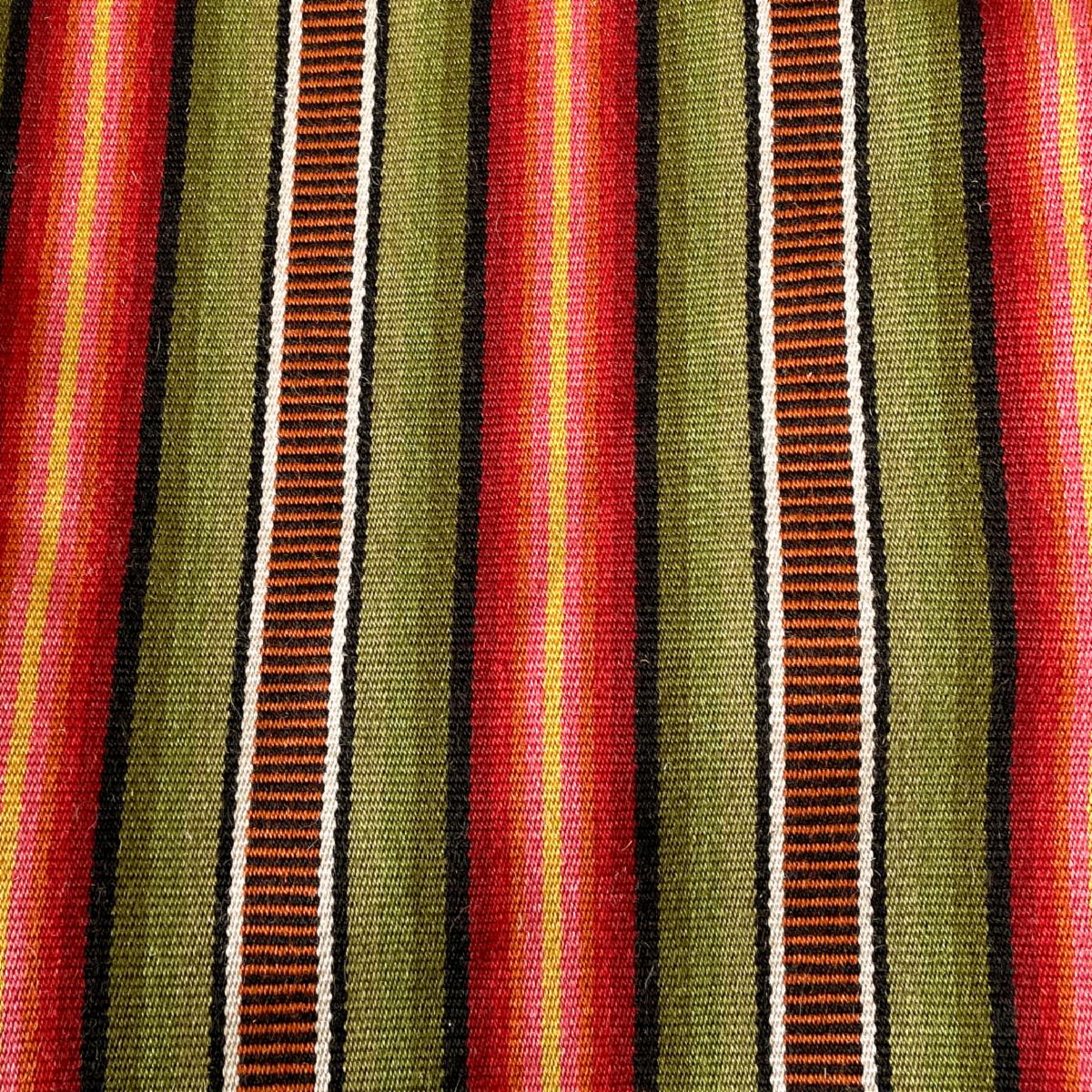
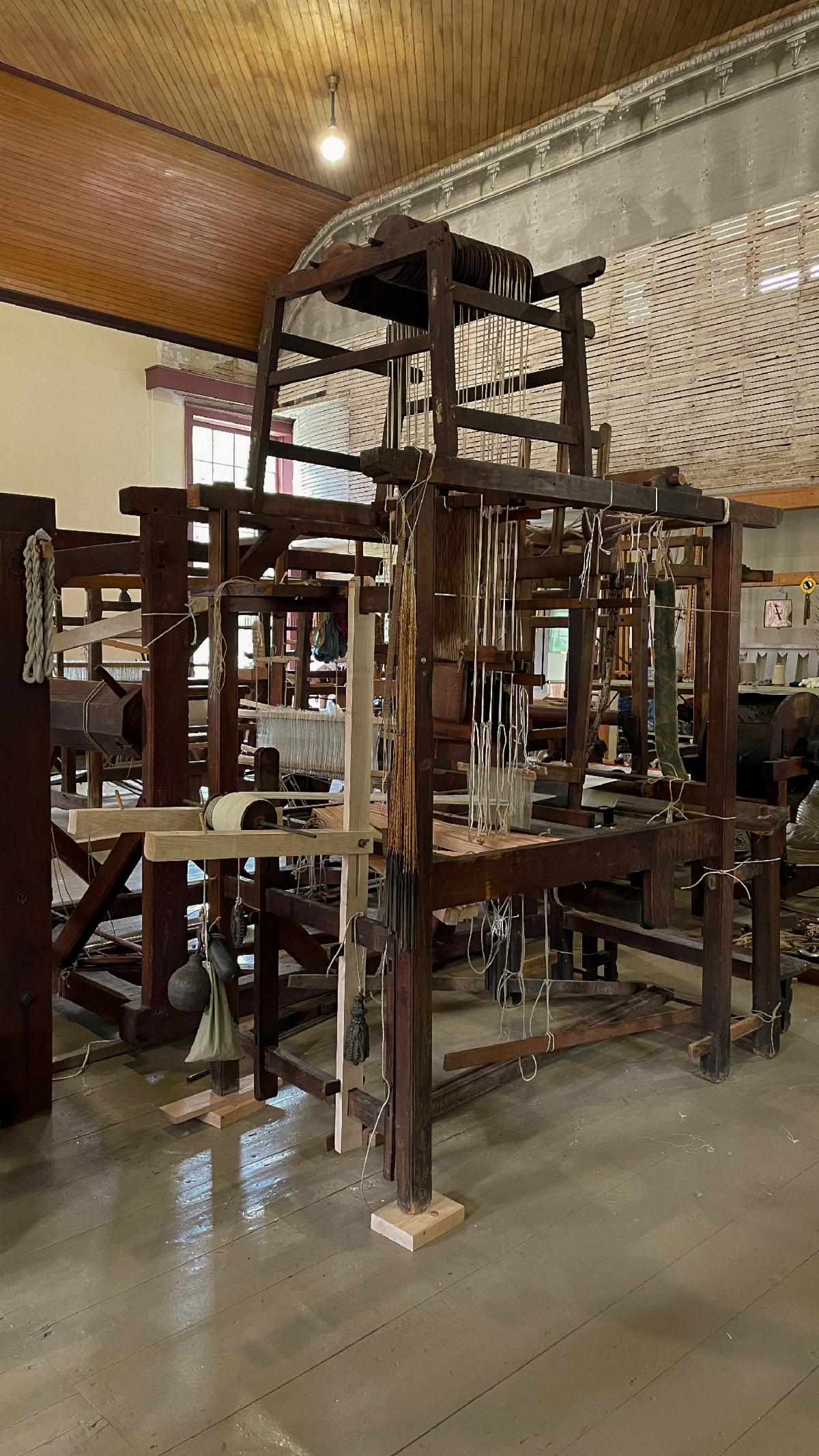
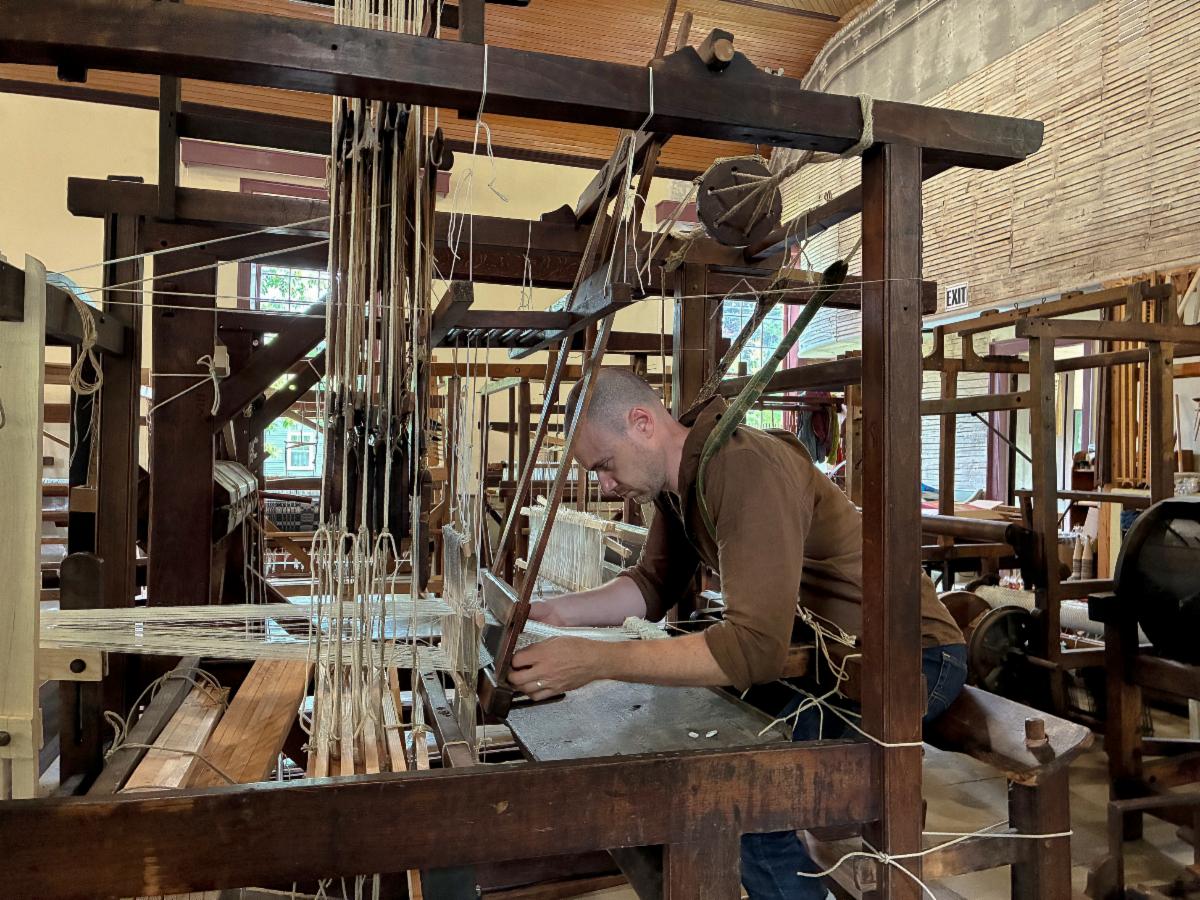
| | The narrow widths of bunting meant that selvedge edges could be taken advantage of when constructing the flags themselves, and we know a good time when we see one! To eliminate any raw edges in the seams between our stripes we're weaving our bunting at a slightly narrower width of 7 inches. To churn out the 50 yards of the stuff for our flag we need a loom that's good at making narrow cloth fast, and no handloom is better at fast and narrow than the passementerie loom. A piece of technology developed in the 16th century, passementerie looms excel at narrow goods thanks to their unique shedding system, spring driven lay, weaver body support, and tensioned shuttles. This particular one dates to the mid-19th century and was used in Paris before it moved to Belgium where less expensive labor kept it in regular operation until the 1980s. | | We may have had a delayed start (fashionably late, thank you very much), but Newbury's Star-Spangled Banner is coming together, one pick at a time. Stop by the chapel throughout August to see the weaving underway, and come back for dyeing and help us sew it together in September. If all goes well (Mr. Burns, we're looking at you again) our flag will fly during Vermont North By Hand Open Studio Weekend, October 10–11! | | |
Above: A composite image of our inspiration, the Star-Spangled Banner.
ID number AF.13649, Smithsonian National Museum of American History, Washington, DC.
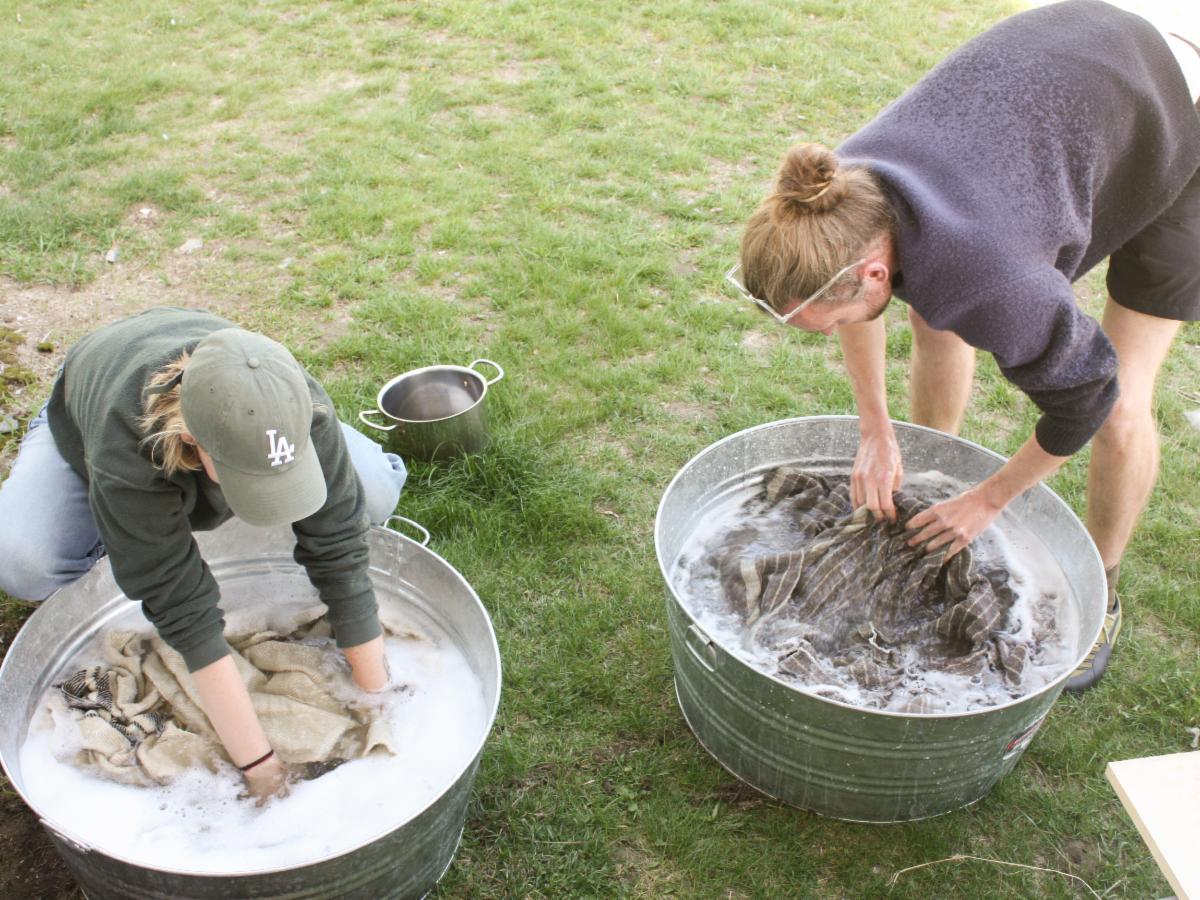
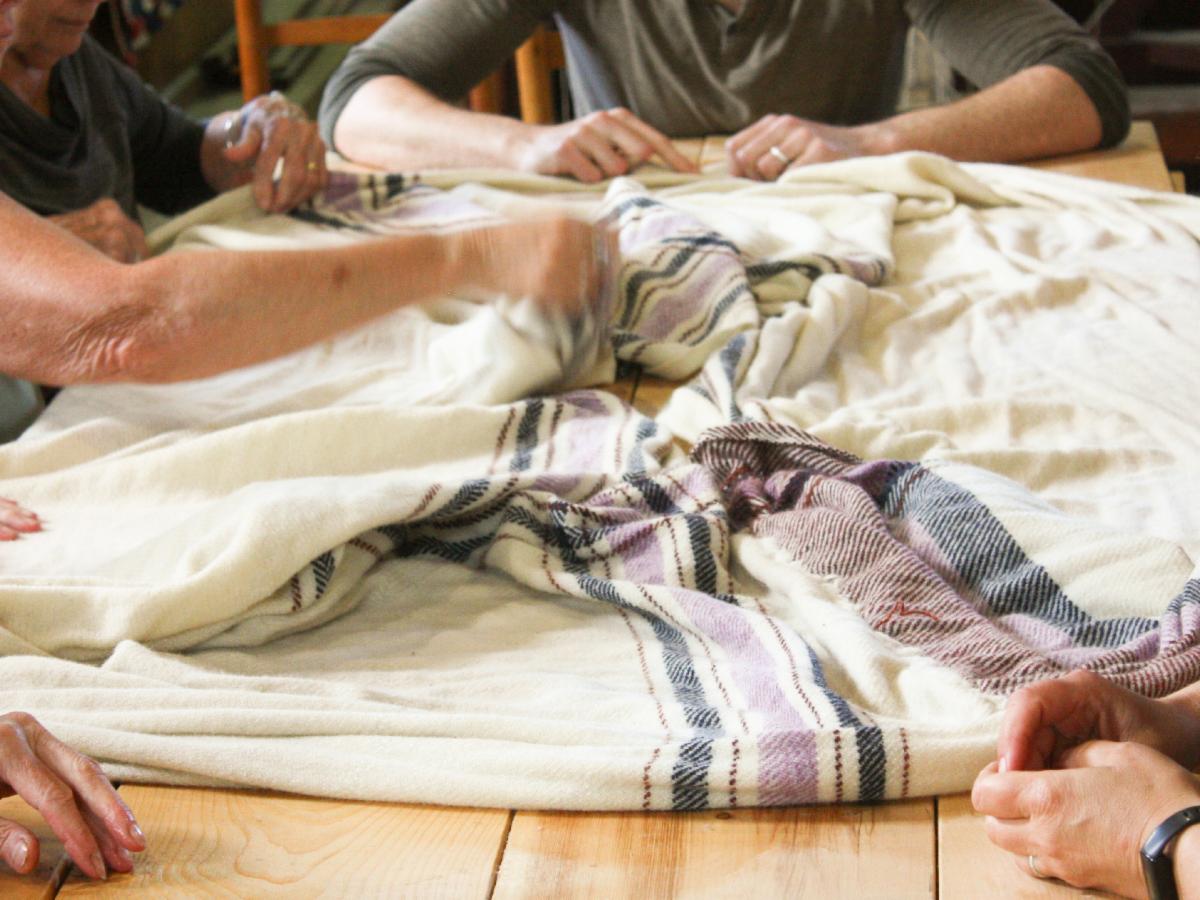
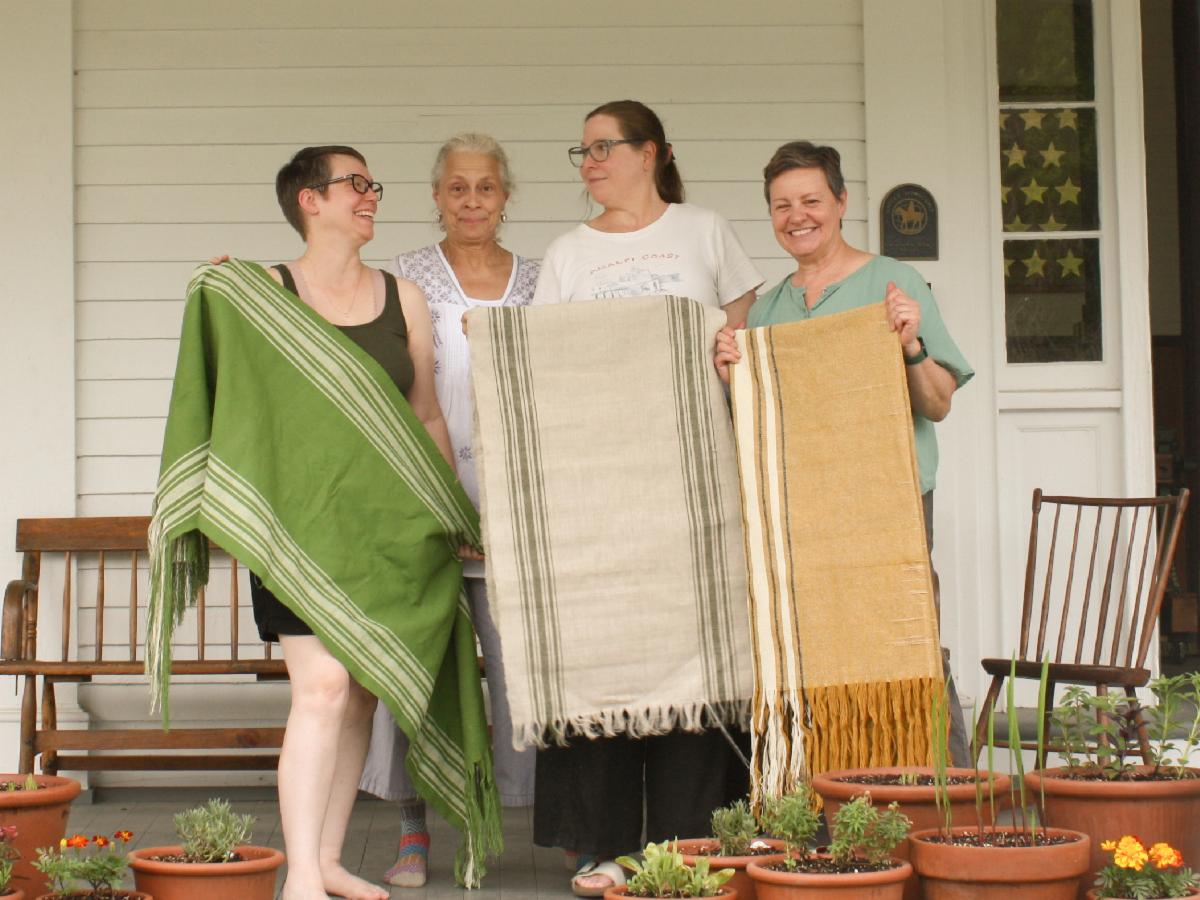
| | At the end of May, we said goodbye to our Fleece to Fulling crew. Blake and Lainey flew home to Australia and Los Angeles, respectively, and Heri (not pictured below, but equally delightful and valued) is of course still here in Vermont. Their handspun, handwoven, 2-panel blankets came out beautifully, and they have become extremely familiar with their great wheels along the way. Lainey has already found her own great wheel back in LA, so we can confirm that a whole month of intensive spinning does not in fact ruin your taste for it! | | |
Speaking of difficult goodbyes, we also recently bid adieu to Hope, our amazing spring intern who joined us from Middlebury College. Hope helped us to make a huge dent in digitizing our artifact collection documents, and wove off a whole bushel of cloth. If my calculations are correct, she has woven more yardage in this building than anyone else since the move in 2024!
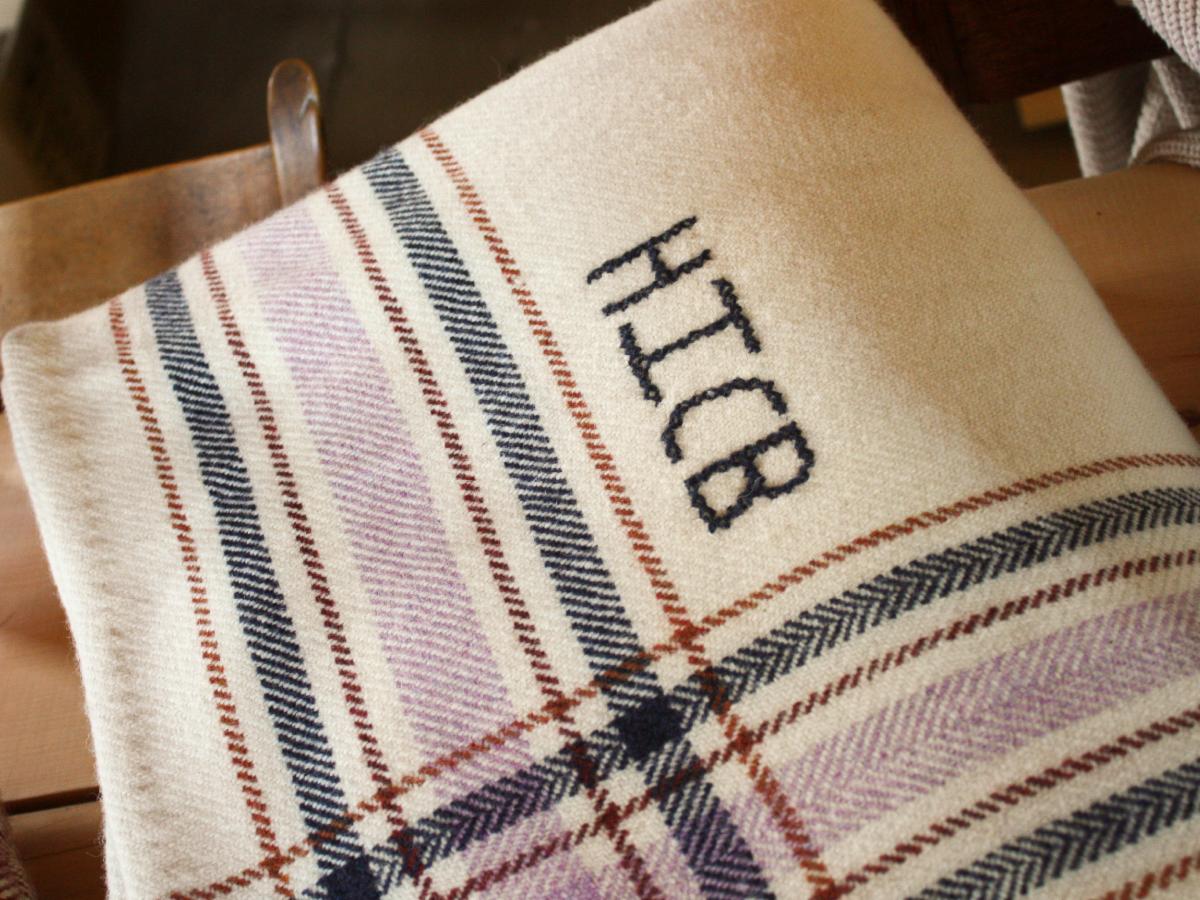
First she tackled a few cotton towel warps, which will go to our annual fundraiser sale during the Vermont North by Hand Open Studio Tour in October. With this under her belt, she moved onto a personal project by weaving a 2-panel wool blanket and a matching throw pillow. She tagged along with our other students for both Foundations and Weaving, Interrupted, so she will be heading back to her art history program with newfound context for all things textiles. We can’t wait to see where she goes next!
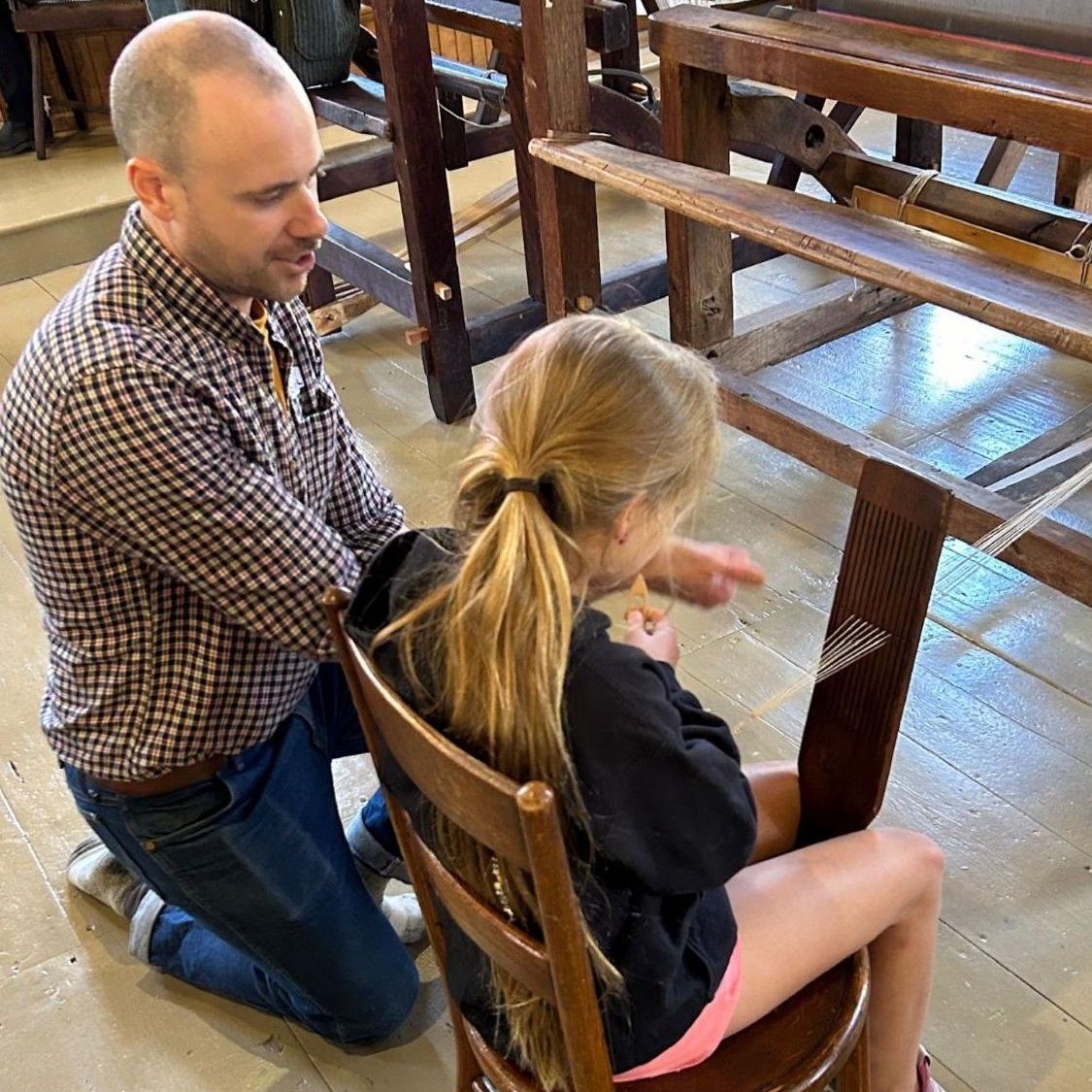
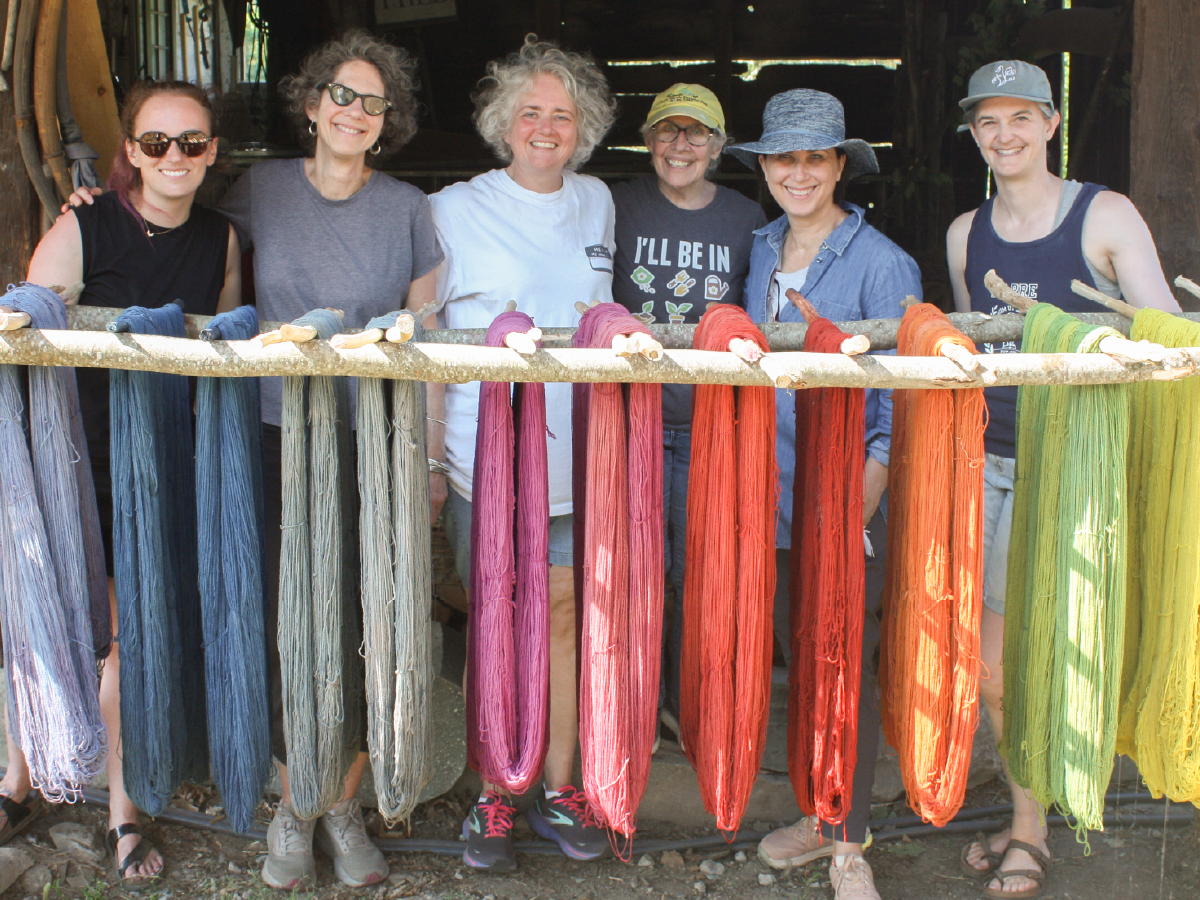
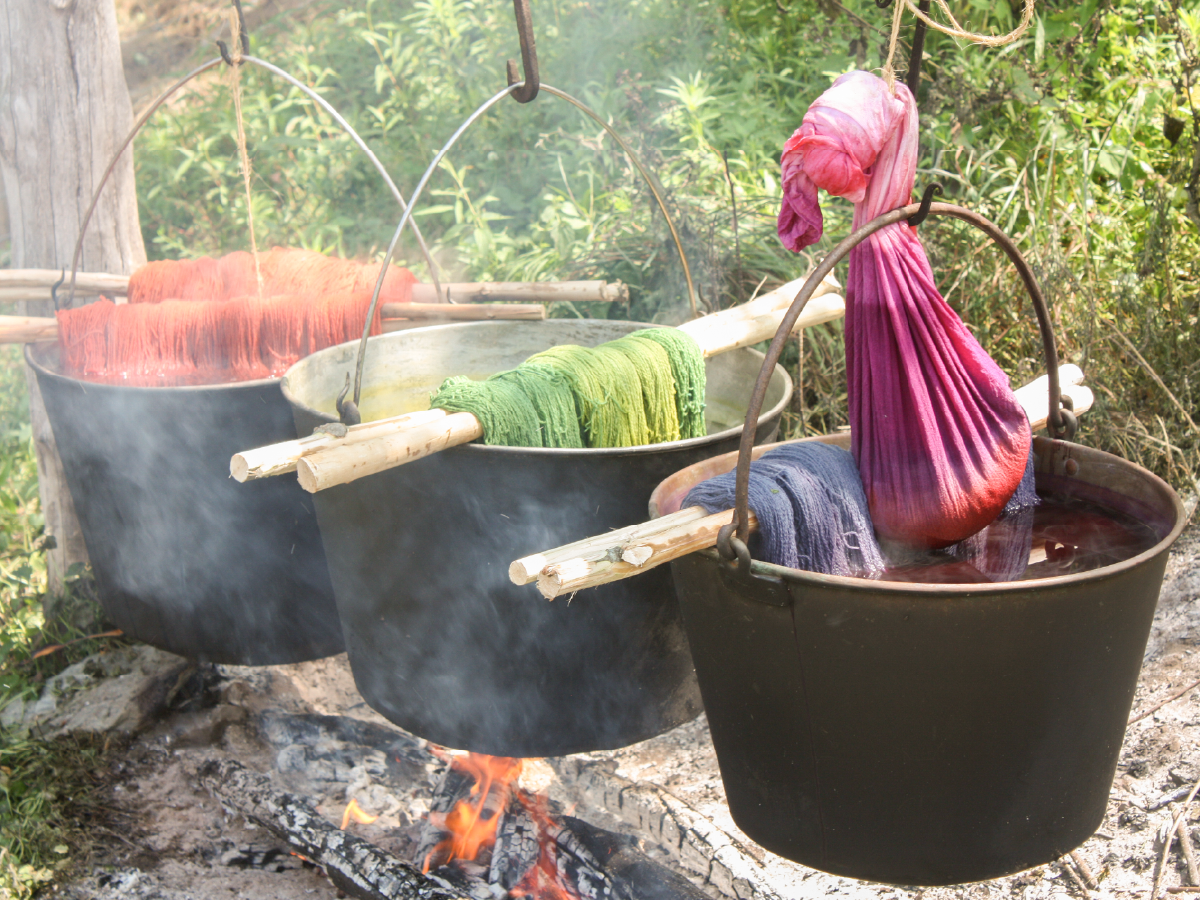
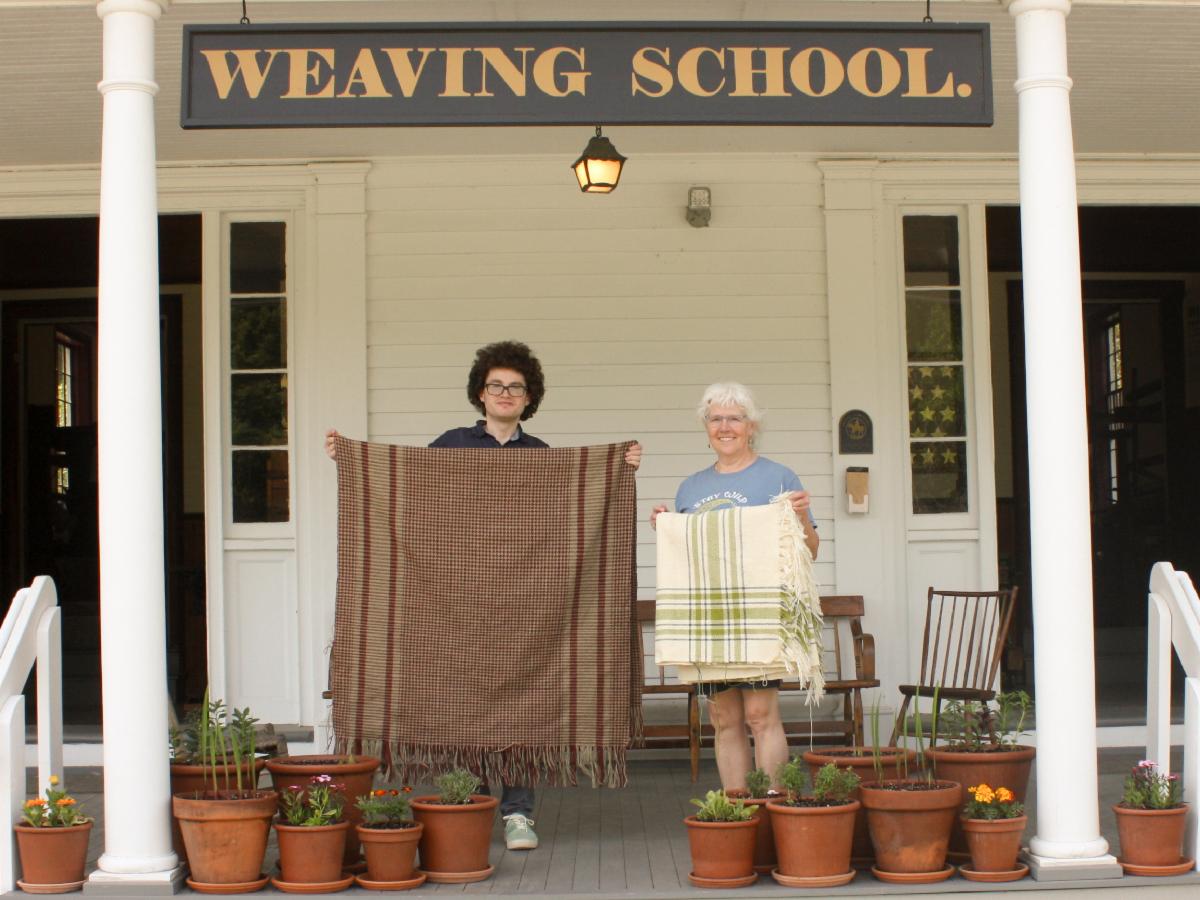
| | Beginning with Classical Natural Dyes | Our newest class, Beginning with Classical Natural Dyes, went on its maiden voyage at the end of July. Working with weld, cochineal, madder (we used rubia cordifolia for this session), and indigo, we were able to coax out a rainbow of 10 different colors on our natural 2-ply wool yarn from Green Mountain Spinnery. Each student went home with 10 skeins of color, and only a little bit of a sunburn on this particularly sunny Saturday. | | As always, our Foundations cohorts continue to be an absolute delight. See proof below. | | As always, we can only do what we do with your generous support. Gifts of all sizes make a tremendous impact. Thank you. | | | | |