|
|
Hello!
Welcome to the Newsletter of the Friedrich-Ebert-Stiftung's Regional Center on Peace and Security
| |
Sergio Aguayo and Gerardo Arroyo, from the Seminar on Violence and Peace from the Colegio de México, demonstrate with their research that organized crime moves with ease in the digital ecosystem and uses social networks to recruit hitmen and lure young people into prostitution rings. The initial investigations, which received a discouraging response from large technology companies, will now be continued jointly with other institutions. | | | | |
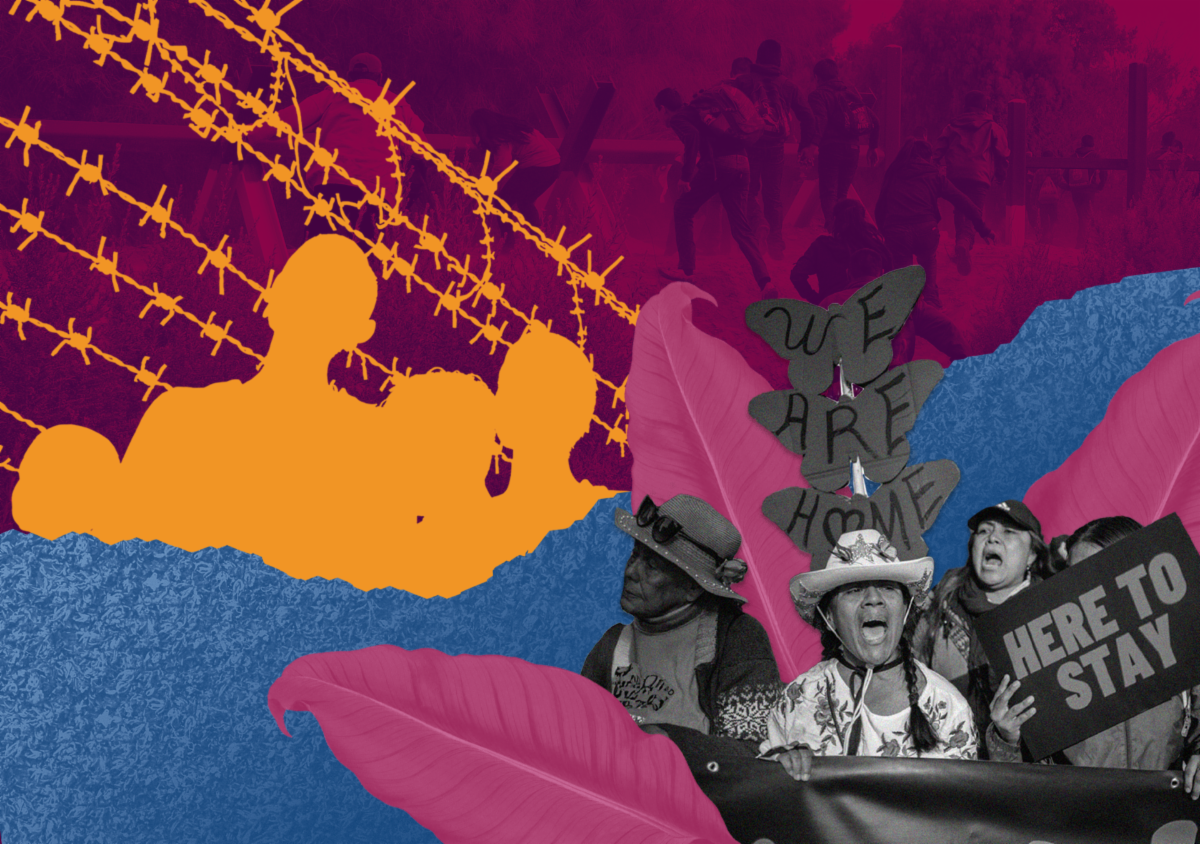
The plan of mass detention and deportation of migrants from the U.S. to their countries of origin and others is one of the star policies of the Trump Administration, with domestic and international impact, especially in Latin America.
The deportation policy was formulated in the document Mandate for Leadership. Project 2025 of the Heritage Foundation, where it is outlined as a plan of action for an ultraconservative government. Doctors of the World-USA analyze its impact here. The "Big, Beautiful Bill" signed by Donald Trump in July further restricts the rights of migrants, including tens of thousands who were granted temporary stay permits (among others from Haiti, Venezuela, and Nicaragua), and approves a dramatic increase in the budget for detention without due process or humanitarian protections.
Mass arrests are taking place not only at the borders but throughout the United States. In this publication and this article, the Migration Policy Institute explains how they work, and the role of Immigration and Customs Enforcement (ICE) as a policy enforcer. Meanwhile, Radley Balko, author of Rise of the Warrior Cop: The Militarization of America's Police Forces, documents on his Substack channel The Watch the escalation of domestic militarization during this Administration. In an interview with the New York Times, he explains how President Trump is using law enforcement linked to deportations to build his own paramilitary group that operates without law or rules.
Deportations have an internal control aspect and a strong impact on Latin America, as the International Refugee Assistance Project exposes. The securitization of migration and the externalization of control are affecting fundamental rights. According to the Colombian NGO Dejusticia, the region could support rights-based responses and build alternatives to criminalization.
For its part, the Washington Office on Latin America (WOLA) is documenting the situations of citizens from Mexico, Honduras, and elsewhere; people deported to their places of origin or to third countries. Here it explains ICE deportations in Honduras. CIVICUS Monitor has listed El Salvador for sustained authoritarian repression and "alarming intensification" of attacks on freedoms under the Nayib Bukele government. Despite this, and following the path laid out by the U.S., other governments are considering sending detainees to that country.
Deportations are integral to the white supremacist component of the Make America Great Again (MAGA) ideology. Nueva Sociedad has delved into its historical roots and current manifestations and how Florida became the "MAGA capital" of the United States.
According to several authors, Latin America would serve as the control laboratory for the Trump Administration's international politics, where they test their capacity to unilaterally dictate rules on migration, security, trade, border control, and even domestic policies (paid article). Along these lines, US Southern Command officials have suspended a military conference with Brazil, while in August, Commander Alvin Holsey met with armies from the region in Buenos Aires to address the threat of transnational organized crime and the influence of China.
| | |
President Trump's decision to impose 50% tariffs on Brazil to influence its domestic policy is also interpreted as an attempt to weaken other countries, especially the emerging ones (be they middle powers or small states) that are part of the Global South and BRICS. In this context, the White House has imposed the same tariffs on India. Several analysts consider that these attacks on Brazil and India strengthen these countries' relations with China.
President Lula assures that Brazil is open to negotiations with the US, and that his country is in no hurry to apply reciprocal tariffs. The two countries were negotiating on Brazil's abundant minerals and rare earths, dialogues that have collapsed following the imposition of tariffs. China has a virtual world monopoly on rare earths, and the South American country can choose to ally with China or ally with the US to compete with it.
"Punishing" Brazil may damage the global economy, further delegitimize the US internationally, and strengthen Brazil's alliances with China, Europe, and the Global South. Mónica Hirst wonders about the possible role of Europe. Other authors point out that it could be driving a rise of the BRICS themselves. This article (paywalled) points out that China and Brazil have moved from industrial collaboration to a strategic alliance.
The expansion of the BRICS between 2023 and 2025 has brought the bloc greater economic and geopolitical dimensions as a counterweight to global governance structures with deficits in legitimacy and inclusiveness. The BRICS pursues a middle path, working within the international system to transform it. For Brazil, this greater geopolitical weight must be reconciled with its quest for strategic autonomy (paywalled article).
Audo Araujo, a member of the Office of the Special Advisor to the President of Brazil, explains the reconstruction of foreign policy in Lula's third mandate in peace and security, climate change, and sustainable development. He concludes that the defense of Brazilian democracy will be the major component in the final period of this mandate.
| | |
According to a recent study conducted in 18 countries, between 77 and 100 million people live with some form of criminal governance. This governance can regulate the rules of coexistence, order and security, and even access to public services. The urban peripheries are the most affected areas, although not the only ones. State presence does not seem to diminish the impact of this type of governance, quite the contrary.
Criminal governance is not the same as pure criminal activities. In this second aspect, organized crime groups multiply their sophistication and degree of threat. The Inter-American Dialogue (Washington D.C.) has launched the Citizen Security Initiative to address crime and violence in the region.
In Mexico, cartels are fighting the government and each other, and in their arms race, are adopting weapons of modern warfare such as drones and improvised explosives. Meanwhile, the US is pressuring the government to crack down, but the risk for President Claudia Sheinbaum is that of fighting the cartels and corruption without losing control of the country.
On the other hand, an investigation by Tierra de Nadie and Connectas shows that in Ecuador, abuses by military forces have multiplied since the declaration of internal war in Daniel Noboa's first term. His government has put them on the front-line of the fight against organized crime.
The youth of the continent are key victims of insecurity, according to the FES survey "Youth, unfinished business". In this podcast, the survey's coordinator, Anabel Bilbao, analyzes its results; and here young politicians from several countries in the region argue that young people need to live without fear and with dignity.
| | |
The deployment of U.S. warships and aircraft off the coast of Venezuela has sparked speculation about a possible military aggression against the country. Officially, the deployment is part of the military emphasis on the fight against drug trafficking, which follows the declaration of crime groups in the region as terrorist organizations (and which, according to WOLA, will not work). But it has generated significant concern in Caracas and elsewhere.
Both Trump and Secretary of State Marco Rubio are "hawkish" toward Venezuela. The deployment could be an exercise in intimidation and an additional hindrance to Venezuela's trade, especially in oil, or a prelude to military intervention, the risks of which would be high and long-lasting. The New York Times studies its military and legal implications.
The Southern Command's attack on September 2 on a speedboat allegedly loaded with drugs, which, according to the U.S. president, killed 11 crew members, has exacerbated the tension. A second attack on a speedboat occurred on 16 September and was criticised by former US military legal experts as 'unlawful'.
This extensive report examines the Venezuelan crisis one year after the presidential elections.
| | |
Violence has not ceased since the assassination of Senator and presidential hopeful Miguel Uribe Turbay. For decades, the country has fought against ideological armed groups and illegal organizations. The current violence is more fragmented and unpredictable, but with a similar destabilizing impact, and is probably redefining the electoral parameters for 2026.
Gustavo Petro faces his last year in office with dismal security indicators. Homicides, murders, and massacres are on the rise, as well as the intensity of war and armed confrontations. According to the International Committee of the Red Cross (ICRC), this year could be the worst of the decade in terms of humanitarian consequences of violence. Human Rights Watch highlights in its annual report abuses by armed groups, poverty, and limited access to justice as the main human rights problems. Petro, for his part, has toughened his discourse against terrorism.
FES Colombia has examined the challenges of the relationship between local authorities and police authorities and the factors that condition these relationships and affect the provision of police service and the implementation of security policies, along with recommendations for smoother relations. The text also makes some recommendations for smoother relations between the two parties.
|
|
Security is the main concern of Chileans. FES Chile compiles the actions of the country's municipalities regarding citizen security in its second report on municipal security initiatives.
The country will soon enter an electoral campaign period for parliament and the presidency. Academics and specialists have explored the institutional challenges of the police and armed forces, prevention, the penitentiary system, and illegal markets. The result is a set of progressive proposals for public security that move away from the traditional "iron fist" and can be adopted by the country's progressive candidates.
Meanwhile, in Argentina, a mechanism has been established for the Armed Forces to complement (and, according to critics, perhaps control) the actions of the police forces. Security expert Sabina Frederic considers that Javier Milei is imposing "a government of sticks and stones" (Reading with paywall in El Diplo).
| | |
In Haiti, more than 1,500 people were killed between April and June, according to the UN. In June alone, 45,000 were displaced in the Centre and Artibonite departments, where gangs are now expanding. Half of the country is facing food insecurity. Haiti is also extremely vulnerable to the impacts of climate change, with disasters and extreme weather events exacerbating food insecurity, displacement, and social tensions.
Haiti's transitional government has struck a ten-year deal with the private security firm Vectus Global, run by Erik Prince, founder of the mercenary firm Blackwater (which played a very negative role in Iraq), to deploy hundreds of fighters from the United States, Europe, and El Salvador.
The Stockholm International Peace Research Institute (SIPRI) recommends actions to be taken by the international community. And the Chatham House Institute urges the UN and the international community to take action within the framework of international law.
| | |
Several reference centers have published their reports on armed conflicts and international security in 2024. Although they use different methodologies, which explain the divergences in figures, they all show an increase in the number, duration, and lethality of armed conflicts in the world.
The Peace Research Institute Oslo (PRIO) documents 61 state-based conflicts across 36 countries, the highest number since World War II, with large-scale violence on the rise. For SIPRI, the most serious trends are the return of interstate warfare in Europe and the number and intensity of military aggression in the Middle East. The number of direct victims of conflict violence rose from 188,000 in 2023 to 239,000 in 2024. Global military expenditure rose for the tenth consecutive year, to $2.7 trillion.
The Universitat Autònoma de Barcelona’s School for a Culture of Peace Yearbook recorded 37 armed conflicts, the highest number in twelve years, incorporating Haiti and Papua New Guinea (Indonesia). More than half (57%) were high intensity, measured in terms of lethality and impact on human security.
In many places, it is being negotiated as well as fought. According to the same center, 52 peace processes and negotiations were active in 2024. Few showed significant progress, such as the agreement between Ethiopia and Somalia, and between China and India to reduce border tensions. In Colombia, the fragmentation and division of the armed groups made it difficult to achieve results in the dialogue processes.
For decades, disarmament, demobilization, and reintegration (DDR) programs for ex-combatants have been a fundamental component of the transition from war to peace. Oliver Kaplan of the University of Denver uses the database of DDR programs to investigate the extent to which they can help prevent the return of war.
The Sage Handbook on Peace and Conflict Studies examines violence, conflict, and peace from a global, multidisciplinary perspective. The volume includes numerous authors from the Global South and integrates critical and decolonial perspectives. Meanwhile, in issue 42 of the Latin American Journal of Security Studies (URVIO), Cécile Mouly and Roberta Maschietto analyze the development of peace and conflict studies in Latin America.
PEACEptions is a project of FES with the German Institute for Global and Area Studies (GIGA), where different ideas about what peace is and how to achieve and maintain peace are considered. Applied to countries such as Cameroon, Colombia, the Philippines, South Sudan, Tunisia, and Venezuela, these insights enable the generation and adaptation of peacebuilding proposals.
| |
- The Economic Commission for Latin America and the Caribbean (ECLAC), the United Nations Office on Drugs and Crime (UNODC), and the Friedrich-Ebert Foundation are organizing the Seminar on the Impact of Crime on the Economy of Latin America and the Caribbean to be held on September 23 and 24, 2025, in a hybrid format. To participate, registration is required at this link.
- On September 12, the event Reimagining Strategies for Security and Peacebuilding in Latin America and the Caribbean will take place and be transmitted via streaming. The recording will be hosted on the YouTube channel of FES Colombia. The event takes place within the framework of the Conferencia Regional sobre el nexo paz-seguridad-cuidado: diálogos intersectoriales para América Latina y el Caribe [Regional Conference on the Peace-Security-Care Nexus: Intersectoral Dialogues for Latin America and the Caribbean], which is being held as part of the twenty-fifth anniversary of UN Security Council Resolution 1325 on Women, Peace and Security.
- The Universidad de los Andes offers the virtual course Derechos humanos: Desmovilización y Reintegración [Human Rights: Demobilization and Reintegration], which will take place in 12 sessions from September 30 to November 6, 2025. The course explores processes of disarmament, demobilization, and reintegration of ex-combatants (DDR), as well as the theories, approaches, and practices employed in countries such as Colombia, Nigeria, Ethiopia, and El Salvador. Registration here.
- The Latin American Network of United States Research (RELEU) regularly provides information on studies, books and activities on the U.S. and Latin America. Subscribe to their Newsletter on their website.
| | |
Newsletter of the Regional Center on Peace and Security
Edited by Mariano Aguirre Ernst and Mabel González Bustelo
Translated by Yenni Castro (Valestra Editorial)
More information: Maria Alejandra Rico (MariaAlejandra.Rico@fes.de)
Calle 71 # 11 - 90, Bogota, Colombia
© 2025 FES
|
| | | |